Buyer Fit Snapshot
| Best fit | Custom Paper Tube Mailers projects where brand print, material claims, artwork control, MOQ, and repeat-order consistency need to be specified before quoting. |
|---|---|
| Quote inputs | Share finished size, material target, print colors, finish, packing count, annual reorder estimate, ship-to region, and any compliance wording. |
| Proofing check | Approve dieline scale, logo placement, barcode or warning zones, color tolerance, closure strength, and carton packing before bulk production. |
| Main risk | Vague material claims, crowded artwork, missing packing details, or unclear freight terms can make a low unit price expensive after revisions. |
Fast answer: Custom Paper Tube Mailers: Film, Print, MOQ, and Carton Packing should be specified like a repeatable production item. The safest quote records material, print method, finish, artwork proof, packing count, and reorder notes in one written spec.
Production checks before approval
Compare the actual filled-product size with the drawing, then confirm tolerance on folds, seals, hang holes, label areas, and retail display edges. Reserve space for logos, QR codes, warning copy, and material claims before decorative graphics fill the panel.
Quote comparison points
Review material grade, print process, finish, sampling route, tooling charges, carton quantity, and freight assumptions side by side. A quote is only useful when the supplier can repeat the same color, closure quality, and packing count on the next order.
Custom Paper Tube Mailers: Sustainable Packaging Tips
Custom paper tube mailers solve a packaging problem that is easy to underestimate until the first damaged shipment lands on a desk. How do you ship something that cannot bend, should not crease, and still deserves a presentable arrival? Posters, apparel inserts, premium prints, certificates, and promo kits usually need more structure than a flat envelope can provide. A corrugated box can solve that, but the box often brings extra bulk, extra freight, and extra material that the product never really needed. Custom paper tube mailers sit in the middle, and that middle ground is why more brands are treating them as a practical packaging choice rather than a novelty.
What surprises teams is how much a cylinder changes the feel of the package. A well-made tube can protect edges, hold shape under rough handling, and still look refined enough for a branded arrival moment. I have watched sample rounds where the only thing that changed was the container, yet perceived value jumped because the package looked intentional. For teams trying to reduce plastic without giving up presentation, custom paper tube mailers do more than carry an item. They support package branding, reinforce sustainability claims, and make the pack feel deliberate before the buyer ever reaches the product.
“A tube mailer rarely fails because the paper is weak; it fails because the spec is vague.”
That is the part many buyers miss. Custom paper tube mailers are not simply containers. They sit inside product packaging, inside fulfillment, and inside the unboxing experience itself. Size, wall strength, and closure style decide whether the tube feels engineered or improvised. Get those details right and the format can outperform a flat mailer for the right products while keeping the material story cleaner than many layered alternatives. Brands that care about branded packaging and lower plastic use have good reason to look closely.
Custom Paper Tube Mailers: Why They Stand Out
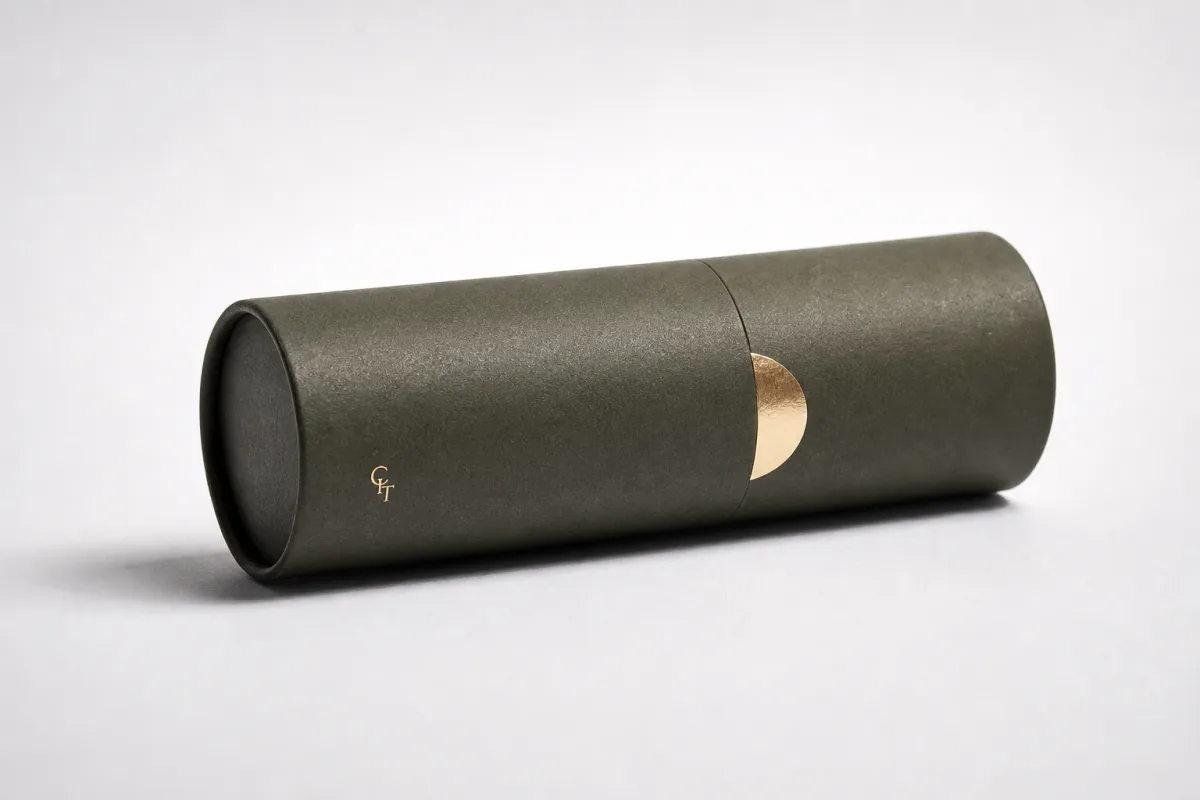
From a packaging buyer’s angle, custom paper tube mailers stand out because they solve a transit problem without forcing the brand into a bulky box. A poster tube protects rolled art from edge damage far better than a poly sleeve. A premium apparel insert can travel in a cylindrical format that feels intentional rather than like whatever was left on the shelf. That difference matters. Customers may not talk about board compression resistance, but they absolutely notice when a package feels flimsy versus cared for.
The design advantage is practical, not cosmetic. Custom paper tube mailers create visual presence on a shelf, in a mailbag, and on a doorstep. A kraft tube with one bold color can feel calm and modern. A fully printed wrap can act like a small billboard. Compared with many flat formats, the round profile gives designers more room to build a story around packaging design and retail packaging without adding extra components that complicate production.
They also fit neatly into a wider packaging mix. Not every item belongs in a tube, and not every order needs the same wall thickness or closure. Still, for brands replacing plastic mailers, custom paper tube mailers can sit between a low-cost envelope and a more protective Custom Printed Box. Long items, rolled goods, light fragile products, and presentation-sensitive kits are often better served by a tube than a flat format. Awkward shapes, heavy products, and items that need corner protection usually point back toward a corrugated box.
Sustainability gets attention for good reason. Many custom paper tube mailers rely on recyclable paperboard and reduce dependence on plastic films or mixed-material builds. That does not make every tube eco-friendly by default. Recyclability depends on the actual construction: adhesive choice, liner, coating, and closure all influence how the package behaves after use. Buyers should treat the environmental claim as a specification issue, not a marketing slogan. A tube that looks paper-based on the outside can still contain enough non-paper material to complicate disposal.
A clean way to compare formats looks like this:
- Poly mailers are light and inexpensive, but they offer limited structure.
- Corrugated boxes protect well, though they add volume and usually more material.
- Custom paper tube mailers sit between the two, delivering structure, presentation, and a stronger paper-based story.
If you are comparing more than one format, the broader range at Custom Packaging Products makes the trade-offs easier to see. Tubes are not automatically the best choice. The real test is whether the format fits the product, the carrier route, and the brand promise without forcing compromises elsewhere.
How Custom Paper Tube Mailers Work
At the construction level, custom paper tube mailers are usually made from spiral-wound or rigid paperboard. That structure gives the tube its crush resistance and helps it keep its shape under handling pressure. End closures vary. Some use fitted paperboard caps. Some rely on friction-fit ends. Higher-end versions may add insert discs, inner liners, or wrap-around closures that tighten packout and make opening feel more refined.
The shape does the protecting. A flat sleeve depends on padding or exterior stiffness. A tube works differently. Its circular profile resists bending and spreads force around the wall, which is why rolled artwork, promo kits, textile inserts, and slim cylindrical items often travel more safely in custom paper tube mailers than in a soft mailer. Geometry is not a side note here. It is part of the protective system.
Branding options are broader than most buyers expect. Tubes can carry full-wrap graphics, a single strong logo color, matte or gloss finishes, and restrained label-led designs. A kraft finish signals natural and understated. A white or printed wrap feels sharper and more retail-ready. For brands balancing package branding with shipping practicality, custom paper tube mailers give useful room to build a visual identity without overcomplicating the pack.
Fulfillment stays fairly direct if the spec matches the line. Typical packout is simple: load the product, add tissue, a stop card, or a protective insert if needed, close the ends, and move the tube into shipping. The difficult part is not the sequence. It is line speed. A tube that is too tight, too loose, or awkward to seal will slow the line. That is one reason sample testing matters before a large order lands.
Recyclability still depends on details. A paper-based body is only part of the equation. Adhesive, coating, and any plastic window or liner can affect how easily the package moves through local recycling systems. Some buyers want curbside recyclable claims. Others simply want a cleaner material profile. Either way, ask for the full construction spec and check it against the market you actually sell into.
If your sourcing team relies on certification, review paper origin and chain-of-custody claims carefully. The FSC system is one benchmark many brands use to support responsible sourcing language, but the certificate alone does not tell you much about performance or end-of-life. It is one piece of the spec, not the whole story.
Custom Paper Tube Mailers Cost, Pricing, and MOQ
Pricing for custom paper tube mailers comes down to a small set of variables, and once those are clear, comparing quotes gets much easier. Size comes first. A wider diameter uses more board. A longer tube uses more board. Board weight follows, then print coverage, finish, closure type, and any insert or liner requirement. A specialty coating, metallic effect, or tight color match pushes the price up again.
At volume, the difference can be real. On a 5,000-piece run, I have seen a plain kraft tube mailer with minimal print land around $0.40-$0.70 per unit, depending on dimensions and closure style. A more heavily printed tube with a cleaner finish often sits closer to $0.55-$1.10 per unit. Premium rigid builds, layered inserts, or specialty wraps can climb higher, sometimes well above that range. Those numbers are not universal, but they give a useful planning frame.
MOQ follows production economics. Setup time, tooling, print method, and board conversion all influence the threshold. A supplier may accept a lower MOQ on a simple tube if the run is straightforward. The same supplier may insist on a much higher minimum for a custom shape, a complex closure, or full-wrap graphics. Buyers sometimes read MOQ as a sales tactic. In many cases it reflects the cost of getting the line ready and keeping waste under control.
Freight can change the landed cost more than buyers expect. Tube mailers are lighter than many boxes, yet they can be awkward to palletize if the dimensions are long or the order is packed inefficiently. Sampling costs matter too, especially when several structural revisions are needed. A quote that looks low at factory level can get expensive after freight, color corrections, and rework. Apples-to-apples comparison matters more than the headline unit price.
Here is a practical comparison of common options:
| Format | Typical Use | Estimated Unit Cost at 5,000 | Protection Level | Branding Impact |
|---|---|---|---|---|
| Plain kraft tube mailer | Posters, prints, rolled inserts | $0.40-$0.70 | Good for bend protection | Simple, natural, low ink coverage |
| Printed tube mailer | Retail kits, branded mailers | $0.55-$1.10 | Good to very good | Strong, especially with full-wrap artwork |
| Rigid premium tube | Gift sets, luxury inserts | $0.90-$1.80 | Very good | High-end feel, heavier freight |
| Poly mailer alternative | Soft goods, light apparel | $0.10-$0.35 | Low structural protection | Low tactile impact |
That table helps avoid a common mistake: comparing a tube to a poly mailer on unit price alone. A cheaper soft mailer can cost more if the product arrives bent, creased, or returned. A higher-priced tube can still be the better buy if it reduces damage, improves presentation, and supports custom printed boxes or other formats across the rest of the line. Packaging should be measured by total outcome, not by the sticker price sitting on the quote.
If you are also weighing lighter formats for soft goods, Custom Poly Mailers give a useful comparison point. The contrast usually becomes clear fast: poly mailers win on cost and weight, while custom paper tube mailers win on shape retention, presentation, and a cleaner material story.
Transit risk should never be an afterthought. A supplier may say the tube is strong, but the only question that counts is whether the finished package survives your route. If the product is sensitive, ask about drop and compression testing aligned to ISTA methods. No lab coat is required to understand the logic. The spec needs to reflect the real shipment, not a perfect sample that never sees a carrier sorter.
Process, Timeline, and Production Steps for Custom Paper Tube Mailers
The production flow for custom paper tube mailers usually begins with a brief, not with artwork. That brief should define the product dimensions, the shipping method, the acceptable damage threshold, and the brand goals. Once those pieces are clear, the supplier can recommend wall thickness, diameter, length, and closure style. Too many teams skip that step and rush to graphics. Rework follows, because the art might be fine while the tube itself is wrong.
From there, the structural spec becomes a sample or mockup. If the dimensions are new, the supplier may need a dieline or a prototype build. Artwork prep comes next, followed by proofing and color review. A simple print run may move in 12-15 business days after proof approval. A new size, new finish, or multiple revision rounds can stretch the schedule. Lead time is usually not lost in manufacturing alone. It disappears in decision-making.
Proof approval is one of the biggest pressure points. A buyer may think a “small” change does not matter, yet moving a logo, changing a closure, or increasing board thickness can affect the whole build. That is true for custom paper tube mailers and for any structured format, including custom printed boxes. Once the structural spec changes, the print layout and packout logic often need to change with it.
Ask suppliers how they handle pre-production samples. Some offer a structural sample before the print run. Some provide a printed proof. Others can send a short pilot batch for line testing. Those options are not interchangeable. A structural sample tells you about fit and closure behavior. A printed proof tells you about color and graphics. A pilot batch tells you whether the system works at scale. Buyers who understand the difference usually avoid the most expensive surprises.
Planning around launch dates is another place where reality usually gets less forgiving than the spreadsheet. Seasonal campaigns, subscription programs, and retail packaging resets all create calendar pressure. If the tube is part of a launch, build in time for sample approval and shipping delays. A brand that waits until the product is ready has already waited too long. Packaging should arrive early enough to absorb a correction, not just match the shipping date.
Timeline discipline matters even more when several teams are involved. Procurement may want a lower MOQ. Marketing may want stronger print coverage. Operations may want faster packout. Those are valid pressures, but they can pull the spec in different directions. A clean approval process keeps custom paper tube mailers from becoming a bottleneck. It also helps the supplier quote honestly instead of padding the schedule for uncertainty.
How to Choose the Right Specs for Custom Paper Tube Mailers
The right spec sheet starts with the product itself. Measure the item in its packed state, not just its bare dimensions. A rolled print has a different diameter than a loose poster. A garment insert changes thickness once it is folded and wrapped. Inside diameter, length, wall strength, and closure style all need to match the actual contents. A fit that is too loose lets the product shift. A fit that is too tight slows packout and can make the customer fight the opening.
Wall strength deserves more attention than many buyers give it. Heavier board can improve compression resistance, but it also changes cost and weight. The goal is not the thickest wall available. The goal is the right wall for the route. A local shipment may not need the same build as a cross-country parcel. A subscription insert may need less protection than a retail sample kit. That is why a good supplier will ask about carrier type, pack density, and handling conditions before quoting custom paper tube mailers.
Design choices should support the customer experience, not fight it. Label placement matters. Opening direction matters. So does whether the tube reveals the product slowly or all at once. A matte finish can feel quieter and more premium. A gloss finish can add punch if the artwork is bold. If the brand wants utility, the tube can stay restrained. If the brand wants a stronger package branding moment, the graphic system can carry more weight. That is packaging design, not decoration.
Sustainability criteria belong in the brief. If the brand needs recycled content, say so. If it needs minimal mixed materials, say so. If it must support FSC-style sourcing language, make that explicit. If it needs to stay curbside recyclable, the supplier should confirm the full build, not just the paper body. A tube with a paperboard shell, paper end caps, and a compatible adhesive system may fit the goal. A tube with hidden non-paper layers may not.
Testing should happen with real product, real packers, and real speed. Mockups tell part of the story. Live pack tests tell the rest. Ask a fulfillment lead to pack 20 to 50 units with the proposed system and watch for friction points. Does the product snag? Does the closure hold? Does the print scuff in storage? Does the tube keep its shape in a secondary carton? Those small questions decide whether custom paper tube mailers work in daily operations or only in a presentation deck.
For a wider look at formats and finishing options, many teams review the full catalog of product packaging choices before settling on one spec. That approach is smart. A tube should be selected because it fits the job, not because it looks fashionable in a mockup.
Common Mistakes with Custom Paper Tube Mailers
The first mistake is choosing a tube that looks elegant but leaves too much empty space. Extra headroom can let the product rattle or tilt, and that turns a premium format into a careless one. Buyers sometimes assume padding will fix every fit issue. It will not. A loose tube can still crush in transit, especially when the contents shift and stress one section more than the rest.
The second mistake is ignoring carrier abuse testing. A package can look sturdy in the office and fail after a drop, corner impact, or compression event. That is why transit testing matters. Even simple internal testing can expose weak points before the order goes live. If the product is valuable, ask for a test plan that mirrors the route. A package that performs on a desk but not in distribution is not a success.
The third mistake is assuming all custom paper tube mailers are equally recyclable or equally durable. They are not. Construction varies widely. One tube may be mostly paper with a simple closure. Another may include coatings, labels, liners, and adhesives that change the recycling story. Durability varies too. Board grade, seam construction, and cap style all matter. A buyer who skips the spec review can end up with a tube that is expensive, fragile, or hard to dispose of correctly.
Artwork is another common failure point. Busy graphics, weak contrast, or tiny text can make a strong structure look generic. Sometimes the design is so crowded that the brand loses clarity from across the room. Good branded packaging is not about piling on elements. It is about using the tube surface with discipline. A clear logo placement and one or two purposeful color blocks usually work better than a cluttered full-wrap design with no hierarchy.
Operational errors are less glamorous, but they are often the most expensive. Teams order before checking fulfillment speed. They approve a spec without asking how the tube stores on pallet. They choose a closure that slows packout by three seconds per unit, then wonder why labor cost rises. A tube mailer is a packaging component, not a standalone style choice. Custom paper tube mailers have to fit the line, the warehouse, and the shipping method or the savings disappear quickly.
Do not assume every supplier means the same thing by “custom.” Some are selling a stock tube with a printed label. Others can produce a fully custom structure with board, finish, and closure tuned to the job. That distinction matters for quality, timeline, and pricing. A clear brief keeps everyone aligned and helps the quote reflect the real need.
Good packaging judgment is often dull. That is a compliment. The best results usually come from specifications, not drama.
Expert Tips and Next Steps for Custom Paper Tube Mailers
Start with a brief that answers five questions: what is the product, how is it shipped, how fragile is it, what sustainability claim is required, and what is the budget range. That sounds basic, but it saves weeks. When buyers define the constraints early, custom paper tube mailers become easier to quote, easier to test, and easier to approve. Without that clarity, the process turns into guesswork.
Order structural samples before committing to a full run. Then run a small pilot. A pilot does not need to be large to be useful. Even 100 to 250 units can reveal issues with fit, closure, or print handling. If the product is high value or the return rate would be painful, treat the pilot as insurance. It is cheaper to learn on a short run than on a warehouse full of the wrong tube.
Compare suppliers using the same assumptions. Make sure each quote includes the same diameter, length, board weight, print coverage, closure type, freight method, and overrun allowance. Ask whether the price includes samples, whether color tolerance is defined, and whether the packaging arrives flat or preformed. Those details change the economics. Two quotes that look close can represent very different finished products.
A simple launch checklist keeps the project moving:
- Confirm the product dimensions and shipping route.
- Approve the structural spec before final artwork.
- Test packout with the actual product.
- Review damage risk and carrier handling.
- Check the landed cost, not just the factory price.
- Scale only after the pilot proves the system.
It also helps to treat the tube as part of a wider packaging system. Some brands pair tubes with inserts, cartons, or secondary wraps depending on the channel. Others use a tube for the primary presentation and a separate shipper for e-commerce. That mixed strategy can work well, especially for companies that need both retail packaging impact and shipping efficiency. The right answer rarely looks like a one-size-fits-all choice.
If you are comparing custom paper tube mailers with other formats for your line, the decision usually comes down to three things: protection, presentation, and total landed cost. The strongest packaging programs do not chase the cheapest unit price. They choose the format that reduces damage, supports the brand, and keeps operations predictable. That is where custom paper tube mailers earn their place.
Are custom paper tube mailers better than poly mailers for fragile products?
Usually yes, if the product can crease, bend, or crush in a soft mailer. Custom paper tube mailers keep shape better and give the contents more structural protection. They also create a stronger presentation for buyers who care about unboxing. They are not always the lightest option, though, so the best choice depends on product weight, fragility, and the shipping budget. For soft goods, a poly format may still be the cheaper fit.
What affects custom paper tube mailers pricing the most?
Size, board thickness, print coverage, closure style, and insert requirements drive the price first. Order quantity matters because setup costs get spread across more units as volume rises. Freight, sampling, and color correction can also move the landed cost more than buyers expect. In many quotes, the gap between an average cost and a painful one hides in the details, not in the headline unit price.
How long does the custom paper tube mailers production process usually take?
Timing depends on whether you are reordering a known structure or building a new spec from scratch. Sampling, proof approval, and artwork revisions usually create the most delay. A simple run may move in roughly 12-15 business days after approval, while a more custom build can take longer. A supplier should give a clear schedule for pre-production, manufacturing, and shipping before you commit.
Can custom paper tube mailers be curbside recyclable?
Often yes, but not automatically. A paper-based body helps, yet coatings, liners, adhesives, and closure parts can change the recycling outcome. That is why the full construction needs review. Buyers should verify the exact build rather than assume every paper tube qualifies. If curbside recyclability is a priority, ask the supplier to document the materials clearly and keep the design as simple as the product allows.
What products work best in custom paper tube mailers?
Poster-sized items, rolled prints, apparel inserts, documents, cosmetics sets, and premium promotional kits are all strong fits. Anything that benefits from a rigid cylindrical format can work well. Products that need high presentation value but do not require a full box are often a good match. Very irregular or highly fragile items may still need a carton, insert, or different protective system instead of custom paper tube mailers.
How should a brand decide between tubes and other packaging formats?
Start with the shipment, not the artwork. If the item bends easily, a tube usually beats a soft mailer. If the item needs corner protection, a box may be better. If the objective is a strong branded reveal with moderate protection and a cleaner paper-based story, custom paper tube mailers often sit in the sweet spot. For many teams, the best move is to compare the tube against a box and a poly alternative before locking the spec. That comparison usually makes the trade-offs obvious.
For brands that want a practical, well-built package rather than a decorative one, custom paper tube mailers can be a smart part of the mix. They support the product, sharpen the brand, and often reduce plastic use in a way shoppers can understand quickly. The key is to spec them carefully, test them honestly, and treat them as a system rather than a single component. If you want the shortest path to a sound decision, start with the packed product, choose the wall strength for the real route, and run a small pilot before you scale. That one step catches more problems than any polished mockup ever will.

