Buyer Fit Snapshot
| Best fit | Custom Stand Up Pouches with Logo projects where brand print, material claims, artwork control, MOQ, and repeat-order consistency need to be specified before quoting. |
|---|---|
| Quote inputs | Share finished size, material target, print colors, finish, packing count, annual reorder estimate, ship-to region, and any compliance wording. |
| Proofing check | Approve dieline scale, logo placement, barcode or warning zones, color tolerance, closure strength, and carton packing before bulk production. |
| Main risk | Vague material claims, crowded artwork, missing packing details, or unclear freight terms can make a low unit price expensive after revisions. |
Fast answer: Custom Stand Up Pouches with Logo: Film, Print, MOQ, and Carton Packing should be specified like a repeatable production item. The safest quote records material, print method, finish, artwork proof, packing count, and reorder notes in one written spec.
Production checks before approval
Compare the actual filled-product size with the drawing, then confirm tolerance on folds, seals, hang holes, label areas, and retail display edges. Reserve space for logos, QR codes, warning copy, and material claims before decorative graphics fill the panel.
Quote comparison points
Review material grade, print process, finish, sampling route, tooling charges, carton quantity, and freight assumptions side by side. A quote is only useful when the supplier can repeat the same color, closure quality, and packing count on the next order.
A shopper usually gives packaging only a few seconds before moving on, and that brief look is often enough to decide whether a product gets picked up or passed by. A front panel that feels clean, structured, and unmistakably branded can do a lot of work in that moment, which is why custom Stand Up Pouches with logo often outperform plain packaging. They turn the pack into a small but persistent signal of quality while still doing the practical job of protecting what is inside.
That shift matters far beyond appearance. A coffee roaster, supplement brand, pet treat maker, or snack startup is not simply buying a pouch; it is choosing shelf presence, fill behavior, seal performance, and a repeatable surface for brand identity. Buyers who approach Custom Stand Up Pouches with logo as a packaging decision tend to get better results than those who treat artwork as a last-minute add-on.
From a packaging buyer's point of view, the difficult part is rarely selecting a bag shape. The real challenge is matching barrier, size, finish, and print method so the logo still looks sharp after the pouch has been filled, shipped, stacked, and opened again and again. If you are comparing flexible formats with Custom Packaging Products like cartons, labels, and other retail packaging, the right answer usually becomes clearer once you compare actual performance rather than the mockup alone.
Why Custom Stand Up Pouches With Logo Win Shelf Attention
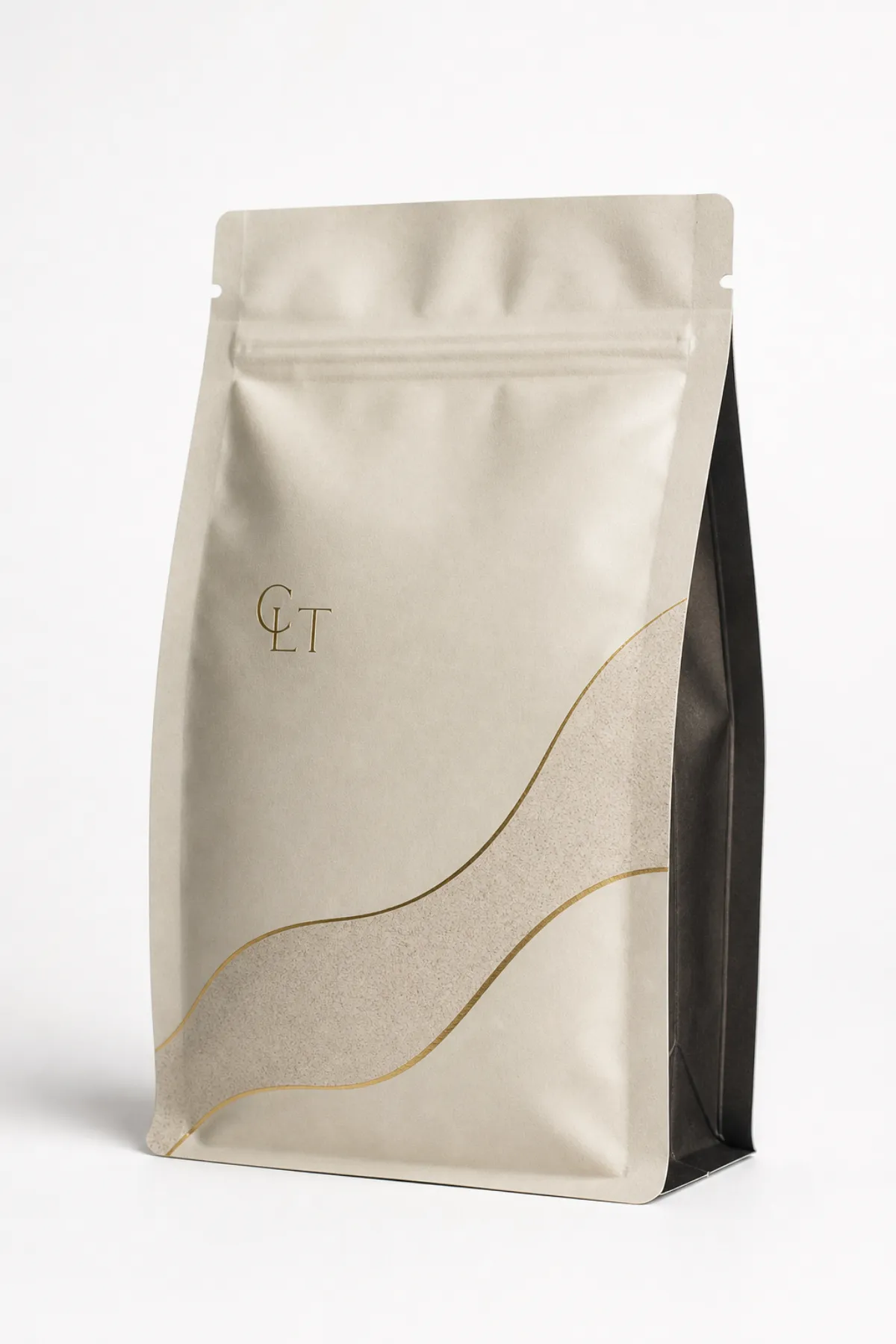
A stand up pouch does one thing immediately and visibly: it stands upright. That gusseted base gives the package structure, which matters more than many first-time buyers expect. A flat bag can hang, slump, or lie down. A stand up pouch creates a usable face, and that face becomes a natural billboard for custom stand up pouches with logo.
The logo is not decoration in this format. It becomes the first signal of trust, flavor, quality tier, and product category. A clean logo on a matte pouch can make a mid-priced snack feel more refined, while a crowded design can make a strong product look unconsidered. That is one reason branded packaging often beats generic product packaging even when the product itself is excellent.
These pouches show up across so many categories because they solve several problems at once. Snacks need a tidy shelf presentation. Coffee needs odor control and, in many cases, a degassing valve. Powders need a dependable seal and enough front-panel space for dosage or usage claims. Pet treats need durability, and supplements often need room for compliance copy without losing visual order. Custom stand up pouches with logo handle those demands well because the format gives structure without the weight and rigidity of jars or folding cartons.
That comparison is worth paying attention to. Jars feel sturdy, yet they are heavier, more fragile in transit, and usually more expensive to ship. Folding cartons offer generous print space, though they often need an inner liner or a secondary barrier. Flat pouches can be cheaper, but they do not sit on a shelf with the same confidence. For many brands, custom stand up pouches with logo land in the sweet spot between efficiency and persuasion.
A lot of buyers miss the real decision by starting with unit price. A better starting point is how the package behaves in the aisle, in a box, and on a kitchen counter. If a pouch improves visibility, reduces breakage, and lowers shipping weight, the total package economics can look stronger than a cheaper format that needs more protection or extra secondary packaging.
The logo changes the role of the pouch in a very direct way. Without it, the pack is only a container. With it, custom stand up pouches with logo become a piece of package branding that can do the work of a display, a sign, and a product cue on one surface. That is a major reason this format keeps growing in retail packaging and direct-to-consumer lines.
How Custom Stand Up Pouches With Logo Actually Work
At the construction level, a stand up pouch is a laminated flexible package made from two or more film layers. Each layer handles a different job: one for graphics, one for strength, one for barrier, and one for heat seal performance. Depending on the product, the structure may include PET, OPP, PE, nylon, metallized film, or a mono-material structure aimed at recyclability. Custom stand up pouches with logo depend on all of those layers working together, not just the printed face.
The core parts are easy to overlook if you are only staring at the digital mockup:
- Front and back panels for branding and compliance copy.
- Bottom gusset for shelf stability.
- Side seals that protect fill integrity.
- Zipper or closure for resealability.
- Tear notch for opening.
- Spout or valve when the product needs controlled dispensing or gas release.
The artwork path matters just as much. A designer should start with a dieline, not a flat rectangle. The dieline maps the live area, seal zones, zipper area, hang holes, windows, and any curved edges. If the logo lands too close to a seal line, the pouch can be technically printable but practically wrong. That is why custom stand up pouches with logo should be reviewed with the structure in mind from the first round.
The print method changes what the logo can do. Digital printing is useful for shorter runs and faster iteration. Flexographic printing works well for medium and larger runs and can deliver strong color consistency across volume. Rotogravure is often used for high-volume jobs with rich color and fine detail. Fine text, thin rules, gradients, and metallic effects behave differently under each method, so the quote should always match the print process to the design goal.
A practical rule helps here: if the logo includes small type, do not bury it under heavy textures, dark fills, or busy pattern work. A logo needs contrast. A pouch front panel also needs breathing room. That balance is part of packaging design, and it is one reason custom stand up pouches with logo often look stronger than crowded labels on rigid containers.
The back panel and side panels carry the rest of the job. Put recognition on the front, keep instructions, claims, ingredients, and barcodes on the back, and use the sides for extra details only if the layout still feels orderly. A pouch that tries to say everything on the front usually says less, because the logo loses hierarchy in the process.
A logo that looks strong on a screen can disappear on a real pouch if the contrast is weak, the type is too fine, or the finish throws too much glare under store lighting.
Cost, Pricing, MOQ, and Quote Basics for Custom Stand Up Pouches With Logo
If you ask ten suppliers for a quote, you can end up with ten different answers because the phrase custom stand up pouches with logo hides a long list of variables. The biggest cost drivers are pouch size, film structure, barrier requirements, print coverage, finish, zipper style, and special features such as windows, valves, or tear strips.
MOQ is not just a number on a spreadsheet. It is a pricing lever. Smaller volumes usually carry more setup burden per unit, while larger runs spread the tooling and press time across more pieces. For buyers, that means a 2,000-piece launch order may cost dramatically more per pouch than a 10,000-piece reorder, even if the pouch design itself looks identical.
The comparison below helps separate the options. These are ballpark ranges only, since material thickness, graphics coverage, and freight all matter. Still, they are close enough to help you budget custom stand up pouches with logo before requesting a formal quote.
| Printing / Run Type | Typical MOQ | Approx. Unit Cost | Best For | Notes |
|---|---|---|---|---|
| Digital short run | 500-3,000 pcs | $0.28-$0.65 | Launches, seasonal SKUs, test markets | Lower setup burden; good for fast proofing and smaller volumes |
| Flexographic mid run | 5,000-20,000 pcs | $0.12-$0.28 | Established retail lines, repeat orders | Strong value once artwork is locked and volume is steady |
| Rotogravure high volume | 25,000+ pcs | $0.09-$0.20 | National brands, high-repeat SKUs | Best economics at scale; higher tooling expectations |
That table leaves out an important truth. The cheapest quote is not always the cheapest packaging. A pouch with a low unit price but weak barrier performance can shorten shelf life, which creates spoilage and returns. For oxygen-sensitive goods like coffee, protein powders, or dried fruit, paying more for the film structure is often the better business choice. Custom stand up pouches with logo should protect the product first and attract the shopper second.
Ask every supplier to break the quote into pieces:
- Artwork setup or prepress fees.
- Tooling, plates, or cylinders if the print method requires them.
- Sample charges and proofing fees.
- Per-unit pouch price at the requested quantity.
- Freight and packaging for shipment.
- Reorder price so you know the future unit economics.
If two quotes look similar but one uses a 2.5 mil film and the other uses a 4.0 mil film with a better moisture barrier, they are not really comparable. The thicker pack may feel more premium, seal better, and survive distribution far more reliably. That is why comparison charts for retail packaging options are only useful when the specs are lined up side by side.
For Brands That Sell through stores and shipping channels at the same time, it can also make sense to compare custom stand up pouches with logo against custom printed boxes. Boxes can create a stronger unboxing moment, while pouches often win on freight weight and shelf efficiency. The right choice depends on product density, margin, and the amount of visual space the brand needs.
Process, Timeline, and Production Steps for Custom Stand Up Pouches With Logo
The production path for custom stand up pouches with logo is usually straightforward if the spec is complete. It slows down fast when the artwork is incomplete, the pouch style keeps changing, or the compliance text arrives late. In a typical run, the order moves from brief to dieline, then proof, then sample or approval, then production, then freight.
A simple order can often move from proof approval to shipment in roughly 12-15 business days, though that depends on supplier capacity and print method. More complex jobs can take longer, especially if they need custom tooling, specialty finishes, or multiple proof revisions. If the launch date matters, schedule backward from the date the product must be filled, not the date you want the packaging to arrive.
The biggest delays usually come from small, preventable issues:
- Logo files sent as low-resolution JPGs instead of vector files.
- Copy changes after the proof has already been prepared.
- Late barcode updates.
- Missing regulatory statements for supplements, food, or pet products.
- Color expectations that were never tied to a physical sample or Pantone target.
Think of the workflow like this:
- Define the product first: fill weight, texture, shelf life, storage conditions, and channel mix.
- Select the structure: barrier level, zipper, window, valve, and finish.
- Approve the dieline before any artwork is finalized.
- Review the proof like a printer, checking seals, safe zones, and barcode contrast.
- Test the sample or pilot batch in real filling and shipping conditions.
That last step saves a lot of brands from expensive surprises. A pouch that looks perfect on a PDF can still feel awkward in a filler, tip too easily on a shelf, or scuff more than expected in transit. A small pilot order of custom stand up pouches with logo can surface those problems before the larger run is locked in.
If your product ships in cases, ask whether the supplier has transit-test experience aligned with ISTA methods. That matters for packaging that will travel through warehouse handling, parcel networks, or mixed freight. For a recyclable or paper-forward approach, think ahead about the actual structure rather than assuming every "green" material performs the same way.
Key Factors That Shape Performance and Branding
Performance should lead the design conversation. Custom stand up pouches with logo can look premium, but if the barrier is wrong, the product deteriorates. Oxygen, moisture, light, and odor are not abstract concerns; they are the difference between a fresh product and a returned one.
For coffee and some snacks, a high-barrier film and a degassing valve may matter more than a flashy finish. For powders, a strong zipper and resistance to tearing matter because the pouch may be opened and closed many times. For pet treats, odor retention and puncture resistance can matter just as much as the front-panel look. The logo should support the job, not compete with it.
Finish choices can change perception quickly. Matte tends to feel more restrained and can reduce glare, which helps logo readability. Gloss gives more pop and can intensify color, though it also reflects light. Soft-touch adds a tactile cue that often reads as premium. Metallic accents can grab attention, but they should be used carefully so the pack does not feel overloaded. In practical terms, the finish is part of package branding, not a decorative afterthought.
A simple way to think about the tradeoff looks like this:
- Matte: better for restrained, premium, or natural brands.
- Gloss: better for bright colors and high-energy retail packaging.
- Soft-touch: good for a premium handfeel, though it can show scuffs if handled roughly.
- Metallic: useful for shelf impact, but only if the logo still has enough contrast.
Sustainability deserves a careful answer, not a marketing answer. Some pouches are built with recyclable mono-material structures, while others rely on multilayer laminates that deliver stronger barrier performance. Those two goals are not always equal. If you want recyclability, ask exactly what the material blend is, whether the pack is locally recyclable, and whether the barrier still fits the product. For broader guidance on recycling and material recovery, the EPA recycling guidance is a useful starting point.
There is a brand-side truth that gets missed often: the logo has to work in bad conditions, not just ideal ones. Store lighting can be warm, dim, or reflective. E-commerce thumbnails can shrink a carefully designed front panel into a tiny square. Pallets can arrive scuffed. The strongest custom stand up pouches with logo remain legible in all of those settings, which is why contrast and hierarchy matter so much.
If you want to see how the pouch compares with other forms of product packaging, it helps to look at shelf distance. At six feet, the shopper sees shape and color first. At two feet, they read logo and product promise. At arm's length, they look for instructions, trust cues, and usage details. A pouch organized around those distances usually performs better than one that tries to cram everything into the front panel.
Step-by-Step Guide to Ordering the Right Pouch
The clearest way to order custom stand up pouches with logo is to treat it like a specification process, not a shopping trip. That keeps the decision anchored in product needs rather than screen images. Use the five steps below as a working checklist.
-
Define the product first.
Lock down the fill weight, texture, shelf life, storage conditions, and selling channel. A dry snack sold through retail packaging has different needs than a powder shipped direct to consumer. If the product is oily, aromatic, or moisture-sensitive, the barrier choice rises to the top of the list.
-
Choose the pouch architecture.
Select size, zipper style, finish, window, and any special feature before you finalize the art. A stand up pouch with a euro hole, for example, changes the logo placement. A clear window changes the visual balance. Custom stand up pouches with logo should be built around those decisions rather than squeezed into them afterward.
-
Request the dieline and sample plan.
Ask for a dieline at true size. Then map the logo, barcode, and compliance copy onto it. If possible, request a printed sample rather than only a mockup. A sample exposes contrast issues, zipper placement conflicts, and label-style clutter that can hide on a flat proof.
-
Review the proof like a production buyer.
Check safe zones, bleed, seal clearance, spelling, barcode quiet zones, and the relationship between the logo and the other front-panel claims. If your logo is the most important branding asset, it should have room to breathe. The proof should make that obvious at a glance.
-
Run a pilot or fill test.
Even a small test run can tell you whether the pouch stands well, seals cleanly, and survives handling. This is especially useful for new brands that are still tuning fill methods or shipping conditions. One pilot test can save a whole production run of custom stand up pouches with logo from a costly redesign.
If you are building a larger line of branded packaging, it helps to compare the pouch spec with your other formats on the same sheet. That way, your Custom Packaging Products review stays focused on unit cost, visual impact, and the real job each format performs.
Common Mistakes With Custom Stand Up Pouches With Logo
Most costly packaging mistakes are not dramatic. They are small mismatches that pile up. With custom stand up pouches with logo, the most common issue is a logo file that was never prepared for print. A 300-pixel image may look fine on a laptop, but it can blur on press. Vector files are usually the right starting point because they scale cleanly.
Another mistake is choosing the pouch for appearance alone. The shape may look elegant, but if the product does not fill evenly, the pouch may lean, wrinkle, or obscure the logo once packed. That is especially true for lightweight snacks and granular products. The pouch must hold its form after filling, not just in an empty mockup.
Overloading the front panel causes trouble too. Too many badges, claims, QR codes, and callouts make the logo compete for space. The result feels busy and less premium. Good package branding usually relies on restraint. Front-panel space is valuable, and the logo should own a clear part of it.
Price-only comparisons also create headaches. Two suppliers can quote the same dimensions and still deliver different barrier performance, finish quality, or zipper reliability. If one uses better film, tighter print registration, and cleaner lamination, that quote may be worth more even if the unit price is higher. Custom stand up pouches with logo should be compared on matched specifications, not on a single line item.
Finally, many buyers underestimate reorder timing. A strong design can sell through faster than expected, especially if the product gets traction online. If the reorder lead time is six weeks and the launch succeeds in three, the brand can run out of packaging before it runs out of product. That is an avoidable failure, and it is one reason the first order should always include a realistic buffer.
Common packaging mistakes worth watching for:
- Using low-resolution logos or unoutlined fonts.
- Skipping a sample because the PDF "looks fine."
- Ignoring how the pack behaves after filling.
- Forgetting barcode and regulatory space.
- Comparing quotes without matching barrier, finish, and closure details.
Expert Tips and Next Steps for Better Results
Use the front panel for one job: fast recognition. That is the cleanest rule I can give for custom stand up pouches with logo. The front should not try to tell the entire brand story. It should signal what the product is, who made it, and why it deserves a second look. Everything else can live on the back or side panels.
Reserve the back panel for proof points and practical information. That includes ingredients, usage instructions, storage guidance, claims, and compliance text. A clear hierarchy makes the pack feel more trustworthy. It also makes the logo more effective because the eye can find it quickly instead of wandering through clutter.
Ask for samples, not just photos. Photos cannot tell you how the zipper feels, how the pouch sits, or how the finish behaves under light. A sample can. For custom stand up pouches with logo, physical review usually exposes issues that nobody notices on a screen. I have seen packs that looked polished in mockups but felt flimsy in hand, and that kind of mismatch is hard to fix after the fact.
A simple comparison sheet can keep the decision honest. Track these columns:
- Unit cost.
- MOQ.
- Barrier level.
- Lead time.
- Print method.
- Finish options.
- Reorder price.
That kind of sheet works because it stops the conversation from drifting into vague language. It also makes it easier to compare pouches against custom printed boxes if you are deciding between a flexible format and a rigid one. The best choice usually appears once you see the freight math, the display behavior, and the shelf story side by side.
My practical recommendation is simple: gather the product specs, request one well-made proof, test the sample in real conditions, and then place the order that best balances visual impact, protection, and budget. If you are exploring more than one format, the broader Custom Packaging Products lineup can help you compare your options without losing sight of the main goal: Packaging That Sells the product and protects it.
custom stand up pouches with logo work best when the brand brief is clear, the structure is right, and the order is built on facts instead of guesswork. That is the real takeaway. Get those three pieces aligned, and the pouch does what good packaging should do: it earns attention, protects the product, and makes the brand look like it belongs on the shelf.
How much do custom stand up pouches with logo usually cost?
Price depends on pouch size, material, barrier needs, print coverage, and added features like zippers or windows. Lower MOQs usually increase unit cost, while larger runs spread setup costs across more pieces. Ask for a quote that separates setup, samples, freight, and reorders so you can compare suppliers fairly.
What is the minimum order for custom stand up pouches with logo?
MOQ varies by printing method, pouch complexity, and supplier capacity. Digital or shorter-run options can be lower, while custom structures and specialty finishes often need more volume. The best MOQ is the one that matches your launch volume, storage space, and cash flow.
How long does production take for custom stand up pouches with logo?
Lead time depends on artwork approval, sampling, material availability, and whether the order needs custom tooling. Simple, spec-ready jobs move faster than complex projects with multiple revisions or specialty finishes. Build in extra time if your launch date depends on packaging arriving before product fills begin.
What file do I need to send for custom stand up pouches with logo?
Send vector logo files when possible, such as AI, EPS, or PDF with outlined fonts. Provide brand colors, copy, and any barcode or compliance text at the same time to reduce revision loops. A clean dieline proof is easier to approve than a loose mockup, especially for small logos and fine text.
Can custom stand up pouches with logo be recyclable?
Yes, some pouch structures are designed to be recyclable, but the exact material blend matters. Check whether the pouch is mono-material or a laminated structure, and confirm local recycling compatibility. If sustainability is a priority, ask for samples and test whether the barrier and seal performance still fit the product.
If you are comparing vendors, start with the product spec, not the quote. The best custom stand up pouches with logo are the ones that balance barrier, structure, print quality, and reorder consistency without forcing tradeoffs you did not plan for.

