Buyer Fit Snapshot
| Best fit | Custom Paperboard Inserts Bulk projects where brand print, material claims, artwork control, MOQ, and repeat-order consistency need to be specified before quoting. |
|---|---|
| Quote inputs | Share finished size, material target, print colors, finish, packing count, annual reorder estimate, ship-to region, and any compliance wording. |
| Proofing check | Approve dieline scale, logo placement, barcode or warning zones, color tolerance, closure strength, and carton packing before bulk production. |
| Main risk | Vague material claims, crowded artwork, missing packing details, or unclear freight terms can make a low unit price expensive after revisions. |
Fast answer: Custom Paperboard Inserts Bulk: Specs, Pricing, and MOQ should be specified like a repeatable production item. The safest quote records material, print method, finish, artwork proof, packing count, and reorder notes in one written spec.
Production checks before approval
Compare the actual filled-product size with the drawing, then confirm tolerance on folds, seals, hang holes, label areas, and retail display edges. Reserve space for logos, QR codes, warning copy, and material claims before decorative graphics fill the panel.
Quote comparison points
Review material grade, print process, finish, sampling route, tooling charges, carton quantity, and freight assumptions side by side. A quote is only useful when the supplier can repeat the same color, closure quality, and packing count on the next order.
Custom paperboard inserts bulk orders solve a simple problem with expensive consequences: they keep products from moving inside the carton. That sounds modest until you trace the chain reaction. A loose item shifts, the shift becomes abrasion, the abrasion becomes a return, and the return becomes a charge that never appeared in the original quote.
That is why the best insert is rarely the prettiest component in the box. It is the one that holds the product in place, survives the production line without slowing it down, and still feels deliberate when the customer opens the package. Skincare sets, cosmetic kits, electronics bundles, and seasonal gift boxes all depend on the same mechanics. Reduce empty space. Separate the parts. Stop motion before it starts.
Bulk buying changes the economics in a way small runs never can. Setup costs spread out, tooling is used efficiently, and repeat orders become easier to spec because the structure is already proven. For brands shipping at volume, a custom insert is not a decorative extra. It is part of the pack-out system.
The most expensive packaging mistake is often a quiet one. The outer shipper arrives intact, the seal looks fine, and the product still reaches the customer with a scuffed lid, a cracked accessory, or a rattling component that feels cheap before anyone has touched the contents. Paperboard inserts help prevent that gap between “shipped” and “delivered well.”
“If the product can move, it will move. The fix is rarely a bigger box. It is usually a better insert.”
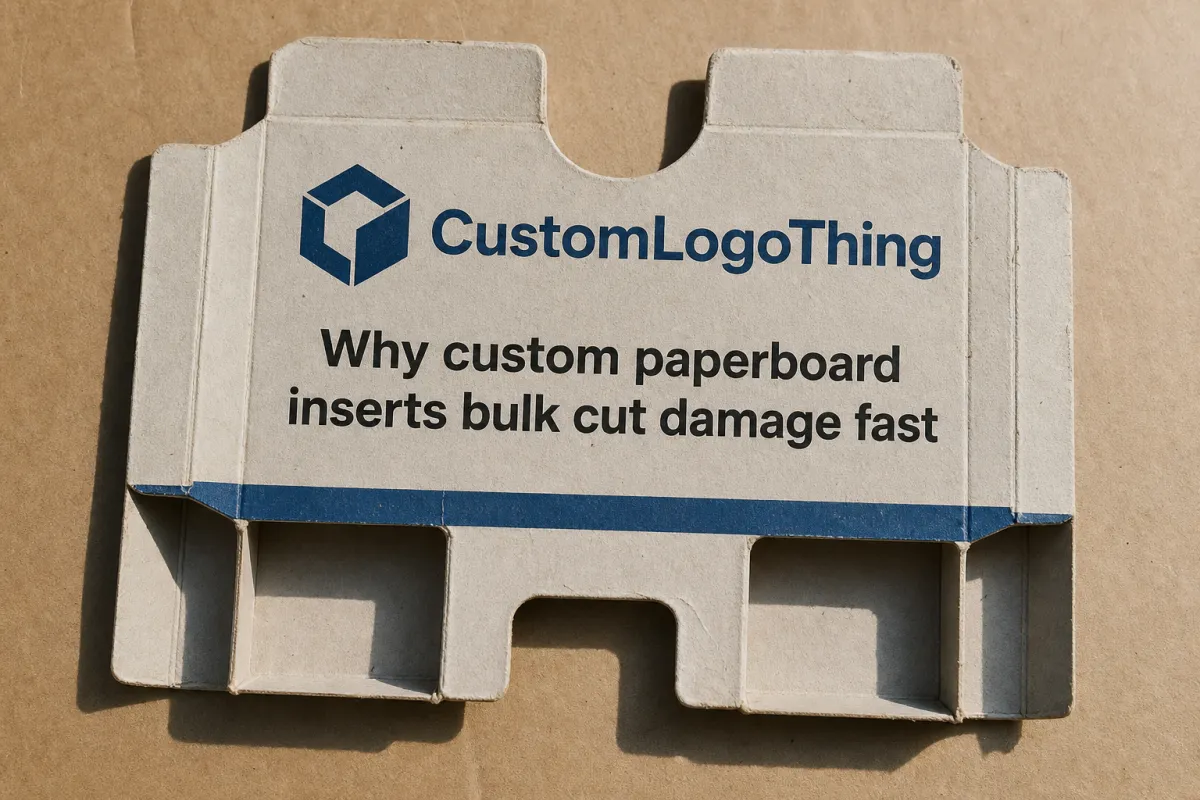
Why custom paperboard inserts bulk cut damage fast
Open a carton with too much free space and the failure pattern is easy to read. A bottle leans into a divider. A jar presses against a side wall. A cable rubs against a printed surface. None of those problems looks dramatic in isolation, which is exactly why they show up so often in real shipments. Small movement creates small damage first, then the small damage becomes the reason for a refund.
Movement inside the pack-out is usually the real problem. Custom paperboard inserts bulk orders work because they reduce that movement before shipping pressure, vibration, and handling can do their work. The insert stabilizes the product, separates components, and removes the voids that let items build momentum inside the box.
A skincare kit makes the point quickly. A glass serum bottle, a jar, and a spatula might survive a loose pack on a calm day, but they will not always survive the same setup in transit. The bottle neck can rub the lid. The jar can shift into the wall panel. The spatula can slide into a corner and scratch a finished surface. One well-designed insert fixes all three issues at once.
The same logic applies to candle sets, small electronics, subscription boxes, and premium retail packaging. The product does not need to be fragile to benefit from restraint. Even durable items look and feel better when they arrive still arranged the way the brand intended.
Bulk production also helps teams standardize the pack-out across locations and seasons. One approved design can serve a warehouse, a co-packer, and a retail fulfillment line without requiring a new guess every time the SKU ships. That consistency matters more than many buyers expect, because packaging errors tend to multiply when every batch behaves a little differently.
What custom paperboard inserts do in the pack-out
A paperboard insert does more than hold things apart. It stabilizes, cushions, presents, and guides assembly. Those jobs overlap, but they are not identical, and good design respects that. A divider might be enough for a light kit. A folded cradle might be better for bottles. A display-style insert may be the right choice if the product needs to sit at an angle for shelf appeal or photography.
Generic inserts fail for predictable reasons. A divider that works for one SKU may pinch another. A tray that looks neat on paper may collapse under load. A pocket that fits the sample may bind once the board is fully folded and packed. Packaging design has to start with the item, the closure, and the stress the package will actually see.
Paperboard is attractive in many bulk programs because it is light, printable, and usually easier to align with recycling goals than mixed-material systems. It also tends to be less expensive than molded alternatives in large runs. That said, it is not the right answer for every product. Very heavy items, high-moisture environments, and severe drop-risk shipments may call for a different construction. Honest packaging work starts with the constraints, not the preferred material.
Buyers should expect the insert to do two things at once: protect the product and support the brand. A purely functional insert can feel industrial. A purely decorative one can fail in transit. The better versions manage both, which is why Custom Printed Boxes and inserts often work best as a matched system rather than as separate decisions made by different teams.
Repeatability matters, especially in wholesale programs. If one batch folds cleanly and the next arrives loose, the line slows down and pack-out errors rise. That is one reason experienced suppliers spend so much time on production consistency. The first sample matters. The fifth reorder matters more.
For broader packaging programs, it helps to align inserts with other components already in the line. If you are sourcing cartons, sleeves, or display packs, review the available Custom Packaging Products to keep structure and print specs aligned. Ongoing volume planning fits better through the Wholesale Programs page, especially if reorder rhythm matters.
Common insert use cases
- Single-product cradle - Centers one item in the carton, often used for bottles, jars, chargers, and accessories.
- Multi-compartment kit - Separates several parts so they do not scratch or collide in transit.
- Layered presentation insert - Supports premium opening experiences for gift sets and retail packaging.
- Display support - Keeps the product upright or angled for shelf visibility and photo-ready presentation.
End-of-life considerations matter too. Paperboard inserts often fit cleaner sustainability goals than mixed-material systems, but that does not make every board automatically recyclable in every market. Coatings, inks, adhesives, food residue, and local collection rules all affect what actually happens after disposal. For a neutral reference point, the Forest Stewardship Council and the EPA recycling guidance are useful starting points.
Paperboard specs, thickness, and insert styles
Most insert problems begin with incomplete specifications. The supplier needs product dimensions, weight, fragility, pack-out orientation, and the exact carton size the insert must fit inside. Leave out any of those details and the design starts to drift into guesswork. Guesswork wastes board, creates weak fit, and usually leaves enough slack for movement.
The spec set that actually helps includes product dimensions, insert depth, board caliper, fold style, cut lines, and whether the insert ships flat or pre-assembled. Flat-shipping lowers freight and storage costs. Pre-assembled pieces reduce labor at the packing station. Neither option is inherently better. The right choice depends on your line speed, your labor cost, and how much handling the insert can tolerate before use.
Thickness usually falls into a practical range. Lighter items often work well in the 14-18 pt range. Heavier kits, denser components, or inserts that need more rigidity often move into the 18-24 pt range. That is a useful starting point, not a universal rule. Board performance changes with structure, score quality, and how much load the insert carries. A prototype is still the fastest way to confirm real-world fit.
Finish matters more than many buyers expect. Clay-coated board gives a smoother print surface and a cleaner retail appearance. Matte surfaces reduce glare and feel quieter visually. Gloss makes color pop, though it can show scuffs more readily. Natural kraft fits brands that want a grounded look and a simpler material story. If the product sees moisture or abrasion, ask about scuff resistance and extra print protection rather than assuming a finish alone will solve the problem.
Structure is where the tradeoff becomes visible. A plain separator is faster and cheaper. Add pockets, tabs, or display geometry, and the insert can improve both fit and presentation. Complexity raises tooling and assembly time. More features mean more labor or tighter tolerances, and that only pays off if the product actually needs the added structure.
Spec factors that actually change the quote
- Quantity - Higher volumes usually lower the unit cost by spreading setup across more pieces.
- Board grade - Better stiffness, brighter white, or specialty coatings change cost quickly.
- Die complexity - More cuts, folds, and locks mean more tooling and more setup time.
- Print coverage - Full bleed graphics cost more than a plain natural insert.
- Assembly method - Flat-packed pieces are cheaper to ship; pre-assembled units cost more to handle.
One practical test saves a lot of trouble: build the insert around the exact product, carton, and closure you plan to use. A sample that looks perfect on a desk can fail once lid pressure changes or box tolerances shift. Prototypes reveal the real behavior. They show whether the board keeps its shape after folding, packing, vibration, and hand assembly. That is the difference between a nice idea and a usable spec.
Cost, pricing, and MOQ for custom paperboard inserts bulk
Pricing should be clear, not vague. For custom paperboard inserts bulk, the main cost drivers are quantity, board grade, die complexity, print coverage, assembly time, and any specialty finishing. If a supplier cannot explain those factors, the number on the quote is mostly decoration.
The minimum order quantity, or MOQ, exists because setup costs do not disappear on small runs. Dielines need preparation. Cutting tools need to be made. Press setup takes time. Crews still have to run the job. Small quantities therefore carry a higher unit cost, especially when the structure is elaborate or the insert needs manual assembly.
For planning, simple flat inserts may begin around 500 units, while more complex multi-pocket structures often fit better at 1,000 units or above. That is not a promise. Tooling, labor, and revision count still shape the final number. Even so, the range helps buyers avoid wasted quote cycles and compare suppliers on something more useful than a single headline price.
A better comparison comes from tiered pricing at 500, 1,000, 2,500, and 5,000 units. That shows the real curve. Most buyers see the biggest drop early, then smaller gains as volume rises. If the quote barely changes between 1,000 and 2,500 units, the structure may be too labor-heavy or the setup cost may not be spreading efficiently.
| Insert type | Typical fit | Common MOQ range | General price behavior | Best use case |
|---|---|---|---|---|
| Flat paperboard divider | Light items, basic separation | 500-1,000 units | Lowest setup and labor cost | Simple retail packaging, small accessories |
| Folded cradle insert | Bottles, jars, small kits | 1,000-2,500 units | Moderate cost; better presentation | Skincare, cosmetics, consumer goods |
| Multi-compartment kit insert | Several components, uneven shapes | 1,000-5,000 units | Higher labor and tighter tolerances | Electronics sets, gift boxes, branded packaging |
| Printed display insert | Premium presentation and shelf visibility | 2,500+ units | Higher print and finishing cost | Retail packaging, sample kits, launch programs |
A simple unprinted insert with straightforward geometry usually sits in a lower price band than a printed, die-cut, multi-part insert. Volume can pull the unit cost down in a meaningful way, but the final number still depends on carton size, board choice, and whether the insert ships flat or assembled. A serious quote for custom paperboard inserts bulk should show tooling, sampling, and freight assumptions so the buyer is not surprised later.
Hidden costs are where cheap quotes become expensive. Rework from bad measurements, rush charges, extra packaging, and inefficient shipping can erase the savings. A slightly higher unit price with a better fit and cleaner production often wins in total cost because it reduces returns, reorders, and damaged units.
What a clean quote should include
- Unit price by tier - So you can compare 500, 1,000, 2,500, and 5,000 units.
- Tooling and setup - So you know what is one-time and what repeats.
- Sampling cost - So prototype work does not disappear into the fine print.
- Lead time - So your launch schedule stays realistic.
- Shipping method - So freight does not undo the quote.
Process and timeline for bulk insert production
The production path should feel orderly. Send specs. Review the dieline. Approve a prototype. Confirm materials. Move into production. That sequence is boring in the best possible way, because boring is what keeps the run on schedule. Rush any step and the risk of a bad fit climbs quickly.
Simple samples can move fast, especially when the product shape is straightforward and the board choice is standard. Complex layouts, multiple revisions, and specialty finishes add days or weeks. The timeline is not only about the press. It also includes design review, proof approval, sample feedback, and any rework needed before the bulk run begins.
A straightforward insert can move from concept to production quickly once measurements are locked. A more involved job needs longer lead time because the insert has to fit precisely and survive packing, shipping, and repeated handling. That matters even more for Custom Printed Boxes with matching inserts, where carton geometry and internal support need to line up cleanly.
Most delays start with bad information. Unclear measurements. Last-minute artwork changes. Missing carton data. Approval delays on the buyer side. The board is rarely the real culprit. The information is. Change the outer box after the insert is approved and the insert can lose its fit, which creates a chain reaction no one wants.
Buffer time belongs in the launch calendar. Inserts can become the thing that slips a shipment, even when every other piece is ready. Buyers who plan for sampling and production lead time avoid expensive expedited freight and the kind of reprint that shows up only after the deadline is already gone.
It helps to keep the schedule in three buckets:
- Sampling window - Time for dieline, prototype, fit check, and revisions.
- Production window - Time for bulk cutting, finishing, and assembly.
- Transit window - Time to move the finished goods to your facility or co-packer.
That structure keeps expectations honest and gives teams a clean way to answer scheduling questions. If your packaging program includes test requirements, align the insert with shipping validation principles from ISTA. The insert is not the full test package, but fit and restraint affect transport performance in a direct way.
Why choose us for custom paperboard inserts bulk
Buyers do not need more polished language. They need consistent sizing, repeatable runs, and packaging support that starts with the quote. That is where a supplier earns trust. A team that can explain fit, board choice, print constraints, and freight implications without hand-waving makes the process much easier to manage.
For bulk insert programs, quality checks matter. Clean die-cutting matters. Efficient nesting matters. Small errors compound fast when volume rises. A disciplined supplier reduces surprises on reorder, which matters more than a one-time prototype that happened to look good.
The useful sales question is not “What is the cheapest option?” It is “What spec gives the lowest total cost once damage, labor, and shipping are included?” That question usually leads to better packaging design and fewer downstream problems. It also tends to expose the difference between a low sticker price and a low real cost.
Long-term value usually beats a low upfront number. If the insert fits properly, cuts return rates, and packs cleanly every time, the line runs with less waste and fewer damaged units. That makes the insert useful in the only sense that matters: it earns its place in the program.
Our work around custom paperboard inserts bulk is built on those realities. Not guesswork. Not filler. Practical structure, realistic MOQ guidance, and clear production expectations. If the project needs to sit alongside Custom Packaging Products already in your line, the goal is to keep the specification consistent instead of forcing every component to fight the others.
For brands with recurring needs, wholesale planning matters too. If the insert is part of a continuing line or seasonal rotation, the Wholesale Programs path gives you a better shot at aligning volume, timing, and reorder rhythm without rebuilding the program each time.
Next steps for ordering custom paperboard inserts bulk
Before asking for a quote, gather the basics. Product dimensions. Target quantity. Carton size. Photos of the current pack-out, if you have them. Board preference. Print requirements. Any special features such as compartments, locks, or display geometry. Measurements are enough to start, but photos usually cut down on back-and-forth.
The fastest way to de-risk the project is to request a prototype or sample. That is the clearest fit check before a bulk run. A flat sample catches dimensional mistakes. An assembled prototype shows whether the board keeps its shape after folding and packing. One real sample teaches more than a stack of vague email replies.
Quotes deserve a close read. Compare MOQ. Compare lead time. Compare tooling assumptions. Check whether revisions are included or billed separately. A vendor that is much cheaper but vague on process usually has a reason for that gap. Sometimes it is true efficiency. Sometimes it is a missing line item waiting to appear later.
If your goal is a reliable pack-out with less damage and a cleaner finish, custom paperboard inserts bulk is a practical place to invest. Send the specs, approve the sample, and lock the production schedule before launch pressure starts to squeeze the timeline. That is how packaging stays useful instead of becoming the weak link.
The most actionable next step is simple: prepare a measurement sheet, photograph the current pack-out, and request a sample built for the exact carton and product you plan to ship. That three-part brief gives the supplier enough information to quote accurately and gives you a real basis for comparing options.
What MOQ should I expect for custom paperboard inserts bulk orders?
A common starting point is 500 to 1,000 units, but the real MOQ depends on die complexity and assembly time. Simple flat inserts can sometimes run lower; multi-pocket or display-style inserts usually need a higher minimum. Ask for tiered pricing at 500, 1,000, 2,500, and 5,000 units so you can see where the value improves.
What thickness works best for custom paperboard inserts bulk shipping?
Light products often work with 14-18 pt board, while heavier kits usually need 18-24 pt or stronger construction. If the insert supports multiple items, choose stiffness and fit first; attractive print does not stop product movement. A real sample is the fastest way to confirm whether the board holds shape after folding, filling, and packing.
Can I sample custom paperboard inserts bulk before full production?
Yes, and you should. A flat sample or assembled prototype catches fit problems before they turn into a full reprint. Test the insert with the exact product, closure, and shipping carton you plan to use in production. Sampling adds time, but it is far cheaper than fixing a bad bulk run after the fact.
How long does a custom paperboard inserts bulk order usually take?
Simple projects can move from dieline approval to production quickly, while complex designs need more review time. Sampling, artwork changes, and special finishes are the usual timeline stretchers, not the base print run itself. If you have a launch date, ask for sample, production, and shipping windows separately so there are no surprises.
What do you need to quote custom paperboard inserts bulk quickly?
Send product dimensions, target quantity, carton size, and photos of the product pack-out if you have them. Include board preference, print needs, and any structural details like compartments, locks, or display features. If you already have a dieline, attach it; if not, measurements are enough to start a workable quote.

