Buyer Fit Snapshot
| Best fit | Custom Paperboard Mailer Boxes projects where brand print, material claims, artwork control, MOQ, and repeat-order consistency need to be specified before quoting. |
|---|---|
| Quote inputs | Share finished size, material target, print colors, finish, packing count, annual reorder estimate, ship-to region, and any compliance wording. |
| Proofing check | Approve dieline scale, logo placement, barcode or warning zones, color tolerance, closure strength, and carton packing before bulk production. |
| Main risk | Vague material claims, crowded artwork, missing packing details, or unclear freight terms can make a low unit price expensive after revisions. |
Fast answer: Custom Paperboard Mailer Boxes: Film, Print, MOQ, and Carton Packing should be specified like a repeatable production item. The safest quote records material, print method, finish, artwork proof, packing count, and reorder notes in one written spec.
Production checks before approval
Compare the actual filled-product size with the drawing, then confirm tolerance on folds, seals, hang holes, label areas, and retail display edges. Reserve space for logos, QR codes, warning copy, and material claims before decorative graphics fill the panel.
Quote comparison points
Review material grade, print process, finish, sampling route, tooling charges, carton quantity, and freight assumptions side by side. A quote is only useful when the supplier can repeat the same color, closure quality, and packing count on the next order.
Custom Paperboard Mailer Boxes: Sustainable Packaging Guide
Custom paperboard mailer boxes can look almost plain at first glance, and that is exactly why people underestimate them. A well-built version carries the product, protects the presentation, and trims unnecessary material without turning packing into a slow, awkward process. A poorly chosen version becomes a thin shell that bends at the wrong moment and costs more to replace than anyone expected. For apparel, cosmetics, accessories, stationery, and lightweight gifts, custom paperboard mailer boxes can be one of the most practical forms of branded packaging if the size, board, and print spec actually match the item inside.
From a packaging buyer’s perspective, the appeal is easy to understand. The format gives more polish than a plain shipper, takes up less bulk than heavier corrugated options, and leaves more room for branding than a generic mailer. That does not make custom paperboard mailer boxes a cure-all, and they are not supposed to be. They perform best when the product is modest in weight, the finish serves a real purpose, and the structure is built around the item rather than around a concept board. That difference saves money, space, and a fair amount of frustration.
Custom Paperboard Mailer Boxes: What They Are and Why They Matter
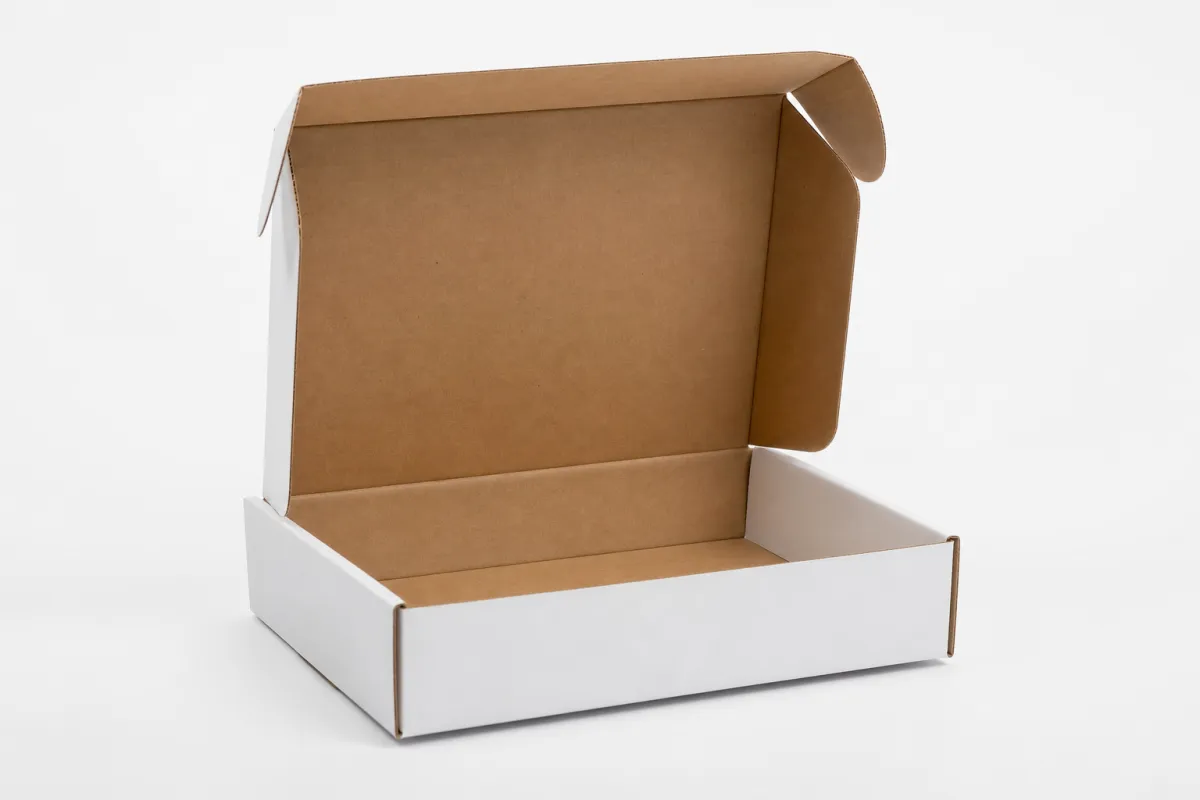
Custom paperboard mailer boxes are folding cartons made from paperboard, cut and scored so they can form a mailer-style package. They are often used for retail packaging, subscription kits, direct-to-consumer orders, and presentation-led product packaging where the box itself carries part of the brand message. Open one that was designed with care and the feeling is immediate: the product looks considered before anyone even touches it.
Material choice is the first real distinction. Paperboard is not corrugated board. Corrugated board includes flutes between liner sheets, which gives it extra crush resistance and a better tolerance for rough shipping. Paperboard is thinner, smoother, and better suited to custom printed boxes where the print surface needs to stay crisp and the load is relatively light. Think of paperboard as the tailored shirt and corrugated as the work jacket. Both belong in packaging. They just solve different problems.
Custom paperboard mailer boxes fit best for products that are compact, light, and not likely to be crushed by a difficult transit lane. Common examples include folded apparel, beauty sets, candles with stable inserts, notebooks, scarves, jewelry, small electronics accessories, and gift kits. Dense or awkwardly heavy items push the format past its comfort zone fast. A prettier box does not become stronger because the design team wanted it to.
The sustainability story is real, provided the spec is sensible. These boxes often use less material than bulkier shipping formats, which can reduce board consumption and shipping cube. They also print efficiently, especially when the layout is planned around the dieline instead of forced onto it. For brands that want packaging to feel intentional without overbuilding the pack-out, custom paperboard mailer boxes offer a solid middle ground.
Right-sizing does a lot of quiet work. A mailer that fits the product closely usually needs less void fill, fewer inserts, and fewer packing adjustments. That means less waste, less storage demand, and fewer returns caused by a product shifting around inside the box. In branded packaging, fit is not a small detail. It is often the difference between thoughtful and careless.
If you are comparing formats, it helps to think of custom paperboard mailer boxes as one part of a packaging system rather than a single decision. You might combine them with tissue, paper wrap, or a molded insert. You might also decide another format from Custom Packaging Products is the better fit if you need a broader mix of retail packaging and shipping styles. The structure should follow the product, not the other way around.
Practical rule: if the product can survive a moderate distribution lane without needing heavy-duty corrugated protection, custom paperboard mailer boxes deserve a serious look. If it cannot, pushing paperboard into a corrugated role usually means paying twice.
That is the real value of the format. These boxes are not just packaging that looks eco-friendly. They balance cost, presentation, and material use in a way that can improve both the brand experience and the pack-out at the same time.
How Custom Paperboard Mailer Boxes Work in Real Packaging
Custom paperboard mailer boxes begin as flat sheets that are printed, cut, scored, and converted into a foldable mailer structure. Closures usually rely on a tuck-in tab, friction lock, or tab-and-slot setup. The process is straightforward, which is part of the appeal. The box folds quickly, stores flat before use, and ships in stacks instead of taking up space as empty cartons. Warehouse teams appreciate that. Freight bills do too.
The production path usually starts with board selection, then dieline work, then artwork. Printing happens before conversion, so the graphics have to align to the finished layout rather than just a mockup on a screen. After that, the box may receive coating or lamination. Common finishes include matte, gloss, soft-touch, and aqueous protection. Each one changes the feel of the surface, how well it resists scuffing, and how much it adds to the final cost.
In practice, custom paperboard mailer boxes work best when the print and finish choices support the product’s use case. A beauty brand may choose a soft-touch finish because it gives the unboxing a tactile, premium feel. A shipping-heavy brand may go with aqueous coating because it helps with abrasion without making the box feel overly coated. A subscription brand with bold package branding may skip special effects and spend its budget on sharper typography, better contrast, and a cleaner structure. Strong packaging design does not always mean more decoration. Sometimes it means knowing when to stop.
Protection is where people tend to overstate what the box can do. The box provides basic structure, but it is not a substitute for proper pack-out planning. If the product shifts, the box will show it. If the item is fragile, you may need a die-cut insert, paper wrap, corrugated support, or a molded tray. Soft goods like apparel usually work beautifully in a paperboard mailer. Glass or dense items need the full system checked, not just the render admired.
That is why custom paperboard mailer boxes are often ideal for apparel, accessories, and lightweight retail packaging, yet less suited to products that need genuine shipping-grade crush resistance. If you are comparing them with a lighter shipping format, it may also make sense to review Custom Poly Mailers for soft goods that do not need a rigid presentation box. Different tool. Different outcome.
Flat storage is a real operational advantage. Before assembly, the boxes use far less room than prebuilt cartons, which can reduce storage footprint and lower inbound freight. That matters for teams managing multiple SKUs or seasonal campaigns. A stack of printed paperboard sheets is easier to store than a mountain of formed boxes. Packaging should make life easier before the product ever reaches the customer. If it only looks attractive on a product page, the job is only half done.
The customer experience ties it all together. Sharp print, crisp edges, a closure that opens with a clean pull, and a fit that feels controlled rather than loose all make the product seem more valuable. That matters especially with custom paperboard mailer boxes, because the material is thinner and the presentation depends on precision more than brute strength. A tidy structure with decent print can look expensive without actually being expensive. That is the point.
Key Factors That Affect Cost, Quality, and Sustainability
Pricing for custom paperboard mailer boxes depends on board thickness, finished size, artwork coverage, coating choice, insert complexity, and quantity. That is the short version. The longer version is that each of those variables can move the unit price in a different direction, and the final quote usually reflects the most expensive combination rather than the prettiest one. Buyers who ask for “just a quote” without specs are really asking someone to guess. Guessing is how invoices become confusing.
For smaller orders, the unit price can feel steep. A short run of 500 to 1,000 units may cost 30% to 60% more per box than a 5,000-piece run, and sometimes more if the artwork or tooling is complicated. Larger orders reduce unit cost, but they also increase inventory risk. If your packaging changes every quarter or your SKU count shifts often, a cheap box bought in bulk can turn into a dusty liability. MOQ is not just a factory number. It is a cash-flow decision.
Here is a practical comparison that buyers can actually use while evaluating custom paperboard mailer boxes:
| Spec | Typical Use | Approx. Unit Cost at 5,000 Units | Tradeoff |
|---|---|---|---|
| 14pt SBS, 1-color print, matte aqueous | Light apparel, stationery, small gifts | $0.32-$0.48 | Low cost, simple branding, moderate durability |
| 16pt C1S, full-color print, matte lamination | Beauty sets, accessories, retail packaging | $0.46-$0.72 | Better print face, stronger presentation, higher finish cost |
| 18pt recycled kraft board, 2-color print | Eco-forward product packaging, gift kits | $0.50-$0.82 | Natural look, good sustainability story, less color pop |
| 16pt board with insert and soft-touch lamination | Premium branded packaging, subscription kits | $0.78-$1.25 | High-touch feel, more cost, more setup |
Those numbers are broad ranges, not a promise. Board selection, freight, print coverage, and regional production differences all affect the quote. Still, the table gives a sensible starting point. If a supplier offers custom paperboard mailer boxes at a price that feels too low, ask what got removed. Usually something important did.
Material choice matters too. Recycled content can strengthen the sustainability story, and FSC-style sourcing is often a smart ask for brands that want traceable paperboard. That said, a board with 100% recycled content is not automatically the best option if it prints poorly or loses enough strength to cause damage. Sustainable packaging is not a reward for good intentions. It is a performance test. The FSC framework is useful when you want a responsible sourcing signal without pretending every board grade behaves the same.
Printing and finishing are where costs rise fastest. Full-bleed graphics are fine, but large ink coverage across every panel, plus specialty coatings, plus inserts, plus custom closures can turn a modest mailer into a premium unit faster than most teams expect. Simple one- and two-color jobs usually stay more affordable. If the brand story can be told cleanly with restrained artwork, custom paperboard mailer boxes often deliver better value than overworked custom printed boxes loaded with effects that few people notice after opening.
Sustainability also depends on the whole system. Right-sizing reduces board use. Better die cuts reduce waste during conversion. Smarter print layouts reduce scrap. Smaller, lighter packs reduce freight weight. Those savings matter more than a polished sustainability statement on a pitch deck. For broader packaging design decisions, it helps to compare the paperboard mailer against other product packaging options before committing to a spec that only looks efficient on paper.
One more detail often gets missed: coating can influence recyclability perception and end-of-life behavior. Aqueous coating is generally easier to live with than heavier plastic lamination if the goal is a cleaner disposal story, though local recycling rules still vary. If you want a baseline reference for municipal recycling basics, the EPA recycling guidance is a useful place to start. It will not design the box for you, which is regrettable, but it will help ground the conversation.
Custom Paperboard Mailer Boxes: Step-by-Step Ordering Process and Timeline
Ordering custom paperboard mailer boxes should begin with the product, not the artwork. Measure the item’s length, width, height, and weight. Measure it with actual packaging in mind, not just the retail dimensions on the spec sheet. If the product ships in tissue, sleeves, inner trays, or protective wrap, include that in the measurement. A box designed around bare product dimensions often ends up too tight once real pack-out materials appear.
After that, ask for a dieline. The dieline is the flat template that shows panel sizes, folds, glue areas, tabs, and bleed zones. Artwork should be built to that template rather than guessed from a mockup. A designer who understands packaging design will check panel orientation, safe zones, and fold locations before calling the job complete. A designer who does not usually discovers the problem after printing. That is the expensive version of learning.
Artwork prep stays manageable if people respect the structure. Keep important text away from folds. Use a 0.125 inch bleed, or about 3 mm, unless the supplier specifies something different. Keep critical details such as barcodes and legal copy inside the safe zone. Use CMYK unless the project calls for a special color system. Resolution needs to be high enough for print; 300 dpi is usually the floor for raster elements. These are not fancy rules. They are the basic requirements for custom paperboard mailer boxes that need to look sharp instead of accidental.
Sampling and proofing should happen in two stages whenever possible. First, a structural sample confirms size, closure, fit, and any insert alignment. Then a printed proof checks color, text accuracy, coating behavior, and visual balance. If the box is part of a larger launch, this is the point where the actual product should go into the sample, not just a foam core stand-in. The box does not care about the render. The product cares about the real thing.
Production timing varies, but a realistic schedule for custom paperboard mailer boxes often looks like this:
- Brief and measurement review: 1-3 business days.
- Dieline creation or confirmation: 2-5 business days.
- Artwork setup and proofing: 3-7 business days depending on revisions.
- Sampling and approval: 5-10 business days if a physical sample is needed.
- Production: often 10-18 business days for straightforward jobs, longer for specialty finishes.
- Freight and final delivery: varies by route, but it still deserves a buffer.
That means a simple job can move quickly, while a customized one with multiple revisions can easily stretch into several weeks. Brands planning a launch around a fixed date should leave room in the schedule. Something always steals time: a color correction, a dieline adjustment, a proof delay, or a freight quote that becomes a small drama. Packaging is rarely late for a noble reason.
Testing standards deserve a mention too. For transit-heavy applications, many teams refer to ISTA procedures or ASTM-based test methods to evaluate drop, vibration, or compression performance. If you want a baseline reference, ISTA testing resources are a sensible place to begin. Not because every job needs a formal lab plan, but because better packaging decisions come from checking the lane conditions instead of guessing them.
Common Mistakes With Custom Paperboard Mailer Boxes
The most common mistake with custom paperboard mailer boxes is poor measurement. A box that is even a few millimeters too tight can warp, crush product edges, or make assembly miserable. A box that is too loose lets the item shift, which leads to scuffing, broken corners, and a cheap unboxing feel. People often blame shipping when the real problem started with the spec sheet.
Another mistake is overdesign. Too many finishes, too much ink coverage, oversized structures, and unnecessary inserts can erase the cost advantage of paperboard very quickly. A buyer may start with the idea of simple branded packaging and end up approving a box that costs more than a lighter corrugated alternative. If the goal is efficient product packaging, keep the design lean enough that the structure still earns its place.
There is also a sustainability trap. Recycled content helps, but not if the box fails in transit and forces a replacement shipment. That extra shipment can erase the environmental gain fast. The greenest box is not the one with the loudest claim. It is the one that arrives intact, does its job, and does not need to be remade. That is why custom paperboard mailer boxes should be tested as a system, not judged by board content alone.
Artwork errors are another classic problem. Text too close to folds gets clipped or distorted. Low-resolution graphics look fuzzy. Barcode placement gets blocked by closures or inserts. Colors that looked fine on screen print darker on board. Packaging buyers usually hate this stage because it feels fussy, then the print run arrives and everyone suddenly cares about the details that were ignored. I have seen that happen more than once, and it is always the same lesson: the tiny stuff is what makes the box feel finished.
Skipping testing is the last major mistake. A sample run can reveal closure issues, scuffing, fit problems, or weak points that no mockup will show. A quick bench test is not glamorous, but neither is a pallet of boxes that refuse to close properly. With custom paperboard mailer boxes, the small things matter because the structure depends on precision.
Reality check: paperboard is a presentation material with shipping benefits, not a shipping tank. If the product lane is rough, the product is heavy, or the closure needs to survive abuse, respect that and Choose the Right format.
One more thing. A good-looking box can hide a poor pack-out. If the product needs crinkled filler, plastic trays, or extra outer protection just to survive, the sustainability story gets shaky. It is better to admit that some jobs need different packaging than to force every SKU into the same box shape because the branding team liked the mockup. Packaging is not a democracy. Physics gets the final vote.
Expert Tips for Better Sustainable Packaging Results
If you want better results from custom paperboard mailer boxes, start by designing for the product first and the brand story second. That does not mean the packaging should be dull. It means the box needs to protect the item, fit the shipping channel, and still leave room for a clear visual identity. Strong packaging design can feel refined without becoming overworked.
Keep the print system lean. One strong idea usually beats five competing ones. A clean logo placement, disciplined typography, and a restrained color palette often outperform a box that throws every effect at the surface and hopes for the best. In branded packaging, clarity usually feels more premium than clutter. Nobody opens a chaotic box and calls it efficient.
Choose finishes with a reason. Soft-touch and matte can elevate premium goods, but they also affect cost and can show handling marks depending on the use case. Gloss can sharpen color and improve scuff resistance, though it may feel less refined for some brands. Aqueous coating is a practical middle ground for many custom paperboard mailer boxes because it adds protection without much drama. Drama belongs in marketing decks, not mailers.
Think through the full pack-out. If the box needs tissue, belly bands, inserts, or a label system, those pieces belong in the sustainability conversation too. A minimal-looking mailer that needs three extra materials is not always more efficient than a slightly more structured box with less filler. Compare the whole system, not one line item. That is how packaging buyers avoid false savings.
Ask better questions of suppliers. A good supplier should want product weight, dimensions, shipping method, storage conditions, and whether the box needs to be assembled by hand or on a line. If all they discuss is price, that is not expertise. That is a quote generator with manners. The best partners for custom paperboard mailer boxes usually care about fit, print method, and end use before they talk numbers.
Here is a quick checklist that usually improves outcomes:
- Match the structure to the product weight: lighter goods can use thinner board; heavier goods need more support.
- Limit finish complexity: use coating or lamination only where handling or moisture makes it worthwhile.
- Test with real inventory: sample a finished box using the actual product, not a stand-in.
- Plan for assembly time: a box that takes twice as long to pack can cost more than it saves.
- Compare formats honestly: if the item is soft and low-fragility, a paperboard mailer may not beat other custom printed boxes or a lighter mailer format on total cost.
If you are still comparing options, it may help to review broader Custom Packaging Products to see where custom paperboard mailer boxes fit relative to other retail packaging and ship-ready choices. The best packaging is rarely the loudest one. It is the one that balances protection, brand impact, and the actual labor required to use it.
What to Do Next Before You Order
Before you place an order for custom paperboard mailer boxes, get the basics locked down. Measure the product accurately. Write down the weight. Decide whether the box should prioritize presentation, shipping strength, or assembly speed. Estimate monthly volume, not just launch volume. A pretty forecast does not help if the reorder point arrives late.
Then ask every serious supplier for three things: a structural sample, a printed proof, and a quote that clearly separates tooling, unit cost, and freight. If those numbers are blurred together, you cannot compare offers properly. That is how buyers end up choosing the wrong option and calling it budget-friendly. It is not budget-friendly if it creates rework.
Compare specs side by side. Look at board grade, coating, MOQ, lead time, insert requirements, and how much assembly effort the pack-out will take. Custom paperboard mailer boxes can be a very efficient choice, but only when the structure, artwork, and schedule line up cleanly. If one of those pieces is off, the box stops being a smart move and starts becoming a compromise.
Check fit with actual product samples before you approve the run. Packaging drawn on paper and packaging packed on a bench are not the same thing. The bench usually wins. If the product is heavy, fragile, or unusually shaped, rethink the format before you lock in a fancy spec that looks great in a render and awkward in production.
For some brands, the answer will be obvious: custom paperboard mailer boxes are the right mix of branded packaging, product protection, and material efficiency. For others, a different format will work better, and that is fine. Good packaging is not about forcing one box style onto every SKU. It is about choosing the right structure for the job, then building it cleanly.
Done well, custom paperboard mailer boxes can make a product feel more deliberate, reduce waste compared with bulky alternatives, and support a stronger unboxing experience without blowing the budget. That is a solid result. Better than solid, really. It means the box is doing real work instead of just sitting there looking expensive.
FAQ
What are custom paperboard mailer boxes best used for?
Custom paperboard mailer boxes work best for lightweight to medium-light products that need both protection and a polished presentation, such as apparel, beauty items, accessories, stationery, and gift sets. They fit well when unboxing matters, but they are not the first choice for heavy or very fragile products that need stronger shipping protection.
How much do custom paperboard mailer boxes cost?
Cost depends on size, board thickness, print coverage, coating, inserts, and quantity. For custom paperboard mailer boxes, simple high-volume jobs can land in a much lower unit-cost range than short-run premium builds, and it is common for short runs to cost 30% to 60% more per box than larger orders.
Are custom paperboard mailer boxes sustainable?
They can be a strong sustainable choice when they are right-sized, sourced responsibly, and printed with sensible finishing. The sustainability value drops quickly if the box is oversized, over-embellished, or causes damage and replacement shipments. A good sustainability claim still has to survive real shipping conditions.
How long does the process take for custom paperboard mailer boxes?
Timeline depends on artwork readiness, dieline work, sampling, and the production queue. Simple custom paperboard mailer boxes may move through in a few weeks, while more customized projects with revisions and finishing steps can take longer, especially once freight is added.
What should I prepare before requesting a quote for custom paperboard mailer boxes?
Have product dimensions, product weight, target quantity, print goals, and any coating or insert requirements ready before you ask for pricing. If you can share a sample product or a close mockup, suppliers can usually recommend a better structure and help you avoid a poor fit on the first pass.

