Buyer Fit Snapshot
| Best fit | Custom Paperboard Packaging Boxes projects where brand print, material claims, artwork control, MOQ, and repeat-order consistency need to be specified before quoting. |
|---|---|
| Quote inputs | Share finished size, material target, print colors, finish, packing count, annual reorder estimate, ship-to region, and any compliance wording. |
| Proofing check | Approve dieline scale, logo placement, barcode or warning zones, color tolerance, closure strength, and carton packing before bulk production. |
| Main risk | Vague material claims, crowded artwork, missing packing details, or unclear freight terms can make a low unit price expensive after revisions. |
Fast answer: Custom Paperboard Packaging Boxes: Design, Cost, Fit should be specified like a repeatable production item. The safest quote records material, print method, finish, artwork proof, packing count, and reorder notes in one written spec.
Production checks before approval
Compare the actual filled-product size with the drawing, then confirm tolerance on folds, seals, hang holes, label areas, and retail display edges. Reserve space for logos, QR codes, warning copy, and material claims before decorative graphics fill the panel.
Quote comparison points
Review material grade, print process, finish, sampling route, tooling charges, carton quantity, and freight assumptions side by side. A quote is only useful when the supplier can repeat the same color, closure quality, and packing count on the next order.
Custom Paperboard Packaging Boxes: Design, Cost, Fit
Custom paperboard packaging boxes do more selling than many brand teams expect. On a shelf or in a shipping carton, the first thing a shopper often notices is not the product itself, but the way the box frames it, protects it, and gives it some visual authority. In press checks, I have seen a carton sell the product before a sales rep said a single word, which is why the box deserves a real packaging conversation instead of a quick price-only decision.
For brands in cosmetics, supplements, food, electronics accessories, and giftable consumer goods, the box becomes part of the product experience. It affects shelf appeal, packing speed, transit performance, and how people judge quality before the package is even opened. If you browse Custom Packaging Products while planning a launch, the best projects usually start with structure and fit, then move into graphics and finish once the practical side is settled. That order matters more than people think.
A good carton does not just hold the item. It helps the product look more credible, more organized, and more worth the price on the shelf.
Custom paperboard packaging boxes: what they are and why they matter
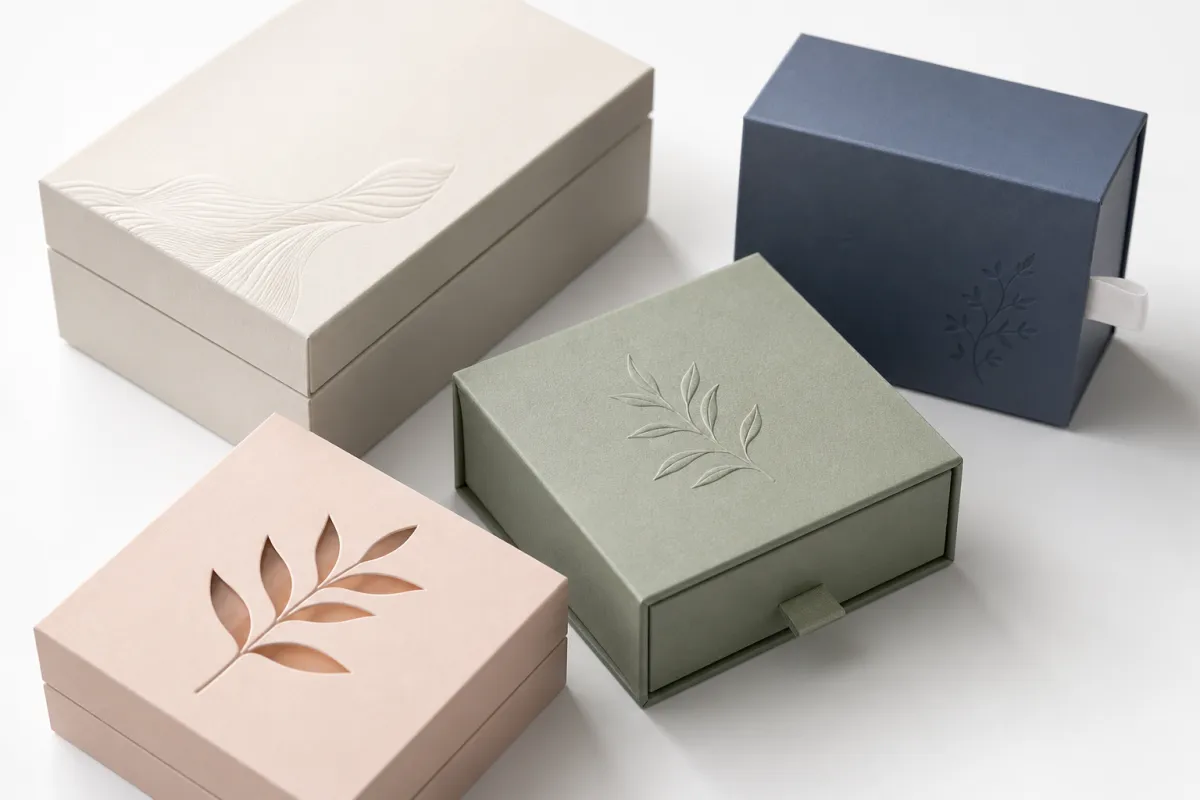
Custom paperboard packaging boxes are foldable Cartons Made From paper-based board stock that can be printed, cut, folded, glued, and finished for retail use. They show up so often because they balance appearance, cost, and production speed in a way many other formats cannot match. A paperboard carton can look polished on shelf, carry clear brand messaging, and still ship flat for efficient storage before assembly.
The difference between custom paperboard packaging boxes and Corrugated Shipping Boxes comes down to structure and purpose. Corrugated board uses fluted medium between liner sheets, so it is built for impact resistance and transit protection. Paperboard cartons are thinner, smoother, and better suited to high-resolution graphics, tight folds, and cleaner shelf presentation. Corrugated is usually the workhorse; paperboard is usually the face of the brand.
That distinction matters more than many buyers realize. A brand might use corrugated mailers or shipper cartons for distribution, then place the product inside custom paperboard packaging boxes for retail display and unboxing. That layered approach gives the company better protection in transit while preserving branding where customers actually see it. It also keeps the retail footprint compact, which can help planograms, shelf facings, and display trays stay orderly.
From a packaging buyer's point of view, custom paperboard packaging boxes solve several problems at once. They can make a lightweight item feel more substantial, help a premium product justify its price, and reduce visual clutter by presenting information in a cleaner layout. That is why so many categories keep returning to paperboard cartons: they are flexible enough for branded packaging, but disciplined enough to stay practical.
The most common reasons brands choose custom paperboard packaging boxes come into view quickly once the box is on shelf:
- Better shelf appeal: smooth printable surfaces handle color, typography, and image detail well.
- Tighter footprints: cartons can be sized close to the product, which reduces wasted shelf space.
- Stronger branding: the box becomes a controlled surface for logo placement, claims, and instructions.
- Improved unboxing: opening sequence, inserts, and internal print can add perceived value.
- Flexible construction: tuck ends, auto-lock bottoms, sleeves, and window cartons all serve different needs.
Materials, finishes, and structure all influence how custom paperboard packaging boxes perform, so the right choice depends on the product and the channel. A cosmetics carton for a boutique shelf does not need the same build as a health supplement carton that will be stacked, handled, and displayed in a busy retail environment. The better starting question is simple: what does the box need to do besides look good?
How custom paperboard packaging boxes are made
The production path for custom paperboard packaging boxes usually begins with a dieline, which is the flat cutting and folding map for the carton. A strong dieline does more than mark folds; it determines how the product sits, how the box closes, where the panel seams land, and whether the packaging design can survive real-world assembly. If the dieline is off by even a few millimeters, the carton may bow, crush, or open too loosely.
Board selection comes next. SBS, or solid bleached sulfate, is often chosen for premium retail packaging because it has a bright white face, good stiffness, and strong print response. CUK, or coated unbleached kraft, gives a more natural appearance and can offer solid strength with a kraft look. Recycled paperboard options are also common, especially when buyers want a lower-virgin-fiber spec or need to align with FSC sourcing goals. If that certification matters to your brand, the FSC standards at fsc.org are worth reviewing early so the specification matches the claim and the paperwork lines up cleanly.
Printing can be done several ways. Offset printing is common for medium and higher volumes because it delivers sharp type, clean solids, and consistent image quality. Digital printing is useful for short runs, test programs, or SKU variation, especially when a brand wants to launch several custom paperboard packaging boxes without committing to large inventory. Specialty embellishments such as foil stamping, embossing, debossing, and spot UV can be added later in the process, but each one introduces setup, registration, and cost considerations that should be planned in advance. If you stack too many effects onto a small carton, the package can start to feel kind of busy instead of premium.
Once the sheets are printed, they move into converting. That is the stage where the flat board becomes an actual carton through die-cutting, scoring, folding, gluing, and any extra steps like window patching or insert construction. The converting room is where a lot of design decisions either hold up or fall apart. If a thumb notch is too small, if a glue flap is too narrow, or if a window opening cuts too close to an edge, the final custom paperboard packaging boxes can become harder to assemble and easier to damage.
Coatings and finishes matter more than many buyers assume. Aqueous coating can improve rub resistance and handling without adding much bulk. Gloss coating makes colors pop and can work well for bright, energetic brands. Soft-touch coating creates a muted, velvety feel that signals premium product packaging, though it can also soften brightness if the artwork relies on high contrast. Matte laminations, spot gloss, and foil accents each change both appearance and cost, so the finish should support the story rather than fight it.
In practice, the board, print, and finish need to be chosen as a system. A delicate finish on a carton that gets handled constantly can wear faster than expected. A heavy coating on a food carton may not suit the look or the regulatory claims. Custom paperboard packaging boxes perform best when the materials match the channel, the product weight, and the amount of handling the box will see between filling and final sale. Recyclability is not automatic either; coatings, window films, and local collection rules can all affect what happens after use, so claims should be checked before they are printed on the carton.
Cost, pricing, and material choices for custom paperboard packaging boxes
Cost for custom paperboard packaging boxes is shaped by a handful of predictable drivers: board grade, box size, print coverage, finish complexity, insert requirements, and order quantity. Most buyers want a simple answer, but pricing is tied to how much material and labor the carton demands. A larger box uses more board. A full-bleed, four-color design uses more press time. Foil, embossing, and specialty coatings add setup and finishing steps. It all adds up.
Volume is usually the biggest lever. Short runs can be practical, especially for launches or seasonal product packaging, but they tend to cost more per unit because setup costs are spread across fewer boxes. Higher quantities lower the unit price because the press, die, and finishing setup are amortized across a larger run. That does not mean ordering more is always smarter. It means the quote needs to be balanced against inventory risk, storage space, and forecast confidence.
To make the pricing picture easier to read, here is a practical comparison for common custom paperboard packaging boxes:
| Carton Type | Typical Board | Common Finishes | Approx. Unit Cost at 5,000 Units | Best Fit |
|---|---|---|---|---|
| Simple folding carton | 14pt to 16pt SBS or CUK | Aqueous coating, one-color or two-color print | $0.18-$0.32 | Lightweight items, basic retail packaging, cost-sensitive launches |
| Full-color retail carton | 16pt to 18pt SBS | Gloss or matte coating, full CMYK print | $0.28-$0.55 | Cosmetics, supplements, consumer goods, brand-forward displays |
| Premium presentation carton | 18pt to 24pt SBS or specialty stock | Soft-touch, foil, spot UV, embossing, windows | $0.55-$1.20+ | Higher-margin products, gift items, branded packaging with strong shelf presence |
Those ranges are not a promise, and they can move based on structure, order quantity, and print coverage. A larger carton may cost more even if the design looks simple. A small carton with heavy embellishment can cost more than a larger plain one. That is why custom paperboard packaging boxes should be priced by structure and finish, not by surface appearance alone.
Structural changes can also move the number in meaningful ways. Thicker board improves stiffness but raises material cost and may require different scoring behavior. Custom inserts, whether paperboard, molded pulp, or foam, add protection and presentation value, but they also increase tooling, assembly, and packing time. A window patch can make the product visible, but it also adds a material step and can slow throughput a little. None of these are bad choices; they simply need to justify themselves.
A practical way to think about budget tradeoffs for custom paperboard packaging boxes is straightforward: spend on the features that help sell the product, protect it, or make filling easier, then simplify the parts that do not move those goals. In many cases, that means choosing one strong visual accent instead of three. It may mean using a smarter dieline instead of a heavier board. It may mean keeping the interior plain and putting the effort into the face panel where customers actually look.
For brands comparing multiple options, cost should be read alongside the use case. A carton that saves five cents per unit but crushes during assembly is not really cheaper. A premium box that increases conversion or supports a higher shelf price may be worth the extra spend. Good packaging buyers think in terms of total value, not just the lowest line item.
Step-by-step process and timeline for custom paperboard packaging boxes
A clean workflow keeps custom paperboard packaging boxes on schedule. The process usually starts with a project brief that defines the product dimensions, target market, quantity, and brand goals. From there, the packaging team develops or refines the dieline, checks product fit, places the artwork, and reviews finish options before any production run begins. The more complete the brief, the fewer surprises later.
Fast decisions help. If you already know the product dimensions, closure style, quantity target, and finish preference, quoting and prototyping move faster. If you can provide a sample product or a fully measured prototype, the packaging supplier can evaluate panel sizes, headspace, and tolerances with far less guesswork. That matters because custom paperboard packaging boxes are only as good as the fit behind the artwork.
Proofing is the stage most teams should treat seriously. A digital proof is useful for layout, spelling, and general placement. A physical proof or pre-production sample is better for checking fit, fold behavior, closure tension, and how the printed color sits on the chosen stock. If a gloss coating makes barcode readability worse, or if a glued seam lands in the wrong place, the proof stage is where those problems should appear. In practical terms, a proof can save a run.
Typical timeline depends on complexity, but a straightforward carton can often move from proof approval to shipment in about 12-15 business days once all files and specifications are locked. More intricate custom paperboard packaging boxes with foil, embossing, inserts, or multiple revision rounds may need longer. Print schedule, converting load, and freight method all matter too. If the order must be air-shipped or cross-docked into distribution, the planning window should widen.
For teams that want a clearer path from idea to finished carton, this sequence tends to hold up well:
- Define the product: measure the item, note weight, and confirm whether an insert is needed.
- Choose the box style: tuck end, reverse tuck, auto-lock bottom, sleeve, or custom structure.
- Select the material and finish: board grade, coating, print method, and embellishments.
- Approve proofing: review dieline, line art, color placement, and fit sample details.
- Run production: printing, die-cutting, converting, packing, and freight coordination.
Testing is smart, especially for products that will be stacked, shipped, or displayed in rough retail conditions. ISTA testing protocols help brands think more clearly about package performance under vibration, drop, and compression conditions, and the guidance at ista.org is useful when the carton needs to survive more than a single handoff. That does not mean every carton must go through formal lab testing, but it does mean the end-use environment should shape the spec.
Common mistakes to avoid with paperboard box specs
One of the most common mistakes with custom paperboard packaging boxes is designing for appearance only and forgetting the physical job the box must do. A carton can look beautiful on screen and still fail if the product rattles inside, the closure pops open, or the box bulges on shelf. Good packaging design starts with fit, then works outward toward graphics and finish. If the structure is wrong, no amount of print polish will save it.
Another issue is choosing a board grade that feels impressive in a sample but cannot support the product in daily use. A lighter board may be fine for a small accessory, but not for a heavy jar, bottle, or stacked supplement pack. Custom paperboard packaging boxes need enough stiffness to survive handling, display, and occasional compression, yet not so much board that folding and gluing become difficult. The right thickness often sits in a narrow band, so sample testing matters.
Artwork mistakes create avoidable delays. Low-resolution files, missing bleed, weak contrast, and fonts that are too small for the panel size can all hurt the final result. Finishes can also change how color reads. Soft-touch coating tends to mute contrast slightly. Foil can pull the eye away from other details if it is overused. Spot UV can look sharp, but only if the layout gives it room to breathe. With custom paperboard packaging boxes, print execution is just as important as the concept itself.
Vague specs are expensive. If the quote says "small retail carton" instead of actual measurements, the supplier has to make assumptions. If the order does not specify insert type, finish, pack style, or freight destination, more revisions follow. That means repeated proofs, extra back-and-forth, and sometimes a change order during production. Clear specifications are one of the easiest ways to protect both budget and timeline.
Skipping end-use testing is also risky. Custom paperboard packaging boxes may look perfect on a desk, then fail later when a line worker has to assemble hundreds of units or a store team stacks them under fluorescent lighting and frequent handling. A good pre-production check should answer practical questions: Does the product fit without forcing the panel? Does the flap stay closed? Does the box still look clean after handling? Those details decide whether the packaging really works.
For brands using custom printed boxes as part of their launch strategy, the safest habit is to test early and then adjust the spec before mass production. That approach can save money, but it also protects brand credibility. A carton that opens badly or wears too soon sends the wrong message, especially in premium retail packaging where the box is expected to reflect the quality inside.
Expert tips for better shelf appeal and performance
Start with the customer experience path. What do they notice first? What information do they need at arm's length? What do they see when the box is rotated? Those questions shape the layout better than any trend. Custom paperboard packaging boxes should guide the eye from logo to product name to key benefit to regulatory copy in a sequence that feels natural, not crowded. Clear hierarchy usually beats decorative noise.
Balance structure and finish with restraint. A carton can feel premium without getting fussy to make. A smart die-line, a well-chosen stock, and one or two targeted embellishments often create more value than piling on every available effect. In many cases, spot gloss on the logo, a single foil accent, or a soft-touch face combined with a clean matte reverse gives the box enough distinction without inflating cost or slowing assembly.
Typography deserves more respect than it usually gets. Clean type on paperboard is not just an aesthetic choice; it affects readability from a shelf, at checkout, and in the hand. Thin fonts can disappear on textured stock. Dark backgrounds can swallow fine detail. Crowded panels can make a package look busy even when the product is strong. For custom paperboard packaging boxes, a tighter hierarchy with fewer competing messages often reads as more premium and more trustworthy.
Sample testing should be part of the plan, not an afterthought. Evaluate how the box opens, how the product sits, whether the closure rebounds after repeated handling, and whether the carton still looks crisp after a few assembly cycles. If the box includes an insert, check that the item does not loosen during vibration or light pressure. That kind of check is basic, but it saves a lot of frustration later. In packaging terms, a sample is cheaper than a complaint.
I have also found that teams make better decisions when they handle the sample under real light, not just under a bright proofing lamp. Retail lighting can flatten color, hide texture, or make foil glare in ways that never show up on a screen. A carton that looks perfect in a file can read very differently once it sits under store LEDs and gets touched a few times.
A few practical rules keep most projects on course:
- Keep the front panel focused: one brand statement, one product message, one visual point of emphasis.
- Use finish where it helps the eye: logo, callout, or image focal point, not every surface.
- Match the board to the product weight: light content can use lighter board, heavier items need more stiffness.
- Plan for handling: if the carton will be touched often, choose coatings that resist rub marks.
- Check the box in real light: retail lighting can change how colors and foil actually appear.
From an operational point of view, the best custom paperboard packaging boxes are the ones that can be filled efficiently, stacked neatly, and presented consistently. That is why packaging teams should think about both the shelf and the line. If the carton looks great but slows packing, the project is only half right. If it fills quickly but looks flat on shelf, it misses the brand story. The sweet spot sits in the middle.
Next steps for your custom paperboard packaging boxes project
If you are planning custom paperboard packaging boxes right now, the first three decisions should be product dimensions, box style, and target budget. Those choices shape almost everything else: board grade, fit, print coverage, and the amount of finishing that makes sense. Without them, quotes can drift and samples can miss the mark.
Gather a product sample, your artwork files, and an estimated order quantity before you request pricing. That one step usually shortens the conversation and improves the quote. It also helps the supplier recommend the right structure more quickly. If you are still undecided, compare at least two versions of the carton so you can weigh shelf impact against cost. Many teams are surprised by how much a small change in structure can affect assembly and presentation.
When you review options from Custom Packaging Products, use a checklist instead of relying on gut feeling alone. Confirm the board stock, finish, insert needs, timeline, shipping method, and any special retail requirements such as hang tabs or barcode placement. The goal is not to make the box complicated. The goal is to make it correct for the product and the channel.
Custom paperboard packaging boxes perform best when the spec is clear, the timeline is realistic, and the box is built around what the product actually needs. Keep the fit honest, choose finishes with purpose, and budget for the features that truly support the sale. If you leave with one rule, make it this: lock the structure before you chase the sparkle, because the right carton spec is what keeps custom paperboard packaging boxes attractive, economical, and easy to run.
What is the difference between custom paperboard packaging boxes and corrugated boxes?
Paperboard boxes are usually thinner, smoother, and better suited to retail presentation, while corrugated boxes are stronger and better for shipping protection. Custom paperboard packaging boxes are typically printed for shelf appeal and package branding, not for heavy transit abuse. Many brands use both: a paperboard retail carton inside a corrugated shipper.
How much do custom paperboard packaging boxes usually cost?
Cost depends on board grade, box size, print coverage, finishes, inserts, and quantity. Simple cartons cost less per unit than premium boxes with foil, embossing, windows, or specialty coatings. Higher volumes usually reduce the unit price because setup costs are spread across more boxes.
How long does it take to make custom paperboard packaging boxes?
Timeline depends on artwork readiness, proof approvals, structural complexity, and production load. A straightforward carton can move faster than a custom structure with multiple finishes or inserts. Fast decisions on dieline, artwork, and quantity help keep the schedule on track.
What paperboard thickness is best for retail packaging boxes?
The best thickness depends on product weight, desired feel, and how the box will be handled on shelves or during assembly. Lighter cosmetics or accessories may use thinner board, while heavier items often need a stiffer grade. Testing a sample is the safest way to confirm fit and rigidity before production.
Can custom paperboard packaging boxes include inserts or special finishes?
Yes, many boxes can be paired with paperboard, molded, or foam inserts depending on product protection needs. Finishes like soft-touch coating, gloss, foil, spot UV, and embossing are common ways to improve presentation. The best choice depends on budget, product protection, and the brand look you want to create; custom paperboard packaging boxes work best when structure, print, and handling all point in the same direction.

