If you are planning a Custom PE Bags Factory bulk order, the first question is rarely whether the bags can be made. The real question is whether they can be made to the right gauge, with the right print, and at a unit cost that still leaves room for margin. That is where polyethylene earns its place: light, adaptable, and good at shielding products from moisture, dust, and surface scuffing without adding much shipping weight.
From a buyer’s perspective, PE is a practical packaging material rather than a prestige one. It can be clear, white, frosted, or tinted. It can be printed, sealed, slotted, punched, or converted into roll stock for automated lines. For many brands, that combination of cost control and functional performance is stronger than moving into heavier laminates or rigid packaging too early.
Why PE Bags Work So Well for Bulk Packaging
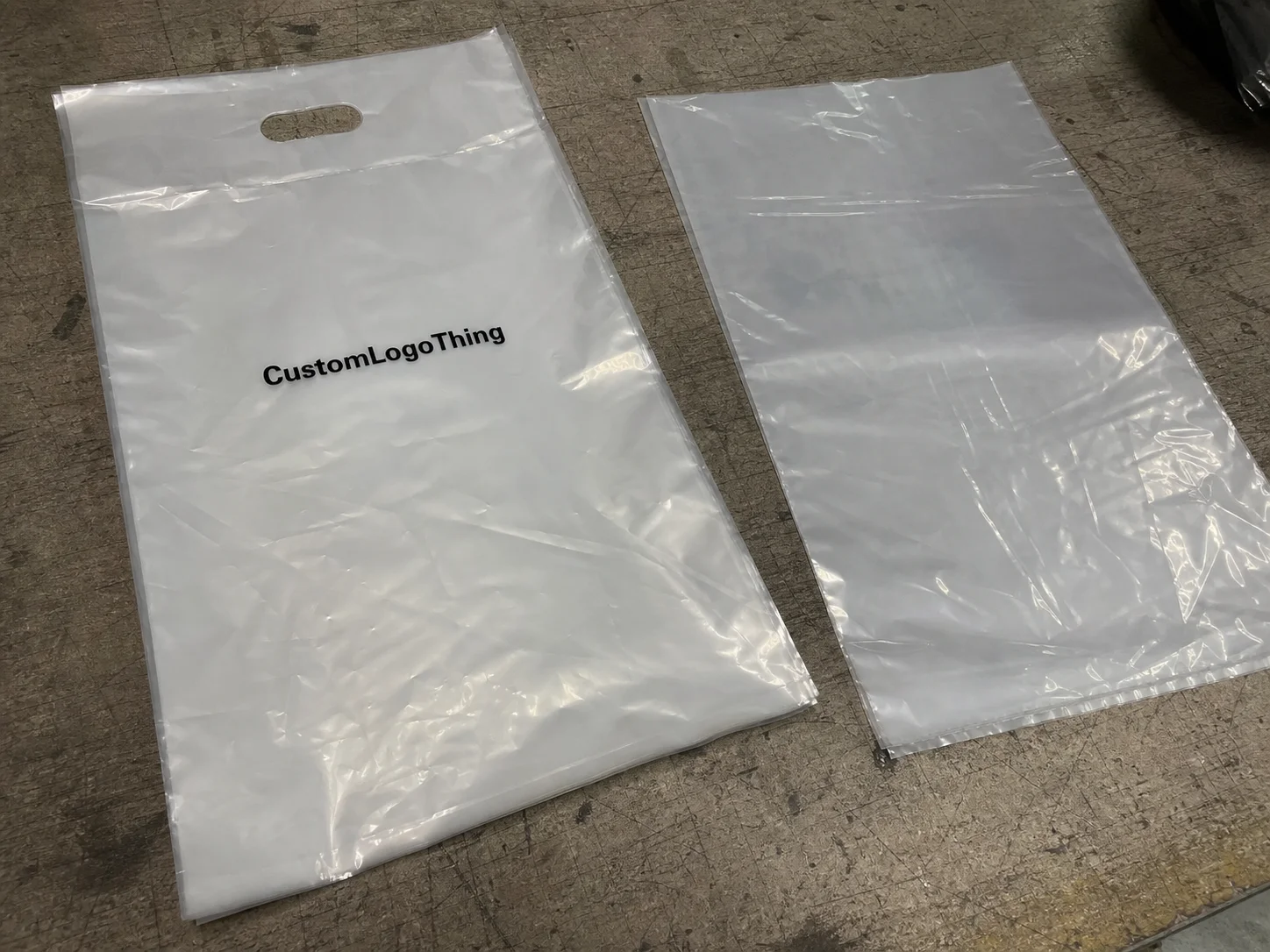
PE bags are common in bulk runs because the material is forgiving in production and predictable in use. In warehouses and packing rooms, bags get dragged across carton edges, stacked in bins, or exposed to a bit of humidity during transit. A properly specified polyethylene bag can handle that kind of treatment without splitting at the seal or becoming brittle.
For apparel, hardware, small parts, mail-order inserts, promotional kits, and many general bundling jobs, PE sits in a useful middle range. It is lighter than paperboard, usually less expensive than specialty laminates, and easier to adapt into branded packaging through print or label zones. Food-contact use is possible too, but only with the correct grade and paperwork. That is one reason the spec sheet matters before anyone asks for pricing.
There are practical differences between LDPE, HDPE, and co-extruded films. LDPE tends to be softer, clearer, and more flexible. HDPE feels crisper and gives a stiffer hand at the same thickness. Co-extruded PE combines layers to balance seal performance, puncture resistance, and appearance, which helps when the product has sharper edges or the print needs a cleaner surface.
“The cheapest quote is not always the lowest total cost. If the gauge is too light or the seal window is too narrow, the price shows up later in returns, complaints, and rework.”
That is why a Custom PE Bags Factory bulk order usually becomes more cost-efficient once the size, thickness, print coverage, and closure style are locked before quoting. Uncertainty pushes suppliers to pad the price, and that rarely works in the buyer’s favor.
Custom PE Bag Types, Prints, and Closure Options
No single PE bag format fits every packing line. Flat bags are common for bundling and retail inserts. Gusseted bags create room for thicker or boxier products. Wicketed bags suit manual and semi-automated packing where speed matters. Resealable zip bags work well for samples, refill items, and parts that will be opened more than once. Header bags and bags on rolls are often chosen for display or higher-volume fulfillment.
Film appearance changes both the look and the handling. Clear bags show the product and suit retail packaging where visibility sells. White film hides the contents and creates a cleaner print field. Frosted PE has a softer visual effect, while tinted film can help with branding or product sorting in warehouses. A slick surface and a matte-feeling surface do not behave the same on a fast packing line, so finish should be chosen with handling in mind, not just aesthetics.
Printing is where packaging starts to carry a visible brand message. Flexographic printing is usually the workhorse for larger runs and straightforward graphics. Gravure can deliver strong consistency and detail for repeat orders, but the tooling cost is higher. For many bulk buyers, one- or two-color printing is the sensible place to stay disciplined, especially when the logo, product code, or compliance text is all the bag needs to carry. Dense artwork can raise cost quickly without improving the package.
Closures and features should match the actual use case. Heat seals work well for tamper resistance and a clean edge. Adhesive strips are practical for mail-order inserts and promotional kits. Zip closures help when the contents need to be resealed. Euro holes, hang holes, perforations, and tear notches matter in retail settings where display and opening experience affect the product’s usability.
One pattern shows up again and again in bulk procurement: when buyers standardize bag dimensions and print placement early, waste drops and packing efficiency improves. That is one reason many brands keep bag sizing aligned with product families instead of ordering a different format for every SKU.
Film Gauge, Dimensions, and Compliance Specifications
The core specification set for PE bags is simple, but each item affects performance. Width, length, gusset depth if needed, film thickness in microns or mils, resin type, print colors, closure style, and packing format all need to be stated. If the bag has to work on a machine, that should be written down too. Automated equipment is less forgiving than a hand-packing station, and even a small dimension error can slow a line.
Film gauge changes more than buyers often expect. Thinner film lowers weight and cost, but it can reduce puncture resistance and make sealing less forgiving. Thicker film gives better body, improved tear resistance, and a more premium feel, though it uses more resin and may require seal adjustments. For heavier kits or sharper products, a few extra microns can be the difference between a bag that holds and one that splits at a corner.
Tolerances deserve attention as well. A bag listed as 12 inches wide is not necessarily exactly 12 inches in every lot, and print placement can shift within accepted limits. Seal strength, ink adhesion, opening direction, and the amount of clearance above the product should all be checked before release. These details matter most when the bag feeds into a machine or has to fit neatly into a carton.
Compliance is where rushed buyers often get caught. Food-contact requirements, REACH, RoHS, ASTM or ISO test expectations, and retail labeling rules can apply depending on the product and market. If recycled content, virgin PE, or a specific declaration is required, say so early. For consumer goods sold through established retail channels, a proper data sheet is far more useful than a vague assurance that the material is “fine.”
For technical buyers, it helps to request a spec sheet or dieline before artwork is finalized. That gives the factory a chance to verify print margins, sealing allowances, and trim lines before the production schedule starts. If you need a reference point for testing and materials discussions, resources from ISTA and EPA can help frame the conversation.
Cost, Pricing, and MOQ Factors That Change the Quote
Pricing for a Custom PE Bags Factory bulk order comes down to a short list of predictable variables. Resin grade is one. Film thickness is another. Then there are bag size, print colors, closure style, quantity, and whether the bags are packed loose, on rolls, or in a specific carton count. Once those points are clear, the quote starts to look rational instead of arbitrary.
MOQ usually follows the setup burden. Flexographic printing requires plates. Gravure needs cylinders. Even a plain converted bag run has machine setup, test sheets, and startup waste. If the artwork is simple and the bag size is standard, the MOQ can stay relatively low. Once the order adds multiple print colors, special closures, or a custom dimension, the minimum quantity usually rises because the setup cost has to be spread across more bags.
Buyers often ask for a quick price range, and the honest answer is that cost swings widely. A standard unprinted clear LDPE flat bag can be only a fraction of the price of a multi-color printed gusseted bag with a zip closure. The raw material difference may look small on paper, but tooling, press time, and conversion steps can multiply the final unit cost. In practice, the most common savings come from keeping the design simple rather than chasing the thinnest possible film.
| Option | Typical Use | Quote Impact | Buyer Tradeoff |
|---|---|---|---|
| Standard clear LDPE flat bag | Simple bundling, inserts, lightweight retail use | Lower | Best cost control, limited visual branding |
| Printed gusseted PE bag | Retail apparel, boxed goods, larger products | Moderate | Better shelf presence, more setup complexity |
| Zip lock PE bag with print | Samples, parts, repeat-open use | Higher | Convenience and resealability, higher unit cost |
| Bags on rolls for automation | High-volume packing lines | Depends on tooling | Improves line speed, requires equipment compatibility |
There are straightforward ways to hold cost down without weakening the package. Reducing print colors helps. Using a common film grade helps. Standardizing dimensions across multiple SKUs helps too. Larger quantities usually lower the unit price because the setup cost gets spread over more bags. By contrast, odd dimensions, heavy ink coverage, and specialized closures can push the price up fast.
Buyers should also ask for a landed-cost view, not only a factory price. Freight, export packaging, customs charges, and domestic delivery can change the final number enough to affect margin. An itemized quote is simply better procurement. It lets you compare unit cost, tooling, carton cost, and transport on the same sheet.
If packaging is part of a broader product presentation system, it can help to decide whether the bag carries the main visual role or whether labels, inserts, or a secondary carton do some of that work. That choice changes how much branding the PE bag needs to carry. A simple bag can still do its job well if the rest of the pack does not ask too much of it.
Most competitive quotes arrive when artwork is finished and the spec is locked. A custom PE bags factory bulk order with missing information often gets padded, because the supplier has to protect against unknowns. That is not a flaw in the process; it is how manufacturing risk gets priced.
Production Steps and Lead Time From Artwork to Shipment
The normal workflow is fairly linear: inquiry, specification review, artwork check, quote approval, proof or sample confirmation, production, inspection, packing, and shipment. If a supplier cannot explain those steps clearly, that is a warning sign. Packaging production is a process business, and schedules become fragile when one stage is handled loosely.
Lead time depends on several variables. Artwork revisions add days. Plate or cylinder preparation adds more. Resin availability can affect the start date, especially on larger runs or during busy production windows. A pre-production sample is sometimes needed, particularly if the bag has a precise fit or a print-sensitive layout. Simple unprinted bags can move faster than multi-color printed orders, while special closures and custom dimensions add setup time.
For planning purposes, buyers should expect a small gap between approval and real output. Even when the factory is busy and organized, the first pieces off the line may need adjustment. That is normal. A rush order can sometimes be handled, but it usually narrows the window for revisions and increases the chance that small errors slip through.
Quality control should not be treated as a final glance at the end of the line. Good factories check incoming material, monitor print alignment inline, verify seal performance, measure bag dimensions, and confirm carton counts before dispatch. In serious production environments, those checks are part of the job rather than an optional extra.
If the bags are traveling a long distance, shipment packaging matters too. Carton strength, palletization, moisture protection, and export labeling all protect the product before it reaches the warehouse. Thin-film bags are especially sensitive to crushed cartons, because the stack can deform and feed poorly later in the packing line.
It also helps to confirm the target ship date, delivery terms, and receiving requirements early. If you need a specific pallet height, a carton count, or dock scheduling support, say so before production starts. Small details like that tend to prevent larger delays later.
How to Evaluate a PE Bag Factory Before You Place a Large Order
Capability matters more than marketing language. Ask what thickness range the factory runs every week, what print methods it actually supports, and how it holds seal consistency across a full lot. A supplier that handles 30-micron work well may not be the right choice for 100-micron packaging, and the reverse can also be true.
Request samples if possible. Look at dimensional accuracy, print registration, color matching, and the consistency of the seal line. Ask which tests are used. Seal strength checks, handling inspection, and carton count verification are basic but meaningful. They say more about operating discipline than a polished sales deck ever will.
Communication matters as well. Buyers often underestimate the value of clean proofing, quick responses, and clear documentation, especially when several people are involved in procurement. If a supplier can explain the spec in plain language and catch ambiguous artwork before production starts, that saves time and money.
Packaging and logistics discipline belong in the evaluation too. Strong cartons, correct palletization, and moisture protection reduce transit damage. For international sourcing, ask how export marks, pallet wrap, and labeling are handled. Those details do not make the packaging prettier, but they affect whether the order reaches your warehouse in usable condition.
In practice, the better factory partner is the one that turns product requirements into manufacturable specs without pushing upgrades you do not need. That kind of honesty is usually a better sign than an overpromised quote.
For buyers who need broader purchasing support, Wholesale Programs can help when a project spans multiple SKUs or packaging formats, and the FAQ page can clear up common ordering questions before the PO is issued.
Next Steps to Place Your Bulk Order Confidently
The cleanest RFQ package is short and specific. Include bag width, length, gusset depth if needed, thickness, film preference, print colors, closure style, quantity, and your destination zip code or port. If you already know whether the bags will be loose-packed or on rolls, include that too. Those details shape the quote more than most buyers expect.
Send artwork in editable vector format whenever possible. If you are matching an existing package, include a sample photo or a physical sample so the factory can compare dimensions, print placement, and visual tone. That is especially useful when the bag is part of a broader packaging design system and must fit with labels, inserts, or custom printed boxes.
Ask for a quote comparison that separates unit cost, tooling, setup, carton cost, and freight. If you want a fair comparison between options, that structure is better than a single lump sum. It shows where the money goes and whether a change in thickness, print count, or quantity actually helps.
Before payment, confirm sample policy, lead time, and approval steps. These three items are where schedules most often slip. Ask the supplier to confirm the final spec in writing before production release. That way, the order is aligned with the real product packaging requirement rather than a loose interpretation.
For many buyers, the practical path is simple: define the spec, verify the print, and place the order after the details are locked. A well-managed custom pe bags factory bulk order should arrive with the right fit, the right finish, and a price structure that makes sense for your margin.
What details do I need for a custom PE bags factory bulk order quote?
Provide bag width, length, gusset depth if needed, film thickness, color, print colors, quantity, and whether you need bags on rolls, loose-packed, or with a zip or adhesive closure. Include artwork files, target shipping destination, and any compliance or food-contact requirements so the quote reflects the real production setup.
What is the usual MOQ for custom PE bags?
MOQ depends on bag size, print method, and whether tooling or print plates are required. Single-color or standard-size orders may support lower MOQs, while multi-color printed bags usually need higher quantities to cover setup costs efficiently.
How long does production usually take after artwork approval?
Simple PE bag orders can move quickly after proof approval, while printed or specialty bags need more time for setup and QC. Lead time is shaped by artwork revisions, tooling, material availability, and the shipping method you choose.
Can PE bags be printed with a logo and still stay cost-effective?
Yes, especially when the design is kept to a manageable number of colors and the order quantity is large enough to spread setup costs. Clear artwork, standard dimensions, and a stable film grade usually help keep printing efficient.
How do I make sure the bags will fit my product properly?
Ask for a dieline or spec confirmation based on your product’s actual dimensions, including any clearance needed for sealing or loading. If the product is heavy, sharp, or irregularly shaped, request a sample or tolerance check before full production.


