Buyer Fit Snapshot
| Best fit | Custom Perforated Carton Sleeves projects where brand print, material claims, artwork control, MOQ, and repeat-order consistency need to be specified before quoting. |
|---|---|
| Quote inputs | Share finished size, material target, print colors, finish, packing count, annual reorder estimate, ship-to region, and any compliance wording. |
| Proofing check | Approve dieline scale, logo placement, barcode or warning zones, color tolerance, closure strength, and carton packing before bulk production. |
| Main risk | Vague material claims, crowded artwork, missing packing details, or unclear freight terms can make a low unit price expensive after revisions. |
Fast answer: Custom Perforated Carton Sleeves: Design, Cost, Uses should be specified like a repeatable production item. The safest quote records material, print method, finish, artwork proof, packing count, and reorder notes in one written spec.
Production checks before approval
Compare the actual filled-product size with the drawing, then confirm tolerance on folds, seals, hang holes, label areas, and retail display edges. Reserve space for logos, QR codes, warning copy, and material claims before decorative graphics fill the panel.
Quote comparison points
Review material grade, print process, finish, sampling route, tooling charges, carton quantity, and freight assumptions side by side. A quote is only useful when the supplier can repeat the same color, closure quality, and packing count on the next order.
A single tear line can change how a carton behaves on a packing floor, on a retail shelf, and in a customer’s hands. I have watched a sleeve that looked immaculate on screen fail in the simplest possible way: it tore crooked, caught on the fold, and turned a premium launch into a slightly embarrassing scramble. That is why custom perforated carton sleeves are not a finishing detail to file away and forget; they are a packaging decision that affects speed, presentation, waste, and the way a buyer reads your brand in the first few seconds.
From a packaging buyer’s point of view, the appeal is plain. One printed paperboard component can open cleanly, reveal a product, support tamper evidence, or convert a transit format into retail packaging without adding a second plastic piece. In the right structure, custom perforated carton sleeves can strengthen package branding while keeping the build simpler than many multilayer alternatives.
That combination carries more weight than it first appears. A sleeve that tears in a predictable way can reduce operator confusion, speed up line-side handling, and make the unboxing feel planned instead of improvised. A sleeve that tears poorly creates the opposite effect: scuffed graphics, wasted cartons, and a customer wondering whether the package was damaged before it ever arrived. Nobody wants that kind of first impression, and nobody wants to explain it to retail partners either.
Custom Perforated Carton Sleeves: Why the Tear Line Matters
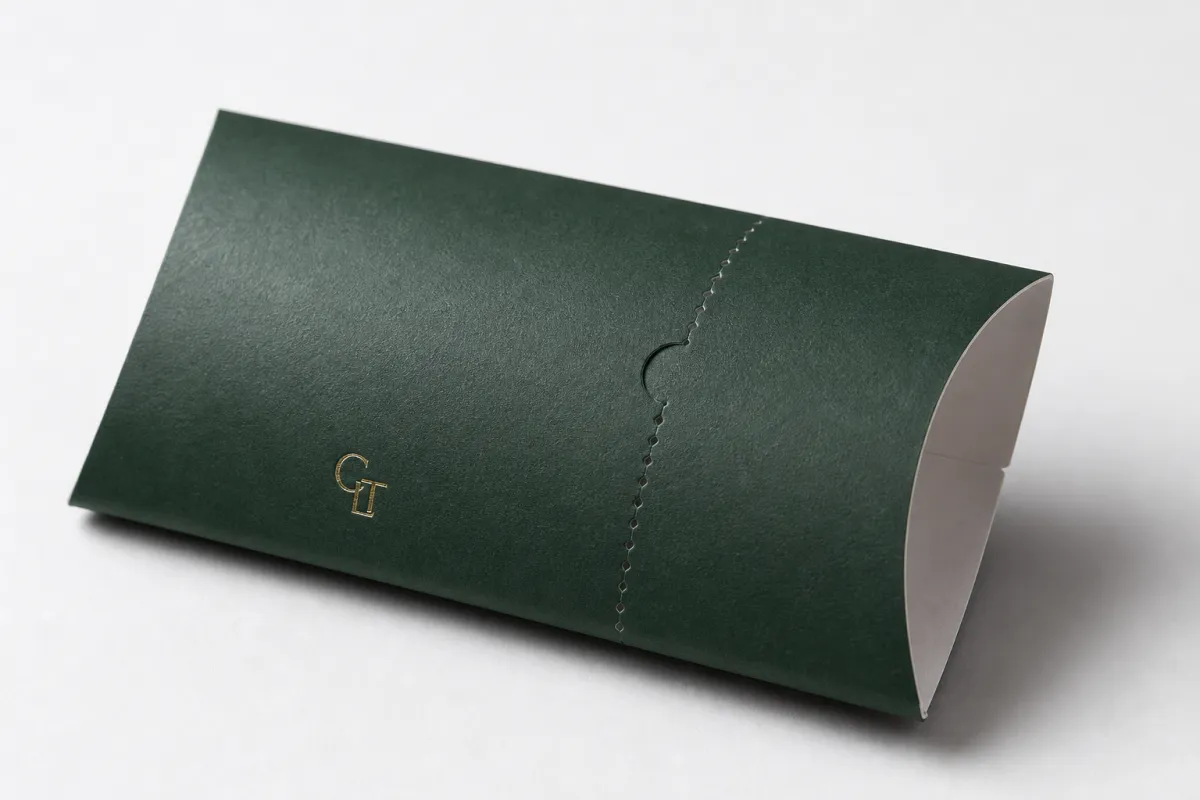
The tear line is the whole story. On paper, a perforation looks like a tiny finishing detail, but in practice it changes how the carton opens, how it displays, and how quickly a team can move through packing or store setup. That is why custom perforated carton sleeves deserve the same level of attention as board grade, print coverage, or glue placement.
In plain language, custom perforated carton sleeves are printed paperboard or carton wraps with engineered tear lines that let the sleeve open cleanly, separate in a controlled way, or convert from transit mode to display mode. The sleeve may wrap around a folding carton, a rigid carton, or a retail-ready tray. Once the perforation is activated, the outer structure can reveal a product window, release a closure flap, or expose shelf-facing graphics without requiring another component.
That is why the format shows up so often in retail packaging, branded packaging, and product packaging where a clean reveal matters. A buyer opening a premium food carton, a personal care pack, or a multi-unit promotional set expects order and control. A torn edge that looks accidental can make even a well-designed carton feel cheap. A purposeful perforation, by contrast, signals that the package was built for use, not just for the spec sheet.
There is also a practical operational reason to care. Retail-ready cartons often need quick access for staff, a visible product story for shoppers, and tamper evidence that does not depend on extra film or a separate tear strip. Custom perforated carton sleeves can handle all three if the structure is planned correctly. That is one reason they show up so often in Custom Printed Boxes and shelf-ready pack designs.
Sustainability enters the conversation early because the sleeve can either simplify the package or add clutter. A well-specified paperboard sleeve can reduce excess material, eliminate plastic add-ons, and support paper-based recovery streams when the substrate, inks, and coatings are chosen with recycling in mind. That does not make every sleeve automatically sustainable, but it does make the format worth serious evaluation. If the sleeve replaces shrink film or a secondary plastic band, the material story gets stronger fast.
"A clean tear is not just about opening the pack. It is part of the product promise."
That is the part many teams miss. The perforation is not a decorative detail sitting outside the design system. It is part of the experience, part of the logistics, and part of the economics. For custom perforated carton sleeves, the line between success and frustration is often measured in millimeters. Sometimes, annoyingly, it is measured in one millimeter and a very expensive phone call.
How Custom Perforated Carton Sleeves Work
The mechanics are simple to describe and tricky to execute. A perforation is a pattern of cuts and ties that directs where the board will tear. The hole size, cut length, tie length, pitch, and placement determine whether the sleeve opens cleanly, resists accidental opening, or demands a deliberate pull from a designated point. On custom perforated carton sleeves, that pattern has to match the board thickness and the package use case.
A useful way to think about it is this: the perforation is a controlled failure point. If it is too weak, the sleeve may pop open during shipping or handling. If it is too strong, operators may have to score it manually or rip it in a way that ruins the graphics. The sweet spot depends on product weight, sleeve dimensions, and the stress it will see in distribution.
Typically, a converter will evaluate how the sleeve interacts with the carton body. The tear line may expose a window, create a front-facing retail panel, or release a closure flap while the structural carton remains intact. In a display application, the perforation can turn a shipper into shelf-ready packaging. In a promotional application, it can guide the buyer toward a reveal sequence that feels deliberate. With custom perforated carton sleeves, the tear path is part of the architecture, not an afterthought.
The manufacturing sequence matters too. Scoring, die-cutting, gluing, and print registration must align so the perforation does not weaken the wrong panel or drift into a graphic area that needs support. If the tear line runs too close to a glue seam, the panel can buckle. If it crosses a critical fold, the board may tear unpredictably. A good dieline prevents that by mapping the tear path before anything is printed.
There is also a workflow question. Some sleeves are applied by hand, some by semi-automatic equipment, and some by fully automated sleeving or cartoning systems. Each method changes the tolerance window. Hand-applied custom perforated carton sleeves can accept a little more variation, but they often need a clearer grip point. Automated systems usually demand tighter dimensional control, more consistent caliper, and more exact perforation placement so the machine can feed reliably.
From a brand perspective, the opening action matters more than many teams expect. A controlled tear feels premium because it suggests the package was engineered, not just assembled. A sloppy tear looks like damage. For package branding, that difference can be enormous. The customer may not know why one carton feels more expensive, but they can feel the difference in the opening motion.
To make the logic easier to compare, here is a simple breakdown of common sleeve behaviors:
| Perforation Behavior | What It Does | Best Use | Risk If Misdesigned |
|---|---|---|---|
| Light tear line | Opens with little force | Retail reveal, display conversion | Accidental opening in transit |
| Medium tear line | Requires a deliberate pull | Consumer-facing opening, tamper-aware packs | Confusing if no tear tab is visible |
| Heavy tear line | Resists opening until activated | Transit protection, line-side handling | Can frustrate operators or customers |
| Segmented tear with pull tab | Guides the user to a start point | Premium product packaging, display packs | Needs precise registration and print alignment |
If the sleeve will travel through distribution, a useful reference point is transit testing. ISTA publishes package test procedures that help brands evaluate how a format performs under vibration, compression, and drop conditions. That matters because a perforation that looks perfect on a sample table may behave differently after real shipping stress. I have seen a design pass a hand tear test and still fail after two pallet moves and a week in a warm warehouse.
For many brands, the design goal is not just opening. It is controlled opening. Custom perforated carton sleeves can protect the product, reveal the product, and support the visual story in one motion. That is a strong piece of packaging design, but only if the tear behavior is planned as carefully as the print.
Key Factors That Affect Performance and Sustainability
Material choice is usually the first lever. Paperboard grade, recycled content, caliper, and coating all affect tear behavior, print quality, rigidity, and recyclability. A 300gsm board may behave very differently from a 400gsm SBS or a high-recycled-content cartonboard. With custom perforated carton sleeves, the substrate has to support both the tear path and the visual finish.
Caliper matters more than buyers sometimes realize. A thicker board can give the sleeve a more premium hand feel, but it may also require a different perforation pitch to tear predictably. If the board is too soft, the tear can wander. If it is too stiff, the opening force can feel excessive. The best result usually comes from matching board structure to product weight rather than choosing the thickest sheet available. Premium does not have to mean overbuilt.
Structural variables come next. Sleeve length, overlap, glue seam position, and perforation location should be set around the carton’s actual dimensions and the product’s real weight. A sleeve that wraps a lightweight cosmetics carton does not need the same tear resistance as a sleeve on a dense food or household pack. Custom perforated carton sleeves work best when the dieline is built from the package outward, not from a graphic concept inward.
Print and finish deserve the same scrutiny. A high-gloss varnish, soft-touch lamination, foil stamp, or dense flood coat can improve shelf appeal, but each choice changes the surface and can complicate repulpability. In some cases, heavy coatings also change how the board tears because they strengthen the surface layer. That does not mean finishes are off limits. It means they need to be selected with the tear line in mind.
That is where sustainability gets more serious than a marketing claim. If a sleeve is paper-based but uses a non-recyclable laminate, a mixed-material adhesive, or excessive coverage that makes recovery harder, the environmental benefit shrinks. The more honest question is whether the sleeve reduces total package mass, eliminates a separate plastic component, or lowers shipping waste. If it does, the format can be a genuine improvement. If it merely shifts material from one layer to another, the claim gets weaker.
For teams that need to back up claims, the EPA recycling guidance is a practical starting point for understanding how paper-based packages move through recovery streams. Local rules still matter, of course, and coatings or adhesives can change the picture. A recycled-content board is not automatically the right answer if the sleeve must hold a sharp tear, maintain shelf stiffness, and survive humid distribution. That tradeoff shows up constantly in real packaging design.
Distribution conditions also matter. If custom perforated carton sleeves will spend time in humid warehouses, refrigerated supply chains, or parcel networks, the design should resist scuffing, crushing, and edge damage without becoming overbuilt. A sleeve can be too delicate, but it can also be too heavy. Overengineering is expensive, and it often creates a worse environmental profile than a right-sized structure.
One useful check is to ask what the sleeve actually replaces. Does it remove an outer shrink wrap, a plastic security band, or a separate display carton? Does it reduce the number of handling steps? Does it allow the pack to move from shipping mode to shelf mode without extra labor? If the answer is yes, the sustainability story becomes more credible because the sleeve is doing real work.
A second check is to ask whether the tear behavior improves user confidence. A buyer who can open the carton in a clean, predictable way is less likely to use knives, scissors, or excessive force. That reduces damage and helps the package look intentional. In that sense, custom perforated carton sleeves support sustainability indirectly by reducing waste from torn goods and rejected packs.
For brands comparing product packaging options, that can be a decisive advantage. The sleeve may look like a finishing choice, but it affects material use, handling, and the quality of the opening experience all at once.
Production Process, Timeline, and Lead Time
A good project starts with the brief, not the artwork. The production path usually runs from concept, to structural dieline, to artwork setup, to prototyping, to testing, to approval, to printing, to converting, and finally to shipment. Custom perforated carton sleeves move smoothly when the structure is defined early, because the converter can build the tear line around the actual carton instead of guessing from a flat design file.
The biggest delays are predictable. Missing carton dimensions, unclear tear-line behavior, late artwork changes, and repeated proof rounds can extend lead time faster than almost anything else. If the team has not decided whether the sleeve should open from the top, side, or front panel, the supplier is forced to pause. Every pause adds time, and custom structures do not benefit from ambiguity. They also do not benefit from last-minute “small” revisions that turn into three more proofs and a weekend of stress.
Prototyping is the cheapest insurance in the process. A physical sample lets the team verify tear strength, shelf fit, machine compatibility, and the look of the reveal after opening. It also exposes problems that are easy to miss on screen: a pull tab that is too small, a fold that interferes with the tear, a graphic that is lost after the sleeve opens. For custom perforated carton sleeves, a prototype is not a luxury. It is usually the fastest way to avoid a much more expensive mistake.
There is a practical planning rule that saves headaches: test the sleeve in the actual packing environment, not just on a sample table. Operators wear gloves, move quickly, work near other cartons, and deal with line speed. A tear line that feels perfect in a quiet sample review may behave differently under production pressure. That becomes even more obvious if the sleeve is meant for automated or semi-automatic application.
Lead time varies by complexity. A simple sleeve with standard board, straightforward artwork, and one proof round may move faster than a complex format with specialty inks, foil, matte lamination, or a more intricate die line. Simple custom perforated carton sleeves might be ready in roughly 12-15 business days from proof approval, while more complex jobs often need additional time for sampling, revision, and line testing. If the project involves multiple stakeholders, that timeline stretches further.
It helps to think in stages:
- Brief and dimension review - confirm carton size, product weight, tear behavior, and packing method.
- Dieline and structural review - verify where the perforation sits relative to folds, glue, and graphics.
- Prototype and sample test - check fit, tear force, and display performance.
- Artwork proofing - lock in registration, ink limits, and panel callouts.
- Production and finishing - print, cut, perf, glue, and pack.
Teams often underestimate how much detail sits inside the phrase "approved sample." For custom perforated carton sleeves, approval should mean more than visual acceptance. It should include a clear answer to these questions: Did the tear open where expected? Did the sleeve hold during handling? Did the graphics remain intact after conversion? Did the pack still look clean on shelf?
If the sleeve is part of a broader rollout, it can help to review it alongside other Custom Packaging Products so the team sees how the sleeve interacts with the rest of the program. The more the structure and graphics are aligned with the wider packaging system, the fewer surprises show up later.
Cost, Pricing, MOQ, and Unit Economics
Price is driven by more than a headline quote. The main cost drivers are substrate grade, print coverage, die complexity, perforation tooling, finishing, and order quantity. For custom perforated carton sleeves, the tear line itself does not usually cost much in isolation. The tooling, setup, and quality control around it are what shape the final number.
MOQ behavior is also easy to misread. Low quantities carry a higher unit cost because setup and tooling are spread across fewer sleeves. Larger runs improve economies of scale, but they also increase inventory risk if the carton changes later. That tradeoff is why a buyer should ask for tiered pricing rather than accepting only one quote. If your forecast is shaky, a big order can look smart on paper and awkward in the warehouse.
Here is a realistic way to think about unit economics for custom perforated carton sleeves. The numbers below are illustrative, not universal, but they mirror the shape of many production quotes:
| Run Size | Typical Unit Price | What Drives It | Best Fit |
|---|---|---|---|
| Prototype / short-run | $1.50-$4.00 | Sampling, setup, small-batch handling | Testing, launches, stakeholder approvals |
| 500-1,000 units | $0.60-$1.20 | Setup spread across a limited run | Pilot programs, regional trials |
| 5,000 units | $0.18-$0.40 | Better press efficiency, lower setup per piece | Established SKUs, repeat campaigns |
| 20,000+ units | $0.10-$0.22 | Scale, material buying power, faster converting | National rollouts, steady demand |
A simple 5,000-piece run on 350gsm SBS with modest print coverage may sit around $0.18-$0.28 per unit, depending on the supplier, while heavier coverage, foil, soft-touch lamination, or a more complex die can push the number higher. That is not because the sleeve is "fancier" in the abstract. It is because every added process step adds labor, material, or production risk.
Prototype cost deserves separate treatment. Sampling is an upfront expense, but it can prevent waste from misfit sleeves, torn perforations, or packaging-line downtime. A failed production run is almost always more expensive than a sample. From a procurement standpoint, that means the cheapest sleeve is not always the lowest-cost option. The better question is whether the sleeve lowers total packaging cost by reducing rework, damage, or packing time.
That comparison becomes more important if the sleeve is meant to replace another component. A sleeve that eliminates shrink film, labels, or an outer carton may justify a higher unit price because it trims labor or material elsewhere. In other words, custom perforated carton sleeves should be judged as part of the full packaging system, not as a line item in isolation.
For teams balancing branded packaging and budget pressure, ask suppliers for pricing at multiple volume tiers. Look at 1,000, 5,000, 10,000, and 25,000 units if the program is likely to grow. That reveals the breakpoints where unit Cost, Lead Time, and inventory exposure change. It also shows whether the economics support a pilot now and a larger rollout later.
One more detail matters: freight and packing method. Sleeves that ship flat usually save space, but if the board is too heavy or the die pattern too complex, the converted pack can eat into savings elsewhere. A full landed-cost view should include freight, warehousing, sampling, spoilage allowance, and any application labor. That is the level at which custom perforated carton sleeves either make sense or fall apart.
Common Mistakes When Specifying Carton Sleeves
The first mistake is placing perforations too close to critical edges, folds, or glue areas. That can cause premature tearing, weak handling strength, or irregular opening. A tear line needs room to behave. If it sits right on top of a structural fold, the board may split in the wrong direction and the package loses its clean reveal.
The second mistake is overdesign. It is tempting to add extra coatings, oversized panels, metallic effects, or decorative features because they look premium in a mockup. Sometimes they help. Often they do not. They can make the sleeve more expensive, heavier, and less recyclable without improving the actual opening experience. With custom perforated carton sleeves, restraint often looks better than excess. A clean structure usually does more for the brand than one more shiny finish nobody asked for.
The third mistake is measurement drift. A sleeve that looks perfect on a screen can shift once folded, glued, and packed. Real carton dimensions should drive the dieline, not estimated numbers from an old spec sheet. If the carton changed by even a few millimeters, the perforation position may need to move. In packaging design, small measurement errors create large consequences.
The fourth mistake is ignoring the user. If the tear path is hard to find, too tight, or too easy to rip accidentally, the sleeve becomes a nuisance for both workers and customers. A retail-ready package has to work for the person stocking it, the person opening it, and the person buying it. That is a lot to ask from one structure, but custom perforated carton sleeves can do it if the opening logic is obvious.
The fifth mistake is assuming paper-based automatically means eco-friendly. It does not. A paperboard sleeve can still use non-recyclable finishes, excessive ink coverage, or adhesives that complicate recovery. The sleeve can also create waste if it requires frequent reprints because the perforation fails. Honest sustainability claims depend on the board, the coating, the print coverage, and the actual material reduction the design achieves.
Another common issue is forgetting how the sleeve will be used after opening. If the design converts into a display pack, does it still stand properly? If it is tamper evident, does the visible tear look neat or messy? If the sleeve is part of custom printed boxes, does the tear disrupt a key logo or product story? Those questions sound basic, but they often decide whether the final pack feels polished.
"A sleeve that saves material but slows the line is not a win. The best design solves more than one problem at once."
That is the mindset to keep. Custom perforated carton sleeves should improve shelf appeal, packing speed, and handling confidence together. If they only improve one of those and damage the others, the project needs another pass. I would rather see a plain sleeve that behaves properly than a beautiful one that forces the operator to wrestle with it every time.
Expert Tips and Next Steps for Your Packaging Team
Start with function, not graphics. Define whether the sleeve must protect, promote, reveal, or speed up packing, then let that answer guide the structure. A sleeve that mainly supports shelf presentation will not use the same perforation logic as a sleeve built for line-side access. Once that purpose is clear, the rest of the brief becomes much easier to write.
A practical test matrix helps a lot. Evaluate tear behavior, fit, print durability, and shelf presentation under real handling conditions before approving full production. Include operator feedback if possible. People packing the product often notice friction points long before the brand team does. With custom perforated carton sleeves, those comments are gold because they show where the design actually slows down.
Ask for a supplier review of the dieline, not just a quote. A strong structural review can save more money than a small unit-price discount because it catches problems before tooling is locked. If a converter suggests moving the tear line, reducing overlap, or simplifying a fold, pay attention. Those changes often improve both performance and cost.
Cross-functional sign-off matters too. Packaging, operations, procurement, and sustainability stakeholders should all review the design so the sleeve does not solve one problem by creating another. Procurement may focus on price, operations on speed, sustainability on material choice, and marketing on package branding. The best custom perforated carton sleeves hold all four concerns together without making any one of them feel ignored.
It also helps to compare the sleeve with other packaging formats before committing. Some brands discover that a sleeve is the right answer. Others find that a different carton structure does the same job with less friction. Reviewing Custom Packaging Products alongside the sleeve concept can clarify whether the program should stay sleeve-based or move toward a full carton redesign.
Here is a simple checklist your team can use before requesting quotes:
- Carton dimensions, including finished fold size and any tolerance range
- Target order volume and likely repeat volume
- Desired opening behavior: easy tear, controlled tear, or display conversion
- Board preference, such as 350gsm, 400gsm, recycled content, or SBS
- Print requirements, including coverage, finish, and any special effects
- Distribution needs, including humidity, compression, or parcel handling
- Sustainability requirements, including FSC sourcing, recyclability goals, or material reduction targets
That checklist looks basic, but it prevents a lot of confusion later. It also helps the supplier quote more accurately, which means fewer revisions and fewer surprises. If the package must go through warehousing or parcel distribution, include those conditions in the brief. If it must sit on shelf for weeks, say that too. Custom perforated carton sleeves are easier to engineer when the real use case is stated plainly.
My final advice is simple: gather carton dimensions, target order volume, desired opening behavior, and sustainability requirements before you request custom perforated carton sleeves. If you can also include a sample carton, a photo of the current pack, and a target shelf image, even better. The more precise the brief, the more likely the sleeve will support the brand, the operations team, and the customer experience at the same time. Start there, and the rest of the project stops being guesswork.
What are custom perforated carton sleeves used for?
They are used to make a carton easier to open, convert, or display while keeping the outer structure clean and controlled. They are common in retail-ready packaging, tamper-evident wraps, promotional cartons, and products that need a crisp unboxing moment. They can also reduce secondary packaging by combining branding, closure, and opening functionality in one paper-based component.
Are custom perforated carton sleeves recyclable?
Often yes, if they are made from paperboard and avoid non-recyclable laminations or heavy mixed-material finishes. Recyclability depends on the specific substrate, inks, coatings, adhesives, and local recycling guidance. Ask for material specifications before assuming a sleeve belongs in a paper stream.
How do custom perforated carton sleeves affect packing speed?
A sleeve with a well-placed tear line can speed up handling by making opening and display changes more predictable. If the sleeve is too tight, poorly die-cut, or inconsistent, it can slow operators and raise waste. The best way to judge speed impact is to test the sleeve on the actual packing line.
What is a typical MOQ for custom perforated carton sleeves?
MOQ varies by supplier, substrate, and print method, but custom sleeve jobs often have a minimum because setup and tooling costs must be covered. Smaller orders usually cost more per unit, while larger runs lower the unit price. Ask for tiered quotes so you can compare inventory risk against per-piece savings.
How long does production usually take for custom perforated carton sleeves?
Timeline depends on artwork readiness, dieline complexity, sampling needs, and production capacity. Simple jobs move faster; more complex sleeve structures, special finishes, or multiple proof rounds extend lead time. A realistic schedule should include sample approval and line testing, not just print production.

