Buyer Fit Snapshot
| Best fit | custom perforation on cartons for packaging buyers comparing material specs, print proof, MOQ, unit cost, freight, and repeat-order risk where brand print, material, artwork control, and repeat-order consistency matter. |
|---|---|
| Quote inputs | Share finished size, material target, print colors, finish, packing count, annual reorder estimate, and delivery region. |
| Proofing check | Approve dieline scale, logo placement, barcode or warning zones, color tolerance, and any recyclable or compostable wording before bulk production. |
| Main risk | Vague material claims, crowded artwork, or missing packing details can create delays even when the unit price looks attractive. |
Fast answer: Custom Perforation on Cartons: How It Works and Costs should be specified like a repeatable production item. The safest quote includes material, print method, finish, artwork proof, carton packing, and reorder notes in one written spec.
What to confirm before approving the packaging proof
Check the product dimensions against the actual filled item, not only the sales mockup. Ask for tolerance on folds, seals, hang holes, label areas, and retail display edges. If the package carries a logo, QR code, warning copy, or legal claim, reserve that space before decorative graphics fill the panel.
How to compare quotes without losing quality
Compare board or film grade, print process, finish, sampling route, tooling charges, carton quantity, and freight assumptions side by side. A lower quote is only useful if the supplier can repeat the same color, closure quality, and packing count on the next order.
Custom perforation on cartons is one of those small structural choices that changes how a package feels the moment someone picks it up. The carton still has to protect the product, survive shipping, and stack properly in the warehouse, but it also needs to open in a controlled way without forcing the customer to reach for a knife or tear through the wrong panel.
That balance matters more than a lot of teams expect. A well-placed tear line can improve product packaging, reduce damage claims, and give branded packaging a more deliberate finish. That is why custom perforation on cartons keeps showing up in subscription boxes, retail packaging, e-commerce shippers, and promotional mailers that need to look polished from first contact to final opening.
Custom perforation on cartons: what it is and why it matters
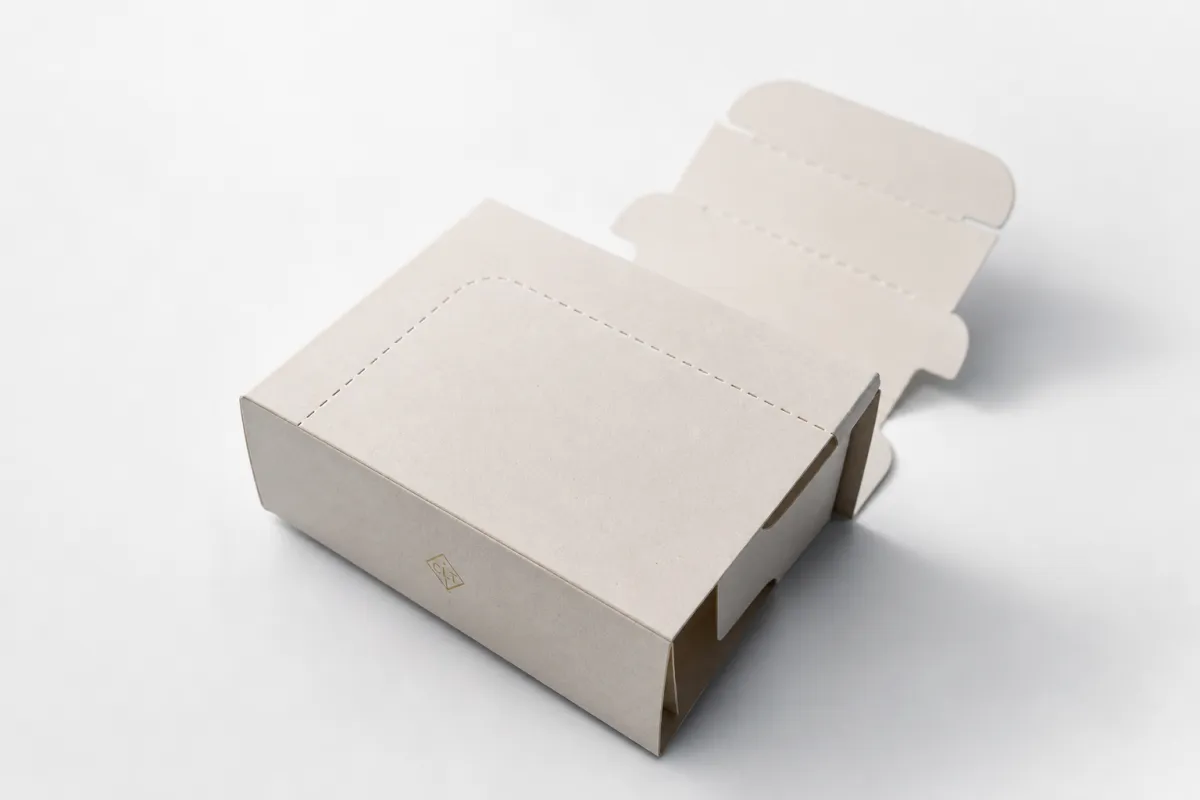
At its simplest, custom perforation on cartons is a controlled line of tiny cuts, bridges, or weakened points that guides the carton along a planned opening path. It is not the same as a score, which compresses the board to help it fold, and it is not a full die-cut opening, which removes material entirely. A perforation leaves enough fiber intact to keep the carton strong during shipping, but not so much that the end user has to fight the package to get inside.
In a warehouse or fulfillment center, that distinction matters a great deal. A carton can be built to hold a product securely, then open cleanly at the consumer end with a thumb pull, a tear strip, or a short access panel. That is why custom perforation on cartons fits subscription cartons that need a neat reveal, retail-ready cartons that double as shelf units, and e-commerce shippers that should open quickly without damaging the contents.
From a packaging buyer's point of view, the business value is pretty easy to see. Faster opening means less frustration. A clean tear path means fewer knife cuts and fewer accidental product damage claims. A controlled opening also supports package branding, because the box presents itself the way the designer intended instead of collapsing into a jagged mess. For custom printed boxes, that first opening can be part of the brand experience, not just a mechanical event.
People sometimes underestimate how much the tear line affects perception. If the tear starts where it should, travels straight, and leaves a tidy edge, the carton feels engineered. If it wanders, feathers out, or stalls halfway through, the whole package feels cheaper than it really was. That is especially true on Premium Product Packaging, where the customer notices every detail, from board finish to the sound the carton makes as it opens.
Practical rule: custom perforation on cartons should be designed around real use, not just the drawing. That means thinking through product weight, how the box is handled, whether it will be opened by hand or with a tool, and whether the carton has to survive rough distribution before the consumer ever touches it.
A good tear line should stay out of sight until the customer needs it, then open with almost no drama.
That is the real job of custom perforation on cartons: stay out of the way during shipping, then do its work cleanly during opening.
How custom perforation on cartons works in production
In converting, custom perforation on cartons is usually created with a die-cut tool, a perf wheel, or a rule set that creates a repeating cut-and-bridge pattern. The exact method depends on the carton style, the board grade, and how the line needs to behave. A light perf may leave a longer bridge for strength, while a more aggressive perf may use shorter bridges so the tear starts with very little force. The goal is not to weaken the entire carton; the goal is to control exactly where the tear starts and how it travels.
Good production teams plan the perforation around the carton structure, not after the fact. That means checking the tear path against folds, glue flaps, locking tabs, print zones, and any corners that need to stay rigid. On custom perforation on cartons, even a few millimeters of movement can change the opening experience. If the line sits too close to a fold, the tear can dive into the crease and become irregular. If it sits too far from the intended opening edge, the customer may pull against the wrong panel and damage the structure.
There is also a difference between a carton that needs to open easily and a carton that must resist abuse. For a subscription carton that is handed directly to the end user, a lighter tear path may be fine. For a shipper that will be stacked, moved, and vibration-tested, custom perforation on cartons often needs a stronger bridge pattern so the line does not fail under compression or impact. That is where experience matters, because a pattern that feels perfect on screen may behave differently once the board is folded, glued, and loaded.
Converters usually check registration carefully so the perf lands in the same place on every piece of the run. If the opening strip is supposed to align with a printed cue or a pull-tab graphic, the die and print must stay in sync. That matters especially on custom printed boxes where the artwork is part of the opening instruction. A misaligned tear line can make the box look sloppy even if the mechanics are technically workable.
Sample testing is not optional in my view. A flat sample can hide a lot of problems. Once the carton is folded, glued, filled, and shipped, the board memory, product pressure, and handling stress all come into play. Custom perforation on cartons should always be tested with the actual packed product, because an empty carton and a fully loaded carton do not tear the same way. One behaves like paper. The other behaves like a loaded structure. That difference can be kinda sneaky if you only look at the dieline.
If you are building a new package structure, it helps to think about the carton as a system rather than a single panel. Our Custom Packaging Products page is often where buyers begin when they need the structure, print, and finishing decisions to work together instead of competing with each other.
Key factors that affect strength, tear behavior, and appearance
The first thing I look at is board grade, because custom perforation on cartons behaves differently on corrugated board, folding carton stock, and coated paperboard. Corrugated usually needs a stronger opening pattern because the flute structure contributes to stiffness and shipping durability. Folding carton board can be more forgiving, but coated stocks may show fiber pull or a rough edge if the perf is too aggressive. The perf depth, bridge spacing, and cut consistency all need to match the material, not just the artwork.
Flute direction and grain direction matter more than many teams expect. Tear behavior tends to follow the path of least resistance, so if the line runs against the grain or across a structural panel, the opening can wander. On custom perforation on cartons, a line that sits perfectly centered on the art may still perform poorly if it fights the board direction. That is one reason seasoned converters keep asking for a flat layout, board spec, and fill direction before they approve a structure.
Product weight is another major factor. A lightly filled mailer may open cleanly with a short finger pull, but a tightly packed carton can build internal pressure that loads the perf before the customer ever touches it. If the carton is stacked in storage, the top-to-bottom compression can also change how the tear line behaves. For that reason, custom perforation on cartons used in retail packaging or fulfillment should be judged under realistic load, not by board thickness alone.
Graphics also play a role. The tear path should not cut through critical logo placement, product copy, legal text, or a barcode that must remain visible after opening. Good packaging design treats the perforation as part of the layout, not a last-minute structural add-on. In branded packaging, that matters because the opening reveal should reinforce the brand message, not interrupt it.
Environmental conditions can change the outcome more than some buyers realize. Humidity can soften board fibers and make a perf tear faster than expected. Cold storage can make paperboard stiffer and less cooperative. Long transit times and repeated handling can loosen the line or add wear to the bridge points. Custom perforation on cartons for cold chain product packaging should be checked separately from room-temperature cartons because the same perf pattern may behave very differently once the board has absorbed moisture or chilled down.
Here are a few standards and references that can be helpful if you are validating shipping performance or fiber sourcing: ISTA testing protocols and FSC certification guidance. They do not replace carton testing, but they give you a practical framework for talking about distribution risk and responsible material choices.
Common field lesson: if the package has to survive a rough journey, custom perforation on cartons should be designed as part of the structure, not as a decorative tear line added at the end.
Custom perforation on cartons process and timeline: from spec to sign-off
The cleanest projects usually start with a simple written spec. For custom perforation on cartons, that spec should name the carton style, the product weight, the tear location, the intended opening method, and the result you want after opening. If the carton must remain resealable, say so. If it should open only by hand, say that clearly. If the customer is expected to pull a strip before accessing the product, the pull direction and strip length need to be stated up front. A one-page brief is often enough to prevent three rounds of back-and-forth later.
The converter will usually want a few concrete details before building a sample: carton dimensions, board type, fill orientation, and whether the perforation sits near a fold, a seam, or a glued edge. Custom perforation on cartons is easier to get right when the team knows how the box will be packed. A box that is packed on one line and opened on another may need a different tear force than a carton filled by hand at a small co-packer. That is why a clean handoff between brand, operations, and packaging supplier saves time.
In a normal run, the timeline often includes structural review, artwork placement, sample making, test opening, and final approval. The slowest step is usually not the converting itself; it is the revision cycle after the first sample. If the tear force is too high, the bridges may be shortened. If the tear is too easy, the line may be strengthened or moved away from a fold. With custom perforation on cartons, each adjustment can affect print registration, board strength, and machine setup, so even a small change may trigger another sample.
That is also why it helps to involve operations early. If the carton will be erected on a machine, the perforation cannot interfere with glue zones or case erecting performance. If fulfillment loads the product automatically, the line must not catch on belts, grippers, or inserts. Custom perforation on cartons that looks perfect in prepress can still slow a line if the opening feature is fighting the way the carton is assembled. The best version is the one that supports throughput instead of disrupting it.
If you want the process to move smoothly, assign one person to own the structural approval and one sample test to serve as the final reference. That avoids the common problem where five people have opinions but nobody owns the decision. In my experience, custom perforation on cartons works best when the approval path is documented and the opening test is signed off before the order is released.
Typical sign-off checklist:
- Confirm the carton style and board grade.
- Confirm the exact tear path and opening method.
- Test the packed sample, not just the flat.
- Approve the visual edge quality after opening.
- Release production only after the trial matches the intended use.
Custom perforation on cartons cost, pricing, and quote drivers
Pricing for custom perforation on cartons is usually driven by setup complexity, board type, run length, and whether the perf can be handled with standard converting equipment or needs a special tool path. A simple tear line on a standard folding carton may add very little to the unit price, while a more complex access panel, pull strip, or multi-point tear system can increase both setup time and inspection time. The carton structure itself matters too, because some designs are easy to run and some require more careful alignment through the press and die station.
One thing buyers sometimes miss is the difference between one-time setup charges and ongoing unit cost. A quote may include a tooling fee, sample charge, or structural setup line item, plus a per-carton price. If you only look at the first number, you can misread the economics. For custom perforation on cartons, the real picture usually shows up once you divide the setup over your expected quantity. A higher setup charge can still be economical at volume, while a very low setup cost can look expensive if the unit price climbs because the line is complicated.
Small design changes can move the quote more than expected. Adding two tear points instead of one can raise setup time. Moving the perf closer to a fold may require tighter control. Increasing bridge length may improve shipping durability but demand more precise tooling. Even the distance between the tear and the printed edge can affect the run if registration has to be held very tightly. This is why custom perforation on cartons is rarely a true commodity feature; it is usually tied to the exact structure and handling goal.
Minimum order quantity matters too. A short run spreads setup across fewer pieces, so the unit cost rises. A larger run usually lowers the cost per piece because the converting time is distributed over more cartons. That is especially relevant for seasonal launches, small-batch branded packaging, and niche product packaging programs where the initial order is modest. In those cases, custom perforation on cartons may still be worth it, but the buyer should expect the economics to look different than a high-volume shipper.
Here is a useful way to compare common approaches:
| Perf style | Typical use | Setup complexity | Typical setup charge | Estimated unit impact at 5,000 pieces |
|---|---|---|---|---|
| Light finger-tear line | Subscription mailers, simple reveal openings | Low | $150-$300 | $0.01-$0.02 per carton |
| Mid-strength access panel | E-commerce shippers, retail-ready cartons | Medium | $250-$450 | $0.02-$0.04 per carton |
| Heavy-duty tear strip | Stacked shipments, tighter distribution, protective cartons | Medium to high | $350-$600 | $0.03-$0.05 per carton |
Those numbers are a working range, not a promise. Actual pricing depends on the board, print coverage, carton size, finishing steps, and how much additional inspection the line requires. Still, the table shows the basic pattern: custom perforation on cartons is usually cheaper when the line is simple, the structure is standard, and the order quantity gives the setup room to amortize.
When you request a quote, ask the supplier to separate structure, sampling, converting, and any special finishing. That makes it easier to compare options fairly and see where custom perforation on cartons adds genuine functional value versus where it is simply adding cost. If a carton needs better opening control, a few cents may be justified. If the perf is decorative only, the spend may be harder to defend.
Common mistakes that make perforated cartons fail
The first failure mode is making the line too strong. That sounds harmless until a customer has to pull twice, reach for scissors, or rip the carton in the wrong place. A tear path that resists opening too much creates frustration, and frustration is usually what people remember. With custom perforation on cartons, the correct opening force is not the strongest one; it is the one that feels intentional and predictable in the hand.
The opposite problem is just as bad: the line is too weak. In that case, the carton may split during transit, fail under stack pressure, or arrive at the customer with the opening feature already damaged. That can expose the contents, hurt presentation, and create avoidable claims. Custom perforation on cartons needs enough residual fiber to survive the distribution path, especially if the carton is part of a protective shipping structure rather than a simple display package.
Poor placement is another common issue. If the tear crosses a structural corner, a glued seam, a seal area, or a critical fold, the carton can lose rigidity long before the opening happens. I have seen cartons look fine in the flat, then behave poorly because the perf landed in a spot that needed to carry load. Packaging design has to respect the mechanics of the board, not just the layout of the artwork. That is why custom perforation on cartons should be mapped to the fold pattern as carefully as the print image.
Skipping sample testing is a mistake that costs more than most people expect. An empty carton and a packed carton are different systems. Once weight is added, the walls flex differently, the tear line sees new stress, and the opening hand feel changes. If the real product has a rigid insert, a glass bottle, a nested tray, or a tightly stuffed textile load, the opening force can shift enough to make a supposedly good design fail. Custom perforation on cartons always deserves a test with the actual product inside.
There is also an appearance issue that gets overlooked. Rough edges, paper dust, or fiber pullout can make a premium carton feel inexpensive the second it opens. That matters in custom printed boxes and retail packaging because the consumer sees the edge, not just the graphics. If the tear line leaves a jagged path, the package can lose a lot of its visual authority even if it performs well structurally.
Good rule of thumb: if a carton opens with surprise, the perf probably was not tuned tightly enough. If it opens with control, custom perforation on cartons is doing its job.
From a quality standpoint, the best failure prevention is simple: verify the board, verify the load, verify the tear path, and verify the edge after opening. That four-part check catches most problems before production locks in.
Next steps for specifying custom perforation on cartons
Start with a one-page brief that names the carton style, product weight, tear location, opening method, and the exact finish you want after opening. That brief should be direct enough that a converter can picture the job without guessing. If you already have a flat layout, include it. If you only have a concept, say that too. Custom perforation on cartons is much easier to quote and engineer when the supplier sees the real structure rather than a loose description.
Then gather a physical sample, a dieline, or both. A real flat lets the converter judge fold positions, glue zones, and panel behavior. If you are planning custom perforation on cartons for a new launch, it is worth asking for a prototype or press sample before production. That sample should be opened by the same people who will pack the product, ship the carton, or receive it on the other end. Their feedback is usually more useful than an internal opinion that has never touched a live carton.
Test the opening force, the visual edge, and the transit durability together. I like that order because it keeps the conversation grounded. A line that feels easy but fails in shipping is not acceptable. A line that survives shipping but frustrates the user is not acceptable either. With custom perforation on cartons, the right answer sits in the middle: easy enough to open, strong enough to protect, clean enough to look intentional.
If your program includes procurement, operations, and creative, get them in the same review loop before you release the order. The brand team may care most about the reveal. Operations may care most about speed and machine compatibility. Procurement may care most about the per-unit cost and minimums. Custom perforation on cartons works best when those needs are visible at the same time, because then the carton can be designed as a complete system rather than a compromise that satisfies only one department.
Here is a compact decision checklist I recommend before sign-off:
- Confirm the board and carton style.
- Confirm the tear path and opening method.
- Confirm the packed sample and opening force.
- Confirm that the edge looks clean after opening.
- Confirm the run plan, quantity, and approval owner.
Once those five items are settled, custom perforation on cartons usually moves into production without much drama. That is the goal: a carton That Ships Well, opens the way it should, and supports the brand without adding unnecessary complexity.
For buyers building a new packaging program, the smartest move is often to start simple, test honestly, and then refine. Custom perforation on cartons does not need to be flashy to be valuable. It just needs to be tuned to the board, the product, and the real handling conditions that the carton will actually face.
Frequently asked questions
What is custom perforation on cartons used for?
It creates a controlled tear path so the carton opens where you want it to, instead of forcing the customer to cut into the package. Custom perforation on cartons is commonly used for access panels, tear strips, subscription packaging, and cartons that need a cleaner opening experience. It can also improve safety and convenience by reducing the need for knives or scissors during unpacking.
Will custom perforation on cartons make the box too weak?
Not if the pattern is sized correctly for the board grade, flute direction, and product load. A well-designed perforation weakens only the opening path, not the carton structure that needs to carry weight and survive shipping. Weakness usually comes from poor placement or an overly aggressive tear pattern, which is why sample testing matters.
How do I choose the right perforation pattern for cartons?
Match the pattern to the carton material, because paperboard and corrugated board do not tear the same way. Consider who will open it, whether by hand or with a tool, and how clean you want the edge to look after opening. Test a sample with the packed product so you can verify the opening force before approving production. That approach is especially useful for custom perforation on cartons used in branded packaging or retail packaging.
What affects the timeline for custom perforation on cartons?
Artwork approval, structural drawing changes, and sample review usually have the biggest impact on timing. If the tear path needs revision after the first sample, expect another round of testing before production release. Having clear carton dimensions and product information ready at the start helps shorten the overall turnaround for custom perforation on cartons.
What should I ask for in a quote for custom perforation on cartons?
Ask for the setup cost, any tooling or sampling charges, and the unit price at your target quantity. Request a breakdown of how board type, quantity, and perforation complexity change the price. Make sure the quote includes the exact carton structure and opening style so you can compare options fairly, especially if you are weighing custom perforation on cartons against other finishing choices.
Custom perforation on cartons is one of those packaging details that pays off quietly: the shipping process stays efficient, the opening experience feels intentional, and the brand gets a cleaner presentation without adding extra parts or gimmicks. If you spec it carefully, test it on the real packed product, and keep the board, tear path, and approval sample aligned, custom perforation on cartons can become a small structural upgrade with an outsized impact on product packaging, retail packaging, and the way people remember your box after it arrives.
The practical takeaway is simple: write the spec, build the packed sample, and verify the tear line under real load before you commit to production. That is the point where custom perforation on cartons stops being a drawing detail and starts doing its actual job.

