Golf caps get four or five hours of sun, sweat, cart dust, and camera time. They sit on players, sponsors, staff, winners, and the person giving the check to the charity director. A custom Performance Golf Caps bulk order is not just merchandise. It is a fit decision, a brand decision, and a deadline-driven production job packed into one SKU.
That sounds dramatic. It is not.
A basic cotton promo cap can survive the registration table. A performance golf cap has to handle heat, UV exposure, repeated adjustment, clubhouse photos, resale expectations, and the slow humiliation of looking cheap by the tenth tee. The difference shows up quickly.
Why bulk performance golf caps beat standard giveaways
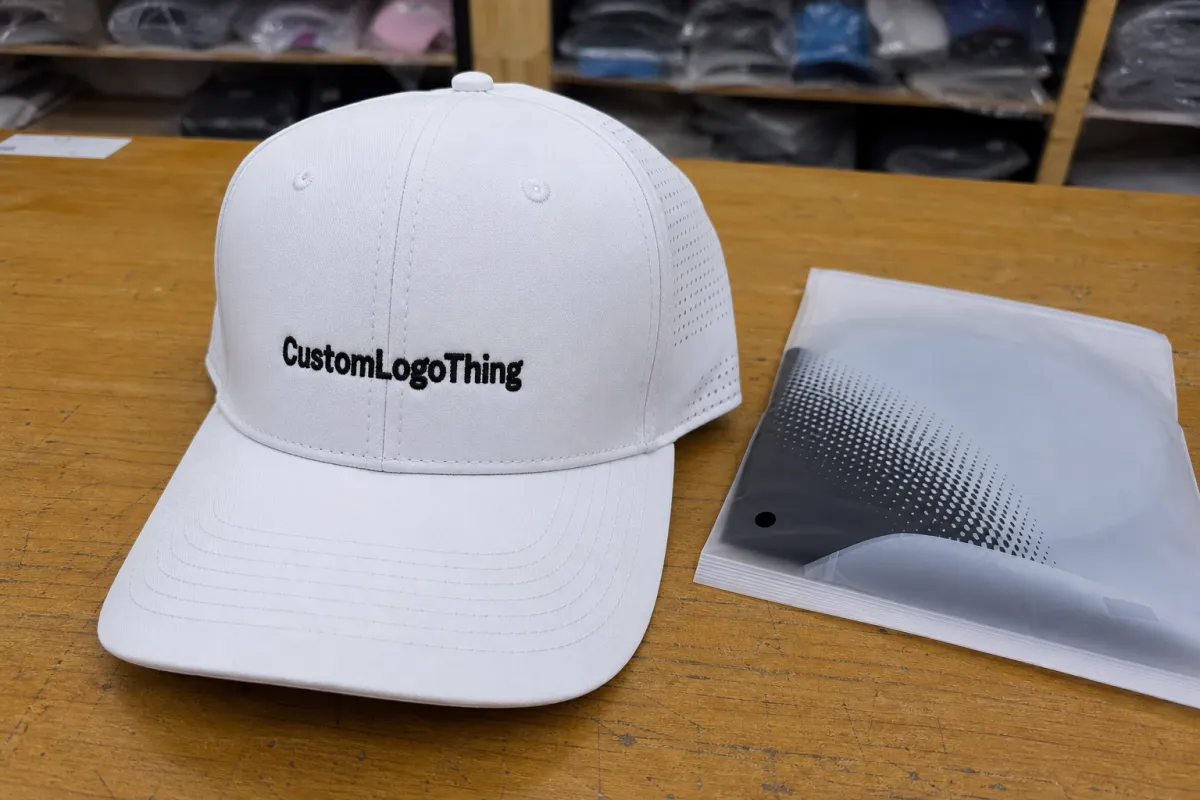
Most promotional items get seconds of attention. A cap gets hours. It also sits at eye level, which makes logo scale, crown shape, and color matching more visible than a sleeve print, drinkware mark, or bag insert.
That changes the buying logic. You are not buying “something with a logo.” You are buying repeated exposure under real use conditions.
Performance caps usually earn more repeat wear than standard giveaways because the materials do actual work. Moisture-wicking polyester, nylon blends, light spandex content, breathable panels, and smoother sweatbands all help. Cotton can feel heavy once it absorbs sweat. Cheap sweatbands stain early. Weak crowns collapse in event photos. Nobody puts that in the product glamour shot, obviously.
Bulk ordering also protects consistency. Golf clubs, tournaments, resorts, corporate outings, charity events, pro shops, and sponsor activations usually need matching colors, predictable fit, clean embroidery registration, and cartons that can be counted fast. Ordering 300 caps in one controlled run is usually safer than stitching together several smaller batches with slightly different navy, thread tension, or brim shape.
Buyer reality: The lowest unit price is not always the lowest cost. If a third of the caps feel awkward, look cheap, or never get worn again, the usable cost per cap climbs fast.
Before approving a custom performance golf Caps Bulk Order, confirm the fabric, crown profile, closure, decoration method, MOQ, pricing drivers, proofing process, production timeline, packaging plan, and delivery deadline. That sounds like a lot. It is still less painful than fixing 600 wrong caps after the sponsor logos are already stitched.
Performance cap details that matter on the course
“Performance” should mean more than a sporty product photo. In cap terms, it usually points to lightweight synthetic or blended fabric, quick-dry behavior, moisture control, breathable construction, and a sweatband that does not feel abrasive after repeated wear.
Common materials include polyester, polyester-spandex, nylon-poly blends, and mesh-back constructions. Some caps use UPF-rated fabrics, but do not assume sun protection from the word performance. Ask for the rating and any supporting documentation if UV protection matters to the program.
The right cap depends on use. A tournament player gift needs comfort, fast distribution, and reliable delivery. Staff uniforms need repeatable color and a spec that can be reordered without drama. Retail merchandise needs better handfeel, cleaner finishing, size planning, barcode thinking, and packaging that fits the pro shop. Sponsor packages may need multiple logo locations. Golf academy apparel may need youth sizing or smaller adult options.
Profile matters more than many buyers expect.
Low-profile caps feel relaxed and retail-friendly, especially for resorts and casual club merchandise. Mid-profile caps are often safer for broad fit acceptance because they suit more head shapes. Structured crowns create a sharper surface for embroidery and patches. Unstructured caps can look premium in a laid-back way, but the artwork cannot depend on a perfectly flat front panel.
Closures change distribution risk. Adjustable snapbacks work well for one-size event handouts. Hook-and-loop closures offer flexible fit, though some buyers see them as less premium. Metal buckle closures look more polished and suit resort or retail programs. Stretch-fit caps create a cleaner look, but they require a size curve. If you need 600 caps for players, volunteers, sponsors, and VIPs, adjustable sizing removes a lot of spreadsheet nonsense.
Sample photos create false confidence. Two caps can look nearly identical online and behave differently after sweat, sun, and repeated wear. Check handfeel, sweatband finish, brim recovery, crown structure, and closure quality before bulk approval, especially above 250 pieces or for any program tied to retail packaging, branded packaging, or broader package branding standards.
Logo placement, decoration, and artwork choices
Decoration is where cap buying gets technical. Flat embroidery works well for club marks, corporate logos, and event names with clean shapes. 3D puff embroidery adds dimension, but it does not love tiny type, fine outlines, or complicated crests. Woven patches hold detail better than thread in dense artwork. Rubber patches create a modern retail look. Heat transfers can work on some performance fabrics, but fabric compatibility and wash expectations need to be checked first.
Performance fabrics can complicate decoration. Slick synthetic surfaces, curved crown geometry, stretch panels, and center seams all affect stitch density, patch adhesion, and logo sharpness. A logo that looks excellent on a custom printed box may not translate cleanly onto a curved cap front. Flat packaging is cooperative. Caps are not.
Front center is usually the highest-confidence placement for primary branding. Side panels work for sponsors, course names, or event marks. The back closure area can carry short secondary text, a website, or a date-free tournament identity. Inside labels make sense for retail or club merchandise programs where product packaging and cap presentation are part of the same brand system.
Logo simplification is both a cost lever and a quality lever. Tiny text, gradients, hairline outlines, and detailed shields often need cleanup before embroidery. If the artwork has six colors and fine internal lines, a woven patch may look better than stitched thread. If the mark is bold and simple, embroidery is often the more economical choice.
Give the supplier vector files, Pantone or thread color references, preferred cap color, logo size, placement notes, and proof requirements. If exact sponsor color is contractual, say so early. If the order needs a physical sample before production, build that time into the schedule. Decoration risks should be flagged before the order is placed, not explained after the cartons arrive.
Specifications to confirm before approving bulk golf caps
Specification discipline is the quiet part of a successful bulk cap order. One vague phrase, such as “navy cap” or “white logo,” can mean different things to procurement, design, event staff, and production.
Navy might mean midnight, royal navy, or a dusty blue-black. White thread might mean bright white, natural white, or light silver under clubhouse lighting. Fun little surprises. Best avoided.
Use a complete spec sheet before quote acceptance. It should list material, crown structure, panel count, brim shape, closure type, sweatband, ventilation, color, size range, decoration method, logo placement, packaging, carton labeling, and shipping requirements. That file becomes the shared reference for pricing, proofing, production, inspection, and final delivery.
- Polyester: common for quick-dry golf caps, broad color availability, and efficient unit cost.
- Nylon blends: light handfeel, useful for warm-weather resort, caddie, and staff programs.
- Spandex blends: better stretch and recovery, good for cleaner fit but less forgiving in size planning.
- Mesh-back styles: strong airflow, practical for charity outings and summer tournaments.
- Recycled materials: useful for sustainability-led programs; confirm claims, composition, and available documentation.
Fit risk deserves its own line item. Adjustable caps simplify one-size distribution. Fitted or stretch-fit caps require a size curve based on audience, reorder plans, and sales channel. A pro shop may need small/medium, medium/large, and large/extra-large units. A one-day corporate outing probably does not.
Packaging and distribution details matter too. Individual polybags reduce handling marks but add material and labor. Bulk carton packing is faster and cheaper. Event-ready sorting can separate player gifts, volunteer caps, sponsor caps, and VIP extras. Retail programs may need hangtags, barcodes, carton labels, or coordination with other Custom Packaging Products.
For buyers building a brand presentation across caps, apparel, custom printed boxes, and retail packaging, specification control keeps the program coherent. The Forest Stewardship Council offers useful context on responsible paper sourcing for related packaging components at fsc.org, especially if hangtags, inserts, or cartons are part of the merchandise plan.
Pricing, MOQ, and unit cost variables buyers should expect
Pricing for a custom Performance Golf Caps bulk order depends on construction, fabric, quantity, decoration method, stitch count or patch type, logo locations, packaging, sampling, freight, and deadline. A basic embroidered performance cap for an outing sits in a different bracket than a retail-ready resort cap with a woven patch, buckle closure, hangtag, and individual packaging.
For many stock performance cap programs, buyers often see broad landed unit ranges from the mid-single digits to the high teens, depending on volume and finish. Premium retail builds, multiple decoration locations, custom trims, or rush freight can push higher. Treat any “from” price without specifications as a hint, not a budget.
MOQ is not a universal number. It varies by blank style, cap color, custom fabric, decoration process, and whether the order uses an existing performance blank or a fully custom build. Stock blanks usually support lower minimums. Custom-dyed fabrics, private-label trims, special closures, and custom woven patches often push minimums higher.
Unit cost usually improves with quantity because setup, digitizing, proofing, machine preparation, and freight spread across more pieces. Very small runs absorb those fixed costs heavily. That is why 48 caps can feel oddly expensive, while 288 or 576 pieces may make more sense for tournaments, clubs, and retail replenishment.
| Order Type | Typical Fit | Common Cost Drivers | Buyer Watchpoint |
|---|---|---|---|
| One-day corporate outing | Adjustable polyester cap with front embroidery | Quantity, digitizing, logo size, delivery deadline | Confirm the in-hand date at least 2-3 weeks before play if possible |
| Club staff uniform | Mid-profile structured cap with repeatable color | Color consistency, reorder plan, sweatband quality | Keep the spec sheet for future reorders |
| Resort retail program | Premium fabric, patch, buckle closure, hangtag | Patch type, packaging, size range, retail finishing | Sample before bulk if margin depends on perceived value |
| Sponsor-heavy tournament | Front logo plus side or back sponsor marks | Multiple locations, artwork cleanup, proof revisions | Collect sponsor approvals before production starts |
For quote accuracy, provide quantity, target delivery date, cap style, color, logo file, decoration locations, packaging needs, shipping destination, and sample requirements. If a budget range is real, share it. A supplier can compare a lower-cost build against a premium option instead of guessing and wasting three rounds of email.
Cost control is usually practical. Reduce logo locations. Choose stock colors. Simplify artwork. Approve proofs quickly. Consolidate shipping. Order a modest overage if replacements, late sponsor additions, or VIP extras are likely. For larger programs, Custom Logo Things can align the cap order with Wholesale Programs so pricing reflects actual volume instead of a one-off purchase.
Production process and timeline from quote to delivery
A clean production process has defined steps: inquiry, product recommendation, quote, artwork review, proof, sample if needed, purchase order, bulk production, quality check, packing, shipping, and delivery confirmation. Skip a step and the risk moves downstream. It may not show up until the caps are already decorated.
Timeline depends on blank availability, custom material sourcing, embroidery digitizing, patch production, proof approval speed, factory capacity, order quantity, inspection requirements, and freight method. Digital proofing is faster because it confirms layout, scale, placement, and general color direction. Physical sampling adds time but improves confidence for retail programs, complex logos, high-value sponsor orders, or strict brand standards.
Late artwork is one of the most common avoidable delays. A buyer can have budget approval, executive approval, and a tournament date locked, then lose several business days because the only logo available is a low-resolution PNG copied from a slide deck. Vector artwork reduces cleanup. Pantone references reduce color debate. One consolidated approval contact reduces revision loops.
Build the schedule backward from the event date. Leave room for internal approvals, proof review, shipping, receiving, sorting, and address issues. Do not schedule delivery for the morning of the tournament. One missed carrier scan can turn a polished sponsor activation into a registration-table scavenger hunt.
As a rough planning guide, simple stock-blank embroidery programs may move in a few weeks after proof approval if inventory is available. Patch orders, custom materials, retail packaging, or physical samples need more time. Rush service may be possible, but it usually narrows style choices and raises freight cost. That is not a moral failing. It is production math.
For shipping and handling expectations, buyers running multi-location programs can borrow some thinking from packaged goods. The International Safe Transit Association publishes testing resources at ista.org. Caps do not need the same protection as fragile goods, but carton labeling, count accuracy, and route planning still decide whether the order arrives usable.
Lead time should be communicated in operational terms: approval points, production dependencies, and shipping assumptions. “Should be fine” is not a timeline. It is a shrug wearing a polo.
Quality checks that prevent expensive cap mistakes
Quality control is financial protection. A flawed cap order can affect sponsor relationships, staff presentation, retail margins, and event-day logistics at the same time. The damage is not only the product cost. It is the rework, replacement freight, apology emails, and credibility hit.
Ask about inspection points before approval. Cap color consistency. Logo placement. Embroidery clarity. Patch adhesion. Brim shape. Stitching. Closure function. Sweatband finish. Loose threads. Packing accuracy. Carton labels. Small checks catch the mistakes buyers remember.
There is a difference between cosmetic preference and production defect. If a buyer expected a flatter crown but approved a structured mid-profile sample, that is a specification issue. If the logo is off-center, thread is fraying, or a patch edge is lifting, that is a production issue. Clear proof files help both sides evaluate the result more objectively.
Sponsor-heavy tournament caps need extra scrutiny. Multiple logos create more chances for placement conflicts, small-text failure, and last-minute revisions from stakeholders who did not review the first proof. A side logo that looked harmless on a flat mockup may compete visually with the main front mark once it is stitched on the cap.
A final approval file should include the cap mockup, artwork scale, decoration method, thread or color references, quantity by color or size, packaging instructions, and delivery address. If retail packaging, hangtags, or branded inserts are included, list those too. The best supplier is not the one that says every request is easy. It is the one that identifies what could fail before inventory is committed.
Next steps to place a clean bulk cap order
Start with the audience. Players, staff, sponsors, volunteers, VIPs, retail customers, and academy students may not need the same cap. Then confirm the event or retail deadline, estimate quantity, select the preferred cap style, gather artwork, define logo locations, and decide whether a sample is required.
Quantity should reflect operational reality. Count players, staff, sponsors, volunteers, speakers, prize winners, board members, media, retail replenishment, damaged goods, and last-minute additions. A 5% to 10% overage can be cheaper than a small reorder, especially if decoration setup and freight repeat.
Send one consolidated request instead of scattered messages. A clean quote depends on scope. Include quantity, cap type, fabric preference, color, logo file, decoration method if known, number of logo locations, delivery city, in-hand date, packaging needs, and budget range if available. If you are also ordering custom printed boxes, inserts, or related product packaging, mention that so brand colors and timing can be coordinated.
Use this quote request checklist:
- Quantity and any size or color breakdown
- Preferred cap type, fabric, profile, and closure
- Logo file, logo locations, and decoration preference
- Delivery city, in-hand date, and event date
- Packaging, carton labeling, or retail requirements
- Sample requirement and approximate budget range
Custom Logo Things can help compare options, control unit cost, verify specifications, and move from quote to production without guesswork. If general ordering questions remain, the FAQ page covers common details before a formal quote request.
A strong cap order starts with clear specs, realistic timing, and a supplier willing to challenge risky assumptions before production begins. Not glamorous. Very effective.
FAQs
What is the usual MOQ for custom performance golf caps in bulk?
MOQ depends on the cap style, decoration method, color, and whether the order uses stock blanks or a fully custom build. Existing performance cap styles usually allow lower minimums than custom-dyed fabrics or private-label construction. For the most accurate quote, provide quantity, logo locations, cap color, and delivery deadline at the start.
How much does a bulk order of performance golf hats cost?
Unit cost is affected by quantity, fabric quality, crown structure, closure type, embroidery or patch complexity, number of decoration areas, packaging, and freight. Larger orders generally reduce per-piece cost because setup, proofing, and production preparation are distributed across more caps. A clean quote should separate product cost, decoration, setup, sampling, packaging, and shipping where applicable.
How long does production take for custom golf caps?
Timeline depends on blank availability, artwork readiness, proof approval, sample requirements, production capacity, order size, and shipping method. Digital proof approval is usually faster than physical sampling, but samples are useful for retail orders, complex logos, and strict sponsor standards. Buyers should plan backward from the event date and avoid treating delivery day as the same day caps are needed.
Which decoration method works best for performance golf caps?
Embroidery is a strong choice for classic club, tournament, and corporate marks with clean shapes and limited fine detail. Woven, rubber, or heat-applied patches can work better for complex crests, small text, modern retail styling, or bold dimensional branding. The best method depends on the cap fabric, logo detail, placement, budget, and desired finished look.
What files are needed to quote custom performance caps?
Vector artwork is preferred because it allows cleaner scaling and decoration setup. Helpful quote details include cap color, quantity, logo placement, decoration method, delivery address, in-hand date, and packaging requirements. If vector files are not available, a high-resolution logo can be reviewed, but artwork cleanup may be needed before production.


