A performance golf cap can look like a $4 promo item in a spreadsheet and a $14 retail-quality brand piece in the hand. Buyers searching for a performance golf Caps Unit Cost breakdown are usually trying to answer one blunt question: am I paying for real product upgrades, or dressed-up sales language?
Sometimes the answer is both. Annoying, but true.
The actual cost comes from fabric, crown structure, sweatband quality, logo decoration, order quantity, packing, freight, and setup work. None of those pieces are mysterious. They just get buried when a quote shows one clean unit price and no detail behind it.
Performance Golf Caps Unit Cost Breakdown: What You Pay For
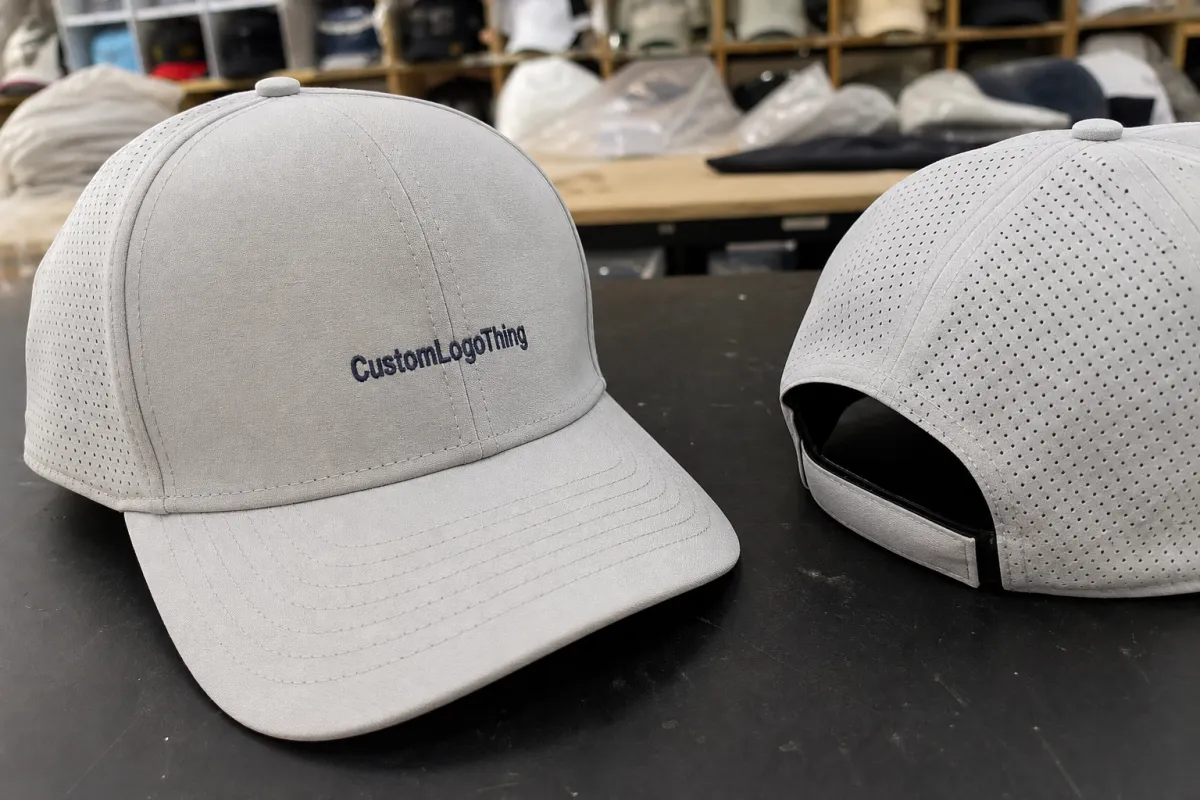
Golf caps are not regular giveaway hats with a sporty label slapped on the invoice. A proper performance cap needs to handle sweat, sun, movement, and repeated wear without turning into a limp souvenir after one hot tournament.
That means lightweight fabric. Breathable panels. A sweatband that does something useful. A visor that keeps its shape. A crown that still looks clean after being tossed into a cart, locker, trunk, or sponsor tote.
A basic polyester cap with flat embroidery is one product. A moisture-wicking cap with laser perforation, a rubber patch, contrast rope, private label, and individual polybagging is another product entirely. Comparing those two by unit cost alone is how bad buying decisions happen. Very common. Very preventable.
A useful cost breakdown separates the cap build from the logo decoration, setup charges, packaging, freight, and sampling. That makes the quote readable. Not one suspiciously round number sitting there like it knows something you do not.
From a branded merchandise buyer’s point of view, the better question is not “What is the cheapest cap?” It is “What cap matches the use case without wasting money?” A one-day charity scramble does not need the same build as a pro shop retail cap. A corporate member gift should not feel like it came out of a bargain bin. People notice. They may not say it politely, but they notice.
Custom Logo Things builds quotes around the actual cap being purchased: fabric, decoration, MOQ, timeline, packaging, and shipping assumptions. That is the only sane way to compare options.
Buyer rule: if two cap quotes are more than 25% apart, assume the specs are not the same until someone proves otherwise.
Fabric, Fit, and Build Details That Change the Price
Fabric is the first major price driver. Lower-cost polyester twill can work for giveaways, especially in higher quantities, and it often lands in the value tier. Better performance poly, nylon-spandex blends, recycled performance fabric, lightweight ripstop, and mesh-back builds all change the feel and the unit cost.
Some upgrades add only $0.40 to $1.25 per cap. Others move the product into a different tier entirely. That is why “performance fabric” needs a little more definition before anyone treats it as a spec.
Performance poly is usually the safe middle ground. It gives you moisture handling, a cleaner decoration surface, and a more golf-friendly hand feel than basic promo polyester. Nylon-spandex blends cost more, but they stretch better and feel more retail. They can also be less forgiving if the cap shape is wrong, because stretch fabric shows construction shortcuts fast.
Recycled performance fabric can add cost, especially if the order needs documentation. If the cap, hangtag, or packaging makes a sustainability claim, sourcing support matters. Do not wing it. For paper trims, hangtags, or certified packaging, programs may need to align with standards from groups like the Forest Stewardship Council.
Crown structure matters more than many buyers expect. Unstructured caps are softer and often cheaper, but they can collapse if the fabric is too light. Semi-structured caps give the front panel a cleaner shape without feeling stiff. Structured caps usually cost more because the front panel needs support, and that support helps embroidery and patches sit flatter.
For golf shops, country clubs, retail-style gifts, and corporate programs, semi-structured or structured builds usually look better in hand. For relaxed member events or casual resort merchandise, an unstructured performance cap can work well. The mistake is choosing structure by price alone.
Closures also affect cost and perceived value. Hook-and-loop closures are economical and practical, but they can feel promotional. Snapback closures are familiar and adjustable. Fitted and stretch-fit styles look cleaner, but they require size planning and can create leftover inventory if the size mix is wrong. Metal buckles add polish. Rope-adjuster styles look sharp on retro golf caps, though they are not always the cheapest option.
Golf-friendly details add cost in small increments that pile up fast: laser perforation, upgraded sweatbands, UV treatment, lightweight lining, pre-curved visors, sandwich visors, contrast underbrims, rope details, and custom seam tape. None of those details are automatically wasteful. The question is whether the wearer will notice or care.
If the cap is for a one-day scramble, do not overbuild it. Use a good stock performance cap, clean embroidery, and practical packaging. If it is for resale, a premium tournament gift, or a sponsor kit, cheap construction will announce itself loudly. It always does.
Logo Decoration Options and Their Real Cost Impact
Decoration is where a cap starts to look branded instead of blank. It is also where budgets get bruised.
The common methods for Performance Golf Caps include flat embroidery, 3D puff embroidery, woven patches, rubber PVC patches, leatherette patches, heat transfer, sublimated panels, and screen printed side details. Each method has a different cost profile, and each one has limits.
Flat embroidery is the best default for many orders. It is clean, durable, familiar, and cost-effective for logos with moderate detail. A simple front logo may add roughly $1.00 to $3.00 per cap depending on stitch count, size, quantity, thread colors, and production location.
Embroidery gets less friendly when a logo includes tiny text, gradients, thin lines, or too many colors. Thread is not a printer. It has limits, despite what the prettiest mockup suggests.
3D puff embroidery gives logos a raised look and can work well for bold marks, initials, and short text. It costs more than flat embroidery and needs enough open space between letters. Fine detail and puff embroidery are not friends. Do not force them to sit together at lunch.
Patches are often the right choice for premium tournament gifts, golf resorts, country clubs, retail merchandise, and brands that want more texture than plain embroidery. Woven patches handle detail better than standard embroidery. Rubber PVC patches add a modern athletic feel. Leatherette patches can look upscale on neutral caps, though they may not suit every performance build.
Patch decoration often adds $2.00 to $5.50+ per cap depending on size, material, attachment method, quantity, and whether a mold or custom shape is required. A small woven patch on a standard shape is one thing. A custom PVC patch with raised detail, tight color matching, and heat-pressed application is another.
Setup fees are boring. They are also real. Digitizing, patch mold fees, artwork cleanup, sampling charges, and color matching can add $40 to $250+ per design, with custom molds sometimes higher. These charges are not glamorous, but they help the logo look like the logo. Funny how buyers tend to appreciate that.
Placement changes the math too. Front center is standard. Side panel, back arch, visor, undervisor, and interior seam tape add labor and sometimes additional setup charges. Two placements can make sense for a sponsor cap. Four placements can make sense for retail. Six placements on a giveaway cap is usually someone losing focus.
The cheapest decoration is only cheap until it makes a $10 cap look like a gas station freebie. A proper quote should show whether decoration is carrying the cost instead of hiding everything inside the product price.
MOQ, Pricing Tiers, and Unit Cost Ranges Buyers Can Expect
MOQ matters because setup work does not care whether you order 48 caps or 500 caps. Artwork review, digitizing, machine setup, proofing, packing instructions, and order admin still happen. Spread those costs over fewer caps and the unit cost looks rude. Spread them over more caps and the math gets civilized.
As a practical range, entry-level Custom Performance Golf Caps may land around $4.50 to $7.50 per unit at higher quantities. Mid-range builds often sit around $7.50 to $12.00. Premium caps with upgraded fabric, custom trims, patches, private labels, or specialty details can run $12.00 to $20.00+ per unit.
Those ranges assume normal commercial decoration and reasonable quantities. Rush freight, complex sampling, unusual materials, exact color matching, and multiple decoration placements can push the price higher.
| Cap Tier | Typical MOQ | Common Build | Estimated Unit Cost | Best Use |
|---|---|---|---|---|
| Entry Performance | 48-144 pieces | Stock polyester cap, flat embroidery, standard closure | $4.50-$7.50 at larger quantities | Golf outings, sponsor giveaways, staff events |
| Mid-Range Performance | 144-300 pieces | Better fabric, semi-structured crown, upgraded sweatband | $7.50-$12.00 | Corporate gifts, member events, better tournament packs |
| Premium Custom | 500-1,000+ pieces | Custom trims, patches, private label, specialty fabric | $12.00-$20.00+ | Retail, resorts, pro shops, premium brand programs |
Stock decorated caps may start around 48 to 72 pieces, depending on the style and decoration method. Better semi-custom options usually make more financial sense around 144 to 300 pieces. Fully custom builds with private label details, custom fabric, specialty trims, or exact color matching often start around 500 to 1,000 pieces.
A quote should break out the blank cap cost, decoration cost, setup charges, sampling, packaging, freight, duties if applicable, and rush handling. If it does not, ask. Bulk pricing can look attractive until freight or tooling fees land late in the process.
Price breaks are not always linear. Moving from 100 to 250 units often creates a visible drop. Moving from 250 to 500 can improve the math again. After that, savings depend on material yields, decoration efficiency, carton quantities, and production scheduling.
Ask for two or three tiered quotes before choosing quantity. Guessing quantity first is how budgets go to die. For a useful performance golf caps Unit Cost Breakdown, compare realistic tiers such as 100, 250, and 500 pieces if those quantities fit the program.
Specs to Confirm Before You Request a Quote
Vague requests produce vague quotes. “Nice golf cap with logo” is not a spec. It is a mood. Useful for Pinterest, not production.
Before requesting pricing, confirm the cap style, fabric, crown structure, visor style, closure, color count, logo size, decoration method, placement, packaging, target quantity, deadline, and shipping destination. That sounds like a lot until you compare three random quotes and realize none of them describe the same product.
- Cap style: unstructured, semi-structured, structured, rope cap, mesh-back, stretch-fit, or fitted.
- Fabric: polyester twill, performance poly, nylon-spandex, recycled fabric, ripstop, or mesh panels.
- Performance needs: sweat-wicking sweatband, breathable panels, UV protection, quick-dry fabric, water resistance, or lightweight lining.
- Decoration: flat embroidery, puff embroidery, woven patch, rubber patch, leatherette patch, transfer, or side print.
- Packaging: bulk pack, individual polybag, size sticker, hangtag, carton sorting, or retail-ready packing.
Artwork matters too. Vector files are preferred because they scale cleanly. Pantone references help if color accuracy matters. Minimum text size should be checked before production, especially for embroidery and woven patches.
Stitch limits, patch size limits, and approval proofs should be discussed early. Not after someone has already promised delivery to the sales team.
For larger or higher-value orders, approve a digital mockup, pre-production photo, or physical sample. Which one makes sense depends on order size, budget, and timeline. A 72-piece rush order may not have time for a physical sample. A 1,000-piece retail program probably should.
Quality-control checks should match the order value and use case. For basic embroidered stock caps, review logo placement, thread color, loose threads, crown shape, and closure function. For premium or custom runs, add checks for patch alignment, color consistency, sweatband attachment, seam strength, visor curve, label accuracy, carton count, and packaging instructions.
Clear specs reduce requotes, prevent decoration problems, and keep unit cost comparisons fair across suppliers. They also shorten the back-and-forth that makes simple orders feel like tax season.
Production Process and Timeline From Artwork to Delivery
The production flow is simple on paper: quote request, spec confirmation, artwork review, digital mockup, sample or pre-production approval, bulk production, quality control, packing, and shipping. The trouble starts when buyers assume the clock started before the order was actually approved.
Artwork approval is the real starting line. Not the meeting where someone said “looks good.” Not the email where the logo was attached as a blurry PNG. Final art, cap specs, quantity, payment terms, and shipping details need to be approved before production timing means anything.
Stock decorated caps may take 7 to 15 business days after final artwork approval. Custom performance builds often take 25 to 45 days. Complex import programs can take 45 to 75 days depending on sampling, freight, material availability, and factory capacity. Those ranges are normal. They are not scare tactics.
Rush production may be possible for stock caps with simple embroidery, but it usually limits cap choices, decoration methods, proofing time, and quality control. Rush freight can also wreck the budget quietly. A cap that was supposed to cost $8.50 feels different once air freight gets involved.
Shipping choices should be discussed early: domestic ground, air freight, ocean freight, split shipments, and event-date planning. For international programs, freight and duties can move the final cost per piece more than buyers expect. For event orders, split shipping can be smarter than waiting for every carton to be ready.
For packaging and transit planning, standards from groups like the International Safe Transit Association are useful reference points, especially when caps are part of larger sponsor kits or retail shipments. Caps are not glassware, but crushed crowns and sloppy cartons still create real problems.
Build in buffer time for tournaments, golf outings, sponsor kits, and retail drops. Caps arriving one day late are not “almost fine.” They are inventory. Expensive, beautifully decorated inventory.
Common Buying Mistakes That Inflate Cap Costs
The first mistake is comparing quotes without matching specs. A structured cap with a rubber patch and premium sweatband should not be compared to a basic polyester cap with flat embroidery. That is not shopping. That is spreadsheet theater.
The second mistake is choosing decoration before checking logo complexity. Tiny type, gradients, thin icons, and detailed crests can force a more expensive patch or a simplified design. Better to know that before the logo is promised to five sponsors.
The third mistake is ordering too few units to “test” when the buyer already knows more will be needed. Small orders are useful for real testing. They are not useful for pretending setup charges do not exist. If the program needs 500 caps over three months, ask for pricing that reflects that plan.
The fourth mistake is ignoring packaging. Individual polybags, size stickers, retail hangtags, custom labels, and carton sorting all add cost. They can also save labor for resale, event distribution, staff uniforms, and sponsor kits. Packaging is not free, but chaos is not free either.
The fifth mistake is approving a mockup without asking about actual thread, patch, or fabric color. Screens lie. They do it confidently. Request thread charts, patch material references, Pantone targets, or pre-production photos if color matters.
The sixth mistake is treating every cap like it has the same audience. A sponsor giveaway needs clean branding and reasonable wearability. A staff uniform cap needs comfort, repeat ordering, and consistent color. A retail cap needs better finishing, better packaging, and a design people would actually buy with their own money. Different jobs. Different costs.
Custom Logo Things prevents these problems by quoting from specs, recommending decoration based on the logo, showing quantity tiers, proofing before production, and discussing tradeoffs directly. A strong cost breakdown should help you decide, not bury the decision under vague product language.
Next Steps to Get an Accurate Golf Cap Quote
Start with the use case. Is the order for a giveaway, staff uniform, sponsor kit, member gift, retail shelf, or premium tournament package? That answer controls how much quality you need and where you can save money without making the cap feel cheap.
Then gather the practical details: cap type, preferred fabric, decoration style, quantity tiers, logo artwork, deadline, shipping location, and packaging requirements. If the decoration method is undecided, say that. A supplier can often save money by resizing a logo, reducing thread colors, increasing patch size slightly, or moving from embroidery to a woven patch.
Ask for good-better-best options instead of one quote. Compare an economical embroidered cap, a mid-range performance build, and a premium patch cap. That gives you a real buying choice instead of one number and a shrug.
Separate the event date from the in-hand date. The tournament is not the deadline. The deadline is when the caps need to be sorted, packed, handed to sponsors, shipped to stores, or staged with the rest of the merchandise. That may be three to seven days earlier than the event.
For the most useful performance golf Caps Unit Cost breakdown, send specs, artwork, quantity range, packaging needs, shipping destination, and deadline together. The quote will be cleaner, faster, and much harder to misunderstand.
FAQ
What is included in a performance golf caps unit cost estimate?
A proper estimate should include the blank cap or custom cap build, logo decoration, setup fees, packaging, freight, and any sampling charges. If the quote only shows one number with no explanation, ask what fabric, decoration method, MOQ, and shipping assumptions were used. For fair comparison, request the same specs from each supplier instead of comparing random cap styles.
How much do custom performance golf caps usually cost per unit?
Basic decorated performance caps often range from $4.50 to $7.50 per unit at larger quantities. Mid-range caps with better fabric, structure, and embroidery often range from $7.50 to $12.00 per unit. Premium builds with custom trims, patches, private labels, or specialty materials can run $12.00 to $20.00+ per unit. Rush freight, multiple logo placements, sampling, and special packaging can raise the final cost.
What MOQ should I expect for branded golf caps?
Stock decorated caps may start around 48 to 72 pieces depending on the style and decoration method. Semi-custom performance caps often make better financial sense around 144 to 300 pieces. Fully custom golf caps with special fabric, labels, trims, or color matching usually start around 500 to 1,000 pieces.
Does embroidery or a patch cost more on performance golf caps?
Flat embroidery is usually the most cost-effective decoration for simple logos and medium quantities. Woven, rubber PVC, leatherette, or embroidered patches usually cost more but can create a more retail-ready look. Complex logos may work better as patches because tiny text and fine detail can become messy in embroidery.
How fast can performance golf caps be produced and delivered?
Stock caps with basic embroidery may take 7 to 15 business days after final artwork approval. Custom performance caps usually take 25 to 45 days depending on sampling, materials, and decoration complexity. More complex import programs can take 45 to 75 days. Rush orders may be possible, but they usually limit cap choices and can increase unit cost or freight cost.


