Buyer Fit Snapshot
| Best fit | Custom Plant Based Poly Mailers projects where brand print, material claims, artwork control, MOQ, and repeat-order consistency need to be specified before quoting. |
|---|---|
| Quote inputs | Share finished size, material target, print colors, finish, packing count, annual reorder estimate, ship-to region, and any compliance wording. |
| Proofing check | Approve dieline scale, logo placement, barcode or warning zones, color tolerance, closure strength, and carton packing before bulk production. |
| Main risk | Vague material claims, crowded artwork, missing packing details, or unclear freight terms can make a low unit price expensive after revisions. |
Fast answer: Custom Plant Based Poly Mailers: Sustainable Packaging should be specified like a repeatable production item. The safest quote records material, print method, finish, artwork proof, packing count, and reorder notes in one written spec.
Production checks before approval
Compare the actual filled-product size with the drawing, then confirm tolerance on folds, seals, hang holes, label areas, and retail display edges. Reserve space for logos, QR codes, warning copy, and material claims before decorative graphics fill the panel.
Quote comparison points
Review material grade, print process, finish, sampling route, tooling charges, carton quantity, and freight assumptions side by side. A quote is only useful when the supplier can repeat the same color, closure quality, and packing count on the next order.
Custom plant based poly mailers are getting real attention for a simple reason: they let brands move away from fully fossil-based film without giving up the low weight, fast sealing, and shipping efficiency that make mailers so useful in the first place. In practice, custom plant based poly mailers are still shipping mailers. The difference is in the resin story, where some portion of the polymer feedstock comes from plants rather than petroleum, while the package still has to survive sortation, abrasion, compression, and the occasional rough toss that every parcel network seems to dish out.
That tension is where the useful conversation starts. A packaging buyer usually reaches for custom plant based poly mailers when the product is soft goods, apparel, accessories, or another item that does not need the crush protection of corrugated boxes. A brand team sees another advantage too: a broad printable surface that can carry a strong visual identity, much like Custom Printed Boxes or other retail packaging that helps the parcel feel intentional the second it lands on a doorstep.
The sustainability language needs caution. A mailer can be plant based, bio-based, recyclable, or compostable in different ways, and those words do not mean the same thing. A buyer sourcing custom plant based poly mailers for branded packaging should understand the film structure, the claim language, and the actual disposal route before placing a large order. Skipping that step is how well-meaning packaging programs end up with vague labels and confused customers.
What Custom Plant Based Poly Mailers Actually Are
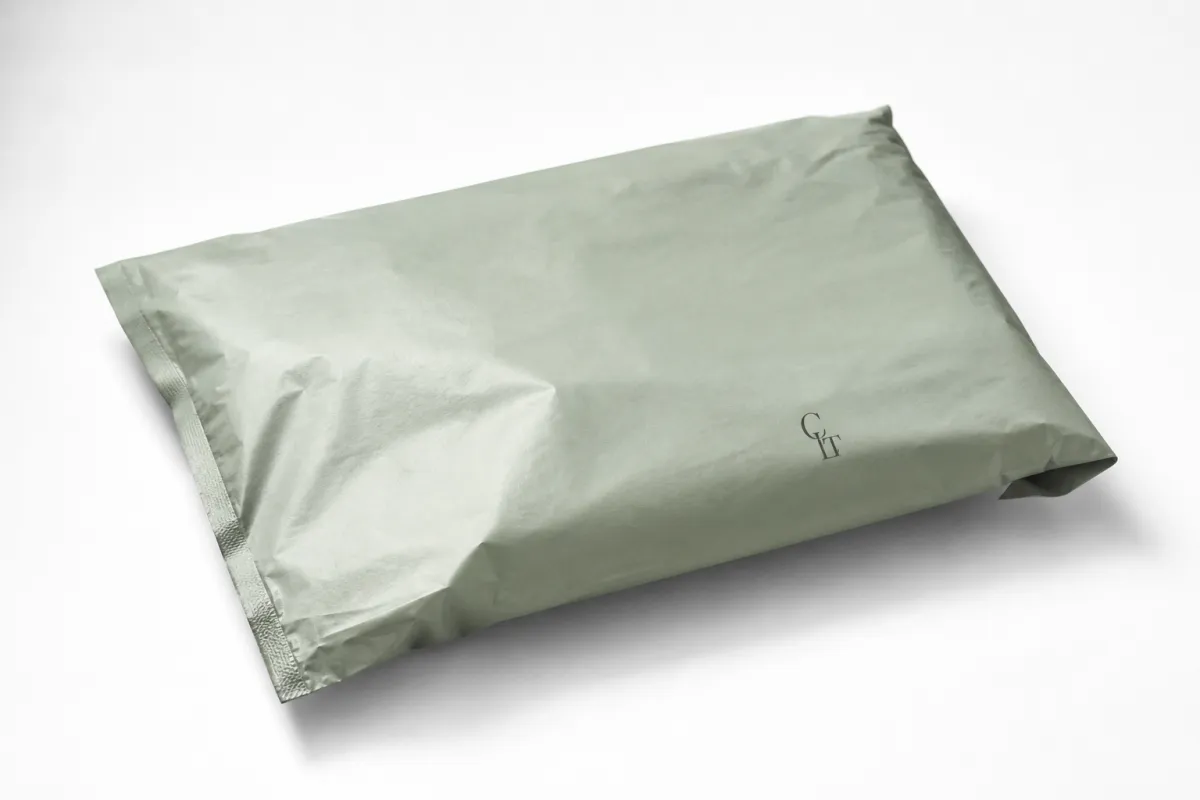
Custom plant based poly mailers are flexible shipping bags made from polymer blends that include plant-derived raw materials, usually combined with other resins so the final film still seals well and resists tearing in transit. That blend matters more than most buyers expect. A fully plant-derived feedstock does not automatically create a better mailer if the film cannot hold a heat seal, accept a clean print image, or survive the conveyor systems used by parcel carriers.
In packaging terms, custom plant based poly mailers sit between standard poly mailers and more specialized sustainability formats. They are often chosen for apparel, cosmetics, small accessories, subscription kits, and light soft goods because they keep dimensional weight down, they ship flat, and they avoid the extra corrugate and void fill that can make product packaging heavier than it needs to be. For many brands, that lower shipping mass is part of the environmental story as well.
One point causes a lot of confusion: plant based describes the feedstock, bio-based usually points to a renewable-origin portion of the polymer, compostable depends on a tested end-of-life pathway, and recyclable depends on both the material and the local recovery stream. A mailer can be custom plant based poly mailers and still not be curbside recyclable everywhere. It can also be recyclable in a store-drop-off stream without being compostable. Those are separate claims, and each one should be supported with care.
From a packaging design standpoint, this category gives brands plenty of flexibility. A clean matte finish, a bold logo, a one-color return address panel, or a full-coverage print layout can all work, provided the film structure and print process match the artwork. Experienced buyers treat custom plant based poly mailers as a specification exercise, not just a marketing decision. Film choice, gauge, closure style, and printed artwork all need to work together.
When the application is right, custom plant based poly mailers are a strong fit because they are lightweight, efficient, and familiar to fulfillment teams. When the application is wrong, they become a poor substitute for a box. Bulky hard goods, sharp edges, and heavy items usually need a different structure, such as a carton, a paperboard mailer, or a more protective system from Custom Packaging Products.
The lesson usually becomes obvious after a few test runs: the best packaging is the one that fits the product and the shipping method together. Custom plant based poly mailers are not a universal answer, but for the right mix of product, brand, and carrier network, they can be a very efficient one. I have sat through more than one proof review where the beautiful sample had to be rejected because the seal zone was too tight for the actual product. That part is kinda boring, but it saves money and headaches later.
How Custom Plant Based Poly Mailers Work in Production
The production path for custom plant based poly mailers starts with resin selection and blend design. A converter chooses a film structure based on the target gauge, the desired stiffness, seal window, and the amount of plant-derived content that the supplier can document. The blend ratio is not a decorative detail. It affects extruder behavior, film surface, sealability, and the way the finished bag behaves when folded, creased, or stretched in transit.
Film extrusion is usually the next major step. The polymer blend is melted and formed into a continuous tube or sheet, then cooled into a usable film. Thickness control matters at this stage. A nominal 2.5 mil film and a 3.0 mil film may look similar at first glance, but they can perform very differently once the package is filled, sealed, and dropped. A lighter gauge saves material, though it also leaves less margin for puncture resistance and tear propagation.
After extrusion comes bag conversion. The film is cut, folded, side-welded or bottom-sealed depending on the structure, and fitted with a closure, usually a pressure-sensitive adhesive strip with a release liner. Some programs add tamper-evident closures, dual adhesive strips for returns, or a second seal for reuse. Those details matter because the mailer has to work for outbound shipment and, in some cases, reverse logistics too.
Custom printing is applied after the film surface is prepared, often with corona treatment or another surface-energy adjustment so the ink anchors correctly. Flexographic printing is common for many mailer programs because it handles repeating brand artwork efficiently at scale, while gravure may be used when the job calls for very fine detail or very long production runs. White ink matters on darker films, and matte finishes can soften glare while improving perceived print quality. Color control is a matter of substrate, ink system, and press setup, not just the artwork file.
That is why custom plant based poly mailers deserve the same specification discipline as any other branded packaging. The printer can only do so much if the film surface is too slick, the ink load is too heavy, or the logo placement conflicts with the seal area. A good supplier will talk through print coverage, line thickness, barcode placement, and seal margin before a plate is made.
Performance still leads the conversation. A mailer that looks beautiful but tears at the corner is not a good mailer. In shipping terms, the bag must handle friction against other parcels, compression in bins, edge stress from the product inside, and the repetitive bumps that happen during carrier sortation. If the structure survives those realities, the print and the sustainability story can do their job.
Buyers who compare options often find it useful to think of custom plant based poly mailers as one point on a broader packaging spectrum. The right specification depends on what the item is, how it is packed, and what the carrier network does to it after pickup.
Practical rule: if the package cannot survive a realistic drop, squeeze, and abrasion test, the sustainability claim will not rescue the shipment. Start with the structure, then build the branding around it.
For shipping validation, many teams borrow methods aligned with ISTA procedures and common material test methods such as ASTM film tests. That does not mean every job needs a formal lab program, but it does mean the packaging decision should rest on repeatable test results rather than appearance or price alone.
Key Factors That Affect Performance and Sustainability
Thickness is one of the first numbers to review when evaluating custom plant based poly mailers. In sourcing conversations, mailers are described in mils, gauge, or microns, depending on the supplier. The unit matters less than the question behind it: does the structure provide enough film strength for the product weight, the corners, and the shipping route? A thin mailer can reduce material usage, yet if it fails once out of every few hundred units, the savings vanish quickly.
Seal integrity comes next. A pressure-sensitive adhesive strip needs the right film surface and enough bonding area to hold through temperature swings and handling. A weak seal turns a shipping issue into a damage issue fast. Good custom plant based poly mailers should be tested with the actual product inside, not only with a flat sample. Product packaging proves itself under load, not on a table.
Tear resistance and puncture resistance matter just as much. Some buyers focus on print and sourcing claims, but in real use the film must resist a corner punch from a zipper, a buckle, or a hard tag. A slightly tougher gauge, a better blend, or a structure with improved orientation can make a noticeable difference. That is the kind of detail that separates a mailer that looks sustainable from one that actually performs in distribution.
Moisture exposure is another detail that gets overlooked. Most parcel networks are dry most of the time, but bags still encounter humidity, condensation, and occasional rain during handoff. The film should be selected with enough moisture resistance to protect the contents without depending on corrugate or internal liners. For soft goods and apparel, this is often one of the main reasons custom plant based poly mailers make sense in the first place.
Sustainability proof points deserve equal attention. If the supplier claims renewable content, ask for the basis of that claim. Is it mass balance, a specific bio-based percentage, or a third-party certification? If the mailer is said to be recyclable, check whether that means store-drop-off, industrial recycling, or another route. FSC is relevant when paper components or inserts are part of the system, but it does not automatically apply to a plastic mailer. Clear labeling protects both the brand and the customer.
For brands that care about sustainability messaging, the best practice is to align the outer shipper with the rest of the packaging system. That might mean pairing custom plant based poly mailers with minimalist inserts, fewer secondary labels, or tighter pack counts that reduce shipping waste. It can also mean using the same visual language across Custom Poly Mailers, cartons, and other branded packaging so the customer sees a single intentional system instead of disconnected parts.
| Mailer Option | Typical Strength | Sustainability Story | Best Fit |
|---|---|---|---|
| Standard poly mailer | Good puncture resistance at lower gauges | Usually fossil-based resin, sometimes recyclable depending on stream | General e-commerce, low-cost shipping |
| Custom plant based poly mailers | Comparable to standard film when the blend and gauge are specified well | Plant-derived feedstock content with claim language that must be stated carefully | Apparel, soft goods, brand-led retail packaging |
| Compostable mailer | Varies widely by resin system | End-of-life claim depends on certified composting route and local access | Programs with clear compost collection or controlled waste streams |
| Paper mailer or carton | Better crush performance, different tear behavior | Often easier to communicate with paper recycling claims, depending on coatings and structure | Heavier items, retail presentation, premium unboxing |
Branding changes performance more than many teams expect. Heavy ink coverage can alter stiffness, add cost, and create opacity concerns on dark films. Barcode readability matters too, especially when the package travels through automated systems. If the print is too busy or the contrast is weak, the packaging may look polished in the sample room while underperforming at the shipping dock.
That tradeoff sits at the center of custom plant based poly mailers: sustainability messaging, visual identity, and transit performance all have to be weighed against one another. The strongest programs treat the bag as both a marketing surface and a shipping tool, because it is both.
Custom Plant Based Poly Mailers Process, Timeline, and Lead Time
The process usually starts with a spec sheet. A solid spec sheet lists the flat dimensions, recommended product size range, film gauge, closure style, print colors, and any claim language that needs approval. For custom plant based poly mailers, that first document saves time later because it removes guesswork from quoting and artwork review. If the bag will be part of a larger package branding system, it also helps to note matching color targets and logo placement rules at the start.
Once the spec is set, the supplier can quote the job, confirm whether the film structure already exists, and identify whether a new blend or new plate set is needed. A repeat structure usually moves faster. A new structure, a new print layout, or a claim-heavy program takes longer because the converter may need more material checks, proofing, and approval cycles before production begins. That is normal, and it is far better to know it upfront than to be surprised later.
Artwork review is where many delays appear. Rich dark backgrounds, fine text, metallic effects, and photo-style printing can all be done on custom plant based poly mailers, but each one adds complexity. If the film is matte and the logo is light, the visual can be excellent. If the artwork uses multiple spot colors and tight registration, the setup becomes more exacting. Early decisions reduce friction later in the run.
Sampling is where the package earns trust. Many suppliers will provide a digital mockup first, then a physical sample or press proof. That sample should be tested with the actual product inside, sealed, labeled, and handled exactly as it would be in a normal order flow. If the mailer is for apparel, test folded garments and rolled garments. If it is for accessories, test the sharpest and heaviest version of the product, not just the easiest one. A sample that looks right in a conference room can still fail once it is packed, dropped, or compressed.
Typical lead time varies, but a simple repeat order often moves faster than a first-time custom program. In practice, many custom plant based poly mailers projects take about 12-15 business days from proof approval for standard repeat production, while new structures, larger quantities, or unusually complex artwork can extend that window. Freight time is separate, and it should be planned separately too. Buyers who leave room for the proofing phase rarely feel rushed; buyers who do not usually end up paying for it in expedited shipping or missed launch dates.
Approval discipline matters more than people think. Once the proof is signed off, changes become costly because the plates, ink mixes, and conversion schedule may already be locked. That is why the best programs keep one person accountable for sign-off. A single clear approval process prevents the familiar chain of confusion where design approves the look, operations approves the fit, and procurement approves the cost, but nobody owns the final file.
If your team is planning a larger packaging program, it helps to compare the mailer schedule with other items in the order, such as inserts, labels, or custom printed boxes. Coordinating the launch date across all product packaging pieces makes the brand feel more polished and keeps the fulfillment team from juggling mismatched inventory arrivals.
Custom Plant Based Poly Mailers Cost, Pricing, and MOQ
Price for custom plant based poly mailers depends on a handful of levers, and the biggest one is still material. The resin blend, the amount of plant-derived content, and the target thickness all affect cost before print is added. A heavier gauge costs more film, but it may reduce damage and returns. A lighter gauge may lower the unit price, yet it needs to be weighed against package failure, which becomes far more expensive once carrier costs and replacements enter the picture.
Print complexity is the next major driver. A one-color logo on a white or light film is simpler than a full-coverage, multi-color artwork program with tight registration. Additional print colors raise setup time and plate cost. Matte or soft-touch effects can add value, but they also add cost. If you are buying custom plant based poly mailers for a launch, think in terms of brand impact and not just unit price, because the outer shipper is often the first physical touchpoint the customer sees.
MOQ, or minimum order quantity, usually reflects how the factory schedules setup and changeover time. Smaller orders generally carry a higher unit price because the fixed costs are spread across fewer bags. Larger orders usually reduce unit cost, but only if you have the demand to use them before inventory gets stale. For many brands, the sweet spot is a production run that fits expected sales for the next reorder window rather than a warehouse full of unused packaging.
There are also hidden costs that deserve attention. Freight can be meaningful, especially for bulky orders. Sampling can add a small but useful cost line. Artwork cleanup, claim review, and plate changes can all affect the final quote. If the supplier needs to provide additional documentation for renewable content or recycling language, that review may also affect timing and cost. Smart buyers ask for all-in pricing before they compare offers, because the lowest quote on paper is not always the lowest landed cost.
Here is a practical way to compare options:
| Specification Choice | Cost Impact | Operational Impact | Typical Buyer Tradeoff |
|---|---|---|---|
| Lighter gauge film | Lower material cost per bag | Less puncture margin | Saves money if the product is soft and low-risk |
| Heavier gauge film | Higher unit price | Better handling tolerance | Useful for sharper edges or higher return risk |
| One-color print | Lower setup and plate cost | Easier color consistency | Good for clean branded packaging and tight budgets |
| Multi-color full coverage | Higher setup and ink cost | More visual impact, more proofing | Best when package branding is part of the launch strategy |
| Higher MOQ | Usually lower per-unit cost | More inventory held on hand | Works when demand is predictable |
| Lower MOQ | Higher per-unit cost | Less inventory risk | Better for new product packaging or testing a new line |
One cost point gets missed often: total cost per shipment. A mailer that fits the product better may reduce dim-weight charges, lower damage, and eliminate the need for void fill or secondary protection. That is why custom plant based poly mailers should be evaluated as part of the entire shipping system, not as a standalone line item. A slightly higher unit price can still produce a lower landed cost if the package is right-sized and reliable.
For teams comparing suppliers, it helps to request a quote for both a test run and a scale run. That gives a more realistic picture of how MOQ influences the final number. It also reveals whether the supplier can maintain the same print quality, closure strength, and material consistency when the order grows. Buyers who only compare the first quote sometimes miss the real savings that come from a supplier with cleaner production discipline.
That also creates a useful comparison with other packaging categories. A brand may find that custom plant based poly mailers are the right fit for one product line, while a box-based system makes more sense for another. The smartest packaging programs are rarely one-size-fits-all.
Common Mistakes to Avoid with Custom Plant Based Poly Mailers
The first mistake is assuming plant based automatically means compostable or recyclable. It does not. Custom plant based poly mailers may use renewable feedstocks, but the end-of-life route still depends on the exact resin system, the inks, the closure materials, and the recovery infrastructure where your customers live. If the sustainability message is vague, customers may read more into it than the package can honestly support.
The second mistake is choosing the wrong size. Oversized mailers create extra empty space, which can let the product move around and can also increase shipping cost if the finished parcel becomes larger than necessary. Undersized mailers are even worse because the seal area gets stressed, the product can damage the seam, and returns become more likely. A proper size test should start with the thickest packed configuration, not the item’s flat storage size.
The third mistake is overbuilding the artwork. Heavy ink coverage, tiny reversed-out text, and barcode placement too close to folds can all cause trouble. Dark films may need more opaque underlayers to keep the brand color from shifting. If your team is used to paperboard or custom printed boxes, do not assume those same visual rules transfer cleanly to film. Plastic film behaves differently, and print results depend on the substrate more than many designers expect.
The fourth mistake is skipping product testing. Custom plant based poly mailers should be tested with real items, sealed as they will be used in fulfillment, and sent through a normal shipping route. Drop tests, squeeze tests, and abrasion checks are useful because they mimic the forces the bag will actually see. For higher-value items, temperature swings deserve attention too, since adhesive behavior and film flexibility can change in cold or hot conditions.
A good standard applies here: test the system, not just the sample. Packaging that passes in a controlled environment may still fail when carrier handling becomes unpredictable. If you want more context on packaging test methods and transport simulation, the industry resources at packaging.org are a useful starting point, especially for teams trying to connect material choice to real distribution performance.
The fifth mistake is treating sustainability claims as decoration on top of a generic bag. If the customer cannot understand the claim, it does not build trust. Clear language, accurate labeling, and a realistic end-of-life statement are stronger than a crowded badge stack. Custom plant based poly mailers can support a responsible message, but only if the claim is specific enough to stand up to scrutiny.
Another issue shows up with reorder consistency. A sample approved in one quarter should not turn into a noticeably different bag six months later unless the team intentionally changed the spec. If the gauge, finish, or adhesive shifts, so does performance. That is why a locked spec sheet is so valuable. It gives procurement, design, and operations the same reference point and keeps the program from drifting over time.
For brands building out a larger shipping system, consistency matters across all product packaging. The mailer, label, insert card, and outer carton should feel like part of the same brand family. If they do not, the customer experiences the package as disjointed, even when each individual piece is technically acceptable.
Expert Tips and Next Steps for Custom Plant Based Poly Mailers
If you are planning custom plant based poly mailers for a launch or a packaging refresh, start with a short test plan instead of a full production leap. Check seal strength, print readability, product fit, and carrier performance with actual orders. Keep the test small enough to learn from but large enough to reveal repeatable issues. That simple discipline can save a lot of time and money later.
Compare suppliers on more than price. Ask how they document plant-derived content, whether they can explain the difference between renewable content and end-of-life claims, and how quickly they can turn around a sample. Good vendors will also help you think through what happens after the package leaves the warehouse, which is where many sustainability claims get shaky. Custom plant based poly mailers should be sourced with that full journey in mind.
It also helps to lock the spec sheet early. Decide on dimensions, gauge, closure type, print count, and acceptable tolerances before artwork finalization. If you want the program to scale, write down what must never change and what can be adjusted later. That makes reorders much easier and keeps the package from drifting over time. For teams that are building a broader packaging line, this same discipline applies across Custom Poly Mailers and other branded packaging formats.
From a packaging buyer's point of view, the best programs are usually the ones that are boring in the right way. The bag opens when it should, seals cleanly, looks like the brand, and arrives intact. That is the goal. Custom plant based poly mailers are most useful when they stay in that lane and do the practical work quietly, without creating extra handling problems for fulfillment or extra confusion for the customer.
If you need a next step, run a small pilot, then compare the results against your current mailer on three things only: damage rate, pack-out time, and customer-facing appearance. Those three numbers tell you more than a glossy sample ever will. Once they are stable, scale the custom plant based poly mailers spec That Actually Worked, not the one that just looked good on the sample table.
FAQ
Are custom plant based poly mailers compostable or recyclable?
Not automatically. Plant based describes the raw material source, not the end-of-life route. Custom plant based poly mailers may be recyclable in certain programs or may have a compostability claim if the exact structure has been tested and certified, but those outcomes depend on the material blend and the waste system available to the buyer.
How do I choose the right size for custom plant based poly mailers?
Measure the product at its thickest packed dimension, not its flat storage size. Leave enough room for a clean seal without creating so much empty space that the item shifts around in transit. For soft goods, test folded and rolled packing methods to see which one gives the smallest secure fit.
What affects the price of custom plant based poly mailers the most?
Material blend, thickness, and order quantity usually have the biggest impact on unit cost. Print complexity, number of colors, and special finishes can raise setup costs. Freight, proofing, and any claim verification should also be part of the comparison so you are looking at real landed cost.
How long does it take to produce custom plant based poly mailers?
Repeat orders can move faster than first-time programs because the artwork and structure are already approved. New jobs usually take longer when material sourcing, proofs, and sampling are required. Lead time depends on order size, print complexity, and how quickly approvals come back.
What should I test before launching custom plant based poly mailers?
Test seal integrity, puncture resistance, and fit with actual products inside the mailer. Run shipping trials through your normal carrier route so you can see how the package holds up in real handling. Also check print clarity, barcode scans, and any sustainability wording before the full rollout.
Do custom plant based poly mailers work for premium brands?
Yes, if the visual design and structure are handled with care. A clean matte finish, strong logo contrast, and precise print registration can make custom plant based poly mailers feel very polished. Many premium brands use them when they want a lighter package than a box but still want a clear branded presentation.
Can custom plant based poly mailers be part of a larger packaging system?
Absolutely. They often work best alongside other product packaging items such as inserts, labels, and secondary cartons. When the mailer matches the rest of the packaging design, the brand feels more deliberate and the customer experience is easier to recognize across channels.

