Buyer Fit Snapshot
| Best fit | Custom Logo Sticker Branding Review projects where brand print, material claims, artwork control, MOQ, and repeat-order consistency need to be specified before quoting. |
|---|---|
| Quote inputs | Share finished size, material target, print colors, finish, packing count, annual reorder estimate, ship-to region, and any compliance wording. |
| Proofing check | Approve dieline scale, logo placement, barcode or warning zones, color tolerance, closure strength, and carton packing before bulk production. |
| Main risk | Vague material claims, crowded artwork, missing packing details, or unclear freight terms can make a low unit price expensive after revisions. |
Fast answer: Custom Logo Sticker Branding Review: Material, Adhesive, Artwork, and MOQ should be specified like a repeatable production item. The safest quote records material, print method, finish, artwork proof, packing count, and reorder notes in one written spec.
Production checks before approval
Compare the actual filled-product size with the drawing, then confirm tolerance on folds, seals, hang holes, label areas, and retail display edges. Reserve space for logos, QR codes, warning copy, and material claims before decorative graphics fill the panel.
Quote comparison points
Review material grade, print process, finish, sampling route, tooling charges, carton quantity, and freight assumptions side by side. A quote is only useful when the supplier can repeat the same color, closure quality, and packing count on the next order.
Tips for custom logo sticker branding are not about dressing up a package for the sake of it. A sticker on a mailer, jar, or takeaway box is often the first thing a customer touches, closes, peels, and remembers later. I have watched teams treat that tiny square as an afterthought, and then wonder why the whole pack feels generic. It is a small asset, yes, but it carries a surprisingly loud message.
Used well, tips for custom logo sticker branding help turn plain product packaging into branded packaging that feels deliberate, secure, and easier to recall. A sticker can seal, label, warn, identify, and decorate at the same time. On a tight budget, that kind of multitasking matters a lot. It can also be the difference between packaging that looks assembled and packaging that looks designed from the start.
What custom logo sticker branding really does
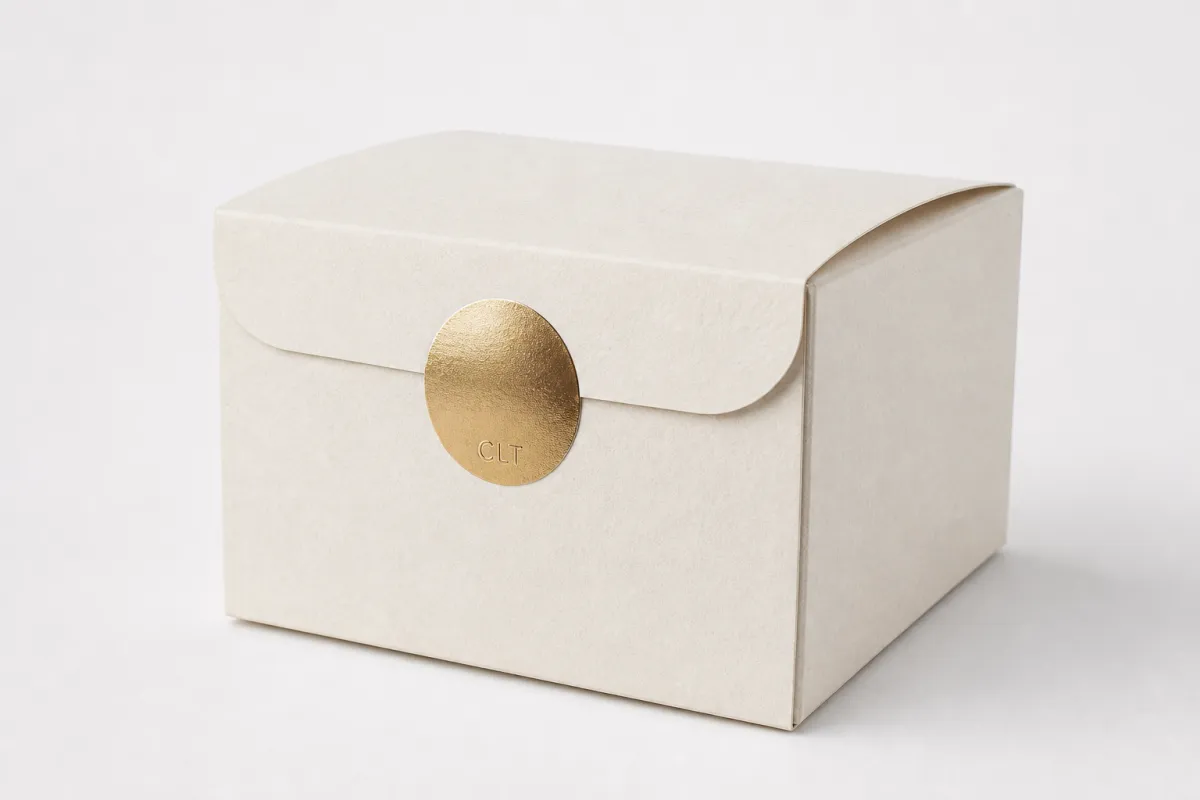
Custom logo sticker branding sounds modest, almost too small to matter. The reality is sharper. In a typical packaging flow, a box gets handled by a fulfillment team, a carrier, and then the customer. A sticker sits in that chain, not at the edge of it, which gives it an outsized role in how quality is judged.
Think of it as a compact signal carrying a heavy load. On a kraft mailer, a logo seal tells the customer the pack was closed on purpose. On a jar, a round label can make an entire product line feel organized. On takeaway boxes, a sticker can keep the lid shut and still reinforce the brand. That is why tips for custom logo sticker branding belong beside packaging design decisions, not after them.
Most people reduce stickers to decoration. That misses the point. A well-placed sticker can make a plain carton resemble Custom Printed Boxes without the cost of printing the whole carton. It can also give smaller brands a way to improve retail packaging and product packaging before they commit to a larger packaging overhaul.
There is a practical advantage too. Custom logo sticker branding is fast to change, low-cost to test, and easy to scale up or down. Seasonal artwork changes? Swap the sticker. Short launch run? Print a limited batch. Compared with a full box reprint, the sticker usually wins on speed and flexibility by a wide margin. That is not a theory; it is how a lot of growing brands stay nimble while their packaging system catches up.
A sticker should answer two questions at once: does this package stay closed, and does this brand look deliberate?
That dual job is why tips for custom logo sticker branding often outperform generic packaging advice. The same square of vinyl or paper can protect a seal, carry a logo, and support the unboxing experience. When the design is clean, the adhesive is right, and placement stays consistent, the package looks more expensive than it is.
If you are planning a broader packaging refresh, stickers can bridge the gap. They pair naturally with Custom Packaging Products, and they work well alongside Custom Labels & Tags when you want more than one branded touchpoint in the pack. For teams comparing approaches, Case Studies can show how the same logo behaves very differently on film, paper, and corrugated board.
The business case is straightforward: tips for custom logo sticker branding help you control perception with one of the lowest-cost elements in the pack. A sticker does not need a large budget to create a premium impression. It needs the right role. A five-cent difference per unit sounds tiny until you multiply it across 10,000 packs; then it is $500, and that gets attention fast.
How custom logo sticker branding works: process and timeline
Good tips for custom logo sticker branding begin with the production flow, because that is where delays usually show up. The path runs through artwork prep, proofing, print setup, finishing, cutting, packing, and shipping. Each step can move quickly on its own, yet the total lead time depends on how clean the files are and how complex the order becomes.
Artwork prep is where many buyers lose a day or two. A logo that is not vector-based, colors that are left vague, or multiple versions of the same mark can slow the proof cycle. A clean file set with one logo version, one color target, and one die line makes custom logo sticker branding much easier to execute. That matters even more when the sticker has to match other branded packaging assets.
Proof approval is not a box to tick and forget. It is the moment to check size, bleed, font clarity, and cut line placement. If the sticker must sit on a curved container or a textured kraft mailer, the proof should reflect that surface. A design that looks fine on a screen can feel awkward on the actual pack. I have seen that happen more than once, and the fix is almost always a better proof review, not a better printer.
Turnaround time usually moves according to three variables: revisions, material choice, and quantity. Simple digital jobs can often ship in a few business days after proof approval, while specialty finishes, larger quantities, or more involved cutting can stretch the schedule. Tips for custom logo sticker branding should always account for that reality. The fastest route is not always the right one if color accuracy or durability matter.
Application timing matters too. Some stickers go on before the box is sealed, creating a strong closure effect. Others are applied after filling, which makes sense for jars, pouches, and takeaway containers. A third group goes on at the shipping stage, where the sticker acts more like a seal or tamper cue. Each choice changes labor, speed, and the visual effect.
If packaging is heading into cold storage, rough transit, or damp conditions, validation matters. For shipping durability, many teams look to ISTA test expectations, especially when the sticker helps hold a flap in place. For paper stock, some brands choose FSC-certified material so the sourcing story stays aligned with the rest of the pack; FSC is the reference point most buyers know.
One useful way to think about tips for custom logo sticker branding is this: the design decision, the print decision, and the application decision all shape the timeline. A simple round seal on uncoated paper is one thing. A waterproof label for chilled product packaging is another. The more those details are clarified up front, the fewer surprises appear later.
Cost, pricing, and MOQ for custom logo sticker branding
Tips for custom logo sticker branding become far more useful once pricing is understood. Sticker quotes can look similar until the specs are compared line by line. The main cost drivers are size, shape, stock, finish, color count, quantity, and whether the order is sheeted, rolled, or individually cut. If two suppliers quote different totals, the reason is usually buried in one of those details.
MOQ, or minimum order quantity, matters because short-run digital work behaves differently from larger print runs. A brand testing a new seal might be comfortable with 250 or 500 pieces. A growing business using the same sticker on every outbound carton might want 2,500, 5,000, or more to lower the unit cost. Tips for custom logo sticker branding should help you decide whether you are testing a concept or building a repeatable system.
The price gap between materials often matters more than the price gap between two sizes. Paper stickers are usually the cheapest starting point. BOPP costs more, but it holds up better against moisture and scuffing. Vinyl is stronger still, especially for curved containers, outdoor exposure, or wash-down conditions. That is why sticker branding should match the package surface, not only the logo.
| Material | Best use | Typical cost at 5,000 units | Strengths | Watch-outs |
|---|---|---|---|---|
| Paper | Dry mailers, inserts, short-lived seals | $0.04-$0.09 each | Low cost, easy to print, good for simple branding | Less resistant to moisture and abrasion |
| BOPP | Mailers, jars, bottles, chilled or handled packs | $0.07-$0.14 each | Moisture resistance, cleaner peel, solid color hold | Not ideal if you want a matte paper feel |
| Vinyl | Curved surfaces, durable seals, higher-touch packs | $0.12-$0.28 each | Strong durability, flexible on curved containers | Usually more expensive and not always needed |
These ranges are realistic budgeting guides, not fixed prices. A 2-inch round paper seal with one-color print will not cost the same as a 4-inch die-cut BOPP sticker with flood coating and a custom shape. Tips for custom logo sticker branding work best when you request quotes with the same artwork, the same dimensions, the same finish, and the same quantity breakpoints.
Comparing sticker branding to other upgrades helps as well. A full printed carton or custom printed boxes can raise the perceived value of the package, but the per-unit cost is much higher, especially at lower volumes. A premium insert may look elegant, yet it does not always protect the closure or do the same visual work. Sticker branding often delivers a strong brand lift at a lower entry price, which is why it shows up so often in early-stage packaging design.
A practical budgeting framework looks like this:
- Ask for quotes at two or three quantity levels, such as 500, 2,500, and 5,000.
- Use the same file format, size, stock, and finish in every quote.
- Compare cost per 1,000 units, not just the sticker total.
- Include freight, proofing, and spoilage or waste allowance.
- Check whether the supplier prices sheeted, rolled, or kiss-cut labels differently.
That list may look basic, but it saves real money. In many packaging programs, the cheapest quote is not the lowest landed cost. Tips for custom logo sticker branding should help you see the full picture: sticker price, application labor, and how the sticker affects the rest of the package.
One more point matters for multi-SKU brands. Ask whether the same sticker structure can be adapted across several sizes. A well-planned master design can reduce artwork fees and simplify reorders. That is especially useful in retail packaging, where consistency matters but each product may need a slightly different footprint.
Step-by-step guide to custom logo sticker branding
There is a simple way to make tips for custom logo sticker branding more reliable: treat the sticker like a packaging component, not a graphic file. That means thinking about surface, closure, moisture, application speed, and how the sticker will look after it has been handled for a few hours, not only how it looks in the proof.
Start with the use case
Ask what job the sticker is supposed to do. Is it sealing a mailer, identifying a product line, adding a promotional mark, or acting as a compliance cue? The answer changes the size, adhesive, shape, and finish. A seal on a corrugated carton does not need the same structure as a label on glass. Tips for custom logo sticker branding begin with the use case because the wrong job definition leads to the wrong spec.
Design for the package, not the screen
Use strong contrast and avoid tiny type that disappears on textured stock. Keep logos readable at the size they will actually be applied, not the size they look best in a layout file. Thin outlines, delicate gradients, and pale text can fail fast once they meet matte kraft or uneven surfaces. If the sticker will sit beside a barcode or a shipping label, leave enough breathing room so the package does not feel crowded.
Most teams get better results by testing two versions: one that is safe and legible, and one that pushes the brand a little harder. That is one of the more useful tips for custom logo sticker branding because the bolder version is not always the better one. On small packaging, clarity usually beats complexity.
Choose the right adhesive and stock
Paper can be perfect for a dry, short-term seal. BOPP is often better for shipping durability, condensation, and repeated handling. Vinyl is worth considering if the sticker needs to survive rougher use or sit on a curved container. If you are working with refrigerated product packaging, ask about freezer-grade or low-temperature adhesive. If the package is exposed to oil, moisture, or friction, do not assume standard paper stock will hold up.
This is one of the moments where custom logo sticker branding becomes operational instead of visual. The best-looking sticker is not the best sticker if it peels at the corners after a day in transit. A clean adhesive choice can raise perceived value more than adding another ink color.
Proof, sample, and test
Request a proof, then apply a sample to the real surface. Check for lift at the corners, alignment against folds or seams, and whether the color still reads well in natural light. A short run is worth the cost if the sticker is going on a high-visibility pack or if your team is planning a broader rollout. One afternoon of testing can prevent a long week of rework.
Here is a simple test sequence that works well in practice:
- Apply the sticker to the actual package surface.
- Let it sit for 24 to 48 hours.
- Check adhesion after handling, stacking, or light abrasion.
- Inspect the package under the lighting the customer will actually see.
- Confirm the sticker still looks aligned once the box is closed or the container is filled.
Document placement for consistency
If multiple staff members or a fulfillment partner will apply the sticker, write down the placement rules. Use a simple guide: distance from the edge, angle, and whether the sticker should cross a seam or stay fully inside a panel. Consistency matters because a brand can look polished on one unit and sloppy on the next if placement drifts by even a few millimeters.
That is why tips for custom logo sticker branding should include a placement standard. It is easy to overlook, but the customer notices when every closure lands in the same spot. Repetition builds recognition. It also makes the pack look more expensive than it is.
Common mistakes in custom logo sticker branding
The most expensive mistake is choosing a sticker because it looks good in a mockup and ignoring the real surface. Tips for custom logo sticker branding need to account for temperature, moisture, oils, shipping pressure, and packaging texture. A sticker that looks flawless on a render can fail on a cold jar or lift from a recycled mailer with a rough finish.
Scale causes trouble too. Oversized logos can dominate a small mailer and make the package feel cramped. Tiny logos can disappear on matte kraft or get lost on a curved bottle. Good tips for custom logo sticker branding always push for a scale check on the actual packaging, not on a white artboard.
Artwork inconsistency does more damage than many teams expect. One logo file gets sent in three versions, each with a slightly different color or proportion, and the whole run starts to drift. That weakens brand identity. If the sticker is part of a larger package branding system, file discipline should be as strict as it would be for custom printed boxes or retail packaging inserts.
Skipping test applications is another easy way to waste money. The problem might be a peeling corner, but it might also be residue, stretching, or poor laydown on a textured surface. If the package is stacked, chilled, or shipped long distance, a sticker that seems fine on day one may fail later. Tips for custom logo sticker branding should always include a real-world test before volume production.
Some buyers also forget that the sticker has to work with the rest of the pack. If the carton already has a busy printed surface, the sticker may need to be simpler. If the package is minimal, the sticker can carry more personality. Packaging design is not a collection of separate items; it is one system. A sticker either supports that system or fights it.
One more mistake deserves attention: chasing the lowest spec when the use case calls for durability. Paper may be fine for a dry sleeve, but it is a poor choice for chilled product packaging or a mailer that may see moisture during transit. That is exactly where tips for custom logo sticker branding can save a brand from expensive reprints. Spending a little more on the correct stock is often cheaper than replacing failed units.
If you want a quick gut check, ask three questions before you approve a run: Does this adhesive match the surface? Does this finish match the environment? Does the artwork still read at the actual size? If any answer is unclear, the job needs another round of review.
Expert tips for stronger custom logo sticker branding
Strong tips for custom logo sticker branding are usually about systems, not single design choices. A brand that uses one sticker for everything tends to look generic after a while. A better approach is to build a sticker family: one version for seals, one for thank-you marks, one for shipping, and one for product identification. That keeps the brand consistent without making every touchpoint identical.
Finish choice matters more than many teams realize. Gloss can sharpen color and make contrast pop. Matte can feel calmer and more refined. Textured or uncoated stocks can support an artisan or eco story, especially when the rest of the package uses natural materials. Tips for custom logo sticker branding work best when the finish supports the brand personality instead of competing with it.
Placement should follow the customer journey. A seal on the top flap does one job: it signals closure and creates a moment at opening. A logo on the side panel does another job: it builds recognition during handling or shelving. A label on the front can act as the main retail cue. Use each location with intent. That small decision can improve the unboxing experience more than adding another line of copy.
If you are trying to raise perceived value without raising cost too far, look for tiny structural improvements. A cleaner die-cut shape. A better adhesive. One less cluttered element in the layout. Those changes can make a package feel materially more polished. One of the most overlooked tips for custom logo sticker branding is simple: remove friction before you add decoration.
It also helps to match the sticker to the rest of the packaging ecosystem. If your store already uses branded packaging, the sticker should echo the same typography, icon style, and color logic. If you are pairing stickers with Custom Packaging Products, keep the visual language aligned so the pack feels like one brand, not a stack of unrelated pieces. That same principle applies when you expand into Custom Labels & Tags for multi-SKU programs.
For brands that want proof before scaling, the evidence usually shows up in the simplest tests. Compare two sticker finishes on the same box. Measure peel resistance after 24 hours. Check how the logo reads under warehouse lighting and under natural light. Compare the customer reaction to a plain seal versus a branded seal. Small tests can reveal large differences, and that is what makes tips for custom logo sticker branding practical instead of theoretical.
There is also a sustainability angle that should be handled carefully. If the brand story depends on recycled content or responsible sourcing, make sure the sticker stock and adhesive support that claim. FSC-certified paper is useful when paper is the right material, but the claim has to fit the full package, not just one component. Good packaging credibility comes from consistency, not slogans.
Repetition matters more than most teams expect. The same logo in the same position, across several SKU lines, becomes a visual shortcut for the customer. That is how package branding starts to feel familiar. It is also how a basic box begins to look like a deliberate retail packaging system rather than a one-off shipment.
Next steps for custom logo sticker branding
If you want tips for custom logo sticker Branding That Actually help, start by auditing the package you already have. Look at the mailers, cartons, jars, pouches, or takeaway boxes that leave your operation every day. Mark the places where a sticker would create the biggest gain: closure, identification, promotion, or a cleaner final presentation.
Then build a simple spec sheet before you request quotes. Include size, shape, material, finish, quantity, application surface, and whether the sticker must survive moisture, refrigeration, abrasion, or long transit. The more precise the brief, the more accurate the price. That is one of the most reliable tips for custom logo sticker branding because vendors cannot price guesswork well, but they can price a clear spec very quickly.
Once you have a quote, do not skip the sample stage if the sticker will sit on a high-visibility package. Order a short run or at least a sample sheet, then test it on the actual surface. Check the package after 24 to 48 hours, and if the sticker is part of a shipping workflow, test it under the same handling conditions it will see in real life. That small pause can save a full production run.
It is also smart to compare sticker branding against your broader packaging roadmap. If the sticker is doing most of the heavy lifting, maybe the next step is a more structured packaging design upgrade. If the sticker already works well, perhaps you only need stronger consistency across related materials. Either way, the goal is the same: make the package look coherent, functional, and worth remembering.
When the design, material, and process are planned together, tips for custom logo sticker branding become easier to execute and easier to scale. Those decisions should not sit in separate conversations. They are one system, and the best results come from building that system on purpose. If you only do one thing after reading this, make it a real sample test on the actual packaging surface before you approve volume printing. That one step catches more problems than any polished mockup ever will.
Frequently Asked Questions
What material works best for custom logo sticker branding on mailers?
Choose paper only for dry, indoor use and short-lived applications. Use vinyl or BOPP for better moisture resistance, shipping durability, and cleaner peel performance on mailers. For most brands, BOPP is the practical middle ground because it holds up better than paper without pushing cost as high as vinyl. That is one of the most useful tips for custom logo sticker branding when the package moves through a real fulfillment channel.
How do I size custom logo sticker branding for small boxes?
Measure the visible panel area first, then leave enough margin so the sticker does not crowd folds, seams, or barcodes. Test two sizes on the real box; the best choice is usually the one that reads clearly at arm's length without overpowering the package. If the box is part of a broader retail packaging system, keep the sticker scale consistent with the rest of the brand identity.
What is a realistic price range for custom sticker branding?
Pricing depends on quantity, material, finish, shape, and print method, so compare quotes using identical specs. Small runs cost more per unit, while higher volumes usually lower unit cost quickly; ask for pricing at two or three quantity breakpoints. For many buyers, tips for custom logo sticker branding are most valuable when they show how to compare landed cost, not just the sticker price itself.
How long does the custom logo sticker branding process take?
Simple orders can move quickly after proof approval, but custom materials, revisions, and finishing steps extend turnaround. Build in time for sample testing and freight so the timeline reflects real production, not just print time. If the sticker must coordinate with other branded packaging, allow extra time for proof review so the full system stays aligned.
Can I use one sticker design across different packaging types?
Yes, but only if the size, adhesive, and finish work on every surface you plan to use. A design that performs well on kraft mailers may fail on glass, coated cartons, or curved containers, so test each surface. The smartest tips for custom logo sticker branding usually involve creating one master design and then adapting the material or size for each packaging surface.
Tips for custom logo sticker branding work best when they are treated as operational decisions, not just design preferences. Match the material to the surface, the size to the package, and the finish to the brand story, and the sticker becomes a small but powerful part of the whole system. That is how a simple label turns product packaging into branded packaging that looks intentional from the first touch to the final reveal.

