Buyer Fit Snapshot
| Best fit | Custom Plastic Envelopes Order projects where brand print, material claims, artwork control, MOQ, and repeat-order consistency need to be specified before quoting. |
|---|---|
| Quote inputs | Share finished size, material target, print colors, finish, packing count, annual reorder estimate, ship-to region, and any compliance wording. |
| Proofing check | Approve dieline scale, logo placement, barcode or warning zones, color tolerance, closure strength, and carton packing before bulk production. |
| Main risk | Vague material claims, crowded artwork, missing packing details, or unclear freight terms can make a low unit price expensive after revisions. |
Fast answer: Custom Plastic Envelopes Order: Specs, Pricing, Timing should be specified like a repeatable production item. The safest quote records material, print method, finish, artwork proof, packing count, and reorder notes in one written spec.
Production checks before approval
Compare the actual filled-product size with the drawing, then confirm tolerance on folds, seals, hang holes, label areas, and retail display edges. Reserve space for logos, QR codes, warning copy, and material claims before decorative graphics fill the panel.
Quote comparison points
Review material grade, print process, finish, sampling route, tooling charges, carton quantity, and freight assumptions side by side. A quote is only useful when the supplier can repeat the same color, closure quality, and packing count on the next order.
A Custom Plastic Envelopes order changes how a shipment feels the second it lands on a desk or conveyor. Plain mailers say “we shipped it.” Branded envelopes say “we paid attention.” Customers notice that faster than most teams think they do.
I have sat through enough packaging reviews to know the pattern. The buyer starts by asking for a logo on plastic, then ends up caring about thickness, seal strength, opacity, and how the thing opens with gloved hands at 6 a.m. That is normal. It is also why a Custom Plastic Envelopes order needs more planning than a quick scroll through stock mailers.
For teams comparing a custom plastic envelopes order with standard stock mailers, the real decision is not hype. It is fit, print quality, film gauge, closure strength, and landed cost. Get those right and the package looks intentional. Miss them and the order looks like somebody threw it together during a warehouse fire drill.
Why a custom plastic envelopes order beats plain mailers
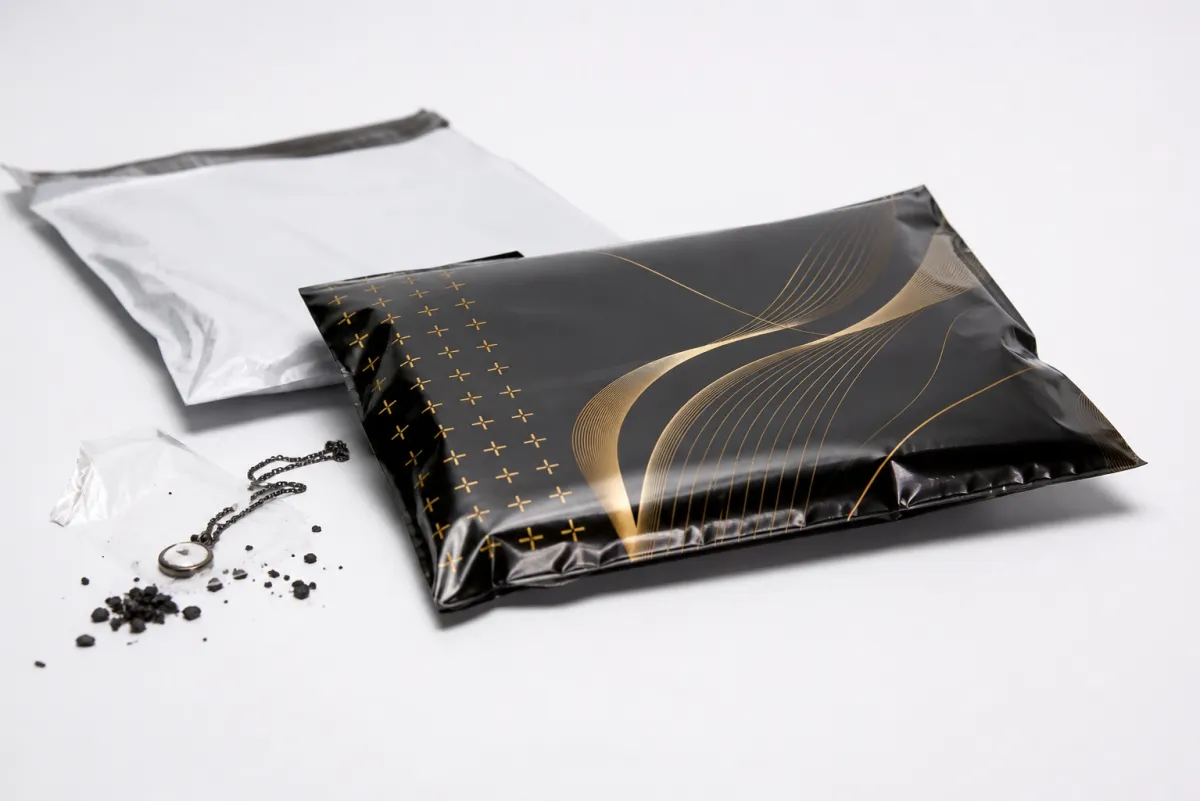
A plain mailer works. Nobody is arguing that. A custom plastic envelopes order does something a plain mailer cannot do: it makes the shipping pack part of the brand experience. That matters for retail packaging, apparel, subscription shipments, printed inserts, and lightweight kits where the outer envelope is the first thing the customer sees.
The envelope is often visible before the product, the invoice, or the thank-you card. So yes, it is a shipping choice. It is also a branding choice. In a lot of cases, it is the first visible sign that the business has its act together.
“If the outside looks cheap, people assume the inside was handled the same way.”
That is not drama. That is buyer behavior. A branded envelope can reduce complaints about sloppy presentation, especially for DTC apparel, membership kits, sample packs, and document delivery. It also improves recall. Customers may forget the tracking number. They remember the envelope that matched the rest of the package branding.
For a custom plastic envelopes order, use case matters more than trend. Apparel brands want clean presentation and a little stretch resistance. Document couriers want a neat, professional shell. Sample kits need a strong print area and sometimes a return strip. E-commerce inserts usually need low cost and consistent sizing. One envelope style does not fit every job, and pretending it does is how buyers waste money.
From a packaging buyer’s point of view, branded packaging also helps with repeat orders. A customer who gets a tidy shipment twice is more likely to trust the next one. That is why a custom plastic envelopes order can beat generic mailers even when the unit price is higher. The envelope is doing its job before the customer opens the box, bag, or insert pack.
If you are sourcing a broader mix of packaging, compare the envelope against the rest of the line. A strong outer mailer can support a lighter inner pack, which means you may not need to overspend on custom printed boxes for every shipment. Some brands use a simple envelope for small replenishment orders and save the more elaborate product packaging for launch kits or gift sets. That is sane buying, not penny-pinching.
For teams shopping across formats, our Custom Packaging Products page is useful because it keeps the outer pack, inserts, and branded shipping items in the same conversation. That saves time and cuts the usual back-and-forth where marketing wants “nice,” operations wants “cheap,” and nobody agrees on what “nice” costs.
A custom plastic envelopes order makes sense when presentation, protection, and repeatability all matter. If the shipment is disposable in every sense, plain stock may be enough. If the order is customer-facing, a branded envelope earns its keep quickly.
Custom plastic envelopes order: product details that matter
Most mistakes in a custom plastic envelopes order happen before pricing even enters the conversation. The buyer starts with a logo, not a spec. That is backwards. A useful order begins with the envelope structure: material, finish, closure, print area, seam strength, and whether the design needs opacity or clarity.
Material choice is the first real decision. LDPE is common for soft, flexible mailers because it is economical and easy to form. Co-extruded films are often chosen when a buyer wants better durability, more controlled opacity, or a cleaner print surface. Recycled-content film can also work, but the tradeoff is usually in surface feel, color consistency, or film clarity. None of that is a dealbreaker. It just needs to be planned.
Film finish changes the look more than many buyers expect. A matte surface feels more restrained and premium. A gloss finish pops harder under lighting and can make a logo read faster. Clear envelopes show the contents or insert card, which is useful for some retail packaging programs. Opaque film hides the contents and usually feels more private, more secure, and more professional for apparel or document shipments.
Closure style matters too. A peel-and-seal strip is the most common choice for a custom plastic envelopes order because it is fast and easy to train on. Tamper-evident adhesive adds a stronger security cue. Reseal strips help with returns or multi-step fulfillment. If you are shipping samples or member kits, closure choice can affect customer experience more than the logo does.
Print options are where the envelope starts carrying brand identity. A one-color logo is usually the cleanest and most cost-efficient route. Two-color print can add depth without making the order expensive. Full-color graphics are possible on some builds, but they need stronger artwork discipline and usually make the proofing process slower. Inside print is a niche choice, but it can work well for a surprise message or repeated pattern if the budget supports it.
What should a custom plastic envelopes order do? It should protect the item, present the brand, and survive handling without seams blowing out or adhesive failing. That sounds basic because it is. Trouble starts when buyers obsess over decoration and ignore structure. A good envelope is built to behave in the mail stream, not just to look nice on a desk.
For product packaging teams, the envelope can sit beside inserts, labels, and even custom printed boxes as part of a larger branded packaging system. If the outer mailer uses one tone and the product box uses another, the shipment looks split in half. Customers notice that. Buyers notice it too. Package branding is not decoration. It is part of the purchase logic.
There is also a difference between a utility mailer and a branded envelope. Utility mailers move goods cheaply. A custom plastic envelopes order moves goods and communicates something at the same time. That “something” can be premium, playful, corporate, or minimalist. It should still be deliberate.
For any custom plastic envelopes order, the question is simple: does the envelope earn attention or waste it? If it earns it, you are buying well. If it wastes it, you are paying for a blank surface with a logo on it, and that is not much of a plan.
Specifications for a custom plastic envelopes order
The cleanest way to specify a custom plastic envelopes order is to start with the item you are shipping. Measure the product with any insert, label, or foldout card included. Add fit allowance after that. For soft goods, the allowance may be modest. For rigid products or stacked samples, it needs to be larger so the envelope does not look stuffed or stress the seams.
Common size ranges depend on the use case. Document envelopes might sit in the 9 x 12 inch to 10 x 13 inch range. Apparel mailers often move into sizes like 10 x 15 inches, 12 x 15 inches, or larger if folded garments need more room. If the envelope includes a gusset, it can handle more bulk without forcing the closure. If it does not, the item profile needs to stay tighter.
Thickness is one of the easiest spec points to underbuy. Light-duty film around 2 to 2.5 mil can work for documents, inserts, and low-risk soft goods. A custom plastic envelopes order carrying apparel or more frequent handling often benefits from 2.5 to 4 mil film, sometimes higher if the product has sharp edges or the route is rough. For buyers used to metric, that is roughly 50 to 100 microns, give or take. A few cents saved per unit does not help much if the film stretches, scuffs, or tears in transit.
Material choice has a real cost effect. LDPE is usually the economical baseline. Co-extruded film can improve strength and print performance. Recycled-content options may support sustainability goals, but buyers should ask about consistency and opacity, because those vary. I am all for recycled content, but not when it wrecks the look a customer expects. If the order includes paper inserts or labels, FSC-certified paper components can help support the brand’s environmental story; see FSC standards for responsible paper sourcing.
Security details are worth specifying clearly. A peel-and-seal closure is common, but the adhesive grade matters. Tamper-evident options show if the mailer has been opened. Reseal strips help with return flows or recurring shipments. If the custom plastic envelopes order is for documents or confidential material, security features should be written into the brief instead of being assumed later.
Artwork rules that save time
Artwork is where good orders get delayed. Not because the design is hard, but because the file was built for a screen and not for print. A proper custom plastic envelopes order should include bleed, safe zones, correct color build, and a clean vector logo when possible. Tiny text can work, but tiny text on flexible film is not a hobby worth keeping.
Avoid placing critical copy too close to seams or edges. Keep the logo and any legal text in the printable area with enough margin for trimming and registration shifts. If the order uses fine lines, gradients, or reversed type, ask for a proof that shows those elements at actual size. What looks crisp in a mockup can vanish in production if contrast is too low.
For buyers who want a better read on durability or shipping fit, ask whether the packaging has been evaluated against transit expectations or industry test methods. The ISTA packaging test standards are a useful reference if your shipment has to survive distribution rather than just a desk handoff. Not every order needs formal testing, but the standard exists for a reason.
- Size: Match the envelope to the item plus fit allowance, not the other way around.
- Thickness: Choose film based on handling risk, not just the lowest unit price.
- Closure: Pick peel-and-seal, tamper-evident, or reseal based on the shipping flow.
- Artwork: Use print-ready files with bleed, margins, and clean logo vectors.
- Finish: Decide between matte, gloss, opaque, or clear based on the brand and the product.
That checklist sounds plain because it should be. A custom plastic envelopes order does not need dramatic language. It needs correct dimensions, usable film, and artwork that survives production without guesswork. That is the whole point.
Custom plastic envelopes order pricing, MOQ, and setup costs
Pricing for a custom plastic envelopes order moves with five things: size, thickness, print complexity, quantity, and finishing. Anyone promising a real price before those are known is selling fog. The honest answer is that unit cost can swing a lot based on the spec, and the jump between a basic one-color run and a full custom build is real.
Minimum order quantity, or MOQ, depends on the build. Smaller runs can be available, but the per-unit price rises because setup does not disappear just because the order is tiny. A custom plastic envelopes order with simple one-color branding may start at a lower MOQ than a multi-color or special-size run. Once the envelope needs special sizing, heavier film, or more complex print, the practical minimum usually climbs.
There are also costs buyers forget to ask about. Setup fees, plates, proofing, freight, and rush charges can change the landed cost enough to matter. If the quote only shows unit price and ignores the rest, it is not a full quote. It is a teaser. Fine for marketing. Useless for procurement.
| Option | Best For | Typical Unit Price | Common Setup Cost | Notes |
|---|---|---|---|---|
| Basic one-color envelope | Documents, inserts, simple apparel runs | $0.12-$0.22 at 5,000 units | $80-$180 | Lowest complexity, fastest to approve |
| Mid-tier branded envelope | Retail packaging, soft goods, recurring shipments | $0.18-$0.32 at 5,000 units | $120-$260 | Better film, stronger brand presence |
| Premium custom build | Higher-value product packaging, multi-color graphics | $0.28-$0.55 at 5,000 units | $200-$500 | More print steps, tighter artwork control |
Those ranges are directional, not a promise. A custom plastic envelopes order can land above or below them depending on size, film grade, opacity, and the quantity break. Still, they give buyers a useful frame before the quote lands. If your quote is wildly outside these ranges, ask why. Sometimes the answer is legitimate. Sometimes the supplier padded the number because the brief was vague.
The simplest way to save money without hurting quality is to simplify the print and standardize the size. One strong logo often does more than a cluttered design. If you can use a stock-like dimension instead of a fully custom shape, the tooling or setup burden usually drops. If your forecast is stable, a larger run can reduce unit cost enough to matter across a season.
For buyers working through broader sourcing, a custom plastic envelopes order can also be compared with other packaging lines through Wholesale Programs. That helps if you need envelopes, inserts, and other branded pieces on the same purchasing schedule. It is easier to negotiate intelligently when you are comparing the full packaging stack rather than one item in isolation.
A smart custom plastic envelopes order quote should show what is included, what is optional, and what changes if you move the quantity up or down. Ask for two or three spec options side by side. That makes the cost impact obvious. It also stops the usual trick where the cheapest line item looks attractive until freight and setup show up.
I have seen buyers chase the lowest quote and then spend the “savings” on reprints because the envelope was too thin, too small, or printed on the wrong side. That is not buying smart. That is paying for the same mistake twice. Compare unit price, setup cost, freight, and actual use case. A custom plastic envelopes order is only cheap if the total landed cost stays sane and the envelope still does the job.
Custom plastic envelopes order process and timeline
The order process should feel boring. That is a compliment. A custom plastic envelopes order usually moves through a predictable sequence: request, spec confirmation, quote, artwork check, proof approval, production, packing, and shipment. When a supplier wanders outside that flow, delays show up quickly.
The first step is locking the spec. Final size, thickness, closure style, print colors, and quantity need to be written down before anyone starts quoting. If the buyer keeps changing those details after the proof stage, the timeline stretches. That is not the supplier being difficult. That is how production works.
Artwork review is the next friction point. If the file is print-ready, the process moves faster. If the logo needs redrawing, the copy is too small, or the file contains low-resolution images, expect revisions. A custom plastic envelopes order with strong artwork reaches proof faster and runs with fewer surprises. Weak artwork costs time and confidence.
Typical production timing varies by complexity, but a straightforward custom plastic envelopes order often takes around 12 to 15 business days after proof approval, plus shipping time. More complex print, special film, or higher quantities can extend that. Rush service may be possible if the material is in stock and approvals come back quickly, but rush is a condition, not a magic switch.
Samples and production runs are not the same thing. A blank sample helps check size and fit. A printed proof helps check color, logo placement, and copy. Neither one should be confused with full production. If the custom plastic envelopes order is large enough to make a mistake expensive, request the sample or proof that actually answers the question you have.
There are a few checkpoints that keep the timeline clean:
- Confirm the final quantity before proofing starts.
- Approve the delivery address and receiving window early.
- Decide whether you need individual packing, bundle packing, or carton packing.
- Send artwork in the correct format the first time.
- Respond to proof questions quickly, ideally in one round.
That list sounds procedural because it is. A custom plastic envelopes order slows down when the buyer has not made a decision. If marketing, operations, and procurement all need to sign off, get the signoff schedule in place before the quote is accepted. That avoids the awkward moment where the supplier is ready and the internal approvals are still drifting.
For brand teams that care about presentation across multiple items, a custom plastic envelopes order usually fits best alongside the rest of the shipping system: cartons, inserts, labels, and mailers. If you need the content side of the process covered too, our FAQ page is a useful backup for common order questions and production basics.
In practice, the fastest custom plastic envelopes order is the one with final artwork, final quantity, and a realistic delivery window from the start. Nothing fancy there. Just fewer moving parts.
Why choose us for your custom plastic envelopes order
Buyers do not come back because of marketing fluff. They come back because the first custom plastic envelopes order worked the way it should. The size fit. The print looked right. The film held up. The delivery arrived in the promised window. That is the business. Everything else is window dressing.
A serious supplier should give you clear specs instead of vague reassurance. That means talking in real terms about thickness, closure, print method, carton packing, and expected lead time. If the response reads like a brochure, keep pushing. A custom plastic envelopes order needs technical clarity, not a mood board.
Consistency matters more than drama. A supplier that can repeat the same envelope quality across reorders is worth more than one that talks big and misses the details. When a custom plastic envelopes order is part of a recurring program, the buyer wants stable color, stable dimensions, and stable adhesive performance. Reordering should feel like repeating a known good spec, not starting over every time.
Good service also shows up in how questions are handled. Can the supplier explain the cost impact of a thicker film? Can they tell you how a one-color design compares with a two-color design? Can they point out where artwork may fail before the proof is made? Those answers save money. They also prevent frustration. Oddly enough, that matters.
A custom plastic envelopes order is usually one piece of a bigger package branding plan. That plan might include custom printed boxes, sleeves, inserts, or other branded packaging materials. The suppliers that understand that broader system tend to give better advice, because they are not treating the envelope as an isolated item. They are looking at how it fits the rest of the shipment.
For larger buyers, Wholesale Programs can help standardize repeat orders and reduce the scramble that happens every time a team re-requests the same spec. Wholesale is not about being fancy. It is about avoiding unnecessary admin work and keeping the same custom plastic envelopes order moving through the supply chain without reinventing it.
On the operational side, the best supplier is the one that tells the truth about tradeoffs. Heavier film costs more but resists damage better. More print colors raise complexity. Special finishes can look great but slow approval. That honesty matters more than a polished sales pitch. A buyer can work with facts. Facts are easy to price.
If the goal is a clean, repeatable, professional envelope for retail packaging or direct shipment, choose a supplier that treats the custom plastic envelopes order like a production spec, not a design contest. That is how you avoid mistakes that show up in the customer’s hands instead of in the proof.
Next steps for your custom plastic envelopes order
If you are ready to move, prepare five things before requesting a quote: target size, estimated quantity, material preference, print artwork, and delivery deadline. That is enough to turn a vague inquiry into a usable custom plastic envelopes order conversation. Without those details, every quote will feel like a guess.
Ask for at least two spec options. One can be the practical baseline. The other can be a slightly heavier or more branded version. Comparing them side by side shows the real cost of better film, stronger print, or a more polished finish. That is more useful than a single number with no context.
If you are unsure about artwork, ask for a file check before production. If you are unsure about size, request a blank sample or a dimensional proof. If you are unsure about color, ask what the proofing method covers and whether it is a match for full production. A custom plastic envelopes order should not move forward on assumptions. Assumptions are expensive.
Here is the clean buying path:
- Choose the envelope size based on the item and fit allowance.
- Confirm the film thickness and closure style.
- Lock the artwork and print count.
- Approve the proof.
- Set the delivery window and pack-out details.
That process is simple because it has to be. The more complicated a custom plastic envelopes order gets, the easier it is for one small mistake to slow the whole run. Keep the spec clean, keep the approval process tight, and do not approve anything just because it looks “close enough.” Close enough is how reorders get messy.
If you need to compare the envelope against other branded packaging options, look at your full packaging design stack, not just the outer mailer. Sometimes the right answer is a stronger mailer and a simpler insert. Sometimes it is a lighter mailer and a better product box. Either way, the final decision should be based on total impact, not a single line item.
For buyers weighing a custom plastic envelopes order against other packaging choices, the main thing to remember is this: the envelope is not an afterthought. It is part of the shipment’s first impression, its protection, and its brand signal. Choose the spec carefully, and the custom plastic envelopes order pays for itself in presentation, consistency, and fewer avoidable problems.
FAQ
What is the minimum custom plastic envelopes order?
MOQ depends on size, print complexity, and film type, but smaller runs usually cost more per unit because setup is spread across fewer pieces. A standard one-color spec can sometimes start lower than a fully custom build, while special sizes and multi-color print usually need higher quantities. Ask for two quotes: one at your target quantity and one at the next pricing break so you can see the real gap.
How long does a custom plastic envelopes order take?
Lead time usually includes proofing, production, packing, and shipping, so the fastest jobs are the ones with final artwork ready on day one. Revisions add time, simple as that. Rush timelines are possible on some specs, but they depend on stock material availability and how quickly approvals come back.
Can I get a sample before my custom plastic envelopes order goes into production?
Yes, samples are useful when size, opacity, or finish matters and the order is large enough that a mistake would be expensive. Some suppliers offer blank samples, while printed samples or proofs may require extra time or setup. Check whether the sample is for size confirmation, color confirmation, or both, because those are different things.
What print options work best for custom plastic envelopes?
One- or two-color branding is usually the most cost-efficient choice, especially for simple logos and repeat orders. Full-color print can work well when the design needs more shelf impact, but it can raise setup complexity and cost. If budget matters, use a strong logo, clean type, and one high-contrast color instead of overcomplicating the art.
How do I choose the right thickness for a custom plastic envelopes order?
Match thickness to the item weight, sharp edges, and handling risk rather than choosing the lightest option just to save a few cents. Light-duty film is fine for documents and soft goods; heavier film makes more sense for products that need extra durability. If the shipment gets rough treatment in transit, thicker film usually pays for itself by reducing damage and complaints.
Final takeaway: write down the item dimensions, pick a film gauge based on actual handling risk, and send print-ready artwork before you ask for quotes. That gives you a clean custom plastic envelopes order brief, fewer surprises, and a much better shot at getting the result you wanted the first time.

