custom plastic shopping bags Low MOQ Custom order requests usually come from a practical need: a retailer needs branded bags before a launch, a seasonal promotion needs packaging without a large cash commitment, or a new product line needs market feedback before anyone orders more. In each case, the bag is part of the customer experience and often the first branded item a shopper takes home.
That makes packaging decisions more commercial than decorative. A well-specified bag can support the sale, move through the store, and stay in use long after checkout. Low-MOQ custom runs help buyers control artwork, test formats, and avoid paying for inventory that may never match the next campaign.
Low-MOQ custom plastic shopping bags: why small runs can outperform bulk buys
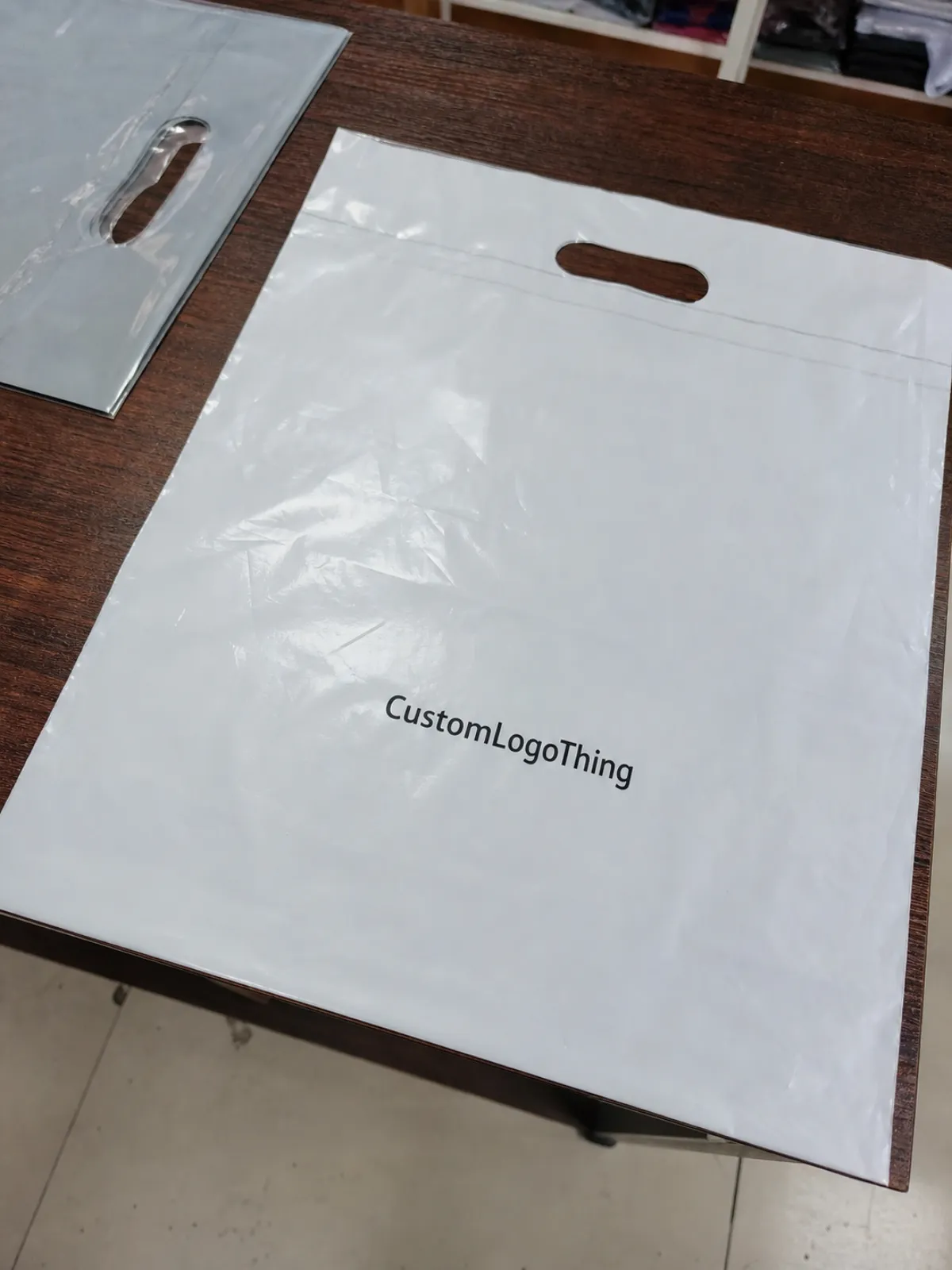
Small runs make sense when demand is uncertain. A boutique may need bags for one collection, then switch styles next month. A cosmetics launch may need branded packaging before sales data exists. A seasonal promotion may last six weeks and then disappear. In those cases, a low MOQ reduces the risk of ordering packaging that outlives the promotion.
Smaller quantities also make it easier to learn from the market. Buyers can check whether the logo reads clearly, whether the handle feels secure, and whether the bag still looks good after folding, stacking, and carrying. Those are the kinds of details that matter when the bag is used in public, not just viewed on a proof.
Small runs are useful when the spec is right. They reduce inventory risk, reveal design problems early, and keep packaging aligned with actual sales.
For brands using multiple packaging formats, the bag should fit the same visual system as labels, cartons, and inserts. A restrained retail bag paired with other Custom Packaging Products often looks more intentional than a louder one-off design that does not match the rest of the package.
Bag styles and print choices that shape the final look
Bag style affects both presentation and cost. T-shirt bags are practical and economical, which is why they remain common in grocery, takeaway, and high-volume retail. Die-cut handle bags look cleaner and are often used in boutiques and events. Loop handle bags feel more finished in hand, while patch handles add reinforcement and are better suited to heavier loads.
Handle construction matters more than many buyers expect. A loop handle usually feels more premium. A die-cut opening can work for lighter items, but it may feel temporary if the contents are dense. For apparel, boxed products, candles, and cosmetics, the handle should feel secure rather than improvised.
Print method changes both appearance and budget. Flexographic printing is common for larger runs and straightforward graphics. Screen printing can work well for bold, low-color artwork. Single-color logos are often the easiest to approve and keep readable, while multi-color art can add cost quickly on a small run.
A logo-first layout often works better than a crowded graphic. It reads faster and usually feels more deliberate at retail. The best results usually come from one strong mark, enough white space, and a finish that matches the product line.
| Bag style | Best use | Typical MOQ effect | Print note |
|---|---|---|---|
| T-shirt | High-volume retail, food service | Usually lowest | Best for simple one- or two-color logos |
| Die-cut handle | Boutiques, events, gift items | Moderate | Works well with centered branding |
| Loop handle | Apparel, cosmetics, premium retail | Higher than basic styles | Better for cleaner, high-end package branding |
| Patch handle | Heavier items, premium carryout | Often higher due to construction | Supports stronger brand presence and comfort |
For brands still refining their visual system, the bag should be decided alongside the rest of the packaging, not after the fact. If the label and box already use restrained artwork, the bag should usually follow the same approach.
Materials, thickness, size, and load specs to lock in
Plastic Shopping Bags are not one generic material. LDPE is softer and more flexible, which can suit retail bags that need a smoother hand feel. HDPE can be thinner at the same perceived strength, which may help keep the bag crisp and efficient. Recycled-content film can support sustainability goals, but it may change surface finish and print response.
Thickness is a functional choice, not a cosmetic one. Gauge or mil affects how the bag behaves under load. Too thin and it may sag or stretch; too heavy and it can add cost without much benefit. A light apparel bag and a bag for boxed candles are not the same specification, even if the artwork is identical.
Exact dimensions matter just as much. Width, gusset, height, and handle opening are not interchangeable. If the bag is too narrow, the product sits too tightly. If the gusset is too shallow, the contents can bulge. The bag should be sized around the product, not the other way around.
Performance details belong in the brief too. Ask about weight capacity, seam strength, and finish. Glossy surfaces make graphics pop. Matte finishes feel quieter and more premium. Translucent film can be useful when visibility matters, but it changes how a logo reads. A good spec answers three questions: what it holds, how it feels, and how it presents the brand.
For buyers shipping bags with cartons or inserts, transit performance matters as much as shelf appearance. Industry references such as the Packaging Institute and ISTA are useful reminders to think about handling, stacking, and shipment, not just print quality.
Pricing, MOQ, and unit cost for a smaller custom run
Pricing for low-MOQ bag orders usually follows a simple pattern: larger quantities lower the unit cost. The part that surprises buyers is how quickly setup fees, print colors, material thickness, and construction can change the result. A 2,000-piece run may look expensive on paper, but if it avoids dead inventory, it can still be the better decision.
Quote structure usually comes down to bag size, film weight, print count, packaging format, and whether the job uses a stock structure or a more custom build. If the supplier needs a new plate, a new die, or a different film width, the cost rises. If the order can use a standard format with custom print only, the economics usually improve.
| Order size | Typical setup profile | Example unit cost range | Buyer takeaway |
|---|---|---|---|
| 1,000-2,500 pcs | Higher setup share, limited print complexity | $0.22-$0.45 | Best for tests, launches, or short seasonal runs |
| 3,000-5,000 pcs | Balanced setup and production cost | $0.16-$0.32 | Often the practical middle ground for branded packaging |
| 10,000+ pcs | Lower setup impact, better material efficiency | $0.10-$0.24 | Useful once artwork and demand are already proven |
Those are working ranges, not promises. A heavy-gauge loop handle with multi-color art will price very differently from a simple die-cut bag with one ink color. Freight can matter as much as production cost, so landed cost is the number that matters. A lower quote per bag is not cheaper if plate charges or shipping terms push the total up.
MOQ language also deserves scrutiny. In some cases the floor is driven by the bag style. In others, it is the print method. Sometimes the production line simply cannot run efficiently below a certain quantity. Ask whether the MOQ is tied to tooling, ink changes, or film width, because that answer tells you how flexible the number really is.
Buyers comparing several packaging categories should also look at the broader supply program. If one supplier can handle bags, cartons, and related materials, the buying team often gets a clearer view of total spend. That is where Wholesale Programs can help, especially for brands that move between shopping bags and custom printed boxes across different lines.
Custom order process and lead time from proof to shipment
A clean process prevents most delays. It usually starts with inquiry and quote, then moves into artwork review, digital proof, production approval, manufacturing, inspection, and shipping. Each step has a point where problems can slow the order, so complete input from the buyer saves time later.
Artwork issues are the most common delay. Missing dielines, low-resolution logos, vague color references, or incomplete copy can stall a job for days. Changes after proof sign-off create another round of review because the supplier may need to recheck the layout or reset production.
A practical timing framework is simple: proof turnaround may take one to three business days, production often runs about 10 to 15 business days after approval, and freight adds its own schedule depending on destination and mode. Rush options can exist, but they usually narrow the print choices or raise cost. If the bags are for a store opening or promotional launch, build in a buffer.
For fixed dates, staggered delivery can be smarter than waiting for one full shipment. A partial delivery may get a store open on time while a second run tops up inventory later. That can reduce pressure on the first order and avoid overcommitting before demand is visible.
Compliance and transit should stay in the conversation if the bags are part of a larger logistics plan. Testing bodies such as ISTA are useful benchmarks because they keep the focus on handling and shipment, not just appearance.
Why buyers keep returning for low-MOQ custom bags
Repeat orders show whether the original spec actually worked. If a buyer comes back, the bag probably held up in store, the color stayed consistent, and the reorder process was manageable. That is the real test of a supplier handling small-run retail bags: can they make the next order feel predictable?
Service quality shows up in the details. Faster quoting helps because merchandising calendars move quickly. Clear artwork guidance matters because many buyers are not packaging engineers. Fewer surprises on proof revisions matter because the schedule does not stop for corrections.
Low-MOQ programs are especially useful for brands with several locations or rotating campaigns. A chain might need one design for a flagship district and another for a seasonal push. A boutique may need different bags for holiday, clearance, and new arrivals. If the supplier can manage those changes without turning each quote into a new learning exercise, the buyer saves time.
There is also a quality signal inside low-MOQ capability. A supplier that handles small runs well usually understands spec discipline. They know how print registration, material choice, and construction affect each other, which is useful for bags and for broader branded packaging programs.
Common mistakes that raise cost or slow approval
The most expensive mistake is under-sizing the bag. Buyers sometimes focus on logo placement and forget the item that must fit inside. Once the bag is too tight, everything else gets compromised: gusset depth, handle comfort, seam stress, and the customer’s experience.
Another common issue is overloading the print. A busy layout may look energetic on screen, but on flexible film it can quickly feel cluttered. Color mismatch is another problem that costs money and time. Pantone references, substrate color, and ink limits all affect the final result, so color expectations should be stated early.
Changing quantity after quote approval can also distort the numbers. A higher run may improve the unit cost but increase freight or production time. A lower run may look safer but push the price up because setup gets spread across fewer pieces. The comparison should happen before approval.
- Verify dimensions against the actual product, not a rough estimate.
- Check print limits before approving a multi-color layout.
- Confirm color references with Pantone numbers when consistency matters.
- Review the proof for spelling, placement, and scale.
- Lock quantity early so unit cost and production timing stay stable.
Keep the bag consistent with the rest of the packaging system. If the brand already uses a specific logo treatment on boxes, labels, or inserts, the bag should follow the same logic. Mixed visual language weakens the perceived quality of the whole order.
What to prepare before you request a quote
The cleanest quote request is also the fastest. Start with quantity range, bag dimensions, handle style, film thickness, print colors, and the date the bags need to ship. If the delivery location is known, include that too, because freight changes the final number more often than buyers expect.
Artwork should be ready in vector format whenever possible. Include logo files, Pantone references, preferred placement, and any copy that must appear on the bag. If there is no dieline yet, ask for one before design work begins. A proper dieline reduces avoidable revisions, especially on gusseted or reinforced bags.
Ask for a tiered quote so you can see pricing at several quantities. The difference between 2,500 and 5,000 pieces may be smaller than expected once setup gets spread across the run. That comparison usually reveals the real break point for unit cost.
Before sign-off, confirm any compliance or recycling requirements. If the brand makes material or sustainability claims, the claim must match the actual spec. If the order sits inside a larger procurement strategy, compare it with the other branded materials and ask whether one supplier can support both the bag run and related retail packaging.
Send the spec sheet, review the proof carefully, and place the order only when the numbers, artwork, and timing all fit. That is the cleanest way to buy a small run without creating a larger problem later.
What is the minimum order for custom plastic shopping bags with a low MOQ?
The minimum depends on bag style, print method, and film width, not one universal number. Ask for tiered pricing at several quantities so you can see where the unit cost starts to improve. If you only need a test run, request the lowest practical MOQ that still supports proper production setup.
How long does a low-MOQ custom shopping bag order usually take?
Timing usually splits into proof approval, production time, and transit time. Simple one-color orders move faster than multi-color or special-material runs. The fastest way to avoid delays is to send complete artwork and approve the proof quickly.
What artwork files should I send for a custom order?
Send vector artwork when possible, along with logo colors, preferred placement, and any text that must appear on the bag. Include Pantone references if color accuracy matters. If you do not have a dieline, ask for one before design work starts.
Can I match my store colors on custom plastic shopping bags without ordering a large run?
Yes, but the final match depends on the material, ink system, and how many colors are being printed. Small runs can still use color control if the supplier reviews the artwork and substrate early. Request a proof and confirm whether the color is being matched visually or to a specific Pantone target.
What should I compare when pricing custom plastic shopping bags low MOQ custom order options?
Compare unit cost, setup charges, freight, material thickness, and print complexity together. Look at total landed cost instead of only the quoted price per bag. Also compare lead time, proof support, and reorder consistency, because the cheapest quote is not always the lowest-risk choice.

