Pom Pom Beanies Low MOQ Custom Order: Fast Quote Options
A pom pom beanies Low MOQ Custom Order works best when the buyer needs a seasonal item, a tested design, or a controlled first run. Winter headwear sells in a short window, so smaller quantities let teams check color, fit, and decoration before they commit to a larger buy.
Small runs also move faster through approval. Buyers can compare styles, confirm the logo treatment, and settle packaging without building a large inventory risk. The tradeoff is that low MOQ still demands clear specs. Material, cuff shape, pom type, and decoration method all need to be decided before quoting starts.
That matters because a beanie may look simple, but the purchase decision touches cost, wearability, presentation, and inspection. If the order is for retail, a team store, or a gift program, the final product has to look finished as soon as it comes out of the carton.
Why small-batch pom pom beanies still move inventory
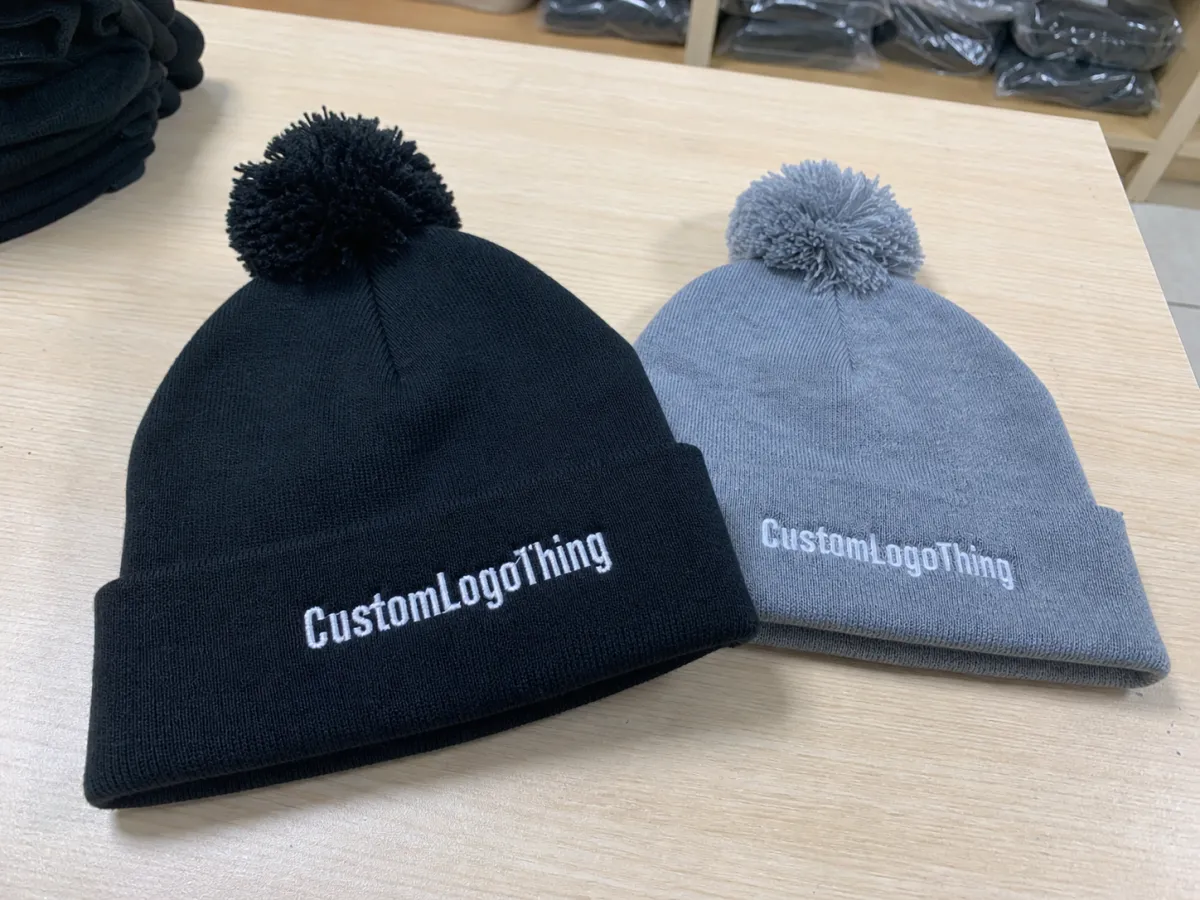
Pom Pom Beanies are a reliable cold-weather item because they are visible, easy to wear, and simple to merchandise. They do not require sizing complexity, and buyers can sell them as add-ons, impulse buys, or branded gifts without a long education cycle.
Small batches are especially useful for school stores, sports programs, pop-up retail, and holiday promotions. In those settings, the beanie is both practical and promotional. The pom gives the style enough personality to feel seasonal, while a clean cuff and sharp logo make the item look intentional rather than generic.
Low MOQ also limits downside. If the color misses, the logo feels too large, or the pom style does not match the rest of the line, the buyer has not locked into a big overbuy. That matters in winter categories, where markdowns can erase margin quickly.
A smaller run is often enough to validate the color, price point, and decoration before scaling.
These orders are also useful when the beanie needs to coordinate with other branded pieces. A smaller quantity gives the buyer room to match tags, inserts, or packaging without carrying excess stock if the program changes.
Pom pom beanies low MOQ custom order: styles, knit builds, and decoration choices
The base build drives both cost and finish. Acrylic is still the most common yarn because it is affordable, consistent, and easy to source for smaller runs. Recycled acrylic or blended yarns can support sustainability goals, but they may cost more and have narrower color ranges. Wool blends offer a warmer, more traditional feel, though they usually raise unit price and care requirements.
Cuffed beanies are the easiest to decorate because the cuff creates a flatter surface for embroidery or a patch. Slouch styles feel more casual and fashion-led, but logo placement usually needs to be smaller and more carefully positioned. Rib knit holds structure well; looser knits feel softer but can reduce legibility on small artwork.
Poms affect both appearance and handling. Yarn poms are the standard choice for value-focused programs. Faux fur poms look more premium and can improve shelf appeal, but they add cost and need more care in packing so they keep their shape. Removable poms help with storage and replacement, though they add an extra part to inspect and count.
Decoration is where the spec usually succeeds or fails. Embroidery is the most common option because it is durable on knit surfaces and keeps branding crisp. Woven patches work better for fine detail, multiple colors, or small type that would be crowded in stitching. Sewn labels are useful when the buyer wants subtle branding and a more apparel-like look.
There is no single best method. Simple logos usually look cleanest in embroidery. More detailed marks often read better as a woven patch. The right choice depends on how far away the branding needs to be read, how much setup cost the buyer can absorb, and how much visual emphasis the program wants.
Color choice can change the perception of the item faster than the logo does. A dark heather body reads more practical; a cream body with a contrast pom feels more retail-oriented. One strong colorway is usually more useful than several weak ones when the goal is to test the market.
Specs to lock before you request a quote
Fast pricing starts with a complete spec. A quote request should include quantity, base style, yarn preference, cuff height, pom type, decoration method, and deadline. If the beanies are part of a larger kit, include packaging details such as hang tags, polybags, inserts, and carton labeling.
Fit should be defined early. Most low-MOQ orders use a standard adult one-size profile, but not every beanie sits the same way. A deeper crown, tighter rib, or shorter cuff can change how the hat feels and where the logo lands. If the buyer expects a relaxed fit and the factory quotes a structured build, the final sample can look off even if the measurements are close.
Artwork placement needs more than a vague note like “front center.” Cuff height changes placement, and a logo centered in the file can sit too high once the beanie is folded. Placement should be tied to the cuff edge or seam line, especially for small type, thin lines, or symbols that need clean spacing.
Color approval should be handled carefully. PMS references help, but yarn texture, thread, and knit density all shift color slightly. A shade may look richer in yarn than on screen, or a bright tone may soften once stitched into knit fabric. If color match matters, ask for a sample or strike-off instead of relying only on a digital proof.
Packaging should be specified with the same level of detail. Carton labels help receiving teams move faster. Drop-ship orders should be packed and labeled by destination to avoid hand-sorting later. These details are not flashy, but they prevent delays and reduce errors.
| Option | Best use | Setup and handling | Typical unit cost at small MOQ |
|---|---|---|---|
| Acrylic knit, yarn pom, single embroidery | Promotions, team stores, basic retail capsules | Simple setup, quick proof cycle | $5.25-$7.50 |
| Recycled blend, woven patch, branded tag | Eco-focused launches, better retail presentation | Moderate setup, more detail review | $6.80-$9.80 |
| Fleece-lined cuffed knit, faux fur pom | Premium winter merchandise, gift programs | More material handling, longer finishing time | $8.50-$12.50 |
| Slouch knit, removable pom, multi-color stripe | Fashion-led retail and lifestyle drops | Extra assembly steps, tighter QC needs | $7.20-$10.50 |
For transit and carton durability, many buyers use ideas from the ISTA framework. If the order includes paper inserts or hang tags, specifying FSC paper can help with sourcing documentation.
Pricing, MOQ, and unit cost drivers
Pricing is shaped by a few variables that are easy to underestimate: yarn type, stitch complexity, decoration count, packaging, and total quantity. A basic acrylic beanie with one embroidery location will usually cost less than a fleece-lined style with a faux fur pom and a sewn label because the second option requires more material and more handling.
Low MOQ typically raises unit cost because setup is spread across fewer pieces. Digitizing, machine setup, inspection, trimming, and packing still have to happen, even if the order is small. The buyer is paying for fixed labor as much as for the hat itself.
There is also a difference between the minimum for the style and the minimum for the decoration. A factory may accept a lower count when using stock materials and standard branding, but require more units for a new patch shape, special yarn, or multiple colorways. Asking for a split-run quote makes those differences visible.
When comparing prices, ask for a breakdown of the main cost lines:
- Sampling or mockup cost
- Digitizing or patch preparation, if needed
- Production unit cost
- Packaging upgrades, such as hang tags or polybags
- Freight and delivery method
- Rush charges, if the deadline is tight
That breakdown matters because a low unit price can become expensive once shipping and packaging are added. For a small run, landed cost is usually the number that matters most, especially if the beanies are intended for resale.
Timing affects price too. A compressed schedule often brings a rush premium or requires current factory capacity. Buyers who approve artwork quickly and settle the spec early usually get cleaner pricing than buyers who keep changing the design during sampling.
Production steps, timeline, and approval milestones
The production path is usually simple: quote, proof, sample or mockup, approval, production, inspection, and shipment. Each stage checks a different risk. The quote confirms scope, the proof checks artwork and placement, and the sample confirms knit density, pom size, and hand feel before the full order starts.
For standard materials, a realistic lead time after proof approval is often 12-18 business days. Special yarns, complex decoration, or detailed packaging can extend that timeline. If the order is tied to a seasonal event, the sample stage should be built into the schedule instead of treated as optional.
Approval speed matters. If artwork changes after the sample is prepared, the schedule slips. If the color reference is unclear, the factory pauses while someone interprets it. The cleanest orders usually follow a fixed sequence: style first, color second, decoration third, packaging last.
Packing also needs to be confirmed before production starts. Retail programs may need one carton format, while team stores or event kits may need another. Destination counts, carton labels, and fold requirements should be settled early so the final shipment does not require manual sorting.
Small orders move fastest when the approvals are exact. A clean proof cycle usually saves more time than trying to compress production by a day or two.
The final packing stage is the last chance to catch avoidable issues. Count verification, carton labeling, and destination sorting matter because a small order has less buffer if something is wrong.
How we keep low-MOQ orders consistent run to run
Consistency starts with yarn lot control and stitch tension. If yarn lots shift, color can drift enough to show in side-by-side comparisons, especially on lighter shades. If tension changes, the beanie can measure differently from batch to batch, and the cuff may not sit the same way.
Trim quality matters just as much. Poms should be secured evenly, labels should sit straight, and loose threads should be removed before packing. Those details are small, but they are usually the first things a buyer notices when checking whether the product feels finished.
Sample approval remains the best safeguard. A physical sample confirms knit texture, logo scale, pom appearance, and how the cuff folds. It also shows whether the mark needs to be larger, smaller, or moved slightly to balance the hat.
Inspection should include pack-out behavior, not just appearance. Are the poms crushed in the carton? Are the cases packed by colorway or destination? Are the counts easy to verify? A vague packing plan can create a bigger problem than a small defect in the hat itself.
Lower quantity does not mean lower risk. If the beanies are tied to a launch, holiday, or resale plan, there is less room to recover from defects. That is why QC matters just as much on a small run as it does on a larger one.
Best-fit use cases for retail, teams, events, and promotions
Low-MOQ pom pom beanies fit winter retail capsules, school stores, sports sidelines, Trade Show Giveaways, and holiday bundles. They are easy to wear, easy to display, and broad enough in appeal that most buyers can place them in a cold-weather assortment.
Retail teams often use a small run to test a colorway or logo refresh before scaling. That is a smart way to control risk. If the first round sells through, the next order can be planned with more confidence and usually better cost control. If the design underperforms, the loss stays contained.
Teams and schools usually want comfort and durability first. Events and promotions care more about visibility and presentation, but the logic is similar. A cuffed knit with a woven patch can look more intentional than a generic giveaway, especially when the packaging is neat and the colors fit the broader program.
There is useful overlap between categories. A style that works for retail can often be adapted for a corporate gift or school program by changing the trim, insert card, or carton labeling. The core beanie stays the same while the presentation shifts.
Next steps to place your custom beanie order
To move quickly, send a clear spec list: quantity, preferred color, logo file, pom style, deadline, and intended use. If you already know the decoration method, include whether it should be embroidery, a woven patch, or a sewn label. The first message should reduce assumptions, not create them.
Ask for pricing that separates unit cost, setup, shipping, and packaging upgrades. That makes it easier to compare landed cost across suppliers and styles. If placement or texture is still being debated, request a sample or mockup before production starts. A small review step is cheaper than fixing a full run later.
If the beanies need to coordinate with other merchandise, settle the packaging plan early. Inserts, tags, and carton labels should match the rest of the kit instead of feeling added at the end. The best pom pom beanies Low MOQ Custom Order programs combine clear specifications with realistic timing and controlled approvals.
FAQ
What is the typical MOQ for pom pom beanies low MOQ custom order requests?
Minimums vary by factory, decoration method, and yarn availability. Low-MOQ programs are usually built for smaller launch quantities rather than bulk retail runs. Ask whether the minimum applies per color, per artwork, or per style before you compare quotes.
Can I mix colors in one custom pom pom beanie order?
Often yes, but the minimum may apply to each colorway if the yarn or pom changes. If you need multiple colors, request a split-run quote so you can see how the unit cost shifts across versions.
What logo methods work best on custom pom pom beanies?
Embroidery, woven patches, and sewn labels are the most common choices because they hold up well on knit surfaces. The best option depends on logo detail, budget, and how prominent you want the branding to be.
How long does a pom pom beanies low MOQ custom order take to produce?
Lead time depends on sample approval speed, decoration method, current production load, and whether the materials are standard or special-order. A standard small run can move efficiently, but buyers should still allow time for proofing, production, inspection, and shipping.
Can I approve a sample before the full custom order starts?
Yes, and that is usually the safest way to confirm fit, color, logo placement, and pom appearance before production. A sample helps prevent revisions later and gives a more accurate read on the final retail or giveaway quality.

