Buyer Fit Snapshot
| Best fit | Custom Poly Bags Pricing projects where brand print, material claims, artwork control, MOQ, and repeat-order consistency need to be specified before quoting. |
|---|---|
| Quote inputs | Share finished size, material target, print colors, finish, packing count, annual reorder estimate, ship-to region, and any compliance wording. |
| Proofing check | Approve dieline scale, logo placement, barcode or warning zones, color tolerance, closure strength, and carton packing before bulk production. |
| Main risk | Vague material claims, crowded artwork, missing packing details, or unclear freight terms can make a low unit price expensive after revisions. |
Fast answer: Custom Poly Bags Pricing: Quote Scope should be specified like a repeatable production item. The safest quote records material, print method, finish, artwork proof, packing count, and reorder notes in one written spec.
Production checks before approval
Compare the actual filled-product size with the drawing, then confirm tolerance on folds, seals, hang holes, label areas, and retail display edges. Reserve space for logos, QR codes, warning copy, and material claims before decorative graphics fill the panel.
Quote comparison points
Review material grade, print process, finish, sampling route, tooling charges, carton quantity, and freight assumptions side by side. A quote is only useful when the supplier can repeat the same color, closure quality, and packing count on the next order.
Custom Poly Bags Pricing Guide: What Really Drives Cost
Years around packaging lines taught me a blunt lesson: quote surprises usually come from one small spec change, not from a dramatic redesign. A buyer in Columbus, Ohio once approved a 10 x 14 inch, 2 mil clear bag at $0.09 per unit for 10,000 pieces, then asked for 2.5 mil and a 1.5 inch bottom gusset because the product had a sharper edge than expected. The next quote landed at $0.13 per unit, and the change was not a mystery; it was more film, more sealing time, and a little extra waste. That is exactly why a Custom Poly Bags pricing guide is more useful than it sounds at first glance. The spreadsheet did not betray anyone in that meeting. It just reflected the math.
A practical Custom Poly Bags pricing guide has to go beyond size and color count. It should account for resin cost, film grade, converting labor, print setup, ink coverage, packaging method, freight assumptions, and the way a plant schedules jobs across a Monday-to-Friday production calendar. Two bags can look nearly identical on a screen and still behave very differently on the floor. One may run at 260 bags per minute in Dongguan, while another slows to 180 bags per minute because of tighter registration, a heavier gauge, or a wider seal area. Same visual shape. Very different economics. That is the part buyers miss when they only stare at the drawing.
Before comparing quotes, it helps to know what lives inside the number. A supplier is usually balancing raw resin, whether the film is extruded in-house or purchased as rollstock, how much setup time the line will need, whether the job needs special packaging, and how many cartons or pallets the finished bags will occupy. On a 5,000-piece order, a $180 plate charge or a $75 proof charge can be obvious; on a 50,000-piece order, those same charges shrink into the background. The Custom Poly Bags pricing guide you want at the start is the one that makes those moving pieces visible instead of hiding them inside one tidy line item and calling it clarity.
Custom Poly Bags Pricing Guide: Why One Small Change Can Shift the Quote
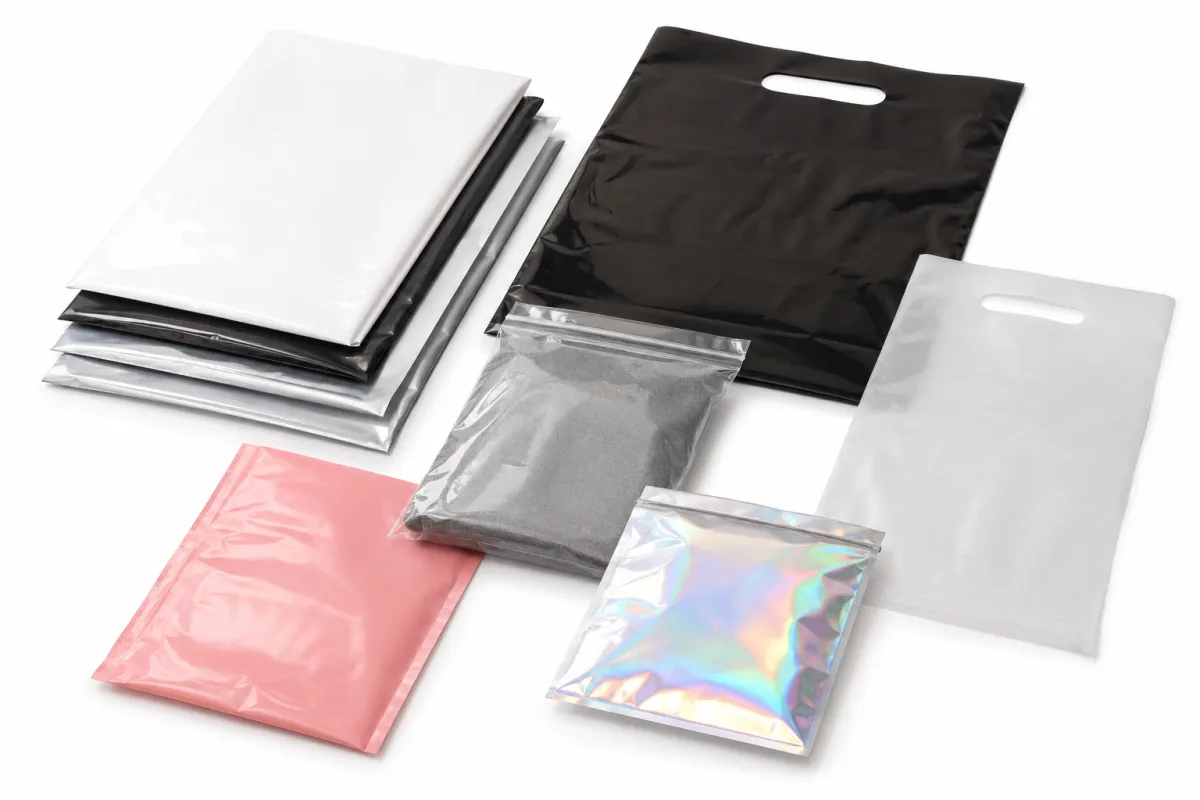
The biggest misconception I hear is that poly bags are priced mostly by size, as if a 10 x 14 bag and an 11 x 14 bag should land in the same neighborhood. In practice, a one-inch increase can alter resin usage, seal time, and scrap rate all at once. I saw that on a food-adjacent run in Monterrey, Mexico, where a switch from a straight bag to a 2 inch side gusset changed film yield enough to push the unit price from $0.08 to $0.11 on a 20,000-piece quote, even though the artwork stayed exactly the same. That is a classic lesson from any custom poly bags pricing guide: visible dimensions tell only part of the story, and sometimes not even the interesting part.
A bag quote usually includes more than the unit price. Resin or film cost, converting labor, plate or cylinder charges for printed work, artwork cleanup, color matching, packing labor, carton counts, pallet wrap, and freight assumptions tied to a destination zip code can all sit inside the final number. If a plant is buying virgin LDPE at $1.12 per pound during a week of higher market pricing, or if the job needs a tighter gauge tolerance like 2.25 mil +/- 10 percent, the price can shift before the machine even starts humming. A clear custom poly bags pricing guide should make those assumptions explicit instead of burying them in a single number and pretending that is helpful.
Freight structure deserves the same scrutiny. One supplier may quote a printed bag with freight included, another may quote ex-factory pricing, and a third may add tooling and packaging charges later. I sat in a negotiation once where three numbers looked close until we realized one quote assumed 500 bags per carton and the other assumed 250, which doubled the pallet count from 6 to 12. The supposed savings evaporated right there. That was a very expensive fifteen minutes, especially after someone had already ordered lunch. A strong custom poly bags pricing guide is really a quoting discipline, not just a cost explanation.
Production efficiency matters too. A shop may run 25,000 bags of a simple clear poly mailer in one shift, while a heavily printed retail bag may need slower press speeds, more inspection, and longer changeover time. If the project sits inside a broader branded program, alongside Custom Packaging Products or even Custom Poly Mailers, the bag spec has to fit the entire package plan. That is one reason the custom poly bags pricing guide is useful to purchasing teams, designers, and operations managers alike. It ties one component to the system around it instead of treating the bag like an island.
Custom Poly Bags Pricing Guide: How the Quote Is Built
When I break a quote down with a buyer, I usually start with the film. Some jobs use in-house extrusion from virgin LDPE or LLDPE, while others use stock film that is later converted into finished bags. The resin choice matters because LDPE behaves differently from LLDPE in stretch, seal strength, and softness, and those physical differences affect machine speed and yield. A 2.0 mil LDPE bag for warehouse use may cost around $0.06 per unit at 20,000 pieces, while a 2.5 mil blend with better puncture resistance can land near $0.08 or $0.09. A solid custom poly bags pricing guide should explain that film is not just plastic. It is the base economics of the project, and it has a sneaky habit of deciding the rest of the math.
Converting comes next, and that is where the flat roll becomes a finished bag. The line may need bottom seals, side seals, side gussets, zipper placement, wicket punching, perforation, or hang holes, and each operation adds machine time and setup. I once watched a converting crew in Shenzhen lose nearly an hour because a tiny seal bar alignment was off by less than 1 millimeter. One millimeter. That kind of detail makes a floor manager stare at the line, then at the sample, then at the same sample again like it might confess. A custom poly bags pricing guide has to account for labor and changeover, not just raw material.
Printing adds another layer. A one-color logo on one side of a 2 mil bag is a different job from a two-sided, four-color retail graphic with tight registration and Pantone matching. Ink coverage, plate count, and setup for each station can move the economics quickly, especially on shorter runs. On a 5,000-piece order in Chicago, a single-color print might add $0.03 per unit, while a four-color design can add $0.09 or more because of plate prep and press time. If you are working through a custom poly bags pricing guide for promotional packaging, branded packaging, or product packaging, the number of colors often matters more than buyers expect. Four colors can sound like "just a little more art," and then the quote arrives looking personally offended.
Then come the one-time charges. Plates, cylinders, artwork corrections, and first article proofing are usually spread across the run, which is why quantity matters so much. On a 5,000-piece order, a $180 plate charge can matter a great deal. On a 50,000-piece order, it becomes a much smaller slice of the unit cost. That is one reason a custom poly bags pricing guide almost always shows better unit pricing as order size rises, even when the bag spec stays the same. Fixed costs are like that: rude at small volumes, less dramatic at bigger ones.
- Raw film or resin: LDPE, LLDPE, or a blend, usually priced by pound and affected by market swings; a common spread is $1.05 to $1.35 per pound.
- Converting: Sealing, cutting, wicketing, perforating, zipper insertion, or gusset forming; minor operations can add $0.01 to $0.04 per bag.
- Printing: Plate costs, setup, ink matching, press time, and inspection; one-color jobs often cost less than half of two-sided four-color jobs.
- Packaging: Cartons, bundles, pallet wrap, labels, and count verification; carton changes can shift pallet count from 6 to 12.
- Freight: Parcel, LTL, or full truckload, depending on finished cube and destination; a Los Angeles shipment can price very differently from one going to Atlanta.
Minimum order quantities matter as well. A small run of 2,500 bags can cost more per piece than a 20,000-piece run because the line still needs to be set up, the film has to be staged, and the printer still has to be calibrated. A 2,500-piece clear bag order might land at $0.18 per unit, while the same bag at 20,000 pieces can drop closer to $0.07 or $0.08. That is not a penalty. It is manufacturing math, and manufacturing math does not care how politely the buyer asks. A practical custom poly bags pricing guide should show where the fixed cost sits so the pricing pattern feels less mysterious.
Buyers get a better benchmark when they ask whether the supplier is quoting a manufactured bag or a bag converted from already-extruded film. I have seen both models work well, but they produce different cost structures. If the supplier is also handling related packaging design, outer shippers, or retail packaging graphics, ask how those services are separated in the quote so bundled support does not get mistaken for free labor. A careful custom poly bags pricing guide keeps those lines visible, which saves everybody from the classic "wait, that was extra?" conversation.
| Quote Type | Typical Features | Common Cost Drivers | Best Use Case |
|---|---|---|---|
| Plain clear bag | No print, standard LDPE, simple seal; often 2 mil and 10 x 14 inches | Film weight, bag size, carton count; around $0.06 to $0.09 per unit at 10,000 pieces | Internal storage, protective overwrap, warehouse handling |
| One-color printed bag | Logo on one side, one plate or cylinder, usually 2.5 mil film | Setup, ink match, press time; often $0.10 to $0.14 per unit at 10,000 pieces | Basic package branding or promos |
| Multi-color retail bag | Two-sided print, tight registration, specialty finish, often shipped in 500-count cartons | Artwork prep, plate count, slower run speed; can reach $0.15 to $0.22 per unit at 5,000 pieces | Retail packaging, shelf display, customer-facing use |
Lowest unit price is not always the best number to chase. In a real custom poly bags pricing guide, the right cost is the one that matches protection, appearance, and landed cost without padding the spec beyond what the product actually needs. A bag can be cheap and still expensive if it fails the job. I have seen a $0.07 bag create a $1.80 return shipment because the seal split in transit from Dallas to Phoenix. That sort of failure is what turns a bargain into a liability.
For teams worried about transit damage, I also pay attention to how the finished bags will travel inside a master carton or shipper. Transit testing guidance from the ISTA library can help when bags are part of a larger parcel workflow, because a 3.5-pound carton that passes on paper can still fail a corner drop if the pack-out is sloppy. When a buyer treats the custom poly bags pricing guide as part of the full distribution plan rather than just the factory price, the result is usually smarter, calmer, and a lot less expensive in the long run.
Key Cost Drivers: Material, Size, Gauge, and Print Options
Material choice is where much of the pricing movement starts. LDPE is common for soft, flexible bags, while LLDPE can improve puncture resistance and stretch, which matters if the product has sharp edges or gets handled repeatedly. Resin pricing can swing with oil markets, plant capacity, and supplier availability, so the same spec may not hold the same number from one month to the next. A current custom poly bags pricing guide has to reflect that reality instead of pretending resin prices are carved into stone. A bag quoted at $0.07 in January can easily hit $0.09 by March if resin jumps by 12 percent.
Size changes are easier to see, but they are still easy to underestimate. A bag that grows from 8 x 10 to 9 x 12 uses more film, yet it may also require a wider web and different machine settings, which affects yield and waste. Add a gusset, and the film pattern changes again. I have seen a buyer approve a slightly wider retail bag because the artwork looked better centered, only to learn that the extra half inch of width meant a noticeable rise in material use. That is why the custom poly bags pricing guide has to connect design intent with shop-floor economics, not just with the prettier mockup.
Gauge thickness is another major variable. Moving from 2 mil to 2.5 mil or 3 mil seems modest on paper, but over 20,000 bags it becomes a large resin difference. Thicker bags also affect sealing speed and can raise the chance of wrinkle control issues on the line. In practical terms, a bag should be thick enough for the product, not thick enough to make everyone feel safe because "more plastic must be better." I say that with love, but also with a little frustration, because the invoice always proves the point later. That is a lesson I repeat often in any custom poly bags pricing guide.
Printing variables can change the quote as much as gauge. One-sided art is simpler than two-sided art, and a plain one-color logo is far easier than a full-bleed retail design with small text, barcodes, and color gradients. If you need Custom Printed Boxes for the outside shipper and a printed bag for the inside unit package, both specs need to be coordinated so the branding stays consistent across the line. A 350gsm C1S artboard carton at $0.42 per shell may be a different item entirely, but the buyer still needs one visual and one cost plan. Good package branding is not just about adding ink; it is about matching the visual plan to the cost plan, and a detailed custom poly bags pricing guide should make that visible.
Closures and finishing options matter too. A zipper, flap, adhesive strip, euro slot, wicket hole, or vent hole all change the process. Even a simple perforation can alter line speed because the operator has to keep the tear line true and the film tension stable. If the project involves food-adjacent or tamper-sensitive product packaging, the finishing spec should be chosen with testing in mind. For broader material and waste considerations, the EPA recycling guidance is a useful reference when teams are weighing source reduction and disposal planning, especially for facilities in California, Illinois, and Ontario.
Freight deserves its own conversation. Fifty thousand bags in compact cartons might ship differently than 5,000 oversized bags packed in large cases, because cube, pallet count, and weight all affect the final landed cost. A quote that looks $0.03 cheaper per piece can become more expensive once it is packed onto 12 pallets and moved by LTL freight instead of parcel. A trailer from a plant in Cleveland to a warehouse in Nashville may cost $680, while a small parcel shipment from the same plant may only be $110, but the unit economics still need to be compared. That is another place where a practical custom poly bags pricing guide saves money, because it forces the buyer to look at landed cost instead of one line item and call it analysis.
Process and Timeline: From Artwork Review to Finished Poly Bags
The process usually begins with quote approval and a clean spec sheet. After that comes artwork review, and this is where a surprisingly large number of delays begin. A logo file that looks fine on a laptop may arrive as a low-resolution JPG, which means the shop has to rebuild it for print. If you want your custom poly bags pricing guide to lead to a predictable launch, the first step is simple: make sure the art files are actually print-ready. A 300 dpi vector file can move in one day; a blurry 96 dpi image can stall the job for 2 or 3 days while the artwork team rebuilds it. I wish that sounded less obvious, but here we are.
Once the art is approved, the shop schedules materials, plates, and line time. On standard jobs, I have seen turnaround land in the 12 to 15 business day range from proof approval to finished packing, but the number can stretch if the film is specialty, the color match is exacting, or the shop is already booked on their printing press. A dependable custom poly bags pricing guide should make clear that lead time is tied to capacity, not just enthusiasm. "We need it soon" is not a production strategy, despite how often it gets treated like one. A plant in Ho Chi Minh City may quote 12 business days, while one in Charlotte may quote 8, and both can be right if their schedules are different.
One client meeting still stands out. A retail buyer wanted a purple accent on a clear poly bag, but the actual Pantone needed a second round of ink adjustment because the first proof looked too blue under shop lights and too gray under office fluorescents. We burned nearly two days on that match, and nobody enjoyed paying for extra proofing, yet the lesson was real: color decisions affect both schedule and cost. A second proof can add $45 to $120 depending on the supplier and the number of stations. That is why a complete custom poly bags pricing guide should mention proofing as a real production step, not a formality that magically sorts itself out.
During production, the plant has to coordinate extrusion, printing, converting, inspection, and packing. If the extrusion line is down for maintenance or the press is tied up on another run, the order may wait even if every approval is finished. I have walked floors where one missing roll core held up an entire shift. That kind of thing makes you appreciate how many tiny pieces have to line up before a finished bag appears. These are the unglamorous details that explain why a custom poly bags pricing guide needs to talk about plant reality, not just theoretical lead times.
After converting, bags are counted, boxed, palletized, and labeled. A simple count error can create a larger problem than many buyers realize, because the wrong carton count may trigger a reshipment, a credit, or a production stop downstream. If the bags are going into retail packaging or being bundled with other branded packaging components, inspection before dispatch matters just as much as print quality. That is the kind of detail a mature custom poly bags pricing guide should call out plainly, because no one enjoys discovering a shortage once the goods are already on a truck.
Step-by-Step: How to Build a Quote That Matches Your Needs
Start with a spec sheet that leaves little room for interpretation. List the bag dimensions, gauge, material, color, print count, print sides, closure type, carton count, target annual volume, and the delivery zip code. If you can add the product weight, the packaging dimensions of the item going inside the bag, and whether the bag is for retail packaging or internal handling, do it. The more complete the brief, the more useful the custom poly bags pricing guide becomes in practice, and the fewer times you will have to answer the same question in three different email threads.
- Gather the core specs: width, length, gusset, gauge, material, colors, and closure style; for example, 10 x 14 inches, 2.5 mil LDPE, clear.
- Clarify quantity: quote 5,000, 10,000, and 25,000 if you are not certain about annual demand; the unit price can move from $0.15 to $0.08 across those breaks.
- Define the print: one side or two sides, one color or multiple colors, and Pantone targets if color matters.
- Set freight assumptions: parcel, LTL, or customer pickup, because freight can swing the landed cost by $0.02 to $0.06 per unit.
- Ask for timing: proof approval date, production lead time, and estimated ship date; standard windows often run 12 to 15 business days after approval.
Then compare apples to apples. I cannot count the number of times I have seen two bids that looked close until one included tooling, one excluded freight, and one quietly assumed a lighter gauge. A real custom poly bags pricing guide should push you to confirm the same dimensions, same film, same print complexity, same packaging, and same delivery method before anyone compares numbers. Otherwise the "lowest bid" is just the most artfully incomplete one, usually missing a $75 setup line or a $0.03 per bag packing charge.
For visual or customer-facing applications, ask for a sample or a comparable production photo. If the bag is going into retail packaging, a color-critical promo, or a food-adjacent program, a small production sample can save a costly mistake. I have seen buyers approve a glossy mockup and later regret the actual film finish because it looked too shiny beside matte custom printed boxes on the shelf. A thorough custom poly bags pricing guide should treat samples as risk control, not optional decoration for people who like to hold things up to the light.
You also need to decide whether you are optimizing for lowest unit price or best landed cost. A quote that is $150 cheaper on paper can become more expensive after freight, extra handling, and slower lead time are added in. On the other hand, the cheapest quote is not always the best fit for high-value product packaging where a bag failure creates returns, chargebacks, or brand damage. A smart custom poly bags pricing guide keeps that tradeoff visible so the buyer can make a real business decision instead of winning a budget meeting and losing the month.
| What You Ask For | Typical Risk if Omitted | Why It Changes Price |
|---|---|---|
| Exact dimensions and gusset | Wrong film yield or bag fit | Changes material usage and machine setup; even a 0.5 inch shift can add 4 to 6 percent more film |
| Gauge and material type | Underbuilt or overbuilt bag | Affects resin weight and seal behavior; 2 mil and 3 mil are not priced the same |
| Print colors and sides | Unexpected art costs | Changes plate count and press time; two-sided print can add one full setup cycle |
| Freight method and destination | Misleading quote comparison | Alters landed cost and pallet count; an LTL shipment to Denver will not price like parcel to Newark |
If your order sits inside a larger packaging program, connect the bag spec to the rest of the line, whether that means custom packaging products, labeling, or the outer shipper. I have seen brands save money simply by aligning the bag dimensions with the shipper size instead of treating each component separately. That kind of alignment is exactly why a custom poly bags pricing guide has value beyond the quote itself. It helps the whole package behave better, and it prevents the sort of awkward fit that makes everyone in the warehouse mutter under their breath while loading pallets in New Jersey or Nevada.
Common Mistakes That Inflate Custom Poly Bags Orders
The first mistake is over-specifying. I have seen buyers choose a 4 mil bag for a product that would have been perfectly safe in 2.5 mil, just because thicker sounded safer in a meeting. That decision can add resin cost, slow sealing, and increase shipping weight without improving protection in any meaningful way. A disciplined custom poly bags pricing guide should remind you that stronger is not always smarter. Sometimes it is just heavier, harder to seal, and $0.02 to $0.04 more per unit without adding real value.
The second mistake is comparing quotes without checking the assumptions. If one supplier includes printing plates and another does not, the lower number is not a real comparison. If one quote is based on 250 bags per carton and another on 500, freight and pallet count will not line up. The fastest way to misuse a custom poly bags pricing guide is to treat every line item as if it came from the same playbook. That is how teams end up celebrating a deal that was never actually a deal, especially when the shipping bill from Atlanta lands two weeks later.
"I thought we were saving six cents a bag," a plant manager told me once, "but the freight and rework wiped out the whole gain." That was after a buyer changed the spec from a simple clear mailer-style bag to a heavier printed bag with a wider seal area, and the run took two extra hours on the floor. The job was supposed to ship from El Paso on Thursday; it left on Saturday instead. Nobody was thrilled. The coffee machine got a lot of business that morning.
Artwork issues are another quiet budget killer. Missing Pantone targets, low-resolution logos, and last-minute layout revisions can each add time on the shop floor. One supplier I worked with had to stop a press changeover because the buyer sent a new barcode placement after proof approval, and that restart burned a full stack of setup time. A strong custom poly bags pricing guide should make it obvious that art cleanup is not free labor, even if everyone wishes it were. A 90-minute artwork correction can push a same-week ship date into the following week.
The fourth mistake is buying strictly on unit price. A cheap quote can hide slower lead time, a thinner inspection process, or freight that lands a week later than your ship date. I have seen that happen on both retail packaging launches and industrial replenishment orders, and the result is always the same: the purchase order looked good, but operations paid the bill later. A realistic custom poly bags pricing guide teaches the buyer to compare total value, not just a single per-bag number.
There is also a pattern I see in teams that manage both product packaging and custom printed boxes: they optimize the outer carton and forget the inner bag. That usually creates a mismatch between shelf presentation and material cost. If the bag is the first thing the customer sees, the finish, ink density, and print layout should get the same care you would give a label or shipper. A thoughtful custom poly bags pricing guide keeps the package branding consistent without pushing the spec too far into "fancy for the sake of fancy."
What Affects Custom Poly Bags Pricing the Most?
The short answer is a mix of film, labor, setup, and freight. The longer answer is that the biggest swings usually come from a few predictable places: bag size, gauge thickness, material type, print complexity, and order quantity. Those five variables drive resin usage, machine speed, plate count, and carton count, which is why a custom poly bags pricing guide works best when it treats the quote like a system instead of a single number.
Material choice is often the first lever. LDPE and LLDPE behave differently on the line, and a switch from 2 mil to 2.5 mil or 3 mil changes both resin weight and seal performance. Add a gusset, zipper, wicket hole, or special finish, and the cost moves again. A buyer who understands this pattern can spot whether the quote is priced for a basic clear bag, a printed poly mailer, or a more specialized retail package. That is the kind of context a custom poly bags pricing guide should surface immediately.
Print details are the next place to look. One color on one side is not the same as two-sided, four-color artwork with Pantone matching and a barcode. More colors usually mean more plates, more setup time, and more inspection. On smaller quantities, those fixed costs matter a lot. On larger runs, they spread out. The math is simple, even if the sales language around it is not.
Freight can quietly erase an apparent bargain. A quote that is a few cents lower on paper can become the most expensive option once pallet count, carton size, and shipping method are included. That is why every custom poly bags pricing guide should push buyers toward landed cost, not just ex-factory price. The factory number is only one slice of the story; the warehouse receipt is the rest.
Next Steps: Compare Quotes, Tighten Specs, and Order Smarter
Start by tightening your spec sheet until there is little room for guesswork. If two or three suppliers are quoting the same dimensions, the same film type, the same gauge, the same print count, and the same freight assumptions, your numbers will finally mean something. That is the most practical lesson in any custom poly bags pricing guide: the cleaner the brief, the cleaner the quote. A messy brief makes every supplier look either expensive or incompetent, and neither outcome helps you.
Then build an internal checklist that includes purchasing, design, and operations. Purchasing usually cares about price and lead time, design cares about print quality and color, and operations cares about fit, pack-out, and schedule. If those three groups do not agree before the order is released, you can end up re-quoting the same job twice. A usable custom poly bags pricing guide should help them speak the same language instead of tossing PDFs at one another and hoping for peace.
If the package is customer-facing or performance-sensitive, order a sample or a short pilot run. I would rather see a 500-piece trial uncover a seal issue than learn about it after 25,000 bags are already in distribution. That advice applies whether the bag is feeding a retail packaging program, an industrial rework, or a launch tied to package branding across multiple SKUs. A good custom poly bags pricing guide always leaves room for validation, because real-world handling has a talent for embarrassing beautiful spreadsheets.
My honest view is that the best buyers do not chase the cheapest quote; they chase clarity. They know that a 2 mil clear bag, a 2.5 mil printed bag, and a gusseted retail bag are three different manufacturing problems, even if all three are called "poly bags" in casual conversation. If you use this custom poly bags pricing guide to define the spec carefully, compare the right assumptions, and respect the realities of production, you will get better pricing and fewer surprises on the floor.
That is the real payoff of a custom poly bags pricing guide: not a magic discount, but a sharper quote, a cleaner production plan, and a smarter decision before the first roll of film ever hits the machine. In plants from Shenzhen to Monterrey to Louisville, the same pattern shows up again and again: the more precise the brief, the less expensive the mistake. If you need one takeaway, make it this: lock the bag dimensions, gauge, print setup, carton count, and freight method before you compare suppliers, or the lowest number will almost certainly be the least honest one.
What affects custom poly bags pricing the most?
The biggest drivers are bag size, gauge, material type, print complexity, and order quantity, because each one changes resin use, machine time, and setup cost. Freight and packaging details matter too, especially for palletized orders or shipments with higher cube. A 10 x 14 inch, 2 mil clear bag at 10,000 pieces might sit near $0.08 per unit, while a 2.5 mil printed version can move to $0.13 or more depending on cartons and destination.
How do I compare custom poly bags quotes apples to apples?
Ask every supplier to quote the exact same dimensions, gauge, material, color count, print sides, quantity, and delivery method. Confirm whether each quote includes plates, setup, freight, and any one-time charges so the numbers stay truly comparable. If one quote is based on 250 bags per carton and another on 500, the freight math will not match, even if the unit price looks close.
Do printed custom poly bags cost more than plain bags?
Yes, printed bags usually cost more because they add artwork prep, ink, press setup, and additional production steps. The gap can shrink on larger runs, where those setup costs are spread across more pieces. On a 5,000-piece order, a one-color print might add $0.03 to $0.05 per unit, while a multi-color bag can add $0.08 to $0.12 per unit depending on the press and plant.
How long does a custom poly bags order usually take?
Standard jobs can move fairly quickly once artwork is approved, but lead time depends on film availability, press schedule, and converting capacity. Special colors, complex graphics, or unusual sizes usually add extra time for proofing and production planning. A typical window is 12 to 15 business days from proof approval, though a busy plant in Chicago or Ho Chi Minh City may need a few more days if the press calendar is full.
Can changing bag size or gauge lower custom poly bags pricing?
Yes, reducing oversized dimensions or choosing the lightest gauge that still protects the product can lower resin use and shipping weight. The best savings come from matching the bag to the application instead of overbuilding it. For example, moving from 3 mil to 2.5 mil on a 20,000-piece order can shave enough material cost to cut the total quote by several hundred dollars.


