Buyer Fit Snapshot
| Best fit | Start Custom Box Business projects where brand print, material claims, artwork control, MOQ, and repeat-order consistency need to be specified before quoting. |
|---|---|
| Quote inputs | Share finished size, material target, print colors, finish, packing count, annual reorder estimate, ship-to region, and any compliance wording. |
| Proofing check | Approve dieline scale, logo placement, barcode or warning zones, color tolerance, closure strength, and carton packing before bulk production. |
| Main risk | Vague material claims, crowded artwork, missing packing details, or unclear freight terms can make a low unit price expensive after revisions. |
Fast answer: Start Custom Box Business: Production Spec, Color Control, and Delivery Risk should be specified like a repeatable production item. The safest quote records material, print method, finish, artwork proof, packing count, and reorder notes in one written spec.
Production checks before approval
Compare the actual filled-product size with the drawing, then confirm tolerance on folds, seals, hang holes, label areas, and retail display edges. Reserve space for logos, QR codes, warning copy, and material claims before decorative graphics fill the panel.
Quote comparison points
Review material grade, print process, finish, sampling route, tooling charges, carton quantity, and freight assumptions side by side. A quote is only useful when the supplier can repeat the same color, closure quality, and packing count on the next order.
If you are trying to figure out how to Start Custom Box business, start with the part people love to skip: who buys the box, who actually makes it, and what happens to the margin when a 2,000-piece order turns into a 1,500-piece rush job with a revised dieline, a 0.020-inch board change, and a freight quote that jumps from $185 to $294 overnight because fuel surcharges moved. I have spent time on corrugated floors where operators were checking B-flute caliper with a micrometer set to 0.001 inches, and I have watched a small sales office in Illinois build a durable book of business before it owned a single press. That is the real shape of how to start custom box business the practical way.
You are building a bridge between a customer’s need and the right structure, board grade, print method, finish, and production partner. Some buyers want branded packaging for an ecommerce subscription launch in Austin or Phoenix. Others need Custom Printed Boxes for cosmetics, food, beverages, or industrial parts that need protection and a cleaner presentation. The job is part quoting, part packaging design, part project management, and part quality control. The businesses that hold up usually care more about consistency, response time, and a 12-day proof-to-ship rhythm than clever sales language. Honestly, that is the part most newcomers underestimate. If you want a practical answer to how to start custom box business, build the process before you build the pitch.
I have seen new operators try to sell every box style under the sun and burn cash in the process. The ones who last keep the offer narrow, quote with discipline, and treat margin like something that can be protected or destroyed by a $0.06 freight swing or a 2 mm spec error. Learn how to start custom box business with that mindset, and you are already ahead of a lot of people who think packaging is only artwork and a pretty mockup. It is not. I have seen too many polished mockups collapse the minute the real carton hits the floor and the glue line refuses to behave.
How do you start a custom box business?
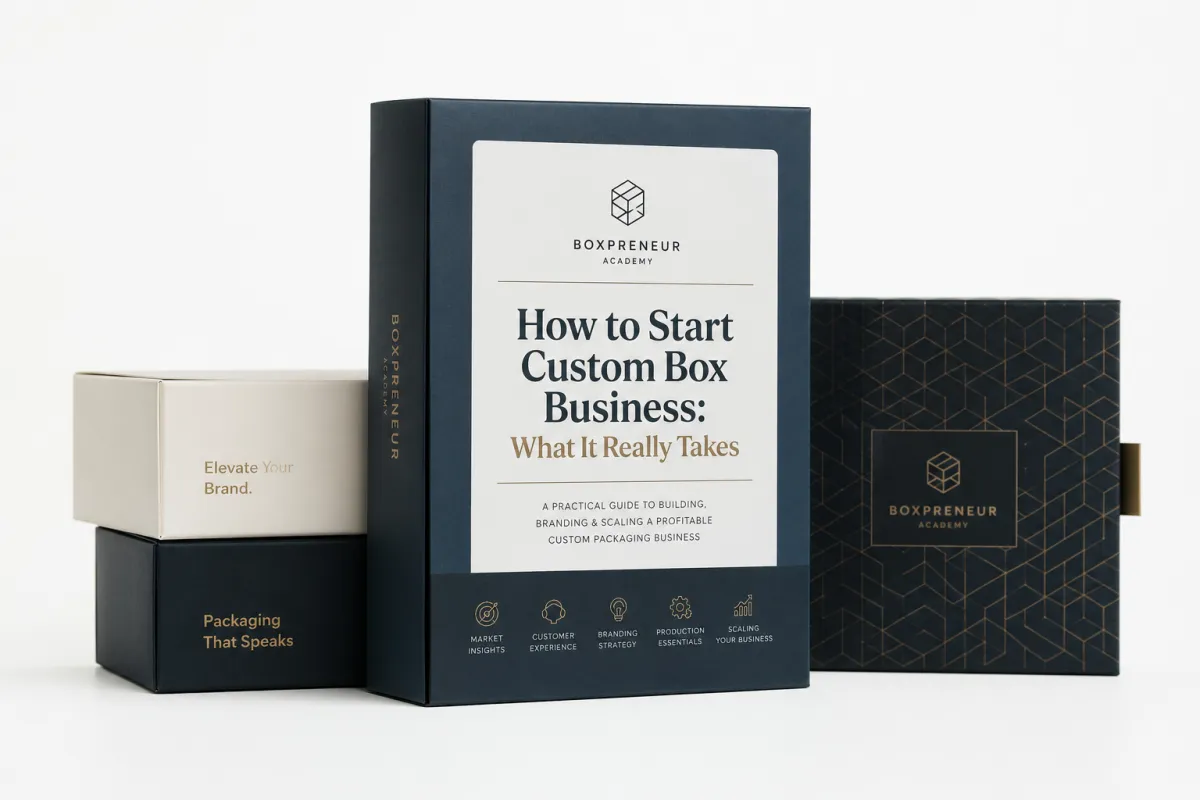
Start by choosing one buyer type, one box family, and one reliable production path. If you are learning how to start custom box business, the smartest opening move is usually a focused service model: collect specs, quote accurately, source from vetted converters, and manage proofing and delivery with discipline. You do not need to own a press on day one. You do need to understand board grades, dielines, print methods, freight timing, and what a customer really means when they say they want a box that feels "premium." The companies that get traction early are usually the ones that make the process clear enough for a buyer to trust it quickly.
There is also a practical reason to start small. A narrow offer makes your quoting faster, your sample shelf more useful, and your supplier conversations less chaotic. I have seen founders waste weeks trying to be everything to everybody, and the result was usually a pile of mismatched proofs and a very tired phone. If you are serious about how to start custom box business, make your first win repeatable, not impressive.
How to Start Custom Box Business: What It Really Takes
The first thing I tell people is simple: how to start custom box business is not mysterious, but it is a business of details. You are not just selling a carton or a mailer; you are selling fit, print quality, protection, freight readiness, and timing. A customer may ask for "a nice box," then expect you to translate that into something specific, such as an E-flute mailer with kraft liner, a 16 pt SBS folding carton, or a rigid set-up box wrapped in chipboard with a soft-touch finish. That translation is where the money is made, and where most mistakes hide, especially when a buyer in Toronto or Dallas is comparing samples side by side.
Many successful packaging businesses begin as brokers, estimators, or small sales shops rather than factory owners. I remember a client outside Chicago who had no machine at all, only a sample shelf, a sharp quoting sheet, and three dependable converters within a 250-mile radius in Wisconsin, Indiana, and Ohio. He printed on a borrowed digital line, bought die-cut work from one plant, and outsourced freight to another. He still made money because he knew how to start custom box business with a focused offer and a quick quoting rhythm. He also knew when to say no, which sounds boring until you watch a bad order eat three good ones.
The buyer groups reveal themselves once you spend enough time in the field. Ecommerce brands usually want mailers and ship-ready corrugated packaging. Subscription companies care about unboxing, print consistency, and repeatability across 5,000 to 25,000 units. Cosmetics buyers want retail packaging that photographs well and survives shelf handling in stores from Los Angeles to Miami. Food and beverage brands may need grease resistance, odor control, or FDA-compliant materials. Industrial shippers often need corrugated packs, partitions, and inserts that survive real abuse in transit. The weird thing is that all of them think their situation is unique until you put the samples side by side and show them the same 0.030-inch board difference.
Speed matters. Sloppy speed hurts more than slow speed. A dimension that is off by 6 mm, or artwork that ignores the score line, can throw the whole job off balance. That is why how to start custom box business should always include a process for spec checks, not just a sales pitch. A good operator knows the difference between a box that looks good in a render and one that folds cleanly, stacks correctly, and arrives without crushed corners after a 1,200-mile freight run. I have had to explain that difference more times than I care to admit, usually while staring at a proof that somehow made a tiny carton look like a luxury hotel on a hill. Nice idea. Wrong physics.
One converter supervisor I worked with in a Midwest plant in Grand Rapids used to say, "If you can quote a 2,000-piece mailer in one business day, confirm the dieline the same day, and keep the proof clean, you will beat fancier competitors who take three calls to answer one question." He ran a two-color flexo line and a die-cutter that stayed busy from 6:00 a.m. to 2:00 p.m., so he was not speaking from theory. He was speaking from the floor, where the board truck either arrives on time or it does not. How to start custom box business comes down to learning that rhythm and protecting it.
The production chain is longer than many new owners expect. It starts with inquiry and spec gathering, then moves through dieline selection, pricing, artwork, proofing, sampling, production, converting, packing, and freight. If any one of those steps is vague, the order can drift. I have seen a 10,000-unit folding carton job stall for four days because the customer approved artwork before confirming the final tuck flap dimensions. That is a small miss on paper and a real headache on the floor. Four days can feel like four weeks when people are asking, "Has it shipped yet?" every two hours.
How to start custom box business with a sane workflow means seeing where time disappears. A digitally printed short-run mailer might move from proof approval to shipment in 5 to 7 business days if the board is in stock and the schedule is open. A litho-laminated rigid box with foil, embossing, and a specialty insert can take 3 to 5 weeks, especially if custom tooling or a wrapped tray is needed. The promise you make should match the structure, not the wish list. I have had to talk buyers down from fantasy timelines more than once, and yes, they usually act like the delay was my idea.
The structural designer makes sure the box opens, folds, and stacks correctly. The prepress operator checks bleeds, ink density, overprints, and trap settings. The converter handles die-cutting, gluing, scoring, and finishing, while the freight partner makes sure the boxes survive pallet handling from Monterrey to Kansas City. Each role matters. How to start custom box business becomes easier once you know which decision belongs to which stage. If the wrong person owns the wrong step, the whole thing turns into a game of packaging telephone, which is as exhausting as it sounds.
Here are the bottlenecks I have seen over and over in plants in Mexico, the Midwest, and southern China: missing dimensions, late artwork swaps, board shortages, die-cut scheduling conflicts, and proof approvals that sit untouched for 48 hours. A five-line spec sheet can save a week. So can a strict approval rule that says no production starts until the final PDF and signed proof are both in hand. I would rather feel "annoying" for 30 seconds than explain a reprint for three hours, especially when the second run costs $1,480 and the first one cost $1,220.
To make the process concrete, compare these common formats:
| Format | Typical Board | Common Use | Lead Time | Risk Point |
|---|---|---|---|---|
| E-flute mailer | White-top or kraft corrugated | Ecommerce shipping and branded packaging | 5-10 business days | Wrong internal fit or weak print file |
| SBS folding carton | 16 pt to 24 pt solid bleached sulfate | Cosmetics, food, retail packaging | 7-15 business days | Score line, coating, and artwork alignment |
| Rigid set-up box | Chipboard wrapped with printed sheet | Premium product packaging and gifts | 20-35 business days | Manual assembly and finish consistency |
If shipment testing matters, ISTA belongs in the conversation whenever a client expects parcels to survive carrier abuse. If paper sourcing matters, especially for fiber claims or chain-of-custody questions, FSC gives you credible language for responsible sourcing. For a lot of buyers, those references carry more weight than a glossy brochure printed on 18 pt board. They do not care that your mockup is "clean." They care whether the box arrives in one piece after a 300-pound pallet gets stacked two high.
That is also where how to start custom box business becomes a trust exercise. You are not promising magic. You are promising a controlled process, a clear spec, and honest timing. The plants that last know how to explain a 2 mm tolerance, a 0.012-inch board caliper, or a 4-color process print without sounding vague or overconfident. I respect that kind of clarity. It saves everyone from the slow misery of guessing, especially when the customer in Atlanta wants a reprint to hit a Thursday trade-show deadline.
Choosing a Niche, Product Mix, and Customer Type
If you are serious about how to start custom box business, choose a lane before you choose a logo. A niche is not a limitation; it is a quoting advantage. When you know you are serving cosmetics brands, you can stock sample boards, build a stronger sample kit, and learn the language of foil, spot UV, and package branding. If you are focused on industrial shippers, the conversation shifts toward edge crush test, burst strength, and pallet count. I have watched a focused seller close deals faster than a "we do everything" shop in New Jersey, and the difference was not subtle.
Materials matter just as much as the audience. Kraft liner is practical and durable, especially for shipper boxes. White-top corrugated gives a cleaner print surface for branded packaging. E-flute is lighter and works well for presentation mailers. B-flute adds more crush resistance. SBS board works well for retail packaging and high-resolution graphics, while CCNB can be cost-effective for certain folding carton programs. Chipboard usually appears in rigid work, where structure matters more than the print surface itself. If you are choosing between them, be honest about what the customer actually needs and what they only think they need after seeing a fancy sample on a table in a showroom in Los Angeles or Dallas.
Print method changes the economics. Digital printing works well for low volumes and fast tests, especially when you are learning how to start custom box business without sitting on inventory. Flexo is efficient for longer corrugated runs and simple graphics. Offset shines on detailed retail packaging. Litho-lamination sits at the premium end, where a printed sheet is mounted onto corrugated or rigid board for a cleaner surface and a more polished appearance. Add foil, embossing, debossing, and spot UV, and your quoting discipline has to sharpen quickly. Honestly, that is where many new sellers fall in love with the wrong part of the job.
I once sat in a supplier meeting where a buyer wanted a high-end rigid box for 3,000 units, but the budget only covered a basic mailer. We walked through the options line by line: a printed corrugated mailer at $1.12 per unit, a folding carton at $0.68 per unit, and the rigid version at nearly $3.40 per unit once labor and wrap were included. That conversation saved everyone a week of frustration and showed how to start custom box business with honesty instead of wishful thinking. I remember the buyer’s face changing halfway through the math. It was the exact expression people make when reality walks into a room carrying a calculator.
Minimum order quantity makes a lot of new people nervous. It should. A 500-piece order has a very different cost structure from a 10,000-piece order because setup time, waste, and freight are spread across fewer units. If a factory needs 120 sheets of setup waste to dial in color, that waste matters much more on the small job. That is why how to start custom box business should include a product mix that matches your cash flow, not just your imagination. A romantic business plan is a nice thing to frame on a wall. It is a terrible way to pay suppliers.
Before you promise the world, validate demand with sample kits, pilot quotes, and a tight list of target industries. If mailing boxes for ecommerce are on your radar, order an E-flute mailer, a folder-style carton, and a rigid insert box so prospects can feel the differences in board rigidity, print surface, and closure style. If you need a starting point, review Custom Packaging Products and use it as a framework for the options you can explain clearly. In practical terms, a sample kit that costs $18 to assemble can save you a week of unqualified sales calls.
The fastest path is usually the least glamorous one: master one product family and one type of buyer first. That approach is better than saying you do everything, and it is the smarter answer to how to start custom box business if you want reorders that stay clean and production mistakes that stay rare. I know that sounds less exciting than "own the whole market," but boring is underrated when you are trying to stay profitable in year one and still solvent in month eleven.
How to Start Custom Box Business on a Realistic Budget
Budget is where the idea gets practical. If you want to know how to start custom box business without guessing, break the startup cost into samples, quoting tools, website basics, sales materials, shipping, insurance, accounting, and supplier deposits. A lean brokerage-style launch may need only $3,000 to $12,000 for samples, branding, basic software, and outreach. A more equipment-heavy path can jump to $75,000, $250,000, or far beyond once machinery, installation, power, labor, and warehousing enter the picture. That gap is why a lot of enthusiastic plans suddenly get very quiet.
Pricing jobs correctly is the difference between a healthy month and a mess. Start with board cost, then add print cost, converting, finishing, freight, overhead, margin, and any broker fee or commission. If a 5,000-piece mailer costs $0.42 in board and conversion, $0.08 in print, $0.06 in finishing, and $0.14 in freight, your full landed cost is already $0.70 before you pay for customer service, prep time, and risk. That is how to start custom box business with your eyes open. I wish more people did this math before they started promising discounts like they were handing out candy.
Setup charges deserve their own line. Dieline fees, art corrections, sample charges, and rush fees are not extras; they are labor. I have seen new operators give away three rounds of artwork revisions and then wonder why the job barely covered the phone bill. If a customer needs a custom die, a CAD sample, and a color proof on a 24-hour rush, price that work clearly and document the approval path. Otherwise, you end up doing unpaid detective work while someone insists the project is "simple." Simple is a word people use right before a box becomes complicated.
Here is a useful comparison of startup models:
| Model | Startup Cost | Best For | Typical Control | Main Tradeoff |
|---|---|---|---|---|
| Brokerage / sourcing | $3,000-$15,000 | Sales-led founders learning the market | Spec, quote, customer communication | Less control over machine time |
| Short-run digital production | $25,000-$120,000 | Fast custom printed boxes with lower volumes | Print speed and quick samples | Higher unit cost on larger runs |
| In-house converting plant | $150,000-$750,000+ | Owners with steady volume and technical staff | Quality, schedule, and finishing | Heavy cash flow and maintenance load |
The low-capital brokerage model is often the best answer to how to start custom box business if you are new. You can learn the market, build supplier relationships, and test pricing before tying up money in equipment. The tradeoff is obvious: you do not control the factory floor. The upside is just as clear: you are not paying for a press brake, a die cutter, and a full maintenance crew before you have a steady customer base. That is a trade I would make again in a heartbeat for most beginners.
The biggest cash flow trap is paying a converter before the customer pays you. That gap can be 15, 30, or 45 days, and if you are not ready, one large order can squeeze the whole business. Freight is another trap. A pallet shipment from Shenzhen to Los Angeles is a very different number from a regional LTL move in Ohio, and customs brokerage can add another $85 to $220 depending on the lane. When you build how to start custom box business around real costs, not optimistic ones, the numbers stop surprising you. And that is a nice feeling, because surprise is great for birthdays, not for margin.
If you are shaping the offer, pair samples with our custom packaging products so prospects see more than one structure, print style, and finish. That kind of reference point shortens sales calls, especially when the buyer is comparing Custom Printed Boxes against stock mailers or plain shippers. It also keeps the conversation grounded in what the customer can actually buy, which is a small miracle in some sales meetings and a useful one when you are trying to hit a 20% gross margin.
For founders who are trying to keep spending tight, one overlooked cost is the sample kit that gets redesigned three times because the offer was never narrowed in the first place. If the business is going to sell mailers, make the sample kit about mailers. If it is going to sell folding cartons, do not cram in every structure under the sun. You are gonna save money, and a lot of awkward back-and-forth, by making the kit say one thing clearly.
Step-by-Step Launch Plan for Your First Orders
Focus comes first. Pick one box category and one customer segment so the offer is easy to explain and easier to quote. If you start with cosmetics folding cartons, stay there long enough to understand coating choices, shelf appeal, and the pace of approvals. If you start with ecommerce mailers, learn corrugated specs, transit performance, and pack-out dimensions. That focus is a major part of how to start custom box business without getting buried in scope creep. Scope creep has a way of arriving wearing a friendly smile and a fake sense of urgency.
Supplier sourcing comes next. Find at least three reliable suppliers and ask for specs, samples, lead times, board options, and tiered price breaks. I like to request quotes for 1,000, 5,000, and 10,000 units so I can see where the pricing bends. A supplier that answers the same day with clean spec sheets and honest lead times is worth more than a cheaper quote that arrives after two reminders. I learned that during a supplier negotiation in Guangdong where the lowest number was tied to a board grade that did not survive a 32-point edge crush target. Cheap and wrong is still wrong.
Your quote template should include dimensions, print coverage, board grade, finish, quantity, freight assumptions, and turnaround expectations. If you are serious about how to start custom box business, your quote form should also ask whether the customer has final artwork, a dieline, or only a rough concept. That one question can save three follow-up emails and a lot of guessing. I would add a field for "who signs off internally," too, because I have seen projects die in silence while three different people waited for someone else to press send.
Your sales package needs to look organized, not crowded. Build a small but polished folder with mockups, sample kits, proofing rules, payment terms, and a short explanation of the production process. Use one page for custom packaging products, one page for timelines, and one page for artwork requirements. Keep it simple enough that a buyer can read it in 5 minutes and still understand the next step. If your materials look like a scavenger hunt, buyers feel it immediately, especially during a 15-minute procurement call.
A controlled launch beats a wide one. Start with a short prospect list, maybe 25 to 40 accounts, not 400. Track quote-to-order conversion, sample requests, average order size, and the number of revisions per job. Those numbers will tell you more about how to start custom box business than a vanity website metric ever will. If 10 quotes produce 2 orders, you know where to improve. If 10 sample kits produce 6 follow-up calls, you know the package is working. I have always trusted those numbers more than "great feedback" from someone who never placed an order.
One habit I trust is running every first job through a preflight checklist: final dimensions, board grade, glue style, print file, finish, ship method, and sign-off date. That checklist does more than prevent mistakes. It creates a repeatable operating habit. In packaging, repeatable habits are what turn a small launch into a stable book of custom printed boxes. And yes, the checklist can feel tedious the first few times. So can buckling your seat belt. I still prefer both.
Common Mistakes When You Start a Custom Box Business
The first mistake is pricing too low. I have watched owners forget freight, sampling, waste, rework, and customer service time, then wonder why a 2,500-piece order that looked good on paper barely covered payroll. If a job needs 90 minutes of phone time, two proof revisions, and a special pallet wrap, that time belongs in the price. How to start custom box business correctly means paying yourself for the work that happens before and after the press run. Otherwise, you are busy, stressed, and somehow still broke, which is a terrible trio.
The second mistake is trying to sell every style of packaging before mastering one path. A business that can confidently produce one mailer, one carton family, and one finish package usually beats a business that says yes to everything. People often underestimate how much simpler operations become once one board grade, one print method, and one converter schedule are known well enough to quote almost by instinct. I am a fan of boring consistency here. It is not glamorous, but neither is reprinting 8,000 boxes because somebody said "close enough."
The third mistake is approving artwork before confirming the dieline, board caliper, score lines, and final packed dimensions. A 0.030-inch change in board can alter closure tension, especially on a tuck-end carton or a rigid sleeve. On one plant visit in North Carolina, a folding carton had to be reworked because the artwork sat too close to the panel fold and the logo disappeared into the crease. That kind of miss is avoidable. It also tends to produce the exact kind of silence that fills conference calls with dread.
The fourth mistake is skipping quality checks. Print registration, glue performance, scuff resistance, and box fit need to be inspected during real assembly, not just on a screen. For custom printed boxes, a beautiful PDF means very little if the ink rubs off during pack-out or the corner stays open after gluing. I like to test three samples from the top of the stack, three from the middle, and three from the bottom whenever a run looks sensitive. That habit has saved me from plenty of "we thought it was fine" conversations.
The fifth mistake is vague terms. Lead times, revision limits, and payment terms should be written down in plain language. If the standard is 10 business days after proof approval, say so. If one artwork revision is included and the second costs extra, say that too. How to start custom box business without disputes is mostly a matter of setting expectations early and repeating them consistently. Clear rules may feel a little stern, but they beat the emotional aerobics of playing guess-the-policy.
For buyers worried about transit damage and sustainability, I also encourage a quick conversation about testing and the paper chain. Freight handling standards matter, and so does responsible sourcing. The EPA has useful guidance on packaging waste reduction, and buyers who care about material choice often ask for that language before they issue a purchase order. That trust layer matters in B2B sales. It is not fluff; it is the difference between a supplier and a partner, especially when the customer wants 20,000 units shipped into three distribution centers.
One more mistake shows up often, and it is sneaky: assuming that a prettier box automatically means a better box. It does not. I have seen brands spend extra on foil or soft-touch coating while ignoring the part that keeps the product from shifting inside the shipper. If the insert fails, the box only looks premium until the first delivery lands on a porch upside down. That is a lesson people only need once, but it is a costly one.
Expert Tips to Grow Your Custom Box Business
The strongest growth advice I can give is to standardize more than you think you need. Build a sample library by board grade, finish, and structure, and keep vendor scorecards for quality, response time, and consistency. I once worked with a small operation that labeled every sample by flute, liner type, coating, and print process. Their sales calls were 20 minutes shorter because they could answer technical questions instantly. That is how to start custom box business and keep it moving once orders begin to stack up.
Another strong move is to begin with short-run digital jobs or trade partnerships before buying heavy equipment. Early wins teach the sales process faster than expensive machinery does. You learn how customers react to pricing, what makes them approve a proof, and how often they reorder. Once that data is real, the equipment decision becomes easier and less emotional. I am always suspicious of founders who buy machines first and customers second. It is a dramatic way to discover you bought the wrong kind of stress.
Use operating habits that stop problems before they spread. A preflight checklist, a proof sign-off form, reorder reminders, and a simple CRM for quotes and follow-ups can do more for profitability than a shiny website with vague claims. If you sell custom printed boxes, the difference between profit and friction is often a single missing field in a spec sheet. That is not glamorous, but it is true in the way packaging people understand truth: by watching what breaks.
Packaging buyers respond to specific proof of competence. Mention ASTM or ISTA test language when the product needs it. Reference FSC chain-of-custody if your paper claims need credibility. Explain how a 350gsm C1S board behaves differently from a 24 pt SBS carton. People trust a vendor who can speak plainly about material choices without overselling the outcome. I trust that vendor too, because the box either survives the truck or it does not, whether it is going to Seattle or Tampa.
I also recommend measuring early success with quote volume, sample requests, close rate, and repeat orders instead of vanity traffic numbers. Ten serious quote requests from qualified buyers can be more valuable than 1,000 casual visits. If a customer reorders within 60 days, that tells you your package branding, structure, and production quality are doing their job. That is a much better signal than generic attention. Attention is nice. Reorders pay the bills, and they pay them on time when the process is clean.
From a floor-level perspective, the habit I trust most is this: keep a sample library, keep your quote rules tight, and keep the follow-up calendar clean. I have seen businesses grow from five accounts to fifty because they answered questions fast, sent accurate mockups, and never lost sight of the actual box. That is the practical answer to how to start custom box business and build it one repeat order at a time, whether your manufacturing partner is in Ohio, Vietnam, or southern China.
If you want to keep your launch grounded, revisit Custom Packaging Products as you refine your offer, then use the sample set to test which structures get the fastest approval from your target buyers. In my experience, the market tells you quickly whether you are closer to retail packaging, shipper work, or premium branded packaging. It is usually more honest than your own instincts, which is humbling but useful, especially after the first 30 quotes come back with comments.
One last growth habit: treat your first 10 orders like a field study. Record what was approved quickly, what stalled, which board grades caused the fewest complaints, and which finishes got the strongest reaction. That record becomes a playbook. It also keeps you from making decisions based on one flashy order that was never going to repeat anyway.
So here is the short version: choose one product, choose one audience, price with all the real costs in view, and build a process that can survive the second order as well as the first. That is how to start custom box business with discipline, and it is how you keep it alive long enough to matter. I have seen the difference between a fun idea and a functioning company, and the latter always looks a little less magical and a lot more organized, with a 12- to 15-business-day rhythm that buyers can actually trust.
The most useful next move is simple: define your first box family, write your quote template, and build a sample kit that only shows what you are prepared to sell this month. That one decision will tell you more than a stack of market notes. If the kit is clear, the quotes get cleaner. If the quotes get cleaner, the business gets real.
How much money do I need to start a custom box business?
A lean brokerage-style launch can begin with roughly $3,000 to $12,000 for samples, quoting tools, branding, insurance, and customer outreach, while a production-heavy path can climb far past $75,000 once equipment, installation, and labor are included. If you are learning how to start custom box business, the safer move is to budget for artwork support, freight estimates, sample shipments, and supplier deposits so the first orders do not create cash flow gaps. I have seen people underestimate samples alone, which is a classic way to get surprised by a very ordinary expense like a $14 proof ship or a $28 die sample.
How long does it take to launch a custom box business?
A service-based launch can move quickly if you already have supplier contacts, a quote template, and a clear product focus. The biggest delays usually come from sample approvals, artwork revisions, and supplier onboarding rather than the printing itself. If you want to know how to start custom box business with momentum, a tight niche and a short list of standard box styles will usually get you to first sales faster than a broad offer. I have watched "we can do anything" take months longer than "we do these three things very well."
Can I start a custom box business without owning a press?
Yes. Many operators begin as brokers, sourcing agents, or estimators and buy from converters instead of printing in-house. That approach lowers startup cost and lets you learn what buyers want before you commit to equipment. It is also one of the most practical answers to how to start custom box business because your real job is to control the quote, the spec, the schedule, and the quality expectations, even if another plant handles the manufacturing. That arrangement can work extremely well if you are disciplined about communication and can turn a same-day inquiry into a same-day price.
How do I price custom boxes for small orders?
Start with the material and print method, then add converting, finishing, setup, freight, and a margin that reflects the extra handling involved in small runs. Small orders often need higher unit pricing because setup time is spread across fewer boxes and waste has a bigger effect on cost. If you are working through how to start custom box business, clear minimums or service fees are usually better than trying to force tiny jobs into a big-order price model. That is the kind of decision that feels awkward for a week and correct for a year.
What is the easiest product to sell first in a custom box business?
Simple corrugated mailers and straightforward folding cartons are often easier first products because they are familiar to buyers and simpler to quote. Standard sizes with one-color or two-color print are usually easier to source, produce, and explain than highly decorated rigid packaging. That is why many founders learning how to start custom box business begin with shipping boxes, then move into more complex product packaging once their process is steady. I think that sequence is sensible, even if it is not the flashiest route, especially if your first supplier is in the Midwest or South China and your lead time target is under 10 business days.

