Custom Poly Mailer Bags Bulk Order for Retail Brands
For retail teams shipping apparel, accessories, and lightweight goods, a custom poly mailer Bags Bulk Order can do more than close a parcel. The right bag cuts shipping weight, protects products from moisture and scuffing, carries the brand before the customer even opens the package, and keeps packing tables moving. That matters when margins are tight and order volume is no longer cute.
When a Bulk Mailer Order Pays Off
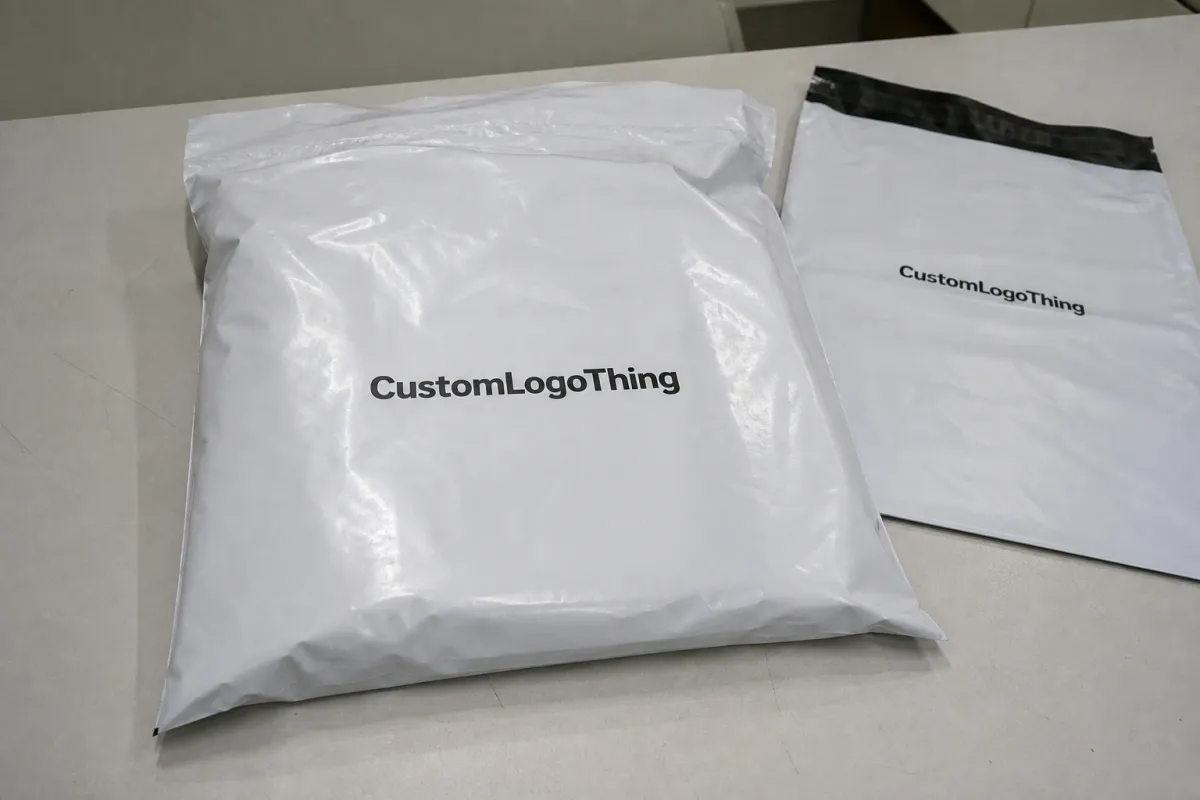
A bulk mailer order starts making sense once your packaging needs are predictable enough to forecast size, print coverage, and order volume. The savings are not only in the unit price. Larger runs reduce setup friction, make packing more consistent, and help teams avoid the daily mess of “almost right” packaging.
The usual turning point is simple: plain stock mailers stop doing the job. Maybe the brand has grown past generic gray bags. Maybe direct-to-consumer shipments need to look sharper. Maybe the fulfillment team is tired of stuffing soft goods into cartons that cost more to ship than they should. A Custom Poly Mailer can solve those problems without turning packaging into a vanity project.
There is also a labor side people underestimate. A mailer with the right opening width, adhesive strip, and internal space packs faster than a bag that fights the product. If the team ships folded tees, hoodies, leggings, scarves, lightweight boxed accessories, or soft textile goods, small fit improvements show up quickly. Fewer repacks. Less tape. Less wrestling at the station.
Poly mailers are popular with retail brands for three practical reasons: brand visibility, low tare weight, and moisture resistance. The printed exterior gives the shipment a more finished look. The lighter structure helps avoid unnecessary carton costs. The film protects against rain, dust, and surface grime better than many paper-only options.
That does not mean every product belongs in a mailer. Heavy items, sharp corners, glass, rigid electronics, and anything that can puncture film need a different structure or an outer carton. Forcing the wrong product into a printed bag is not strategy. It is how you get damaged goods and customer service tickets.
Retail scenarios that fit poly mailers well
Custom mailers work well for apparel brands, subscription shipments with flexible contents, promotional kits, soft goods, and limited retail drops. They also suit operations that need faster pack-out than a folding carton line can offer.
The better question is not “Can everything ship in a mailer?” It is “Which orders should ship in a mailer so the whole operation gets leaner?” That distinction saves money. Map your actual product mix first, then decide which SKUs belong in poly mailers, which need corrugated shippers, and which need internal cushioning.
A bulk order should support the business you actually run, not the one that looks tidy on a planning deck.
Branded mailers versus plain shipping bags
Plain wholesale poly mailers still have a place. They are useful when SKU mixes change often, the budget is under pressure, or the brand is still testing sizes. But branded mailers create a stronger first impression and make a retail operation look more organized.
Use print coverage with discipline. Full-coverage artwork can look excellent, but it raises cost and becomes a liability if the design changes every season. Many brands do better with a strong logo, one background color, and a layout that works across multiple bag sizes. Good packaging survives conveyors, rain, overstuffed bins, and warehouse lighting. Studio mockups have never shipped an order.
Poly Mailer Materials, Film Types, and Print Options
The material structure is where a mailer starts feeling professional or starts becoming a complaint. Most retail poly mailers use low-density polyethylene, often in a co-extruded structure with an outer printable layer and an inner protective layer. Film choice affects strength, opacity, print quality, seal behavior, and how the bag feels in hand.
Common options include virgin polyethylene, recycled-content blends, and co-extruded films designed for better puncture resistance or privacy. Recycled content can support sustainability goals, but it has to perform. A bag that tears early, seals poorly, or arrives looking abused is not a win just because the claim sounds nice.
Color changes the finished result. White film gives the cleanest print base and brighter color. Black or gray improves content privacy and can feel more premium. Clear or translucent mailers are less common for branded retail shipments, though they can work for internal logistics, product kitting, or promotional use where visibility matters.
Film constructions and why they matter
Film thickness is only part of the specification. A 2.5 mil mailer and a 3 mil mailer may sound close on paper, but real performance depends on resin blend, seam strength, slip, opacity, and how the material reacts under stress. Some films stretch before they tear. Others feel stiffer and cleaner but are less forgiving with bulky products.
A supplier should be able to explain whether the bag is mono-layer, co-extruded, or made with recycled content. Each structure affects cost and performance. Lightweight but bulky products may need a softer, more flexible film. Products with firm edges may need a tougher blend or higher gauge.
The goal is not to buy the thickest bag available. The goal is to buy the right film for the shipment profile. More plastic is not automatically better. Sometimes it is just more expensive.
Print options and finish choices
Most retail brands choose one of three print approaches: one-color logo printing, two- or three-color brand artwork, or full-coverage graphics. Flexographic printing is common for larger poly mailer runs because it handles repeat production efficiently once plates are made. For simple designs and stable branding, the setup cost often pays back quickly.
If the artwork changes often, keep the print layout lighter. A simple exterior gives the brand room to adjust inserts, stickers, campaigns, and seasonal messaging without scrapping cartons of outdated bags.
Finish also affects perception. Matte film feels quieter and more refined. Gloss can make color look brighter. Black ink on white film is cost-efficient and hard to mess up, which is not a bad thing. A custom poly mailer Bags Bulk Order should be designed for the next six to twelve months of use, not only for one campaign that marketing loves this week.
Sizes, Seals, Thickness, and Functional Specifications
Correct sizing is one of the fastest ways to improve mailer performance. Too small, and the packing team wastes time fighting the bag. Too large, and the product shifts around, the parcel looks sloppy, and the bag takes more film than needed. The internal dimensions should reflect the folded product size, insert thickness, tissue or protective wrap, and the space lost to seals and folds.
For apparel, common mailer sizes often start around 10 x 13 inches and move into larger formats such as 14 x 19 or 19 x 24 inches, depending on the garment category. Accessories may need smaller flat mailers or side-gusset formats. The usable interior space matters more than the outside measurement printed on a quote sheet.
A proper specification should include outer dimensions, usable inner dimensions, film gauge, opacity, seal type, print area, adhesive details, and any return feature. If the supplier cannot tell you where the safe print zones are, slow down.
Seal construction and return features
Pressure-sensitive adhesive strips are standard for ecommerce mailers. The strip should close cleanly without extra tape, hold during normal transit, and resist accidental opening from tension inside the bag. Weak adhesive is one of those small defects that becomes very visible very fast.
Dual adhesive strips are worth considering for apparel, footwear accessories, and other categories with regular returns or exchanges. The customer opens the first strip, uses the second to reseal, and sends the item back without needing a new outer package. A tear strip can improve the opening experience, but only if the perforation is clean and consistent. Bad tear strips are worse than no tear strip. They make people reach for scissors, and then the whole “easy return” idea quietly dies.
Thickness choices and shipping durability
Mailers are usually specified in mils. Many retail applications fall in the 2.25 to 3 mil range, though the right choice depends on weight, edge profile, shipping distance, and handling conditions. Smooth lightweight garments may not need heavy film. Bulky hoodies, boxed accessories, or parcels moving through rougher carrier networks may need more abuse resistance.
Think in terms of what the bag has to survive. Conveyor belts. Mixed parcel bins. Rainy porches. Compression inside delivery vehicles. If those conditions are routine, a stronger film is worth the cost. If the product is light and soft, overbuilding the mailer just inflates the packaging bill.
Functional features worth specifying
Small details change the actual user experience. Opaque film protects privacy. A tamper-evident closure adds confidence during transit. A document pouch can help with invoices or return paperwork, although many brands now prefer a cleaner exterior and digital documents. Vent holes may be needed in certain situations to release trapped air, but they can reduce moisture protection, so do not add them by habit.
Clear specs reduce production errors. They tell the supplier where print can land, which dimensions are critical, and which features need inspection before release. That is boring paperwork. Boring paperwork prevents expensive surprises.
Custom Poly Mailer Pricing, MOQ, and Unit Cost Drivers
Pricing for a custom poly mailer Bags Bulk Order is usually driven by size, film thickness, print complexity, quantity, material structure, and freight. As a rough planning range, a simple one-color custom mailer in a 5,000-piece run may land around $0.12-$0.24 per unit. More colors, heavier film, recycled-content structures, larger sizes, or special features can push the price higher.
Use that range as a planning tool, not a promise. Actual quotes move with resin pricing, artwork coverage, supplier location, production method, and shipping mode. A quote should separate base film, printing, plate or tooling charges, optional features, and freight. If everything is bundled into one vague number, comparisons get messy.
MOQ varies widely. Some suppliers quote 3,000 pieces, others start at 5,000 or 10,000, especially for custom sizes and flexographic printing. Higher quantities usually lower the unit cost, but only if you can use the inventory. A cheap bag sitting in storage for a year is just trapped cash with adhesive.
What pushes cost up or down
Cost increases are usually predictable. Larger bags use more film. Thicker gauges use more resin. More print colors require more setup. Full-coverage ink costs more than a simple logo. Dual seals, tear strips, metallic effects, special finishes, and unusual film colors can all add cost.
There are good ways to control spend without weakening the package. Standardize one or two core sizes. Keep artwork simple enough to reuse. Avoid printing every inch of the bag unless the design truly benefits from it. Ask whether a standard film color or stock dimension can meet the need before paying for a fully custom structure.
Design discipline often saves more money than hard negotiating. Less glamorous. More effective.
MOQ strategy for retail brands
The right order quantity depends on sell-through, storage space, cash flow, and how often the design changes. A brand running limited seasonal drops may be better off with a smaller run at a higher unit price. A stable core apparel line can usually support a larger order, especially if the mailer design will not change for several sales cycles.
Ask for quote tiers, such as 3,000, 5,000, 10,000, and 25,000 pieces. The cost curve will show where scale starts paying back. It may also show that the “best deal” is not the biggest quantity. Storage, obsolescence, and design changes count too.
Artwork Setup, Proofing, and Color Control Before Production
Artwork is where good packaging still goes sideways. The printer needs clean vector files, outlined fonts, accurate color references, and a dieline that matches the final bag. Low-resolution logos, missing fonts, weak contrast, and ignored safe zones create delays that are entirely avoidable.
The file should respect seams, folds, adhesive strips, tear lines, and print tolerances. Critical brand marks should not sit too close to a seal. Tiny text should be questioned before it goes to press. A QR code or barcode needs enough contrast and quiet space to scan after the bag is printed, folded, stacked, and handled.
A simple, accurate brief helps more than a long creative essay. Include bag size, print area, colors, finish, logo files, required copy, and any areas that must stay blank for labels. If the brand uses Pantone references, provide them. If there is a full background flood, confirm whether the supplier can hold consistent coverage on the selected film.
Color expectations on plastic film
Poly film is not paper. Ink behaves differently on plastic than it does on coated board, and the base film changes how color appears. White film gives brighter results. Darker film may need specific ink handling to avoid dull color. Soft neutrals can shift more than expected.
A digital proof is useful for layout, but it is not a perfect color contract. For higher-volume or color-sensitive orders, ask for a pre-production sample, press proof, or strike-off. It adds time, but it can prevent a full run of bags that look “close enough” in the worst possible way.
Define acceptable variation before production starts. A bulk mailer order does not need gallery-level color consistency, but it should stay within a reasonable visual range across cartons and repeat runs.
Proofing details buyers often miss
Proof approval should cover more than logo placement. Check the address label zone, adhesive strip location, tear strip direction, bag orientation, gusset placement if used, and repeat pattern alignment. Review the proof at actual size. Zoomed-in screens make everything look cleaner than production usually does.
If a physical sample is available, inspect it under normal indoor light and with a real product inside. Fold it. Seal it. Open it. Try the return strip. A mailer can look excellent flat and still be annoying at the packing table.
Production Steps, Lead Time, and Shipping Timeline
A standard custom poly mailer order usually moves through artwork approval, plate or setup preparation, film sourcing, printing, conversion, inspection, packing, and freight booking. After proof approval, many orders fall into a production window of about 12 to 18 business days. Larger runs, custom materials, specialty features, or factory backlog can extend that timeline.
Schedules stay cleaner when the specification is complete at the start. Reconfirming dimensions, changing film grades, or moving artwork after plates are prepared can stretch the order. Buyers should ask about material availability, plate lead time, production queue, and freight timing before approving the job.
Shipping method matters. Air freight is faster and expensive. Sea freight is better for larger volumes but requires more buffer. Domestic production may shorten transit time but can carry a higher unit cost. Overseas production may lower the bag price while adding freight risk and longer planning windows. Pick the tradeoff with your inventory calendar open, not from memory.
What the production flow looks like
Once the proof is approved, the supplier prepares the print setup and confirms the film roll specifications. The material is printed, converted into bags, sealed, counted, inspected, and packed. For larger orders, cartons should be labeled by size, print version, quantity, and purchase order number.
The best production flow has few handoffs and fewer assumptions. Spec, proof, approval, production, inspection, shipment. Every extra revision creates one more chance for the wrong version to reach the press.
Receiving details that prevent warehouse confusion
Carton labels matter more than people admit. If a warehouse receives multiple mailer sizes or print versions at once, clear markings prevent the wrong bag from landing at the wrong packing station. Ask how many bags are packed per carton and whether the cartons are protected from over-compression.
Once the shipment arrives, do a receiving check before the bags enter daily use. Confirm size, print version, color, seal type, carton count, and any special feature. Catching an issue at receiving is annoying. Catching it after 2,000 orders have shipped is worse.
Quality Checks That Protect Bulk Mailer Orders
Quality control is not just a nice line on a supplier profile. It is how you keep a bulk packaging order from becoming a warehouse problem. Buyers should check print registration, color consistency, film thickness, opacity, seal strength, adhesive performance, opening behavior, and carton counts.
For ecommerce use, test the bag with the real product. Fill it, seal it, press on the seams, stack it, slide it across a packing table, and open it like a customer would. If the bag has a return strip, test that too. Specs matter, but actual handling tells the truth faster.
Recognized standards can support more formal testing. ASTM-based methods can help evaluate film and seal performance. ISTA protocols can help assess how packaged goods behave in transit. Not every retail brand needs a full lab program, but objective testing helps when a team is changing suppliers, reducing film gauge, or making sustainability claims.
Checks worth putting on the receiving sheet
A practical inspection sheet should include these items:
- Correct size, print version, and film color
- Consistent seal strength and adhesive performance
- Readable print, clean registration, and acceptable color range
- No pinholes, contamination, weak seams, or heavy scuffing
- Accurate carton count and clear carton labeling
That list is not fancy. It catches the problems that actually disrupt fulfillment. If a retail brand ships thousands of orders a week, a small defect rate can become a large operational headache by Friday.
Sustainability claims and material checks
FSC certification applies to paper and forest-based materials, not polyethylene film. For poly mailers, sustainability claims usually involve recycled content, reduced gauge, recyclability where facilities exist, or reusable return features. Claims should be specific and supportable.
If the bag uses recycled polyethylene, ask for material details and test the seal and tear performance before placing a large order. Recycled content can be the right choice, but it should not be treated like a magic label. The bag still has to protect the product and survive the carrier network.
How to Request a Better Bulk Mailer Quote
The fastest way to get a useful quote is to send a complete brief. Include bag size, quantity, product type, film thickness, print colors, artwork files, adhesive features, return needs, and any material goals such as recycled content or higher opacity. Vague requests get vague quotes. Then everyone wastes three days clarifying things that should have been in the first email.
Share the real use case. Tell the supplier whether the mailers will ship tees, hoodies, accessories, promotional kits, or mixed retail goods. Mention whether the priority is a premium look, lowest workable cost, stronger durability, privacy, or return handling. That context helps the manufacturer recommend a structure instead of simply quoting the cheapest bag that fits the dimensions.
Ask for a breakdown, not one lump price. A clear quote should show unit cost at different quantities, tooling or plate fees, freight assumptions, production timing, material structure, and optional upgrades. This makes supplier comparisons cleaner and reduces surprises after approval.
For brands with ongoing replenishment, plan the next run before the current stock is almost gone. Poly mailers are simple products until they are suddenly missing from the packing line. Then they become urgent, expensive, and everyone’s problem.
FAQ
What is the usual minimum order for custom poly mailers?
MOQ often starts around 3,000 to 5,000 pieces, though it depends on the supplier, print method, bag size, and material. Custom sizes, specialty film, or multi-color flexographic printing may require 10,000 pieces or more.
How much should I budget per bag?
For planning, simple custom retail mailers can land around $0.12-$0.24 per unit at mid-sized quantities. Larger sizes, thicker film, recycled-content structures, multiple print colors, dual seals, and freight can raise the total. Ask for a fully loaded quote before comparing suppliers.
Can poly mailers be used for returns?
Yes, if they are built with a second adhesive strip or another return-friendly closure. This is common for apparel and soft goods because customers can reseal the same bag instead of finding a new outer package.
Are recycled poly mailers a good option?
They can be, as long as the film still performs in shipping. Check seal strength, puncture resistance, opacity, and print appearance before approving a large run. Recycled content is useful only if the bag still does its job.
How do I choose the right thickness?
Start with the product. Light, smooth items often work in the 2.25 to 2.5 mil range. Heavier, bulkier, or sharper items may need 3 mil or a tougher film blend. Handling conditions and shipping distance matter as much as product weight.
Done well, a custom Poly Mailer Bags bulk order gives a retail brand cleaner pack-out, stronger presentation, and tighter control over shipping costs. Done carelessly, it becomes a storage problem with a logo printed on it. The difference is usually clear specs, honest testing, realistic quantities, and a supplier who understands how the bags will be used after they leave production.
