When a Wine Bag Has to Carry More Than a Bottle
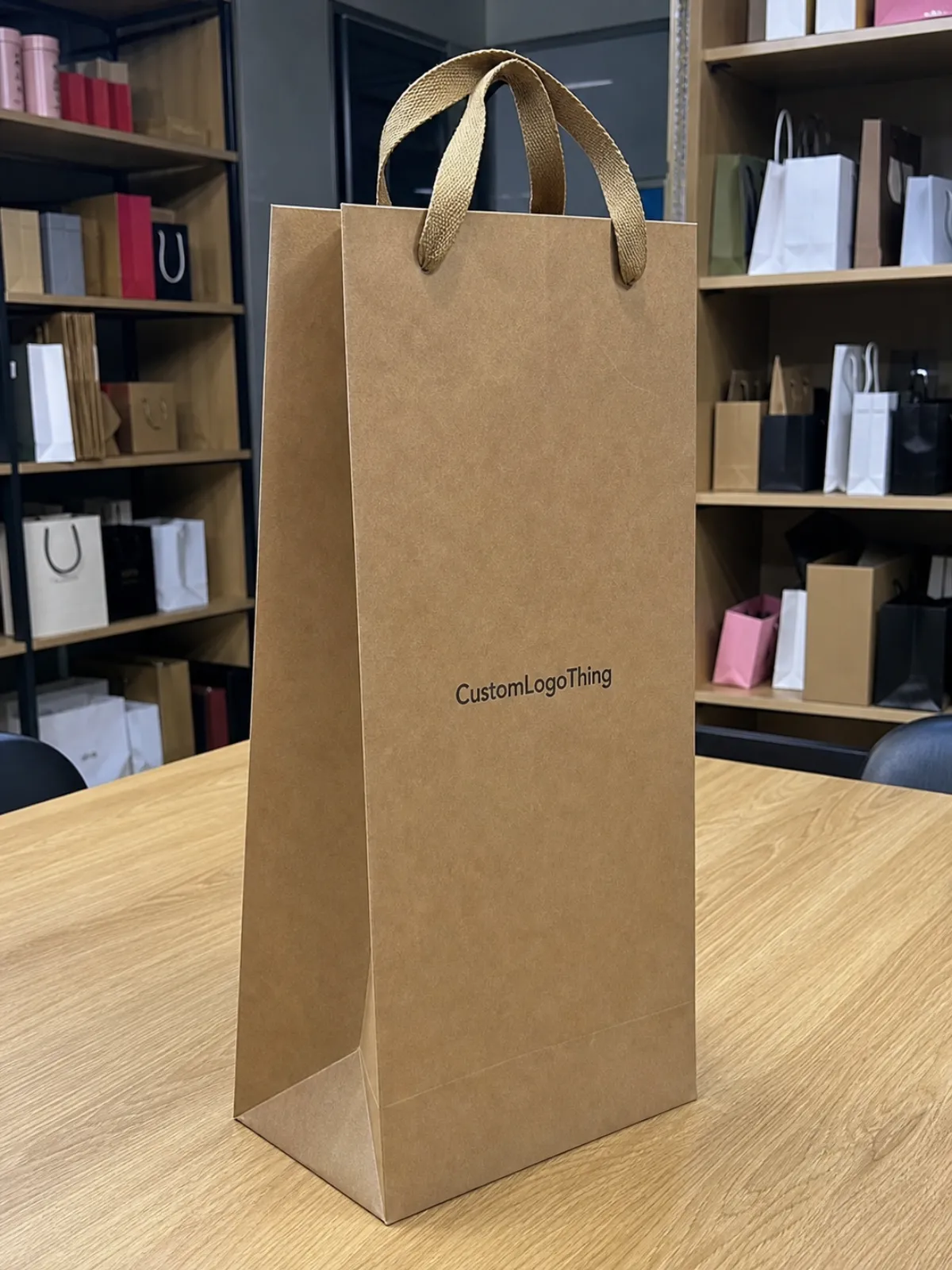
A 750 ml glass bottle is a compact, unforgiving load. A bag can look sharp on a conference table and still fail once that bottle swings from a handle, rides across a checkout counter, or gets handed off with condensation on the glass. A custom wine Paper Bags Bulk Order is not just a print purchase; it is a strength, fit, branding, and operations decision.
That point matters for wineries, bottle shops, gourmet retailers, event companies, gift basket sellers, hotels, and hospitality brands. The bag has to carry weight, protect the label from scuffing, stand upright while staff rings up the sale, and still give the brand enough clean print area for a logo, tasting event mark, or retail message. Pretty is useful. Reliable is non-negotiable.
Buying in bulk gives a retail brand better control than chasing short seasonal reorders. Color stays more consistent. Handle feel stays the same across locations. Carton counts become easier to plan. Unit economics usually improve because setup time, print preparation, and packing labor spread across a larger run. In practice, that is often the difference between a bag that feels like part of your retail packaging system and a bag that feels like a last-minute supply item.
Practical rule: size the bag around the bottle first, then design the artwork. A strong logo cannot fix a bag that is too short, too tight, or weak at the bottom fold.
For Custom Logo Things, the goal is straightforward: help buyers lock the right specifications before production starts. That means looking at material choices, sizing, handle construction, printing method, finish, MOQ, pricing drivers, production steps, timing, and the details needed for a clean quote. Facts beat guesswork every time.
Bag Styles, Paper Materials, and Handles That Fit Wine Bottles
Wine bags are narrow for a reason. The bottle is tall, dense, and usually around 2.9 to 3.3 inches in diameter for many standard 750 ml formats, though sparkling bottles and specialty shapes can run wider or taller. A single-bottle paper wine bag often lands near 4 to 5 inches wide, 3.5 to 4.5 inches deep, and 13 to 15 inches high, depending on the closure and how much neck coverage the buyer wants.
Common formats include single-bottle bags for standard 750 ml bottles, taller narrow bags for sparkling wine, two-bottle carriers, and reinforced gift bags for premium presentation. Two-bottle formats need more than extra width. They need better bottom support, stronger side seams, and sometimes an insert or divider so the bottles do not knock against each other during carry-out.
Paper choice changes the look and the performance. Kraft paper gives a natural retail look and can work well for organic, farm, or small-batch positioning. White paper gives brighter print contrast and cleaner color reproduction. Coated paper, including C1S art paper in heavier weights, supports sharper graphics and smoother finishes. For higher-end product packaging, heavier paperboard-style constructions can feel more substantial in hand.
Handles deserve real attention. Twisted paper handles are practical for everyday retail because they are cost-efficient, recyclable in many paper streams depending on adhesives and local rules, and familiar to shoppers. Cotton or rope handles feel more gift-oriented. Die-cut hand holes reduce parts and work for simple carry-out use, though they can be less comfortable with heavier bottles. Ribbon handles look polished, but I would not choose them for rough handling or long walks from a parking lot unless the attachment method is properly reinforced.
- Everyday retail: 150-180 gsm kraft or white paper with twisted paper handles and bottom reinforcement.
- Premium gifting: 200-250 gsm coated stock with cotton, rope, or ribbon handles and optional lamination.
- Heavy bottles: stronger paper, reinforced handle patches, and a bottom board insert.
- Two-bottle carry: wider gusset, stronger glue seams, and a divider if label scuffing is a concern.
Ask about bottom board inserts, folded top rims, handle patch reinforcement, and glue strength at the side seams. Those details are not decorative. They affect whether the bag survives normal use. Branding surfaces also matter: front and back panels carry the main logo, side gussets can hold a web address or small mark, and the top fold area can work with hang tags, ribbons, or event stickers.
Print Options, Logo Placement, and Finish Choices for Branded Wine Bags
Printing method should follow the artwork, not the other way around. For a custom wine Paper Bags Bulk Order with detailed color work, offset printing is often a good fit because it handles gradients, photography-style graphics, and tighter color control. Flexographic printing can make sense for simpler repeat graphics or larger production runs. Screen printing works well for bold solid logos, especially when the design is one or two colors. Foil stamping adds a metallic accent, usually with a die charge and a slower production step.
Most wine brands do not need to overcomplicate the bag. A strong one-color logo on kraft can look excellent and keep cost under control. Two- or three-color designs help with retail recognition. Full-panel artwork can be useful for launch campaigns, tasting events, or seasonal gift programs. Foil, embossing, debossing, spot UV, and soft-touch matte lamination belong in the conversation when the bag is part of a premium gift experience.
Artwork files should be clean from the start. Vector logo files such as AI, EPS, or production-ready PDF are preferred. Pantone references help when brand color matters, though CMYK may be used depending on print method and artwork. Keep critical text away from folds, gussets, and the lower bottom fold area. Small type needs enough line thickness to survive printing on textured paper, especially on uncoated kraft.
Ink behaves differently on different paper. Brown kraft darkens color and reduces contrast, so a burgundy or deep green may look more muted than expected. White paper gives brighter contrast. Coated stock usually gives cleaner color control for detailed packaging design, but coatings and laminations can affect recyclability and surface feel. For recycling guidance, the U.S. Environmental Protection Agency has useful general information on paper and packaging recovery at epa.gov/recycle.
| Print or Finish Option | Best Use | Typical Cost Impact | Buyer Note |
|---|---|---|---|
| One-color screen print | Bold logos and simple retail packaging | Lower setup and unit cost on many runs | Works well on kraft or white paper |
| Offset printing | Detailed artwork and tighter color control | Moderate to higher, depending on colors | Best with clean dielines and approved color references |
| Hot foil stamping | Premium gifting and metallic logos | Higher due to die and setup | Confirm foil alignment tolerance before approval |
| Matte lamination | Smooth premium finish | Moderate upgrade | Improves feel but may affect recycling options |
Here is the practical approach I like for most buyers: make the front panel strong, keep the back panel clean, avoid critical copy across gusset folds, and use side panels for secondary details. A custom printed bag should read well from three feet away, not only in a flat proof on a screen.
Specifications to Confirm Before Ordering Wine Paper Bags in Bulk
A clean quote starts with clean specifications. Before placing a Custom Wine Paper Bags bulk order, confirm bag width, gusset depth, height, paper weight, handle type, handle color, bottom reinforcement, print colors, finish, packing quantity, and shipping destination. Missing one of those details can change cost, lead time, or performance.
Sizing is more than outside dimensions. The bag must be tall enough to cover the bottle body cleanly, wide enough for easy loading, and deep enough to avoid squeezing the label or distorting the side panels. If the bottle has broad shoulders, a heavy punt, wax dip, tall closure, or gift tissue inside the bag, build that into the size. For paired sets, such as wine plus olive oil or wine plus specialty food, measure the full packed footprint rather than the bottle alone.
Paper weight can stay simple. Lighter weights may work for basic carry-out bags, especially for one standard bottle and short handling. Heavier weights and reinforcement are better for premium bottles, multi-bottle formats, or gift programs where the bag needs to look crisp after handling. A common retail range might sit around 150-180 gsm for practical kraft bags, while premium coated gift bags may move into 200-250 gsm or higher depending on construction.
Load testing is not only about the first lift. Think about filled weight, repeated lifting, chilled bottle condensation, and whether shoppers carry the bag by the handle for several blocks. Moisture changes paper behavior. A wet bottle can soften contact areas and mark the inside panel. If cold bottles are common, discuss paper surface, ink rub, and reinforcement instead of assuming any standard bag will hold up.
Compliance details depend on the selling channel. Recycling marks, country-of-origin labeling, retailer packaging standards, and suffocation warnings for poly-packed carton bundles may apply. For broader package testing concepts, the International Safe Transit Association publishes widely used test procedures at ista.org. Not every wine bag needs formal ISTA testing, but the mindset is useful: define the real distribution path, then build packaging to survive it.
Carton packing also affects the real landed cost. Bags may ship flat, nested, or bundled. Carton dimensions influence warehouse space, freight class, pallet efficiency, and how many bags staff can move safely at one time. A low unit price can lose its appeal if cartons crush easily or take up twice the expected storage area.
Pricing, MOQ, and Unit Cost Drivers for Bulk Wine Bag Orders
Pricing is driven by the physical bag and the decoration package. Size, paper weight, handle type, print colors, finish, reinforcement, order quantity, proofing requirements, and shipping distance all matter. A simple kraft wine bag with one-color printing may price very differently from a laminated coated bag with rope handles and foil stamping.
As a broad planning range, some custom printed single-bottle paper bags can fall around $0.35-$0.90 per unit on larger runs, while premium gift constructions with heavier paper, specialty handles, foil, or embossing can move above that. Smaller runs carry more setup cost per bag. Freight can add a few cents or much more per unit depending on carton count, destination, and shipping method. These are planning ranges, not fixed promises, because specifications change the math quickly.
MOQ varies by construction and decoration method. Custom production usually needs a run large enough to justify material setup, plates, screens, stamping dies, machine changeover, and packing labor. A custom wine paper Bags Bulk Order often becomes more attractive as quantity rises because setup charges spread across more units and material purchasing becomes more efficient.
Buyers may see several cost categories on a quote: tooling or plate charges, bag production, print decoration, finish upgrades, sampling, inner packing, carton packing, and freight. Compare full landed cost, not only the bag unit price. If one quote has a lower unit cost but twice the carton count, the warehouse and shipping impact may narrow the difference.
Seasonal demand needs a careful plan. If a retailer knows it will use 20,000 bags across holiday gifting, wine club pickups, and tasting room sales, quoting an annual quantity with scheduled releases may protect pricing while keeping warehouse space under control. This depends on production schedule, storage terms, and material availability, but it is often worth asking about.
Custom Logo Things can also help buyers compare related branded packaging, from wine bags to Custom Packaging Products such as cartons, sleeves, and custom printed boxes. Matching the bag to the rest of the package branding creates a cleaner customer experience without forcing every item to use the most expensive finish.
Production Steps and Timeline From Quote to Delivery
The fastest production path is the one with fewer unknowns. A typical process starts with inquiry review, specification confirmation, artwork check, quote, digital proof or physical sample if needed, approval, material preparation, printing, converting, quality inspection, packing, and shipping. Each step has a purpose.
For a fast quote, provide quantity, bag dimensions, bottle type, paper preference, handle style, print colors, finish, target delivery date, and delivery ZIP code or port details. If you do not know the bag size yet, send the bottle height, diameter, shoulder shape, and filled weight. Photos help, especially for unusual bottles, wax closures, or gift sets.
Digital proofs check layout, logo placement, approximate color, and dieline position. Physical samples are better for confirming paper feel, handle strength, fit, color behavior, and finish appearance. Honestly, if the project involves premium gift bags, foil stamping, or a nonstandard bottle, a sample can prevent expensive assumptions.
Timeline depends on artwork readiness, material availability, order quantity, decoration method, sampling, and freight. A straightforward Custom Printed Paper bag may move faster than a bag with imported specialty paper, rope handles, foil stamping, and embossing. Physical sampling adds time, but it can save rework. Buyer-side delays are common too: late vector files, missing Pantone references, dimension changes after proof approval, and unclear shipping instructions can all slow the line.
Plan early for seasonal gifting, wine club shipments, festivals, hotel welcome gifts, tasting room launches, and new label releases where the bag artwork needs to match other campaign materials. A custom wine paper Bags Bulk Order is easier to manage when the in-hand date is set before artwork work begins, not after production is already being squeezed.
If you have repeat purchasing needs, review Custom Logo Things Wholesale Programs. Larger planned quantities, scheduled replenishment, and clear pack-out requirements can make retail packaging supply more predictable.
Quality Checks That Protect Bottles, Branding, and Retail Presentation
Quality control for wine paper bags is very physical. The bag needs consistent folds, clean glue lines, centered handles, stable bottoms, accurate color, and cartons packed to prevent crushing. Small variations add up when bags are spread across multiple stores, tasting rooms, event tables, or gift assembly stations.
Functional checks should include handle pull strength, bottom seam strength, gusset opening, upright stance, bottle fit, and repeated lifting with realistic bottle weight. A standard 750 ml bottle often weighs around 2.6 to 3.3 pounds filled, and heavier glass can push beyond that. Two-bottle bags can easily carry 5 to 7 pounds before any inserts or extras are added. Test for the load you actually sell.
Visual checks matter because the bag is part of the selling moment. Look at logo registration, ink coverage, foil alignment, lamination consistency, color match, trimmed edges, and whether the front panel stays smooth after opening. A premium bag that wrinkles badly at the front panel loses some of its value before the bottle leaves the counter.
Batch consistency is especially important on larger orders. The first carton and the last carton should feel like the same product. Paper shade, handle color, print density, and fold accuracy should stay within agreed tolerances. Not every shade variation is avoidable across materials, especially on natural kraft, but expectations should be clear before approval.
Shipment packing deserves respect. Flat-packed bags should be bundled neatly, protected from moisture, and placed in cartons that keep corners from bending during transit. If cartons are stacked on pallets, compression strength and pallet pattern matter. A good bag can arrive damaged if the carton plan is weak.
Custom Logo Things approaches a custom wine Paper Bags Bulk order by matching specifications to use, not by pushing the most expensive option. Sometimes the right answer is a clean kraft bag with a strong paper handle. Sometimes it is coated stock with foil and a reinforced bottom. The use case decides.
Next Steps Before You Request a Wine Bag Quote
Before requesting pricing, measure the bottle. Record height, body diameter, shoulder width, filled weight, and any unusual closure details. Then decide whether you need a single-bottle bag, two-bottle carrier, or a wider gift format for paired items. Choose a paper color and finish direction before discussing upgrades.
- Measure the actual bottle or gift set, not only the label file.
- Choose kraft, white, coated, or premium paperboard-style construction.
- Select twisted paper, cotton, rope, ribbon, or die-cut handles.
- Gather vector logo files and Pantone or CMYK color references.
- Estimate order quantity and ask for two quantity levels if budget is flexible.
- Set the required in-hand date and delivery location.
Quoting two quantities is often smart. A near-term event quantity and a larger replenishment quantity will show how volume changes unit cost. For example, 2,500 bags may carry setup cost heavily, while 10,000 or 25,000 bags may produce a much better per-unit number. The right choice depends on cash flow, storage, and usage rate.
Share real usage details. Retail checkout, gift presentation, tasting room sales, hotel welcome gifts, event giveaways, subscription pickups, and paired bottle-and-food gift sets all create different stress points. Identify must-have features first: handle strength, natural kraft look, premium finish, foil logo, recycled content, bottom reinforcement, compact storage, or exact brand color.
Custom Logo Things can help clarify material selection, print method, artwork placement, MOQ options, production timing, carton packing, and freight planning. If you still have general ordering questions, the FAQ page is a useful place to review common production and ordering details.
Send bottle dimensions, artwork, quantity, finish goals, and delivery details, and the quote conversation will move faster with fewer revisions. That is the practical way to start a custom wine Paper Bags Bulk order with specifications that protect the bottle, support the brand, and make sense on the receiving dock.
FAQ
What information do I need for a custom wine paper bags bulk order quote?
Provide bag quantity, bottle size, preferred bag dimensions, paper color, handle style, print colors, finish, artwork files, delivery location, and target in-hand date. If dimensions are uncertain, send the bottle height, diameter, shoulder shape, closure style, and filled weight so the bag can be sized around the actual product.
What MOQ should I expect for custom printed wine paper bags?
MOQ depends on bag construction, print method, paper stock, handle type, and finish because custom production has setup and material requirements. Larger runs usually reduce unit cost because setup charges, print preparation, and production changeovers are spread across more bags.
Which paper bag style is best for heavy wine bottles?
Choose a narrow wine bag with suitable paper weight, reinforced bottom construction, strong side seams, and handles matched to the bottle weight. For premium or heavier bottles, consider thicker paper, bottom board reinforcement, and a handle style with a dependable attachment area.
Can I order bulk wine paper bags with foil stamping or embossed logos?
Yes. Foil stamping, embossing, debossing, spot UV, matte lamination, gloss lamination, and other finishes can be considered depending on the artwork and paper surface. These upgrades can increase setup cost and lead time, so they should be confirmed early in the quote and proofing process.
How long does production take for branded wine paper bags in bulk?
Turnaround depends on order quantity, artwork readiness, sampling needs, material availability, print method, finish complexity, and shipping method. The fastest path is to approve dimensions, artwork, color references, and delivery details before production begins.
