Custom Clothing Store Paper Bags Bulk Order: What Buyers Actually Gain
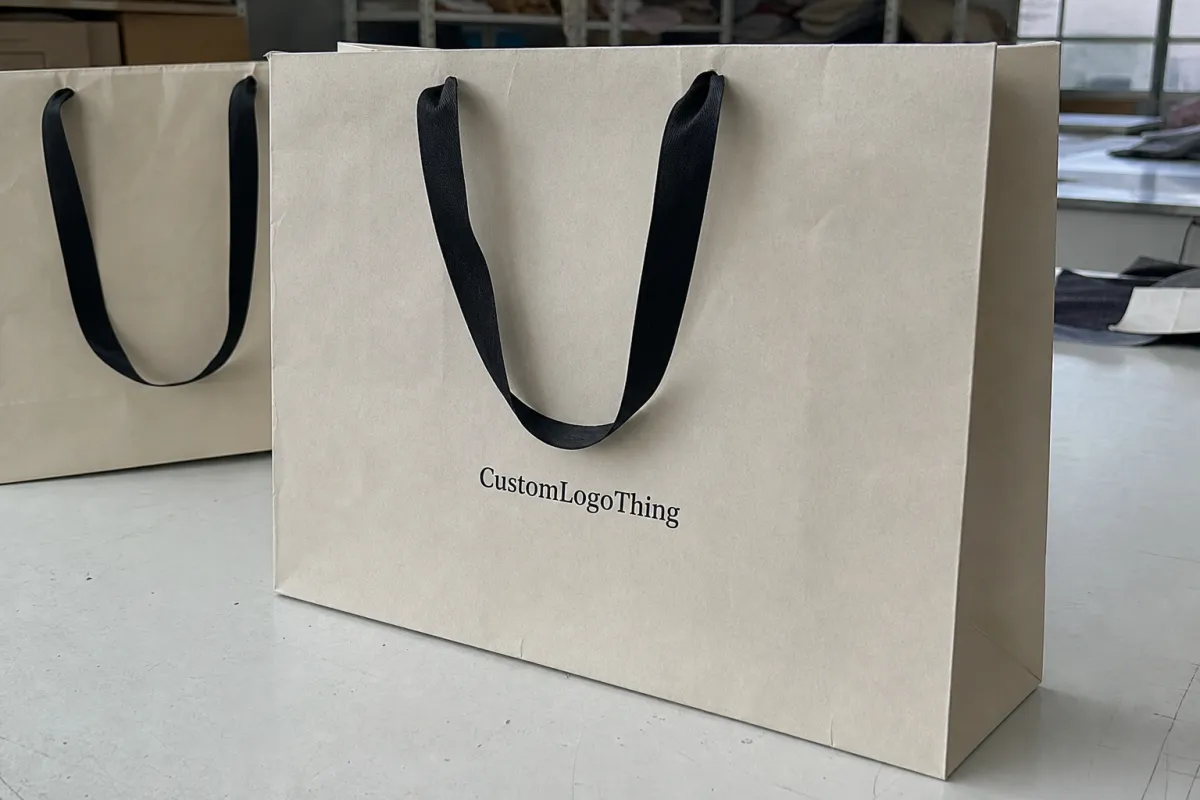
A shopper pays $90 for a garment, receives it in a thin generic bag, and the value signal drops before they reach the parking lot. A custom clothing store Paper Bags Bulk Order is not decoration first; it is an operational packaging decision that affects checkout speed, perceived quality, reorder control, and how often a store scrambles for last-minute retail packaging.
Generic stock bags solve one problem: they hold merchandise for a few minutes. Custom bulk production solves more. It gives a store consistent color, repeatable sizes, stronger handles, and a presentation that matches garment tags, tissue, receipts, gift cards, and boxed accessories. Apparel bags do more lifting than many buyers assume. A folded hoodie, denim pair, receipt folder, hangtag, and tissue wrap can easily create a thick bundle that strains a narrow gusset or weak handle patch.
Here is the practical comparison. Stock bags are available fast, but visual quality varies by supplier, batch, and paper surface. Custom bags require planning, yet they keep unit appearance consistent across pop-ups, store openings, seasonal promotions, and multi-location replenishment. Reorder control matters too. If a store uses 1,200 bags per month and waits until 150 remain, emergency purchasing can cost more than the bag itself through rush freight and mismatched sizes.
Packaging buyer reality: the cheapest bag can become expensive if it fails at checkout, looks off-brand in customer photos, or forces a rushed reorder during peak sales weeks.
Paper bags also travel. They appear in malls, on sidewalks, in rideshares, at offices, and in customer social posts. That makes them a moving sign, not a throwaway item. For apparel retailers, a custom clothing store Paper Bags Bulk Order turns a basic checkout supply into branded packaging with measurable use: fewer emergency buys, better presentation, and packaging that supports the price of the product inside.
Paper Bag Styles That Fit Apparel, Boutique, and Retail Checkout Use
Style selection should start with the average purchase, not the prettiest finish. A scarf and a boxed belt do not need the same structure as two sweatshirts. In practice, most apparel retailers need one compact size for accessories or folded shirts and one medium-to-large size for denim, knitwear, jackets, or bundled purchases.
| Bag style | Best fit | Typical specification range | Buyer note |
|---|---|---|---|
| Kraft paper shopping bags | Casualwear, sustainable labels, daily checkout | 120-180gsm kraft with twisted paper handles | Good cost control and a natural retail look |
| White paper boutique bags | Minimal fashion labels, boutiques, gift purchases | 157-250gsm white board or art paper | Sharper logo reproduction than basic kraft |
| Laminated luxury bags | Premium streetwear, formalwear, launch events | 200-350gsm C1S or artboard with matte or gloss lamination | Higher finish quality, higher unit cost and freight weight |
| Flat-handle economy bags | High-volume checkout, outlet retail, lightweight garments | 80-120gsm paper with flat paper handles | Efficient for simple branding and lower-cost runs |
Boutique Paper Bags differ from basic merchandise bags in four areas: paper weight, handle construction, surface finish, and print sharpness. A basic merchandise bag may use light kraft and simple flexographic printing. A boutique bag may use coated paper, reinforced handle patches, offset printing, and a finish such as matte lamination, foil stamping, embossing, or spot UV.
Each upgrade has a job. Matte lamination reduces glare and gives black, cream, or muted brand palettes a softer surface. Gloss lamination makes color pop but can show scuffs more clearly on dark bags. Spot UV works best when contrast matters, such as a shiny logo over a matte field. Foil stamping is useful for premium labels, but it adds setup cost and can slow production. Embossing and debossing create texture, although they make the most sense on heavier paper stock.
Brand positioning should guide the structure. Natural kraft suits organic cotton basics, outdoor casualwear, refill boutiques, and low-waste product packaging. White board fits clean labels that rely on negative space and precise logo placement. Black laminated stock can suit premium streetwear or formalwear, especially with silver foil, blind embossing, or a short rope handle. Choose the bag around the product mix first. Decoration comes second.
Specifications to Confirm Before Ordering Clothing Store Bags
A quote is only as accurate as the specifications behind it. Before requesting pricing for a custom clothing store Paper Bags Bulk Order, prepare size, material, paper GSM, handle type, print colors, finish, quantity, and delivery location. Missing one of those details can change price by 10-30%, especially if handle style, lamination, or freight method shifts after quoting.
Common apparel bag dimensions usually fall into practical bands. Small accessory bags may be around 8 x 4 x 10 inches. Standard shirt bags often sit near 10 x 5 x 13 inches. Medium boutique bags may run 13 x 5 x 10 inches or 14 x 6 x 12 inches, depending on folding style. Larger coat, hoodie, or multi-item bags may need 16 x 6 x 13 inches or bigger. Metric specs are common too, so confirm whether measurements are width x gusset x height.
Paper weight is the simplest spec buyers overlook. GSM means grams per square meter. Higher GSM generally improves rigidity, presentation, and load tolerance, but it also raises paper cost and shipping weight. A 120gsm kraft bag can work for light daily checkout. A 250gsm white board bag feels more structured. A 350gsm C1S artboard bag with soft-touch lamination moves into luxury packaging territory.
- Twisted paper handles: economical, recyclable in many paper streams, and suitable for standard retail use.
- Cotton rope handles: stronger hand feel and premium presentation, often used with laminated boutique bags.
- Ribbon handles: gift-oriented and decorative, better for special purchases than rough daily handling.
- Die-cut handles: sleek and minimal, but they need enough board strength around the cutout.
Print method also shapes the final result. Flexographic printing is common for kraft and high-volume simpler graphics. Offset printing suits sharper artwork, coated paper, and richer package branding. Digital printing can help with short runs or sampling, although unit cost may be higher. Hot foil stamping adds metallic detail. Screen printing can work well for bold one-color logos on certain surfaces.
Match the gusset to the folded product thickness. A bag that is too narrow forces staff to compress garments, which can crease shirts, crush boxes, or tear the bottom seam. For stores selling tissue-wrapped apparel, measure the product after tissue, insert cards, and accessories are included. That is the real checkout bundle.
Pricing, MOQ, and Unit Cost Factors for Custom Paper Bags
Pricing for a Custom Clothing Store Paper Bags bulk order is shaped by quantity, size, paper grade, handle type, print coverage, color count, finishing, tooling, and freight. Two bags may look similar in a photo but price very differently if one uses 180gsm kraft with one-color print and the other uses 250gsm art paper, matte lamination, foil stamping, and rope handles.
MOQ is a production efficiency issue, not just a sales hurdle. Setup time, printing plates, machine calibration, material procurement, handle matching, and carton packing need to be spread across enough units to make the run economical. That is why 500 luxury laminated bags can price sharply higher per unit than 5,000 standard kraft bags.
As volume rises, unit cost usually falls. Total spend still increases. That sounds obvious, but it matters for cash flow and storage. A store using 2,000 bags per quarter may find that 5,000 pieces lowers unit cost from roughly $0.42 to $0.29 on a standard printed kraft format, while a premium laminated bag may move from about $1.10 to $0.72 depending on finish and freight. These are planning ranges, not fixed quotes.
| Cost factor | Lower-cost choice | Higher-cost choice | Typical impact |
|---|---|---|---|
| Size | Standard dimensions | Custom oversized structure | Affects paper use, carton count, and freight |
| Material | Unlaminated kraft | Coated artboard with lamination | Can shift both unit cost and perceived value |
| One-color logo | Full-coverage multi-color artwork | Changes setup, ink use, and proofing requirements | |
| Handle | Twisted paper | Rope or ribbon | Raises material cost and assembly time |
| Finish | No lamination | Foil, embossing, spot UV | Adds tooling, alignment checks, and production steps |
Cost-saving levers are straightforward: use standard sizes, reduce print colors, choose kraft paper over laminated art paper, simplify handles, and consolidate shipments. Also examine landed cost, not just bag price. Freight, duties, overrun policies, artwork fees, sample charges, and proofing changes can alter the real number on the invoice.
Ask for tiered pricing at two or three quantities. For example: MOQ, a mid-volume run, and a larger reorder quantity. The breakpoint often tells a buyer more than a single quote. If storage is available and sales volume is predictable, a larger Custom Clothing Store Paper Bags bulk order may lower per-checkout packaging cost without changing the design.
Artwork, Proofing, Production Steps, and Lead Time
Production follows a sequence. Specification review. Quote. Artwork setup. Digital proof. Sample or pre-production approval. Mass production. Quality control. Packing. Shipping. Skip a step and the risk moves downstream, usually into rework or delayed delivery.
At the artwork stage, provide vector logo files such as AI, EPS, or print-ready PDF. Add Pantone or CMYK color references, placement preferences, and any brand spacing rules. If the same mark appears on garment labels, tissue paper, custom printed boxes, and store signage, color references become even more valuable. Fashion brands notice small shifts. Customers may not name the color error, but they feel the mismatch.
Proofs are not all equal. A digital proof confirms layout, size, placement, and general color direction. A physical sample checks structure, paper feel, handle comfort, and finish. A pre-production sample is useful for higher-risk orders involving lamination, foil, embossing, unusual handles, or a strict launch deadline. It costs more time, but it can prevent a full production run from carrying the wrong surface or handle attachment.
Lead time depends on order volume, print complexity, finishing, sample approval speed, factory capacity, and shipping method. Standard-size, simple-print bags with clean artwork and same-day proof approval move fastest. Custom-size laminated bags with foil and rope handles take longer because each added process creates another queue and another inspection point. For many runs, buyers should plan in weeks rather than days, especially if ocean freight or large carton volumes are involved.
Retail calendars drive better packaging decisions than panic orders. Plan around seasonal launches, market events, influencer gifting, store openings, and holiday inventory surges. If a campaign has a fixed date, share it at the quote stage. A packaging partner can then discuss whether the timeline supports sampling, whether air freight is needed, or whether a simpler structure would protect the delivery date.
For broader packaging planning, buyers can compare related formats through Custom Packaging Products. The same artwork and color logic often applies across paper bags, mailers, rigid boxes, and product packaging inserts.
Quality Checks That Prevent Weak Handles, Color Drift, and Retail Delays
Quality control is risk reduction. That is especially true for checkout bags used at trade shows, pop-ups, wholesale buyer appointments, or a store opening where every bag may be photographed. A weak handle is not a small defect if it fails with a $180 jacket inside.
Inspection should cover paper thickness, handle attachment strength, glue lines, color accuracy, print alignment, lamination consistency, edge folding, carton packing, and quantity counts. The checks are simple, but they need to happen before cartons leave production. A one-color logo printed 8mm too low can make a carefully designed bag look accidental. A twisted handle attached with a weak patch can pass visual review and still fail under load.
Color drift deserves special attention in apparel. Brand palettes often connect garment labels, hangtags, tissue, receipt sleeves, storefront graphics, and retail packaging. A cream that turns yellow, a black that prints charcoal, or a red that shifts orange can weaken package branding across the whole purchase experience. Use Pantone references where possible and confirm whether the paper substrate will affect color appearance.
Strength testing does not need to be theatrical. Load the bag with the expected garment weight plus a margin. Check the bottom seam, side gusset, handle patch, and fold lines. A bag intended for one shirt does not need the same tolerance as a bag used for denim, shoes, or boxed accessories. Standards from organizations such as ISTA are useful reference points for transport testing thinking, while material sourcing claims may involve programs such as FSC certification when applicable.
Carton packing matters too. Crushed corners, moisture exposure, and scuffed laminated surfaces often happen after production, not during printing. Larger bulk runs should be packed with sensible carton weights, moisture protection where needed, and clear carton labels by size or store allocation. Request photos, sample checks, or inspection notes for larger orders and deadline-sensitive runs.
Why Apparel Brands Order Paper Bags from Custom Logo Things
Custom Logo Things helps apparel buyers turn store needs into production-ready paper bag specifications. That sounds plain. Good. Packaging should be clear before it becomes expensive.
The quoting process is based on bag use, order volume, artwork, finish, and delivery requirements. A daily checkout bag for 4,000 monthly transactions should not be quoted the same way as 800 premium gift bags for a capsule launch. The first buyer may need unit-cost discipline and fast replenishment. The second may need color control, thicker paper, foil placement, and a stronger presentation.
Coordinating structure, print, finish, and logistics through one packaging partner reduces the friction that can occur between designers, printers, and freight providers. Designers may focus on the front panel. Printers may focus on ink and registration. Freight providers care about cartons, cube, and destination. A usable bag needs all of those details aligned before production begins.
Custom Logo Things supports apparel-specific use cases including boutique presentation, pop-up retail, influencer gifting, seasonal launches, and multi-location store replenishment. Buyers can also compare material and finish alternatives when the brief has two competing targets: strong brand impression and strict unit cost. That trade-off is normal. A good quote should show the practical choices, not push the most expensive finish by default.
If your team is building a broader branded packaging program, Wholesale Programs can help align repeat orders, volume planning, and store-level replenishment. For common production questions before you request pricing, the FAQ page is a useful starting point.
The sales argument is factual: clear specs reduce quote revisions, practical options protect budgets, transparent production steps reduce surprises, and packaging built for real retail use performs better than a pretty bag that cannot handle the checkout load.
Next Steps Before You Request a Clothing Store Bag Quote
Prepare the basics before asking for pricing. It speeds up the quote and reduces assumptions. Measure the largest garment bundle you expect the bag to hold, including tissue, hangtags, receipt folder, inserts, and any boxed accessory. Then choose one or two target bag sizes. Confirm quantity, handle preference, print colors, finish direction, and delivery location.
- Measure your most common folded purchase and your largest typical purchase.
- Select one daily checkout size and, if needed, one larger boutique size.
- Choose a handle style: twisted paper, rope, ribbon, flat handle, or die-cut.
- Prepare vector logo files with Pantone or CMYK color references.
- Set a target delivery date and confirm the shipping address or store allocation list.
- Ask for tiered quantities plus one lower-cost alternative for comparison.
Decide the primary use case early. Daily checkout bags need durability, cost control, and reorder consistency. Premium purchases may justify heavier board, lamination, foil, or ribbon handles. Event bags need visual impact and reliable delivery timing. Launch campaign bags may need closer artwork review because they often appear in photography, PR kits, or social content.
Also consider storage. A larger order can reduce unit cost, but cartons take space. Paper bags should be stored away from moisture, direct sunlight, and crushing weight. If several stores need stock, ask about carton labeling by size, design, or destination. Small logistics choices can save hours during rollout.
For a production quote, send your specs, artwork, quantity, target delivery date, and shipping details to Custom Logo Things. The more complete the information, the faster pricing, proofing, and production scheduling can begin. A custom clothing store Paper Bags Bulk order works best when the bag is treated as part of retail operations: measured, specified, proofed, tested, and reordered before stock runs low.
FAQs
What is the typical MOQ for a custom clothing store paper bag bulk order?
MOQ depends on bag size, material, printing method, handle type, and finish. Standard kraft or white paper bags usually have lower minimums than fully laminated, foil-stamped, or specialty-handle bags. Ask for tiered pricing so you can compare the minimum run against a larger quantity with a lower unit cost.
How long does bulk production take for custom apparel paper bags?
Timing depends on artwork approval, sample requirements, order quantity, finishing complexity, and shipping method. Simple standard-size bags with approved artwork move faster than custom-size laminated bags with foil, embossing, or rope handles. Share your in-store deadline at the quote stage so production and freight options can be planned realistically.
What size paper bags should a clothing store order in bulk?
Choose sizes around your most common purchases, not only your smallest product. Many apparel retailers use at least two sizes: one for accessories or shirts and one for bulkier garments such as hoodies, denim, or boxed items. Measure folded garment stacks with tissue or packaging inserts included before approving final dimensions.
Can custom paper shopping bags be printed with full-color clothing brand artwork?
Yes, paper bags can support one-color logos, multi-color artwork, full-coverage designs, foil stamping, embossing, and specialty finishes. Vector artwork is preferred for sharp logo reproduction and cleaner proofing. Color accuracy should be checked with Pantone or CMYK references, especially if bags must match labels, tags, or store signage.
How can I reduce the unit cost on custom boutique paper bags?
Use standard sizes, limit print colors, avoid unnecessary full lamination, and choose practical handle options. Increase order quantity when storage and cash flow allow, because setup costs are spread across more bags. Request quote tiers and ask for a lower-cost material or finish alternative that preserves the core brand look.
