A food subscription box can have polished artwork, a strong offer, and a loyal customer base, yet still lose margin if the outer mailer is too large, too thin, slow to pack, or expensive to ship. Buyers searching for a printed Poly Mailer Bags quote for food usually need more than a quick unit price; they need packaging numbers that can be compared against freight, fulfillment labor, product weight, launch timing, and the real packed dimensions of the order.
The artwork feels like the creative decision. The quote is where the commercial decision becomes visible. A 10 x 13 inch white mailer in a lighter film, printed one side in one color, is a very different project from a 14.5 x 19 inch opaque co-extruded bag with full-panel graphics and a returnable dual-seal strip. The second may be exactly right for a heavier bundled order, but it will not price, ship, or convert like the first.
For dry, sealed, or secondary-packaged food products, Branded Poly Mailers can reduce outer-packaging weight compared with corrugated boxes, speed manual packing, and give the delivery experience a more finished look than a plain gray shipping bag. They are not universal food packaging. In most ecommerce applications, the food is already protected by its primary pouch, carton, wrapper, jar, tin, or retail container. Loose food contact is a separate material and compliance discussion, and it should be raised before quoting rather than after artwork approval.
Practical quote rule: a useful custom mailer quote is not one number. It is a controlled set of choices: size, film thickness, print method, quantity, seal style, compliance expectation, and delivery location.
Why Food Brands Ask for Poly Mailer Pricing Before Artwork
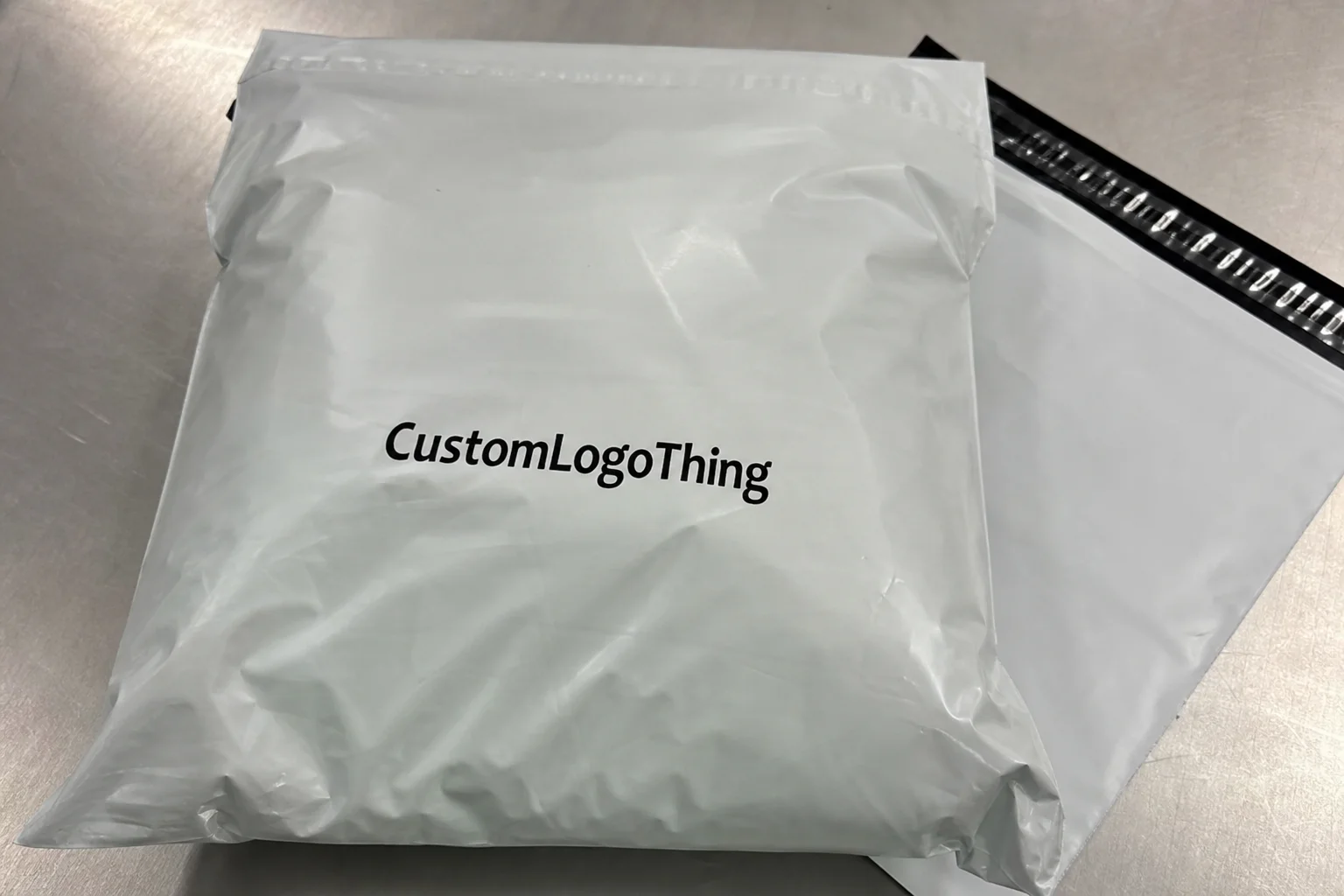
Food packaging decisions are usually shared by three groups that care about different risks. Marketing wants the bag to look branded at the doorstep. Operations wants a mailer that opens quickly, seals cleanly, and does not split under parcel handling. Finance wants the lowest landed cost that still protects the order. A printed poly mailer Bags Quote for Food gives those teams a shared baseline instead of a debate built on assumptions.
Approving design first can create expensive backtracking. Film gauge matters. Closure style matters. Bag size matters more than many buyers expect. On many Custom Poly Mailer projects, moving up one size adds more material cost than adding a simple one-color logo, especially if the larger footprint lowers the number of bags per master carton or increases freight cube.
A practical quote should answer five questions early:
- Will the mailer fit the real packed product, including product depth, inserts, carton corners, and hand-packing tolerance?
- Will the film handle the shipping route, including conveyors, mixed freight compression, sorting, and delivery handling?
- Will the print method support the brand goal, from a simple logo to full-surface graphics?
- Will the closure match the fulfillment model, such as a permanent seal, tear strip, or returnable dual seal?
- Will the landed cost work after setup, cartons, freight, storage, and destination distance are included?
There is also a timing reason to quote before final artwork. A buyer who learns early that full-panel printing strains the budget can choose a cleaner one-color layout before a designer spends hours building a production file that will never be approved. Likewise, a fulfillment manager who discovers that the packed order needs a larger bag can correct the dieline before proofs are issued.
If branded shipping bags are already the likely format, review Custom Poly Mailers and prepare the specification details before requesting pricing. A cleaner quote request typically means fewer revisions, faster proofing, and a production slot that is easier to protect.
Product Details That Change Food Mailer Performance
Printed Poly Mailer Bags are lightweight polyethylene shipping bags with custom branding. For food brands, they usually function as secondary ecommerce packaging: the food is already sealed in a pouch, carton, wrapper, jar, tin, or retail container, and the mailer protects and presents that packed item during shipment.
Good candidates include snack boxes, coffee accessories, dry tea packs in cartons, supplement pouches, candy bundles, bakery gift boxes, spice refill packs, and subscription replenishment orders. The common condition is simple. The mailer is not replacing the primary food package; it is replacing or reducing the outer shipper.
Match the mailer to the load, not just the category. Sharp carton corners can stress thin film. Powder pouches can create dense, compact parcels that pull hard against seams. Glass jars usually need cushioning, a molded insert, or a corrugated component before a mailer makes sense at all. Chilled or insulated food shipments raise another set of concerns because condensation, gel packs, insulation, and transit time change the entire packaging system.
Film choice is where performance starts. LDPE is common because it is flexible and cost-effective. Co-extruded film can improve strength, opacity, or surface behavior by combining layers with different properties. Recycled-content film may support sustainability goals, but the claim should be specific and supported by material information. Opaque white, gray, or custom-color films can protect privacy, hide retail graphics, and provide a more consistent branded print surface.
Thickness is only one part of strength. Buyers often compare mailers by mil gauge, but a 2.5 mil co-extruded film may not behave the same as a basic 2.5 mil film. Bag size, seam construction, film blend, and the shape of the packed load all influence performance. A soft pouch assortment places different stress on the bag than a rigid stack of boxed bars with four sharp corners.
Closures deserve more attention than they usually receive. A permanent adhesive strip is efficient for one-way ecommerce shipping. A tear strip improves opening and reduces the chance that customers attack the bag with scissors near the product. Tamper-evident closure features can support consumer confidence for premium food gifts or supplement orders, although the primary package still carries the main product-security burden. Dual-seal returnable designs make sense for apparel-like ecommerce models or mixed catalogs, but many food products cannot be resold after return, so the value depends on the category and returns policy.
Branding can remain restrained or become highly visual. Common options include logo placement, QR codes, batch messaging, handling icons, limited promotional copy, one-color marks, or full-panel graphics. A budget-sensitive launch may start with black ink on a white mailer. A mature subscription program may justify heavier ink coverage and tighter color control because the same delivery moment repeats month after month.
Specifications to Prepare Before Requesting a Quote
A fast, accurate printed poly mailer bags Quote for Food starts with complete inputs. Missing dimensions or vague artwork notes force assumptions, and assumptions tend to become price changes later. Procurement teams should collect these details before asking for a formal quote:
- Flat bag width
- Usable length, excluding flap
- Flap length
- Material gauge or target strength level
- Film color and opacity preference
- Print side, print area, and number of ink colors
- Order quantity and preferred quantity breaks
- Closure style
- Shipping destination, ZIP code, or country
- Pack-out requirements, such as cartons per master case
Measure the loaded product, not just the product face. A 9 x 12 inch carton will not fit comfortably in a 9 x 12 inch mailer once depth, corners, inserts, and packing tolerance are included. Manual packers usually need more clearance than automated systems because the product angle and hand position vary. A practical allowance might be 0.5 to 1.5 inches depending on carton depth and load rigidity, but the final call should come from the actual pack-out.
Send product dimensions and weights rather than guessing the bag size. Under-sizing causes tearing, crooked seals, slow packing, and frustrated packers who have to fight the bag closed. Over-sizing wastes material and can make the parcel look loose or sloppy; it may also create dimensional inefficiency if the bag balloons around a small rigid pack. Both problems show up as labor waste, reships, customer complaints, or a delivery experience that feels cheaper than the product inside.
Film gauge is commonly discussed in mils. Lighter poly mailers may sit around 2.0 mil for low-weight, soft, or compact orders. Heavier ecommerce mailers may move toward 2.5 to 3.0 mil or more where boxed food kits, dense supplement bundles, or sharp-cornered cartons are involved. Exact recommendations depend on film structure, bag size, seam strength, and load shape. The safest path is to test the bag with the real packed item before approving a large run.
Artwork files matter as much as the physical specification. Vector logo files are preferred for clean print edges. Pantone references help when brand color matching is required, although flexible packaging print will still have tolerances. Dieline approval confirms fold, seal, flap, and safe-margin areas. Barcodes and QR codes need quiet zones and enough contrast to scan after converting. Critical copy should stay away from folds, seals, cut edges, and high-stress areas.
Raise compliance questions early. Is the mailer for secondary packaging only? Is recycled content required? Are recyclability claims planned? Is any direct food-contact claim needed? The U.S. Environmental Protection Agency provides useful background on packaging waste and recycling considerations at EPA containers and packaging data, but any claim on the mailer still needs to match the actual film, the available documentation, and the market where the product is sold.
Printed Poly Mailer Bags Quote for Food: Cost, MOQ, and Unit Cost
A printed Poly Mailer Bags quote for food is shaped by more than bag count. The main cost drivers are bag size, film thickness, resin market movement, print coverage, number of colors, plate or setup requirements, order quantity, finishing options, packing format, and freight. A low unit price can become less attractive once cartons, palletization, and delivery distance are added.
MOQ logic is straightforward. Custom printing has fixed work attached to it: artwork review, prepress, proofing, setup, material scheduling, press preparation, converting, inspection, and packing. Higher quantities spread those fixed costs across more units. That is why the jump from a very small run to a practical production quantity can reduce unit cost sharply, while later quantity increases may produce smaller incremental savings.
For planning, simple Custom Poly Mailers may appear in broad ranges such as $0.18 to $0.35 per unit at mid-level quantities, while larger, thicker, full-print, specialty-closure mailers can move higher. Small custom-printed runs may price well above that range because setup is spread across fewer bags. These figures are planning references, not guarantees. Resin pricing, dimensions, freight distance, print method, artwork coverage, and lead-time pressure can all move the final quote.
| Mailer Choice | Typical Use Case | Cost Effect | Buyer Watchout |
|---|---|---|---|
| One-color logo on stock film | Early food launch, small subscription run, refill packs | Lower setup and ink coverage | Less visual impact than full artwork |
| Two- to three-color branded layout | Growing ecommerce food brand with repeat orders | Moderate print and proofing cost | Color registration and safe margins need review |
| Full-panel graphics | Premium snack kits, giftable food bundles, influencer drops | Higher ink, setup, and quality-control requirements | Large coverage can affect lead time and approval cycles |
| Returnable dual-seal closure | Mixed product catalogs or categories with practical returns | Higher material and converting cost | May not add value for many food returns |
| Recycled-content opaque film | Brands with defined sustainability claims | Depends on material availability and percentage | Claims need documentation and careful wording |
One-color logo printing is often the disciplined first buy. It controls cost, shortens decision cycles, and gives operations a chance to test size and gauge before the brand commits to a more complex format. Full-panel artwork can strengthen shelf-to-door branding, especially for subscription programs where the package may appear repeatedly in social content. It also adds complexity. More coverage means more attention to proofs, registration, rub resistance, ink laydown, and final color expectations.
Do not compare only unit cost. Compare landed cost. Freight, cartons, pallet configuration, destination distance, and delivery method can change the real per-bag number. A quote that saves $0.02 per bag but ships inefficiently may not be the better buy. Ask for itemized unit price, setup charges, proof costs if any, estimated freight, production lead time, payment terms, overrun or underrun policy, and reorder pricing.
Storage cost also belongs in the calculation. A larger quantity may reduce unit price, but it can tie up cash and warehouse space if sales velocity is uncertain. For a seasonal food program or limited promotional drop, the lowest theoretical unit price may be less useful than a quantity that matches realistic demand.
If the mailer is part of a broader packaging refresh, review other Custom Packaging Products at the same time. A retail carton, insert, label, or promotional card can change the loaded thickness enough to affect the correct mailer size.
Production Process and Timeline From Quote to Delivery
The production path has a predictable order: quote request, specification review, artwork check, pricing confirmation, digital proof, material scheduling, printing, converting, quality inspection, packing, and shipping. Delays usually come from incomplete specifications, late artwork changes, unclear color expectations, or a size decision that has not been tested against the real pack-out.
A complete buyer can move faster. Exact dimensions, artwork, quantity, material preference, closure style, and destination allow the supplier to quote with fewer caveats. A buyer still choosing between three sizes and two film gauges needs more estimating time, and the quote may need to be revised after samples or pack-out checks.
Proofing is the main risk-control checkpoint. It confirms logo placement, print direction, flap orientation, seal position, bag dimensions, safe margins, and color references. For food brands, proofing should also catch whether the mailer opens in the expected direction during fulfillment. That detail sounds small until a pack station loses seconds on every order because the bag orientation fights the workflow.
Typical timelines vary by specification. A straightforward repeat order can move faster than a new custom film color or heavy-coverage print job. Many Custom Printed Mailer projects require roughly 12 to 20 business days after proof approval, with longer windows possible for specialty material, larger order volume, complex printing, or freight constraints. Air freight can reduce transit time but may erase cost savings. Ocean or consolidated freight can help larger buys, but only if the packaging calendar is set early.
Build buffer time around launches. Subscription box drops, holiday promotions, retailer delivery appointments, and campaign shipments all share the same weakness: packaging delays can stop finished inventory from leaving the warehouse. Finished snacks sitting in storage without approved mailers are not sellable in the ecommerce channel that needs them.
Approve one final specification sheet internally before issuing a purchase order. Marketing should sign off on artwork. Fulfillment should sign off on size, pack direction, and closure. Procurement should sign off on price, quantity, payment terms, and freight. This simple step prevents a surprising amount of late-stage rework.
Quality Checks for Food-Related Ecommerce Packaging
Quality is operational insurance. A mailer that splits in transit can cost more in refunds, reships, customer service time, and brand damage than the bag ever saved. For food brands, damaged outer packaging can also create concern about product safety, even when the primary food package remains intact.
Inspection should cover seal strength, adhesive performance, film consistency, print registration, color consistency, opacity, puncture resistance, carton count, master carton labeling, and packing accuracy. For printed bags, rub resistance matters because parcel networks are abrasive. Bags slide across conveyors, sit under mixed freight, and rub against labels, corrugated cartons, and other poly surfaces.
Test real pack-outs, not empty samples. An empty mailer can look excellent on a desk. Add two rigid snack cartons, a promotional card, and a dense supplement pouch, and the stress points change. Corners push into the film. The adhesive strip may be forced to close across a curved load. The finished parcel may no longer stack cleanly.
Basic ecommerce checks can include hand packing, seal closure testing after 24 hours, corner stress review, print rub testing, and a small drop sequence using the actual packed item. For more formal parcel testing, buyers can reference distribution-test frameworks from the International Safe Transit Association. Not every food mailer project needs formal lab testing, but the thinking behind ISTA procedures is useful: test the package as a system, not as isolated components.
Adhesive performance deserves special attention if the packed goods are stored in variable temperatures. Heat, cold, dust, and overstuffing can all affect closure reliability. The seal should be easy for packers to use, but aggressive enough to stay closed through transit. If the mailer is being used around powdery products, loose paper fill, or dusty retail cartons, check that the adhesive area remains clean during packing.
Odor and cleanliness also matter. Secondary Packaging for Food should arrive clean, well-packed, and suitable for a consumer-facing unboxing experience. A strong film odor, dusty master cartons, or poorly packed mailers can create a bad first impression before the customer sees the actual product.
Sustainability claims require discipline. If the mailer says recycled content, recyclable, reusable, or eco-friendly, ask for supporting material details. Vague green messaging is risky and often unhelpful. A specific claim, such as a stated recycled-content percentage where available and supportable, is stronger than broad language that cannot be verified.
Next Steps to Get an Accurate Custom Mailer Price
To get an accurate custom mailer price, send a tight specification package. Include product dimensions, loaded weight, desired bag size if known, quantity tiers, artwork file, material preference, closure style, print colors, and delivery ZIP code or destination country. If the final size is uncertain, say so directly. A quote process can still begin with product dimensions, photos, and the current shipping setup.
Request two or three quantity breaks. For example, ask for pricing at 5,000, 10,000, and 25,000 bags if those volumes are realistic for the forecast. The point is not to chase the largest number on paper. The point is to see how unit cost changes and choose a buy level that fits cash flow, storage space, and sales velocity.
Photos help. Send an image of the packed food item, the retail carton, or the current shipping setup. Show the product from the front, side, and packed angle if possible. That reduces sizing errors and helps confirm whether a poly mailer is appropriate as outer packaging. If the load includes glass, sharp corners, multiple dense pouches, fragile bakery gift components, or anything chilled, identify that before samples are produced.
Flag deadlines early. Launch dates, subscription shipping windows, retailer delivery appointments, and promotional campaigns change the quoting conversation. A buyer with a hard in-hand date may need a simpler print option, a stock film color, or a revised quantity plan to reduce risk.
Sample review is smart when size, gauge, or load profile is uncertain. It is especially useful for heavier boxed food, sharp-cornered cartons, multi-item bundles, and premium gift packs where the unboxing moment carries brand weight. Samples cannot predict every parcel-network event, but they catch obvious fit and handling problems before full production.
For the cleanest pricing discussion, send specifications through Contact Us with any artwork, dimensions, quantity targets, and destination details already available. A well-prepared printed poly mailer bags quote for food should help the buyer compare material choices, production timing, and landed cost without guessing at the details that affect performance.
FAQ
What details are needed for a custom printed food poly mailer quote?
Provide bag dimensions, product size and weight, order quantity, film gauge or strength target, print colors, artwork file, closure type, and shipping destination. If the final bag size is unknown, send photos and dimensions of the packed food item so the size can be estimated more accurately.
Can printed poly mailer bags be used directly with food?
Most Printed Poly Mailers are used as secondary outer Packaging for Food already sealed in pouches, cartons, wrappers, jars, tins, or other containers. If direct food contact is required, state that upfront so material and compliance requirements can be reviewed before quoting.
What affects the unit cost of printed poly mailers for food brands?
Unit cost is influenced by size, material thickness, quantity, print coverage, number of ink colors, closure style, setup needs, packing format, and freight. Higher quantities usually reduce unit cost because fixed production costs are spread across more bags.
What MOQ should I expect for printed poly mailer bags?
MOQ depends on bag size, print method, material, and customization level, so it should be confirmed during quoting. Ask for multiple quantity breaks to compare the lowest practical order with the best unit-cost option.
How long does production take after approving a printed mailer proof?
Many Custom Printed Mailer projects require about 12 to 20 business days after proof approval, though lead time depends on artwork approval, material availability, order size, print complexity, and shipping method. Specialty films, heavy ink coverage, large runs, and tight freight windows can extend the schedule.


