Buyer Fit Snapshot
| Best fit | Custom Poly Mailers for Startups projects where brand print, material claims, artwork control, MOQ, and repeat-order consistency need to be specified before quoting. |
|---|---|
| Quote inputs | Share finished size, material target, print colors, finish, packing count, annual reorder estimate, ship-to region, and any compliance wording. |
| Proofing check | Approve dieline scale, logo placement, barcode or warning zones, color tolerance, closure strength, and carton packing before bulk production. |
| Main risk | Vague material claims, crowded artwork, missing packing details, or unclear freight terms can make a low unit price expensive after revisions. |
Fast answer: Custom Poly Mailers for Startups: Film, Print, MOQ, and Carton Packing should be specified like a repeatable production item. The safest quote records material, print method, finish, artwork proof, packing count, and reorder notes in one written spec.
Production checks before approval
Compare the actual filled-product size with the drawing, then confirm tolerance on folds, seals, hang holes, label areas, and retail display edges. Reserve space for logos, QR codes, warning copy, and material claims before decorative graphics fill the panel.
Quote comparison points
Review material grade, print process, finish, sampling route, tooling charges, carton quantity, and freight assumptions side by side. A quote is only useful when the supplier can repeat the same color, closure quality, and packing count on the next order.
Custom Poly Mailers for Startups: Smarter Shipping Basics
For a lot of early brands, Custom Poly Mailers for startups solve a very practical problem: how do you ship quickly, look credible, and keep packaging costs from eating into margin before the business has settled into a rhythm? Founders spend weeks refining the product, then the first shipment goes out in a plain bag that makes the brand feel smaller than it really is. That first package carries more weight than many teams expect, because it is often the first physical proof that the company exists outside a screen.
For direct-to-consumer brands, the mailer is sometimes the first branded object a customer handles, even before the product comes out of the bag. Packaging is not decoration in that moment. It shapes perceived value, brand recall, and the feeling that the customer bought from a deliberate company rather than a side project. If you are comparing options across Custom Packaging Products or narrowing in on Custom Poly Mailers, the best choice usually comes down to a careful balance of cost, fit, print quality, and how the package behaves on a packing table under real conditions.
Custom Poly Mailers are lightweight shipping envelopes made from polyethylene film and finished with a logo, color palette, pattern, or short message. They show up often in apparel, accessories, beauty samples, and small hard goods because they keep weight low, resist moisture, and avoid the expense structure of rigid cartons. Compared with custom printed boxes, they are faster to pack and easier to keep within postage targets. Compared with generic mailers, they create a layer of branded packaging that makes the shipment feel intentional instead of improvised.
That does not mean every startup should use them. Product packaging should match the item, the channel, and the promise the brand is making to the customer. Even so, for a lot of early-stage companies, custom poly Mailers for Startups are one of the fastest ways to improve the unboxing moment without stepping into box-level expense. This piece walks through how custom poly mailers for startups work, what drives pricing, how ordering timelines usually unfold, and where first-time buyers tend to run into avoidable problems.
"A mailer is not just a shipping supply. For a young brand, it is often the first piece of package branding a customer sees in the wild."
Custom Poly Mailers for Startups: Why First Shipments Matter
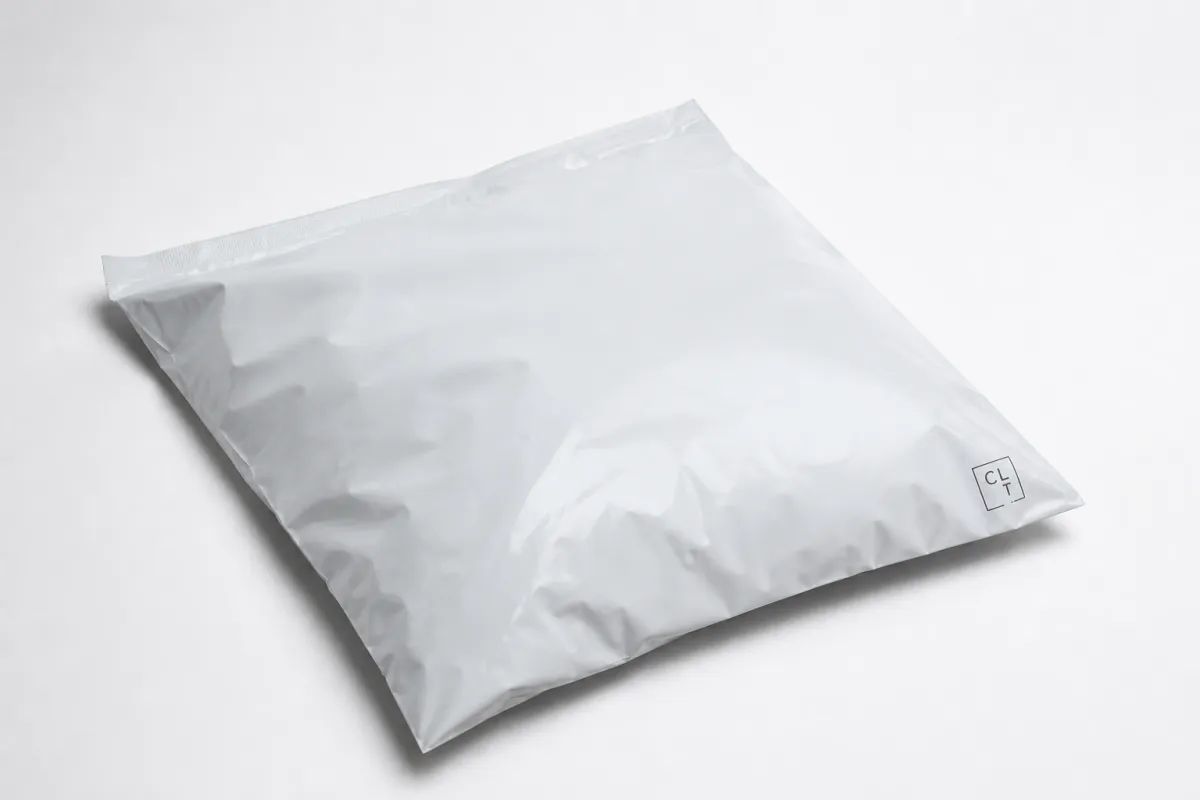
Experienced operators treat first shipments like a controlled test because the product alone does not carry the whole experience. A customer can love what they ordered and still judge the shipment in a few seconds. A plain mailer can make the order feel forgettable, while custom poly mailers for startups can make even a modest package feel considered. That matters because perceived value starts before the seal is broken, and in many categories the mailer is the only branded surface the buyer handles.
Picture the difference between a well-fitted printed mailer and a baggy anonymous envelope with product and extra air stuffed inside. One looks deliberate. The other looks rushed. That gap shows up clearly in retail packaging and direct-to-consumer shipping, where customers compare your parcel with everything else landing on the doorstep that week. A startup does not need luxury embellishment to create a strong impression, but it does need coherence. Custom poly mailers for startups can deliver that coherence at a lower cost than rigid cartons.
The practical advantages are easy to feel on the fulfillment floor. Poly mailers are light, which helps keep billable weight down. They resist moisture, which protects garments and soft goods during transit. They close quickly, which helps packing speed. Since they do not require tape-heavy assembly, they reduce friction for a small team. When a startup ships 20, 50, or 200 orders a day, a few seconds saved per order can matter just as much as a small price break on the unit cost.
There is also a brand logic behind the format. Packaging is protection, but it is also one of the earliest signals customers use to decide whether a company feels serious. That is why custom poly mailers for startups often beat generic mailers even when the shipping job is straightforward. The brand looks established. The offer looks real. The shipment feels like it came from a business that knows what it is doing.
If you are deciding between mailers and boxes, the right answer depends on the product and the promise you are making. A hoodie, a tote, or a sample kit may fit poly very well. A fragile ceramic, premium candle, or dense kit may belong in a box. The point is not to force every product into one format. It is to choose the format that fits the economics and the customer story. For many brands, custom poly mailers for startups are the most efficient place to begin.
One thing I have seen again and again: founders worry the mailer is too simple, then the first branded shipment lands and the feedback is almost always about how polished it feels. That little shift matters. It is kinda amazing how much confidence a clean outer package can create before the customer even sees the product.
How Custom Poly Mailers for Startups Work
At the construction level, a poly mailer is simple, and that simplicity is part of the appeal. Most are made from polyethylene film, often in a thickness range around 2.5 to 4 mil depending on the product weight and the amount of abuse expected in transit. A mailer usually includes a peel-and-seal adhesive strip, and some versions add a tear strip, a dual adhesive closure, or a second seal for returns. For startup operators, custom poly mailers for startups usually mean one of three things: printed film, a branded stock mailer, or a fully custom-size mailer with artwork matched to the brand system.
Print method changes the economics. A single-color imprint is usually the least expensive path and often the easiest to keep clean and crisp. Two- or three-color graphics add setup complexity. Full-coverage art, gradients, or inside printing can look striking, but they usually raise both cost and lead time. That is not a reason to avoid them. It is a reason to choose them on purpose. The best custom poly mailers for startups use the least expensive print structure that still creates the right impression in the hand and on camera.
The fulfillment path is direct. Product goes in, the adhesive strip closes the bag, and the package is labeled and sorted. Because the format is flexible, it usually occupies less cube space than a carton, and that can help with carrier dimensional weight. For apparel especially, the difference is real. A compact mailer avoids the wasted air that turns a low-cost product into a surprisingly expensive shipment once postage and handling are added.
Use cases tend to cluster in categories that are light, flexible, and not fragile in a rigid sense. Apparel is the obvious one. Accessories, subscription kits, beauty samples, paper goods, and soft home items also fit well. Custom poly mailers for startups are less suitable for products that need crush protection, corner stability, or layered inserts. A slim package helps only if the item can tolerate compression and routine handling in distribution.
There is a business-side angle too. A packaging line runs better when the mailer is easy to open, easy to fill, and easy to seal. Good packaging has to serve marketing and operations at the same time. If the artwork looks polished but the adhesive fails, or the size is attractive but awkward to pack, the whole system loses value. The best custom poly mailers for startups do not just look branded; they move through fulfillment without creating drama.
For brands building a broader packaging system, the mailer should be treated as one layer in a larger stack. A startup may begin with poly, then add tissue, inserts, stickers, or eventually move into more elaborate retail packaging. The first step, though, is usually getting the mailer right and making sure it supports the rest of the shipment instead of fighting it.
Custom Poly Mailers for Startups: Cost, Pricing, and MOQ Basics
Pricing is where the real decisions surface. Custom poly mailers for startups can look inexpensive at first glance, but the actual number depends on much more than the unit quote. Size, film thickness, print complexity, color count, finish, and whether the dimensions are stock or fully custom all shape the final cost. A simple white mailer with a one-color logo and a standard size may land in a very different range from a matte black mailer with full-bleed artwork and a custom gusset.
MOQ, or minimum order quantity, is the term that catches many founders off guard. Some suppliers are willing to work with low runs, while others need a larger quantity to make print setup economical. That creates a real tension for startups. A higher MOQ can improve unit cost, but it also ties up cash and storage. A lower MOQ protects cash flow, yet the per-unit cost may be higher. With custom poly mailers for startups, the right answer is usually the one that matches near-term demand rather than an optimistic forecast built on hope.
Hidden costs are easy to miss if you focus only on the quote. Artwork setup, plate or proof charges, freight, samples, and color matching can move the final landed cost more than many buyers expect. There is also the cost of over-ordering a design that changes after the first sales cycle. If a startup pivots the logo, adjusts the color story, or changes size after launch, extra inventory becomes dead stock. That is why custom poly mailers for startups should be ordered with some restraint during the first production run.
A useful rule of thumb stays simple: lower quantities usually mean a higher per-unit cost, while larger runs bring the unit price down but increase upfront spend. That tradeoff is normal in packaging. What matters is total landed cost, not only the number printed on the quote line. Freight and setup can make the "cheapest" option the least efficient one once the product is actually in motion.
| Mailer Option | Typical MOQ | Typical Unit Price | Best Fit | Notes |
|---|---|---|---|---|
| Stock white poly mailer with logo sticker | 250-500 | $0.10-$0.18 | Very early testing | Lowest commitment, but less polished than printed custom poly mailers for startups |
| 1-color printed mailer | 500-1,500 | $0.16-$0.30 | Apparel, accessories | Good balance of brand presence and cost control |
| Multi-color printed mailer | 1,500-3,000 | $0.24-$0.48 | Brand-forward launches | Higher setup complexity and longer proofing |
| Fully custom size and full-coverage print | 3,000-5,000+ | $0.30-$0.75 | Stable product lines | Best for strong package branding and tighter product fit |
Those numbers are directional, not universal. A heavier film, specialty finish, extra print color, or domestic versus overseas production can move them quickly. Still, they give a startup a realistic frame for budgeting. If a team is planning custom printed boxes later, it can make sense to compare the full packaging stack side by side and decide where the brand gets the strongest visual return for each dollar spent. In many cases, custom poly mailers for startups win the early-stage comparison because they carry less overhead than box-based packaging.
It also helps to look at the total system cost. A beautiful package that slows packing or increases shipping weight may cost more in labor and freight than it saves in presentation. That is why custom poly mailers for startups should always be evaluated in context: product type, fulfillment volume, and how much brand signaling the shipment truly needs to do.
Process and Timeline for Custom Poly Mailers for Startups
The production path is usually more linear than founders expect. It starts with a quote request, then spec confirmation, then artwork submission, then proof review, sample approval, manufacture, and finally shipping. The whole sequence can move quickly when decisions are already made. It can drag when the team is still debating size, logo placement, or color palette. For custom poly mailers for startups, decision speed matters almost as much as design quality.
Artwork readiness is one of the biggest variables. Vector logos in AI, EPS, or PDF format are easier for printers to handle than low-resolution raster images. Dimensions should be locked early, because changing size after a proof has been built can create avoidable back-and-forth. If a startup wants a specific look, the brand color values should be defined up front as well, including Pantone references when color matching matters. The more stable the brief, the smoother the timeline for custom poly mailers for startups.
Typical production windows vary, but many simple orders land around 12-15 business days after proof approval, with shipping time added on top. Multi-color work, custom sizes, or specialty finishing can stretch the schedule. Rush production exists, yet it often costs more and narrows customization choices. In practice, the fastest way to delay a packaging launch is to treat packaging as an afterthought. Custom poly mailers for startups should be scheduled alongside inventory, not after the product arrives.
One practical way to manage the timeline is with milestones:
- Lock dimensions and quantity target.
- Prepare vector artwork and basic copy.
- Approve digital proofs quickly.
- Request samples if the design is new or the product is unusual.
- Build time for manufacturing and transit into the launch calendar.
That sequence sounds basic, but it prevents the common trap where product stock arrives first and packaging shows up later. For a startup, that mismatch is expensive. You either ship without branding or delay the launch, and neither choice feels good. A disciplined timeline is one of the simplest ways to make custom poly mailers for startups function like a professional system instead of a scramble.
For buyers who want more context on transit durability and packaging testing, the ISTA resources are a useful benchmark. They help frame why drop tests, vibration testing, and package integrity still matter, even for light mailers. For brands with a sustainability lens, the FSC site is worth checking for paper components, inserts, and certified material choices that may sit alongside a poly mailing system. Just keep one honest caveat in mind: recycled-content claims and recycling outcomes vary by region and by local collection rules, so a supplier's green language should always be checked against the actual material spec.
Step-by-Step Guide to Choosing the Right Mailer
Start with product fit. Measure the item as it will ship, not as it sits on a shelf. Include sleeves, inserts, tissue, and anything else that changes thickness. A mailer that is too large wastes material and makes the package feel loose. A mailer that is too tight can stress seams or make packing slow. Custom poly mailers for startups work best when the size looks intentional instead of improvised.
Next, match material to use case. Thicker film helps with heavier products or sharper corners. Opaque film improves privacy. Recycled content can matter to a brand that speaks openly about environmental goals, though the exact structure depends on supplier options and performance needs. If the product is lightweight apparel, a standard film may be enough. If the brand sits higher on the price ladder, the mailer may need stronger tear resistance or a richer printed finish. That is why the best custom poly mailers for startups are chosen by use case, not by habit.
Branding choices should be deliberate. Logo placement, color contrast, internal messaging, and finish all shape how the package reads in the customer’s hand. A dark mailer with a light logo can feel sharp and modern. A bright color can make the shipment more visible and memorable. Inside print can create a second reveal, but it is not required. The point is consistency. Custom poly mailers for startups should reinforce the same promise customers see on the website, in email, and on product pages.
Operational fit matters just as much. If the mailer sticks too aggressively, slows packing, or makes barcode placement awkward, the fulfillment team feels the problem immediately. If the seam tears easily, customer service sees the result later. If the material is too slick, labels may not hold well. The most useful packaging is the kind that behaves predictably on the packing line. That is especially true for custom poly mailers for startups, where a small team cannot afford avoidable friction.
A practical sampling process reduces mistakes. Order a small proof run or sample pack, then test it through real packing conditions. Put an actual product inside. Seal it. Label it. Shake it. Stack it. Drop it from a realistic height. Compare that result with the brand impression you want to create. If the mailer survives the test and still looks good, you are close. If not, revise before scaling. That is how strong package branding gets built without expensive surprises.
Simple review checklist
- Does the product fit without excess empty space?
- Does the closure seal cleanly after repeated handling?
- Does the print hold color and sharpness at arm’s length?
- Does the mailer feel aligned with the brand’s price point?
- Does the format support future growth, or will it be replaced too soon?
One more point: not every startup needs fully custom dimensions on the first run. In some cases, a stock size with custom print is the smarter move, especially when the product is still changing. That approach reduces risk while still giving the shipment a branded identity. For early-stage teams, custom poly mailers for startups are often most effective when the design is disciplined and the order is not overcomplicated.
Common Mistakes Startups Make With Custom Poly Mailers
The most common mistake is sizing too large. It feels safe in the moment, but it usually creates a poor fit, wastes material, and makes the shipment look less considered. Oversized mailers also occupy more storage space and can increase shipping inefficiency. For custom poly mailers for startups, size discipline is often the cheapest upgrade available.
Another frequent error is overdesign. Too many colors, too much text, and crowded graphics can make the mailer expensive to print and hard to read at a glance. A busy design may look exciting on a screen, but a shipping envelope is not a poster. It is seen quickly, often under fluorescent warehouse light or on a crowded doorstep. A clear logo, a strong color block, and one concise message usually outperform a cluttered layout. The smartest custom poly mailers for startups often look simpler than founders first imagine.
Skipping samples is risky. Color shifts, weak seals, and unexpected film feel show up most clearly during real packing, not during a sales call. A proof can look acceptable and still fail operationally. That is one reason sample orders matter so much in product packaging. If a startup wants to avoid a reprint, a small sample run is cheap insurance. Custom poly mailers for startups should be validated in the same environment where they will actually be used.
Inventory mistakes are just as common. Some founders order too many mailers before sales are stable, then end up with boxes of outdated branding. Others order too few and run out at the worst possible time, usually right as launch interest peaks. The right answer is not always the lowest MOQ, and it is not always the biggest discount. It is the order size that matches demand with enough room for a second round of learning. Custom poly mailers for startups are easiest to manage when the first run is treated as a test rather than a final statement.
Timeline mistakes can be costly too. Packaging often gets pushed behind product sourcing, creative, and fulfillment setup. Then proof revisions, artwork fixes, and freight delays compress the schedule. Suddenly the product is ready, the marketing team is ready, and the mailers are not. That is not a small inconvenience; it can delay the launch or force the brand to ship in generic packaging. For custom poly mailers for startups, a realistic calendar belongs in the budget.
Finally, some teams treat the mailer as an isolated purchase instead of part of the broader branded packaging system. That can lead to mismatched graphics, inconsistent messaging, or a mailer that conflicts with inserts, stickers, or later retail packaging. A better approach is to think through the whole package experience. Even if the startup begins with simple mailers, the design should leave room for future growth into more complete package branding.
Expert Tips and Next Steps for Better Shipping
My strongest advice is to phase the packaging program. Start with one product line, one mailer size, and one visual system. If the product sells well and the packout holds up, expand from there. That is a cleaner path than trying to solve every packaging scenario at once. Custom poly mailers for startups are most effective when they begin as a controlled experiment rather than a huge commitment.
Build a short packaging brief before you ask for quotes. Include dimensions, product weight, target MOQ, artwork files, brand colors, timeline, and budget ceiling. That one document can save hours of back-and-forth and reduce weak quotes. It also helps suppliers respond with something useful instead of a generic estimate. For a startup, clarity is cheaper than revisions. The more precise the brief, the easier it is to compare custom poly mailers for startups on equal terms.
Do not compare vendors on price alone. Look at proof quality, response speed, print consistency, sample reliability, and whether the supplier understands fulfillment realities. A cheaper vendor that creates repeated issues can cost more than a slightly pricier one that gets the job right the first time. In packaging, operational reliability is an asset. That is especially true for custom poly mailers for startups, where one bad run can create both waste and brand damage.
It also helps to remember that the mailer is not just a shipping supply. It can act like a small sales asset. When customers share unboxing content, post referral photos, or reuse the package, the mailer becomes part of the brand conversation. That is why package branding matters even for simple products. A startup does not need elaborate custom printed boxes to build recognition. Sometimes a sharp, well-sized mailer does the job more efficiently. That is the practical value of custom poly mailers for startups.
Before you place the first order, audit the current packaging setup and identify the biggest gap. Is it cost? Is it brand presentation? Is it speed on the packing table? Is it product protection? The answer usually points to the right spec. From there, the path is straightforward: choose the format, test the proof, verify the fit, and scale only after the first run proves itself. That is how custom poly mailers for startups move from a simple shipping choice to a durable part of the brand system.
If the next order is the first branded shipment, start with the practical details and not the fantasy version of packaging. Choose the Right thickness for the product, keep the size tight, confirm the closure, and test the mailer through real packing steps before you commit to volume. That process keeps the launch grounded, protects cash, and gives the brand a cleaner first impression. For most young brands, custom poly mailers for startups are not just a packaging detail; they are one of the simplest ways to make shipping look like it belongs to a real business.
Frequently Asked Questions
How many custom poly mailers for startups should I order first?
Start with a quantity that matches a realistic launch window, not a full year of demand. If sales are still unpredictable, a smaller MOQ can protect cash flow even if the unit cost is a little higher. The first order should be large enough to test size, print quality, and packing speed, but not so large that the design becomes a storage problem if you revise it later. For most teams, custom poly mailers for startups should function as a learning run first and a scale run second.
What affects the price of custom poly mailers for startups most?
Size, film thickness, print colors, and finish usually drive the biggest pricing changes. Artwork setup, proofing, freight, and any special handling can matter almost as much as the quoted unit cost. Larger orders often lower per-unit pricing, but they also raise upfront spend and inventory risk. That is why custom poly mailers for startups should be priced on total landed cost, not only the headline unit number.
How long does it take to produce custom poly mailers for startups?
Timing depends on artwork readiness, proof approval, production capacity, and shipping distance. Simple designs can move faster than multi-color or fully custom jobs, and vector artwork usually speeds the proofing process. A practical planning window is often around 12-15 business days after proof approval, plus freight time. If the launch date is fixed, build extra time for revisions and transit. That buffer matters more than most founders expect with custom poly mailers for startups.
Are custom poly mailers for startups good for fragile products?
Only sometimes. They work well for lightweight fragile items if the product is also protected by inserts, sleeves, or cushioning that keeps it from shifting, bending, or scratching. For very delicate goods, a rigid outer box may be the safer route. The packaging should match the risk profile of the product, not the aesthetic preference alone. For fragile shipments, custom poly mailers for startups are best treated as one layer in a larger protection system.
What should I ask a supplier before ordering custom poly mailers for startups?
Ask about MOQ, total landed cost, proofing steps, turnaround time, and reprint policies. Confirm the exact film thickness, closure type, and print method before approving artwork. Request a sample or proof so you can check color, size, and seal performance under real packing conditions. Those questions sound basic, but they expose most of the differences between suppliers quickly. If a vendor answers clearly, that is usually a good sign for custom poly mailers for startups.

