Buyer Fit Snapshot
| Best fit | custom poly mailers for apparel brands for packaging buyers comparing material specs, print proof, MOQ, unit cost, freight, and repeat-order risk where brand print, material, artwork control, and repeat-order consistency matter. |
|---|---|
| Quote inputs | Share finished size, material target, print colors, finish, packing count, annual reorder estimate, and delivery region. |
| Proofing check | Approve dieline scale, logo placement, barcode or warning zones, color tolerance, and any recyclable or compostable wording before bulk production. |
| Main risk | Vague material claims, crowded artwork, or missing packing details can create delays even when the unit price looks attractive. |
Fast answer: Custom Poly Mailers for Apparel Brands: Film, Closure, Print, and Fulfillment should be specified like a repeatable production item. The safest quote includes material, print method, finish, artwork proof, carton packing, and reorder notes in one written spec.
What to confirm before approving the packaging proof
Check the product dimensions against the actual filled item, not only the sales mockup. Ask for tolerance on folds, seals, hang holes, label areas, and retail display edges. If the package carries a logo, QR code, warning copy, or legal claim, reserve that space before decorative graphics fill the panel.
How to compare quotes without losing quality
Compare board or film grade, print process, finish, sampling route, tooling charges, carton quantity, and freight assumptions side by side. A lower quote is only useful if the supplier can repeat the same color, closure quality, and packing count on the next order.
Custom Poly Mailers for Apparel Brands: What Works Best
Custom Poly Mailers for apparel brands do a lot more than move a folded shirt from a shelf to a doorstep. They create the first physical impression a customer gets from a label, and that moment often happens before the garment is even out of the bag. In practical terms, the mailer is one of the few packaging assets that can keep shipping weight low, support branded packaging, and still feel deliberate instead of disposable.
That matters because apparel is soft, compressible, and usually bought again. A tee, hoodie, sock bundle, or swimsuit rarely needs the crush resistance of a rigid carton. It needs a package that keeps the item clean, sealed, and easy to recognize. For many brands, Custom Poly Mailers for apparel brands land in a useful middle ground: light enough to protect margin, flexible enough for most SKUs, and visible enough to reinforce package branding without turning pack-out into a slow, clunky process.
There is a quieter benefit too. A plain shipping envelope says “delivery.” A printed mailer says “this order was handled with care.” That shift changes the feel of the unboxing before tissue paper, stickers, or inserts enter the picture. For a lean apparel business, that can matter almost as much as the bag itself. I have watched a customer’s opinion turn on a mailer in a matter of seconds, which is kind of wild when you think about it.
Below, I break down how Custom Poly Mailers for apparel brands actually work, which materials and sizes make sense, how pricing behaves, and where apparel teams tend to make avoidable mistakes. The aim is practical: choose a mailer that fits your garments, your shipping profile, and your margin targets.
Custom Poly Mailers for Apparel Brands: What They Are
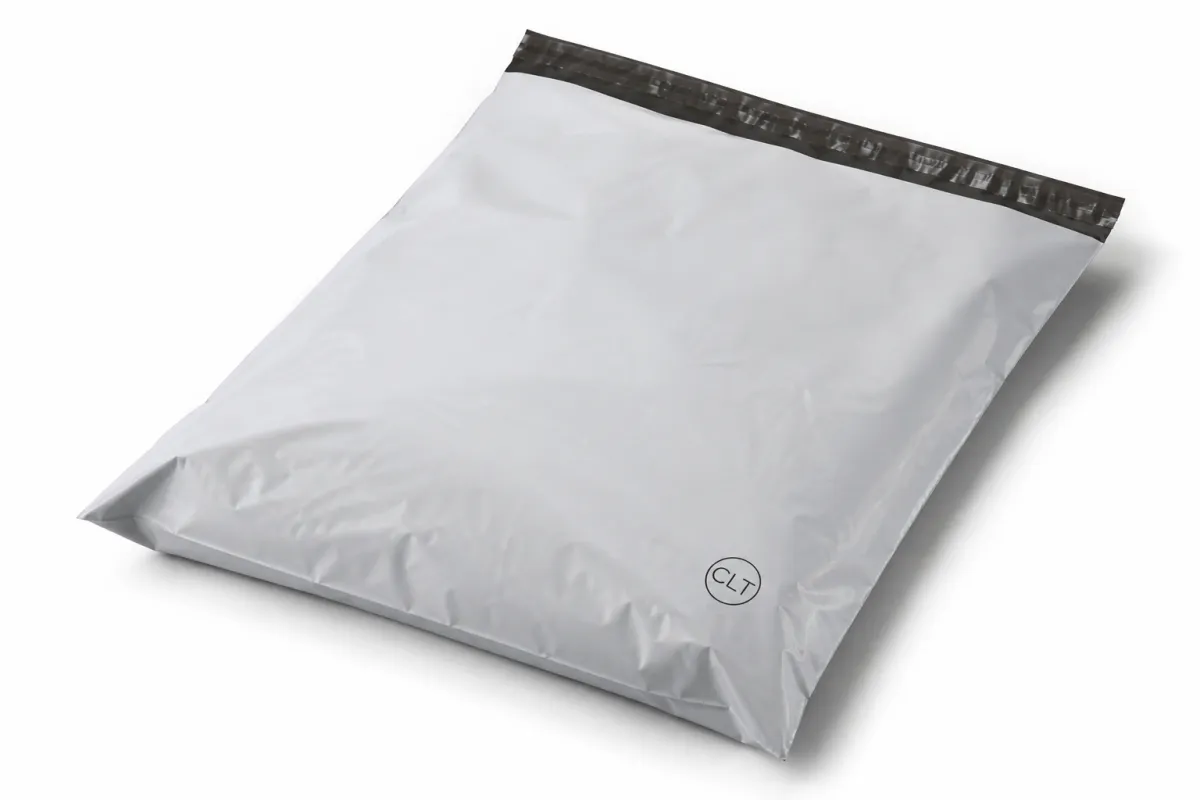
Custom poly mailers for apparel brands are printed plastic shipping envelopes built for folded clothing and other soft goods. They are usually made from polyethylene film, often with a self-sealing adhesive strip, and sized to accept common garment folds without forcing the product into a rigid shape. The better versions do two jobs at once: they ship efficiently, then serve as a moving brand surface on the way to the customer.
Here is the part that surprises new buyers. For many apparel labels, the mailer becomes the first physical brand touchpoint customers actually hold in their hands. Not the website. Not the ad. The package. That makes the material choice and print quality more than a cosmetic decision. It becomes part of the product packaging strategy, especially for e-commerce brands that do not have a store shelf to help carry the story.
These mailers fit tees, hoodies, socks, activewear, loungewear, swimwear, and undergarments. Anything soft, foldable, and not especially fragile can usually ship well in a mailer if the dimensions and film strength are matched correctly. They are a weaker choice for products that need crush protection, such as rigid accessories, boxed gift sets, or items with delicate hardware.
From a packaging design angle, the mailer is often the simplest place to start. It can carry a logo, repeated pattern, brand message, return address, or internal print if the goal is a more polished reveal. Compared with custom printed boxes, the barrier to entry is lower, which is why many growing apparel brands use custom poly mailers for apparel brands as their first branded shipping format before they build out a broader packaging system.
Still, simple does not mean one-size-fits-all. A 100-gram tee order and a fleece hoodie set are not the same shipment. A fresh launch may only need a light-gauge bag with one-color print, while a premium collection may justify thicker film, stronger seams, and higher-coverage graphics. The real task is to match the bag to the garment mix, the shipping lane, and the brand experience you want customers to remember.
I think that is where a lot of brands miss the point. They treat custom poly mailers for apparel brands as decoration, then wonder why the package feels flimsy or the shipping bill drifts upward. A better approach is to treat the mailer as operational packaging with a branding job attached. That order matters.
I have seen packaging teams spend hours debating artwork while skipping the actual fit test. Then the first bundled order arrives too tight, the seal pulls, and everybody is back at square one. Not ideal. The spec has to work before the graphics get the applause.
If you are comparing packaging options across a broader assortment, our Custom Packaging Products page is a useful starting point, and our Case Studies page shows how different brands balance cost, presentation, and fulfillment speed. For mailer-specific options, see our Custom Poly Mailers.
From an industry standpoint, custom mailers are not something to approve on appearance alone. Performance should be tested against expected shipping stress, puncture risk, and seal integrity. Groups like the ISTA provide test frameworks that help packaging teams think beyond graphics. For brands documenting sustainability claims, the conversation should also include recycled-content documentation, resin sourcing, and whether the supplier can back up its statements with real specs rather than marketing copy. If a mailer is paired with paper inserts, cartons, or labels, those paper components may be the place where FSC certification becomes relevant.
So, custom poly mailers for apparel brands are not just bags. They are lightweight brand carriers, cost-control tools, and shipping assets that can either support the customer experience or quietly weaken it.
How Custom Poly Mailers Work in Apparel Fulfillment
At warehouse level, the flow is usually simple: fold the garment, add tissue or an insert if needed, place it in the mailer, seal it, apply the shipping label, and move it to dispatch. That straightforward sequence is one reason custom poly mailers for apparel brands are so common in e-commerce. They do not ask the fulfillment team to build a box, tape corners, or manage void fill.
Speed matters here. Poly mailers generally take less storage space than cartons, which means more units per shelf, fewer replenishment headaches, and less handling of packaging inventory. They also reduce dimensional weight compared with a box in many shipping scenarios, which can make a real difference for lower-priced apparel orders where every shipping dollar is visible.
That does not mean they are cheaper in every case. The savings depend on the carrier, the destination, and the actual order profile. But for shirts, leggings, socks, and light knits, custom poly mailers for apparel brands often improve pack-out efficiency because the team is working with a flat, forgiving format rather than a rigid structure.
The brand effect shows up in transit too. Mailers are visible in a way that plain cartons often are not. They get handled, stacked, and scanned in full view. If the design is clean, that visibility helps the brand look deliberate before the customer opens the parcel. If the print is sloppy or the material feels cheap, the opposite happens just as quickly.
Custom printing enters the process in a few different ways. Some brands place a logo on one side and contact information on the other. Others use repeated patterns, bold color fields, or a short brand statement. A few include internal printing for a more premium opening moment. The right choice depends on the brand’s identity and how much visual load the package can carry without feeling crowded.
Durability is the part that tends to get underpriced. Tear resistance, puncture resistance, seam construction, and adhesive performance need to match the item inside. A thin bag can work for a lightweight tee on a short route. Put a bulky hoodie or a multi-item order in the same bag and the risk profile changes quickly. The mailer should be selected for the heaviest likely pack, not only the lightest one.
For apparel teams that want a more polished experience, the mailer can work alongside tissue, stickers, cards, or branded inserts. Used well, that mix creates a coherent product packaging story. Used poorly, it becomes overstuffed and slows the line. That is one reason custom poly mailers for apparel brands work best when the packaging plan is documented rather than improvised at the table.
Here is a practical way to think about the fulfillment tradeoff:
- Plain shipping is efficient but forgettable.
- Branded mailers add recognition without the weight of a box.
- Boxes feel more premium but usually cost more to ship and store.
- Hybrid setups can work well for special drops or giftable product lines.
The strongest packaging system is the one that fits the order mix, not the one that looks most impressive in a mockup. That is why custom poly mailers for apparel brands often become the default for everyday fulfillment, while custom printed boxes are saved for limited editions, bundles, or higher-ticket sets.
Choosing Materials, Sizes, and Print for Apparel Orders
Material choice is where custom poly mailers for apparel brands begin to split into different paths. The common options are virgin poly, recycled poly, and co-extruded films. Virgin film is often the easiest route for consistent print quality and dependable seal performance. Recycled film can support sustainability goals, but the look, feel, and sourcing profile can vary more. Co-extruded builds may offer better tear behavior or a more refined surface for graphics, depending on the supplier.
Cost, appearance, and environmental signaling do not always move together. A recycled option may support a brand story, but if the resin mix creates inconsistent opacity or rougher print results, the perceived value of the package can fall. That is why I always tell brands to look at the full set of tradeoffs instead of asking which material is “best” in the abstract.
Size matters more than many first-time buyers realize. The right mailer should follow the folded dimensions of the garment, not just the product category. A medium tee, a heavyweight hoodie, and a three-pack of socks may all belong to the same brand, but they should not all be forced into one bag if the fit becomes sloppy or the seal is strained. Oversizing wastes material and can raise shipping costs. Undersizing risks stretching the seam or creating a bulky package that looks messy on arrival.
A good sizing exercise starts with real SKUs. Measure the folded width, height, and thickness of your most common orders, then test the largest realistic bundle. If you only size for your hero item, the first bundled order will expose the weakness. That is one reason custom poly mailers for apparel brands should be selected after packing tests, not before them.
Print style changes perception quickly. A one-color logo can feel clean and restrained. A full-bleed graphic can feel bold and fashion-forward. Inside printing adds a surprise moment, but it also increases cost and can lengthen production. Matte finishes tend to read as more muted or premium, while gloss finishes often look brighter and more retail-driven. None of those choices is universally right. Each one changes how the package reads in the customer’s hand and in social photos.
Opacity matters more than many people expect. If the film is too thin or too translucent, the contents can show through, which is not ideal for privacy-sensitive categories like underwear, swimwear, or intimate apparel. If the material is too opaque in a way that looks chalky or cheap, the package can lose polish. The same is true for closure style: a weak adhesive strip can ruin an otherwise well-designed mailer.
Thickness, usually expressed in mils or microns depending on the supplier, should be matched to the item weight and transit conditions. Thicker is not always better, because added material can raise cost and sometimes stiffness without improving practical performance enough to matter. But too-thin film is a false economy. For custom poly mailers for apparel brands, a few cents saved on the bag can become a return, a damage claim, or a bad review.
Here is a simple comparison framework that apparel teams can use when reviewing options:
| Option | Typical Use | Strengths | Tradeoffs |
|---|---|---|---|
| Virgin poly, one-color print | Core tee and basics orders | Strong print consistency, dependable seal, lower design complexity | Less sustainability signaling, simpler appearance |
| Recycled poly, limited print | Eco-positioned fashion or basics line | Supports sustainability messaging, often good for repeat orders | Can vary more in texture and opacity, sometimes higher cost |
| Co-extruded film, full-bleed graphics | Premium drops and branded mail-only campaigns | Better visual impact, potentially improved puncture resistance | Higher setup complexity, usually more expensive |
| Matte finish with inside print | Elevated unboxing and giftable apparel | Premium feel, memorable reveal | Higher unit cost, longer lead time in some cases |
That table is the right way to think about custom poly mailers for apparel brands: not as one product, but as a set of tradeoffs. The “best” mailer is the one that balances film, opacity, seal performance, and print quality with actual order behavior.
If you want a practical standard to sanity-check shipping durability, packaging groups such as packaging.org are useful for broad category understanding, while ISTA test methods can help frame how well a package holds up under vibration, compression, and handling. Apparel brands do not need to become lab specialists, but they should think like one when they approve the final spec.
Another useful filter is to ask whether the bag helps or hurts the rest of your packaging system. A mailer that looks great but forces a slower pack-out can quietly cost more than a simpler option. Likewise, a mailer that saves shipping weight but makes the product feel underwhelming may weaken customer perception. The strongest custom poly mailers for apparel brands sit in the middle: clean, strong, efficient, and easy for the team to pack every day.
Custom Poly Mailers for Apparel Brands: Cost, MOQ, and Pricing
Pricing for custom poly mailers for apparel brands is shaped by a handful of variables that matter more than almost anything else: size, film thickness, print coverage, color count, order quantity, and material choice. Recycled or specialty films can add cost. Heavy artwork coverage can add cost. Larger bags need more material. None of this is mysterious, but it is easy to miss when a quote sheet shows only one “unit price” number.
MOQ, or minimum order quantity, is the next issue. Suppliers ask for minimums because custom print setup, film conversion, and production changeovers all carry fixed costs. If a brand wants a unique size, custom colors, and full-coverage graphics, the supplier needs enough volume to justify the run. That means smaller labels often face a harder choice: accept a higher unit cost, simplify the design, or standardize on a bag that can be reused across launches.
Here is the part many new buyers miss. The first few thousand units of custom poly mailers for apparel brands usually cost much more per bag than the larger reorders. The price curve rewards scale. A run of 5,000 pieces might land in one cost band, while 20,000 pieces drop noticeably because setup costs are spread over more units. That does not mean a brand should buy more than it needs. It means the quote should be read with the inventory plan attached.
To make that concrete, consider a simple range. For a 5,000-piece run of a standard printed mailer, the unit cost might sit somewhere around the low twenties of cents, depending on size, print coverage, and whether the film is recycled or virgin. At larger volumes, the unit cost can fall by several cents. If a brand ships tens of thousands of parcels a month, that difference adds up quickly. If a small label only needs a few hundred mailers to test a collection, the economics look very different.
And that is before freight. Freight can erase the apparent savings of a cheap quote, especially on overseas production or heavy cartons. Setup fees, plate charges, sample costs, and storage also belong in the comparison. A quote that looks lowest on paper may become the most expensive once the bags land at the warehouse and the team has to store them for six months.
Here is a compact way to evaluate quotes for custom poly mailers for apparel brands:
- Compare apples to apples. Same size, same thickness, same print coverage, same closure type.
- Include setup costs. Plates, art prep, tooling, and sample charges can materially change the true price.
- Check freight separately. Air, ocean, and domestic trucking behave very differently.
- Estimate storage carry. Bulky packaging sitting in a corner has a real cash cost.
- Test pack speed. A mailer that slows labor can cost more than a slightly pricier but easier format.
There is also a budget trap that keeps showing up in apparel operations. Brands save a few cents on the mailer, then lose dollars through oversized shipping or poor pack-out efficiency. A slightly smaller, better-fitting bag can often trim dimensional waste. That is why custom poly mailers for apparel brands should be reviewed alongside parcel data, not in isolation.
To put the price question in context, here is a very rough decision lens:
- Lower MOQ, higher unit cost works for launch testing and uncertain demand.
- Mid-volume runs fit growing DTC brands with repeat SKUs.
- Higher-volume orders usually reward brands that have stable demand and predictable replenishment.
At the business level, the real question is not “How cheap can this bag be?” It is “What is the total cost of shipping this garment in a way that protects margin and brand perception?” That framing is much closer to how seasoned packaging teams buy. Honestly, that one question filters out a lot of bad decisions.
If your packaging strategy includes more than mailers, compare the role of custom poly mailers for apparel brands against insert cards, tissue, labels, and even custom printed boxes. For many apparel companies, the mailer is the entry-level branding tool, while other elements can be layered in as revenue grows. The package does not need to do everything. It needs to do the right things at the right cost.
Custom Poly Mailers for Apparel Brands: Process, Timeline, and Lead Time
The production process for custom poly mailers for apparel brands usually starts with a spec brief. That brief should include dimensions, film thickness, material type, print zones, color targets, seal style, and any need for return information or barcodes. The clearer the brief, the fewer revisions later. Vague requests are where packaging timelines get derailed.
After the brief comes artwork and proofing. If the design is simple, the proof cycle can be short. If the brand wants full-bleed graphics, a custom pattern, or internal print, the review process usually takes longer. Color approval is especially important because a screen mockup does not always reveal how a brand color will behave on a polyethylene surface.
Sampling is the stage most small teams underestimate. A digital proof is useful, but it cannot tell you how the bag feels, how the adhesive performs, or whether the material is too see-through under real light. The sample should be packed with the actual garments the brand ships most often. For custom poly mailers for apparel brands, that one small test can prevent a lot of expensive guesswork.
From there, production begins. Lead time depends on print complexity, supplier capacity, material sourcing, and shipping method. A simple order with modest print coverage may move relatively quickly. A more customized run, especially one using recycled material or full-coverage graphics, can take longer. Overseas freight can extend the schedule further, and that is before weather, port congestion, or documentation issues show up.
Typical lead time expectations vary widely, but many apparel teams plan for several weeks from approved proof to landed delivery, with overseas orders often taking longer than domestic ones. The exact window depends on the supplier and the shipping lane, which is why a calendar should be built backward from the in-hand date, not forward from the quote date.
That backward plan matters most for seasonal drops, campaign launches, and influencer-driven demand spikes. Packaging often becomes the bottleneck after the product itself is ready. I have seen brands finalize shirts, photography, and fulfillment labor only to discover the mailers arrive late. The order still ships, but the brand presentation gets compromised because the packaging was treated as an afterthought.
Here is a practical timeline framework for custom poly mailers for apparel brands:
- Brief and quote: define specs, request comparable quotes, and ask about MOQ and freight assumptions.
- Artwork and proof: confirm logo placement, Pantone targets if needed, and any inside print.
- Sampling: pack real garments, test the seal, and check opacity under normal light.
- Production: allow time for printing, curing, inspection, and cartonization.
- Freight and receiving: build in a cushion for transit variability and warehouse intake.
It is smart to include contingency time for reprints or late design tweaks. One revised logo file can push a schedule by days. One late approval can push it by more. If a supplier needs to rework the proof or replace material, the lead time expands again. That is not failure; it is ordinary manufacturing reality.
For brands that care about testing discipline, ISTA standards can be a useful reference point. Even if a team does not run formal lab testing, the mindset is valuable: simulate the drop, vibration, compression, and handling the package will really face. Custom poly mailers for apparel brands should survive more than a desktop approval.
There is a good reason to document all of this in a packaging spec sheet. Once the process is written down, reorders become easier, the warehouse team has clearer instructions, and the brand is less likely to drift into random bag choices from one season to the next. That consistency is part of what makes a strong packaging program feel professional.
Common Mistakes Apparel Brands Make With Poly Mailers
The most common mistake is sizing the mailer for a single hero SKU and forgetting about the rest of the line. A brand may test a tee, approve the fit, and then discover that hoodies, jackets, or bundled sets push the seam to the edge. That is a bad place to learn the lesson. Custom poly mailers for apparel brands should be sized against the largest realistic packing combination, not the easiest one.
Another mistake is underestimating closure quality. Weak adhesive, poor seal area, or film that tears too easily can create returns and customer frustration. A bag that opens in transit or splits at the seam undermines trust much faster than a plain package ever could. Durability is not glamorous, but it is the line between a good brand impression and a support ticket.
Overbranding is less obvious, but just as real. A package covered in loud graphics, oversized slogans, and crowded content can feel messy. For some apparel brands, restraint does more work than decoration. The package should support the garment, not shout over it. The strongest custom poly mailers for apparel brands usually have enough visual identity to be recognizable, but not so much that the design looks chaotic.
Skipping samples is another recurring problem. A mockup on screen does not show texture, opacity, or the way a mailer behaves when folded, stuffed, and sealed. It also cannot reveal subtle color shifts. A brand that signs off without a physical sample is basically guessing. That is a poor habit in any packaging program, especially one tied to customer-facing apparel fulfillment.
Inventory mistakes are just as costly. Buy too few units and the team can run out in the middle of a launch. Buy too many and the storage burden grows, while cash gets tied up in packaging sitting on a rack. Small labels feel this most sharply, because packaging spend is competing with inventory, creative, and paid media. The right quantity depends on velocity, reorder cadence, and shelf space, not just price per thousand.
There is also a hidden mistake that often appears in well-meaning sustainability efforts. A brand chooses a recycled bag, but does not test whether the print remains legible or the bag still closes cleanly. Or it chooses a lightweight format that looks efficient on paper but fails when packed with a heavier garment. Sustainability goals should not override basic performance. If the package fails, the brand is forced to replace it, which is worse for both cost and waste.
These mistakes are avoidable if the brand treats custom poly mailers for apparel brands as a system rather than a one-off purchase. The mailer must fit the SKU mix, the fulfillment motion, the shipping lane, and the customer experience. Miss one of those pieces and the whole setup gets weaker.
One more mistake deserves a callout: brands sometimes chase the lowest quote without comparing the entire landed cost. Freight, setup, and storage can erase the apparent savings. A package that looks cheaper in procurement may be more expensive by the time it reaches the fulfillment floor. That is why smart buyers compare value, not just unit price.
For apparel teams that want a broader packaging strategy, the mailer should also be aligned with inserts, labels, tissue, and any secondary materials used in retail packaging or gift orders. Packaging works better when it has a system behind it. Random assets assembled at the last minute usually show it.
Expert Tips and Next Steps for Apparel Brands
If I had to reduce the buying process to one recommendation, it would be this: start with one core size that covers the majority of orders, then add a second size only if packing data proves the need. Most brands do not need five mailer sizes. They need one good primary format and a disciplined reorder plan. That is especially true for custom poly mailers for apparel brands, where simplicity can protect both operations and margin.
Build a short packaging spec sheet before you ask for quotes. Include finished dimensions, film thickness, closure type, opacity target, print zones, finish, and any special handling requirements. A spec sheet turns a vague shopping exercise into a procurement process. It also makes it easier to compare suppliers without getting distracted by glossy mockups.
Then order samples. Not one. A few. Pack your heaviest likely garment combination, your most common single item, and one bundle order. Check the seal, the clarity of the print, the hand feel, and whether the package looks tidy after it has been folded and labeled. That small internal test catches more issues than a stack of digital approvals ever will.
A pilot launch is worth considering if you are not sure how the bag will perform at scale. Tie the mailer to one collection or one sales channel, then measure pack speed, damage rates, and customer feedback. If customers post the package, even better. That data is more useful than opinions in a meeting, because it shows whether the bag is doing real work or just looking good in a mockup.
There is also a strategic question about how the mailer sits inside the rest of your packaging architecture. If you already use labels, inserts, and tissue, custom poly mailers for apparel brands can become the core shipping shell while other materials handle the premium layer. If your assortment includes high-end gift sets, some orders may belong in custom printed boxes instead. The point is not to force every SKU into one format. The point is to match the format to the job.
“The best mailer is the one the team can pack quickly, the carrier can move cheaply, and the customer still wants to open.” That is the test I would use before approving any apparel mailer program.
If you are building a new packaging workflow, these are the steps I would follow next:
- Audit your top SKUs by folded size and shipment weight.
- Collect artwork and decide where the logo and messaging should live.
- Request comparable quotes with the same spec across suppliers.
- Review samples with real garments and normal packing staff.
- Lock a reorder threshold so you never run short during a launch.
That sequence keeps the packaging decision grounded in actual operations. It also reduces the chance that custom poly mailers for apparel brands become a vanity purchase instead of a useful one. Good packaging should pay for itself through efficiency, brand lift, or both.
For brands looking to expand beyond mailers, our Custom Packaging Products catalog can help you map the broader mix. For teams that want examples of packaging decisions tied to real business outcomes, our Case Studies page is a useful reference point. And if mailers are the next step, the Custom Poly Mailers page is where the spec conversation can start.
My honest view: custom poly mailers for apparel brands work best when they are treated like a controlled brand asset, not just a shipping expense. Get the size right. Get the film right. Get the print right. Then let the package do its quiet work on every order.
What are custom poly mailers for apparel brands best used for?
They are best for soft goods like tees, leggings, swimwear, undergarments, socks, and lightweight knits. They work especially well when the goal is to reduce shipping weight without losing branded presentation. They are not ideal for fragile accessories or products that need rigid crush protection.
How do I choose the right size for custom poly mailers for apparel brands?
Measure the folded dimensions of your most common SKU, then add enough room for a clean seal. Check bulkier items separately, such as hoodies or bundled orders, before locking in one size. Ask for samples and test-pack the exact garments you plan to ship.
Are custom poly mailers durable enough for shipping clothes?
Yes, if the film thickness, seam strength, and adhesive are matched to the product and transit conditions. Heavier items and longer-distance shipments usually need stronger specs than basic tee orders. Always test against puncture, tearing, and seal failure before placing a large order.
How long does the custom poly mailers process usually take?
Timing depends on artwork approval, sampling, production capacity, and freight method. Simple orders move faster than full-coverage prints or recycled-material runs with special sourcing needs. Build in extra time for revisions, especially before a product launch or seasonal drop.
Can small apparel brands afford custom poly mailers for apparel brands?
Yes, but they should focus on the smallest practical print spec and a size that covers the widest range of orders. Smaller brands often get the best return by treating packaging as a conversion and retention tool, not just a shipping cost. Comparing freight, setup fees, and MOQ is just as important as comparing unit price.
The practical takeaway is straightforward: custom poly mailers for apparel brands work best when they are chosen like operational tools, not decoration. Build the spec around your heaviest real order, test the seal and opacity with actual garments, compare landed cost instead of just unit price, and keep the design clean enough to recognize at a glance. If those pieces line up, the mailer earns its place in the pack line and does exactly what a good packaging asset should do.

