Buyer Fit Snapshot
| Best fit | Custom Poly Mailers with Center Seal projects where brand print, material claims, artwork control, MOQ, and repeat-order consistency need to be specified before quoting. |
|---|---|
| Quote inputs | Share finished size, material target, print colors, finish, packing count, annual reorder estimate, ship-to region, and any compliance wording. |
| Proofing check | Approve dieline scale, logo placement, barcode or warning zones, color tolerance, closure strength, and carton packing before bulk production. |
| Main risk | Vague material claims, crowded artwork, missing packing details, or unclear freight terms can make a low unit price expensive after revisions. |
Fast answer: Custom Poly Mailers with Center Seal: Film, Print, MOQ, and Carton Packing should be specified like a repeatable production item. The safest quote records material, print method, finish, artwork proof, packing count, and reorder notes in one written spec.
Production checks before approval
Compare the actual filled-product size with the drawing, then confirm tolerance on folds, seals, hang holes, label areas, and retail display edges. Reserve space for logos, QR codes, warning copy, and material claims before decorative graphics fill the panel.
Quote comparison points
Review material grade, print process, finish, sampling route, tooling charges, carton quantity, and freight assumptions side by side. A quote is only useful when the supplier can repeat the same color, closure quality, and packing count on the next order.
Custom Poly Mailers with Center Seal: What to Know
The odd advantage of Custom Poly Mailers with center seal is that the part doing the hardest work is also the part most people never really look at. Move the seam to the back panel and the front face opens up: cleaner, flatter, easier on the eye. Small change, big effect. In apparel, subscriptions, and other soft-goods programs, that can make the package feel less like transit packaging and more like a brand object. Customers notice that before they even notice the tissue paper inside.
From a buyer’s seat, that front panel is not cosmetic trivia. It is the first tactile and visual handshake, a piece of branded packaging that sits between fulfillment speed and presentation. The right spec can calm a packing bench and make the finished parcel look crisp. The wrong one can wrinkle, split, or print poorly no matter how polished the art looked on screen. Packaging has a way of punishing optimism, which is a polite way of saying it’s gonna expose sloppy specs fast.
Custom Poly Mailers with center seal are not complicated. They are just easy to specify badly. Film gauge, seam quality, sizing, closure style, and artwork placement all affect the outcome. The practical questions usually come down to how the mailer behaves, what it actually costs, how long it takes to produce, and whether it fits the product mix. That is the territory covered here, with enough detail to help you ask sharper questions before you place an order for Custom Poly Mailers or compare them with other Custom Packaging Products.
What Custom Poly Mailers with Center Seal Are
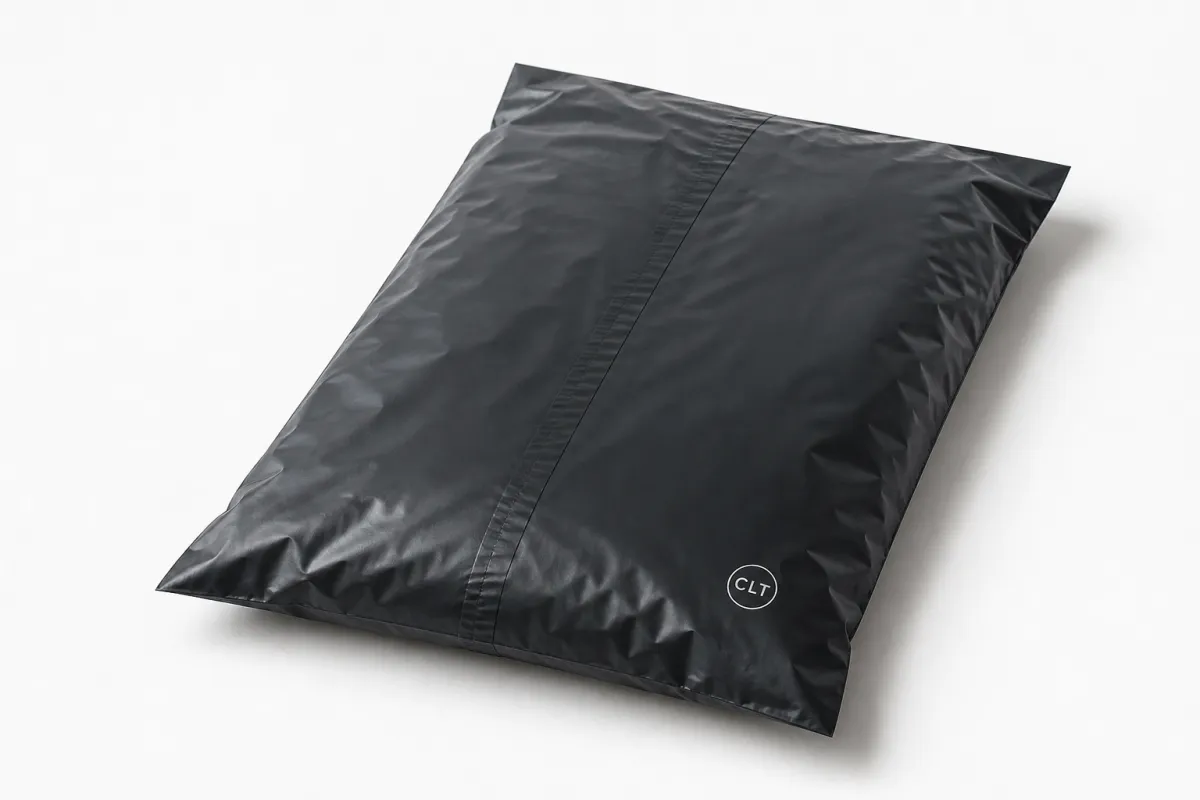
Custom Poly Mailers with center seal are flexible polyethylene shipping bags made from film that is folded and sealed along the centerline, so the seam runs down the back panel instead of splitting the sides. That structural choice changes the look in a meaningful way. The front panel becomes a cleaner field for logos, copy, patterns, and color blocking. That is why this format shows up so often in apparel, subscription kits, and other soft-goods programs where presentation matters almost as much as protection.
The bag is still a mailer, not a box. It does not have the rigid walls you would expect from custom printed boxes, and it will not protect fragile contents the same way a structured carton does. For products that already tolerate flexible handling, though, custom poly mailers with center seal can deliver a tidy result with less material and less cube than corrugated packaging. That affects shipping cost, storage efficiency, and packout speed. A few millimeters of structure can change an entire operation.
Brands usually pick this style for three reasons. The front panel feels open, which helps artwork read quickly. The center seam gives the finished bag a neater silhouette in the customer’s hand. The format also supports a straightforward fulfillment flow because the bag opens, loads, and closes without much drama. Those are the same reasons custom poly mailers with center seal keep appearing in product packaging programs that care about presentation and throughput at the same time.
That benefit disappears quickly when the spec is wrong. A center-seal layout does not fix thin film, uneven heat sealing, or undersized dimensions. I have seen mailers with excellent graphics fail in transit because the film gauge was too light for the product edges. I have also seen plain mailers outperform them because the seam was straight and the closure held. So yes, custom poly mailers with center seal look cleaner on the shelf and on the packing bench, but performance still comes down to material selection, seam integrity, and fit.
There is a branding angle here that buyers sometimes miss. If a program depends on simple, repeatable visuals, a center-seal structure can act like a quiet backdrop instead of competing with the artwork. That works especially well for ecommerce labels, modest logo placements, and minimalist package branding systems where the mailer itself is part of the identity. In that sense, custom poly mailers with center seal occupy a useful middle ground between plain transit packaging and more elaborate retail packaging.
Size matters more than people expect. A mailer that is too tight can distort graphics and make loading frustrating. A mailer that is too roomy can slide around, wrinkle at the closure, and look sloppy at arrival. The format is flexible, but that flexibility only helps when the dimensions are chosen with the real product in mind. That is why custom poly mailers with center seal should be specified from the actual item, not from a guess based on “small,” “medium,” or “large.”
How Custom Poly Mailers with Center Seal Work
The construction is straightforward, which is part of the appeal. Printed polyethylene film is folded, aligned, and sealed along the center, creating one continuous seam path down the back of the mailer. That seam becomes the structural spine of the bag, and it is the reason custom poly mailers with center seal can present a cleaner front face than side-seal layouts. The front panel stays visually uninterrupted, while the seam lives where it is less likely to compete with the artwork.
The sealing process depends on heat, pressure, and dwell time. Those three variables sound simple, but they are where many production problems begin. Too little heat and the seam may not bond properly. Too much heat and the film can distort or create a brittle zone near the weld. Pressure has to be even, and dwell time has to match the film blend and gauge. Good custom poly mailers with center seal are not just printed bags; they are a controlled film-and-seal system that needs the right processing conditions.
For the packing line, the benefit is speed with less visual clutter. The bag opens quickly, accepts product without much wrestling, and closes in a way that keeps manual or moderate-speed fulfillment efficient. For businesses shipping soft goods, lightweight apparel, or bundled kits, that can reduce motion at the bench and keep packers moving at a steady pace. That is one reason custom poly mailers with center seal are so popular: they respect the pace of fulfillment without looking cheap.
Artwork placement deserves close attention. The seam zone, tear notch, and closure area should all be treated as no-print or low-importance areas unless the supplier explicitly says otherwise. If a logo crosses the seam, the line can break visually or show a slight shift after sealing. If a barcode lands too close to the closure, scanning issues can appear once the film flexes. Strong packaging design respects those zones from the start, and that matters even more for custom poly mailers with center seal because the back-panel seam needs room to do its job.
Before approving samples, inspect the bag the way a warehouse associate would. Open it several times. Check whether the mouth separates cleanly. Look at seam straightness. Run your eye across the printed field and see whether the ink registration tracks properly around the fold. Then test it with the actual product, not a light placeholder. A sample that looks fine empty can behave very differently once the product is inside. That is not a flaw in the category. It is how flexible packaging works.
For teams that like to compare print and film behavior against recognized methods, resources from the ISTA can help frame transit testing, and the Institute of Packaging Professionals has educational material that sharpens basic packaging decisions. Neither site replaces a real production sample, but both can help buyers ask better questions before they sign off on custom poly mailers with center seal.
“A center seam is only as good as the film, the fold, and the heat control behind it.”
That line earns its keep. A mailer can look elegant in a proof and still disappoint if the seam wanders, the film is too light, or the closure area is weak. That is why custom poly mailers with center seal should be judged as a complete production system, not just as artwork on a bag.
Custom Poly Mailers with Center Seal: Cost and Pricing Factors
Pricing is usually the first question, and it should be. Custom poly mailers with center seal are often cost-effective compared with rigid packaging, but the final number depends on several variables that interact with each other. Size comes first. A larger mailer uses more film and more press coverage. Film thickness comes next. Print coverage follows. Then the number of colors, the closure style, the quantity ordered, and whether the dimensions are standard or custom all start shaping the total.
In actual purchasing terms, short runs usually carry the highest unit cost because setup time gets spread across fewer bags. A 1,000-piece order may price very differently from a 5,000-piece order even when the artwork is nearly identical. For many brands, that is the point where custom poly mailers with center seal start making more sense at scale. Once the run is large enough, the setup cost becomes manageable and the per-unit figure settles into a more practical range.
As a rough planning guide, a simple branded run in the 5,000-piece range might land somewhere around $0.14 to $0.22 per unit for a modest print layout and a common film spec, while fuller coverage or heavier gauge material may move into the $0.22 to $0.38 per unit range. Smaller orders can run higher, sometimes $0.30 to $0.60 per unit depending on print coverage, Size, and Setup. Those numbers are planning ranges, not promises, but they give buyers a realistic frame for custom poly mailers with center seal.
Freight can change landed cost more than people expect. A low unit price means very little if cartons are shipping across the country on an expensive service level or if the packaging configuration is inefficient on the pallet. Proofs, sampling, rush fees, and special packaging for the cartons themselves can also add cost. Ask suppliers to quote the same spec sheet every time. Otherwise, one vendor may be pricing a thinner film, another may be quoting a larger size, and the comparison becomes useless. That is especially frustrating with custom poly mailers with center seal because the differences can be subtle on paper and significant on the invoice.
| Spec | Typical Use | Relative Cost | Practical Note |
|---|---|---|---|
| 2.0-2.5 mil film | Light apparel, soft accessories | Lower | Good for low-risk, lightweight shipments if the product has no sharp edges. |
| 3.0 mil film | Mixed apparel, moderate shipping stress | Medium | A common middle ground for custom poly mailers with center seal that need extra puncture resistance. |
| 4.0 mil film | Heavier soft goods, higher abuse risk | Higher | Costs more, but helps if the product has corners, hardware, or rough handling in transit. |
| Full-coverage print | Premium brand presentation | Higher | More ink coverage and tighter registration control can raise setup and production cost. |
| Simple one-color print | Lean branding programs | Lower | Often the cleanest path for brands that want custom poly mailers with center seal without overbuilding the artwork. |
There is also a decision around standard size versus custom dimension. Standard sizes usually help pricing because tooling and setup are simpler. Custom dimensions can be worth it if they reduce filler space, improve shelf appearance, or fit the product better, but they can also add lead time and cost. In practice, the most efficient custom poly mailers with center seal are often the ones that are just large enough to close cleanly, yet not so oversized that they waste film or look bloated in the customer’s hand.
One useful habit is to ask for a quote that separates the bag spec from the shipping spec. You want the exact film gauge, print method, dimensions, MOQ, and lead time, plus the freight terms. If a quote only gives a headline unit price, it is missing the details that actually determine budget accuracy. Buyers who treat custom poly mailers with center seal like a specification exercise, not just a price hunt, usually make better decisions and avoid surprise charges later.
Process and Lead Time: From File Setup to Shipment
The production path is predictable, but it only moves as fast as the slowest approval. The process usually begins with artwork review, then moves to proofing, setup, printing, finishing, inspection, and packing. If the design is clean and the specification is complete, custom poly mailers with center seal can move through that path smoothly. If the artwork is missing bleed, the dimensions are unclear, or the color targets are vague, time slips away quickly.
Artwork review is where a lot of problems can be prevented. The seam line should be marked. The safe zones should be visible. Any barcode, address panel, legal copy, or promo text should be positioned with the finished structure in mind, not just the flat artwork file. This is where packaging design discipline matters, and it is one reason brands used to retail packaging or custom printed boxes often adapt faster to film packaging. They already understand that artwork has to respect the structure underneath it.
Typical lead time varies by order complexity. A simple repeat order may move faster than a first-time custom run, especially if the artwork and dimensions are already locked. New artwork usually needs more back-and-forth, and that happens before production even starts. As a general planning range, sample or proof work can take a few business days, while production often lands somewhere in the 12 to 18 business day range after approval for a standard custom run. Larger or more complex custom poly mailers with center seal can take longer, especially if the print coverage is heavy or the size is unusual.
One practical question is exactly when the clock starts. Does the supplier begin timing from payment, from proof approval, or from final art sign-off? Is freight included in that time, or is shipping separate? Those details matter a lot when you are planning a launch date, a seasonal restock, or a subscription box refresh. Many delays are not production delays at all; they are approval delays. With custom poly mailers with center seal, clear communication saves more time than almost anything else.
If you need a useful production reference point, ask the supplier how they inspect seam quality, color registration, and bag opening performance. Not every vendor will test the same way, and that is fine as long as you know what “approved” means in their process. The important part is that you and the vendor are looking at the same standard. That is especially true for custom poly mailers with center seal because the seam is both a design feature and a functional requirement.
Repeat orders are where a well-run program starts paying back. Once the artwork, dimensions, and film spec are locked, the reorder process is usually easier and less risky. You are not starting from scratch, which reduces the chance of mistakes and often shortens the schedule. For brands with predictable demand, that repeatability is one of the strongest arguments for custom poly mailers with center seal over a more complicated packaging format.
How to Specify the Right Mailer
Start with the product, not the bag. Measure the item in its final packed state, then add a practical fit allowance so the closure can work without stretching the film. That sounds obvious, yet it is the step many teams skip. A mailer that fits on paper may still be annoying on the line if the load is too tight. The best custom poly mailers with center seal are sized from real product dimensions, not from a guess at the shelf.
Next, choose the film gauge based on weight, puncture risk, and shipping method. A light T-shirt going regional ground service does not need the same film as a heavier garment bundle with zippers or hardware. The film has to survive handling, slide through carrier networks, and still look decent at arrival. If you are unsure, ask for a sample in more than one thickness. I would rather see a buyer test two gauges and choose conservatively than save a few cents and risk returns later. That is a common lesson with custom poly mailers with center seal.
Artwork planning should happen early because the seam, tear notch, and closure area affect what can go where. Put the logo where it reads most clearly. Keep barcodes away from stress zones. Leave enough quiet space that the design does not feel crowded once the bag is filled. Good branding on flexible packaging is rarely about stuffing more information onto the surface; it is about giving the eye a clean route to the important parts. That is one reason custom poly mailers with center seal can look so polished when the design team respects the structure.
Confirm the closure style before approving the print. Peel-and-seal closures work well for many ecommerce operations, while heat seal or other finishing methods may suit a different line speed or presentation style. Closure choice affects how the packout bench moves, how the end user opens the bag, and how the mailer feels in hand. It can even change how the artwork should be positioned near the top edge. If you are comparing packaging systems, look at the whole flow, not just the front graphic. That is especially true for custom poly mailers with center seal, because the finish is part of the function.
A simple spec sheet goes a long way. List the product dimensions, desired bag size, film thickness, closure type, print colors, seam orientation, and target quantity. Add any special notes about the shipping environment or the product’s shape. Once that sheet is in place, quotes become easier to compare and approval gets cleaner. Teams that create this kind of documentation tend to make better decisions across all product packaging categories, not only custom poly mailers with center seal.
If you also manage other packaging formats, compare this spec process with your Custom Packaging Products workflow for cartons, labels, or inserts. The habit is the same: define the structure first, then let the artwork and branding follow the structure. That mindset keeps custom poly mailers with center seal from turning into a guessing game.
Common Mistakes to Avoid
The first mistake is underestimating size fit. Too tight, and the package fights back. Too loose, and the mailer looks bloated or wastes material. Either one hurts presentation. A mailer should close cleanly without forcing the product into an awkward shape, and it should still look intentional once packed. That is a simple standard, but custom poly mailers with center seal can miss it if the dimensions are chosen from a chart instead of the actual product.
The second mistake is letting artwork cross the seam zone without thinking about the effect. Heat and pressure can slightly affect registration, and the seam can interrupt fine lines or small type. Logos that look great in a flat proof can feel unbalanced once the film is folded and sealed. If a brand is using a minimalist design system, this matters even more, because the seam becomes more noticeable. A clean-looking set of custom poly mailers with center seal depends on respecting that back-panel line from the start.
The third mistake is choosing a thin film for a product with rough edges, metal parts, or dense folding points. Packaging buyers sometimes focus on appearance and forget the package will spend time rubbing against cartons, belts, and carrier bags. A film that looks adequate on a desk can tear during transit if the product is abrasive. If the item has any chance of puncturing the film, test it honestly. That is especially important with custom poly mailers with center seal because the structure is flexible by design.
The fourth mistake is approving a proof without confirming the actual substrate behavior. Ink can look different on polyethylene than it does on coated paper or a carton proof. Color can shift, edges can soften, and black areas may read lighter or glossier than expected. That is true across retail packaging, but it is especially noticeable in film. A proof on the real material tells you more than a screen image ever will. For custom poly mailers with center seal, the actual film is the only proof that really counts.
The fifth mistake is comparing unit price without looking at landed cost. Freight, setup, carton counts, pallet configuration, and lead-time risk all matter. A cheap quote can become expensive once the order lands at your dock. This is one reason experienced buyers look beyond the headline number. They know that custom poly mailers with center seal are a packaging purchase, not just a print job, and the true cost includes the whole trip from production to receiving.
There is also a softer mistake: treating the mailer as if it were an afterthought. In a good shipping program, the mailer is part of package branding, part of the unboxing experience, and part of operational speed. If the design is sloppy, the whole system feels less intentional. If the design is clean and the seal is reliable, the package feels like it was thought through. That is the difference a well-spec'd custom poly mailers with center seal program can make.
Actionable Next Steps Before You Order
Before you request pricing, gather three basics: product dimensions, monthly volume, and the finish you want customers to see when the bag lands in their hands. Those three items steer almost every other choice. If you know the product size but not the volume, the quote may miss the scale you need. If you know the volume but not the finish, the branding conversation stalls. Clear inputs help suppliers quote custom poly mailers with center seal correctly the first time.
Then ask for samples or a short proof run. Do not skip this just because the artwork looks simple. Load the bag with the actual product, seal it the way your team will seal it, and watch how it behaves. Does it open cleanly? Does the closure hold? Does the front panel still look crisp once filled? Those are the questions that matter. A sample test is the cheapest place to catch a mismatch, and that is why serious buyers use it before ordering larger runs of custom poly mailers with center seal.
Build a quote request that breaks out size, thickness, print method, MOQ, lead time, and freight. If a supplier cannot give you those details, you are not really comparing packaging proposals. You are comparing guesswork. A good quote makes it easier to compare a center-seal bag with other options, including standard mailers or other branded packaging formats. It also helps you evaluate whether the order belongs in the same purchasing basket as custom printed boxes or should stand on its own.
Create a simple approval checklist before production starts. Check artwork placement, seam orientation, fit allowance, closure style, shipping date, and the exact version of the file being used. That may sound like extra paperwork, but it prevents the kind of small errors that turn into expensive reprints. Teams that run this checklist consistently usually see fewer surprises on repeat orders of custom poly mailers with center seal.
If you are still comparing format options, review the broader packaging lineup through Custom Packaging Products and compare it with the category page for Custom Poly Mailers. That comparison helps you decide whether a center-seal bag is the best answer, or whether another structure fits the product and the brand story better. In some programs, custom poly mailers with center seal are the cleanest, fastest, and most economical choice. In others, a different format wins on protection or presentation. The point is to choose with the whole system in mind.
My practical view is simple: custom poly mailers with center seal work best when the specification is clear, the art respects the seam, the film gauge matches the product, and the first sample is treated like a real production test. Get those details right, and the mailer does exactly what it should do - protect the product, present the brand cleanly, and move through fulfillment without drama. That is the kind of packaging decision that pays off quietly, order after order.
If you want a clean final rule, use this one: choose the smallest size that still closes naturally, test the real product before sign-off, and do not approve a color or seam placement that only works in a flat proof. That three-part check catches most of the expensive surprises with custom poly mailers with center seal.
Frequently Asked Questions
Are custom poly mailers with center seal better than side-seal mailers?
Custom poly mailers with center seal often give the front panel a cleaner look because the seam runs down the back instead of across the sides. That makes the design feel less interrupted and can improve the visual field for logos or graphics. Side-seal mailers can still be the better choice if your product shape, art placement, or internal packing flow benefits from a different seam layout. The right answer usually depends on presentation goals, product fit, and how the bag will be handled on the line.
What thickness should custom poly mailers with center seal use?
The right thickness depends on the item’s weight, puncture risk, and shipping environment. Light apparel and soft goods often perform well in lighter gauges, while sharper-edged items or heavier bundles usually need more film strength. For custom poly mailers with center seal, it is worth testing two gauges with the actual product before you lock the spec, because bag size and closure style can change how the film behaves in real use.
How long does production usually take for custom poly mailers with center seal?
Lead time usually includes artwork approval, setup, printing, finishing, inspection, and packing before the order ships. Simple repeat orders can move faster than first-time custom runs, especially when the dimensions and artwork are already approved. For custom poly mailers with center seal, it is smart to ask whether the timeline starts at proof approval or payment, and whether freight is separate from production time. That one detail can affect launch planning more than people expect.
What is a realistic MOQ for custom poly mailers with center seal?
MOQ depends on the print method, size, and film specification, but custom runs usually need enough volume to absorb setup costs efficiently. Lower MOQs are possible in some cases, although the per-unit price tends to rise as the order gets smaller. If MOQ is a concern, ask whether a standard size or simpler print layout can reduce the minimum order requirement for custom poly mailers with center seal.
How should artwork be placed on a center-seal poly mailer?
Keep critical logos, barcode areas, and fine text away from the seam and any heat-stressed zones. Leave safe margins around folds, tear notches, and closure areas so the finished mailer still looks sharp after sealing. Always review a production proof on the actual film so you can confirm color, placement, and back-seam visibility before approval. That is one of the most reliable ways to avoid disappointment with custom poly mailers with center seal.

