Buyer Fit Snapshot
| Best fit | Custom Poly Mailers for Hats projects where brand print, material claims, artwork control, MOQ, and repeat-order consistency need to be specified before quoting. |
|---|---|
| Quote inputs | Share finished size, material target, print colors, finish, packing count, annual reorder estimate, ship-to region, and any compliance wording. |
| Proofing check | Approve dieline scale, logo placement, barcode or warning zones, color tolerance, closure strength, and carton packing before bulk production. |
| Main risk | Vague material claims, crowded artwork, missing packing details, or unclear freight terms can make a low unit price expensive after revisions. |
Fast answer: Custom Poly Mailers for Hats: Sizing, Cost, and Branding should be specified like a repeatable production item. The safest quote records material, print method, finish, artwork proof, packing count, and reorder notes in one written spec.
Production checks before approval
Compare the actual filled-product size with the drawing, then confirm tolerance on folds, seals, hang holes, label areas, and retail display edges. Reserve space for logos, QR codes, warning copy, and material claims before decorative graphics fill the panel.
Quote comparison points
Review material grade, print process, finish, sampling route, tooling charges, carton quantity, and freight assumptions side by side. A quote is only useful when the supplier can repeat the same color, closure quality, and packing count on the next order.
Custom Poly Mailers for hats look like a small line item until the first shipment lands crooked, crushed, or scuffed enough to trigger a complaint. I have seen a well-packed cap leave the table in perfect shape and arrive with a bent brim because the mailer was chosen for a product name, not the way the hat actually folds. That kind of mismatch is tiny on paper and expensive in the field.
The gap between "packed" and "delivered" is where returns begin. The right Custom Poly Mailers for hats protect shape, reduce shipping waste, and turn the outside layer into branded packaging that feels deliberate rather than borrowed from a generic fulfillment shelf.
Custom Poly Mailers for Hats: The Packaging Detail That Prevents Returns
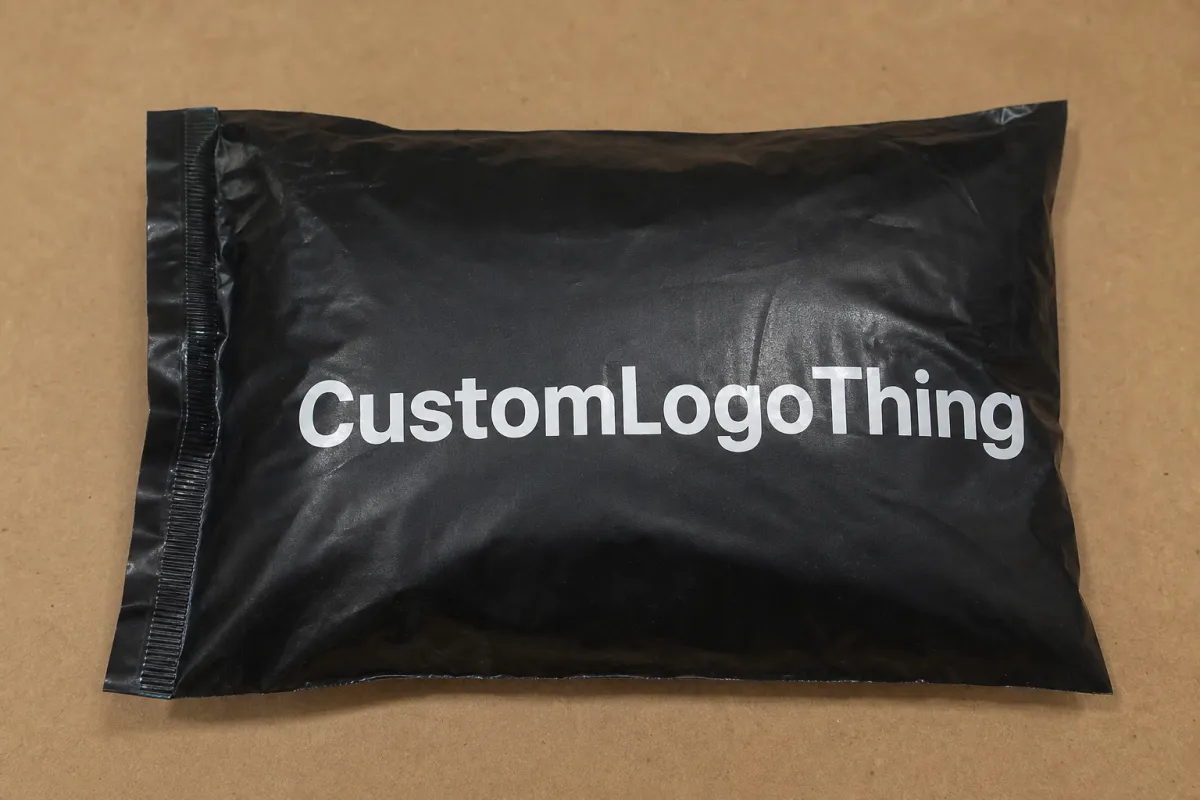
From a packaging buyer's point of view, Custom Poly Mailers for hats sit in a useful middle ground. They weigh less than boxes, cost less to ship than rigid cartons, and take up far less storage space than a wall of branded boxes waiting for a seasonal launch. For ecommerce teams dealing with high order volume, those differences matter more than a spreadsheet usually makes them look. Dimensional weight rules can erode margin quickly, and a lighter mailer helps keep postage more predictable.
Cost is only part of the story. Control is the deeper reason brands choose Custom Poly Mailers for hats. A plain mailer says an item was shipped. A branded mailer says someone thought through the order from first click to doorstep. That shift in tone changes perception in a way that is hard to quantify and easy to feel. Packaging is part of the product experience, and package branding often starts with the first exterior surface a customer touches.
Hats are tricky because they do not all travel the same way. A structured trucker cap can resist collapse better than a soft dad hat. A knit beanie can be folded tightly with little drama. A bucket hat may ship flat, but the brim still dislikes hard creases. That is why custom poly mailers for hats are not really about one universal solution. They work best when the shipping format follows the hat style.
Boxes still matter. A rigid box is the safer choice for premium, structured, or gift-oriented hats where presentation has to stay crisp. Custom poly mailers for hats make sense for lightweight, flexible products that do not crush easily under ordinary carrier handling. If a crown insert is tall, or a molded front panel must stay untouched, a box can be the smarter call. The mistake is not using mailers. The mistake is assigning them to a job they cannot do well.
That distinction matters because the best packaging decisions are almost invisible once they are working. They reduce friction. They cut damage claims. They speed up fulfillment. They keep the warehouse from having to explain why a hat that looked perfect at pack-out arrived looking tired and flattened.
Here is the simplest way to think about custom poly mailers for hats:
- They shield against dirt, light moisture, and surface scuffs.
- They keep shipping volume low for soft or foldable hat styles.
- They give you a visible branding surface without the cost of a full carton.
- They work best when paired with the right internal packing method.
If you are building a packaging program from scratch, compare the whole stack rather than one item in isolation. A brand that uses Custom Packaging Products for retail sets may still want Custom Poly Mailers for daily ecommerce fulfillment, because the shipping job changes even when the logo stays the same.
How Custom Poly Mailers for Hats Work in Real Shipping Conditions
The value of custom poly mailers for hats shows up in the outer shell they create. Poly film stands up to light moisture, dust, and handling abrasion better than a plain paper envelope. For ecommerce orders moving through multiple sorting points, that difference matters. A hat does not need waterproof packaging, but it does need a clean, low-profile layer that reduces the odds of smudging and surface wear.
Shipping performance starts with friction control. A well-sized mailer keeps the order compact so it moves through parcel networks without unnecessary bulk. That can lower shipping cost, but only if the fit is right. Oversized mailers leave extra air inside and let the hat shift around. Undersized mailers force the product to bend more than it should. Custom poly mailers for hats do their best work when the dimensions are built around the real folded product, not a guessed category size.
Different hat styles behave differently under pressure:
- Structured caps need enough room to avoid collapsing the front panels or squashing the crown.
- Dad hats usually tolerate a compact fold and are among the easiest products for custom poly mailers for hats.
- Knit beanies often ship well in thin mailers because they compress naturally.
- Bucket hats need a careful fold so the brim does not crease in a visible way.
- Embroidered hats may need a backing card or internal sleeve to prevent thread abrasion.
In practice, the best setup is often layered. The hat may go into tissue wrap, then into a small inner sleeve or dust bag, then into the branded mailer. That sequence improves presentation and reduces movement. It also gives the unboxing a clear rhythm. The customer sees the outer branding, then the protective layer, then the hat itself.
Custom poly mailers for hats are not a substitute for structure where structure is required. If the product includes a tall crown insert, a molded front panel, or a premium presentation standard, a mailer alone may be the wrong format. Packaging design needs to stay honest. Good packaging is not about forcing every item into the cheapest container. It is about choosing the format that lowers total cost while protecting what the customer paid for.
Carrier testing and transit simulation are worth discussing early for brands that want evidence instead of guesswork. The ISTA testing framework is useful because it focuses on realistic distribution hazards: drops, vibration, compression, and handling events that are easy to miss on a calm packing bench. If your broader packaging line includes recycled or fiber-based components, FSC certification remains a familiar reference for responsible sourcing.
When people ask whether custom poly mailers for hats are strong enough, a better question gets more useful answers: strong enough for which route, which hat, and which customer expectation? That is the packaging conversation that actually matters.
Key Factors for Custom Poly Mailers for Hats: Size, Thickness, and Branding
Three choices carry most of the load: size, film thickness, and print design. If those are handled well, custom poly mailers for hats usually perform well. If they are handled loosely, the rest turns into avoidable cost.
Size should start with the packed hat dimensions, not the product category alone. Measure the folded or nested hat in its real shipping configuration, then add only enough room for easy insertion. A mailer that is too tight creates stress on the brim or crown. A mailer that is too loose allows the item to slide, which can wrinkle the inner wrap and make the shipment feel sloppy. The best fit is snug without forcing awkward compression.
For many hat orders, brands use a few common sizing approaches:
- Flat fold fit for soft hats and beanies that compress cleanly.
- Controlled crown fit for structured caps that need a little extra room.
- Multi-item fit when a hat ships with inserts, cards, or small accessories.
Thickness affects puncture resistance, feel, and cost. A lighter film may work for low-risk domestic shipping, but routes with longer transit or rough handling can justify a stronger film. In the market, many custom poly mailers for hats fall somewhere in the 2.5 mil to 4 mil range, though the right thickness depends on bag size, print coverage, and the amount of carrier abuse the package will take. Thicker is not always better. A heavier film can raise material cost and weight, and it can feel less refined if the package is meant to look sleek and retail-ready.
Branding is the point where the package shifts from practical to memorable. A one-color logo on a clean background can look sharp and stay cost-efficient. A full-color pattern can turn the mailer into a recognizable extension of the brand. Matte finishes tend to read softer and more premium; gloss finishes can feel brighter and more retail-like. The important thing is consistency with the rest of the brand system. If the website is minimalist and the hat line is premium, loud packaging can feel disconnected. If the brand is playful and graphic, a restrained bag may underdeliver visually.
Branding choices carry practical consequences too. More print colors usually mean more setup complexity and, often, a higher quote. Large coverage areas can affect how the film lays down visually and may expose imperfections more easily. Placement matters as well. A centered front logo is direct. A repeat pattern creates stronger shelf presence in unboxing videos. A side mark feels understated. These choices are part of packaging design, not decoration added after the fact.
Sustainability belongs in the specification, not in the slogan. If recycled content is required, ask for the exact percentage. If recyclability claims are being made, ask how they apply in your target market. If a brand balances paper and film formats across retail packaging and ecommerce, the claims need to be documented carefully so the message stays accurate. The EPA's packaging and waste resources at EPA are a practical place to sanity-check broader waste-reduction language.
For purchasing decisions, this short checklist usually keeps the process grounded:
- Measure the hat in its shipping fold.
- Confirm whether the style needs shape support.
- Choose film thickness based on route risk, not habit.
- Pick a print layout that matches your brand tone.
- Ask for a sample before locking in a full run of custom poly mailers for hats.
Brands that get this right do not chase the fanciest specification. They choose the one that makes packing easier, shipping safer, and the unboxing cleaner. That is the quiet advantage of custom poly mailers for hats: they can look simple and still do a lot of work.
Cost, Pricing, MOQ, and Unit Cost for Custom Poly Mailers for Hats
Pricing for custom poly mailers for hats usually comes down to five variables: size, material thickness, print complexity, order quantity, and whether the design uses one side or two. Those factors shape not just the quoted unit price, but also the setup, freight, and storage burden that follows.
For smaller brands, MOQ is often the first surprise. Custom packaging usually rewards volume, which means low quantities tend to carry a higher per-unit cost. That does not mean small runs are a bad idea. It means the economics change. A 1,000-piece order can work well for a launch or limited collection, but the unit price may sit noticeably above a 5,000-piece run with the same artwork. That pattern shows up across branded packaging, not just mailers.
In rough terms, a simple custom poly mailer can land in one price band, while a larger or more heavily printed mailer lands in another. The exact numbers vary by supplier and region, but buyers often see ranges like these for a standard domestic run:
| Option | Typical Use | Approx. Unit Cost at 5,000 pcs | Notes |
|---|---|---|---|
| Plain poly mailer | Low-risk shipping with no branding | $0.08-$0.14 | Lowest cost, but no brand presentation |
| One-color custom mailer | Simple logo and brand color | $0.14-$0.24 | Often the best balance for custom poly mailers for hats |
| Full-color printed mailer | Patterned or high-impact branding | $0.20-$0.35 | Stronger visual identity, higher print setup burden |
| Premium finish mailer | Matte, specialty ink, or upgraded feel | $0.28-$0.45 | Best for elevated unboxing; not always necessary for volume shipping |
| Rigid box | Structured or premium hats | $0.60-$1.50+ | Higher material and freight cost, but better shape protection |
That table is not a quote. It is a decision frame. The cheapest option is not always the best value, because the total cost of a packaging choice includes more than the unit price. When a mailer tears, the real cost includes replacement product, a second shipping label, customer service time, and the brand damage that never appears on the invoice. If custom poly mailers for hats prevent even a handful of those failures, the math can favor them quickly.
Dimensional weight creates another hidden cost. If a bag is too large or packed too loosely, the parcel can trigger a higher shipping charge than expected. Waste is another one. If the design changes after production starts, or if a print file is approved too quickly, you can end up with unusable inventory. Good custom poly mailers for hats should be quoted with a clear view of waste, freight, and defect tolerance, not just the printed price on the page.
When comparing suppliers, ask for these items in writing:
- Bag size in inches and usable interior area
- Film thickness and material composition
- Print method and number of colors
- MOQ by size and by artwork version
- Freight terms and estimated delivery window
- Sample or proof process before full production
For some brands, the real decision is between custom poly mailers for hats and custom printed boxes. If the hat is flat, flexible, and shipped at scale, the mailer often wins on total cost. If the hat is structured, high-value, or part of a giftable retail set, a box can justify its extra expense. The smart comparison is total landed cost, not the sticker price alone.
Process, Timeline, and Lead Time for Custom Poly Mailers for Hats
Production timing is one of the easiest places to lose control. Custom poly mailers for hats usually move through a predictable sequence: artwork review, proofing, approval, printing, curing or drying, quality checks, packing, and shipment. If those steps stay clean, the order moves on schedule. If one step stalls, everything else waits.
In many custom packaging programs, a standard lead time may land around 12 to 20 business days after proof approval, with shipping time added on top. Rush orders can move faster, but only when artwork is ready, the factory has capacity, and the print specification is straightforward. A complicated design or a late color change can stretch the schedule more than people expect. That is why custom poly mailers for hats should be planned backward from the launch date, not forward from the order date.
The hidden delays usually come from preventable issues:
- Artwork files that need resizing or cleanup
- Color expectations that were never matched to a physical proof
- Sample approvals that take too long to reach a decision
- Last-minute size changes after production has already been scheduled
- Seasonal factory congestion during peak ecommerce periods
For a hat brand running a drop model, those delays matter a lot. A launch tied to a creator partnership or social campaign is often measured in days, not weeks. If the packaging arrives late, the shipment still goes out, but the brand loses the chance to present the order properly. That is frustrating because packaging is one of the few things you can control before a customer ever touches the product. With custom poly mailers for hats, timing is part of the value.
One useful planning habit is to build the schedule backward:
- Set the in-stock date for the hats.
- Reserve time for sampling and proof changes.
- Allow production time based on print complexity.
- Add freight time, customs time if relevant, and a buffer for receiving.
- Build a second buffer if the design is new or the supplier is untested.
That final buffer is where the sharper buyers live. They know packaging schedules do not fail in theory; they fail because a file was not final, a sample was not checked, or someone assumed a two-week promise was a guarantee. The best custom poly mailers for hats programs rely on calendar discipline, not wishful thinking.
When the timeline is managed well, the packaging order becomes almost invisible. It arrives on time, matches the proof, and enters the warehouse without drama. That is not flashy. It is exactly what most teams need.
Common Mistakes When Ordering Custom Poly Mailers for Hats
Most packaging mistakes are small on their own and expensive together. The first error with custom poly mailers for hats is sizing by hat category instead of by packed dimensions. A "one-size" assumption is usually too vague. A five-panel cap, a knit beanie, and a structured snapback are not the same package once folded. The right bag size should reflect the fold, the insert, and the way the team actually packs the product.
The second mistake is over-designing the mailer. More color does not automatically mean better branding. More special effects do not automatically mean better retail packaging. In fact, a crowded layout can dilute the logo and make the bag feel busy. For many brands, a restrained design looks more confident and costs less. Custom poly mailers for hats need enough brand presence to feel deliberate, but not so much that the package becomes visual clutter.
The third mistake is skipping samples. A digital proof helps, but it does not tell you how color sits on film, how glossy or matte the surface feels, or whether the logo reads correctly under warehouse lighting. One sample can prevent a run of bad assumptions. That is especially true when the design uses dark backgrounds, light ink, or tight registration. If the first physical sample looks off, fix it before approving volume production.
The fourth mistake is focusing only on aesthetics and ignoring usability. Can the packer close the mailer quickly? Is the adhesive strip strong enough? Does the tear line open cleanly for the customer? Does the film resist scuffing in transit? These are not minor questions. They shape how the customer experiences custom poly mailers for hats before they ever reach the product itself.
If a hat needs structure to survive the route, the mailer is not the problem; the package format is. Good packaging starts by matching the product's fragility to the shipping method, not by forcing a cheaper format to do a harder job.
The fifth mistake is forgetting the opening experience. A package can be durable and still feel awkward. Too much empty space, a weak seal, or a hard-to-open closure can turn a clean brand moment into a nuisance. In ecommerce, those small annoyances matter. They separate "nice packaging" from "I would reorder from them."
Here is the short version of what usually goes wrong with custom poly mailers for hats:
- The bag is chosen too large or too small.
- The artwork is approved before a physical sample is reviewed.
- The design is busy, but the structure is weak.
- The shipping route is more demanding than the packaging spec.
- The team forgets that ease of packing is part of product packaging, not an afterthought.
There is a quiet pattern across these mistakes. They show up when packaging is treated as an add-on instead of a system. The brands that avoid trouble are the ones thinking about fit, handling, and customer experience at the same time.
Expert Tips and Next Steps for Custom Poly Mailers for Hats
If you are choosing custom poly mailers for hats for the first time, start with the product, not the print. Define the hat style, the folded dimensions, and the packing method. Then decide whether the mailer carries the order alone or works with an insert, tissue, or inner sleeve. That sequence sounds basic, but it is where many packaging projects drift off course.
My practical buying sequence looks like this:
- Measure the packed hat exactly as it ships.
- Pick two or three mailer sizes that could realistically work.
- Request samples in the film thickness you are considering.
- Compare quotes with freight and setup included.
- Check artwork on the actual material, not just on screen.
- Test a small batch through real delivery routes before the full run.
That final step is skipped more often than it should be. A package that passes in the warehouse may behave differently once it is handled, sorted, stacked, and dropped in real transit conditions. Even a limited field test can reveal whether custom poly mailers for hats are holding shape, resisting tears, and arriving with the finish the brand expects.
It also helps to keep a simple packaging spec sheet current. Record the bag size, film thickness, print method, brand colors, file format, sample date, and reorder point. That document becomes useful the moment someone on the team asks, "What did we order last time?" Packaging history disappears quickly when order management lives in scattered emails.
For brands that sell both direct-to-consumer and through retail channels, the packaging strategy may need two lanes. A hat shipped in custom poly mailers for hats for ecommerce might also need a different solution for store presentation, PR kits, or wholesale samples. That is where broader retail packaging and shipping packaging decisions split apart. The mistake is assuming the same format should handle every job.
If you are still comparing options, keep the decision grounded in three questions: What does the product need, what does the customer see, and what does the route cost? Those answers usually point you toward the right solution faster than a long debate over "premium" versus "cheap." For many brands, custom poly mailers for hats win because they fit the shipment, the budget, and the brand story at the same time.
One last operational note: set your reorder point before inventory gets tight. Packaging should never be the reason a sale waits. When a cap launch hits, the best custom poly mailers for hats are the ones already in the building, already approved, and already ready to use. That is the difference between a smooth fulfillment week and a rushed one.
Measure carefully, sample before volume, compare the total landed cost, and choose the spec that matches the hat, not the wish list. That is how custom poly mailers for hats support better shipping, clearer branding, and fewer avoidable returns.
What size should custom poly mailers for hats be?
Base the size on the folded hat dimensions, not the product category alone. Leave enough room for easy insertion without forcing the brim or crown to bend. Test the final fit with a packed sample before ordering in volume.
Are custom poly mailers for hats better than boxes?
They are usually better for lightweight, flexible hats that do not need rigid protection. Boxes are still the safer choice for structured or premium hats that can crush easily. Choose based on shipping risk, presentation goals, and total fulfillment cost.
How much do custom poly mailers for hats cost per unit?
Unit cost depends on size, material thickness, print coverage, and order volume. Lower MOQs usually cost more per bag, while larger runs typically reduce the price. Ask for a quote that includes freight and any setup charges so comparisons are accurate.
What is the typical lead time for custom poly mailers for hats?
Lead time usually depends on artwork approval, print complexity, and factory capacity. Simple designs move faster than multi-color or specialty-finish orders. Build in extra time for sampling and revisions if the packaging has never been ordered before.
Can custom poly mailers for hats include my logo and brand colors?
Yes, most custom options support logos, brand colors, and repeat-pattern artwork. The final look depends on film type, print method, and how many colors you use. Request a proof or sample to confirm color accuracy before approving production.

