Buyer Fit Snapshot
| Best fit | Custom Poly Mailers for Online Stores projects where brand print, material claims, artwork control, MOQ, and repeat-order consistency need to be specified before quoting. |
|---|---|
| Quote inputs | Share finished size, material target, print colors, finish, packing count, annual reorder estimate, ship-to region, and any compliance wording. |
| Proofing check | Approve dieline scale, logo placement, barcode or warning zones, color tolerance, closure strength, and carton packing before bulk production. |
| Main risk | Vague material claims, crowded artwork, missing packing details, or unclear freight terms can make a low unit price expensive after revisions. |
Fast answer: Custom Poly Mailers for Online Stores: Film, Print, MOQ, and Carton Packing should be specified like a repeatable production item. The safest quote records material, print method, finish, artwork proof, packing count, and reorder notes in one written spec.
Production checks before approval
Compare the actual filled-product size with the drawing, then confirm tolerance on folds, seals, hang holes, label areas, and retail display edges. Reserve space for logos, QR codes, warning copy, and material claims before decorative graphics fill the panel.
Quote comparison points
Review material grade, print process, finish, sampling route, tooling charges, carton quantity, and freight assumptions side by side. A quote is only useful when the supplier can repeat the same color, closure quality, and packing count on the next order.
Custom Poly Mailers for online stores are often the first physical brand touchpoint a customer sees, and that matters more than a lot of sellers want to admit. A mailer can make a small brand look organized and intentional, or it can make the whole order feel like it was packed in a hurry by someone who was already thinking about lunch. From a packaging buyer's point of view, the choice is not really about a bag. It is about cost, speed, protection, and the impression your store leaves before the customer even opens the package.
That is why Custom Poly Mailers for online stores work so well for apparel, accessories, soft goods, and other lightweight non-fragile items. They are simpler than boxes, lighter than most rigid mailers, and easier to run through a fulfillment line without wasting time on void fill. The tradeoff is obvious: they are not the right answer for every product. The point here is to make that decision with clear numbers, realistic production expectations, and a few practical guardrails instead of packaging fluff.
What custom poly mailers for online stores actually change
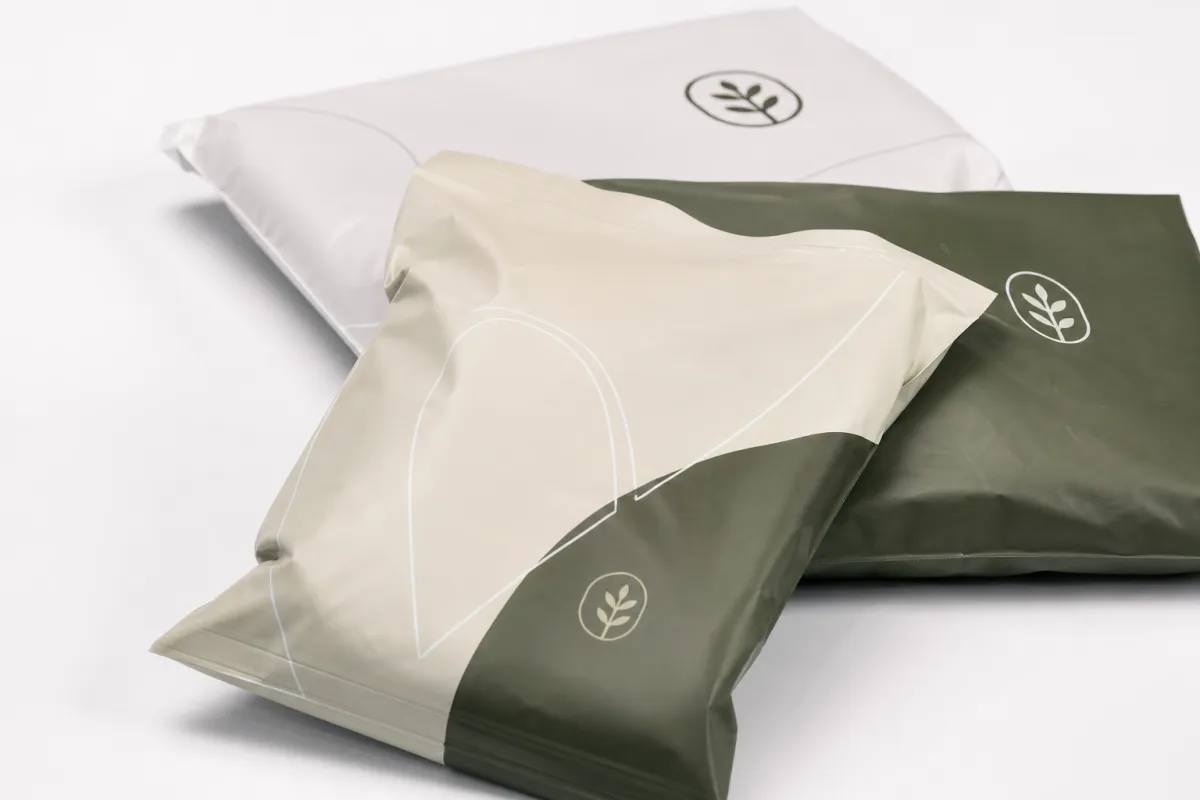
The first thing Custom Poly Mailers for online stores change is perception. A plain shipping bag says the order is functional. A printed bag says the brand thought about the whole trip, not just the item inside. That difference is small on a spreadsheet and big in the customer's head, especially for stores that sell visually driven products like clothing, swimwear, beauty accessories, and merch. If the product itself is low-cost but the presentation feels cheap, people notice fast.
For smaller online brands, Custom Poly Mailers for online stores also help the business side in the boring ways that actually matter. They usually weigh less than cartons, need no tape for closure if the seal is good, and take less space in storage than stacks of boxes. That means less shelf space, fewer packing steps, and a cleaner picking station. In practice, those little savings add up once you start shipping a few hundred orders a month. I have seen plenty of stores try to keep everything in generic mailers and then wonder why their packaging still feels messy. Usually the packaging is doing no branding work at all.
There is also a fit question. Custom poly mailers for online stores are a smart choice for:
- Apparel such as tees, leggings, hoodies, undergarments, and socks
- Soft accessories like scarves, hats, gloves, and fabric pouches
- Flat, lightweight non-fragile items that do not need crush protection
- Returns where the mailer can carry the brand name both directions
They are not the right fit for glass, ceramics, candles with fragile glass jars, electronics with delicate corners, or anything that can be damaged by bending. In those cases, a box, a padded mailer, or a rigid mailer is the smarter buy. Some sellers try to force everything into one package type because it feels efficient. It is not efficient if the product arrives bent or cracked.
Practical rule: if your product needs shape retention more than it needs low shipping weight, a box usually wins. If it needs speed, light weight, and a branded surface, custom poly mailers for online stores usually make more sense.
That is the frame for the rest of this piece. Custom poly mailers for online stores are not about packaging theory. They are about choosing the right format for the item, the shipping method, and the margin you actually have to work with.
How custom poly mailers work from checkout to doorstep
From a fulfillment standpoint, custom poly mailers for online stores are straightforward. The product gets folded or stacked, slid into the bag, sealed, labeled, and shipped. No carton assembly. No crumpled paper filler. No tape gun work on every unit. That matters more than people expect because even a small time savings per order becomes noticeable once the order count climbs. If a box-based workflow takes 20 to 30 seconds longer per order, that gap turns into a real labor cost over a busy month.
The film itself does a lot of the practical work. Most custom poly mailers for online stores use LDPE or a co-extruded film structure. Common thicknesses sit around 2.5 mil to 4 mil, with 2.5 to 3 mil covering a lot of apparel use cases and 4 mil giving more stiffness and puncture resistance. Thicker is not always better. If the bag is too heavy or too stiff for the product, you pay for material you do not need. If it is too thin, the mailer can split at the seal or crease badly during sorting and delivery.
Opacity matters too. A cheap-looking transparent or semi-transparent mailer can undercut the brand before the customer even touches the product. Better custom poly mailers for online stores use enough ink coverage or an opaque film blend to hide the contents and keep the package looking clean. Print layout matters as well. A repeat pattern, a bold color field, or a solid brand panel can do more than a tiny centered logo that disappears on a moving truck.
Branding mechanics also affect production complexity. Simple custom poly mailers for online stores might use one-color printing with a logo, website, or short message. More involved versions add:
- Full-coverage exterior graphics
- Inside printing for a surprise brand message
- QR codes that drive customers to a reorder page or social profile
- Two-sided graphics for a stronger unboxing moment
- Tamper-evident strips with return-ready closures
The more print areas you add, the more setup work and proofing you create. That is fine if the brand payoff is real. It is not fine if the extra ink only adds noise. I see that mistake a lot with custom Poly Mailers for Online Stores: too many elements, too little hierarchy, and a package that looks busy instead of branded.
Carrier handling also deserves a mention. A mailer should seal reliably, stay flat enough to scan, and avoid bulging so much that it gets snagged or crushed. If you want to compare shipping performance more formally, ask suppliers for film data tied to methods such as ISTA testing, plus material data like ASTM D882 for tensile properties or ASTM D1709 for dart impact when relevant. You do not need to become a lab technician. You do need enough evidence to know the bag will survive normal parcel handling.
Finally, there is the customer side. Custom poly mailers for online stores can make returns easier if the seal is repeat-use friendly, and they give the buyer a recognizable package on the doorstep. That is a small but real brand cue. People remember packages. Sometimes more than the ads that got them there.
Choosing the right material, size, and print for your store
Picking custom poly mailers for online stores is mostly a balancing act between durability, appearance, and cost. The material choice is usually the first decision. LDPE is common because it is flexible and affordable. Co-extruded film can offer better puncture resistance, better opacity, or a nicer print surface depending on the construction. If your products are soft and light, you usually do not need the heaviest film on the market. If your items have zippers, hardware, or sharper edges, a tougher film starts to make sense fast.
Thickness is another place where sellers overbuy. For many custom poly mailers for online stores, 2.5 mil to 3 mil is enough. Step up to 3.5 mil or 4 mil when the contents are bulkier, the route is rougher, or the brand wants a firmer hand feel. A thicker mailer can also help the package stand up straighter on camera or on a packing bench, which sounds trivial until you see a stack of flimsy bags slumping all over each other. That gets old fast.
Size should follow the packed product, not the raw product. That sounds obvious, but it gets ignored constantly. Measure the item after folding, bundling, or packing it the way it will actually ship. Leave enough room for a clean insert without forcing the seal. Oversized custom poly mailers for online stores waste material, make the shipment look sloppy, and can increase dimensional weight if the bag puffs up too much. Undersized bags create wrinkling, stress on the seal, and a worse customer impression. I usually tell buyers to test with three things: the best-selling item, the bulkiest item, and one awkward edge case.
Print choice changes both perception and unit economics. Here is the practical version:
| Mailer style | Typical use | Approximate unit price at mid-volume | Main benefit | Main tradeoff |
|---|---|---|---|---|
| Plain poly mailer | Basic shipping for low-priority branding | $0.08-$0.16 | Lowest upfront cost | No branded impact |
| One-color custom print | Most apparel and accessory brands | $0.14-$0.28 | Good balance of cost and brand visibility | Less visual pop than full coverage |
| Full-coverage custom print | Brands that want strong package branding | $0.22-$0.42 | Stronger shelf and doorstep presence | Higher print setup and ink cost |
| Inside-printed or specialty finish | Premium launches and giftable product packaging | $0.30-$0.60+ | Memorable unboxing | Usually not the best starter option |
That table is not a promise. It is a buying map. Prices move with quantity, print coverage, color count, film spec, and freight. Still, those bands are close enough to help you compare quotes without getting distracted by a pretty sample that costs twice what your margin can tolerate. Custom poly mailers for online stores only make sense if the print choice fits the business model. A new brand does not need every premium feature on day one.
Closure and security also deserve attention. A good peel-and-seal adhesive is usually the baseline. Tamper-evident strips help with confidence in transit. Some suppliers offer double-adhesive return strips so the customer can reuse the same mailer for a return. That can be useful for clothing and soft goods because it reduces friction in the return process and keeps the package aligned with the original brand experience. For paper-based accessories or inserts, recycled-paper options can support broader sustainability goals, and if your brand also uses paper components, checking FSC documentation is smart. The same goes for recycling claims; the packaging story should be backed by actual supplier information, not wishful thinking or a marketing intern with a search bar. The EPA's recycling guidance at EPA recycling resources is a decent place to sanity-check what can and cannot be claimed.
For stores that want a premium look without overspending, I usually recommend starting with clean custom poly mailers for online stores in one strong brand color, a clear logo, and a readable website or QR code. That combination is usually enough to make the package feel deliberate. Fancy is not automatically better. Clear usually wins.
Custom poly mailers for online stores: pricing and timeline
Pricing for custom poly mailers for online stores depends on a few variables that suppliers will always mention, but not always explain well. Size is the obvious one. A 10 x 13 mailer does not cost the same as a 14 x 19 because the raw material usage changes. Thickness matters too. So does print coverage, number of colors, matte versus glossy finish, inside printing, and whether you want a standard adhesive closure or a specialty return strip. Quantity is the biggest lever of all. Small runs cost more per unit because setup costs get spread over fewer pieces. That is not a trick. It is just math acting annoying.
For custom poly mailers for online stores, I usually tell buyers to think in tiers:
- Small test runs: higher unit price, lower risk, good for launch or proof-of-concept orders
- Mid-volume runs: the sweet spot for many stores, with enough quantity to bring cost down without overcommitting cash
- Large runs: lower unit cost, but more inventory risk if your size or artwork changes
The typical timeline is also pretty predictable once you know the steps. A normal order for custom poly mailers for online stores usually moves through quote, artwork setup, proofing, sample approval, production, and freight. Production time often lands around 12 to 20 business days after proof approval for standard jobs, while freight can add several more days depending on route and mode. The real delay is usually not the press run. It is proof approval. Brands that respond quickly get their bags faster. Brands that take five days to answer a color question get a five-day delay. Packaging is not magic.
Here is a practical comparison of common order situations:
| Order scenario | Typical lead time | What usually drives the timeline | Best use case |
|---|---|---|---|
| Simple one-color repeat order | 2-4 weeks total | Proof approval and transit | Reorders for a steady product line |
| New artwork with standard finish | 3-5 weeks total | Artwork setup, proofing, and sample sign-off | New launch or rebrand |
| Full-coverage custom print | 4-6 weeks total | Color matching, layout review, and production sequencing | Premium branding or seasonal campaign |
| Special finish or custom structure | 5-7 weeks total | More complex setup and possible extra sampling | High-visibility product packaging |
That table is the honest version. Some vendors will promise faster. Maybe they can do it. Maybe they cannot. Ask what happens if the proof needs a revision. Ask whether shipping is included. Ask if the quote covers tooling, plates, or setup. Ask what exact film spec is being priced, because a cheaper quote on thinner film is not really cheaper if the mailers split during fulfillment.
For buyers comparing custom poly mailers for online stores across suppliers, the easiest way to stay sane is to compare the same spec every time: same size, same mil thickness, same print coverage, same closure style, same delivery terms. Otherwise you are not comparing quotes. You are comparing guesses dressed up as numbers.
Step-by-step: ordering custom poly mailers without mistakes
Ordering custom poly mailers for online stores is easier if you start with a clean spec sheet. Not a vague wish list. A spec sheet. Include the packed product dimensions, average weight, fold style, target quantity, logo files, and whether the bag needs a return strip or any other special feature. If your store ships multiple product types, note which items must fit the same mailer and which items can use a separate size. That one step prevents a lot of bad size decisions later.
- Measure the packed item. Use the real folded or bundled size, not the catalog size.
- Choose one primary mailer size. Pick the best-selling item first, then add a second size only if needed.
- Request blanks or samples. Test seal strength, opacity, and how the bag feels in hand.
- Review the digital proof carefully. Check orientation, bleed, logo size, and dark-on-dark artwork.
- Place a pilot order. Use one packing cycle of live orders before scaling up.
- Set a reorder point. Do not wait until the last box is opened to place the next order.
If you are still comparing package formats, start with Custom Poly Mailers and then cross-check them against other Custom Packaging Products so you know whether a mailer, a box, or a padded option fits the product better. That comparison matters. I have seen brands buy custom poly mailers for online stores for everything, then discover that their heavier items would have been better served by custom printed boxes. Right tool, right job. Very simple. Still constantly ignored.
Proofing is where a lot of preventable mistakes happen. Make sure logos are large enough to read from arm's length. Keep key text away from edges and seals. Do not place important copy over folds. If your brand colors are critical, ask how the supplier handles color matching on film rather than paper. Film print can shift, and it is better to know that before production than after 5,000 pieces land on your dock. Custom poly mailers for online stores should look clean from the first sample to the last carton.
Before the pilot order goes live, pack at least a few units under real conditions. Use your actual packing team, your actual items, and your actual shipping label process. If the bag is awkward to load, too tight, or too slick on the bench, that shows up immediately. That is the kind of problem that turns a low-cost mailer into a daily annoyance.
Common mistakes with custom poly mailers and how to avoid them
The most common mistake with custom poly mailers for online stores is oversizing. Sellers think a larger bag is safer. Sometimes it is. Usually it is just sloppier. Extra empty space can make the package look underfilled and can increase the chance of the contents shifting around. A good fit is cleaner, cheaper, and more professional. Do not pay for air unless your business is in the airline industry.
The second mistake is choosing the thinnest film available just to save a fraction of a cent. That decision often backfires. Thin custom poly mailers for online stores can wrinkle harder, split more easily, and make the brand feel bargain-level even when the product is not. If the mailer looks cheap, customers often assume the product or the company is cheap too. That is a brutal little shortcut in the customer's head, but it is real.
Another frequent problem is overdesign. Too many colors, too much text, tiny taglines, background patterns, icons, and QR codes all competing for attention. A package is not a billboard for every idea the brand team had after lunch. In most cases, one strong logo, one clean color palette, and one short message beat a crowded layout. Custom poly mailers for online stores work best when the hierarchy is obvious from a distance.
Proofing errors are also common. Here are the ones I see most often:
- Logo too small to read on film
- Dark artwork printed on a dark background
- Important text placed too close to the seal
- Bleed or trim issues that shift the layout
- Front and back artwork reversed in the proof
Timeline mistakes can be expensive too. A lot of buyers assume custom poly mailers for online stores are quick because the format is simple. The bag may be simple. The process is not. You still need quoting, proofing, sampling, production, and freight. If a launch date matters, build a buffer. If you think you do not need a buffer, that usually means you need one more than everyone else.
One more practical warning: do not ignore fulfillment workflow. A great design on paper can still be wrong if the adhesive strip is hard to peel, the bag sticks to itself, or the finish grabs dust in a warehouse. Custom poly mailers for online stores should support the packing line, not slow it down. That sounds basic, but basic is where most bad purchasing decisions live.
What to do next with custom poly mailers for online stores
If you are ready to move forward, start small and specific. Measure your three best-selling products in their packed state. Pick one primary size and, if needed, one backup size. Then request quotes for the same spec from each supplier so you can compare apples to apples instead of comparing a polished sales email to a half-finished spreadsheet. Custom poly mailers for online stores make the most sense when the quote is tied to actual product dimensions, actual order volume, and actual fulfillment behavior.
Then ask for samples or a proof round. That step tells you more than a glossy photo ever will. Look at the seal. Check the opacity. Fold the bag. Load it at speed. See whether the print feels crisp or muddy. A store shipping 50 orders a month can tolerate a little inefficiency. A store shipping 500 orders a month cannot afford sloppy packaging choices for long.
Here is the simplest rollout plan:
- Order a sample pack or blank test units first
- Run a pilot quantity through real fulfillment
- Track damage, packing time, and customer feedback
- Compare cost per order against your current packaging setup
- Reorder before inventory gets uncomfortably low
That last point matters. Custom poly mailers for online stores should be treated like working inventory, not a one-time branding stunt. Once they are part of the daily packing process, the real question is whether they save time, control cost, and make the store look more polished without tying up cash in the wrong spec. If the answer is yes, keep going. If the answer is no, change the size, film, or print level before you place a bigger run.
Used the right way, custom poly mailers for online stores give you a cleaner shipping workflow, a sharper brand presence, and less waste than oversized packaging formats. Used the wrong way, they just become another box of regret in the back of the warehouse. The difference is usually not complicated. Pick the right spec, approve the proof carefully, and run a small live test before you commit to a larger order. That is the part people skip. Then they act surprised when the mailers do exactly what they were told to do.
How do custom poly mailers for online stores compare with plain mailers?
Custom mailers add branding, which makes the package feel intentional instead of generic. Plain mailers are cheaper upfront, but they do nothing for recognition or repeat-purchase memory. For many stores, custom poly mailers for online stores start making financial sense once shipment volume is high enough that package branding actually affects the customer experience.
What size custom poly mailers should an online store order first?
Start with the actual packed product size, not the raw product size. Pick one size that fits your best-selling item with a little insertion room, then add a backup size only if the product mix really needs it. Before placing a full production run, test custom poly mailers for online stores with real packing so you can confirm fit, seal, and presentation.
Are custom poly mailers for online stores durable enough for shipping?
Yes, if the film thickness and seal strength match the item being shipped. They work well for lightweight, non-fragile products like apparel and soft accessories. Fragile goods usually need inner protection or a different package type, because custom poly mailers for online stores are strong enough for the right products, not magical enough to ignore physics.
How much do custom poly mailers usually cost?
Unit price depends on size, thickness, print complexity, and quantity. Smaller orders cost more per piece because setup costs are spread across fewer units. Ask for pricing at multiple volume breaks so you can see the real tradeoff between launch quantity and long-run cost for custom poly mailers for online stores.
How long does it take to get custom poly mailers made?
Expect time for quoting, artwork proofing, sample review, production, and shipping. Proof approval is often the step that slows everything down. Build in buffer time if the mailers need to arrive before a launch or seasonal surge, because that is usually the difference between a clean launch and a warehouse scramble when you order custom poly mailers for online stores.

