Buyer Fit Snapshot
| Best fit | Custom Poly Mailers with Lamination projects where brand print, material claims, artwork control, MOQ, and repeat-order consistency need to be specified before quoting. |
|---|---|
| Quote inputs | Share finished size, material target, print colors, finish, packing count, annual reorder estimate, ship-to region, and any compliance wording. |
| Proofing check | Approve dieline scale, logo placement, barcode or warning zones, color tolerance, closure strength, and carton packing before bulk production. |
| Main risk | Vague material claims, crowded artwork, missing packing details, or unclear freight terms can make a low unit price expensive after revisions. |
Fast answer: Custom Poly Mailers with Lamination: Film, Print, MOQ, and Carton Packing should be specified like a repeatable production item. The safest quote records material, print method, finish, artwork proof, packing count, and reorder notes in one written spec.
Production checks before approval
Compare the actual filled-product size with the drawing, then confirm tolerance on folds, seals, hang holes, label areas, and retail display edges. Reserve space for logos, QR codes, warning copy, and material claims before decorative graphics fill the panel.
Quote comparison points
Review material grade, print process, finish, sampling route, tooling charges, carton quantity, and freight assumptions side by side. A quote is only useful when the supplier can repeat the same color, closure quality, and packing count on the next order.
A mailer can get dragged across rollers, rubbed against tote walls, and dropped into a truck without much ceremony. If the structure is right, it still arrives looking intentional. That is the practical appeal of Custom Poly Mailers with lamination. The laminated outer layer helps protect the printed surface from scuffs, light moisture, and the dull wear that builds up during a long fulfillment day.
For packaging teams, the appeal is not sentimental. Custom Poly Mailers with lamination let a brand control finish, color behavior, and surface feel while also keeping the package aligned with a broader branded packaging system. You are not just shipping product; you are sending out the first physical touchpoint many customers get from the brand.
That sounds simple, but it rarely is. A laminated mailer still has to seal cleanly, survive handling, fit the product, and keep pack-out moving at a steady pace. If one of those pieces is off, the fancy finish starts to feel like decoration instead of function. That balance is exactly why Custom Poly Mailers with lamination deserve real scrutiny before a purchase order goes out.
What custom poly mailers with lamination are
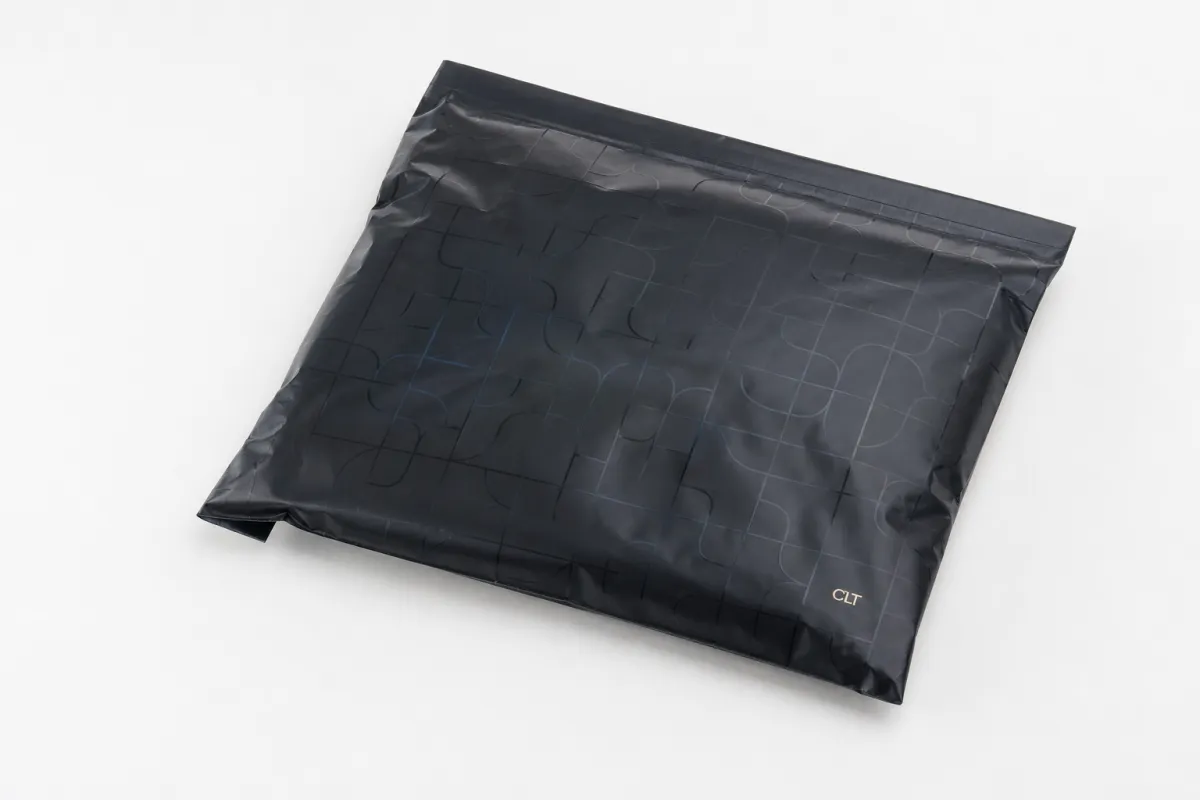
Custom Poly Mailers with lamination are polyethylene mailers with an added surface layer that changes both appearance and performance. The laminate can improve abrasion resistance, help protect print from handling, and influence how the bag reads under warehouse lights, on a porch, or in a product photo.
Most buyers notice the finish first. Matte gives custom poly mailers with lamination a softer, more restrained look. Gloss pushes contrast harder and reflects light in a way that feels brighter and more promotional. Soft-touch sits in its own lane; it adds a velvety feel that can be persuasive for premium product packaging, though it usually asks for more budget and more careful handling. None of these finishes is automatically "best" for every brand. The right choice depends on the artwork, the product, and how the package should feel in a customer's hands.
These mailers make the most sense in categories where presentation and shipping live side by side: apparel, beauty, accessories, subscription boxes, and direct-to-consumer kits. In those spaces, the outer bag is not a throwaway shell. It is part of the purchase. For brands building package branding with more intention, custom poly mailers with lamination can do a lot of visual work without moving into rigid boxes or more complicated retail-style packaging.
I have seen teams underestimate finish enough times that the pattern is obvious. A matte laminated mailer can feel calm, elevated, and contemporary. A gloss laminate can make the same artwork read louder and sharper, sometimes in a good way and sometimes not. On one project I reviewed, the glossy version made a clean logo look a little too eager, while the matte sample felt like the brand had finally exhaled. That kind of detail is small on paper and huge in hand.
In practice, a good laminated mailer has to do two jobs at once: survive handling first and sell the brand second. The better versions do both without shouting about it.
Custom poly mailers with lamination also belong in the larger conversation about surface treatment. Teams that already think carefully about die cutting on cartons, embossing on sleeves, or textured label stock usually understand this instinctively. A finish is not just a visual garnish. It changes how the shipment is interpreted before the seal is even broken.
How custom poly mailers with lamination are made
The build usually starts with a polyethylene film. Artwork is printed onto that film, then a laminate layer is bonded to the surface to protect the print and shape the final look. Depending on the supplier, custom poly mailers with lamination may use a layered structure designed for smoother graphics, better scratch resistance, or a more refined hand feel. The exact stack-up varies, so it is worth asking what the supplier is actually calling "lamination" before you compare quotes.
Print method matters more than many buyers expect. Coverage, ink density, registration, and drying all need to be handled cleanly before the laminate goes on, because any misalignment tends to show up more clearly once the surface is sealed. For custom poly mailers with lamination, the artwork should be prepared with enough bleed, strong contrast, and a realistic level of detail for the chosen print process. A file that looks fine on a monitor can still fail on film if it depends on tiny type or hairline elements.
That means a small logo with delicate lettering will not behave the same way as a bold, full-bleed layout. Heavy coverage can look excellent on custom poly mailers with lamination, but it also raises the bar for color consistency and prepress accuracy. If the art is loose, the final bag can look muddy or slightly off-register, especially on darker backgrounds where every flaw gets louder. Nobody wants a premium bag that looks like it came out of a rushed prototype bin.
The finish changes color perception too. Gloss tends to deepen saturation and add visual punch, while matte softens reflections and makes typography easier to read under bright lights. Soft-touch reduces glare even further, though it brings practical questions about scuffing, cost, and how the surface feels after repeated handling. There is no free lunch here; every finish gives something and takes something back.
Functional details still matter after the look is chosen. Seal strength, tear resistance, opening behavior, and overall film thickness all shape the real-world performance of custom poly mailers with lamination. A beautiful bag that slows down the sealing station is not a win, and neither is a thin bag that looks polished but splits under stress. I have watched operators reject otherwise lovely samples because the opening was awkward and the film kept sticking to itself. That is a very unglamorous failure mode, but it happens.
Buyers who want a standards-based conversation should ask about transit testing and film performance rather than relying on a sample alone. Many teams use ISTA protocols for shipping simulation, and some suppliers reference ASTM methods for film properties so the comparison goes beyond a mockup. The ISTA testing framework is a useful starting point if you want to understand how packs are evaluated for shipping durability.
Key factors that affect durability, print, and branding
Finish choice is one of the biggest levers in custom poly mailers with lamination. Matte usually feels more restrained and premium, which suits a brand that wants quiet confidence rather than glare. Gloss can make colors pop harder and often photographs well, which matters if the package is likely to appear in product shots, creator content, or internal merchandising photos.
Thickness is the other major lever. A mailer that feels sturdy in hand may also survive conveyors, stacking, and last-mile handling more effectively than a thinner bag, especially if the order contains folded apparel, boxed cosmetics, or items with corners that press against the film. In practice, many custom poly mailers with lamination land somewhere around 2.5 to 4 mil, but that is a general market range, not a rule. Load, product shape, and seal design still matter more than a single number.
Artwork design is not only about getting the logo onto the bag. Font size, color contrast, bleed, and how much of the surface is covered by ink all influence the final result. If the design is too delicate, custom poly mailers with lamination can expose the weak spots instead of hiding them, because the smooth surface gives the eye fewer distractions. A clean, confident design usually prints better than an overcomplicated one trying to do too much.
There is a branding tradeoff between visual drama and everyday practicality. Gloss can show fingerprints more easily. Matte tends to hide them better but may mute some colors. Soft-touch creates a strong premium signal, yet it may not be the right choice if the priority is high-volume pack-out with minimal handling risk. A buyer should decide whether the package needs to feel luxurious, look energetic, or simply ship cleanly with fewer complications. That answer should come from how the brand is used, not just how the sample feels on a desk.
That same logic applies across broader package branding decisions. Brands that already invest in custom printed boxes, retail packaging inserts, or embossed cartons usually understand that surface treatment changes the message. Custom poly mailers with lamination work best when they fit that same pattern, giving the outside of the shipment a finish that matches the rest of the customer experience instead of fighting it.
| Finish | Look and feel | Practical strengths | Best fit | Typical quote impact |
|---|---|---|---|---|
| Matte | Soft, low glare, understated | Hides fingerprints, reads premium | Apparel, lifestyle, elevated direct-to-consumer brands | Often similar to standard laminate; artwork quality drives more cost than finish alone |
| Gloss | Bright, shiny, high contrast | Boosts color pop, photographs well | Bold retail packaging, promotions, energetic branding | Usually a modest change unless paired with heavy ink coverage |
| Soft-touch | Velvety, tactile, premium | Strong shelf appeal, memorable feel | Beauty, accessories, luxury-focused product packaging | Often the highest finish premium of the three |
One more practical point: lamination is not a substitute for a stronger base film. It protects the surface, but the bag still needs the right construction underneath. If the film is too light for the product or the seal area is too narrow, custom poly mailers with lamination can still fail under load even though they look excellent on a desk sample. The surface can be flawless and the package can still be wrong.
Brands that care about end-of-life handling as much as presentation should include disposal in the conversation. Poly mailers are not treated the same way in every local recycling program, so the EPA recycling guidance is worth reviewing alongside supplier material notes. The honest answer is that recycling access varies by region, by collection system, and sometimes by the exact film structure. That is not a marketing problem; it is a logistics fact.
Process, timeline, and lead time: from proof to delivery
The order path for custom poly mailers with lamination usually begins with a quote request, then moves through artwork review, proof approval, production, finishing, packing, and shipment. The sequence sounds straightforward, yet the time spent at the proof stage often decides whether the rest of the job stays under control or starts slipping. One missing detail early on can cost a week later, sometimes more.
Delays usually come from ordinary issues rather than dramatic failures. The artwork file needs cleanup, colors need adjustment, dimensions are not fully confirmed, or the buyer has not specified whether the logo should print on one side or both. With custom poly mailers with lamination, sorting out those details early is the easiest way to protect the schedule.
A realistic planning window for custom builds is often longer than for stock bags because print and finishing steps have to be coordinated. As a general rule, many custom poly mailers with lamination projects take about 12 to 15 business days from proof approval to production completion, then shipping time is added on top. Rush work may be possible, but it usually compresses the review window and narrows the finish choices. If a supplier promises a very fast turnaround on a fully custom job, ask what they are trimming to make that happen.
If you want to shorten turnaround, the best move is to hand the supplier complete information at the start. Confirm the bag size, quantity, finish, product weight, and any special packing needs before the first proof goes out. The more complete the request, the less back-and-forth there is on custom poly mailers with lamination.
- Request the quote with dimensions, quantity, artwork, and finish preference.
- Review the proof carefully for color, placement, bleed, and seal-area clearance.
- Approve the final spec only after the pack-out team has checked fit and fold.
- Move the job into production, where print, lamination, and finishing are coordinated.
- Allow time for packing and freight, especially if the shipment is traveling cross-country or internationally.
That checklist matters even more for brands moving from another format. A team shifting from simple shipping bags to custom poly mailers with lamination often discovers that artwork needs more breathing room than it did on labels, sleeves, or cartons. A clean system can still stumble if the logo sits too close to a seam or fold, or if the product creates pressure points that were not obvious in the sample photo.
There is a packing-floor reality here that buyers sometimes overlook. The mailer has to work not just in a controlled proof, but at speed, with tired hands, on a busy shift. The more your spec mirrors real pack-out conditions, the more predictable custom poly mailers with lamination will be once production begins. That sounds plain, but plain is usually what keeps a launch from turning into a repair job.
Cost, pricing, MOQ, and unit cost: what changes the quote
The quote for custom poly mailers with lamination is driven by a small group of variables that matter more than almost anything else: size, film thickness, print coverage, laminate type, and order quantity. A bag with a small logo on one side costs very differently from a fully covered design that uses more ink, more setup, and a more demanding finishing process.
MOQ is one of the first things buyers should ask about. Many laminated mailer programs are most efficient at 2,500 or 5,000 pieces, and smaller runs often carry a noticeably higher unit cost. That does not mean a smaller order is wrong; it just means custom poly mailers with lamination usually reward scale more clearly than simple stock packaging does. If you need a launch run, fine. Just do not expect the same pricing structure as a repeat order at volume.
For planning purposes, a common budget range for mid-size runs might land somewhere around $0.18 to $0.35 per unit at 5,000 pieces, depending on dimensions, print coverage, and finish. Smaller quantities can move up into the $0.45 to $0.90 range or higher, especially if the artwork is full bleed or if the bag needs a premium laminate. Those numbers are not a promise, but they are a realistic starting point for comparing custom poly mailers with lamination across suppliers. Exact pricing can move a lot with market conditions, resin costs, and freight.
Setup costs deserve attention too. Artwork prep, plate or tooling charges if the print method requires them, sampling, and freight can all affect the budget. A quote that looks lower at first glance may not be the better deal if it leaves out these extras. The smarter comparison is not just per-piece price; it is the total landed cost of custom poly mailers with lamination.
Finish can shift perceived value even when the unit cost changes only a little. If a slightly higher-cost laminate helps the package look cleaner, protects the print, and reduces the number of scuffed-looking mailers in the field, that extra spend can be easy to justify. In branded packaging, the cheapest option is not always the most economical if it weakens the customer experience. A few cents saved on paper can get expensive once returns, repacks, or complaints start piling up.
For quote comparisons, ask for a spec sheet that shows the exact film gauge, print method, finish, bag dimensions, and shipping terms. That is the only fair way to compare custom poly mailers with lamination against other options such as a plain mailer or even a lightweight carton in your Custom Packaging Products lineup. If the supplier only gives a single number, you may be looking at apples and oranges.
Brands that already buy Custom Poly Mailers without lamination often find that the laminated version costs a bit more up front but performs better in the field. That tradeoff is worth running in real numbers, not just in theory, because damage, returns, and presentation all carry a price attached to them.
Common mistakes to avoid when ordering laminated mailers
One common mistake is choosing finish before confirming the product experience. A brand may want gloss because it sounds exciting, but glossy custom poly mailers with lamination can make some logos feel louder than intended, while matte might hide fingerprints and fit the brand better. Finish should support the message, not fight it.
Another problem is weak artwork prep. Low-resolution logos, missing bleed, and tiny type become much more visible once the bag is printed and laminated. If the file is loose, custom poly mailers with lamination can magnify those issues, especially on large print areas where the eye has room to catch every flaw. This is one of those places where a tidy-looking PDF can still hide a bad production file.
Buyers also underestimate the seal area and the actual bag dimensions. A beautiful design is useless if the product packs awkwardly or the opening is too tight for the fulfillment team. Before approving custom poly mailers with lamination, it helps to test the intended product, the insert, and any fold pattern together so the bag closes cleanly every time. That step is not glamorous, but it saves real grief.
Price-only shopping is another trap. A quote that looks attractive may hide a lighter gauge, a simpler finish, or a longer lead time that complicates launch planning. With custom poly mailers with lamination, the material spec, shipping method, sampling process, and production window all belong in the same conversation. Otherwise, the comparison is misleading.
Skipping sample review is probably the easiest mistake to avoid. Even strong digital proofs can miss how a finish looks under warehouse lights or how a color reads against the actual film. If the program is new, order a sample or short pilot run of custom poly mailers with lamination before you commit to the full quantity. That one step can save a lot of frustration later, and it is worth the extra day or two.
There is also a broader packaging lesson here. Teams that work on custom printed boxes, retail packaging sleeves, or embossed cartons usually know that a small spec change can alter the whole experience. Custom poly mailers with lamination deserve the same discipline, because the bag is often the first physical brand impression a customer sees and the first thing a warehouse team notices if something is off.
Next steps for choosing custom poly mailers with lamination
If you are ready to move forward, start with a short checklist. Confirm the product size, target finish, artwork files, quantity, and delivery window before asking for a quote. That makes custom poly mailers with lamination easier to spec correctly and gives the supplier a fair basis for pricing.
- Measure the product and any inserts so the bag fits without strain.
- Choose the finish that supports the brand feel: matte, gloss, or soft-touch.
- Prepare final artwork in a print-ready format with bleed and safe margins.
- Ask for a spec comparison so you can review gauge, print coverage, and finish side by side.
- Request a sample or proof, then have the actual packing team test it.
I also recommend asking for a simple comparison between two or three builds. For example, compare a lighter matte version, a slightly thicker gloss version, and a premium soft-touch option. That kind of side-by-side review often clarifies which custom poly mailers with lamination truly fit the budget and the brand voice, instead of forcing a guess from a single sample image.
If the brand is trying a new fulfillment setup, a small pilot order is usually a smart move. It gives the packing team room to spot fit issues, the marketing team a chance to judge the look in photos, and the operations team a chance to see how the package performs in real handling. For custom poly mailers with lamination, that pilot can be the difference between a smooth rollout and a costly revision.
The clearest takeaway is this: define the product fit first, then choose finish, then compare quotes against the same exact spec. Do that, and custom poly mailers with lamination become a controlled packaging decision instead of a design guess. Get the structure right, and the mailer does its job quietly, which is usually exactly what a well-run brand needs.
What are custom poly mailers with lamination used for?
They are commonly used for ecommerce shipments that need stronger shelf appeal and better resistance to scuffs, fingerprints, and moisture. Custom poly mailers with lamination work especially well for apparel, beauty products, accessories, and subscription packaging where the outside of the bag is part of the brand experience.
Does lamination make custom poly mailers more durable?
Lamination can improve surface protection and help printed graphics hold up better during handling and transit. That said, it does not replace a stronger base film, so the durability of custom poly mailers with lamination still depends on the overall construction, gauge, and seal quality.
How do I choose between matte and gloss custom poly mailers with lamination?
Choose matte if you want a softer, more premium look with less glare and fewer visible fingerprints. Choose gloss if you want brighter color pop and a shinier, more energetic presentation for bold branding. In both cases, sample custom poly mailers with lamination under the same lighting your team uses at pack-out.
What affects the price of custom poly mailers with lamination the most?
Size, quantity, print coverage, film thickness, laminate finish, and any artwork setup work have the biggest impact on pricing. Freight, sampling, and rush timing can also change the total, so ask for a full quote rather than only a per-piece number for custom poly mailers with lamination.
What should I prepare before requesting a quote for laminated poly mailers?
Have your target size, estimated order quantity, artwork files, finish preference, and delivery deadline ready. If possible, include your product dimensions and packing goals so the quote for custom poly mailers with lamination matches how the mailer will actually be used.

