Buyer Fit Snapshot
| Best fit | Buy Custom Poly Mailers Online projects where brand print, material claims, artwork control, MOQ, and repeat-order consistency need to be specified before quoting. |
|---|---|
| Quote inputs | Share finished size, material target, print colors, finish, packing count, annual reorder estimate, ship-to region, and any compliance wording. |
| Proofing check | Approve dieline scale, logo placement, barcode or warning zones, color tolerance, closure strength, and carton packing before bulk production. |
| Main risk | Vague material claims, crowded artwork, missing packing details, or unclear freight terms can make a low unit price expensive after revisions. |
Fast answer: Buy Custom Poly Mailers Online: Specs, Pricing, Process should be specified like a repeatable production item. The safest quote records material, print method, finish, artwork proof, packing count, and reorder notes in one written spec.
Production checks before approval
Compare the actual filled-product size with the drawing, then confirm tolerance on folds, seals, hang holes, label areas, and retail display edges. Reserve space for logos, QR codes, warning copy, and material claims before decorative graphics fill the panel.
Quote comparison points
Review material grade, print process, finish, sampling route, tooling charges, carton quantity, and freight assumptions side by side. A quote is only useful when the supplier can repeat the same color, closure quality, and packing count on the next order.
Buy Custom Poly Mailers online: specs, pricing, process
Shipping can look simple from a distance. A product goes into a bag, the bag gets sealed, and the parcel leaves the building. But the details decide whether that shipment arrives neat and ready to be photographed, or whether it shows up scuffed, split, or looking like it spent the trip under a forklift. That is why the decision to buy Custom Poly Mailers online is not a minor procurement task. It affects postage, presentation, damage rates, and the way a brand appears before the box is even opened.
Packaging buyers usually care about three things at once: cost, consistency, and speed. Online ordering pulls those threads into one place. Size options sit next to print choices. Minimums sit next to proofs. Lead times show up before the order is locked. That saves time, but it also cuts down the kind of back-and-forth that turns a packaging request into a week of email threads. Apparel, accessories, beauty kits, supplements, and subscription shipments all benefit from that discipline because the outer pack has to survive transit and still look intentional.
Brands that plan to buy custom poly mailers online tend to ask the same questions first. Will the film stand up to parcel handling? Will the logo stay readable after the bag rubs against other cartons? Will the quote show setup, freight, and artwork charges clearly enough to approve with confidence? Those questions separate a useful buying process from a messy one. I have seen teams spend more time untangling a quote than it would have taken to pick the right mailer in the first place. Not ideal, kinda expensive.
For teams building a wider Custom Packaging Products program, poly mailers are often the first place to start. They weigh less than rigid cartons, cost less to move through the carrier network, and print faster than many elaborate custom printed boxes. That does not mean every order belongs in a mailer. It means the format often gives the best mix of branding and shipping efficiency for products that do not need a hard shell.
Why buy custom poly mailers online now
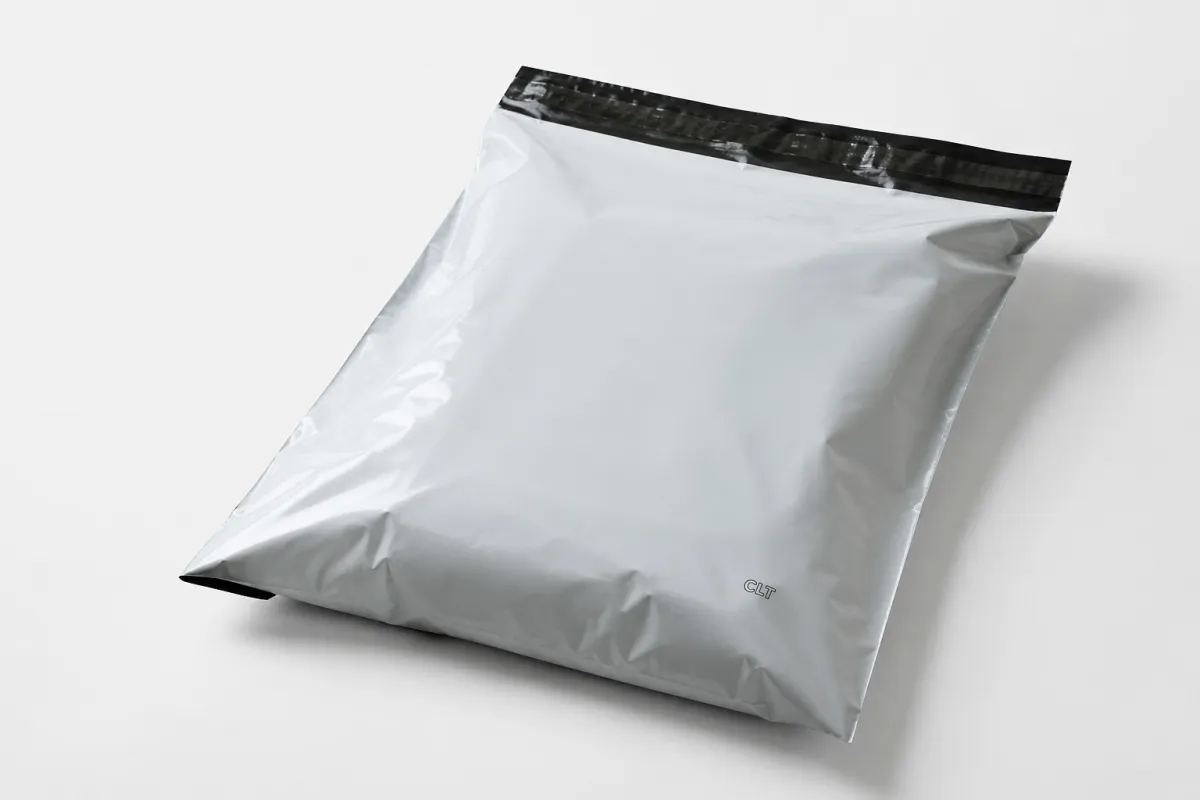
Packaging problems rarely arrive in one dramatic event. They pile up. A mailer that is a little too large adds postage waste every week. A weak seal creates avoidable damage claims. A faded logo makes a growing business look less settled than it is. That is the quiet reason many teams decide to buy Custom Poly Mailers online instead of relying on generic stock bags and hoping the shipment still feels branded.
The speed advantage matters, but the real value is repeatability. A founder, a merch manager, and a fulfillment lead can all review the same spec sheet, the same proof, and the same pricing breakdown without guessing what someone else approved last month. That lowers the chance of the classic packaging mismatch: one person signs off on the sample, another person receives the production run, and the two do not match closely enough to explain the difference to a customer. It sounds minor until a customer posts a side-by-side photo and asks why the new bags look cheaper.
The use cases are easy to see. Apparel brands like poly mailers because soft goods tolerate flexible outer packaging well. Beauty and personal care brands use them for accessory sets and lightweight kits. Supplement brands ship non-fragile bundles in them. Subscription companies use them because the format keeps shipping efficient while leaving room for brand graphics to show up in the mailbox and on the porch. A 2023 carrier survey from Pitney Bowes reported that shipping costs remained one of the top pressure points for small brands, which explains why the outer package gets scrutinized so closely.
Buyers sometimes assume any branded bag will do the job. That assumption gets expensive. A thin bag can split at the corner seal. A translucent bag can blur the design by showing the contents too clearly. An oversized mailer can increase postage without improving protection. If you plan to buy Custom Poly Mailers online, the screen preview is only the starting point. Transit behavior is the real test.
Four filters keep the decision grounded:
- Material confidence - Does the film thickness match the item weight and handling conditions?
- Print clarity - Will the logo, pattern, or message still read after scuffing and stacking?
- Size discipline - Does the mailer fit the product without extra folds or wasted air?
- Quote transparency - Are setup, freight, and proof costs visible before approval?
Those filters are plain, which is exactly why they work. The cheapest quote on paper often stops being the cheapest once weak film, unreadable artwork, or a surprise freight line enters the picture. Buyers who buy custom poly mailers online with a performance-first lens usually end up with fewer reorders, fewer complaints, and less wasted inventory. That is the part that does not show up in a catalog, but it absolutely shows up in the budget.
One more practical point: a mailer can lower shipping costs only if it fits the product. A loose bag adds dimensional weight in some carrier models. A tighter bag can trim wasted space and make the package easier to stack. That tiny difference becomes meaningful across hundreds or thousands of orders.
Buy custom poly mailers online: product details that matter
Anyone who wants to buy custom poly mailers online should read the product page like a spec sheet, not a storefront headline. The logo matters, but the film, seal, and print structure matter more. A supplier that can explain those choices clearly is usually easier to work with after the order is placed because the same discipline tends to show up in the proof stage and in production.
Film thickness is the first place to look. Common ranges include 2.5 mil, 3 mil, and 4 mil, though actual programs can sit a little below or above that band. Thinner film bends more easily and can lower material cost. Thicker film gives a fuller hand feel and usually improves puncture resistance. A 2.5 mil mailer can make sense for light apparel. A 4 mil option is better suited to heavier loads or shipments that will take more abuse in transit. The answer depends on weight, shape, and how rough the carrier chain is likely to be.
Opacity changes the entire visual read. Semi-opaque bags can be enough for some basic shipments, but premium apparel, private items, and retail-branded packaging usually look better with full opacity. When the contents show through, the design loses control. A logo that looked sharp on the proof can feel muddy in a live shipment if the product shape interferes with the print. Full opacity protects the contents and gives the graphics more room to do their work.
Closure type affects speed and trust. Self-seal adhesive is the norm because packing staff can close hundreds of units without wasting time. The flap should also provide tamper evidence. Once the mailer is sealed, there should be a clear visual cue if someone opens it. That does not make the shipment untouchable, but it does help customers trust what they receive.
Tear resistance and water resistance are easy to dismiss until a parcel rides through a wet porch or a crowded conveyor line. Mailers scrape against surfaces, get stacked under other parcels, and sometimes sit in rain or warehouse condensation. A water-resistant outer layer gives the contents a better chance of arriving dry. For anyone preparing to buy custom poly mailers online, that protection usually matters more than a flashy print trick.
Printing style shapes both the look and the economics. One-color printing often gives the lowest price and the cleanest order flow. Two-color and full-color graphics add visual interest, but they also add setup complexity. Repeating patterns hide minor scuffs well. Inside printing creates a strong unboxing moment, which can work beautifully for premium brands, though it usually pushes the order into a higher price tier.
The design rule is straightforward: the print has to support the product. A minimal logo can feel refined on a matte base. A dense pattern can suit streetwear or youth-focused brands that want more energy in the package. Beauty packaging often works better with soft colors and tighter composition. A subscription mailer can carry a bold repeat pattern that stays visible on a porch, in a sorting bin, and in social posts.
If you are deciding whether to buy custom poly mailers online or move to rigid mailers or custom printed boxes, start with the contents. Is the item crushable? Does it need a rigid edge? Does it already arrive inside a product box that just needs an outer shipper? Those questions keep the package matched to the product instead of forcing the product to fit the wrong package.
A mailer that fits well, seals cleanly, and prints sharply does more for repeat orders than a louder design ever will.
That is why experienced buyers ask for samples before they place volume orders. A sample shows how fast the adhesive grabs, whether the finish scratches, and whether the print still looks crisp from arm's length. If a supplier cannot speak to those basics, the safest move is to pause before you buy custom poly mailers online in bulk.
There is also a trust issue here. Not every supplier uses the same resin blend, and not every "eco" claim means the same thing. If recyclability matters to your brand, ask whether the mailer is mono-material polyethylene, whether it is accepted in store drop-off streams in your market, and whether any ink or adhesive choices affect that claim. A clean answer is better than a glossy sustainability badge with no context.
Buy custom poly mailers online: specifications to compare
Specs decide whether the order works or becomes a headache. If the size is off, the mailer wastes material or forces awkward folding. If the artwork area is too narrow, the logo lands too close to a seam. If the proof process is vague, the production run can drift away from what was approved. A buyer who wants to buy custom poly mailers online successfully has to compare details with discipline.
Physical dimensions come first. Measure the product in its packed state, not just by the raw item. A folded hoodie, a small accessory kit, or a mixed sample bundle takes up more room than the item alone. Mailer sizes are usually listed as width by length, and some styles include extra depth or a gusset. Flat mailers suit slimmer goods. Gusseted styles help when the product is thicker, irregular, or packed with inserts.
Printable area deserves equal attention. A larger bag does not automatically mean a larger safe zone for artwork. Seams, flap folds, and the seal area reduce usable space. If the logo sits too close to those edges, it can distort or stretch. That changes readability, which matters more than people think when the package needs to support brand recognition during transit and in customer photos.
Artwork specs should be treated like engineering specs. Ask for the file format the supplier prefers, usually vector artwork such as AI, EPS, or a clean PDF. Confirm whether the proof will be digital or physical. Ask about bleed, safe zone, and minimum line thickness. Fine lines can fill in during print, especially if the design includes small type or detailed icons. If you plan to buy custom poly mailers online, those details belong in the quote stage, not in the apology stage.
Color matching is another place where precision pays off. If your brand uses Pantone references, ask whether the supplier can match them directly or whether the run uses a process-based approximation. A close visual match may be fine for a one-off shipment, but it can fall short for a brand that depends on strict consistency across product packaging. If the mailer has to sit beside labels, inserts, or custom printed boxes, the color logic should be aligned across the entire system.
The easiest way to compare options is side by side. The table below gives a practical framework for buyers who plan to buy custom poly mailers online and want to compare common configurations without getting lost in sales language.
| Option | Typical spec | Best use | Buyer tradeoff | Indicative price behavior |
|---|---|---|---|---|
| Lightweight flat mailer | 2.5 mil, 10 x 13 or similar, one-color print | Tees, socks, small apparel items | Lowest material cost, less body | Usually the lowest unit cost at volume |
| Standard branded mailer | 3 mil, 12 x 15.5 or similar, two-color print | Most apparel and accessory shipments | Balanced look and durability | Mid-range pricing with good value |
| Premium opaque mailer | 3.5-4 mil, matte finish, higher ink coverage | Beauty, subscription, premium retail packaging | Better feel, higher setup and print cost | Higher unit cost, especially at lower quantities |
| Gusseted mailer | Expanded depth, larger printable panel | Bulkier items or mixed bundles | More flexibility, more material use | Usually priced above flat formats |
| Full-coverage design | All-over print, multiple colors, special effects | High-impact package branding | Stronger shelf and social appeal | Higher setup, higher scrutiny on proofs |
That table is not a universal rulebook. Suppliers build pricing differently, and some quote structures hide more in the setup than others. The pattern still holds: more material, more ink coverage, and more customization usually mean a higher unit cost. Simpler formats are easier to keep efficient. If you want to buy custom poly mailers online without turning the project into a moving target, start with one or two sizes and one print system.
Before approval, ask for a short comparison checklist:
- Size fit - Does the item slide in cleanly without excess empty space?
- Seal performance - Does the adhesive hold under normal pressure and handling?
- Print visibility - Is the logo readable from a distance and under different lighting?
- Transit durability - Does the bag resist scuffing, tears, and moisture?
- Line-item clarity - Are setup, freight, and proof fees clearly stated?
The checklist is short because buying does not need to be theatrical to be smart. If one of those answers stays fuzzy, the quote is not ready. Buyers who buy custom poly mailers online with a clear spec sheet usually get cleaner comparisons, fewer proof revisions, and less inventory waste later.
Cost, pricing, MOQ, and quote variables
Pricing is where many orders start to wobble. A quote can look attractive until setup charges, freight, and extra color costs show up in the final total. Buyers who plan to buy custom poly mailers online should ask for a written breakdown before approval. A clean quote is easier to trust than a rounded number that hides the real structure underneath.
The main price drivers are predictable. Size affects film usage. Thickness changes material cost. Print colors affect setup and production complexity. Quantity changes unit price because the fixed work gets spread across more pieces. Finishing such as matte, gloss, or texture can add cost. Shipping distance matters too, especially when the final cartons are bulky enough to affect freight.
MOQ, or minimum order quantity, often changes by spec. A standard size with a simple one-color print may support a lower MOQ than a custom dimension with a full-coverage design. More complex artwork can require a higher minimum because the setup has to be justified. That is normal. What matters is that the minimum is known before proof approval, not after it.
Most buyers see a familiar price curve: unit cost drops as quantity rises. The savings are not perfectly linear. Moving from 1,000 pieces to 5,000 can bring a noticeable drop in cost per unit. Moving from 5,000 to 10,000 may still help, but the percentage gain is often smaller. If you are trying to buy custom poly mailers online for a growing brand, the best order size is usually the one that fits near-term demand plus a modest buffer, not the largest run available.
For reference, many buyers see something like this for typical market behavior, though actual quotes vary by supplier, location, and artwork:
- Simple one-color mailer - lower entry pricing at modest quantities, then better value at 5,000 pieces and above.
- Two- to three-color mailer - mid-range pricing with a noticeable jump when coverage is dense or registration is tight.
- Full-coverage premium design - higher setup and print sensitivity, especially when the artwork spans the full panel.
There are also savings levers buyers can control. Cut the number of sizes. Pick a standard base color. Print on one side if the reverse side does not matter. Simplify gradients and tiny text. Use one mailing format across related SKUs so inventory stays consolidated. None of those choices looks glamorous. Each one makes the program easier to manage and a little less likely to drift off budget.
Here is a practical way to judge whether a quote is fair when you buy custom poly mailers online:
- Does the quote separate product cost, setup, freight, and any art or plate charges?
- Is the price tied to an exact size, thickness, and print count?
- Does the supplier state whether samples are free, chargeable, or credited later?
- Are taxes, duties, or destination fees included or excluded?
- Is the delivery window tied to proof approval, not just the order date?
That level of detail may feel excessive for a mailer order. It is standard good practice, though. The more the order looks like a procurement exercise instead of a guess, the easier it is to compare vendors fairly. That is usually the point where a buyer can say they are ready to buy custom poly mailers online with confidence.
Brands that are also planning broader branded packaging should compare the mailer quote against custom printed boxes or insert programs. Sometimes the mailer wins on total shipping cost. Sometimes the box makes more sense because the product needs crush protection or a richer unboxing experience. The smartest choice is not the cheapest shell. The smartest choice is the one that fits the product, the margin, and the customer promise.
For transit testing and performance references, many teams look to ISTA procedures such as ISTA methods for distribution-focused validation. If your organization tracks sustainability claims or fiber-based components in the broader packaging system, the Forest Stewardship Council is a useful reference point for certified paper inputs. Those standards do not replace supplier due diligence, but they give the conversation a measurable frame.
Process and timeline: from proof to delivery
The ordering process should feel predictable. If it does not, too much risk is sitting with the buyer. To buy custom poly mailers online efficiently, the workflow should move through inquiry, quote, artwork review, proof approval, production, inspection, and delivery without unnecessary detours.
The best buyers send a complete request the first time. That means exact dimensions or a product sample photo, target quantity, logo files, delivery ZIP code, and a note on whether the order is urgent. A loose concept forces the supplier to guess about size, print area, and timeline. Guessing slows everything down before the order even starts.
Artwork review is where many schedules slip. One proof revision is normal. Two can still be manageable. A third round, especially if the team is debating color values or line thickness after the order is already in the queue, can push the job to the next production slot. Print runs are usually batched. Miss the window, and the calendar moves with it.
A common timeline for a clean order looks like this:
- Quote response - same day or within a short business window if the request is complete.
- Proof preparation - after artwork is received and specs are confirmed.
- Proof approval - ideally fast, because every day of delay pushes the schedule.
- Production - often one to two weeks for standard orders, longer for larger or more detailed jobs.
- Freight and delivery - depends on distance, carrier, and carton count.
That is a practical range, not a promise. Bigger orders, custom sizes, special inks, and peak demand can extend the timeline. Remote delivery locations can do the same. If you need to buy custom poly mailers online for a launch or seasonal campaign, discuss rush capacity before payment so the marketing calendar is not built on a ship date that cannot hold.
Quality control belongs in the process even if the buyer never sees it. A good supplier checks print alignment, adhesion, color consistency, and carton count before shipment. That is basic operational discipline. It matters more as volume rises because a small variance on a 500-piece order is annoying, while the same variance on a 10,000-piece order can create a sorting headache.
Here is a simple way to keep the project moving:
- Send final logo files in vector format when possible.
- Confirm the exact mailer size before asking for a quote.
- Ask for a proof with print placement marked clearly.
- Approve one contact person internally so the decision does not stall.
- Ask the supplier to flag any risk before production starts.
That last point matters more than people think. If a supplier sees that a logo line is too fine or that a color match may be difficult, it should say so early. Early warning is a sign of professionalism. Surprises after shipment are a sign of trouble. Buyers who buy custom poly mailers online should expect clarity at the point where the order can still be changed.
Another useful lens: a supplier should understand shipping workflows, not just print files. A mailer has to fit packing station behavior, storage limits, and carrier handling. That operational understanding is what separates a basic print vendor from a packaging partner.
Why choose us for custom poly mailers
Custom Logo Things is built for buyers who want the order process to feel controlled rather than improvised. That starts with straightforward quoting. If you want to buy custom poly mailers online, you should not have to untangle vague line items or decode unclear artwork instructions. A good program should be visible from the first message.
The bigger advantage is consistency. A first run should match the approved proof. A reorder should match the first run. That sounds obvious, but a lot of buyers have seen the opposite: the color shifts, the print moves, or the bag changes slightly between production batches. Reliability is not flashy. It is what keeps shipping operations from slipping out of rhythm.
We also focus on practical guidance. Should the bag be 2.5 mil or 3 mil? Does the product need a gusset? Should the logo stay restrained or cover more surface? Those are packaging decisions, not guesses. The right answer depends on the item, the brand, and the shipping environment. A light garment does not need the same structure as a dense accessory bundle.
For buyers building a broader packaging program, the benefit gets clearer. You may already be using labels, inserts, custom printed boxes, or other retail packaging elements. The mailer has to sit comfortably inside that system. It should support the same brand voice, the same handling standards, and the same business goals. The package should feel deliberate, not patched together.
Speed also needs context. A fast quote is useful only if the quote is accurate. A fast proof is useful only if the layout is readable. A fast reorder is useful only if the second shipment matches the first. Buyers who buy custom poly mailers online are not just paying for plastic film. They are paying for a repeatable shipping outcome that does not need constant correction.
The best supplier is not the one with the loudest promise. It is the one that gives you fewer surprises after approval.
Quality checks matter too. A proper order review should look at print clarity, seal strength, and count accuracy before the shipment leaves. If a supplier is willing to explain those checks, that is a good sign. If it cannot, the buyer may inherit the problem later.
There is also a cost-control advantage to working with a team that understands the broader packaging picture. Sometimes the smartest recommendation is not a more complex mailer. Sometimes it is a slightly different size, a simpler print format, or a single-size strategy that keeps inventory from fragmenting. That kind of guidance helps a brand grow without turning packaging into a recurring fire drill.
If your goal is to buy custom poly mailers online and keep the order practical, the winning supplier should offer three things at once: accurate specs, transparent pricing, and a timeline that holds up. Those are not extras. They are the product.
Next steps to buy custom poly mailers online
The easiest orders start with a short, complete brief. Measure the item you want to ship. Decide whether one size can cover most of the volume. Gather your logo files. Estimate monthly usage. Then ask for a quote that breaks out the mailer spec, the print method, and the delivery timeline. That is the cleanest way to buy custom poly mailers online without dragging the process out.
If you are unsure about quantity, do not overcomplicate it. Start with near-term shipment volume, then add a small buffer for growth, damaged units, or reorder timing. If your SKU mix is broad, try to standardize on one or two sizes first. More SKUs usually mean more cost, more storage demand, and more chances for the wrong mailer to get picked at packing time.
Ask for a proof, a line-item quote, and a written lead time before you pay. Those three items give you the facts needed to compare suppliers fairly. If any one of them stays vague, pause and ask for clarification. The order should not move forward on assumptions.
A practical pilot strategy looks like this:
- Choose one mailer size that fits your most common order.
- Order enough to test real shipping, not just shelf storage.
- Review the print under warehouse lighting and customer-facing light.
- Check whether the seal opens and closes as expected on the packing line.
- Use the results to decide whether to scale or adjust the spec.
That low-risk approach is especially useful for brands adding branded packaging for the first time. It gives you a chance to validate the mailer against the actual product, actual packing motion, and actual carrier handling. If the first run works, reorder planning gets easier. If it does not, the spec can be fixed before volume multiplies the issue.
The best time to buy custom poly mailers online is when size, print, and pricing all make sense together. Not one at a time. Together. That is how packaging stays efficient, brand presentation stays consistent, and shipment costs stay under control. When those three pieces line up, the mailer becomes a quiet asset instead of a recurring problem.
FAQ
How do I buy custom poly mailers online without overordering?
Start with your actual monthly shipment volume and add a small buffer for growth or damaged units. Choose the fewest sizes possible at first so you do not split orders across too many SKUs. Ask the supplier whether the MOQ applies per size or across the full order.
What files do I need to buy custom poly mailers online?
Use a vector logo file when possible, ideally AI, EPS, or a clean PDF. Confirm color values, print placement, and any bleed or safe-zone requirements before proofing. If you only have a raster file, ask the supplier whether it is large enough for sharp print output.
How long does it take after I buy custom poly mailers online?
Timeline usually depends on proof approval, production queue, and shipping distance. Fast approvals shorten the schedule more than almost any other step. Rush needs should be discussed before ordering so the supplier can confirm capacity.
Can I order multiple sizes when I buy custom poly mailers online?
Yes, but each size may carry its own MOQ or setup requirement. Multiple sizes make sense when your products vary widely in dimensions or weight. If possible, standardize on one or two sizes to keep pricing and inventory simpler.
What affects the price when I buy custom poly mailers online?
The biggest drivers are size, quantity, thickness, print colors, and any custom manufacturing steps. Shipping and setup charges can change the total more than buyers expect. Simpler artwork and larger order quantities usually lower the unit cost.
If you are ready to buy custom poly mailers online, the smartest move is to compare the specs, pricing, and timeline before you approve the run. Measure the packed product, get the film thickness and print area in writing, and make sure the quote lists every fee. If those pieces line up, the mailer does its job quietly: it protects the shipment, supports package branding, and keeps the order process predictable from proof to delivery.

