Buyer Fit Snapshot
| Best fit | Custom Poly Mailers with Gloss Finish projects where brand print, material claims, artwork control, MOQ, and repeat-order consistency need to be specified before quoting. |
|---|---|
| Quote inputs | Share finished size, material target, print colors, finish, packing count, annual reorder estimate, ship-to region, and any compliance wording. |
| Proofing check | Approve dieline scale, logo placement, barcode or warning zones, color tolerance, closure strength, and carton packing before bulk production. |
| Main risk | Vague material claims, crowded artwork, missing packing details, or unclear freight terms can make a low unit price expensive after revisions. |
Fast answer: Custom Poly Mailers with Gloss Finish: Film, Print, MOQ, and Carton Packing should be specified like a repeatable production item. The safest quote records material, print method, finish, artwork proof, packing count, and reorder notes in one written spec.
Production checks before approval
Compare the actual filled-product size with the drawing, then confirm tolerance on folds, seals, hang holes, label areas, and retail display edges. Reserve space for logos, QR codes, warning copy, and material claims before decorative graphics fill the panel.
Quote comparison points
Review material grade, print process, finish, sampling route, tooling charges, carton quantity, and freight assumptions side by side. A quote is only useful when the supplier can repeat the same color, closure quality, and packing count on the next order.
Custom Poly Mailers with gloss finish can sit flat on a packing table and still look ordinary, then change character the second light hits them. Under warehouse LEDs, on a boutique shelf, or in a customer’s unboxing photo, the finish sharpens color, lifts the logo, and makes the whole shipment feel deliberate. That visual shift is a big reason brands keep choosing custom poly mailers with gloss finish instead of plain shipping bags. The difference is not subtle once the package is in motion.
Buyers usually land on these mailers for practical reasons first. They weigh less than cartons, move faster through fulfillment than rigid packaging, and give a stronger brand signal than an unbranded envelope. For apparel, beauty, accessories, subscription kits, and direct-to-consumer shipping, Custom Poly Mailers with gloss finish can protect contents while adding a clear sense of identity. I have watched brands go from “good enough” outer packaging to something that actually looked merchandised, and the change was immediate. The mailer becomes part of the product story, not just the outer layer that gets torn off.
The shine does carry tradeoffs. A glossy surface reveals fingerprints, scuffs, and fold lines more easily than matte film, so the finish has to match the message. Bright, crisp, energetic branding usually suits Custom Poly Mailers with gloss finish. Soft, muted, tactile presentation may need a different surface. The right call depends on how the package needs to look in motion, in storage, and in the customer’s hand. Pick the finish first, and the brand mood usually follows.
Custom Poly Mailers with Gloss Finish: Why They Stand Out
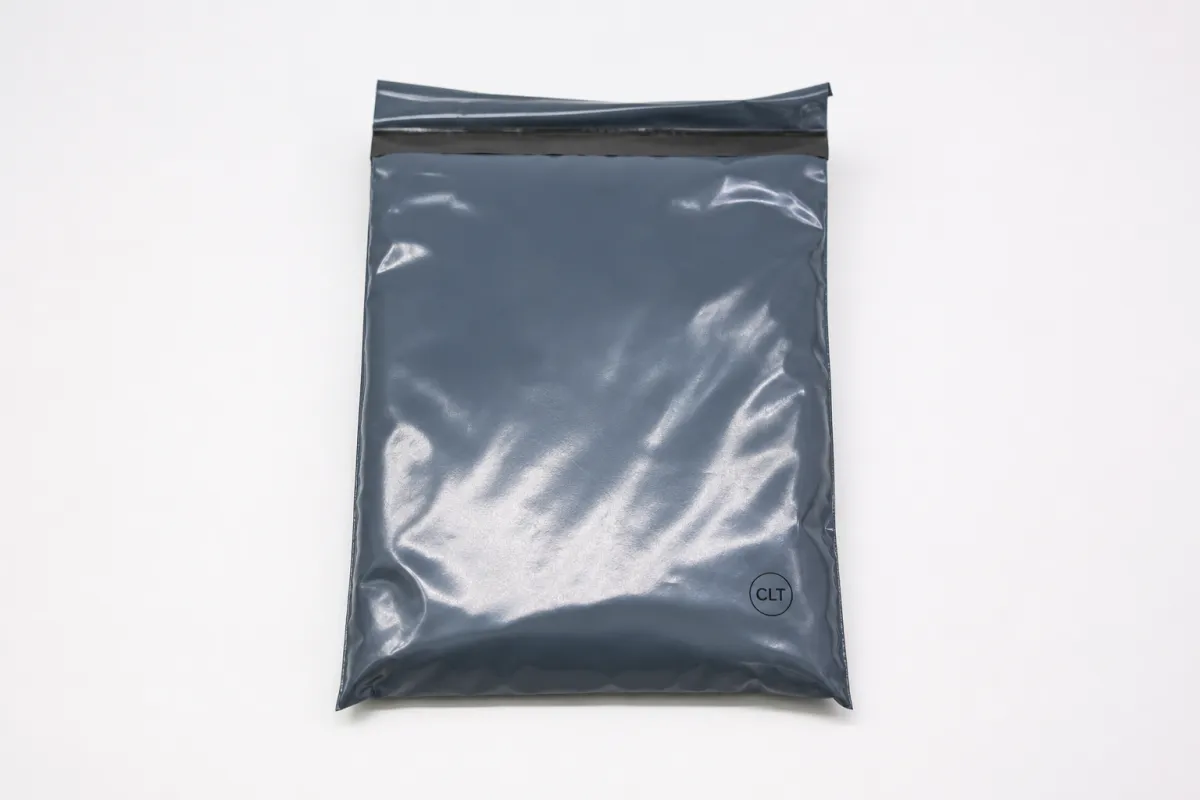
A mailer can change character the moment it leaves a dim stack and enters bright light. In a fulfillment center, on a store counter, or in a social post, Custom Poly Mailers with gloss finish catch and bounce light in a way that makes colors feel stronger and shapes more exact. That effect matters for shipping programs that want a cleaner first impression without adding weight, bulk, or unnecessary cost. The appeal is visual, yes, but the effect is also operational: the package reads as branded before anyone opens it.
The structure itself is simple. A polyethylene film is formed into a flexible mailer, printed with artwork, and finished so the surface reads shiny rather than flat. Smooth film helps logos pop, and the reflective quality can make saturated reds, deep blues, strong blacks, and metallic inks look livelier than they do on matte material. For package branding, that difference shows up fast. A small logo on a gloss mailer looks deliberate; the same logo on an unbranded bag looks like a placeholder. That contrast is why glossy bags often feel more expensive even when the unit cost is only a few cents higher.
For brands that want energy and clarity, custom poly mailers with gloss finish often make the most sense. A fashion drop, a beauty subscription, a lightweight accessory line, or a limited-run promotion can all benefit from the added lift. The finish works especially well with bold typography, reduced layouts, and high-contrast graphics. A shiny surface does not need to shout to be noticed. It just needs a little light.
“A glossy mailer is a small billboard that still has to survive transit, stacking, and rough hands.”
There is a catch, and it is a useful one. Gloss reflects more light, which means fingerprints, wrinkles, and handling marks show sooner. A brand that wants quiet luxury may find that too much shine works against the mood. A brand that wants a crisp, polished, camera-friendly look usually finds custom poly mailers with gloss finish more persuasive than flat film. The finish can either amplify the brand story or flatten it. That is why samples matter. No spec sheet can tell you how the bag will look under a dock light at 7 a.m.
It helps to place the mailer in the larger packaging system. Some companies use it as the primary outer layer. Others tuck product packaging, tissue, or inserts inside, or pair the mailer with custom printed boxes for a fuller unboxing sequence. In each case, the mailer is part of the first touchpoint. The finish is not a decorative extra; it affects how the brand is introduced, photographed, and remembered.
The real question is not whether gloss is “good.” The better question is what the package should communicate in the first two seconds. Bright and current? custom poly mailers with gloss finish fit that brief. Soft and understated? A flatter surface may do a better job and spend less effort on visual drama.
How Custom Poly Mailers with Gloss Finish Are Made
Most custom poly mailers with gloss finish begin with polyethylene resin, which is converted into film and prepared for printing. In simple terms, the material becomes a thin, flexible sheet that can be cut, sealed, stacked, and shipped efficiently. The glossy look usually comes from the film surface itself and the way ink sits on top of it, so the shine is built into the structure rather than added like a paper coating.
Once the film is ready, artwork enters the press. Depending on the run size and color count, a supplier may use flexographic printing, gravure, or another industrial method suited to the order. The goal is straightforward: place the logo, text, and graphics with clean registration and consistent ink coverage. On custom poly mailers with gloss finish, that stage is unforgiving. A smooth surface makes strong color look stronger, and weak alignment easier to spot. There is nowhere for sloppy work to hide.
Artwork prep needs more care than many buyers expect. Seams, seal zones, fold lines, and closure areas affect where content can safely sit. A logo that looks perfect on a screen may land too close to a weld or disappear into a fold once the bag is formed. Good packaging design treats the template as part of the production math. That logic applies whether the final format is a mailer, retail packaging, or branded inserts.
The last steps are mechanical, but they matter just as much as the design phase. The film is cut, sealed into mailer form, and fitted with a closure strip, usually a peel-and-seal adhesive. By then, the bag has to balance appearance, seal strength, tear resistance, and packing speed. A shiny surface may get the first look, yet the mailer still has to withstand handling. That is why custom poly mailers with gloss finish should always be specified against the realities of storage and transit, not just a mood board.
Industry test language gives a useful frame here. The ISTA methods are commonly used for transit simulation, while film and seal checks often reference ASTM procedures. No one needs to become a lab technician to buy packaging well, but appearance and durability cannot be separated. A mailer that photographs well and fails in the delivery chain is the wrong package.
Samples earn their place here. A spec sheet can tell you film thickness, dimensions, and print method, but it cannot fully show how the finish behaves in real light. In practice, custom poly mailers with gloss finish can look slightly different from one run to another because of ink coverage, film batch variation, and the amount of artwork on the panel. That is not a flaw. It is the reason a physical sample is worth the extra day, maybe two if the artwork is dense.
Choosing the Right Specs for Custom Poly Mailers with Gloss Finish
Size is the first spec worth settling. A mailer should fit the product with enough room for easy packing, but not so much extra space that the shipment slides around or looks loose. Apparel usually needs a fit that allows the folded item to enter without stressing the seal. Boxed items and accessories may need more give. With custom poly mailers with gloss finish, oversized bags can look less crisp because extra film folds, creases, and catches light in a way that makes the package seem less controlled.
Size and Fit
Good sizing starts with the real dimensions of the item, not a rough guess or a retail display mockup. A folded hoodie calls for one envelope size, a flat tee for another, a stack of socks for another, and a boxed cosmetic kit for another again. Tight control over fit keeps the load stable, protects the seal, and cuts waste. For custom poly mailers with gloss finish, that control also improves the look of the bag because there is less excess material to wrinkle during packing or shipment.
If the product sits near the edge of the bag or shifts during packing, the surface starts to work against you. The shine will show every little crease. A slightly better fit can do more for presentation than a fancier print layout, which sounds boring until you see the difference side by side.
Thickness and Strength
Thickness is commonly measured in mils, and a range of roughly 2.5 mil to 4 mil is often used depending on the product. Lightweight garments may perform well at the lower end. Heavier apparel, sharper-edged items, and shipments that see rough handling may need a thicker structure. Choosing the glossiest option does not solve those realities. Custom poly mailers with gloss finish still need dependable tear resistance, a solid seal, and enough puncture protection to survive the route from warehouse to doorstep.
For brands shipping irregular or bulky items, the seal area deserves attention too. A strong adhesive strip and a clean edge seal matter as much as the film itself. If the shipment is likely to be stacked, compressed, or tossed into a crowded carton line, a little more structure usually returns more value than a slightly cheaper unit price. That tradeoff is easy to miss when procurement looks only at the quote line.
Artwork, Color, and Readability
Gloss rewards bold design. Strong contrast, clear typography, and simple shapes tend to read best because the finish reflects light and can make busy artwork feel even busier. Tiny type, low-contrast grays, and hairline details may disappear or shimmer in a way that hurts readability. That is why many brands find that custom poly mailers with gloss finish perform best with crisp logos and a focused palette rather than a crowded layout filled with competing elements.
If the brand uses more than one packaging piece, the visual language should stay coordinated. A mailer can echo the colors used on product packaging, custom printed boxes, and inserts without repeating them mechanically. That kind of consistency strengthens package branding in a practical way. The customer recognizes the brand faster, which matters long before the package is opened.
Handling Conditions
The right spec on paper can still fail in the warehouse. If the mailers will sit in warm storage, move through a fast fulfillment line, or ship in large volumes, the film has to tolerate abrasion, heat, and repeated handling. That is where custom poly mailers with gloss finish either prove reliable or reveal weak spots. Smart planning means thinking through storage, packing speed, courier handling, and how many times each bag is touched before it reaches the customer.
Buyers comparing formats often benefit from looking at the broader packaging catalog. The same evaluation used for Custom Poly Mailers can help when reviewing the rest of the line at Custom Packaging Products, especially if the brand is balancing speed, presentation, and shipping cost at the same time.
Custom Poly Mailers with Gloss Finish: Cost, Pricing, and MOQ
Price is where many orders get oversimplified. On the surface, custom poly mailers with gloss finish look like a simple product: a printed bag with a closure strip. The quote usually reflects size, thickness, print coverage, quantity, setup work, and freight. Change one variable, and the price moves too. Sometimes it moves more than buyers expect, especially once shipping and proofing enter the picture.
A practical reference point for small to mid-sized runs is a broad range of about $0.12 to $0.35 per unit, depending on quantity and spec. Lower prices tend to appear at higher volumes and simpler print builds. A 5,000-piece run on a standard apparel mailer may sit near the upper end, while 25,000 pieces with simpler artwork can drop noticeably. That is one reason custom poly mailers with gloss finish are usually priced by quantity breaks rather than a single flat rate.
Minimum order quantities exist because production setup is not free. Plates, color matching, press setup, waste allowance, and proofing all have to be spread across the run. Small orders carry more of that fixed cost per piece. Larger orders distribute it better. That is not a sales trick; it is the basic arithmetic of industrial print production. Buyers who understand that usually get better results from custom poly mailers with gloss finish because they can choose the quantity tier that fits the inventory plan rather than guessing.
| Order Type | Typical Quantity | Approx. Unit Cost | Best Fit | Notes |
|---|---|---|---|---|
| Starter run | 5,000 pcs | $0.18-$0.35 | Testing a new brand look | Higher setup cost per piece; useful for first-time custom poly mailers with gloss finish orders |
| Growth run | 10,000 pcs | $0.12-$0.24 | Regular apparel or accessory shipments | Often the sweet spot for balancing cost and inventory risk |
| Volume run | 25,000 pcs+ | $0.08-$0.18 | Stable, repeat packaging programs | Better pricing, but storage and forecast accuracy become more important |
Several factors move the quote more than many buyers realize:
- Bag size and film thickness
- Number of print colors and ink coverage
- Artwork revisions and proof rounds
- Special sealing or reinforcement needs
- Shipping distance, palletization, and rush timing
Sending complete information the first time usually shortens the quoting cycle. If the supplier knows the dimensions, approximate product weight, print count, desired finish, and target delivery window, the quote comes back cleaner and faster. That matters with custom poly mailers with gloss finish because the savings are not only in unit price. They also show up in fewer revisions, less rework, and fewer freight surprises. Nobody likes discovering a missing detail after the press is already booked.
There is a sustainability angle worth keeping in view. Brands comparing plastic mailers, paper mailers, and other outer packaging formats need to account for route length, product type, and local recycling options. The EPA’s guidance on plastics and recycling is a useful starting point for understanding why destination matters more than a generic label alone: EPA plastics and recycling guidance.
Process and Timeline: From Proof to Delivery
A clean order process saves more time than any rush fee can recover. With custom poly mailers with gloss finish, the usual path runs from specs and artwork to pricing confirmation, then proofing, then production, then shipping. The critical move is to make each stage solid before the next one begins. A wrong template or an incomplete art file slows the schedule immediately. The delay rarely starts in production; it usually starts in the paperwork.
Proof review is often where the timeline stretches. A buyer may need to move a logo, adjust a color, shift a barcode, or correct a file that was built at the wrong resolution. That is normal, and it is also why first-time orders usually take longer than repeat runs. Once the artwork, size, and structure are approved, custom poly mailers with gloss finish tend to move through production much more predictably.
In practical terms, a straightforward repeat order may ship in about 12 to 15 business days after final approval, while a first-time custom run with artwork changes, sample review, or a larger quantity can take longer. More complex builds can stretch beyond that depending on current production load and freight conditions. I would build in slack for receiving, too. The packaging should not arrive the same day the inventory is expected to ship. That kind of timing mismatch is how teams end up repacking boxes at midnight.
Brands that use standardized performance testing can reasonably ask whether the mailer needs transit simulation or seal verification before release. Some teams reference ISTA procedures for package handling scenarios and ASTM methods for film or seal checks, especially when the bag carries valuable product. The point is not to turn every order into a lab project. The point is to confirm that custom poly mailers with gloss finish look right and hold up in the same package.
One practical habit pays off later: keep a live spec sheet after the first successful run. Record the exact size, mil thickness, print method, finish notes, seal style, and approved artwork version. That becomes a useful internal record for future orders, especially if procurement, operations, and brand teams all touch packaging. Good packaging programs are built on repeatable information, not memory and luck.
Handled well, custom poly mailers with gloss finish become a reliable part of the shipping system instead of a recurring one-off project. That is the real target: a package that looks right, runs right, and can be reordered without second-guessing every detail.
Common Mistakes When Ordering Gloss-Finish Mailers
The first mistake is overloading the artwork. A shiny surface already adds motion and reflection, so tiny elements, thin outlines, and low-contrast details can make the mailer feel noisy. Plenty of strong brand identities get weakened because the layout was designed for a screen, not for a package moving through light and motion. With custom poly mailers with gloss finish, simpler often reads with more authority.
The second mistake is ignoring the template. Logos and copy placed too close to seams, folds, or sealing edges can distort or vanish. That frustration usually appears only after the first sample, which is exactly when it costs the most to fix. Good packaging design respects the actual shape of the bag, not just the printable panel. That holds true for custom poly mailers with gloss finish and for other product packaging formats as well.
Size errors are another frequent miss. A mailer that is too small stresses the seal and slows packing. A mailer that is too large wastes film, adds shipping bulk, and makes the finished package look less controlled. Gloss makes the error more visible because loose folds catch light. That is why custom poly mailers with gloss finish should be matched to the product, not selected by category alone.
Proofing mistakes can be expensive in a quiet way. A digital proof may look fine on a laptop and still hide a problem in line weight, barcode placement, or color contrast. If the brand expects a very bright white, a deep black, or a precise logo edge, the proof has to be inspected carefully. For first-time custom poly mailers with gloss finish orders, a careful proof round is worth more than the day it might save.
Another issue is forgetting how the package will be handled after production. Some teams focus on the warehouse floor and overlook pallets, staging areas, delivery vehicles, and the customer’s hands. If the film is too thin or the seal is marginal, the shine will not rescue it. A glossy package that arrives torn does not earn a branding point.
The final mistake is treating the finish as the whole decision. The mailer should fit the brand, but it also has to match fulfillment speed, product weight, storage conditions, and customer expectations. That wider view is what keeps custom poly mailers with gloss finish from becoming a style choice that outruns the operation supporting it.
Expert Tips and Next Steps for a Better Order
Start with the use case, not the artwork. Ask whether the mailer is mainly supposed to protect apparel, sell the brand, keep packing fast, or do all three. That answer guides size, thickness, print coverage, and finish choice. For many brands, custom poly mailers with gloss finish are the right answer because they combine visual impact with efficient shipping, but the spec should still grow out of the business need.
Ask for samples whenever possible, then inspect them in real light. Warehouse lighting, office lighting, and phone flash can produce very different results. A gloss surface that feels restrained on screen may look much brighter in hand. A sample lets you judge the film feel, the seal strength, and the clarity of the print before you commit to a larger run of custom poly mailers with gloss finish. If the sample looks great only in one light source, that is a warning sign, not a detail.
It also helps to build a reorder plan early. Once the right size, thickness, artwork, and finish are approved, capture them in a clean spec sheet and keep that file current. That becomes especially useful when packaging responsibilities sit across operations, purchasing, and brand teams. The better the recordkeeping, the easier it is to reorder custom poly mailers with gloss finish without drifting from one run to the next.
Brands comparing outer packaging formats should keep the mailer in context with the rest of the packaging stack. If you also use custom printed boxes, inserts, or tissue, the visual language should feel coordinated rather than accidental. The mailer can echo the same brand colors, logo style, or tone of voice used elsewhere, which gives the shipment a more finished feel before the customer opens it. That coordination usually reads as quality faster than any single embellishment.
When gathering quotes, ask for several quantity breaks and compare more than the unit price. Find out what moves the number most: size, film thickness, print coverage, or shipping method. Then choose the version that gives the best balance of appearance, protection, and cost. That is usually how the best custom poly mailers with gloss finish orders get approved: not by chasing the cheapest line item, but by choosing the spec that performs across the full shipment cycle.
For teams ready to move from research to purchasing, the cleanest path is to compare the exact bag size, target quantity, and print requirements against the rest of the packaging line, then request a quote with those details in hand. If the brand is building a broader packaging system, the product pages for Custom Poly Mailers and Custom Packaging Products are a practical place to align the mailer with the rest of the order.
In practice, custom poly mailers with gloss finish work best when they are treated as a packaging decision, not just a graphic one. Get the size right, keep the artwork clear, confirm the film strength, and match the finish to the brand’s personality. Do that, and custom poly mailers with gloss finish can deliver cleaner shipping, brighter presentation, and a more confident first impression every time.
Are custom poly mailers with gloss finish better than matte for apparel brands?
Gloss usually creates a brighter, more energetic look, which helps bold logos and saturated colors stand out. Matte often works better when a brand wants a softer presentation or wants to reduce visible fingerprints and reflections. For many apparel programs, custom poly mailers with gloss finish are the better fit when the goal is a lively, camera-friendly first impression.
What affects the price of custom poly mailers with gloss finish the most?
Quantity, size, film thickness, and print color count usually drive the biggest changes in unit price. Setup, proofing, shipping distance, palletization, and rush timing can also shift the final quote in a meaningful way. If you are comparing custom poly mailers with gloss finish, ask for multiple quantity breaks so you can see where the cost drops most clearly.
How long does it take to produce custom poly mailers with gloss finish?
The timeline depends on artwork approval, tooling, order size, and the current production queue. A clean repeat order can move faster than a first-time custom run that needs revisions or sample review. In many cases, custom poly mailers with gloss finish land in a roughly 12 to 15 business day window after final approval, though larger or more complex orders can take longer.
Can custom poly mailers with gloss finish be recycled?
It depends on the film structure and the recycling options in the destination area, since not every curbside program accepts soft plastics. Removing labels, tape, and mixed materials improves the chance that the mailer can be handled correctly. If sustainability is a major part of the buying decision, compare the full disposal path before choosing custom poly mailers with gloss finish.
What artwork works best on custom poly mailers with gloss finish?
Bold logos, strong contrast, and clear typography usually read best on a shiny surface. Keep important details away from seams and edges, and avoid relying on very thin lines or subtle color differences. In practice, custom poly mailers with gloss finish reward simple, confident branding more than crowded layouts.

