Buyer Fit Snapshot
| Best fit | Custom Poly Mailers for Subscription Kits projects where brand print, material claims, artwork control, MOQ, and repeat-order consistency need to be specified before quoting. |
|---|---|
| Quote inputs | Share finished size, material target, print colors, finish, packing count, annual reorder estimate, ship-to region, and any compliance wording. |
| Proofing check | Approve dieline scale, logo placement, barcode or warning zones, color tolerance, closure strength, and carton packing before bulk production. |
| Main risk | Vague material claims, crowded artwork, missing packing details, or unclear freight terms can make a low unit price expensive after revisions. |
Fast answer: Custom Poly Mailers for Subscription Kits: Film, Print, MOQ, and Carton Packing should be specified like a repeatable production item. The safest quote records material, print method, finish, artwork proof, packing count, and reorder notes in one written spec.
Production checks before approval
Compare the actual filled-product size with the drawing, then confirm tolerance on folds, seals, hang holes, label areas, and retail display edges. Reserve space for logos, QR codes, warning copy, and material claims before decorative graphics fill the panel.
Quote comparison points
Review material grade, print process, finish, sampling route, tooling charges, carton quantity, and freight assumptions side by side. A quote is only useful when the supplier can repeat the same color, closure quality, and packing count on the next order.
Custom Poly Mailers for Subscription Kits: A Practical Guide
Custom Poly Mailers for subscription kits look minor until the first package lands on a doorstep. Then the outer layer is either doing its job quietly or making the whole shipment feel cheaper before anyone opens it. Clean print, the right dimensions, and enough film strength can turn a monthly delivery into something that feels deliberate instead of thrown together.
The real job of Custom Poly Mailers for subscription kits reaches beyond shipping. They are branded packaging that protects the contents, keeps fulfillment moving, and creates a first impression before the product is even visible. That is where packaging earns its keep: not in a mockup, but in the warehouse, on the conveyor, and at the mailbox.
Subscription businesses live or die on consistency. A thoughtful product can still feel underwhelming if it arrives in a flimsy, scuffed, or oversized mailer. That mismatch is bigger than most teams expect. Custom Poly Mailers for subscription kits stay popular because they give the operation a controlled outer layer, predictable packout, and a way to reinforce the brand without turning every shipment into a small engineering project.
"The outer mailer is the handshake. If it feels weak, the rest of the unboxing has to work harder."
Here is the plain version. Custom poly mailers for subscription kits are lightweight printed plastic mailers sized for recurring bundles, flat kits, apparel, samples, refills, and similar shippable sets. They are not trying to imitate a rigid gift box. They are built to move product efficiently, resist normal shipping wear, and keep the brand visible from scan to doorstep.
Custom poly mailers for subscription kits: why they work
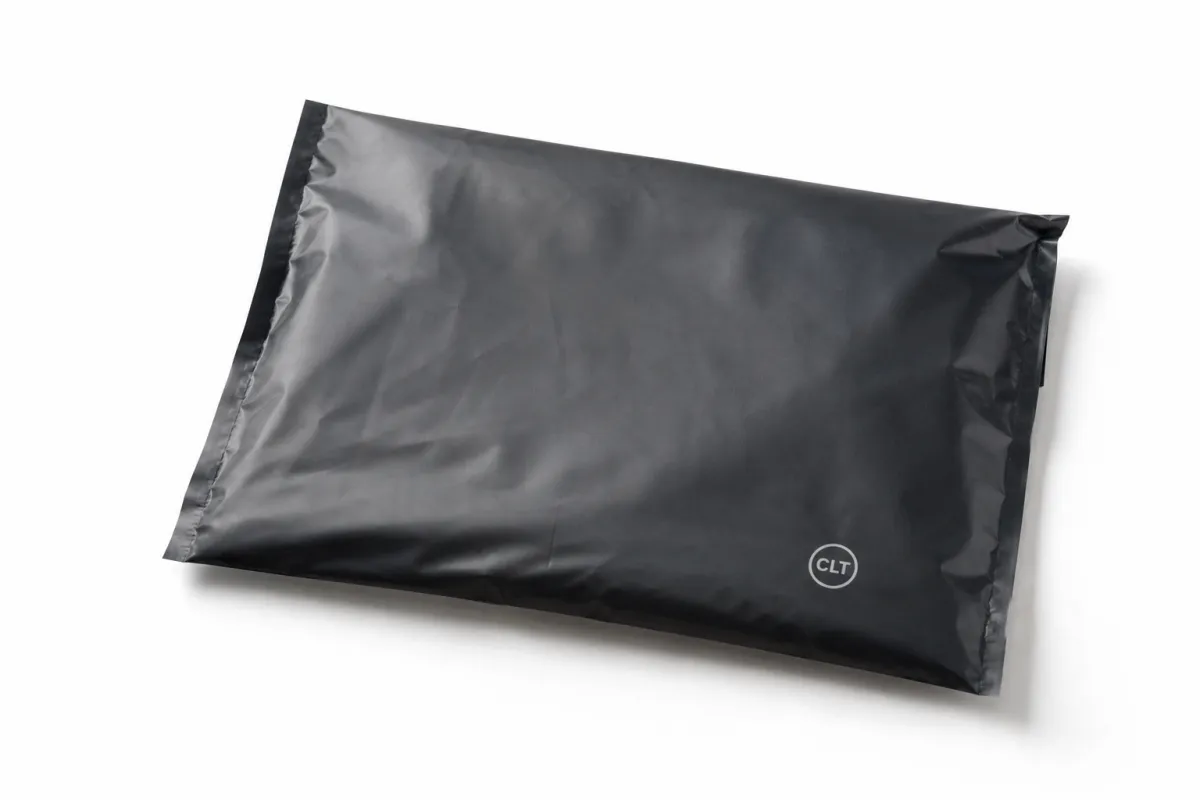
Many subscription brands design the product first and think about the shipper later. That order creates friction. The mailer is the first physical object the customer touches, and in packaging, first contact matters more than teams like to admit. Custom poly mailers for subscription kits work because they solve three problems at once: protection, presentation, and speed.
Protection is the obvious one. A poly mailer blocks dirt and light moisture better than a paper envelope, while giving flat or semi-flat bundles a snug shell. Presentation is the quieter value. A printed logo, a bold field of color, or even one mark placed well can turn a shipping item into part of the brand system. Speed is the part finance notices. Less folding, less void fill, and no box assembly means packers can process more orders with fewer decisions. That matters. A lot.
Custom poly mailers for subscription kits also fit the economics of recurring fulfillment. Boxes make sense for breakables, layered kits, or premium product packaging. Mailers make sense for bundles that stay relatively flat after packing. Socks, supplements, apparel, stationery, refills, and sample sets often fit that profile. Across thousands of repeat shipments, the difference between a lightweight mailer and a heavier box adds up quickly. Even a few cents per unit can become hundreds of dollars per month.
The better question is not whether to print a logo. The better question is whether custom poly mailers for subscription kits support the subscription model without adding cost or friction. A good mailer should simplify the warehouse process and leave the customer with a cleaner experience. That is the point.
Brand consistency matters too. A company can spend real money on packaging design, printed cartons, and inserts, then send the final parcel in an anonymous outer bag. The result feels disconnected. The outside should match the effort inside. Customers notice when it does not, and they are weirdly good at spotting that kind of gap.
There is also a psychological detail that gets missed. Recurring shipments create a pattern in the customer’s head. If month one looks premium and month two shows up in a generic bag, the brand has already started to drift. That kind of drift is subtle, but it piles up.
How custom poly mailers for subscription kits work in fulfillment
The packout flow stays simple, which is exactly why custom poly mailers for subscription kits are attractive. Fill the kit, seal the adhesive strip, add the shipping label, and send it. That sequence matters in a high-volume environment because it reduces training time and keeps lines moving even when staffing changes. Good packaging often looks boring for a reason: boring can be efficient.
Custom poly mailers for subscription kits perform best when the contents fit inside a predictable size range. A packer grabs the right mailer, inserts the kit, presses the adhesive, and moves on. There is less room for judgment calls than with custom printed boxes, where inserts, flaps, and dimensional variation can slow the line. For recurring subscription packs, that difference compounds.
The mailer does one job especially well: it holds flat or low-profile contents tightly. That means fewer rattling items, less internal movement, and less chance of a customer opening a package that feels loosely thrown together. It is also easy to label. If the operation uses barcodes, SKUs, or multi-brand fulfillment, the outer poly surface stays readable and practical.
What it does not do is replace structure. Custom poly mailers for subscription kits are not the answer for glass, breakables, loose-fill-heavy kits, or high-value sets that need hard walls and inserts. If the bundle needs crush protection or a polished retail packaging presentation with inner compartments, a box remains the better tool.
Think of it this way: mailers work well for beauty refills, wellness kits, apparel drops, accessory bundles, sample sets, stationery assortments, and membership packs that stay relatively flat after packing. If a month-to-month kit shifts a little but still fits within a controlled size range, custom poly mailers for subscription kits keep the operation steady. That steadiness is not glamorous, yet it is valuable.
For a wider packaging system, many brands pair mailers with other custom packaging products so each subscription tier gets the right structure. That usually beats forcing every order into one format just because the design render looked tidy. Real fulfillment is rarely that tidy anyway.
Key factors to choose before ordering custom poly mailers for subscription kits
Start with size. Not the size of each product, but the finished packed kit. That is where many buyers get tripped up. Custom poly mailers for subscription kits need enough room for sealing and a little settling, but not so much excess space that the bundle slides around like it was packed during a power outage. Oversized mailers look wasteful. Tight mailers strain the adhesive and corners.
The best sizing method is simple enough to do in-house: pack the real kit, measure the finished bundle, and test at least two mailer widths or gusset options. A proper fit leaves enough space for a clean seal without forcing the contents into a harsh bend. A sample test can save you from ordering 10,000 units of a mailer that looked ideal on a spreadsheet and awkward in the hand. I've seen that happen more than once, and it is never a fun phone call.
Material choice comes next. Thickness, puncture resistance, opacity, and finish all matter. A standard 2.5 mil film can be fine for light apparel or paper goods, while a 3.0 mil or reinforced option makes more sense for heavier kits or routes that see more abuse. Matte films tend to feel more premium and hide scuffs better. Gloss can make bright artwork pop, though it also shows handling marks faster. Neither option is universally better. They solve different problems.
Print strategy matters more than many buyers expect. One-color branding is often cheaper, cleaner, and easier to keep consistent across reorder batches. Full-coverage printing creates a stronger billboard effect for package branding, but cost rises with ink coverage and setup complexity. If the brand already has a strong visual system, a single logo placed well on a solid field can outperform a crowded design that tries too hard.
Closure details deserve real attention. Adhesive strength, tamper evidence, tear resistance, and seam quality all shape how custom poly mailers for subscription kits hold up once carriers start sorting, dropping, and squeezing packages. A weak seal can turn a good design into a customer service problem. That is not theory. It is what happens when shipping meets reality.
Compliance and operations details belong in the review before artwork is locked. Leave room for barcodes, return address text, and any required shipping information. If recycling claims appear on the mailer, they should be accurate and region-specific. Not every city accepts the same poly film, and it is better to be honest than cute. If the broader packaging system includes paper inserts or other fiber components, check FSC guidance for those elements and review source-reduction guidance through the EPA at EPA recycling guidance. For transit abuse and package performance, the test methods from ISTA offer a much better reality check than a polished mockup.
Good packaging design is about constraints, not wishful thinking. That is one reason custom poly mailers for subscription kits often outperform fancier-looking options. They fit the operating shape of the business instead of fighting it. When the artwork, thickness, and dimensions all match the kit, the packaging reads as intentional rather than improvised.
Cost, pricing, and MOQ for custom poly mailers for subscription kits
Pricing depends on size, thickness, print colors, ink coverage, finish, adhesive upgrades, and total quantity. That sounds obvious, yet many buyers still stare at the headline unit price and ignore the factors that actually shape the quote. Custom poly mailers for subscription kits can be inexpensive or surprisingly costly depending on how much print area you want and how specific the dimensions need to be.
The typical MOQ range is not mysterious. Many custom runs start around 500 to 1,000 units, though better pricing usually appears once you move into 5,000-plus quantity territory. Smaller runs can make sense for a business still testing demand because they protect cash and reduce inventory risk. Stable monthly volume often justifies a larger order because the per-unit cost drops enough to matter.
Here is the tradeoff in plain language: cheaper mailers can save money on the purchase order, but a weak seal, poor fit, or off-brand print can cost more later in replacements, complaints, and rework. Custom poly mailers for subscription kits are one of those items where the lowest price is not always the least expensive choice. Hidden costs tend to live in packaging mistakes.
When a quote arrives, check the unit price, setup charges, proof fees, freight, and whether the price assumes one artwork version or multiple SKUs. A quote that looks great until freight is added is not a great quote. If a supplier prices only one size while the subscription program needs three, the real cost picture is incomplete.
Budgeting should match the product cycle. A monthly subscription growing by 8% to 12% does not need a 12-month overbuy just to shave a few cents off each mailer. That is how packaging turns into frozen cash. Better to order enough to cover the likely sell-through window, keep a cushion for reorder timing, and avoid tying up money in cartons that may sit too long.
There is also a cash-flow detail that gets brushed aside. If fulfillment is seasonal or if churn spikes after a promo cycle, overordering can make a packaging budget look efficient on paper while quietly starving other parts of the business. The cheapest per-unit price can be a trap if it forces storage, damage, or stale inventory.
| Option | Typical unit price at 5,000 pcs | Best for | Notes |
|---|---|---|---|
| Blank stock poly mailer | $0.10-$0.18 | Pure shipping utility | Lowest cost, no brand presence, useful when presentation is not a priority. |
| Single-color custom print | $0.18-$0.28 | Most subscription kits | Strong balance of cost and package branding, especially for simple logos and bold layouts. |
| Full-coverage custom print | $0.24-$0.42 | Strong branded packaging | Stronger billboard effect, more ink coverage, and more sensitivity to artwork quality. |
| Heavy-duty printed mailer | $0.30-$0.55 | Heavier kits or harsher routes | Higher film weight and stronger seams, useful when transit abuse is a real concern. |
Those numbers are practical ranges, not fixed law. A small run, a more complex color count, or a special finish can move pricing quite a bit. Still, the table gives a helpful baseline for comparing custom poly mailers for subscription kits against custom printed boxes or other product packaging formats. If the kit is flat, mailers often win on cost. If the kit is fragile, boxes usually justify the higher price.
For brands weighing broader branded packaging or a mix of retail packaging formats, the smarter move is to compare the mailer against the full packaging stack rather than buying whatever seems easiest in the moment. The cheapest unit is not always the smartest system.
Production process and timeline for custom poly mailers for subscription kits
The production flow is usually straightforward: size confirmation, artwork setup, digital proofing, physical sampling if needed, final approval, mass production, quality check, and shipping. That sequence matters because custom poly mailers for subscription kits tend to fail in predictable places. If the size is off, everything downstream suffers. If the artwork proof is fuzzy, the print will be fuzzy too. Packaging does not reward vague instructions.
A simple run often moves from proof approval to production in about 10 to 20 business days, though sampling, revisions, and freight can extend the total timeline. Clean artwork and settled dimensions speed things up. A team still debating logo placement while the launch date approaches can create a schedule problem in a hurry.
Delays usually come from the same few mistakes. Missing dielines. Low-resolution logos. Last-minute size changes. Multiple decision-makers who all want to "just tweak one thing." None of that is unusual. It is project management dressed up as surprise. The fix is to lock the structure early and give one person authority over approval.
Custom poly mailers for subscription kits move faster when the supplier receives exact dimensions, print coverage, and closure preferences up front. If a sample is needed, ask early and test it on the actual packout line. A sample that looks polished on a desk is not enough. A sample that survives packing, sealing, stacking, and shipping is useful.
This is where transit testing stops being optional. If you are shipping recurring kits nationally, you want real confidence that the mailer can survive handling. ISTA standards exist for a reason. They will not turn packaging into magic, but they will tell you more than a guess. If the program is also trying to reduce packaging waste, the EPA’s source-reduction and recycling guidance is more useful than a slogan printed on the side of the mailer.
Subscription fulfillment depends on repeatability. One month of delayed packaging stock can turn into a month of delayed shipments, and that hurts retention faster than a weak promo code. Custom poly mailers for subscription kits are part of the operating rhythm, not a decorative add-on. Treat them like an input the business relies on.
Well-managed production ends up looking plain in the best way. The mailers arrive, the team packs to a clear standard, and the brand ships on schedule. That is what good package branding looks like once the gloss wears off and the work begins.
Common mistakes with custom poly mailers for subscription kits
The first mistake is sizing to the outer carton instead of the actual packed bundle. That creates either a squeezed kit or an oversized mailer that wastes material and makes the shipment feel less intentional. Custom poly mailers for subscription kits need to match the bundle, not the fantasy version of the bundle.
Another common miss is overprinting. Too much dark ink, tiny type, and crowded graphics can make the mailer look muddy after folding, scuffing, and ordinary transit wear. A cleaner design often feels more premium because it survives handling better. Packaging design is not a poster contest.
Weak durability choices come next. Thin film can save a little money, but if the kit has sharp corners, heavier components, or long shipping routes, that savings can disappear once damaged shipments start getting replaced. For many subscription programs, a slightly heavier film is worth the extra cent or two. Cheap mailers that fail are not cheap.
Testing mistakes are another budget drain. Skip sample packs through the real fulfillment line and you are guessing. Guessing is how a polished proof turns into a production problem. Custom poly mailers for subscription kits should be checked with real product, real staff, and real shipping conditions before any bulk order goes out.
Operational basics get ignored too often. Where does the label go? Is there room for a return address? Does the adhesive still hold if the packer is moving quickly? Can the mailer survive carrier handling without a second layer? Those details sound small until they trigger a wave of customer service complaints.
Finally, some brands try to make one mailer solve every packaging job. That approach fails quickly. A kit that needs structure should use a box. A set that wants premium presentation may belong in custom printed boxes with inserts. Custom poly mailers for subscription kits are excellent for the right bundle, but they are not the answer to every product packaging problem.
Expert tips and next steps for custom poly mailers for subscription kits
My first design recommendation is simple: choose one hero color, one strong logo placement, and enough white space for the print to feel deliberate. Custom poly mailers for subscription kits do not need to shout. They need to read clearly from three feet away and still make sense after a courier has handled them twice. That is a stronger test than a flashy render.
If the subscription assortment changes each month, order samples in at least two sizes. Variation is normal, but variation still needs boundaries. A good packaging system can absorb some product swaps without changing the outer shipper every cycle. That is especially useful for brands balancing package branding with warehouse efficiency.
Run a practical quality test before committing. Pack the kit, shake it, seal it, ship it cross-country, and inspect the mailer when it returns. That may sound aggressive because it is. Real-world abuse teaches more than a polished render ever will. If the mailer survives that test, it is probably ready for normal carrier handling.
Balance cost and presentation by choosing the thinnest material that still handles the product safely, then using layout and print to make it feel premium. That is usually smarter than buying the heaviest film available and hoping thickness will compensate for weak design. It will not. Good packaging design does the visible work, and material specification does the hidden work.
If you are building a larger packaging system, compare custom poly mailers for subscription kits against the rest of the lineup. Some brands need a mix of mailers, sleeves, and boxes. Others need one clean format across the board. Start by reviewing Custom Packaging Products alongside Custom Poly Mailers, then decide where the subscription kit fits rather than forcing the decision first and explaining it later.
A few final checks keep the order clean: confirm the artwork file is vector-based, verify the color count, ask for a proof with label placement, and make sure the reorder window lines up with actual sell-through. Custom poly mailers for subscription kits work best when procurement, operations, and creative are all talking about the same real bundle, not three different guesses.
That is the practical path. Measure the packed kit, request three quotes, compare MOQ and lead time, approve a sample, and place the order with enough buffer to avoid a stockout. If the mailer supports the subscription model without slowing fulfillment or pushing shipping costs higher, it is doing the job it was hired to do.
Frequently Asked Questions
What size should I choose for custom poly mailers for subscription kits?
Measure the fully packed kit, not the individual products, then add only enough room for sealing and a little movement. If the kit shifts inside the mailer, the size is too large; if the seal struggles or corners bunch up, the size is too small. Ask for a sample fit test before placing a bulk order so you can verify the packout on your real fulfillment line.
Are custom poly mailers for subscription kits better than boxes?
Mailers are usually better for flat, lightweight, non-fragile kits because they cost less to ship and are faster to pack. Boxes win when the kit needs structure, protection, or a premium unboxing format with inserts and fragile items. The right choice depends on product shape, shipping weight, and how much presentation your brand needs.
How much do custom poly mailers for subscription kits usually cost?
Pricing depends on size, thickness, print coverage, quantity, and add-ons like stronger adhesive or special finishes. Smaller runs usually cost more per unit, while larger orders often drop sharply in price once you reach higher quantities. Always compare unit price, setup fees, freight, and sample costs before deciding whether a quote is actually good.
What is the typical lead time for custom poly mailers for subscription kits?
A straightforward order often needs time for proofing, production, and shipping, so instant turnaround is rarely realistic. Artwork changes, sample revisions, and freight distance can easily add days or weeks to the schedule. If timing is tight, finalize the size and artwork early and ask the supplier to confirm each milestone before production starts.
What artwork works best on custom poly mailers for subscription kits?
Clean vector logos, bold type, and simple layouts print more reliably than tiny text or overloaded graphics. Use enough contrast so the branding stays legible after folding, handling, and normal shipping wear. Ask for a digital proof and, if the design is complex, a physical sample before approving the full run.
Custom poly mailers for subscription kits are a smart choice when the kit is flat, the schedule is tight, and the brand wants a stronger first impression without adding unnecessary complexity to fulfillment. Get the fit right, keep the artwork clean, and the packaging will do its job without making a scene. The actionable takeaway is simple: measure the packed kit, test a sample on the real line, and only then place the order for custom poly mailers for subscription kits.

