Buyer Fit Snapshot
| Best fit | Custom Poly Mailers with Side Seal projects where brand print, material claims, artwork control, MOQ, and repeat-order consistency need to be specified before quoting. |
|---|---|
| Quote inputs | Share finished size, material target, print colors, finish, packing count, annual reorder estimate, ship-to region, and any compliance wording. |
| Proofing check | Approve dieline scale, logo placement, barcode or warning zones, color tolerance, closure strength, and carton packing before bulk production. |
| Main risk | Vague material claims, crowded artwork, missing packing details, or unclear freight terms can make a low unit price expensive after revisions. |
Fast answer: Custom Poly Mailers with Side Seal: Film, Print, MOQ, and Carton Packing should be specified like a repeatable production item. The safest quote records material, print method, finish, artwork proof, packing count, and reorder notes in one written spec.
Production checks before approval
Compare the actual filled-product size with the drawing, then confirm tolerance on folds, seals, hang holes, label areas, and retail display edges. Reserve space for logos, QR codes, warning copy, and material claims before decorative graphics fill the panel.
Quote comparison points
Review material grade, print process, finish, sampling route, tooling charges, carton quantity, and freight assumptions side by side. A quote is only useful when the supplier can repeat the same color, closure quality, and packing count on the next order.
Custom Poly Mailers with Side Seal: Buying Guide Tips
A lightweight apparel order can look easy on the packing table, yet one seam decides whether it ships cleanly or lands split open. That quiet detail is why Custom Poly Mailers with side seal deserve more attention than many buyers give them. For shirts, socks, accessories, and subscription kits, the difference shows up in shipping consistency, package branding, and the way customers read your operation before they ever touch the product.
Custom Poly Mailers with Side Seal: What Sets Them Apart
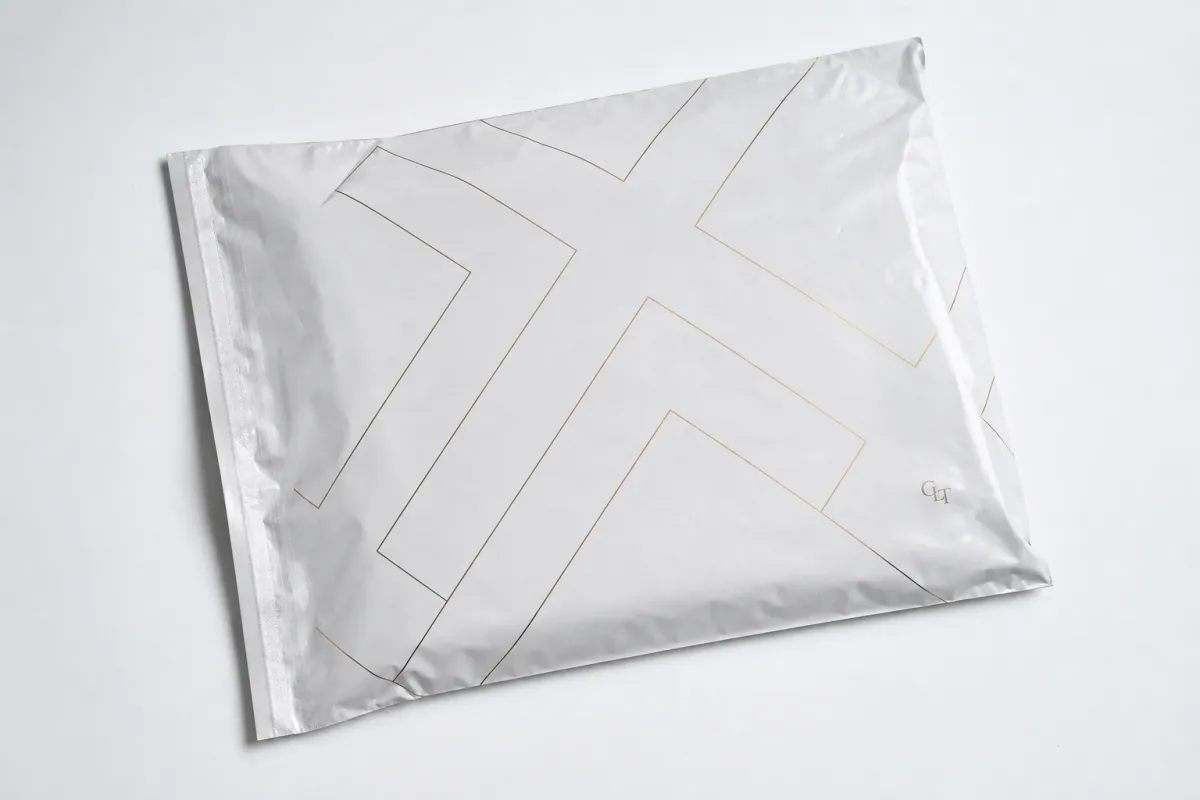
Custom Poly Mailers with side seal are built with the seam running along the edges instead of through the center of the face. That sounds minor on paper, but in actual use it changes how the mailer carries load, how the printable panel presents artwork, and how the package holds up after a long trip through parcel networks. A side seal gives the front surface a flatter, cleaner look, which matters for sharp graphics and for brands that care as much about presentation as protection.
For packaging buyers, the appeal is practical from the start. Custom Poly Mailers with side seal are light, flexible, and much less bulky than cartons, so they can help keep dimensional weight under control on apparel and soft goods. They also handle moisture better than paper-based mailers, which matters on routes where rain, humidity, and loading dock exposure are part of the day. For products that do not need rigid crush protection, they sit in a useful middle ground between padded envelopes and custom printed boxes.
The seam location matters because shipping stress is rarely even. Corners snag. Panels rub on conveyors. A center seam can leave a visible ridge in some formats, while custom poly mailers with side seal usually give brands a cleaner face for printed packaging. That is one reason subscription apparel labels, beauty kits, accessory sellers, and low-profile retail packaging programs keep returning to this format. It brings enough strength for routine ecommerce handling without asking the brand to pay for structure the product does not need.
From a packaging professional's perspective, the real test is not how a mailer looks on a mockup sheet. It is how it behaves after compression, vibration, and the occasional rough sort. That is where custom poly mailers with side seal earn their keep.
The tradeoff is direct. If the product is sharp, rigid, or fragile, a poly mailer may be the wrong choice no matter how good the print looks. For flat goods, these mailers can deliver strong package branding with lower material use and lighter freight than a box. Brands that want a cohesive packaging story without overbuilding every shipment often land here after comparing side-seal mailers with other formats.
In sample reviews, I have seen teams get tripped up by the simplest thing: they pick a mailer because it looks crisp on a render, then realize the product is just a little bulkier than expected once folded, bagged, and tagged. That is where side seal helps, but it is not magic. You still need the right size and the right film.
- Best fit: folded apparel, soft accessories, swimwear, small kits, and light retail fulfillment.
- Less suitable for: sharp corners, glass, highly fragile items, or products that need crush resistance.
- Branding advantage: cleaner printable surface than many mixed-seam structures.
- Operational advantage: lighter, faster to pack, and easier to store than rigid alternatives.
If you are mapping out a broader packaging program, custom poly mailers with side seal usually sit in the same decision tree as mailers, folding cartons, inserts, and other Custom Packaging Products. The right answer depends on how much protection the shipment truly needs, how much brand visibility matters, and how tight your fulfillment workflow is.
How Custom Poly Mailers with Side Seal Work in Shipping
Custom poly mailers with side seal begin as film, usually LDPE or a co-extruded blend, then move through slitting, printing, folding, sealing, and final packing. The result looks simple but does several jobs at once. The outer film shields against abrasion and light moisture. The side welds carry stress. The closure strip holds the contents in place. The printed panel turns a utility item into branded packaging.
Picture the route a shipment takes. An item is folded at the packing station, slipped into the mailer, and pressed onto the adhesive closure. From there it may move across conveyors, into tote bins, into a trailer, and then into the final-mile network. None of those steps is gentle all the time. That is why custom poly mailers with side seal should be judged on transit behavior, not only on print quality. A well-made seam can help the load stay stable when the package gets squeezed flat by other parcels.
The film itself changes the feel and the performance. A 2.5 mil mailer can work for soft apparel, while a 3 mil or 4 mil build is often better for items with edge pressure or longer shipping lanes. Co-extruded films can add tear resistance or a more consistent hand feel, while standard LDPE keeps the structure economical. If you want a formal benchmark for transit validation, many teams look at ISTA test standards as a common reference point for shipping abuse. That does not guarantee success, but it helps buyers speak the same language as suppliers and logistics teams.
Compared with cartons, custom poly mailers with side seal offer less crush protection but better weight efficiency. Compared with paper mailers, they usually resist moisture better. Compared with padded mailers, they give more room for full-bleed branding and a cleaner promotional look. That is why they show up so often in retail packaging programs where the product itself already has a flat profile and the goal is efficient shipping without giving up visual impact.
Another benefit is print consistency. The panel on custom poly mailers with side seal is typically uninterrupted, which helps logos stay centered and graphics look deliberate. If your packaging design depends on color blocks, pattern repeats, or a strong brand system, that flat face can matter more than buyers expect. A mailer that looks premium in person often earns more trust than a generic white bag ever will.
For sustainability questions, the details matter. Some film structures can include recycled content, but recyclability depends on the exact build and the local collection system. For a baseline on recycling expectations and plastic film handling, the EPA's recycling guidance is a useful starting point, though local rules still decide what gets accepted. That is the honest answer, even if it is not the tidy one people want.
One more practical point: if the mailer is used for repeat shipments or returns, the closure style matters almost as much as the film. A strong adhesive strip that closes cleanly the first time is great, but if the package may be opened and reused, you need to check whether the second seal still holds. Some teams find that out the hard way and, yeah, it is a messy lesson.
Key Factors That Affect Cost, Pricing, and Unit Cost
The price of custom poly mailers with side seal comes down to a handful of variables that are easy to name and easy to underestimate. Size is one. Film thickness is another. Print coverage, the number of ink colors, and extras such as tear strips or double adhesives all move the number. Buyers often focus on a unit price without asking what is included, and that is how a quote that looks attractive on paper turns into an expensive order after freight, setup, and rework are counted.
Film gauge is a major lever. A thicker film usually raises raw material cost, but it can also reduce damage claims and the hidden cost of replacements. That tradeoff is why custom poly mailers with side seal should be priced against the product they carry, not against a competitor's lower spec. A mailer that saves a fraction of a cent but fails under pressure is not really cheaper. It simply shifts the cost into returns, customer service, or a second shipment.
Minimum order quantity matters too. Custom print usually comes with plate, setup, and press preparation costs, and those fixed costs have to be spread across the run. A 5,000-piece order will often carry a higher unit cost than a 20,000-piece order even when the material spec is identical. For that reason, custom poly mailers with side seal should be compared on total landed cost, not just headline piece price. Freight, storage, spoilage, and reprints can change the picture quickly.
The cheapest quote is often the most expensive choice after damage, delay, or reprint risk is included. That is especially true for custom poly mailers with side seal, where seam quality and film consistency can decide whether the package earns a repeat order or a complaint.
Here is a practical way to think about pricing at a 5,000-piece level. The numbers below are directional, not universal, but they give buyers a realistic frame for custom poly mailers with side seal.
| Spec | Typical use | Approx. unit cost at 5,000 pcs | Notes |
|---|---|---|---|
| 2.5 mil, minimal print | Soft apparel, low-abuse shipping | $0.10-$0.16 | Best for light goods with a simple branded look |
| 3 mil, 1-2 color print | Most ecommerce apparel programs | $0.18-$0.30 | Common balance of durability and cost |
| 4 mil, full-bleed artwork | Premium retail packaging and stronger handling | $0.26-$0.42 | Higher film and print cost, often better feel |
| Recycled-content blend | Sustainability-led brand programs | $0.22-$0.38 | Depends on material availability and certification needs |
The last piece is easy to miss: fit. A mailer that is oversized wastes material and increases shipping volume, while one that is too tight can stress the seam and closure. For custom poly mailers with side seal, the right size can reduce both damage and unit cost because the film is not being asked to do more work than necessary. Good pricing usually comes from matching the build to the actual product, not simply hunting for the lowest quote.
If your team is also comparing other formats, it helps to review the broader range of Custom Poly Mailers alongside boxes and inserts. That side-by-side review keeps the packaging decision anchored in operations rather than in a single quote sheet.
Buyers sometimes assume a bigger run always solves the pricing problem. Sometimes it does. Sometimes it just creates expensive inventory that ties up cash and fills a storage shelf for six months. The right question is not only "what is the unit cost?" but also "how quickly will we actually use these?"
Production Process and Timeline for Custom Poly Mailers with Side Seal
The production path for custom poly mailers with side seal is not mysterious, but every step can affect the final result. It usually starts with specifications: size, film gauge, color count, print coverage, adhesive type, and any special features. Artwork review comes next. Then proofing. Then tooling and print setup. After that, the film is printed or laminated, formed into mailers, sealed, inspected, and packed for shipment. Each stage has a purpose, and each stage can add time if the brief is incomplete.
Lead time depends partly on capacity and partly on change management. A first order usually takes longer because more decisions happen up front. Artwork adjustments, color matching, panel measurements, and sample review all add to the schedule. For custom poly mailers with side seal, a straightforward reorder can often move faster if the size and print stay unchanged, but a new design or a new gauge resets the clock. In many programs, a simple order lands around 12-15 business days from proof approval, while a first-time order with revisions can run 18-25 business days or more depending on factory queue and material availability.
That is why quoted turnaround should never be read alone. A supplier can promise a short production window, but if the proof changes late or the artwork needs correction, the launch date shifts. Custom poly mailers with side seal are best scheduled like any other packaging launch: back-plan from the ship date, not from the order date. Seasonal drops, promotion calendars, and recurring replenishment all need a cushion because freight and customs can add their own friction.
For brands that care about package branding, the approval trail matters almost as much as the run itself. A good workflow should include a proof approval date, production start date, QC completion date, and ship date. Those checkpoints make it easier to catch slippage before it becomes a stockout. They also help teams coordinate with buying, fulfillment, and customer service so that custom poly mailers with side seal are on hand before orders spike.
What should buyers ask for? At minimum: a written spec sheet, a visual proof, a production timeline with milestones, and a clear note on what happens if artwork or dimensions change. If the answer is vague, the schedule is probably vague too. Clarity at the beginning saves more money than the fastest quote ever will.
In practice, the cleanest projects are the ones where someone owns the spec and someone else owns the calendar. Without that, mailers get approved late, art gets revised after the fact, and the whole thing starts to wobble. I have seen that happen more times than I'd like to admit.
How to Choose the Right Specs for Custom Poly Mailers with Side Seal
Start with the product, not the mailer. Measure the folded or packed item, then add room for any insert card, tissue, care sheet, or return slip. Custom poly mailers with side seal need some working space so the contents do not push against the seam or buckle the closure. A snug fit can look efficient, but if it strains the film or distorts the seal, the result is a false economy.
Gauge should follow risk. Soft tees and flat accessories can often move comfortably in a lighter structure, while items with corners, hardware, or denser folds may need a heavier film. A good rule is to think about the route, not just the product weight. A local shipment and a longer national route do not always need the same build. That is one reason custom poly mailers with side seal should be sampled with real products before the order is locked in.
Artwork decisions matter more than many teams expect. Logo-only branding can keep costs down and still look polished. Full-bleed graphics create a stronger retail packaging effect. Some brands use the panel for care notes, QR codes, returns instructions, or a short brand story. In that sense, custom poly mailers with side seal can carry both utility and package branding if the layout is planned carefully. The key is to keep artwork away from weld lines and to size text so it survives print and handling.
- Logo-only layout: simple, cost-conscious, and good for high-volume ecommerce.
- Full-bleed design: stronger visual impact, especially for launches and seasonal promotions.
- Utility-led print: adds QR codes, care info, or return instructions without clutter.
- Functional upgrades: tear strips, double adhesive, tamper evidence, and return-use closures.
Sample testing is the part that gets skipped too often. Flat mockups can hide problems with fold bulk, seal stress, or scuffing. Real product samples reveal whether the package closes cleanly, whether the mailer slides too easily inside sorting equipment, and whether the artwork stays centered after compression. For custom poly mailers with side seal, one test packout can reveal more than ten minutes of spreadsheet debate.
If your team is building a wider packaging system, compare the mailer against the rest of your line. That might include inserts, labels, cartons, and other Custom Packaging Products. The point is not to force one format everywhere. It is to choose the best structure for each SKU and shipping lane.
A useful habit is to keep one "real world" sample beside the spec sheet. When the folder on the desk says one thing but the packed product says another, trust the sample. It is a small thing, but it saves mistakes.
Common Mistakes When Ordering Custom Poly Mailers with Side Seal
Oversizing by item dimensions alone is a classic mistake. A folded garment is not the same as a flat garment, and a garment plus insert is not the same again. Buyers who skip that extra space often end up with custom poly mailers with side seal that are too tight, too short, or too stressed at the closure area. The seam may hold in a static mockup and fail once the package is bent, stacked, or dropped.
Artwork placement causes trouble just as often. Text that sits too close to the seam can disappear into the weld. Fine lines can blur on film. Barcodes can become hard to scan if they are printed over a busy background or wrapped awkwardly across a fold. With custom poly mailers with side seal, the panel may look wide, but print-safe zones still matter. A clean proof is not enough; the artwork has to survive production tolerances.
The lowest quote is often the noisiest one. Poor film consistency, weak sealing, and sloppy printing can create returns, damage claims, and customer frustration. That is especially costly in branded packaging because the package itself becomes part of the product experience. If a mailer arrives scuffed or split, the brand impression takes the hit before the customer even evaluates the item. That is why custom poly mailers with side seal should be compared with the whole risk stack in view, not just the sticker price.
Skipping test shipments can also backfire. A package that looks perfect on a bench may behave differently in the actual distribution lane. Conveyor vibration, truck compression, and final-mile handling can expose issues with seam quality, adhesion, or stackability. For custom poly mailers with side seal, a small pilot run or sample shipment is often cheaper than discovering a failure after full rollout.
Forecasting errors are the final trap. Many teams under-order because the launch is new and the volume feels uncertain. Others assume one size will fit every SKU and then discover that the product mix is more varied than expected. Either way, custom poly mailers with side seal work best when order quantities are tied to real sales velocity and packout data. A little discipline here prevents expensive emergency freight later.
One common blind spot is assuming the same mailer works across all seasons. Winter apparel usually takes more bulk than summer tees, and holiday kits often bring inserts, tissue, or extra protection. If the spec never changes, the packout probably will, and that mismatch catches people off guard.
- Wrong size: leaves no room for seal area or insert bulk.
- Poor artwork placement: hides text, distorts graphics, or disrupts scanning.
- Thin film for the route: saves pennies and costs dollars in damage.
- No shipping test: misses the problems that only show up in transit.
- Weak forecasting: creates stockouts or unnecessary overstock.
Expert Tips and Next Steps for Better Orders
Ask for a sample pack, a written spec sheet, and a quote that breaks out setup, unit cost, freight, and any reprint terms. That one request filters out a lot of vague suppliers quickly. For custom poly mailers with side seal, clarity in the quote often mirrors clarity in production. If the supplier cannot explain the structure in plain language, that is a sign to keep asking questions.
A simple test matrix can save money. Use one product, one size, one print concept, and one shipping lane. Then inspect the result after packing, sealing, sorting, and receipt. This is especially useful for custom poly mailers with side seal because the seam performance, adhesion, and print durability all show up in different ways. One pilot can tell you whether the mailer supports the way your operation actually works.
Set reorder points based on sell-through, not hope. Emergency freight is expensive, and stockouts interrupt fulfillment at the worst possible time. A modest safety buffer is usually cheaper than a rushed air shipment. Once a brand has a stable spec, custom poly mailers with side seal become easier to manage because the team is not relearning the same package every cycle. That consistency matters for branding, labor planning, and customer expectations.
Internal alignment matters too. Operations wants a mailer that packs quickly and holds up in transit. Brand wants a surface that looks polished and reinforces identity. Finance wants predictable unit economics. Good custom poly mailers with side seal satisfy all three only if the brief is shared early. If the packaging design team, the fulfillment team, and the buyer all look at the same spec sheet, the final order usually performs better.
On sustainability, keep the claims narrow and accurate. Recycled-content film may be available, but documentation varies by supplier and structure. If recycled content or recyclability is part of the buying decision, ask for proof and compare the structure against local collection rules. FSC certification only applies when paper components are part of the package system, such as inserts or printed cards. For broader guidance, the FSC site at fsc.org can help frame paper-related claims, while the EPA remains a useful reference for film recycling basics.
My practical advice is simple: gather the folded product dimensions, target order quantity, print goals, and shipping requirements before requesting quotes. Once those four inputs are clear, custom poly mailers with side seal are much easier to price, sample, and launch without guesswork. That is the difference between ordering packaging and building a package system that actually supports the business.
And if the team is still debating whether to go lighter or tougher, start by testing the route the package will actually take. A mailer that survives a calm office handoff is one thing; a mailer that survives the sortation line is the real standard.
Frequently Asked Questions
What size custom poly mailers with side seal do I need for folded apparel?
Measure the folded garment plus any insert card or tissue, then add clearance for the closure flap and seal area. Test with actual packed items, not just flat measurements, because bulk changes how custom poly mailers with side seal close and ship. If you are between sizes, choose the option that avoids forcing the seam or over-compressing the product.
Are custom poly mailers with side seal stronger than center-seal mailers?
Side seals can distribute stress more evenly along the edges, which often improves handling in transit. Actual strength still depends on film gauge, weld quality, and how sharp or heavy the contents are. For flat, lightweight goods, custom poly mailers with side seal are often a better fit than a basic economy mailer.
What affects the price of custom poly mailers with side seal the most?
Size, film thickness, print colors, and total order quantity usually have the biggest impact on unit cost. Setup fees and freight can change the real budget even when the quoted piece price looks attractive. Smaller runs tend to cost more per piece because fixed production costs are spread across fewer custom poly mailers with side seal.
How long does custom side-seal poly mailer production usually take?
First orders usually take longer because they require artwork proofing, specification review, and tooling setup. Repeat orders are often faster if the artwork and dimensions stay the same. Lead time can stretch if you need color matching, sample revisions, or production during a busy factory window for custom poly mailers with side seal.
Can custom poly mailers with side seal be recycled or made with recycled content?
Some versions can be made with recycled-content film, but availability depends on the supplier and the performance target. Recyclability depends on local film recycling rules and the exact structure of the mailer. Ask for material documentation if sustainability claims matter to your brand or retail partners, especially for custom poly mailers with side seal.
Custom poly mailers with side seal are not the right answer for every product, but for flat, lightweight shipments they can be a sharp combination of durability, presentation, and cost control. If your next order needs to balance brand image, unit economics, and shipping consistency, start with real product dimensions, a realistic test packout, and a supplier quote that separates film, print, and freight. That is the cleanest path to custom poly mailers with side seal that perform the way the brief promised.

