Buyer Fit Snapshot
| Best fit | Custom Poly Mailers for Apparel projects where brand print, material claims, artwork control, MOQ, and repeat-order consistency need to be specified before quoting. |
|---|---|
| Quote inputs | Share finished size, material target, print colors, finish, packing count, annual reorder estimate, ship-to region, and any compliance wording. |
| Proofing check | Approve dieline scale, logo placement, barcode or warning zones, color tolerance, closure strength, and carton packing before bulk production. |
| Main risk | Vague material claims, crowded artwork, missing packing details, or unclear freight terms can make a low unit price expensive after revisions. |
Fast answer: Custom Poly Mailers for Apparel: Film, Print, MOQ, and Carton Packing should be specified like a repeatable production item. The safest quote records material, print method, finish, artwork proof, packing count, and reorder notes in one written spec.
Production checks before approval
Compare the actual filled-product size with the drawing, then confirm tolerance on folds, seals, hang holes, label areas, and retail display edges. Reserve space for logos, QR codes, warning copy, and material claims before decorative graphics fill the panel.
Quote comparison points
Review material grade, print process, finish, sampling route, tooling charges, carton quantity, and freight assumptions side by side. A quote is only useful when the supplier can repeat the same color, closure quality, and packing count on the next order.
Custom Poly Mailers for Apparel: What to Know First
A folded shirt in a flimsy bag can make the whole order feel cheaper before the customer even touches the garment. That is why Custom Poly Mailers for apparel matter so much: they protect the product, keep shipping weight down, and give the parcel a finished exterior that feels like it belongs to a real brand. For clothing sellers, custom poly mailers for apparel are not just packing material. They shape shipping cost, first impression, and the way the package feels when it lands on the doorstep.
Plenty of buyers lock onto the logo because it is the part they can see right away. Fair enough, but the smarter place to start is the packing job itself. A good Custom Poly Mailers for apparel spec begins with the garment, the fold, and the trip it has to survive, then moves into size, thickness, print coverage, and budget. If those pieces are out of sync, even attractive artwork will not hide a bag that looks sloppy or too tight. If they line up well, the mailer does a lot of quiet work, making the shipment feel cleaner, tighter, and more deliberate.
This approach fits tees, hoodies, leggings, socks, swimwear, loungewear, and other soft goods that do not need rigid crush protection. It also suits brands that want stronger branded packaging without moving all the way into Custom Printed Boxes. The practical advantage is easy to see: lighter parcels, lower material spend, and a sharper package branding moment. That is the real trade, plain and simple.
Custom poly mailers for apparel: what they are and why they matter
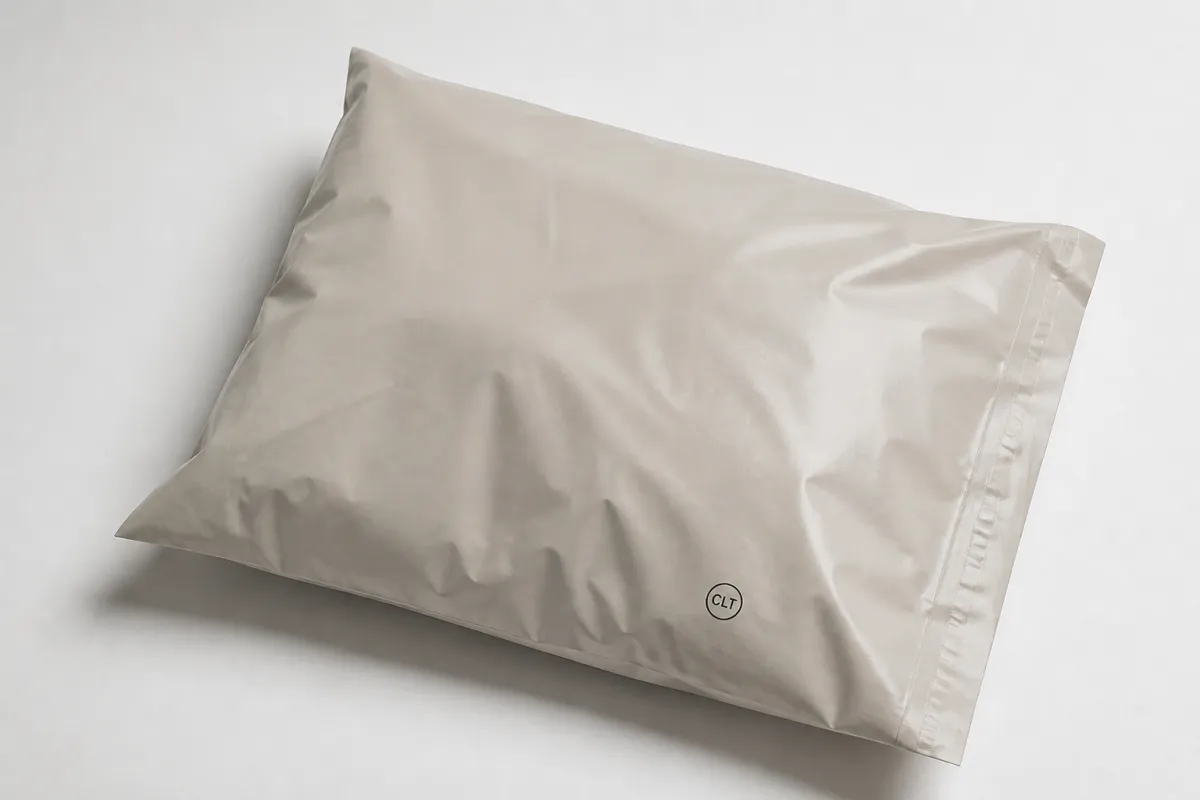
Custom poly mailers for apparel are lightweight shipping bags made from polyethylene film, usually finished with a peel-and-seal strip and custom printing on one or both sides. Most are opaque or semi-opaque, which helps keep the contents hidden and gives the parcel a neater look. In plain terms, they are the soft-goods version of a branded shipping envelope, built for speed, repeat use in fulfillment, and a clean presentation.
That is why custom poly mailers for apparel show up so often in direct-to-consumer clothing, boutique drops, and subscription-style garment shipments. A folded shirt does not need corrugated protection the way a ceramic mug or glass candle does. What it needs is a tidy outer layer, a dependable seal, and enough film strength to handle sorting, stacking, and parcel movement without splitting at the seams. A bag that fits well feels intentional. A bag that stretches or balloons does not. Customers usually notice the difference even if they never say a word about it.
Use cases tend to stay simple:
- Tees and tops that fold flat and stay clean.
- Hoodies and sweatshirts when the film gauge is strong enough.
- Leggings and activewear that benefit from moisture resistance.
- Socks, swimwear, and undergarments that need discreet presentation.
- Multi-item bundles when the packed size stays within reason.
The tradeoff is easy to overlook. Custom poly mailers for apparel do not offer the crush resistance of boxes, so they are not the right answer for every SKU. They perform best when the item is soft, foldable, and not likely to be damaged by ordinary parcel handling. That is why many brands use them for most shipments and reserve boxes for premium kits, gift sets, or products that ship with rigid inserts. Good packaging follows the product, not the other way around.
Practical rule: if the garment looks better packed flat than stuffed into a box, custom poly mailers for apparel are probably the right tool.
From a buyer's point of view, the smartest decision is the one that stays grounded in facts. Measure the finished pack. Estimate the shipping weight. Decide how much branding the shipment really needs. Then compare custom poly mailers for apparel with generic bags and boxes using total cost, not just the sticker price on the bag. That method saves more money than chasing the cheapest quote ever will.
How custom poly mailers for apparel work in shipping and branding
The structure is simple, though the details carry real weight. Most custom poly mailers for apparel use an outer printed film, an inner sealing layer, and a pressure-sensitive adhesive strip. The print surface carries the logo, brand colors, legal copy, or a short message. The film itself is doing several jobs at once: protecting against dust and light moisture, holding the garment compactly, and keeping the parcel lighter than a comparable box. That lighter parcel can reduce dimensional weight charges in some shipping situations, which is one reason the math often tilts toward mailers for soft goods.
For branding, the mailer is often the first physical touchpoint a customer sees. That sounds obvious, yet many brands still treat it like an afterthought. Energy goes into the website, the photos, the hangtag, and the product insert, then the order gets tossed into a plain bag that dulls the whole experience. Custom poly mailers for apparel close that gap. They make the outside of the shipment feel connected to the same brand language as the garment label, the insert card, and the rest of the packaging system.
Print method matters as well. Larger runs often use flexographic printing, which handles bold graphics, solid colors, and repeat orders efficiently. Gradients, tiny text, and hairline details can be done, but film is less forgiving than paper. Packaging design on film rewards clarity. A strong logo. High contrast. Limited color count. A layout that still reads from arm's length. That is usually the right direction for custom poly mailers for apparel.
There is also a customer perception piece that gets underplayed. A plain shipping bag says, "We shipped your item." A branded mailer says, "This came from a label that cared enough to present it properly." That shift affects perceived value, which is why custom poly mailers for apparel can support repeat purchases more than their print cost might suggest. The bag is not the brand, yet it still participates in package branding in a meaningful way.
For brands that also ship fragile or higher-value merchandise, it helps to separate custom poly mailers for apparel from custom printed boxes. Boxes provide structure. Mailers provide speed, lighter weight, and lower cost for soft goods. Different tools, different jobs. Treating them like substitutes for every order usually leads to unnecessary expense.
Key factors for custom poly mailers for apparel
Size comes first. Every time. Measure the folded garment with any tissue paper, insert card, or thank-you card you intend to include. Then add enough room for easy packing so the bag does not have to stretch around the product. A mailer that is too tight slows down fulfillment and can make custom poly mailers for apparel look overstuffed. That is a bad look. Nobody wants a premium tee arriving like it was vacuum-packed in a panic.
Thickness is the next decision. Film is commonly measured in mils, and the useful range for custom poly mailers for apparel often sits around 2.5 to 4 mil depending on garment weight and shipping risk. A lightweight shirt may do fine in a thinner film. A hoodie, sweatshirt, or bundle order usually deserves more strength. If the bag will move through rough handling, durability should win over shaving a fraction of a cent from the unit price. Cheap film can cost more if it tears and forces a replacement shipment.
Print area and design limits deserve more attention than they usually get. Solid black fields, full-bleed color, and dense gradients can look clean on a screen while printing less cleanly on film. Tiny copy often disappears. Thin strokes can break apart. For custom poly mailers for apparel, the strongest layouts usually rely on one bold focal point, one supporting message, and enough empty space to let the branding breathe. That is not minimalism for its own sake. It is print discipline.
Finish changes the tone of the package. A glossy mailer feels brighter and more retail-forward. A matte finish can read as more premium or more understated. Opaque films hide the contents better. Semi-transparent options can work for some brands, but they expose fold lines and sometimes make the package feel less finished. If your business cares about brand packaging consistency, choose the finish that matches the rest of the experience instead of defaulting to whatever option is easiest for the supplier.
There are also operational factors that shape whether custom poly mailers for apparel are the right fit:
- Order volume affects unit cost and setup efficiency.
- Storage space matters because mailers still take room in bulk.
- Color count influences print cost and artwork complexity.
- SKU count determines whether one size can cover most products.
- Reorder frequency affects how much inventory you should hold.
One detail buyers often miss: ask for real film specs, not only a sales phrase like "heavy duty." If the supplier can reference tensile strength or other test data, that tells you more than a glossy pitch ever will. Standards and methods from groups such as ISTA transit testing guidance help you judge how packaging behaves inside the parcel network instead of guessing. For recyclability or end-of-life questions, the EPA recycling guidance is a better starting point than internet folklore. Packaging should stay factual here.
Custom poly mailers for apparel: cost, pricing, MOQ, and quotes
Pricing depends on more variables than most first-time buyers expect. Bag size, film thickness, print colors, finish, quantity, and freight can all move the number quickly. Custom poly mailers for apparel are often cheaper than boxes on a material basis, but only when the spec is tight and the order size is large enough to absorb setup. A small run with multiple colors can climb in price fast. That is simply how production works.
MOQ, or minimum order quantity, is where the tradeoff becomes obvious. Lower minimums are attractive because they reduce risk, but they usually carry a higher unit cost. Larger runs pull the per-piece price down, but they tie up cash and take space. For many apparel brands, the sweet spot for custom poly mailers for apparel sits in a repeatable spec in the 3,000 to 10,000 piece range, though the right number still depends on sales velocity and assortment size.
Here is a practical comparison of common buying options:
| Option | Typical Use | MOQ | Approx. Unit Price | Notes |
|---|---|---|---|---|
| Stock poly mailer with one-color print | Simple logo shipments | 1,000-3,000 | $0.10-$0.20 | Good entry point for custom poly mailers for apparel when the artwork is clean and direct. |
| Custom printed opaque mailer | Most DTC apparel orders | 3,000-5,000 | $0.15-$0.28 | Usually the best balance of branding and cost. |
| Heavy-gauge premium mailer | Hoodies, bundles, higher-value items | 5,000+ | $0.22-$0.40 | More durable film, better feel, and less risk of seam failure. |
| Short-run branded mailer | Launches, tests, seasonal drops | 500-1,000 | $0.30-$0.60 | Convenient, though flexibility comes at a higher per-unit cost. |
Those ranges are not promises. They are directional figures that help a buyer stop pretending every quote is equal. The final price can shift based on artwork coverage, whether the print is on one side or both, and whether the supplier charges separately for plates, setup, or freight. A quote for custom poly mailers for apparel should clearly state whether the number includes the bag, the printing, the packing, and delivery. If it does not, the quote is incomplete.
Ask these questions before you approve anything:
- What are the exact dimensions in inches or millimeters?
- What film gauge are you quoting?
- How many colors are included in the print price?
- Are setup fees, plate charges, and proofs included?
- Is freight domestic, prepaid, or quoted separately?
- What happens if there is a color shift or print defect?
If you want a wider packaging system, it can help to begin with Custom Packaging Products and then narrow the spec to the apparel use case. For a closer look at the product category itself, see Custom Poly Mailers. A package that looks cheap because it was under-specified still looks cheap, even when the logo is nice.
One practical warning: do not compare a premium opaque mailer to a bargain thin bag and call it a fair test. Compare unit cost, seal strength, artwork coverage, and total landed cost. Custom poly mailers for apparel are a packaging purchase, but they are also a perception purchase. Customers notice the difference even when accounting does not.
Production steps and turnaround for custom poly mailers for apparel
The production path is usually more orderly than buyers expect. Artwork review comes first. Then proofing. Then setup. Then printing, converting, inspection, and packing. Custom poly mailers for apparel are not difficult to make, but they respond well to clear files and direct instructions. Low-resolution logos, vague color notes, and requests like "make it pop" are exactly how delays begin.
For a first order, realistic turnaround is often 12 to 15 business days from proof approval on straightforward jobs, with more time needed when print coverage is heavy or the order is complex. Shipping time still needs to be added. Reorders usually move faster because the spec is already fixed and the supplier does not have to re-review the entire design. If a clothing launch depends on the packaging arriving by a hard date, give yourself extra room. Rush orders cost more because someone else has to reshuffle their schedule.
Delays tend to appear in a few predictable places:
- Artwork files are low resolution or the wrong color format.
- The buyer changes size after proof approval.
- Print colors are not specified clearly.
- The supplier waits on sample sign-off.
- Freight takes longer than planned.
That is why samples matter. A physical sample catches size issues, seal strength issues, and print surprises that a PDF cannot show. If you are serious about custom poly mailers for apparel, ask for a sample or a pre-production proof before the full run. A small shift in color or a weak seam is easier to fix on 200 samples than on 20,000 finished bags. That is not abstract advice. It is the kind of mistake that turns a decent quote into a very annoying expense.
Production also gives you a chance to check the package against actual transit conditions. If the bag will travel through parcel shipping, not hand delivery, ask whether the supplier has tested the film or seal in ways that resemble parcel handling. Standards and methods from groups like ISTA exist for a reason. They help separate "looks fine on a desk" from "holds up in the shipping lane."
Best practice: approve custom poly mailers for apparel only after checking the pack, the seal, the print, and the shipping method. A screen proof is not a transit test.
Step-by-step guide to ordering custom poly mailers for apparel
If you are ordering custom poly mailers for apparel for the first time, start with the products, not the artwork. List every apparel SKU that will ship in the mailer, then group them by folded size, weight, and packing style. A lightweight tee and a heavyweight hoodie live in different packaging worlds. Treating them as if they do not causes oversizing or undersizing, both of which waste money.
- Measure the finished pack. Include tissue, inserts, cards, or any other item you will actually ship.
- Set a size range. One size may cover most tees, but hoodies and bundles often need a second option.
- Choose the film strength. Lighter garments can use lighter film; heavier garments need more durability.
- Define the artwork brief. Logo placement, print side, finish, and exact colors should be locked early.
- Request quotes on the same spec. Same size. Same gauge. Same print sides. Same quantity. Otherwise the comparison is meaningless.
- Review a sample or proof. Check fit, seal, and color before you commit to the full run.
- Approve and document. Save the approved dimensions and print details so reorders are painless.
The sizing decision is where most of the money lives. A mailer that is slightly too large adds material cost and lets the garment move around too much. A mailer that is too small slows packing and raises the chance of a seam issue. The right size should let the pack slide in cleanly without a wrestling match. That remains true for custom poly mailers for apparel whether you ship a single tee or several folded items with an insert card.
The artwork brief should be more specific than "put the logo on it." Tell the supplier where the logo should sit, what the background color should be, whether you want one side or both sides printed, and whether the brand tone should feel loud, minimal, or premium. If the design is meant to support brand packaging across the whole shipping experience, the mailer should match the label, the insert, and the rest of the product packaging. Otherwise it starts to feel like a random piece from a different company.
Do not be shy about testing the pack in the real world. Fill the bag. Seal it. Shake it. Stack it. Send a few to different addresses. You will learn more from that than from an hour of spec-sheet theory. Custom poly mailers for apparel are not complicated, yet they only work well when they behave under actual packing conditions.
Common mistakes and expert tips for custom poly mailers for apparel
The biggest mistake is ordering a bag that is too tight. That sounds minor until you watch a pack line slow down because every order needs to be forced into the mailer. Tight packaging also stresses seams and can make the garment look crushed rather than polished. If the goal is premium presentation, custom poly mailers for apparel should make the item look cared for, not compressed.
Another common mistake is overdesigning. Too many colors, too much copy, and weak contrast all hurt clarity. Film is not a giant glossy brochure. It is a flexible shipping surface with its own limits. The strongest-performing custom poly mailers for apparel usually follow a clear hierarchy: logo first, supporting message second, everything else only if it earns its place. That kind of packaging often feels more expensive than a busy layout does.
The durability trap is quieter. A sample may look fine on a desk, yet once the bag is filled, stacked, tossed, and dragged through parcel handling, weak points show up. That is why a test run with real products matters more than a flat sample alone. Check seal strength, edge scuffing, puncture resistance, and whether the print scratches during handling. A mailer that works in theory but fails in transit is not really a mailer. It is a complaint generator.
Here are a few expert habits that save money and reduce hassle:
- Use one dominant logo lockup instead of shrinking three brand marks into one bag.
- Keep critical text away from the seal area so packing does not hide it.
- Choose opaque film if garment color show-through hurts the presentation.
- Match the finish to the brand rather than chasing whatever sounds premium in a quote.
- Build one repeatable spec for your core SKUs and only split sizes when the product mix demands it.
There is a brand clarity lesson tucked into all of this. One strong logo and one clean background usually do more for custom poly mailers for apparel than a crowded layout packed with gradients, slogans, and tiny icons. People often confuse decoration with branding. They are not the same thing. Branding is recognition. Decoration is just ink.
Do not compare custom poly mailers for apparel against custom printed boxes as if one wins every time. Boxes still make sense for premium kits, fragile add-ons, and retail packaging moments where structure matters more than shipping efficiency. Mailers make sense when the garment is soft, the pack is compact, and the brand wants a strong presentation without paying for material it does not need.
Next steps for custom poly mailers for apparel
Build a simple launch checklist before you talk to a supplier: product measurements, target quantity, preferred size range, print style, and a real budget ceiling. That sounds basic because it is basic, and basic is usually where packaging problems either get solved or start. Custom poly mailers for apparel work best when the brand treats them like part of the shipping system, not like a last-minute promo item.
Next, ask for two or three quotes using the same spec sheet. Same dimensions. Same film gauge. Same print sides. Same quantity. That is the only way to compare like with like. If one supplier is quoting a premium opaque bag and another is quoting a thin stock-style bag, you are not comparing price. You are comparing two different products that only share a category name.
Then order one sample or a short pilot run. Pack real garments. Send them to a few destinations. Check the customer experience at opening, not just the warehouse experience at sealing. If the pack feels right, the seal holds, and the print reads cleanly, you are probably close to the right spec. If not, adjust before you scale.
Set a reorder threshold based on actual sell-through, not hope. Emergency rush orders are a tax on weak planning. Dead inventory is another one. The cleanest setup is the one that can be repeated without drama. That is where custom poly mailers for apparel do their best work: once the spec is right, the process should be dull in the best possible way.
If you remember one thing, make it this: build the spec around the folded garment, then test the sample in real packing conditions before you commit to the full run. Do that, and custom poly mailers for apparel become a useful part of your product packaging instead of an expensive guessing game.
What size custom poly mailers for apparel should I order for T-shirts and hoodies?
Measure the folded garment with any tissue paper or insert you plan to use, because the packed size matters more than the fabric label. Choose a bag with enough room for a clean slide-in fit, not a stretched fit that slows packing and makes the package look overstuffed. Keep at least one backup size if you ship mixed apparel types, since hoodies and multi-item bundles usually need more room than single tees in custom poly mailers for apparel.
How thick should custom poly mailers for apparel be?
Lightweight tees can use a thinner film, but heavier garments or bundles usually need a stronger gauge to avoid punctures and seam stress. If the mailer will travel through rough handling or long transit routes, lean toward a more durable option instead of the thinnest possible bag. Ask the supplier how thickness affects print clarity and seal strength, because the cheapest film is not always the best value for custom poly mailers for apparel.
Are custom poly mailers for apparel cheaper than boxes?
Usually yes on material and shipping weight, especially for soft goods that do not need crush protection. The unit price depends on quantity, print complexity, and bag size, so a small custom run can cost more than people expect. Compare total landed cost, not just the bag price, because boxes may look simple but they add weight, storage, and packing labor that custom poly mailers for apparel often avoid.
How long do custom poly mailers for apparel take to produce?
First-time orders take longer because proofs, artwork checks, and setup work need approval before printing starts. Reorders move faster when the spec is already locked, the art file is clean, and the supplier still has the same material in stock. Build extra time for shipping and inspection so the mailers arrive before the product launch instead of on the day you need them, especially if the launch depends on custom poly mailers for apparel being ready on schedule.
What artwork works best on custom poly mailers for apparel?
Bold logos, strong contrast, and simple layouts usually print cleaner than detailed artwork with tiny copy or soft gradients. Keep important branding away from the seal area and edges so the design still looks intentional after packing and handling. If you want a premium feel, test a matte finish or a restrained one-color layout instead of crowding the bag with too much ink on custom poly mailers for apparel.
For apparel brands that want efficient shipping, cleaner presentation, and stronger repeat recognition, custom poly mailers for apparel are often the smartest packaging choice when the spec is sized correctly and the print stays controlled.

