Buyer Fit Snapshot
| Best fit | Custom Poly Mailers for Samples projects where brand print, material claims, artwork control, MOQ, and repeat-order consistency need to be specified before quoting. |
|---|---|
| Quote inputs | Share finished size, material target, print colors, finish, packing count, annual reorder estimate, ship-to region, and any compliance wording. |
| Proofing check | Approve dieline scale, logo placement, barcode or warning zones, color tolerance, closure strength, and carton packing before bulk production. |
| Main risk | Vague material claims, crowded artwork, missing packing details, or unclear freight terms can make a low unit price expensive after revisions. |
Fast answer: Custom Poly Mailers for Samples: Film, Print, MOQ, and Carton Packing should be specified like a repeatable production item. The safest quote records material, print method, finish, artwork proof, packing count, and reorder notes in one written spec.
Production checks before approval
Compare the actual filled-product size with the drawing, then confirm tolerance on folds, seals, hang holes, label areas, and retail display edges. Reserve space for logos, QR codes, warning copy, and material claims before decorative graphics fill the panel.
Quote comparison points
Review material grade, print process, finish, sampling route, tooling charges, carton quantity, and freight assumptions side by side. A quote is only useful when the supplier can repeat the same color, closure quality, and packing count on the next order.
Custom Poly Mailers for samples do more than carry a product from one place to another. They set the tone before the sample is even touched, which is kinda the whole point. A mailer with the right size, color, print, and closure can make a small sample feel considered and intentional, while a flimsy or mismatched one can undercut the experience before the buyer opens it. That first physical impression matters a lot because the outer package often speaks first.
In the sample world, the package usually has to work hard without drawing attention to itself. It should protect the contents, move through fulfillment quickly, and still look like it belongs to the brand. That balance is exactly why Custom Poly Mailers for samples have become such a practical option for apparel swatches, soft goods, trial packs, subscription kits, and flat promotional items.
Custom poly mailers for samples: why they matter
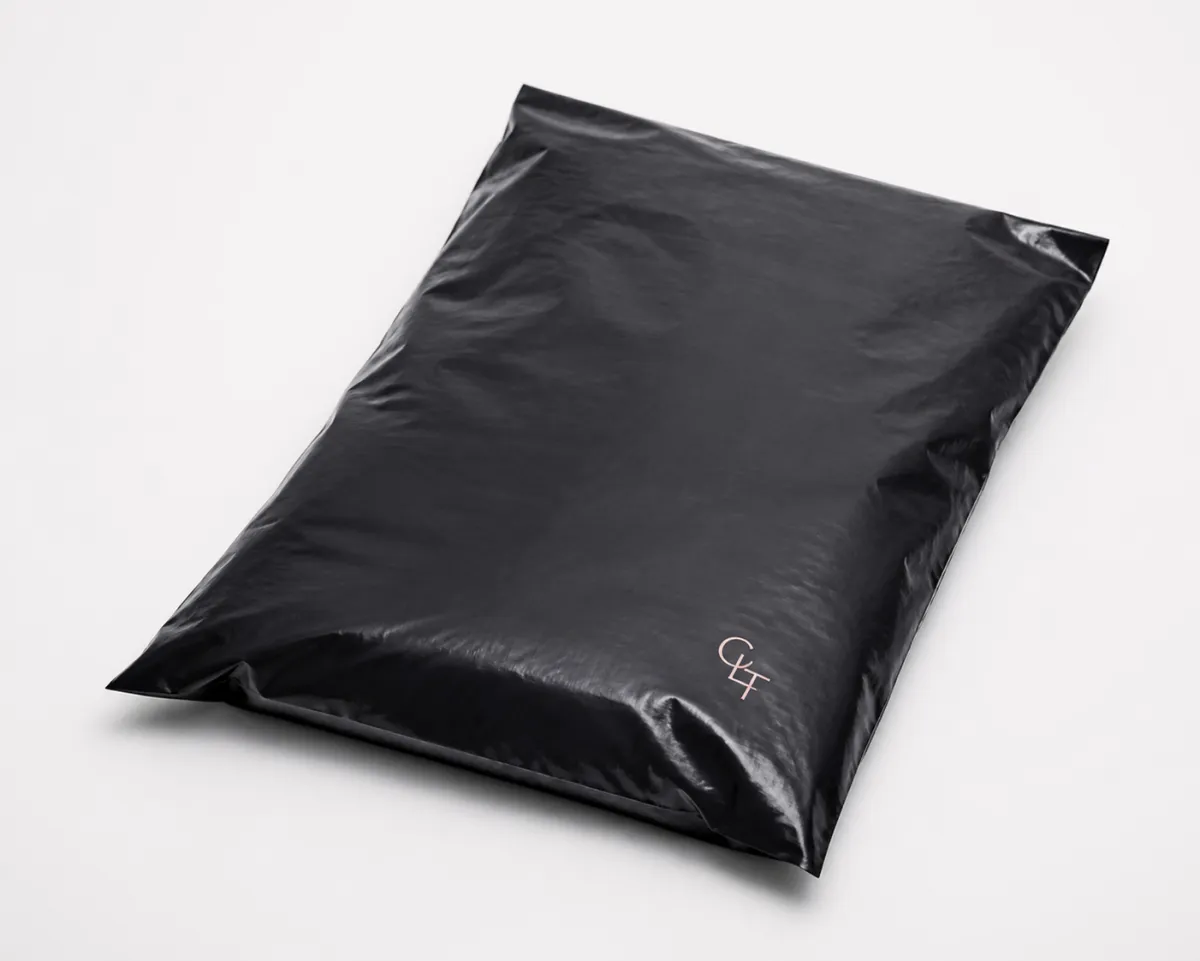
Custom Poly Mailers for samples are lightweight polyethylene shipping bags printed with a logo, campaign message, product name, or another brand detail. In packaging terms, they sit between plain mailers and heavier carton pack-outs because they add identity without much extra weight, labor, or freight. For items that are flat, flexible, or already protected by an insert, that is often the sweet spot.
Samples tend to be judged in stages. The outer package sets the first tone, the opening creates the second, and the product itself finishes the job. If the mailer looks cheap, dirty, or poorly sized, the whole sequence starts on shaky ground. Custom Poly Mailers for samples help shape that first impression, and that role belongs in the main packaging strategy, not on the side as an afterthought.
There is also a practical side that buyers sometimes underestimate. Poly mailers help block light moisture, handle everyday scuffing better than many paper envelopes, and add very little tare weight. That can matter a great deal in parcel pricing, especially when a sample program ships in volume. A box may still be the right answer for rigid, fragile, or premium kits, but for many flat or soft items, custom poly mailers for samples stay lighter, faster, and easier to move through fulfillment.
The outer package is often the first physical proof that your sample program is organized, worth opening, and worth remembering.
Production speed is part of the appeal too. Fulfillment teams can usually pack poly mailers faster than cartons, especially when the sample is flat and already paired with a card or tissue wrap. That speed matters during launches, trade shows, and promotional runs where dozens or thousands of units move through the line in a short window. When brands compare custom poly mailers for samples with printed boxes, the real question is not only presentation. It is also shape, transit conditions, and how much labor each order should absorb.
A good packaging decision usually comes down to four practical questions: How much protection does the sample need? How much does presentation matter? What is the target unit cost? How much time can the team spend packing each order? Honest answers tend to point toward the right structure much faster than a long debate over materials.
How custom poly mailers for samples work
Custom poly mailers for samples are usually made from low-density or co-extruded polyethylene film with sealed side seams and a pressure-sensitive adhesive closure. Many styles include a tear strip, and some add a second adhesive strip for returns or reuse. Film thickness is often listed in mils, commonly 2.5 mil, 3 mil, or 4 mil, depending on the level of puncture resistance and stiffness the program needs. That thickness is one of the first specs worth comparing because it affects both performance and feel.
Printing can be flexographic, rotogravure, or digital, depending on the supplier, order size, and artwork complexity. The design is usually printed before the bag is converted into its finished form, so placement has to account for folding, seams, and machine handling. A proof that looks balanced on a flat screen can land awkwardly once the mailer is filled and sealed. Good packaging design respects that from the start instead of trying to fix it later.
That matters even more for custom poly mailers for samples that will be stacked, bagged again, or packed by hand in high volume. A logo too close to a seam may disappear. Fine text can vanish when the film wrinkles. Glossy surfaces can show scuffing more readily than expected. I usually tell buyers to treat the print area like a working surface, not a poster. Give the main message room, keep the brand mark centered, and make sure it survives folding, shipping, and the quick glance it gets at the receiving end.
Size choice matters just as much as print. A sample set with a product card, tissue wrap, and the sample itself may need more internal depth than the item alone suggests. If the bag is too tight, the seal gets stressed and the package can look stretched. If it is too loose, the contents shift, which hurts presentation and can create abrasion inside the bag. For that reason, custom poly mailers for samples are usually specified by the packed item rather than by the product's raw dimensions alone.
Shipment validation often benefits from transit testing standards instead of guesswork. The International Safe Transit Association test methods are a useful reference if you want a disciplined way to think about drop risk, vibration, and closure performance. That does not mean every sample mailer needs a full certification program, but it does give buyers a more grounded way to judge how a package will behave in real handling.
Moisture resistance is another reason custom poly mailers for samples remain popular. They are not waterproof in every extreme condition, yet they handle light rain, condensation, and everyday warehouse grime well. They also keep weight low, which helps when shipping apparel swatches, beauty trial packs, or small promotional items. In plenty of these use cases, the mailer provides enough protection that a box would add only extra material, extra labor, and extra cost without a clear benefit.
Custom poly mailers for samples: key factors to choose
Size and fit come first. Custom poly mailers for samples should hold the product, any inserts, and the closure zone without strain. A little room inside is fine, but too much empty space lets the contents shift and can make the package look bulky. A bag that sits neatly on the packing bench usually travels better too. For recurring programs, I prefer two or three standardized sizes over a different mailer for every small variation, because purchasing and fulfillment both stay cleaner that way.
Material and thickness follow close behind. A 2.5 mil film may be enough for soft, light items with no sharp edges. A 3 mil bag often works well for sample kits that need more stiffness and puncture resistance. A 4 mil structure can make sense for heavier swatches, rigid inserts, or longer routes where packages get handled repeatedly. The goal is not the thickest film available. The goal is the right film for the product and the path it will travel.
Printing style shapes the final feel. Some custom poly mailers for samples need only a simple logo and website. Others benefit from full coverage that turns the mailer into part of the campaign itself. Message-led designs can work especially well for launches tied to a limited promotion or subscription push. If the package will sit in a retail display, on a table, or inside a PR send-out, the print has to carry more of the brand story than a plain shipping face ever would.
I usually ask buyers to think about the role of the outer bag before they settle on artwork. Is the goal quick identification? A more premium unboxing moment? A practical shipper with a branded face? A carrier for inserts that need to stay flat? The answers shape everything from ink coverage to bag color. Custom poly mailers for samples can handle bold graphics, though they can also stay minimal and clean. Both directions work if they match the brand and the sample program.
Closure and security deserve a careful look too. A self-seal strip should bond reliably, yet not feel so aggressive that staff struggle to align the mouth of the bag during packing. If the sample is valuable or confidential, tamper evidence may matter. If the item needs to be opened and resealed later, a second adhesive strip can help. In practice, custom poly mailers for samples often serve more than one job, especially in programs where a sample may be tested, returned, or compared with another item later on.
Sustainability claims need precision. Some mailers contain post-consumer recycled content, and some may be recyclable in certain streams, but those claims should match the actual film structure and local disposal reality. The EPA recycling guidance is a helpful place to check general language before printing a claim on the bag. If the packaging team cannot support the statement with material specs, tighter wording is the safer path. Buyers notice accuracy, and regulators do too.
Here is a practical comparison that many packaging teams use when choosing custom poly Mailers for Samples:
| Option | Typical Order Size | Approx. Unit Price | Best Fit | Main Trade-Off |
|---|---|---|---|---|
| 2.5 mil opaque mailer, one-color print | 1,000 to 5,000 | $0.18 to $0.28 | Light apparel samples, flat inserts, low-risk shipping | Lower puncture resistance and simpler presentation |
| 3 mil custom printed mailer, full-color branding | 1,000 to 10,000 | $0.22 to $0.36 | Subscription kits, promotional send-outs, brand-forward sample packs | Moderate cost with more print and setup coordination |
| 4 mil recycled-content mailer, two-sided print | 2,500 to 10,000 | $0.28 to $0.45 | Heavier samples, longer transit, programs with sustainability goals | Higher unit cost and more attention needed for accurate claims |
| Premium mailer with tear strip and return strip | 5,000+ | $0.35 to $0.60 | Trial programs, product exchanges, controlled returns | More features and a higher total packaging cost |
That table is only a planning guide, not a quote sheet, because size, freight, artwork coverage, and market conditions all move the number. Even so, it helps buyers compare custom poly mailers for samples against the broader category of Custom Packaging Products before they commit to a run. If a flexible mailer already looks like the right structure, it is worth reviewing Custom Poly Mailers as a starting point for specification details.
Process and timeline for ordering custom poly mailers for samples
The order process for custom poly mailers for samples usually follows a fairly predictable path. First comes the quote request, where the buyer shares bag size, approximate quantity, film thickness, print colors, and whether the design should run on one side or both. Then the supplier confirms the structure, calculates setup, and requests artwork. After that come proofing, approval, production, and shipment. The sequence sounds simple enough, yet the details at each step decide whether the order stays on schedule.
Artwork drives a large share of the timeline. Clean logo files and already-defined brand colors keep the proof stage moving. Rebuilt art, spacing corrections, or color changes slow things down. For custom poly mailers for samples, vector files, a clear placement guide, and a short note explaining which side is the front, where the seal sits, and whether the print should avoid seams or gussets make the process much smoother.
Order quantity changes the rhythm too. Larger runs often lower unit pricing, yet they also demand more planning around packaging, palletizing, and freight. Smaller runs can be quicker to approve, but the cost per bag usually climbs. Standard sizes are easier to source than unusual dimensions, so when a sample program can fit a common size, the process usually saves both time and money. That difference is often what separates a smooth launch from a rushed order filled with compromises.
Typical production timelines for custom poly mailers for samples often fall in the 12 to 15 business day range after proof approval for straightforward jobs, though the supplier, order volume, and print complexity all play a part. A custom size, special film, or more detailed artwork can stretch the schedule. Freight adds its own clock on top. If the mailers support an event, product launch, or seasonal sample campaign, a buffer of at least a couple of weeks is a wise margin.
Preparation shortens the whole process. Buyers should have sample dimensions, insert dimensions, quantity per pack, desired thickness, shipping destination, and final artwork files ready before asking for quotes. If the program also includes secondary pack-outs or supporting collateral, that information helps the supplier see the full packaging design. A sample mailer rarely stands alone; it usually works with tissue, a card, a label, or a code sheet that completes the experience.
Proofing and registration deserve one more check. Custom poly mailers for samples that carry fine type, gradients, or full-bleed color should be reviewed closely so the print lands where the buyer expects. If there is a charge for revisions or art changes, that should be clear before approval. A good packaging partner makes those steps visible instead of hiding them in vague language.
Handled with that kind of attention, the packaging process becomes part of the sample strategy rather than a last-minute shipping decision. That shift helps brands align product packaging with brand goals, internal labor, and customer expectations in one move.
Custom poly mailers for samples: cost, pricing, and MOQ
Price for custom poly mailers for samples depends on a handful of variables that matter far more than many first-time buyers expect. Quantity is the biggest one. Higher volume spreads setup and print costs across more units, which lowers the price per bag. Film thickness, bag size, number of print colors, number of printed sides, and special features such as a tear strip or return strip all shape the final figure as well.
MOQ, or minimum order quantity, deserves attention early in the process. Some suppliers quote lower MOQs, though the price per bag usually rises because setup and waste are spread across fewer units. Higher MOQs can feel steep at first, yet they often deliver stronger value if the sample program runs regularly. If the packaging will be used month after month, a larger run may be the better financial decision.
Quote comparison needs discipline. Ask whether freight, plates, setup, proof revisions, and packaging are included. Two quotes can look close on unit price and still differ a lot in landed cost. Overages and underruns matter too, because a quoted quantity of 5,000 may not be packed at exactly 5,000. Clarity helps here. Custom poly mailers for samples should be compared on the same basis, not on a single number that leaves half the charge out of view.
Some higher prices make perfect sense. If the sample is high value, if print quality carries part of the brand story, or if a stronger film cuts down on damage and replacement costs, the extra cents per unit may be money well spent. A cheap mailer that tears in transit or arrives with weak print can end up costing more once reprints, returns, and lost trust are counted. Experienced buyers tend to look at total packaging cost per sample, not just the cost of the pouch itself.
For planners who prefer a simple framework, here is a practical way to think about the economics of custom poly mailers for samples:
- Unit cost is only one piece of the bill.
- Damage risk can erase savings fast.
- Labor time matters when the sample run is large.
- Brand perception can influence reorder behavior and response rates.
- Freight weight can favor mailers over boxes, especially at scale.
If your program includes inserts, labels, or companion packaging, the final spend often looks better when the whole system is planned together. That is one reason many teams review custom poly mailers for samples alongside the broader packaging mix instead of treating each SKU as a separate decision. A sample bag, a mailing label, and a product insert operate as one package, so it makes sense to buy them with that in mind.
Brands that also ship heavier goods may still keep custom printed boxes in the toolkit. The right answer depends on the shape and fragility of the sample, not on habit. A careful comparison keeps spending in line and avoids packaging that is larger or fancier than the product needs.
Step-by-step guide to using custom poly mailers for samples
Step one is defining the sample format and the shipping job. Are you sending a flat garment swatch, a small trial pack, a folded accessory, or a multi-piece set with a card and tissue? That answer tells you whether custom poly mailers for samples fit the job at all, and if they do, what film and size make sense. It also helps define the customer experience the package should create.
Step two is measuring the packed item, not just the product. Measure the product plus any inserts, then allow enough room for the seal and a small margin so the bag does not have to fight the contents. Many packaging problems begin when a buyer measures only the product and forgets the card or protective wrap. For custom poly mailers for samples, that extra thickness can change the bag choice more than the length or width does.
Step three is choosing material and closure. Soft, low-risk items may only need a thinner bag. Samples with sharper edges or heavier insert packs should move up in thickness. Decide whether the closure should be a standard self-seal, a stronger adhesive, or a mailer with an extra strip for returns. If the sample belongs to a testing program or a limited trial, that small choice can make the pack much easier to handle.
Step four is building artwork around the mailer's real working area. Keep critical text away from the seal zone and edges. Use strong contrast so the package reads quickly on a desk or in a mail cage. If the bag will be folded or stacked, avoid placing important copy where a fold line can cut through it. Custom poly mailers for samples usually look best when the artwork feels bold, simple, and confident instead of crowded with too many claims.
Step five is testing a prototype or sample run. Pack a real sample, seal the bag, inspect the print, and give it a quick shake by hand. Then check the look after stacking and, if possible, after a short transit cycle. Even a small internal test can reveal whether the seal closes easily, whether the sample shifts too much, or whether the face shows scratches after handling. A quick reality check like that often saves real money later.
Once the mailer passes that test, document the spec. Size, thickness, color, print file name, seal type, and approved artwork should all live in one place. That makes reorders cleaner and reduces the odds that a later batch looks different from the first one. For ongoing programs, custom poly mailers for samples become much easier to manage once the team treats them as a controlled packaging item instead of a loose purchase.
Common mistakes and expert tips for sample mailers
The most common mistake is choosing a bag that is too small. Oversized samples strain the seal, distort the package face, and can make the mailer look like it was selected in a hurry. I see that problem most often when teams estimate size from the product alone and forget folds, cards, clips, or any other inserted material. Custom poly mailers for samples should fit the packed system, not just the item.
Another mistake is overdesigning the outside. Full-bleed graphics can look strong, but only if they help the package read quickly and stay legible when the bag is handled in bulk. If the real job is speed, identification, and clean brand recognition, a simpler graphic may do the work better. A lot of package branding problems start with too much noise on the face of the bag. Simple can be more persuasive, especially for sample programs that move through fulfillment quickly.
Vague sustainability language creates trouble too. If a supplier says a bag is recyclable, buyers should ask how, where, and under what conditions. If the bag contains recycled content, ask for the percentage and the supporting documentation. That kind of clarity matters because custom poly mailers for samples often sit at the intersection of branding and compliance. The cleaner the claim, the less room there is for confusion later.
Here are two expert habits that make life easier:
- Standardize a few sizes. If your sample program has repeated formats, lock in one or two mailer sizes so purchasing and storage stay efficient.
- Use a packing checklist. Confirm the sample, insert, seal, and label before each shipment so the outer appearance stays consistent.
A third habit is keeping a small approved sample archive. Save one finished mailer from the first run, with the actual print and closure style, and label it clearly. That physical reference helps everyone from marketing to operations see what good looks like. It also cuts confusion when the next reorder arrives months later. For custom poly mailers for samples, that sort of discipline often marks the difference between a one-off purchase and a dependable packaging system.
If the campaign will run for a long time, review the package again after the first shipment wave. Small changes in fulfillment speed, carrier handling, or insert thickness can reveal issues that did not show up during prototyping. Packaging has a way of teaching lessons after the first few hundred units, not only before launch.
Next steps for custom poly mailers for samples
The easiest way to move forward is to build a short spec sheet. Include sample dimensions, packed count per bag, target quantity, preferred thickness, print colors, and whether the mailer should be opaque, clear, or fully branded. That document gives suppliers the information they need to quote custom poly mailers for samples accurately, and it gives your own team a clearer picture of what the package has to do.
Get artwork files ready early. A clean vector logo, PMS or CMYK color guidance, and a simple placement note save time during proofing and reduce back-and-forth. If the mailer belongs to a larger packaging design system, note how it should relate to inserts, labels, and any other branded packaging elements. The stronger the internal alignment, the easier the order is to manage.
If you are unsure about size or film thickness, order a small test quantity before committing to a larger run. That test can tell you more than a spec sheet alone. You will see how the seal feels, whether the sample shifts, and how the finished package looks once it is packed. If you're gonna test only one thing, test the packed sample, not the flat product. A short trial is often the safest way to judge custom poly mailers for samples before scaling up.
Compare suppliers on more than price. Look at print consistency, proof speed, communication, and how clearly they explain the structure and limits of the material. A lower quote is not a real savings if the bags arrive late, the artwork needs repeated fixes, or the reorder cannot match the first run. Good sourcing depends on repeatability as much as unit cost.
Once the right format is in place, document what worked: bag size, thickness, artwork, closure, and how the package performed in transit. That record makes the next reorder much easier and helps your team refine the sample experience over time. For many brands, custom poly mailers for samples become a quiet but important part of the product story, and the better that process is documented, the easier it is to keep the story consistent.
For most soft goods, trial packs, and flat promotional sets, custom poly mailers for samples offer a practical way to combine protection, brand presence, and packing speed without complicating the shipment. The next move is simple: measure the packed sample, choose the film strength that matches the route, and test one real prototype before you place the full order. That small bit of discipline usually pays for itself fast.
What size custom poly mailers for samples should I choose?
Measure the sample, any inserts, and the packed thickness before you choose the bag size. Leave enough room for easy sealing, but avoid extra empty space that can cause shifting or a bulky look. If you run several sample formats, standardize on one or two mailer sizes whenever possible.
Are custom poly mailers for samples better than boxes?
They are usually lighter, less expensive to ship, and faster to pack for flat or flexible products. Boxes make more sense for fragile, rigid, or premium sample sets that need extra crush protection. The best choice depends on product protection, branding goals, and fulfillment speed.
How long does it take to produce custom poly mailers for samples?
Timeline depends on artwork approval, order quantity, print complexity, and whether the size is standard or custom. Ready-to-print files and fast proof approval can shorten the process. If the mailers support a launch, event, or seasonal sample campaign, plan ahead so you have room for revisions and freight.
What affects the price of custom poly mailers for samples?
The main drivers are quantity, material thickness, size, number of print colors, and any special finishing. Setup, proofing, freight, and packaging details can also change the quote. Ask for a clear unit cost so you can compare options accurately.
Can custom poly mailers for samples be recyclable?
Some can be, depending on the film structure and local recycling programs. Always verify the exact material and avoid broad claims that do not match the build. If sustainability matters, ask suppliers for written material specifications and disposal guidance.

