Pom Pom Beanies Bulk Logo Quote: What Buyers Need First
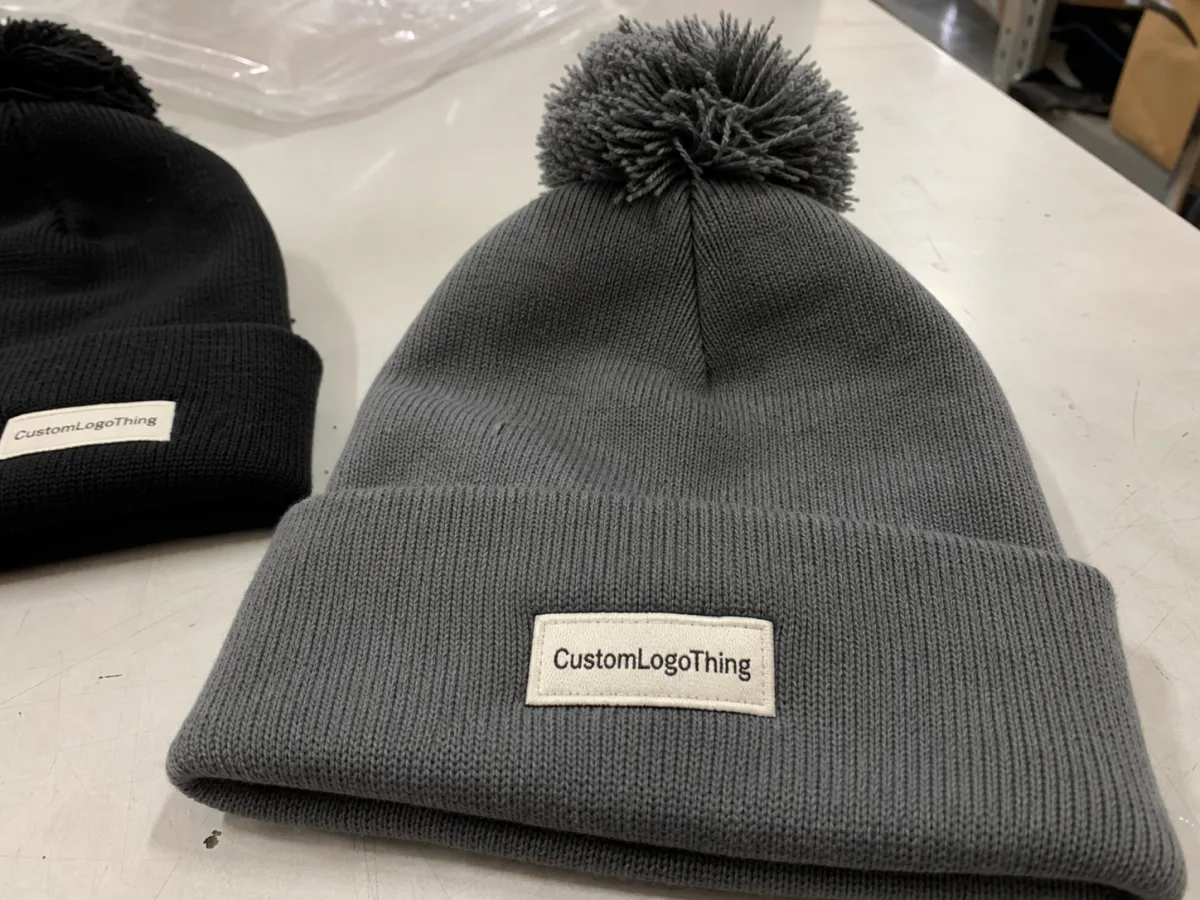
A beanie can outlive a giveaway tee by months, which is why buyers asking for a Pom Pom Beanies Bulk logo quote usually want three answers before anything else: delivered unit cost, logo feasibility, and whether the order can arrive before the cold-weather window closes.
That practical detail changes the buying math. A shirt may get one event wear. A winter beanie can show up on job sites, school pickup lines, ski lifts, brewery patios, team buses, and employee commutes for an entire season. From a branded merchandise point of view, that is strong repeat exposure for a compact item that fits easily into a gift kit, event box, retail display, or employee welcome pack.
Pom Pom Beanies also photograph well. The pom changes the silhouette, and it can carry school colors, team colors, or a brand palette without forcing extra detail into the logo. A navy cuff, cream body, and red-white-blue pom can communicate team identity before anyone reads the patch.
Before a supplier can price accurately, the core variables need to be clear: quantity, knit style, logo method, yarn color, pom construction, packaging, shipping destination, and in-hands date. Miss one of those, and the quote becomes an estimate with too many assumptions.
Typical buyers include corporate gifting teams, school stores, ski event planners, employee kit managers, construction safety programs, sports boosters, brewery merch buyers, and resale brands. Their priorities are not identical. A school booster may care most about margin at 250 pieces. A resort shop may need hang tags, UPC labels, and retail-ready cartons. A field crew program may put warmth, fit consistency, and reorder reliability ahead of decorative detail.
Buyer reality: the cheapest beanie is not always the lowest-cost choice if the logo method fails, the pom color looks wrong, or late freight turns a winter campaign into leftover inventory.
A useful quote should make the trade-offs visible. It should show what moves price, what affects the calendar, and what could compromise quality before production begins.
Product Details That Affect Brand Impact
The beanie build sets the tone before the logo does. A cuffed pom beanie gives the cleanest branding surface because the folded cuff can carry a woven label, faux leather patch, embroidered logo, chenille patch, PVC patch, or applique. A jacquard knit beanie can turn the whole hat into a pattern, but it needs bold artwork. A rib knit style gives more stretch and often feels more retail-grade in the hand.
Cuff height deserves more attention than it gets. A 2.5-inch cuff may fit a small woven label nicely, while a 3.5-inch cuff can carry a wider patch or embroidered wordmark without crowding the edge. Too short, and the mark feels pinched. Too tall, and the beanie can look bulky on smaller heads, especially if the knit is thick or fleece-lined.
Pom choices are not decorative trivia. They affect perceived value, team alignment, and photography. Common options include solid color, two-tone, tri-color, yarn pom, faux fur pom, removable pom, and team-color combinations. A removable pom can help with washing or retail flexibility, but it also adds a component that should be checked for attachment strength and consistency.
Yarn selection carries both cost and feel. Acrylic is the usual workhorse for bulk custom beanies because it is durable, color-flexible, and cost-controlled. Wool blends can lift the retail feel, though they often require clearer care instructions and may not suit every wearer. Recycled yarn can support sustainability-driven campaigns, but buyers should ask what claim can be documented rather than relying on a vague material description. Fleece lining helps in cold field use, yet it can change stretch, fit, and drying time.
Color matching needs a sober conversation. Exact Pantone matching is more realistic on patches, PVC labels, woven labels, printed hang tags, and belly bands than on dyed yarn. Yarn lots can vary, and tolerance ranges should be expected, especially for custom-dyed colors. If a brand color is non-negotiable, put the critical color on the patch or label and use a coordinated yarn shade for the beanie body.
For sustainability claims, packaging choices matter too. Buyers can reference standards and sourcing frameworks such as FSC for paper hang tags or belly bands, and broader waste reduction guidance from the EPA for packaging decisions. The beanie is the main product, but the label, tag, bag, and carton still affect the total brand impression.
Logo Methods, Artwork Limits, and Decoration Trade-Offs
The logo method can make or break a Pom Pom Beanies bulk logo quote. Not because one method is always superior, but because each has a different tolerance for detail, texture, color, and quantity.
Embroidery works well for classic corporate programs, especially with simple marks, initials, clean icons, or short wordmarks. It gives a familiar promotional look and can be efficient at moderate quantities. The limits appear with tiny legal text, thin outlines, gradients, and small lettering under roughly 0.2 inch high. Thread has physical thickness. It cannot behave like ink.
Woven patches handle small type better because the detail is built into the patch weave before sewing. They are a strong choice for detailed crests, school marks, sponsor logos, and multi-color designs. Faux leather patches create a retail winter-merch look, especially with debossed or laser-etched artwork, but they usually favor one-color or tonal designs. PVC patches add dimension and weather resistance, though they feel more sporty or tactical than soft retail.
Jacquard knit logos are different. They are not small-label decoration. They work best for bold shapes, stripes, team names, block letters, and all-over identity. Fine-line mascot art should usually be simplified before knitting. A circular crest may suit a centered patch, while a horizontal mark often fits a cuff more naturally. Logo shape matters more on a beanie than on a flat mailer or box because the surface curves and stretches.
| Logo Method | Best Use | Detail Capacity | Typical Trade-Off |
|---|---|---|---|
| Embroidery | Corporate logos, initials, simple icons | Medium | Small text and gradients do not translate well |
| Woven patch | Crests, schools, detailed marks | High | Adds patch setup and sewing steps |
| Faux leather patch | Retail-style winter merch | Medium | Usually best for tonal or one-color art |
| Jacquard knit | Large team identity and patterns | Low to medium | Higher minimums and simplified artwork |
| Woven label | Subtle branding and side tabs | Medium to high | Smaller visual impact from a distance |
Proofing should include a digital mockup at minimum. For premium gifts, resale programs, or custom knit work, a physical pre-production sample is a smart control point. Texture, stretch, thread contrast, patch stiffness, and pom balance are hard to judge on a flat screen.
Specifications to Confirm Before Production
An accurate quote starts with specifications, not adjectives. “Premium,” “warm,” and “high quality” are not production instructions. A supplier needs measurable details.
- Quantity: total units plus any color splits, such as 300 navy and 200 gray.
- Sizing: adult, youth, toddler, or mixed sizing.
- Fit: folded cuff, slouch fit, skull fit, or longer winter fit.
- Cuff height: commonly around 2.5 to 3.5 inches, depending on logo size.
- Material: acrylic, wool blend, recycled yarn, fleece-lined, or double layer.
- Knit pattern: rib knit, cable knit, waffle knit, flat knit, or jacquard.
- Logo method: embroidery, woven patch, faux leather, PVC, chenille, label, or knit-in design.
- Packaging: bulk pack, individual polybag, hang tag, belly band, size label, or retail carton.
Most adult beanies are sold as one-size-fits-most, but that label hides the real fit drivers. Stretch, knit density, lining, cuff depth, and pom weight all affect comfort. A fleece-lined beanie can feel warmer and more substantial, yet it may fit tighter than an unlined acrylic knit. Youth sizing needs more caution because a beanie that is too deep can slide over the eyes.
Knit construction changes both appearance and function. Rib knit gives stretch and broad appeal. Cable knit reads more winter retail. Waffle knit adds texture without complex art. Flat knit supports cleaner jacquard designs. Double-layer construction improves warmth but adds material cost and can slow drying after snow or rain exposure.
For resale, compliance and labeling deserve early attention. Fiber content, country of origin, care instructions, hang tags, and barcode labels may be needed depending on the distribution channel. For organized retail programs, carton labels and inner pack counts matter as much as the decoration method because receiving teams often reject or delay shipments that arrive without the correct labeling structure.
A practical quote checklist saves days. Send the logo, desired beanie color, pom color, quantity, delivery ZIP code, packaging requirements, and in-hands date in one request. If the project connects to a larger merch or uniform program, the Wholesale Programs team can compare stock-decorated and fully custom paths side by side.
Pricing, MOQ, and Unit Cost Drivers
Bulk pom beanie pricing is driven by quantity, yarn choice, logo method, color count, patch material, sample requirements, packaging, duties, and freight. A serious Pom Pom Beanies Bulk logo quote should not hide those assumptions.
Minimum order quantity depends on the production route. Decorated stock beanies usually allow lower minimums because the base product already exists. Fully custom knit patterns, custom yarn colors, custom pom combinations, or jacquard artwork often require higher quantities because yarn, machines, sampling labor, and setup time must be allocated before the first finished unit is packed.
As a planning range, simple decorated stock beanies often sit in the lower cost band at larger quantities, while fully custom retail-grade builds climb once sampling, special labels, custom colors, and freight are included. Embroidery can be efficient for simple logos. Woven or faux leather patches may be more economical for detailed art across larger runs because the detail is handled in the patch, not by dense thread stitching on every unit.
Ask for cost categories in plain language: setup fees, digitizing, sample charges, rush fees, special labeling, hang tags, individual polybags, export cartons, duties, split shipments, and freight. A quoted unit price of $6.20 can become less attractive than a $6.75 option if the first quote excludes inbound freight, patch setup, or carton labeling.
| Cost Driver | Why It Matters | Buyer Question to Ask |
|---|---|---|
| Quantity | Higher volume spreads setup and sampling cost | Where are the price breaks? |
| Logo method | Embroidery, patches, and jacquard use different labor | Which method best fits this artwork? |
| Yarn and lining | Wool blends, recycled yarn, and fleece add cost | What is the warmest option within budget? |
| Packaging | Retail tags, bags, and labels add labor and materials | Is packaging included in the unit price? |
| Freight | Air, ground, and split shipments change landed cost | What is the delivered cost to my ZIP code? |
Think in landed cost. That means the total delivered cost divided by the number of usable beanies received, not the prettiest unit price on a spreadsheet. A good quote should show specs, assumptions, MOQ, production method, lead time, freight basis, and exclusions. Anything less invites budget surprises.
Production Process and Timeline From Art to Delivery
A typical custom beanie order follows a predictable chain: quote request, artwork review, digital mockup, sample approval if needed, deposit or purchase order, bulk production, quality control, packing, and shipping. The clock usually starts after artwork, specifications, payment terms, and mockup approval are complete. It does not start with the first inquiry.
That distinction matters. A buyer may send an email on Monday, revise the logo on Wednesday, change the pom color on Friday, and still feel the order has been “in production” for a week. It has not. The production calendar begins when the supplier has clear instructions and authorization to proceed.
Standard decorated stock beanies can move faster than fully custom knit beanies. Available blanks remove yarn procurement and knitting from the schedule. Custom-dyed yarn, jacquard designs, physical samples, and overseas freight add calendar time. A typical plan may include several business days for artwork and proofing, additional time for sampling if requested, then bulk production and transit.
Rush orders may be possible, but they usually require trade-offs: fewer beanie colors, available blanks only, simpler decoration, no physical sample, limited packaging, or air freight. Air shipping can protect a deadline, but it can also punish the budget. For bulky winter headwear, freight density is not always friendly.
Set two dates in the quote request: the in-hands date and the must-ship date. The in-hands date is the real deadline. The must-ship date gives production and logistics a target that accounts for carrier movement, receiving, kit assembly, or event staging.
Peak winter demand compresses capacity. Many buyers underestimate the risk in approvals and freight more than in the knit itself. A two-day delay in mockup approval can collide with a production queue or carrier congestion, and the event date will not move just because the beanies are still in cartons.
Quality Control Checks That Prevent Expensive Reorders
A logo placed 0.5 inch too high can make hundreds of otherwise usable beanies feel wrong. A pom in the wrong shade can clash with the entire brand palette. Small errors scale brutally in bulk orders.
Quality control should cover logo size, placement, stitch density, patch alignment, pom attachment, cuff consistency, yarn color, label accuracy, and packaging count. For embroidered logos, thread breaks and fill density need inspection. For patches, check edge stitching, adhesive behavior if applicable, and whether the patch sits flat on the cuff. For jacquard, confirm that the knit pattern is readable when stretched on a head form, not just laid flat.
Samples matter most for premium, retail, or high-visibility orders. A mockup can show position, but it cannot tell you whether a faux leather patch feels stiff, whether the cuff rolls awkwardly, or whether the pom droops after handling. Sampling adds time and cost, but a failed bulk run costs more.
Textile production also has tolerances. Slight variation in knit tension, yarn shade, and finished dimensions is normal. The smart move is to define acceptable tolerance before production. For example, a small placement tolerance may be acceptable, while a logo color shift may not be. Spell that out early.
Carton and fulfillment checks are easy to overlook. Mixed-color assortments, size splits, inner packs, hang tags, carton marks, and case labels should match the receiving plan. If 1,000 beanies are going into employee kits, a bulk carton with random color ratios can create extra sorting labor. If units are going to retail, missing hang tags or incorrect barcode labels can block receiving.
Winter merch is touched, worn, photographed, and worn again. Defects stay visible longer than on many disposable promo items. That is why a careful quote should leave room for QC expectations, not just unit pricing.
Next Steps to Request a Quote Without Delays
The fastest quote requests are not the shortest. They are the clearest. To get a useful Pom Pom Beanies bulk logo quote, prepare the facts a production team needs before pricing begins.
- Target quantity: include total units and any color splits.
- Delivery ZIP code: freight changes the delivered cost.
- In-hands date: give the real deadline, not a rough season.
- Logo file: vector AI, EPS, or PDF is preferred.
- Beanie colors: list body, cuff, and pom preferences.
- Decoration method: name a preference or ask for a recommendation.
- Budget range: helps separate stock and custom routes quickly.
- Packaging: bulk pack, individual bag, hang tag, belly band, or retail label.
Vector art is the cleanest starting point. A high-resolution PNG can help as a visual reference, but it may slow production if the logo must be redrawn. If the mark includes fine lines, gradients, shadows, or small text, ask for a decoration recommendation instead of forcing a method that may not reproduce well.
Consider asking for two specification paths. One can be the fastest option using available blanks and a simple logo application. The other can be the custom option with selected yarn colors, pom combinations, upgraded patch materials, and retail packaging. That comparison gives buyers a real commercial decision: speed versus brand control.
State the use case. Giveaway, uniform, employee gift, team merch, and resale orders do not carry the same quality expectations. A resale program may need hang tags, fiber labels, care instructions, and case labeling. A one-day giveaway may prioritize price and delivery. A uniform program may need reorder consistency across multiple months.
Custom Logo Things should return item specs, decoration details, MOQ, estimated unit cost, setup charges, production timeline, shipping assumptions, and sample options. If artwork and a deadline are ready, send the project details through Contact Us. For larger seasonal programs, wholesale pricing and repeat-order planning can be reviewed through Wholesale Programs.
Complete specs up front make the process cleaner: unit price and delivered cost can be compared, artwork risks can be addressed early, and the final product has a better chance of arriving as warm, wearable merch rather than a rushed compromise.
FAQ
What information do I need for a pom pom beanies bulk logo quote?
Send quantity, logo file, preferred beanie and pom colors, decoration method, delivery location, in-hands date, and any packaging needs such as tags, individual bags, or retail labels. If decoration is undecided, provide the logo and intended use so the supplier can recommend embroidery, a woven patch, faux leather patch, label, or jacquard knit.
What is the typical MOQ for custom logo pom pom beanies?
MOQ depends on whether the order uses stocked blank beanies or fully custom knit production. Decorated stock styles usually allow lower minimums, while custom yarn colors, jacquard logos, special pom combinations, and custom labels often require higher quantities.
Which logo method is best for bulk pom pom beanies?
Embroidery works well for simple corporate logos, woven patches are better for small detail, faux leather patches create a retail look, and jacquard knit is best for bold all-over branding. The best choice depends on logo complexity, budget, quantity, and whether the beanie is for giveaway, uniform use, team merch, or resale.
How long does a bulk logo beanie order take?
Timeline depends on blank availability, artwork approval, sample requirements, production capacity, and shipping method. Orders move fastest when specs are complete, artwork is production-ready, and the buyer approves the mockup without multiple revision rounds.
Can I get a sample before placing a large pom pom beanie order?
Yes. A sample is often recommended for retail programs, premium gifts, detailed logos, or custom knit designs. Sampling can add time and cost, but it reduces risk by confirming color, fit, logo placement, patch texture, and pom quality before bulk production.


