Soap Pom Pom Beanies bulk order planning looks simple until one small detail changes and the whole run has to be recalculated. A 5 mm adjustment to cuff depth, a different pom attachment, or a late switch from a woven label to embroidery can change yarn consumption, sewing time, inspection steps, and carton counts. The product may still look like a basic winter hat on the screen, but in production it behaves like a stitched, decorated, packed retail unit with several failure points.
That is why the strongest orders start with specifications rather than artwork. A clean logo file is useful, but it does not tell the supplier how tall the crown should be, how firm the cuff needs to feel, whether the pom should be sewn or tied, or how the finished beanies need to arrive at receiving. Those decisions carry cost, and they are easier to manage before a purchase order is issued.
The same style often has to satisfy different channels at once: retail programs, winter promotions, school fundraisers, employee gifts, event merchandise, and nonprofit resale. Each channel weighs the details differently. Retail buyers care about shelf consistency and perceived value. Promotions teams often care about speed and budget discipline. Fundraisers need an item that feels good enough to sell without pricing itself out of reach. If those priorities are not defined early, planning turns into a slow chain of revisions, and each revision adds cost before the goods leave the production floor.
Why bulk order planning breaks budgets
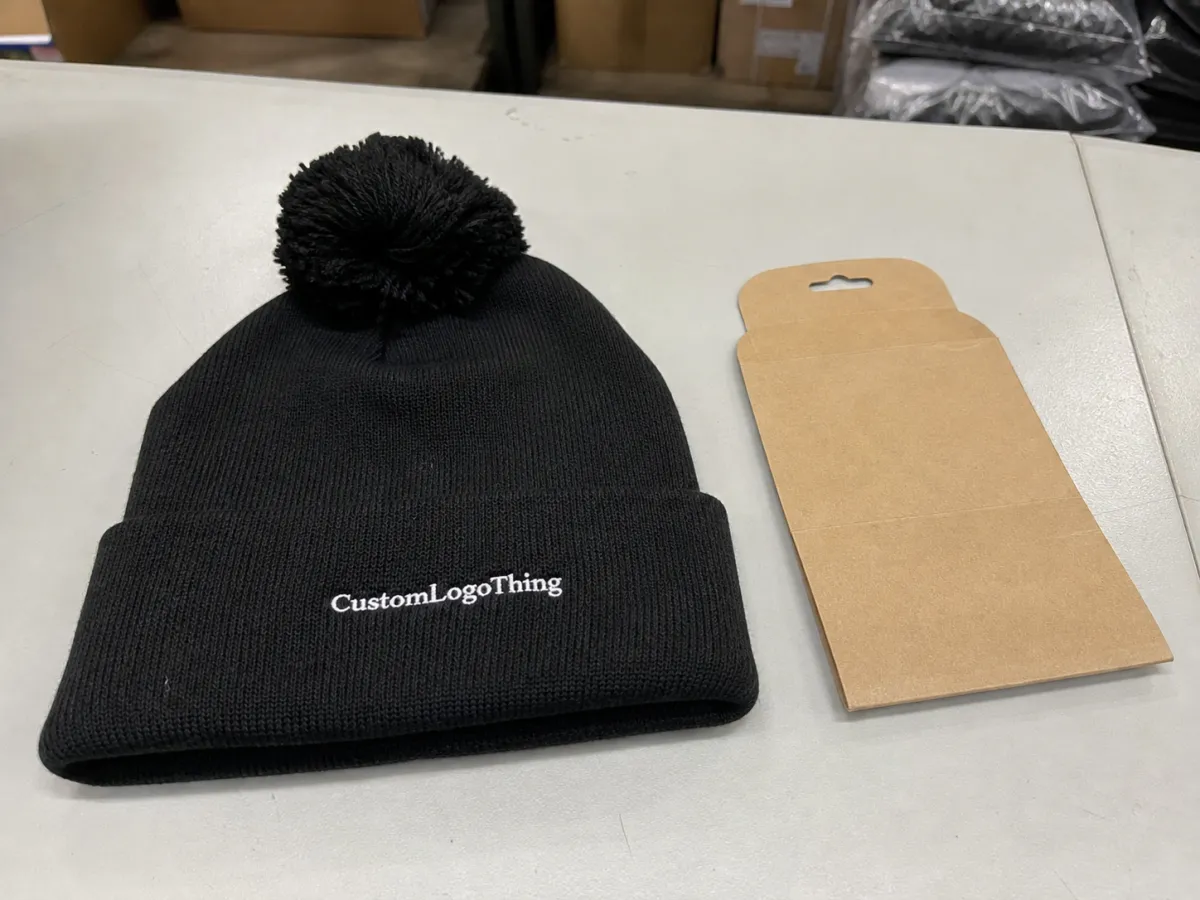
The budget usually breaks because the first quote is built on assumptions. Buyers see a knit hat and expect the pricing logic to behave like a simple printed tee or a stock tote bag. A pom pom beanie has more variables: yarn composition, knit gauge, cuff construction, crown height, pom diameter, attachment method, decoration, labeling, packaging, and cartonization. Each variable can add labor, setup, material usage, or inspection time.
Small changes move quickly through the cost structure. A deeper cuff increases yarn use and can alter the way the hat sits on the head. A larger pom may look better in a product photo, but it can slow packing and create bulkier cartons. Mixed-color assortments can improve merchandising, yet every color needs count control, shade consistency, and proper carton labeling. On a spreadsheet those lines look harmless. In a warehouse, they determine whether receiving is clean or frustrating.
The real cost is rarely just the quoted unit price. Sampling rounds, artwork corrections, repacking, rush freight, late label changes, and missed launch dates all belong in the budget conversation. A low initial quote can become expensive if it excludes decoration assumptions, packaging requirements, or freight terms. Buyers should treat the first conversation as a build review: what exactly is being made, how many units are needed, and by what date must they be ready to sell or distribute?
Good bulk planning is not about chasing the lowest sticker price. It is about locking a repeatable build early enough that fit, shade, pom placement, decoration, and packing stay consistent across hundreds or thousands of units.
For retail seasonal lines, the tolerance for inconsistency is even lower. One undersized pom makes a shelf look uneven. One loose cuff changes the perceived quality of the whole display. One unclear barcode or carton label can slow inbound receiving. These are not dramatic mistakes by themselves, but several small misses can push a shipment off the critical path.
Product details buyers need before requesting a quote
A useful quote starts with a useful product brief. The supplier needs to know whether the beanie is intended for fashion merchandising, cold-weather wear, promotional resale, staff gifting, or event distribution. That answer changes the recommended yarn, knit density, lining options, decoration method, and packaging level. A soft acrylic fashion beanie with a relaxed fit should not be quoted the same way as a tighter winter style intended for colder outdoor use.
Write the core build in plain terms: knit type, cuff style, crown height, pom size, yarn weight, and whether the hat is single-layer, double-layer, or lined. If the target audience is known, include it. A school fundraiser may need a sharp-looking product at a moderate price, while a premium retail drop may justify heavier yarn, a better patch, cleaner hang tag stock, and a more controlled carton plan.
Decoration strategy needs equal attention. Embroidery, woven labels, woven patches, faux leather patches, and direct decoration all change handling during production. Embroidery adds stitch time and can distort soft knits if the design is too dense. A woven label is usually simpler, but placement still has to be measured and approved. A patch can lift the retail look, though it usually adds another sewing or heat-press step. The artwork file alone does not answer these questions; the decoration method has to be named.
Color planning deserves its own line in the brief. Single-color runs are easier to control and often cheaper. Multi-color assortments may sell better, especially for school colors or seasonal merchandising, but they require a tighter packing plan. If the receiving team cannot quickly identify each shade and count, the labor saved on the buy side can disappear during sorting.
- State total quantity and the planned quantity by colorway.
- Define the base build with cuff depth, crown height, lining, yarn, and pom size.
- Choose decoration method before asking for final pricing.
- Share packaging needs such as polybags, hang tags, inserts, barcode labels, or master carton labels.
- Identify the sales channel so the supplier can quote to the correct quality target.
For soap Pom Pom Beanies bulk order planning, this early discipline prevents a common problem: two suppliers quoting two different products while the buyer assumes the numbers are comparable. If one quote includes hang tags and individual polybags while another assumes bulk packing, the lower number may not be lower at all. It may simply be incomplete.
Specs that affect fit, decoration, and shelf appeal
The measurements that matter most are the ones that affect both wear and presentation. Crown height, cuff width, stretch range, opening width, and pom diameter determine how the beanie sits on the head and how balanced it looks on a shelf or display hook. A pom that looks playful on a sample can look oversized if the production crown comes in slightly shorter than approved. A cuff that creeps taller by a few millimeters can crowd the logo area.
Set tolerances in the spec sheet rather than relying only on a reference photo. A practical spec might define crown height, cuff depth, logo placement from the cuff edge, pom diameter, and acceptable measurement variance after relaxation. Knits stretch, and finished measurements can change with yarn, gauge, steam finishing, and packing pressure, so the goal is not unrealistic precision. The goal is a range that protects fit and keeps the finished goods visually consistent.
Material choice drives feel, warmth, durability, and cost. Acrylic is common because it is cost-effective, color-flexible, and widely used in beanies. Polyester blends can improve resilience or support certain textures. Wool blends may bring a warmer hand feel, but they usually raise cost and may require more care-label attention. Lined options, such as fleece or brushed tricot, improve comfort in colder conditions and add perceived value, though they also add sewing time, bulk, and weight.
Wash behavior matters more than many first-time buyers expect. Shape retention, pom stability, label durability, and dye consistency all need to be considered, especially for retail programs where repeat wear is expected. Promotional programs may accept a simpler build if the priority is quick distribution, but even inexpensive orders should avoid weak seams, loose pom attachments, and labels that curl after handling.
Decoration placement is one of the easiest places to lose control. A logo centered on a flat mockup may sit too low when the cuff stretches on a head form. Dense embroidery can create puckering. Patches need enough stable surface area to lie flat. If the beanie has a prominent rib knit, the supplier should confirm whether the decoration will sit cleanly across the ribs or whether a label or patch is the safer choice.
Presentation adds another layer of cost and control. Hang tags, belly bands, polybags, insert cards, barcode labels, and carton counts all shape the final customer experience and the receiving workflow. A clear insert card can do more for perceived value than a larger logo, especially if the product is being sold through a school, team shop, or seasonal retail fixture. If paper stock is part of the requirement, ask for FSC-certified material where possible; FSC remains a practical benchmark for responsible paper sourcing.
Outer cartons deserve the same attention. Beanies are soft, but poms create uneven volume, and over-compressed packing can flatten the finished look. If the order will move through distribution centers or parcel channels, ask how the packout was designed and whether the carton strength matches the route. The guidance at ISTA is useful when a shipment needs better protection through common handling environments.
A simple habit helps: write the spec sheet as if the person packing the carton has never seen the product before. If dimensions, counts, color splits, label placement, and carton marks are unambiguous, the order moves faster and the risk of repacking drops.
Pricing, MOQ, and quote factors that change unit cost
Price is a bundle of variables, not a single number. Quantity usually has the largest effect, followed by yarn, color count, decoration complexity, packaging, inspection requirements, and delivery destination. A basic acrylic beanie with a woven label will price differently from a lined style with embroidery, Custom Hang Tags, and mixed-color cartons. For that reason, buyers should ask for a priced spec breakdown rather than a single total with no context.
MOQ is where many first orders get stuck. Lower minimums carry higher unit costs because setup, sampling, machine time, and purchasing work have fewer pieces to absorb them. Larger commitments spread those costs more efficiently, but only if the buyer can use the inventory. For many bulk knit programs, a workable minimum may sit around 300-1,000 pieces per color and build. Custom yarn, special dye lots, complicated decoration, or retail packaging can push that floor upward.
There is no universal minimum that applies to every beanie. Stock colors with simple labels are easier to run at lower quantities. Custom color matching, specialty yarns, private-label packaging, and multiple approval samples require more coordination. If a supplier promises a very low MOQ and a very low price on a heavily customized style, ask which parts of the build are truly custom and which are stock substitutions.
Quote surprises tend to appear in familiar places: rush timelines, extra sample rounds, special labeling, mixed-color packouts, carton relabeling, and multi-destination shipping. Freight terms also matter. A unit price can look attractive until duties, inland delivery, carton handling, and storage are added. If the order crosses borders or moves through a third-party warehouse, ask for a landed-cost view before approving the purchase.
| Option | Typical unit impact | What it changes |
|---|---|---|
| Woven label | +$0.06-$0.16 | Simple branding with low setup time |
| Embroidery | +$0.18-$0.45 | Stronger front presentation with stitch and placement control |
| Patch application | +$0.12-$0.30 | More substantial retail look with an added attachment step |
| Hang tag and polybag | +$0.08-$0.25 | Retail presentation, barcode handling, and cleaner receiving |
| Mixed-color carton sorting | Varies by run | More labor and tighter inventory control |
These ranges are not fixed quotes. They are realistic pricing deltas a buyer may see during soap pom pom Beanies Bulk Order Planning, especially on mid-volume orders where labor and setup still matter. If a supplier gives a flat number without separating base product, decoration, packaging, and freight assumptions, the quote is not ready for purchase approval.
Production steps, lead time, and approval milestones
A clean production flow usually follows a predictable sequence: quote, spec review, artwork check, sample or mockup approval, production, inspection, packing, and dispatch. Each step should create a written approval. If the final color, logo placement, and carton count live in separate email threads, someone will eventually miss a change.
Lead time starts after approvals are complete, not after the first inquiry. For a straightforward run using stock yarn and simple branding, production may take roughly 12-20 business days after final approval. Add custom labels, lined construction, special packaging, color-matched yarn, or a larger multi-color assortment, and the schedule can move to 25-35 business days or more depending on volume and material availability. Hard launch dates need a buffer because sampling, packing, and freight rarely compress evenly.
The delays are usually predictable. Artwork arrives in the wrong format. A color reference is described verbally instead of tied to a standard. The logo is approved for a flat mockup but not checked against the real cuff height. Packaging is changed after production begins. Each issue looks manageable alone, but together they consume the buffer that was supposed to protect the ship date.
Use one point of truth. A single spec sheet, one approved visual, one packaging instruction, and one named final approver will do more for the schedule than another round of status calls. If sourcing, merchandising, and marketing all need input, collect that input before the supplier receives final approval. After that point, changes should be treated as cost and schedule changes, not casual edits.
Inspection should be defined before goods are packed. Typical checks include cuff height, crown measurement, pom attachment strength, decoration placement, label accuracy, shade consistency, loose threads, stains, needle damage, and carton counts. For decorated beanies, inspect the logo area with the cuff folded as it will be sold, not only with the hat laid flat. That is the view the customer will actually see.
For export shipments or multi-stop distribution, confirm the outer packout early. Ask whether cartons are sized to avoid over-compression, whether mixed colors are separated or clearly marked, and whether the packing method fits the receiving channel. The objective is not only to make the beanie correctly; it is to make the full shipment arrive ready to count, scan, display, or distribute.
What to compare in a supplier for repeat bulk runs
Price matters, but repeatability matters more if the program will reorder during the season. Ask how the supplier controls color matching, sample retention, size consistency, decoration placement, and final inspection. A one-time bargain is not helpful if the second purchase order arrives with a different cuff height or a slightly darker yarn shade.
The best supplier questions are practical. Can they repeat the same cuff depth across batches? Can they keep pom attachment consistent? What tolerance do they use for logo placement? How do they separate color lots during packing? Do they keep the approved sample or production reference for reorders? These are not flashy topics, yet they are the details that protect sell-through and reduce complaints.
Communication quality is another filter. Clear quoting, fast revision responses, and proof-based approvals matter because wholesale orders fail when small changes are not tracked. If revised art, revised pack counts, and revised delivery terms are sent in separate messages with no updated master spec, the buyer carries unnecessary risk. A reliable supplier organizes the information so procurement, marketing, and receiving can all work from the same record.
For buyers managing a larger sourcing plan, the beanie program should follow the same discipline as other seasonal goods. If your team already works through Wholesale Programs, keep the process consistent: documented spec, approved sample, locked carton plan, and one clear owner for sign-off. That kind of control can feel tedious during setup, but it is cheaper than fixing mislabeled cartons or remaking decoration after approval.
Look for these supplier signals:
- Consistent sample quality across revisions.
- Written approval records for color, artwork, measurements, and packaging.
- Clear MOQ disclosure by decoration type and color count.
- Practical advice on carton counts, compression, and freight handling.
- Reorder estimates that reference the approved spec rather than starting over.
If a vendor cannot separate base garment cost, decoration cost, packing cost, and freight assumptions, the quote still needs work. Transparency is what keeps repeat orders from drifting into surprise expense.
How to lock the order before production starts
Before issuing a purchase order, build a short spec sheet that lists quantity, color count, target price, yarn or material preference, cuff depth, crown height, pom size, decoration method, packaging needs, and delivery window. Attach the logo file, reference images, and any required barcode or labeling instructions. This is the practical center of soap Pom Pom Beanies Bulk order planning: one document that forces every cost-driving decision into the open.
Then confirm the approval path. Decide whether the order needs a physical sample, a pre-production sample, a digital mockup, or all three. A digital mockup can move quickly, but it will not show knit tension, pom volume, hand feel, or how embroidery behaves on the cuff. A physical sample takes longer, but for retail and repeat programs it often prevents expensive assumptions.
Carton details should be locked at the same time as the product. Confirm units per inner pack if used, units per master carton, color separation, carton markings, barcode placement, and whether individual polybags are required. If the goods are going to a retailer, school store, event site, warehouse, or fulfillment center, the receiving environment should guide the packout. Packing for a backroom volunteer team is different from packing for a scanned retail dock.
If your team needs a broader ordering reference, the FAQ page can help settle common questions before the order moves into approval. The key is to remove unknowns early. Every open detail becomes either a delay, a change order, or a compromise made under schedule pressure.
My practical view is straightforward: treat the beanie as a finished retail unit, not a loose accessory. The yarn, fit, pom, decoration, packaging, carton, and approval trail all shape the success of the order. Once those pieces are clear, the buy becomes controlled instead of reactive.
A strong bulk order comes down to three questions: what is the exact build, what does each upgrade add to the unit cost, and who has final authority to approve the version that goes into production? Answer those before the factory starts, and the shipment has a much better chance of landing on time, on budget, and ready to move.
What is the usual MOQ for soap pom pom beanies bulk orders?
MOQ depends on yarn availability, decoration method, color count, and packaging requirements. For a simple build, many suppliers may work around 300-1,000 pieces per color, while custom yarns, layered decoration, lined construction, or private-label packaging can push the minimum higher. Larger quantities usually reduce unit cost because setup and sampling expenses are spread across more pieces.
How long does production usually take after approval?
Lead time starts after artwork, specs, and sample or mockup approvals are complete. A simple stock-yarn order may move in about 12-20 business days after final approval, while custom labels, mixed-color sets, lining, or special packaging may extend production to 25-35 business days or more. The cleaner the approval trail, the easier it is to protect the ship date.
Can I mix colors or styles in one bulk order?
Yes, but mixed assortments need tighter planning for inventory, packing, and carton labels. More colors can improve merchandising and fundraising appeal, but they may increase setup time, MOQ, inspection work, or unit cost. Ask whether each color lot can be packed and labeled separately so receiving is easier on your side.
What details change the unit cost the most?
Quantity, yarn choice, decoration complexity, lining, packaging, and freight terms usually have the strongest effect on price. Rush production, multiple colorways, special labels, and mixed-carton sorting can add cost even when the base beanie is simple. For cross-border orders, landed cost matters more than the factory unit price alone.
What files should I send to start a quote?
Send the target quantity, color preferences, logo file, preferred decoration method, delivery date, packaging requirements, and any reference sample or photo. If you know the desired cuff depth, crown height, pom size, or carton instructions, include those too. A complete brief produces faster quoting and fewer revision rounds.


