Buyer Fit Snapshot
| Best fit | packaging buyers who need clearer specs, stronger internal paths, and repeatable quote decisions where brand print, material, artwork control, and repeat-order consistency matter. |
|---|---|
| Quote inputs | Share finished size, material target, print colors, finish, packing count, annual reorder estimate, and delivery region. |
| Proofing check | Approve dieline scale, logo placement, barcode or warning zones, color tolerance, and any recyclable or compostable wording before bulk production. |
| Main risk | Vague material claims, crowded artwork, or missing packing details can create delays even when the unit price looks attractive. |
Fast answer: Custom Postal Boxes With Logo: Branding That Ships Well should be specified like a repeatable production item. The safest quote includes material, print method, finish, artwork proof, carton packing, and reorder notes in one written spec.
What to confirm before approving the packaging proof
Check the product dimensions against the actual filled item, not only the sales mockup. Ask for tolerance on folds, seals, hang holes, label areas, and retail display edges. If the package carries a logo, QR code, warning copy, or legal claim, reserve that space before decorative graphics fill the panel.
How to compare quotes without losing quality
Compare board or film grade, print process, finish, sampling route, tooling charges, carton quantity, and freight assumptions side by side. A lower quote is only useful if the supplier can repeat the same color, closure quality, and packing count on the next order.
The shipping carton gets seen before the product, which is why custom postal Boxes With Logo do more than hold a parcel; they decide whether the customer feels “cheap shipping” or “this brand has its act together” the second the box lands. That first impression is not decoration. It is package branding doing real work while the courier is still walking back to the van.
For brands and packaging buyers, the practical question is blunt: how do custom postal boxes with logo protect the product, keep costs under control, and still make the shipment look intentional? The answer lives in packaging design, board strength, print method, and the plain reality of shipping stress. Not glamorous. Still the part where strong product packaging decisions get made.
A plain box can deliver a product. A branded box can deliver a feeling. If the box is flimsy, though, it delivers a complaint.
Custom Postal Boxes With Logo: Why They Matter Fast
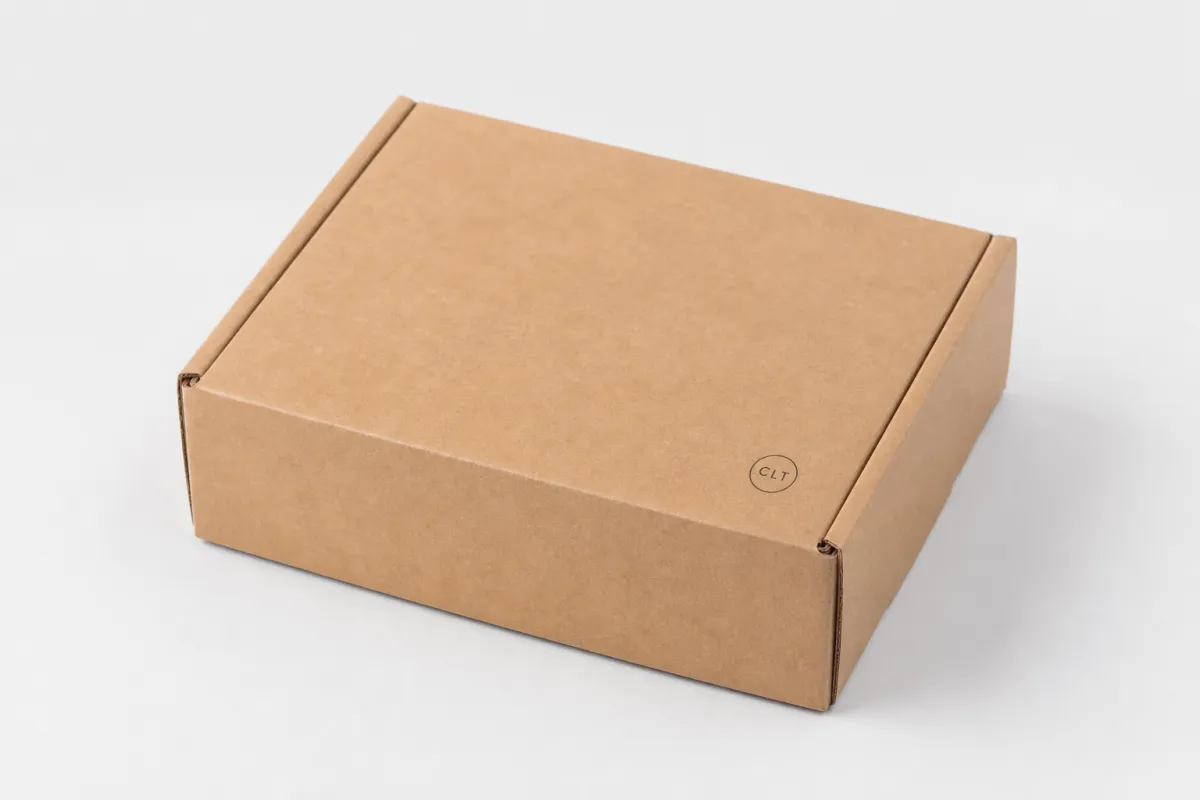
Custom postal boxes with logo matter because the box is often the first branded object a customer touches. The shipping carton arrives before the insert card, before the tissue paper, before the product itself. The box is already doing brand work, whether the budget line acknowledged it or not. Ignore that, and you end up paying for shipping twice: once in freight, and again in lost perception.
What are custom postal boxes with logo, exactly? They are mailer-style cartons built to ship products safely while carrying a logo, brand message, color system, or printed artwork. Most use tuck-in flaps with locking tabs, which helps them stay closed without a separate outer shipper. In practice, they sit between plain corrugated shipping boxes and higher-end retail packaging. That middle ground is why they work so well for ecommerce.
Here is the practical upside. A plain white box can protect a product, but a branded box makes a small order feel deliberate. A $28 candle, a skincare set, or a premium sock drop looks more polished inside custom postal boxes with logo than inside an unmarked carton from a warehouse stack. Customers notice that difference, even if they do not write a five-paragraph review about it.
They fit especially well for ecommerce orders, subscription kits, PR mailers, influencer seeding, gift sets, and retail-to-door shipping. Those are the jobs where the parcel itself is part of the experience. If your brand ships dozens or thousands of units, custom postal boxes with logo can also reduce the need for extra inserts, generic tape, or outer branding stickers. Cleaner workflow. Cleaner impression.
There is also a cost argument, and it is not fluffy. Strong branded packaging can reduce complaints about dinged corners, vague presentation, or packaging that looks borrowed from somebody else’s supply closet. That does not mean you need foil on everything. It means the box should match the product’s value, the customer’s expectation, and the shipping lane it will survive.
From a packaging buyer’s point of view, custom postal boxes with logo are not fancy throwaway packaging. They are a controllable part of the product experience. That is the whole point. The box should support the product, reinforce the brand, and survive transit without pretending it lives in a vacuum.
How Custom Postal Boxes With Logo Work
The structure matters first. Custom postal boxes with logo usually use corrugated board or heavy paperboard with a mailer-style construction: side walls, tuck flaps, and locking tabs that create a self-closing package. That design gives the box compression resistance and keeps it from popping open when stacked, tossed, or dragged across a warehouse floor. Which, frankly, is where packaging goes to prove its worth.
For lighter products, paperboard mailers can work well. For heavier or more fragile items, corrugated is usually the safer choice. E-flute often gives a neat, premium profile with decent print quality, while B-flute or C-flute can add more crush protection. The right choice depends on product weight, fragility, and how rough the shipping route tends to be. Custom postal boxes with logo should be designed around that reality, not around a pretty mockup.
Printing methods change the result. Digital print is often the best fit for short runs and faster turnaround because it avoids plate-heavy setup. Flexographic printing can make sense for repeat orders and simpler artwork at larger quantities. Offset is useful when you need sharper, more consistent image quality across higher-volume runs of Custom Printed Boxes. Each option has tradeoffs. Digital is flexible. Flexo is efficient. Offset is precise, but it is usually less forgiving on setup and budget.
Before production, a supplier will typically need dimensions, product weight, logo files, brand colors, finish preferences, and whether inserts are required. If the box ships as the outer carton, it needs more structural attention than a display-style mailer that sits inside another shipper. That distinction changes board grade, print placement, and how much empty space is acceptable. Too much empty space and the unboxing feels sloppy. Too little and you are forcing the product into a fight it will not win.
Finishes are the last layer. Matte gives a clean, low-glare look. Gloss adds punch and contrast. Soft-touch feels premium, but it is not always the smartest choice if the box will be handled a lot. Spot UV can highlight a logo or graphic detail. Embossing adds texture, but it also adds cost and can complicate timing. Custom postal boxes with logo can absolutely use these effects, but only if the finish supports the brand and the shipping use case.
The best custom postal boxes with logo usually follow a simple order: product first, structure second, graphics third. That hierarchy keeps the box useful. Anything else turns the project into design theater.
Custom Postal Boxes With Logo: Cost and Pricing Factors
Pricing for custom postal boxes with logo comes down to a few core levers: box size, board grade, print coverage, number of colors, finishing, quantity, and whether the project needs special tooling or a custom dieline. Bigger boxes use more material. Heavier board costs more. Full coverage print adds ink and setup. Premium finishes add another layer of cost that looks small on paper and larger on the invoice. Packaging has a habit of doing that. Every nice detail wants a slice.
Small runs usually cost more per unit, but they are safer when you are testing a new line. Larger runs bring the unit cost down, but now you are holding inventory and betting that the design will age well. For custom postal boxes with logo, that tradeoff matters. A startup launching 500 units does not need the same economics as a brand sending 20,000 monthly orders. The wrong quantity can bury cash flow faster than a bad print job.
Ballpark ranges help. For a standard mailer in the small-to-mid size range, a simple one-color printed box might fall around $0.40-$0.90 per unit at higher volumes, while shorter runs can sit closer to $0.85-$1.50 or more depending on size and setup. Add full-bleed print, specialty coatings, embossing, or inserts, and the price rises quickly. Premium custom postal boxes with logo can easily move into the $1.50-$3.50+ range at low quantities if the spec is doing a lot. That is not overpriced by default. It is just what happens when you ask cardboard to act fancy.
| Option | Best For | Typical Unit Cost | Notes |
|---|---|---|---|
| Single-color digital mailer | Testing, early-stage ecommerce, subscription trials | $0.85-$1.50 at low quantity; lower at scale | Fast setup, simple branding, good for first runs of custom postal boxes with logo |
| Full-coverage printed mailer | Established brands, repeat shipments, stronger shelf appeal | $1.10-$2.40 depending on size and finish | More visual impact, better for branded packaging programs |
| Premium finish mailer | PR kits, gift sets, higher-margin products | $1.80-$3.50+ | Soft-touch, spot UV, embossing, or interior print can push cost up fast |
| Heavy-duty corrugated shipper | Fragile, dense, or high-value products | Varies widely with board grade | More protection, less risk, often worth it if damage is expensive |
Hidden costs matter too. Dieline setup, plate charges, sampling, freight, inserts, and warehousing fees can change the true cost of custom postal boxes with logo. A quote that looks cheap until freight lands is not a bargain. It is a delay with better branding.
Minimum order quantities also shape the decision. Low MOQs let smaller brands test colors, sizing, and customer response. Strict MOQs can make premium options tough for niche products. That is why I usually advise comparing the box against the damage rate, return rate, and perceived value, not just the unit price. A cheap box that crushes products is not cheap. It is expensive in a quieter way.
If you want a packaging benchmark, industry testing groups such as ISTA transit testing standards help frame how cartons are evaluated for shipping stress. That does not replace supplier judgment, but it gives you a smarter way to ask for durability. For sustainability claims and recycled content guidance, the FSC certification information pages are worth checking before you put green language on the box.
Bottom line: custom postal boxes with logo should be priced against function, not fantasy. If the box survives transit, looks right on arrival, and reduces customer friction, the spend is usually justified.
Process and Timeline for Custom Postal Boxes With Logo
The production flow for custom postal boxes with logo is pretty straightforward once the inputs are clean. First comes the brief: dimensions, product weight, branding goals, and shipping method. Then the supplier prepares or confirms the dieline. After that comes artwork layout, proofing, sampling, production, finishing, packing, and shipment. Simple list. Not always a simple calendar.
Timelines vary, but the rough pattern is consistent. Artwork proofing can move in a couple of days if the files are ready. Structural sampling takes longer because the box has to be cut, folded, and checked for fit. Mass production often runs faster once approval is locked. For custom postal boxes with logo, a simple digitally printed run might be done in roughly 10-15 business days after approval, while more complex projects with custom sizes or special finishes may stretch to 3-5 weeks or more. The real bottleneck is usually not machinery. It is people waiting to approve something.
The biggest delays come from missing logo files, vague color expectations, late revisions, and sample approvals that drag on too long. If the designer sends a low-resolution PNG and expects the box to magically become a premium printed carton, that is not a production plan. That is a hope. A vector logo, correct color references, and clear placement zones save time and reduce mistakes. Custom postal boxes with logo are much easier to produce when the brand assets are organized before the quote goes out.
There is also a difference between a stocked mailer with printed branding and a fully custom build. A stocked structure with a print run can be fast. A unique dieline, special board spec, or interior print adds lead time. That does not mean you should avoid the custom route. It just means the calendar should reflect the real work, not the marketing launch date someone picked in a meeting because it sounded neat.
Build buffer time for product launches, influencer sends, seasonal drops, and retail campaigns. If the boxes are needed for a campaign, they should arrive before samples are packed, not after the team is already taping together plain cartons. I have seen that mistake more than once, and it never gets less annoying.
For brands comparing vendors, asking for a written schedule is smart: proof date, sample date, production window, freight lead time, and reprint contingency. Custom postal boxes with logo are manageable when the steps are visible. Invisible timelines are where budgets go to disappear.
Design and Material Choices That Change the Result
Material choice shapes everything. Corrugated board is usually the safer answer for shipping because it handles compression and rough handling better. Paperboard can work well for lighter items or elegant mailer-style presentation, but it gives less protection. For custom postal boxes with logo, the right board depends on what is inside, not what looks good on a screen. Screens are famously generous. Shipping conveyors are not.
Flute structure matters too. E-flute gives a cleaner profile and better print detail than thicker flutes, which is why it is common in premium mailers. B-flute or C-flute adds more cushion and crush resistance. If the product is dense, glass, ceramic, or a mix of items in one kit, thicker corrugation may be the better choice. The box should feel sturdy without becoming bulky. There is a sweet spot, and it is usually found by testing actual product fit.
Branding choices can be restrained or loud. A one-color logo on a natural kraft mailer can look sharp if the typography is strong. Full-bleed graphics can work for playful consumer brands or PR kits. Interior printing adds a surprise moment when the box opens. Spot UV can highlight a logo without overdoing it. In many cases, custom postal boxes with logo look more expensive when the design is simpler, not busier. That sounds backwards until you see the alternative: a box covered in every message the brand team ever thought of.
Color affects performance as well as style. Darker inks hide scuffs and courier grime better. Light colors show dirt faster but can look cleaner in photos. Matte surfaces reduce glare, while gloss can make scuffs more visible under harsh light. For custom postal boxes with logo, I usually recommend choosing the finish based on how the box will travel, not only how it will photograph on a styled table.
Inserts and dividers matter for fragile or multi-item kits. A good insert stops the product from moving, which lowers breakage and improves the unboxing feel. If the item rattles around, the customer assumes the packaging was cheap, even if the print looked expensive. That is a bad trade. Use inserts when the product needs them, and keep them simple enough that packing staff can use them consistently.
Sustainability should be practical. Recycled content, recyclable coatings, and reduced material use are sensible. So is selecting a structure that avoids overpacking. The EPA recycling guidance is useful if you want to understand how recyclability claims fit with real disposal behavior. If the box is theoretically recyclable but impossible to flatten, clean, or sort, the claim loses credibility fast. That is true for custom postal boxes with logo and every other package on the shelf.
Use the product category as your filter. Skincare does not need the same box as candles. Apparel does not need the same protection as ceramics. Smart packaging design matches the structure to the product, then layers branding on top with discipline.
Common Mistakes When Ordering Custom Postal Boxes With Logo
The first mistake is oversizing the box. A box that is too large lets the product shift, makes the unboxing feel loose, and often wastes material. With custom postal boxes with logo, excess empty space does not look luxurious. It looks careless. If the product needs room for an insert or protective layer, fine. If not, tighten the dimensions.
The second mistake is sending artwork that was never prepared for packaging. Low-resolution logos blur. Wrong color profiles change the tone. Important elements placed near folds, glue zones, or cut lines get clipped or distorted. I have seen a beautiful logo ruined by placement alone. The printer did not fail there. The file did. Custom postal boxes with logo are only as strong as the files behind them.
Another common error is choosing a finish because it looks nice in a mockup, then discovering it fingerprints easily or scratches during transit. Soft-touch can feel premium, but it is not always the smartest choice for a parcel that will travel through multiple hands. Gloss can pop in photos yet show scuffs. The finish should match the shipping reality. Otherwise the customer receives a box that looks good for five seconds and tired for the rest of its life.
Overdesign is another trap. Too many icons, too much copy, too many calls to action. The box starts to look like a flyer that got crushed in a truck. Custom postal boxes with logo usually work better with one clear brand moment and a clean layout. Strong logo placement. Controlled color. Enough information to support the product, not enough to crowd it.
Then there is the budget trap: focusing only on unit price. Freight, storage, sampling, damage rates, and reorders all matter. A cheaper box can become the expensive choice if it needs more void fill, damages more products, or forces slower packing. If your team has to spend extra minutes per order making the box behave, that cost will show up somewhere. Usually in labor. Sometimes in patience.
Finally, people sometimes order before confirming product dimensions and insert requirements. That is how you end up with a box that is almost right. Almost right is not right enough when a shipment is leaving the warehouse. Custom postal boxes with logo need a measured process because shipping is an unforgiving test.
Custom postal boxes with logo are not just about appearance. They have to survive stack weight, courier handling, customer opening, and the occasional bad day in transit. If the box can do that and still look intentional, you have a good package.
Expert Tips for Better Custom Postal Boxes With Logo
Start small if the design is new. A short run or sample order lets you check fit, print quality, board feel, and customer reaction before you commit to a large quantity. That is especially useful for custom postal boxes with logo because packaging only reveals its real behavior once the product is inside and the box is closed fifty times by a warehouse team. Mockups do not tell you that part.
Design for one strong brand moment instead of trying to cover every panel. A clean logo on the lid, a smart color block on the sides, and a subtle message inside often look better than a loud all-over print. Restraint can read as premium. It can also reduce print cost. Funny how that works. Custom postal boxes with logo do not need to scream to be noticed.
Request physical proofs or sample photos under real lighting if possible. Digital mockups are useful, but they are also very flattering. They hide ink shift, texture, and how a finish behaves on corners. A sample shows the truth. If the supplier cannot provide one, ask for a closer proofing process and be specific about what matters: color, board stiffness, fold quality, and print alignment.
Think about SKU flexibility. A single box size with inserts often works better than five nearly identical boxes for five product variations. That keeps inventory easier to manage and makes reorders less painful. For brands using custom postal boxes with logo, repeatability is a real cost advantage. A spec that is simple to reorder is usually worth more than one that is slightly prettier but annoying to produce again.
Be clear about how the box will travel. Is it the outer shipper, or will it go inside another carton? Will it be stacked in a fulfillment center? Will it ship in mixed pallet loads? Those details change the board spec and print expectations. The supplier is not being nosy. They are trying to stop a bad result before it gets expensive.
Also, do not chase too many specialty effects on your first run. Pick the best board, the right dimensions, and a logo treatment that feels confident. Then add extras only if they earn their cost. For most brands, the strongest custom postal boxes with logo are not the most complicated. They are the ones that look intentional, survive shipping, and are easy to keep in stock.
If you need a starting point for broader procurement, the Custom Packaging Products page is a useful place to compare packaging types before narrowing in on the right mailer structure.
Next Steps for Ordering Custom Postal Boxes With Logo
Measure the product first. Not the way it looks in a photo. The actual product. Width, depth, height, weight, and any extra space required for tissue, inserts, or protective wrap. That is the foundation for custom postal boxes with logo. If the box is too loose or too tight, everything else becomes a compromise.
Next, define the shipping reality. Is the item fragile? Heavy? Stackable? Going direct to consumer, or through a warehouse? Does it need insert support or crush resistance? These questions determine whether you need lighter paperboard, standard corrugated, or a more durable flute. Good custom postal boxes with logo decisions start with function because function controls the rest of the spec.
Then gather the assets: vector logo files, brand colors, preferred print placement, target quantity, and finish level. Ask for a quote that includes setup, proofing, freight, and any insert costs so you can compare suppliers honestly. If you are comparing two options, make sure both are built for the same job. A cheap quote on a flimsy box is not useful. It is just seductive.
I also recommend building a simple spec sheet. Include dimensions, material, branding placement, color goals, interior print needs, turnaround target, and any handling concerns. That one sheet makes quotes comparable and prevents the usual back-and-forth of “I thought you meant a different size.” For custom postal boxes with logo, clarity saves more money than negotiation theatrics ever will.
If the order matters for a launch or seasonal campaign, confirm the sample and approval schedule before the purchase order goes out. Delays usually come from missing decisions, not from the box itself. Give the supplier the information they need early and the process gets much easier. Delay it, and you get the industry’s favorite outcome: rushed approval, avoidable stress, and expensive air freight.
For most brands, the smartest move is to compare two paths: a budget-friendly version for testing and a premium version for scale. That gives you a real reference point for unit cost, print quality, and customer response. Custom postal boxes with logo should evolve with the business, not trap it in a packaging choice that looked good in a spreadsheet but behaves badly in a warehouse.
Think beyond appearance. The best custom postal boxes with logo support the product, the budget, and the shipping workflow at the same time. That is the job. Everything else is just box art.
FAQ
What are custom postal boxes with logo used for?
They are used for ecommerce shipments, subscription kits, PR mailers, retail orders, and branded gift packaging. They protect the product while making the shipment feel intentional instead of generic. Custom postal boxes with logo work best when the box is part of the customer experience, not just a container.
How much do custom postal boxes with logo usually cost?
Cost depends on size, material, print coverage, finish, quantity, and whether inserts or custom tooling are needed. Smaller runs cost more per unit, while larger runs lower the unit price but require more upfront spend. Ask for a quote that includes setup, samples, freight, and finishing so the total is actually clear.
What is the typical lead time for custom postal boxes with logo?
Lead time depends on artwork approval, sample requirements, material availability, and production complexity. Simple printed mailers can move faster than fully custom structures with special finishes. The safest move is to build buffer time into launch plans so the boxes arrive before they are needed.
What file format should I send for the logo on custom postal boxes?
Vector files like AI, EPS, or PDF are usually best because they scale cleanly. If vector files are not available, high-resolution PNG or PDF artwork may work for simpler jobs. Confirm color standards and placement zones before final approval so the logo prints correctly on folds and panels.
Can small brands order custom postal boxes with logo in low quantities?
Yes, many suppliers offer low MOQs or short-run digital printing for smaller brands. Lower quantities are useful for testing product fit, customer response, and design choices before scaling up. The tradeoff is usually higher unit cost, so it helps to treat the first run as a test instead of the final version.
If you want packaging that ships cleanly and still looks like it belongs to your brand, custom postal boxes with logo are one of the smartest places to spend. Measure the product, match the board to the journey, and keep the artwork disciplined; that three-part check is usually enough to avoid the expensive mistakes. In packaging, the cleanest win is rarely the fanciest one.

