Buyer Fit Snapshot
| Best fit | Custom Pouches with Euro Slot projects where brand print, material claims, artwork control, MOQ, and repeat-order consistency need to be specified before quoting. |
|---|---|
| Quote inputs | Share finished size, material target, print colors, finish, packing count, annual reorder estimate, ship-to region, and any compliance wording. |
| Proofing check | Approve dieline scale, logo placement, barcode or warning zones, color tolerance, closure strength, and carton packing before bulk production. |
| Main risk | Vague material claims, crowded artwork, missing packing details, or unclear freight terms can make a low unit price expensive after revisions. |
Fast answer: Custom Pouches with Euro Slot: Design, Cost, and Use should be specified like a repeatable production item. The safest quote records material, print method, finish, artwork proof, packing count, and reorder notes in one written spec.
Production checks before approval
Compare the actual filled-product size with the drawing, then confirm tolerance on folds, seals, hang holes, label areas, and retail display edges. Reserve space for logos, QR codes, warning copy, and material claims before decorative graphics fill the panel.
Quote comparison points
Review material grade, print process, finish, sampling route, tooling charges, carton quantity, and freight assumptions side by side. A quote is only useful when the supplier can repeat the same color, closure quality, and packing count on the next order.
Custom Pouches with Euro Slot: Design, Cost, and Use
A product gets a tiny window to earn attention, and custom pouches with euro slot are designed for that exact moment. They hang at eye level, claim a sliver of retail space, and do something a flat pack cannot quite manage: they interrupt the shopper's scan. That interruption matters.
I have seen brands spend heavily on artwork and then lose the sale because the pack sat low, folded in on itself, or disappeared among a row of similar items. Hanging formats change that equation. They are not magic, and they are not right for every SKU, but they do give a product a better chance to be seen fast. For teams comparing Custom Packaging Products, the euro slot format often lands in a practical middle zone between a basic pouch and a more costly carton.
Custom pouches with euro slot are more than a punched opening. They affect merchandising, pricing perception, restocking, and even the way a brand is remembered after a quick glance. That is why snack companies, beauty sample programs, supplement launches, pet treat lines, hardware assortments, and event kits keep returning to this format. It is also why the wrong spec can be expensive; a pouch that hangs badly can make a polished brand look oddly improvised.
From a packaging buyer's point of view, the best format is the one that improves shelf pickup without creating headaches for the retailer. A hanging pouch does that more often than people think.
Why custom pouches with euro slot stand out on crowded shelves
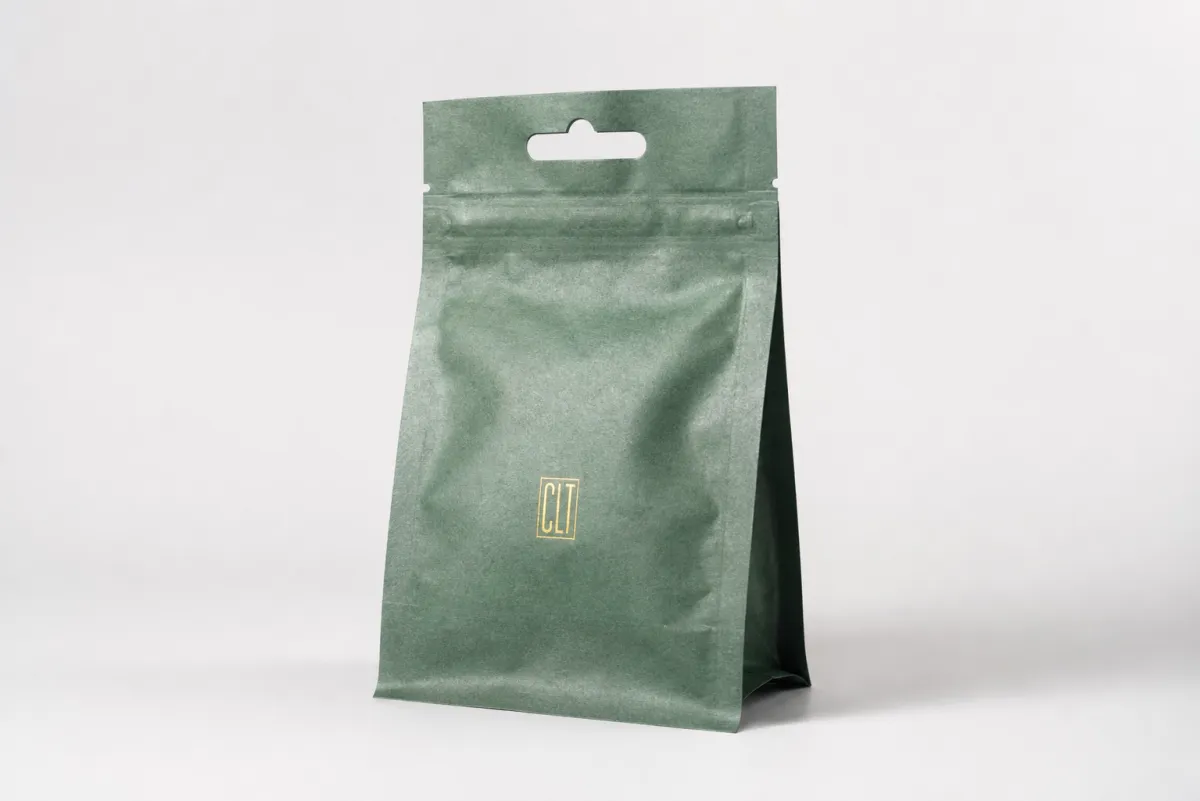
Retail is blunt. If a package does not earn a glance, it gets passed over. Custom pouches with euro slot solve that problem by moving the product from a horizontal shelf plane to a vertical display plane. That single shift changes how the aisle reads. Instead of competing only with the front edge of a shelf, the pack joins a peg-hook wall, a slatwall fixture, or a hanging rack where shoppers scan rows faster.
The euro slot itself is a punched hanging opening, usually shaped to fit common retail hooks. It allows the pouch to hang from peg hooks, slatwall hooks, and specialty display systems without extra hardware. In practice, that means custom pouches with euro slot can show up in convenience stores, farm shops, beauty counters, hardware aisles, and trade show booths where display space is limited and visibility is doing the heavy lifting.
There is a simple retail truth here: a product often has only a few seconds to earn its place. Moving the item upward and outward, rather than letting it sit flat and anonymous, can improve pickup more than a glossy finish ever will. A hanging pouch can beat a carton when the buyer wants density, speed, and a cleaner shelf read. That is one reason some brands choose custom pouches with euro slot instead of Custom Printed Boxes for smaller, lighter items. The pouch is lighter to ship, easier to hang, and visually less cluttered.
The format also helps a retailer organize assortment. When every flavor, scent, or SKU hangs on the same style of pack, the wall looks more deliberate. That is not cosmetic fluff. It reduces friction at the shelf. Customers find the right variant faster, and staff can refill facings without redesigning the display every time a new shipment lands. I have walked aisles where the difference between tidy and chaotic was one poorly aligned hanging header. It sounds minor. It is not.
Custom pouches with euro slot are especially useful for:
- single-serve or trial-size snacks
- beauty samples and travel-size kits
- supplements and wellness sachets
- pet treats and training rewards
- small tools, screws, and hardware sets
- promotional bundles and event giveaways
The important shift is mental. A euro slot is not just a structural feature; it is a merchandising tool. If you treat custom pouches with euro slot as part of the selling system, not merely the packaging system, the design priorities get easier to sort. The pouch has to sell the product, yes, but it also has to behave like a fixture. That second job gets overlooked more often than it should.
How custom pouches with euro slot work on the shelf
To understand performance, it helps to break the pouch into parts. Most custom pouches with euro slot include a main body film, side or bottom seals, a top header zone, the punched slot, and often a zipper or tear notch. If the product is resealable, the zipper sits below the header so the hanging function stays intact after opening. That little detail sounds obvious until a sample arrives with the zipper crowding the slot and the top edge buckling.
The top section carries more stress than people expect. When a pouch hangs from a hook, the load concentrates around the seal and the punched opening. If the fill weight is too heavy for the structure, the top can bow, pucker, or tear after repeated handling. The best custom pouches with euro slot are designed with the product weight in mind from the start, not after artwork is finished. That order matters. A pretty mockup does not tell you how a filled pouch behaves under gravity.
The hanging point also changes shopper behavior. Eye-level placement usually gets faster pickup than lower shelf placement, especially for low-consideration purchases. A shopper can scan a row of custom pouches with euro slot in a few seconds, compare colors or claims, and remove one unit without crouching or digging through a bin. In a specialty store, that convenience can feel premium. In a crowded convenience channel, it can feel efficient. Both are useful, and both can raise the odds of conversion.
Common display environments include peg hooks in convenience stores, fixture walls in specialty retail, and booth walls at trade shows. In each case, the pouch needs to hang consistently. One crooked bag can make the whole row look messy, which is a small annoyance to a shopper and a real pain for staff. A cleanly engineered euro slot, paired with the right header height, usually keeps the line straight and easy to shop.
There is also a planning advantage. With custom pouches with euro slot, a multi-SKU program can use the same display logic for several products. That simplifies assortment planning and reduces the need for mixed display hardware. A brand can launch three flavors, two sizes, or a seasonal set and still keep the presentation uniform. That consistency matters more than most teams expect because a shelf usually looks more credible when the family resemblance is clear.
If the program is built for physical retail and e-commerce together, packaging design gets even more interesting. The same package must look good in a thumbnail, hold up in transit, and hang neatly in store. That is where package branding and structural packaging design meet. A package that looks great flat but sags when filled will not help the launch. The hanging test is the real test. In my experience, the sample that photographs well but hangs badly is the one that costs the most downstream, because everyone sees the flaw at retail.
One more practical note: custom pouches with euro slot usually work best when the front panel can carry the graphic story without depending on a huge amount of height. The logo, product name, and primary benefit should sit where the shopper sees them from 3 to 6 feet away. Anything critical near the top seal risks getting lost once the pouch is hung. If the pouch has a zipper, leave enough room so the closure does not fight the graphics. That part is kinda boring on paper and very noticeable on shelf.
Key design choices that shape performance and branding
Design choices in custom pouches with euro slot are not cosmetic first and structural second. They are both at the same time. Material selection, finish, size, slot placement, and add-ons all affect how the pack looks, how it hangs, and how long it survives in use.
Start with the film structure. If the product needs oxygen barrier, moisture barrier, or odor control, the laminate has to be chosen around that requirement. For snacks and supplements, barrier performance can matter more than clarity. For beauty samples or accessories, a matte window or partial clear panel may help. For products where transparency matters, a clear or partially clear structure can show the contents directly, but it can also make shelf presentation look less premium if the fill is uneven. Custom pouches with euro slot should be matched to the product, not forced into a trendy finish that weakens performance.
Finish is a branding decision too. Matte lamination can feel softer and more premium. Gloss can feel sharper and more retail-forward. Soft-touch finishes can help a premium brand stand apart, though they add cost and can show scuffing differently. That is why the best packaging brief includes both aesthetic direction and handling expectations. A pouch that gets handled by store staff and customers all day needs a finish that can take the abuse without looking tired by week two.
Size matters just as much. A pouch that is too large for the fill will look slack and underpriced. A pouch that is too small will stress the seal and crowd the header. For custom pouches with euro slot, the top header should have enough flat area to support the hanging opening and enough margin so the artwork does not feel clipped. In many programs, that means reserving a visibly clean header zone above the zipper or product fill line.
Placement of the euro slot also affects durability. Too close to the edge, and the material can weaken. Too low, and the artwork loses usable space. The goal is a balanced top section that keeps the pouch stable while still giving the brand room to breathe. Reinforcement options, such as stronger seal bands or a thicker top film, can help when the fill weight is higher or the display is heavily handled. The right choice depends on product mass, not just on how the pack looks in an email proof.
Branding choices should follow channel behavior. Bright color blocking works well for quick retail recognition. Bold typography helps when the SKU name is the main sales point. Window placement matters if the product itself needs to be visible. And if the pack is meant to feel premium, custom pouches with euro slot should avoid cluttered front panels that make the hanging format feel like an afterthought.
Functional add-ons are worth discussing early:
- Resealable zippers for repeat use and freshness
- Tear notches for easy opening without scissors
- Hang-hole reinforcement for heavier fills or frequent restocking
- Tamper-evident features for food, wellness, or sample programs
If the pack is part of a broader branded packaging system, it should match the rest of the line. That does not mean every format must look identical. It means the pouch should feel like it belongs next to the rest of the range. A hanging pouch can live alongside jars, cartons, or even custom printed boxes if the identity system is disciplined enough. Consistency is not about sameness; it is about making the shelf read like one family.
For programs using paper-based elements like hang cards or outer cartons, FSC-certified paper can support the sustainability story. The Forest Stewardship Council is a useful reference point: FSC. Not every launch needs that layer, but when it does, it should be planned before artwork is locked. I would not add a sustainability claim just to decorate the pack; it should reflect the actual material spec and supply chain.
The biggest mistake I see is treating design as decoration. With custom pouches with euro slot, design shapes retail behavior. A beautiful pouch that hangs badly is not a successful pouch. A functional pouch that looks off-brand is not much better. The sweet spot is the one that respects both the shopper and the store staff who have to live with the display.
Cost, pricing, and MOQ for custom pouches with euro slot
Cost for custom pouches with euro slot depends on more variables than most buyers expect. Size, laminate structure, print coverage, zipper choice, finish, and slot reinforcement all affect unit price. So does order quantity. A short run of 1,000 to 2,500 pieces usually carries a much higher per-unit cost than a 10,000-piece run because setup and prepress are spread over fewer packs.
As a practical benchmark, a small to mid-volume run of custom pouches with euro slot may land somewhere around $0.19 to $0.36 per unit at 5,000 pieces, depending on print coverage and construction. A heavier-duty, highly finished version can move higher. A simpler structure with limited color coverage can fall lower. Those are not promises; they are the kind of ranges a packaging buyer uses to budget before requesting quotes. Prices move with resin markets, film availability, region, and print method, so a quote from one converter is not a clean comparison unless the specs match.
MOQ matters because it shapes launch strategy. Startups often want to test a market with the lowest possible spend. Seasonal launches may need a smaller quantity to avoid leftover inventory. Larger programs can tolerate a bigger MOQ if the unit price drops enough to justify the inventory. Custom pouches with euro slot are attractive here because they can often support both test-market runs and larger retail rollouts, depending on the converter and print method.
Tooling and setup can also change the quote. If the pouch size is standard, the euro slot may not add much beyond a punch step or die feature. If the format is unusual, there may be custom prepress work, plate charges, or die-cutting setup. Digital printing can reduce plate costs for smaller runs, while flexographic printing usually becomes more cost-efficient as volume rises. The real question is not "cheap or expensive?" It is "what is the unit economics at the order size I actually need?"
Here is a simple way to compare common options for custom pouches with euro slot:
| Option | Typical unit price at 5,000 pcs | Best fit | Notes |
|---|---|---|---|
| Standard flat pouch | $0.16-$0.28 | Shelf display, lower handling, no hanging need | Lowest structure cost, but weaker retail visibility |
| Custom pouches with euro slot | $0.19-$0.36 | Peg hooks, slatwall, specialty retail, sample programs | Usually the best balance of visibility and cost |
| Reinforced euro slot pouch | $0.24-$0.44 | Heavier fills, frequent restocking, high-touch displays | Higher structure cost, but improved hang durability |
The cheapest option is not always the best value. A pack that tears at the hook or looks awkward on display can cost more in lost sales than it saves in manufacturing. That is why a buyer should compare not only unit price, but also retail fit, shelf efficiency, and the chance to reduce secondary packaging. In some programs, a slightly pricier pouch actually lowers total system cost because it removes the need for extra display materials.
If you are evaluating Custom Packaging Products, ask for a quote that separates material cost, printing cost, finish cost, and any hanging reinforcement. A clean quote makes it easier to compare apples to apples. Otherwise, two estimates can look similar on paper while hiding very different structural choices. I have seen that mistake turn a low quote into the most expensive option once the launch hits production.
Budget also shows up in places people miss. A hanging pouch can reduce the need for large display cartons, extra shelf talkers, or oversized retail packaging. That does not erase the pouch cost, but it can lower the total launch spend. In packaging, total system cost often matters more than a single line item. That is the part teams miss when they focus only on the unit price.
Process, timeline, and turnaround for custom pouches with euro slot
The process for custom pouches with euro slot usually moves through the same sequence: brief, dieline review, artwork prep, proofing, approval, production, and shipment. The pace depends on how complete the spec sheet is at the start. If the team knows the product weight, pouch dimensions, fill target, closure type, and retail channel, the timeline usually stays manageable.
A realistic timeline often looks like this: 2 to 5 business days for spec gathering and dieline alignment, 2 to 4 business days for artwork setup and proofing, 7 to 18 business days for production after approval, and then freight time on top of that. Smaller digital runs can be faster. Larger flexo runs can take longer, especially if film availability is tight or if there are revision rounds. For custom pouches with euro slot, the hanging feature itself is rarely the longest delay. Artwork corrections are.
Packaging delays usually come from details, not big ideas. Missing barcode specifications, last-minute legal copy changes, or a pouch dimension change after proofing can force a restart. If the product will go through distribution, the team should also validate transit expectations early. The International Safe Transit Association publishes useful testing references for pack-out and shipment planning, especially when the pouch is part of a larger shipping system.
Sample approval deserves more attention than it gets. A flat digital proof is useful, but it does not tell you how custom pouches with euro slot will hang when full. A physical sample can show whether the fill weight pulls the header off center, whether the zipper interferes with the slot, and whether the graphic balance still works once the pouch is loaded. That single test can prevent a surprisingly expensive mistake. If the pouch is going to hang crooked, the aisle tells on it immediately.
Another planning habit helps a lot: work backward from launch date. If the product has to be in stores by a certain week, lock the artwork earlier than you think you need to. Leave room for print proof review, supplier feedback, freight delays, and retailer sign-off. A tidy schedule can be the difference between a polished launch and a last-minute packaging scramble. The best launches I have seen all had one thing in common: enough time to fix the small stuff before anyone outside the team saw it.
For teams with tight timing, I usually recommend three checkpoints:
- Spec checkpoint - confirm size, weight, and hang style before artwork begins.
- Proof checkpoint - review the dieline and the live copy against the actual measurements.
- Sample checkpoint - hang and fill the pouch before approving the full run.
That sequence is simple, but it catches the issues that matter. With custom pouches with euro slot, speed should never come at the expense of fit. A fast production run that fails in retail is not actually fast. It is just earlier disappointment.
Common mistakes and expert tips for euro slot pouches
The most common mistake is underestimating the load. A pouch that feels light in the hand can still stress the top seal once it is filled and hung. That is why custom pouches with euro slot should be tested with the actual product fill weight and the actual hook style, not a guess. A display that looks fine on a desk can behave very differently on a peg wall.
Another error is designing the artwork too close to the top seal. Critical text, logos, and claims can disappear into the hanging zone or get visually cramped. The top header needs breathing room. If the slot and seal eat into the brand name, the pouch stops looking intentional. It starts looking crowded, and crowded packaging tends to read as cheaper than it is.
Hook compatibility matters too. Standard retail hooks are not all identical. Diameter, length, and finish can vary. A pouch should be tested on the same style of hook the retailer actually uses, especially if the program is going into multiple chains. That is one of the simplest ways to avoid surprises with custom pouches with euro slot. It sounds basic because it is basic, but basic errors are the ones that show up on the sales floor.
Expert tip: do a real hang test early. Fill the pouch, seal it, and leave it on the hook for a full day. Watch for bowing, slippage, seal stress, or distortion in the header. Then repeat the test after a few removals and rehanges. Retail staff will handle it that way, so the sample should be treated that way in the test room. A one-minute hanging check is not enough.
Another practical check is barcode placement. The barcode should remain scannable once the pouch is hung and once it is flat-packed for shipping. If the code sits too close to a fold or curve, scanners may struggle. The same rule applies to batch codes, lot numbers, and legal copy. Good product packaging is visible, but it is also readable and operational. A beautiful pack that slows down the register is not a win.
The pouch should also be reviewed from multiple distances. Up close, the graphics may look perfect. From 6 feet away, the logo may vanish into the background or the color contrast may not be strong enough. Custom pouches with euro slot sit in a shopper's line of sight, so contrast and hierarchy matter more than people think. That is especially true in stores with noisy shelves and mixed lighting, where details can disappear fast.
Here are the production checks I would not skip:
- verify seal integrity after filling
- confirm the slot sits cleanly above the product weight
- test the pouch flat and hung
- check barcode readability on a scanner
- inspect how the pouch looks after restocking
There is also a subtle design trap: overbuilding for the shelf while ignoring handling. If the format gets too thick or too rigid, it may become expensive to ship, hard to store, or awkward for store staff. The best custom pouches with euro slot balance presentation with production efficiency. That balance is what makes the format feel smart rather than fussy. A packaging spec that nobody enjoys handling usually gets a rough life in the field.
Next steps: spec, sample, and launch custom pouches with euro slot
If you are preparing a launch, start with the facts. Define product weight, barrier needs, retail channel, closure type, and target hang style before requesting a quote. That single brief can save days of back-and-forth and help suppliers price custom pouches with euro slot more accurately.
Then build a sampling checklist. I would include hook fit, visual balance, seal strength, zipper function, and how the pack looks when fully filled. If the pouch will sit next to other branded packaging, compare it against the rest of the line so the shelf story feels consistent. A new pouch should support package branding, not fight it.
A small pilot run makes sense for products entering new stores or testing a seasonal promotion. It gives you a chance to see whether the hanging format speeds up restocking, improves shelf pickup, or needs a tweak in header height or finish. If the pilot works, scaling is easier. If it does not, the fix is usually cheaper than a full reprint.
It also helps to gather retailer feedback before ordering at scale. Ask whether the pouch hangs cleanly, whether the SKU is easy to face, and whether the display slows down or speeds up replenishment. Those details are practical. They matter more than opinions about style alone. A store manager can tell you in one minute what a spreadsheet will never reveal.
For teams comparing custom pouches with euro slot against other product packaging formats, the decision often comes down to this: do you need a container, or do you need a selling tool? A hanging pouch can be both, but only if the spec is grounded in the channel. Otherwise, the format becomes decorative, and decoration is not enough to carry a launch.
And if you are still comparing format options, review Custom Packaging Products alongside your sample requests so the whole launch plan stays connected. That keeps the conversation focused on retail packaging performance, not just the carton or pouch in isolation.
From a packaging buyer's point of view, the cleanest launch is the one that removes friction. Custom pouches with euro slot do that when the size is right, the graphics are readable, and the hanging structure is tested before production. They are not the answer for every product, but for the right product they can be a very efficient retail move. If you want the shortest path to a practical decision, start with the product weight, the hook type, and the shelf distance. Everything else builds from there.
Frequently Asked Questions
What products work best in custom pouches with euro slot?
They work best for lightweight to medium-weight items that benefit from hanging display, such as snacks, beauty samples, supplements, pet treats, accessories, and small hardware kits. They are especially useful in stores where shelf space is tight and the product needs to be picked up fast.
Can custom pouches with euro slot hold heavier items?
Yes, but only if the film structure, top seal, and slot reinforcement are built for the load. Heavier fills should be sample-tested on the same hook style used in the store before launch, because a pouch that looks fine in the pack room can behave differently once it is hanging in retail.
Do custom pouches with euro slot cost more than standard flat pouches?
Usually a little more, because the hanging feature may require extra reinforcement or stronger top construction. The actual price depends on size, print complexity, material choice, finish, and order quantity, so two quotes can look close while the underlying specs are very different.
What do I need to request a quote for custom pouches with euro slot?
Provide product weight, pouch dimensions, material goals, quantity, print colors, closure type, and retail display requirements. Include the target launch date too, because timing affects production planning and freight assumptions.
How long does production usually take after artwork approval?
Timing varies by order size, material availability, and print method, but approval to shipment can take longer than expected if proofs need revisions. For custom pouches with euro slot, a clear spec sheet and fast artwork sign-off usually shorten the overall process and help the launch stay on schedule.

