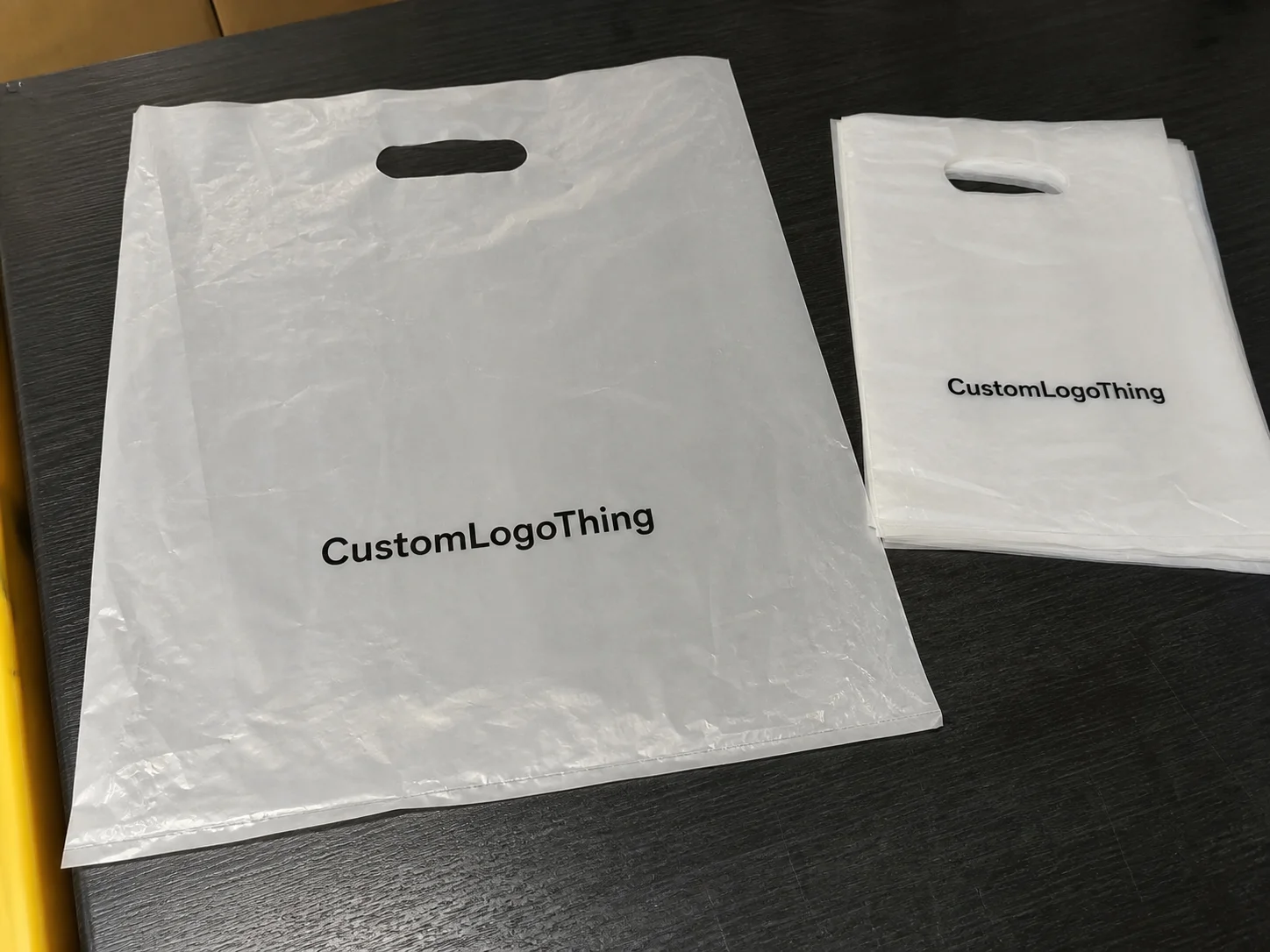
Buyer Fit Snapshot
| Best fit | Custom Printed Biodegradable Bags Wholesale projects where brand print, material claims, artwork control, MOQ, and repeat-order consistency need to be specified before quoting. |
|---|---|
| Quote inputs | Share finished size, material target, print colors, finish, packing count, annual reorder estimate, ship-to region, and any compliance wording. |
| Proofing check | Approve dieline scale, logo placement, barcode or warning zones, color tolerance, closure strength, and carton packing before bulk production. |
| Main risk | Vague material claims, crowded artwork, missing packing details, or unclear freight terms can make a low unit price expensive after revisions. |
Fast answer: Custom Printed Biodegradable Bags Wholesale: Pricing, Specs should be specified like a repeatable production item. The safest quote records material, print method, finish, artwork proof, packing count, and reorder notes in one written spec.
Production checks before approval
Compare the actual filled-product size with the drawing, then confirm tolerance on folds, seals, hang holes, label areas, and retail display edges. Reserve space for logos, QR codes, warning copy, and material claims before decorative graphics fill the panel.
Quote comparison points
Review material grade, print process, finish, sampling route, tooling charges, carton quantity, and freight assumptions side by side. A quote is only useful when the supplier can repeat the same color, closure quality, and packing count on the next order.
Comparing Custom Printed Biodegradable Bags Wholesale options? Start with the part people love to skip: not every “eco” bag is actually fit for the job. I’ve stood on factory floors in Shenzhen while buyers pointed at a sample and said “biodegradable” like the word magically fixed the spec. It doesn’t. The wrong resin blend, the wrong thickness, or the wrong disposal claim can turn a decent-looking bag into a very expensive mistake. Custom printed biodegradable bags wholesale only makes sense when the material, print method, and use case line up. In one Guangdong factory visit, a buyer wanted a 60-micron film for 3kg garment shipments and still expected it to pass a drop test. No, not happening.
I’ve spent 12 years around custom printing, and the pattern is painfully familiar. A brand wants better retail packaging, stronger package branding, and less dependence on conventional plastic, then they get stuck comparing vague quotes with no specs attached. Next thing you know, one supplier says $0.08 a unit and another says $0.23, and the buyer acts shocked. Those are not the same bag. A 2-color flexo-printed kraft bag in Xiamen is not the same as a 4-color compostable mailer from a converter in Dongguan, and pretending otherwise is how budgets disappear. Custom Printed Biodegradable Bags wholesale is a purchasing decision, not a virtue signal.
Used well, these bags improve store presentation, shipping efficiency, and the kind of brand perception that actually matters at the counter or the shelf. Used badly, they tear in humid storage, fail a load test, or arrive with print that looks like it came out of a tired office printer. I’ve seen all of it. The good news is that custom printed biodegradable bags wholesale can be practical when you know what to ask for. For a cafe chain in California, switching to a 120gsm kraft bag with a 15mm reinforced handle reduced customer complaints within the first 30 days because the bag stopped collapsing around takeaway boxes.
Why custom printed biodegradable bags wholesale make sense
The first reason brands buy custom printed biodegradable bags wholesale is simple: recurring orders. If you are shipping or selling every week, buying bag quantities one by one is a fast way to pay more and still end up with inconsistent print. Wholesale gives you better unit economics, steadier color control, and fewer surprises between batches. That matters whether you run a cafe in Austin, a boutique in Melbourne, a grocery program in Toronto, or a promo campaign in Singapore. I’ve seen weekly buyers shave 12% off packaging spend just by moving from ad hoc buys to 5,000-piece runs.
The second reason is brand perception. Customers notice packaging before they read your product copy. A bag with crisp logo placement and a clean finish tells them you care about details. That signal matters in product packaging and retail packaging because people use packaging as a shortcut for product quality. I learned that during a meeting with a mid-sized specialty food brand in California. Their product was strong, their jars were fine, but their old generic bags looked cheap enough to drag down the whole presentation. We switched them to custom printed biodegradable bags wholesale with a reinforced handle and a 2-color flexo print. Same product. Better shelf reaction. Different perception, same day. The order was 8,000 pieces, and the buyer told me the retail team stopped asking for “something more premium” after the first delivery.
There’s also the issue of material dependence. Brands are under pressure to reduce conventional plastic, especially in food service and consumer goods. That does not mean every bag needs to be compostable, and it definitely does not mean every “eco” claim is valid. A biodegradable bag can be a smart middle ground when your business needs packaging that is lighter on fossil-based materials but still strong enough for the job. Custom printed biodegradable bags wholesale gives you scale without pretending the material is magic. If you’re sourcing from Dongguan or Foshan, ask for the resin blend first; the logo comes later.
Here’s the part people get wrong: biodegradable is not a performance label. It is a breakdown claim. Performance depends on load weight, moisture, heat, and storage time. I visited a converter outside Dongguan where a buyer had specified a bag for chilled bakery items, then stored the inventory in a hot warehouse for six weeks. The bags started feeling brittle before they even hit the store. The bag wasn’t “bad.” The spec was wrong. Custom printed biodegradable bags wholesale only works when the operating environment is part of the brief. If your bags will sit in a warehouse in Bangkok or Miami at 32°C, say that in the first email.
Client quote from a recent buyer: “We stopped treating bags like a throwaway line item. Once we tied the material choice to the product and storage conditions, the complaints disappeared.”
Wholesale also helps with consistency. If your packaging changes every order, your brand looks disorganized. One shipment with a different shade of green and another with a slightly off logo size is enough to make a retailer ask questions. Good custom printed biodegradable bags wholesale orders lock down the spec so the same print, same size, and same feel show up every time. That consistency is part of branded packaging and it matters more than most founders want to admit. A chain client in London once rejected a 3,000-piece batch because the handle color shifted from Pantone 343C to something that looked suspiciously like hospital mint.
Biodegradable bag types, materials, and print options
Not all biodegradable bags are built from the same structure, and that is where most quote comparisons fall apart. The main materials I see in custom printed biodegradable bags wholesale orders are PLA blends, PBAT/PLA blends, cornstarch-based films, and Kraft Paper Bags with biodegradable liners. Each has a different feel, strength profile, and print behavior. If someone tells you “any eco film works,” they are either new or guessing. I’ve had samples from factories in Shenzhen, Ningbo, and Wenzhou all look similar on the table and behave very differently once we added product weight and humidity.
PLA blends are popular for certain applications because they can be made from renewable feedstocks and work well in controlled composting systems, but they can be more sensitive to heat. PBAT/PLA mixes usually give better flexibility and tear resistance. Cornstarch-based films can look clean and natural, but film clarity and strength vary a lot by formula. Kraft paper with biodegradable liners is common for retail and takeaway use when the brand wants a more natural look with better structure. For custom printed biodegradable bags wholesale, the right material depends on whether the bag needs barrier properties, breathability, or just basic carry strength. A 350gsm C1S artboard insert inside a kraft carry bag, for example, behaves like a different product entirely than a thin film mailer.
I’ve watched buyers fall in love with a matte kraft look, then complain the bag warped because they forgot about product weight. A 250g coffee pouch and a 2kg retail set are not the same thing. No surprises there, except apparently there are always surprises. Good custom printed biodegradable bags wholesale sourcing starts by matching the bag to the actual load, not to a Pinterest board. I once saw a bakery order 1,000 bags in a beautiful uncoated kraft finish, then load each one with chilled cakes and condensation-heavy ice packs. The paper curled before lunch.
Bag style matters too. Shopping bags need handle strength. Mailer bags need tear resistance and reliable seals. Produce bags often need breathability. Garment bags focus on appearance and light protection. Takeout carry bags need grease tolerance and enough rigidity to survive a delivery run. I’ve seen custom printed biodegradable bags wholesale orders fail because someone chose a beautiful bag style that worked fine for apparel but collapsed under food containers with condensation. A takeout bag for a restaurant group in Kuala Lumpur needed a 20mm die-cut handle and a 180gsm paper body, not a prettier mockup.
Print method is the next fork in the road. Flexographic printing is common for larger runs and works well when the artwork is simple, spot colors are defined, and the supplier has solid plate control. Gravure printing handles long runs and detailed imagery better, but the setup cost is higher. Digital printing can make sense for shorter runs, variable artwork, or quick testing, though unit cost usually rises. For custom printed biodegradable bags wholesale, the “best” method is the one that matches quantity, design complexity, and budget. For a 10,000-piece run in Guangzhou, flexo often wins on cost; for a 500-piece pilot in Portland, digital can be the sane choice.
Ink choice also affects the final result. Dark inks on a natural kraft surface can make a bag feel less eco-friendly, even if the base material is excellent. That sounds irrational, but retail buyers judge with their eyes first. I’ve had clients ask for deep black logos on kraft paper and then wonder why the bag lost its earthy feel. In packaging design, visual signals matter. For custom printed biodegradable bags wholesale, a restrained 1- or 2-color layout often prints cleaner and reads more premium than a loud full-coverage design. A 2-color run in Pantone 469C and 7499C can look more expensive than full CMYK if the artwork is tight.
Functional details are worth more than fancy claims. Reinforced handles, side gussets, tear notches, and decent seal construction can Matter More Than whether the logo is centered by half a millimeter. The bag should help the customer carry the product, not just advertise it. That is the whole point of custom printed biodegradable bags wholesale. If the bag is for a grocery client in Sydney, I’d rather see a 15kg load rating and a clean gusset than a glossy finish nobody asked for.
- Shopping bags: best for retail, boutiques, events, and gifting; common sizes include 250mm x 350mm x 100mm and 300mm x 400mm x 120mm.
- Mailer bags: suited for e-commerce parcels and light apparel; often ordered in 100–150 micron PBAT/PLA films.
- Produce bags: better for fresh items that need airflow; perforation patterns matter in humid markets like Singapore and Bangkok.
- Garment bags: useful for clothing, dry cleaning, and presentation; frequently produced in long-format kraft or film sleeves.
- Takeout bags: built for food service, carry-out, and delivery; handle reinforcement and grease resistance are usually non-negotiable.
Specifications that affect performance and compliance
If you want a quote that means anything, you need real specs. For custom printed biodegradable bags wholesale, I always ask for thickness, dimensions, weight capacity, handle style, seal type, and printable surface area before I talk pricing. If those basics are missing, the quote is basically a guess with a logo on top. And no, a guess is not a procurement strategy. I’ve told buyers in Shenzhen, Ho Chi Minh City, and Los Angeles the same thing: send me the numbers or expect a messy quote.
Thickness is usually measured in microns or mils depending on the material and supplier. A 40-micron film behaves very differently from a 70-micron film, even if both are marketed as biodegradable. Same with a kraft paper bag using 120gsm versus 180gsm paper stock. For custom printed biodegradable bags wholesale, thickness affects both feel and failure rate, so Buyers Should Ask for the exact number, not “standard.” A 120gsm paper bag might be fine for light apparel, while a 180gsm bag with a reinforced base is safer for heavier retail items.
Dimensions matter because a bag that is too tight looks cheap and one that is too large wastes material and money. I worked with a beverage client who wanted a carry bag for 6 bottles. The first sample had the right width but not enough gusset depth, so the bottles sat awkwardly and stressed the handle area. We revised the die-line, increased the gusset by 18mm, and the failure rate dropped. That’s the kind of fix that turns custom printed biodegradable bags wholesale from a paper exercise into a real product solution. The second sample moved from a 90mm gusset to 108mm, and the client stopped losing bottles on delivery runs in Manila.
Compliance is where buyers get nervous, and they should. Compostability claims are not interchangeable with biodegradability claims. If you need a compostable claim, ask what standard applies in your market. Third-party references such as EPA composting guidance and standards organizations can help you separate marketing language from actual requirements. For broader industry context, I also point clients to The Packaging School and industry resources from packaging.org when they need a baseline on packaging categories and material behavior. For custom printed biodegradable bags wholesale, the claim must match the market where the bag will be sold. A compostable claim accepted in California may not satisfy a retailer in Germany without different documentation.
Food-contact rules deserve attention too. If the bag touches food directly, your supplier should tell you what the material is approved for and what testing documentation exists. Not every biodegradable film is suitable for direct food contact. That distinction matters. It is one of the fastest ways to run into a problem with custom printed biodegradable bags wholesale if nobody asks the question early. For bakery and snack packaging in particular, I want the supplier to identify the testing basis before we even discuss artwork.
Climate and storage conditions can also change performance. Humidity, heat, and long warehouse storage all affect biodegradable materials differently. I’ve seen PLA-based items stored too close to a loading bay in summer and come out with worse flexibility than the sample. That is why I insist on asking where the bags will sit before and after delivery. If your custom printed biodegradable bags wholesale order is going to a tropical market, say so. If it is for refrigerated distribution, say that too. A container route from Shenzhen to Dubai is not the same as a local truck transfer in Stockholm.
Testing matters more than phrases on a quote sheet. Ask for tensile strength, drop test data, seal integrity, and sample validation. ASTM and ISTA references are useful when you need a testing framework, especially for shipping and transport performance. The ISTA site is a solid reference point if you are validating packaged product behavior during transit. Custom printed biodegradable bags wholesale should be evaluated with actual samples, not sales language. For one e-commerce buyer, a simple 1.2m drop test with a 1.8kg product caught a weak seal before 15,000 bags were printed.
My rule is simple: request samples before production, then test them with the product inside. Check the color, the feel, any odor, the print edge sharpness, and the real-world durability. A bag that looks great in a photo but smells weird in a retail environment can hurt your brand more than a plain one. That is not theory. I have lived through that client call. A varnish mismatch on a batch in Suzhou once left the bags smelling like solvent for four days, and the buyer nearly canceled the order.
How do you choose the right custom printed biodegradable bags wholesale supplier?
Start with the supplier’s willingness to discuss real specs, not just send a pretty mockup. A good custom printed biodegradable bags wholesale supplier can explain material differences, print limitations, compliance documents, and what happens if your bag needs a stronger handle or a different seal. If they dodge those questions, keep moving. I’ve sat through enough factory meetings to know the difference between a converter who knows the line and one who only knows how to quote.
Ask for samples from the exact material family you plan to buy. A kraft shopping bag and a compostable mailer are not interchangeable just because both wear the “eco” label. The supplier should also tell you whether they can support recurring orders without changing the print shade or thickness from batch to batch. Consistency matters. A one-off bargain is cute until your second shipment looks like it came from a different factory. For custom printed biodegradable bags wholesale, stable production is worth more than a flashy promise.
Look for a supplier who can talk through failure points without sounding defensive. If they’ve actually produced biodegradable packaging before, they’ll know where the weak spots are: seal creep, handle pull-out, curl on kraft stock, print cracking on flexible film, and color shift under heat. That knowledge saves time. It also keeps you from buying a bag that only works in a sample tray. I once watched a sales rep in Jiangmen insist a thin compostable mailer could hold heavy apparel because “the lab report looks fine.” The lab report was for a different construction. Little details. Big mess.
If you can, ask about their production line setup and QA process. A supplier with calibrated print registration, controlled storage, and batch inspection is far less likely to send you a surprise. I’d rather work with the factory that admits a 15mm handle reinforcement is safer for a given load than the one that promises everything and explains nothing. For custom printed biodegradable bags wholesale, honesty beats hype every single time.
Pricing factors, MOQ, and how wholesale quotes are built
Let’s talk money. Custom printed biodegradable bags wholesale pricing is usually driven by material type, bag size, thickness, print colors, finishing, certification requirements, and how the bags are packed for shipment. I’ve seen simple orders land around $0.09 to $0.14 per unit at 10,000 pieces, while a more complex compostable mailer with certified material and multi-color print can land closer to $0.22 to $0.38 per unit. That spread is normal. What is not normal is comparing them as if they are interchangeable. For example, a 5,000-piece run of a 300mm x 400mm PBAT mailer with 2-color print might come in at $0.15 per unit, while a 1,000-piece order of the same spec can jump to $0.24 because the setup cost gets brutal.
Material choice is the biggest cost lever. Kraft paper is often cheaper than specialty compostable film, but not always once you add liners, coatings, or reinforcement. PBAT/PLA film can cost more than basic PE-like alternatives because the resin mix is more expensive and the processing window is narrower. If you want custom printed biodegradable bags wholesale pricing that makes sense, ask for a breakdown by material, print, and extras. A supplier who cannot separate those costs is either hiding something or doesn’t know their own process. I’d rather see a quote that says “material: $0.06, print: $0.03, handle reinforcement: $0.02” than a single magic number with no explanation.
MOQ matters because setup costs spread across fewer pieces when you buy small. Flexo printing may require plates at roughly $60 to $150 per color depending on complexity and supplier, while gravure cylinders can be significantly more expensive. That is why a 1,000-piece order can feel expensive on a per-unit basis, and why 5,000 or 10,000 pieces often look much better. For custom printed biodegradable bags wholesale, the sweet spot depends on how fast you use inventory. In Shanghai and Ningbo, I’ve seen buyers save nearly 20% by moving from 3,000 to 8,000 pieces because the plate cost spread out properly.
One client in the specialty tea category wanted 1,200 custom bags with 4 colors and a matte finish. The unit price looked okay until the setup charges were added. Then the math got ugly. We reworked the artwork into 2 colors, switched to a cleaner layout, and brought the per-unit cost down by about 18%. That is what real quoting looks like. Custom printed biodegradable bags wholesale is not just about the lowest unit price. It is about total spend. On that job, the quote moved from $0.31 per unit to $0.25 after simplifying the artwork and removing an unnecessary matte coating.
Ask for tiered pricing. Seriously. A supplier should show you the break points at 1,000, 5,000, and 10,000 units so you can see where the actual economics improve. I have seen plenty of buyers choose 4,000 pieces because it sounded safe, only to discover that 5,000 pieces would have lowered their unit cost enough to justify the extra stock. For custom printed biodegradable bags wholesale, tiered pricing is the only honest way to compare orders. If the price at 10,000 is $0.12 and the price at 5,000 is $0.15, that’s a real decision, not a guess.
Freight and duties can erase the “cheaper” quote fast. A bag quoted at $0.12 unit cost can end up closer to $0.17 landed once you add ocean freight, import handling, customs fees, and last-mile delivery. That is why I tell buyers to compare landed cost, not factory price alone. One of my favorite factory-floor lessons came from a negotiation in Ningbo where the buyer kept pushing for a lower ex-works price while ignoring freight. He saved pennies at the factory and lost dollars at the dock. Classic. A carton move from Ningbo to Los Angeles can add $0.02 to $0.05 per unit all by itself, depending on volume and season.
Finishing costs also matter. Matte lamination, soft-touch coating, spot UV, hot stamping, or special die cuts can add value, but only if the bag actually needs them. I once saw a startup spend extra money on a finish nobody in their audience noticed. That budget could have gone into stronger handles. For custom printed biodegradable bags wholesale, spend on function first, then appearance. If you are paying for a premium finish in Guangzhou, make sure your customer in the store can actually feel it.
Here’s a practical way to compare quotes:
- Match the same bag size and thickness.
- Confirm print method and number of colors.
- Check whether sampling is included.
- Ask whether certifications are extra.
- Request incoterms and shipping estimates.
- Calculate landed cost per unit.
If you follow that list, custom printed biodegradable bags wholesale becomes much easier to evaluate. If you don’t, you are comparing apples, oranges, and one very expensive mango. And yes, I’ve watched a buyer do exactly that while staring at three different spreadsheets in a meeting room in Shenzhen.
Ordering process, proofing, and production timeline
The ordering process should be straightforward, but only if the buyer provides clear information. For custom printed biodegradable bags wholesale, I usually expect the workflow to go like this: inquiry, specs briefing, artwork submission, quotation, sample approval, production, inspection, and shipping. If any step is rushed, the order tends to wobble later. Packaging is forgiving until it is not. A clean 7-step process can save a week of back-and-forth if you send the dieline and Pantone references upfront.
What slows things down? Missing dielines, vague Pantone references, last-minute copy changes, and certification requests that were never discussed upfront. I had a client send me a logo in a screenshot once and ask for “something close.” Close is not a color standard. It is a shrug. For custom printed biodegradable bags wholesale, you want clean vector artwork, a defined Pantone or CMYK target, and a clear approval chain. If you have a brand guide, send the page with the logo lockup and color values, not the entire 80-page PDF unless you want everyone to scroll for sport.
Sampling usually takes a few business days for simple bags and longer for custom structures or new materials. Production lead time depends on print complexity and raw material availability, but I like to set expectations around 12 to 15 business days from proof approval for simpler runs, and longer when certification or special finishing enters the picture. For custom printed biodegradable bags wholesale, the faster the supplier says “yes” without asking questions, the more careful you need to be. A 5,000-piece order of a standard kraft bag from a factory in Zhongshan can often move in that 12-15 business day window; a new compostable structure with special testing can take 20 business days or more.
Proofing should be controlled. Ask for a digital mockup, review the layout, confirm logo placement, verify all text, and approve one final version only. I’ve seen five rounds of “small changes” destroy a schedule. A good supplier will help, but the buyer still has to decide. That is just how it works in custom printed biodegradable bags wholesale production. I tell clients to limit internal review to one person and one backup, because six opinions on a bag logo is how you get a delayed launch and a headache.
Shipping is part of the timeline, not an afterthought. Air freight can move fast but gets expensive quickly. Sea freight is cheaper but requires planning. Customs clearance varies by destination and paperwork quality. If you are running a retail launch or a seasonal campaign, reorder before inventory gets thin. I tell clients to plan reorders at 25% remaining stock. That sounds conservative until a vessel delays and your shelves are empty. A route from Shenzhen to Los Angeles can take 18 to 28 days by sea, and that is before customs gets curious.
One retail client in Europe once waited too long to reorder biodegradable shopping bags. Their launch week arrived, and the bags were still on the water. The product sold, but the packaging was wrong, and the brand team had to scramble with generic backup stock. Not ideal. For custom printed biodegradable bags wholesale, logistics is part of brand control. If the bags were due in Rotterdam but landed in the wrong warehouse first, the “eco” story was the least of their problems.
Inspection should not be skipped. A basic AQL-style visual check, count check, and print verification can catch problems before shipment leaves the facility. If the order is for food or retail chains, I also recommend a final sample sign-off against the approved proof. Buyers who skip inspection tend to discover issues in the worst possible way: after delivery. That’s an expensive lesson, and one I’d rather save you from. A 2% defect rate on a 10,000-piece run still means 200 problem bags, which is 200 too many when a retailer is counting every unit.
Why buy from us instead of guessing your way through it
Custom packaging is not a side hobby for us. It is what we do. At Custom Logo Things, we work on custom printed biodegradable bags wholesale orders with the same mindset I used when I was running packaging programs for brands that could not afford sloppy output. The goal is not to sell you the fanciest material on paper. The goal is to give you a bag that works in real life and makes your brand look competent. I’ve walked enough factories in Shenzhen and Jiangsu to know the difference between a polished sales deck and a bag That Actually Survives delivery.
That starts with factory-level oversight. I have spent enough time walking lines, checking print registration, and arguing over thickness tolerances to know where orders go wrong. Material sourcing affects cost and availability, and a good supplier relationship can save weeks. When a converter knows you are serious, they stop sending lazy answers. For custom printed biodegradable bags wholesale, that kind of communication is worth money. It also means you hear about delays in Dongguan before the ship date, not after the cartons are already sealed.
We also tell you what is printable, what is compliant, and what is cost-effective. That sounds basic, but apparently it is rare. If you ask for a 5-color design on a low-volume eco film, I will tell you it may blow up the budget. If you want a compostability claim without the right certification path, I will say so. I’d rather lose a bad order than help you print a label that causes problems later. Custom printed biodegradable bags wholesale should be sold with real constraints, not fantasy. A buyer in Auckland once thanked me for killing an overdesigned quote that would have added $0.08 per unit for decoration nobody noticed.
Here is what one wholesale buyer told me after switching their supply:
“We were paying for guesses before. Now we get a quote, a sample, a real spec sheet, and a timeline that actually means something. That saved us money immediately.”
If you are also ordering other formats, our Custom Packaging Products page can help you compare bag structures with other branded packaging options, including Custom Printed Boxes. Some brands need a mixed packaging program, and that is usually smarter than forcing one format to do every job. If your reorder pattern is steady, our Wholesale Programs are built for recurring buyers who care about consistency and price control. A retail brand in Chicago, for example, often pairs biodegradable bags with a 350gsm C1S artboard insert or box system when the SKU mix changes by season.
We focus on practical outcomes. That means fewer surprises, cleaner communication, and better guidance on material choice. If your product needs breathability, we will say that. If it needs a stronger seal, we will say that too. You should not have to decode a packaging quote like it is a riddle written by a committee. Custom printed biodegradable bags wholesale works best when the supplier acts like a partner, not a vending machine. And yes, I’d rather give you the boring answer that saves $1,200 than the flashy one that looks good in a presentation.
Next steps for ordering custom printed biodegradable bags wholesale
If you are ready to move, prepare the basics before you Request a Quote. For custom printed biodegradable bags wholesale, the supplier needs bag type, dimensions, quantity, artwork files, target market, and any certification requirements. If you already know the load weight or food-contact needs, include those too. Better inputs make better quotes. Simple as that. I’d rather get one precise email from a buyer in Seattle than five vague ones followed by “please advise.”
I recommend asking for two options: your ideal spec and a lower-cost alternative. That gives you a real comparison between performance and budget. Sometimes the premium version is justified. Sometimes it is overkill. For one cafe chain, the cheaper bag with a stronger handle outperformed the higher-end film bag, and the customer never noticed the difference except on the invoice. That’s a win. Custom printed biodegradable bags wholesale should be judged by usefulness, not pride. In that case, a $0.15 per unit bag at 5,000 pieces beat a $0.21 version because it carried hot takeaway containers without sagging.
Always request samples before a bulk order, especially for food, retail, or e-commerce use. You need to see the bag in hand, test the print, and verify the feel. A $20 sample can save a $2,000 mistake. I wish more buyers understood that before they approved a full run. For custom printed biodegradable bags wholesale, samples are not a luxury. They are insurance. If the sample arrives in 3 to 5 business days from a warehouse in Shenzhen, test it the same week and make changes before the production slot is booked.
Confirm shipping destination and incoterms before you approve production. If you do not know whether your quote is FOB, CIF, or delivered, you do not really know your cost. That matters more than people think. Reorder expectations should also be set early so you are not scrambling later. The smoothest custom printed biodegradable bags wholesale programs are the ones where both sides know the schedule and the shipment terms. A buyer shipping to Vancouver needs a different freight plan than a buyer receiving into a bonded warehouse in Hamburg.
Here is the checklist I use before I say yes to a bag order:
- Bag style and exact dimensions confirmed
- Material and thickness specified
- Print method and color count agreed
- MOQ and tiered pricing reviewed
- Sample approved in hand
- Certification and labeling requirements checked
- Shipping terms and destination confirmed
Follow that list, and custom printed biodegradable bags wholesale becomes a manageable procurement process instead of a gamble. Ignore it, and you will be chasing problems after the money is already spent. I have seen both paths. One is cheaper. The other is more exciting in the worst possible way. A retailer in Toronto once skipped the sample step and ended up with 6,000 bags that were 10mm too narrow. They were not happy, and honestly, they shouldn’t have been.
My honest opinion? A good biodegradable bag is not about sounding green. It is about matching the product, the market, and the logistics. If the spec is right, the bag performs, the brand looks sharper, and the wholesale cost stays under control. That is the whole point of custom printed biodegradable bags wholesale, and it is why the right supplier matters. The material could be PLA from Jiangsu, kraft from Zhejiang, or a PBAT blend from Guangzhou; what matters is whether it survives the job you actually need done.
If you are comparing options right now, keep it practical. Ask for specs. Ask for samples. Ask for landed cost. Then choose the bag that works in the warehouse, in the store, and in the customer’s hand. That is how custom printed biodegradable bags wholesale should be bought. And if a quote looks too clean to be true, it probably forgot freight, certification, or the handle reinforcement you will end up paying for later. Don’t let a pretty number trick you. Get the details first, then place the order.
Custom Printed Biodegradable Bags Wholesale: decision table
| Decision area | Best fit | What to verify | Risk if skipped |
|---|---|---|---|
| Film or paper thickness | Apparel, accessories, lightweight goods, and subscription boxes | Micron/GSM, seal strength, opacity, and puncture resistance | Thin material wrinkles, tears, or makes the brand feel low value |
| Closure and format | Self-seal mailers, gusset bags, zipper pouches, or drawstring bags | Opening size, resealability, hanging hole, and packing sequence | Wrong format creates returns, repacking, or poor display |
| Print area | Logo visibility and required compliance copy | Ink holdout, color contrast, barcode space, and proof approval | Artwork looks fine flat but disappears once the bag is filled |
FAQs
What affects the cost of custom printed biodegradable bags wholesale?
Material choice, size, thickness, print colors, certification needs, and order quantity all affect cost. Freight, customs, and setup charges can change the real landed price more than the unit quote. For custom printed biodegradable bags wholesale, a $0.11 unit price can become $0.16 or more once Shipping and Handling are included. A 5,000-piece order out of Shenzhen may also price differently from a 10,000-piece run in Ningbo because setup costs spread out faster on larger volumes.
What is the usual MOQ for custom printed biodegradable bags wholesale?
MOQ depends on bag style and print method, but wholesale orders often start in the low thousands. Smaller test runs may be possible, though setup costs usually make them less efficient. If you need custom printed biodegradable bags wholesale for a first launch, ask for the lowest viable run and a tiered price table. In many cases, 3,000 to 5,000 pieces is the practical starting point, especially for flexo-printed bags with plate charges.
Are biodegradable bags the same as compostable bags?
No. Biodegradable means the material can break down over time, but compostable has stricter conditions and standards. Always confirm the claim you need before printing, because labels and compliance can differ by market. That distinction matters a lot in custom printed biodegradable bags wholesale. A bag marketed for composting in California may still need different documentation in the EU or Australia.
How long does production take for custom printed biodegradable bags wholesale?
Timeline depends on sampling, artwork approval, and production complexity. Simple orders move faster; custom materials, multiple colors, or special certifications take longer. As a working baseline, simple custom printed biodegradable bags wholesale orders may ship in about 12 to 15 business days after proof approval, but that is not universal. If the order includes new tooling, complex coatings, or a factory in Dongguan waiting on resin supply, add more time.
Can I get a sample before placing a bulk order?
Yes, and you should. Samples help verify size, print quality, feel, and strength before mass production. A sample is the cheapest way to avoid a very expensive mistake. For custom printed biodegradable bags wholesale, sample approval is one of the most valuable steps in the process. A $20 sample sent by air from Shenzhen can prevent a $2,000 reprint and a very awkward warehouse conversation.