Buyer Fit Snapshot
| Best fit | Custom Printed Cartons with Dividers projects where brand print, material claims, artwork control, MOQ, and repeat-order consistency need to be specified before quoting. |
|---|---|
| Quote inputs | Share finished size, material target, print colors, finish, packing count, annual reorder estimate, ship-to region, and any compliance wording. |
| Proofing check | Approve dieline scale, logo placement, barcode or warning zones, color tolerance, closure strength, and carton packing before bulk production. |
| Main risk | Vague material claims, crowded artwork, missing packing details, or unclear freight terms can make a low unit price expensive after revisions. |
Fast answer: Custom Printed Cartons with Dividers: Board, Finish, Dieline, and Unit Cost should be specified like a repeatable production item. The safest quote records material, print method, finish, artwork proof, packing count, and reorder notes in one written spec.
Production checks before approval
Compare the actual filled-product size with the drawing, then confirm tolerance on folds, seals, hang holes, label areas, and retail display edges. Reserve space for logos, QR codes, warning copy, and material claims before decorative graphics fill the panel.
Quote comparison points
Review material grade, print process, finish, sampling route, tooling charges, carton quantity, and freight assumptions side by side. A quote is only useful when the supplier can repeat the same color, closure quality, and packing count on the next order.
Custom Printed Cartons with Dividers: A Smart Guide starts from a simple packaging truth I have seen play out more times than I can count: a carton can look beautiful on the outside and still fail the moment the contents begin to move. Custom printed cartons with dividers are built to stop that kind of failure before it becomes a returns problem, a damaged goods problem, or a customer service problem. The divider is doing the quiet, practical work inside the pack while the print handles the brand story on the outside, and that combination is exactly why these cartons show up so often for bottles, jars, candles, cosmetics, electronics accessories, and gift sets that need to arrive intact and look intentional at the same time.
Comparing custom printed cartons with dividers to plain shipping boxes or oversized retail packaging usually comes down to much more than unit price. The real question is whether the pack protects the product, keeps packing efficient, and lets your package branding stay visible without wasting space or stuffing the box with filler that nobody wants to pay for. That side of product packaging tends to get ignored until the breakage report starts getting longer, and then everybody suddenly wants a better answer.
Custom Printed Cartons with Dividers: Why They Matter
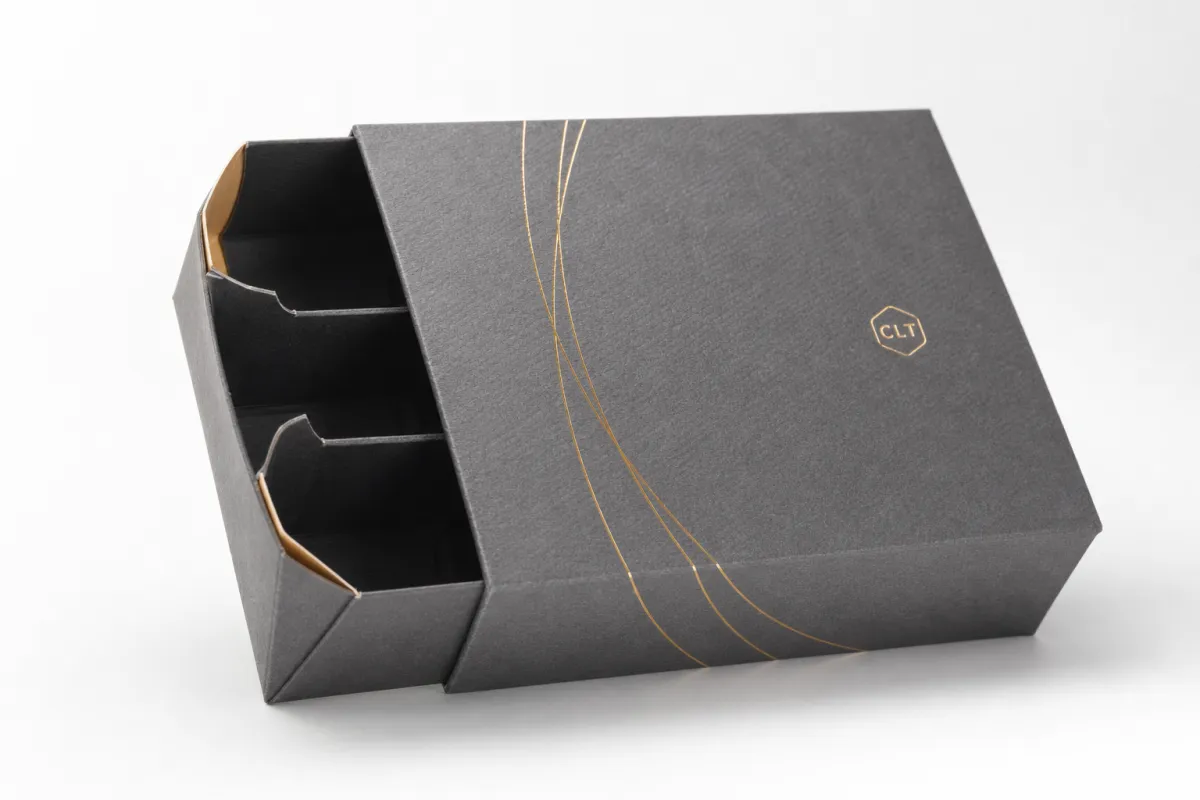
Custom printed cartons with dividers solve an ordinary problem with a very practical structure. Products move. They vibrate, tilt, rattle, settle, and sometimes get bumped hard enough to knock their corners or scuff their labels. A divider turns open space into fixed pockets, which lowers the chance of chips, scratches, broken closures, and product-to-product contact. There is nothing flashy about that, and that is kind of the point. Good packaging often looks boring from a distance because it is doing its job well.
Carton selection often gets treated like a print decision first, but protection has to come before the nice-looking outer surface. Graphics still matter for branded packaging, and a clear visual identity can improve the unboxing experience, yet the internal layout is what protects margin by reducing damage and repacks. Custom printed cartons with dividers are especially useful for glass bottles, skincare kits, tea sets, small appliances, and mixed-item retail packaging that needs to arrive neat enough for the customer to open without finding broken pieces scattered inside.
They also reduce dead space. That sounds minor until an order scales into hundreds or thousands of units and every cubic inch starts affecting freight, warehouse storage, and packing labor. A carton that is too large usually needs more void fill, more tape, and more handling time. Custom printed cartons with dividers bring the pack size into better control, which makes the whole operation feel less improvised and a lot easier to repeat.
The practical upside shows up fast:
- Fewer breakages because products are separated instead of colliding in transit.
- Cleaner unpacking because each item has its own place inside the carton.
- Better shelf and gift appeal because the carton opens with intention rather than chaos.
- Lower packing waste because less loose fill is needed to stabilize the contents.
That is why custom printed cartons with dividers show up so often in cosmetics, beverage samplers, candle sets, and mixed-item kits. They do more than protect the product. They help the brand look organized, and that quality matters more than many teams expect. When the outer print and the inner structure support each other, the box feels deliberate instead of pieced together in a hurry.
For brands that sell Custom Packaging Products, this is usually the point where packaging stops acting like a pure expense and starts doing two jobs at once: protection and presentation. Custom printed cartons with dividers are a good example of that balance done the right way.
How Custom Printed Cartons with Dividers Work in Transit
Shipping damage usually begins with movement. A carton gets stacked, dropped, tilted, or vibrated in a truck, and the items inside start acting like they have no coordination whatsoever. Custom printed cartons with dividers reduce that motion by creating pockets that hold each product in a fixed position. Less movement means less impact. Less impact means fewer chips, scratches, and broken closures. Straightforward idea, messy real-world problem.
The divider does the structural work while the print stays on the outer carton where customers can actually see it. That arrangement is part of why custom printed cartons with dividers are so useful for package branding. The visual message stays front and center, and the internal build handles the rough parts of the journey. You get the appearance of custom printed boxes without pretending that graphics alone can protect fragile goods.
Several divider styles show up often, and each one behaves a little differently in transit:
- Die-cut inserts for a precise fit around one product or a tightly grouped set of items.
- Corrugated grid dividers for bottles, jars, and goods that need firm cell walls.
- Paperboard partitions for lighter products, short runs, or kits that need a cleaner presentation.
- Molded inserts when shape retention and movement control matter more than decorative appearance.
Shipping test standards from organizations such as the ISTA are useful because they focus on vibration, drop, and compression forces, which are the same forces that expose a weak pack. That does not mean every order needs a formal lab report attached to it. It does mean custom printed cartons with dividers should be designed around transit realities instead of relying on a mockup and good intentions. I have watched more than one “solid” carton fail only after the first rough-handling test, and that is a humbling moment for everyone in the room.
Fit matters more than brute strength. A pocket that is too tight can make packing frustrating and may scuff a finish or crush a label. A pocket that is too loose lets the product shift and knock around. Well-built custom printed cartons with dividers sit in the middle: enough room for repeatable packing, enough restraint to limit movement, and enough structure to keep the load balanced across the carton.
The carton size and divider layout need to be developed together for the same reason. A box can look efficient on a dieline and still perform poorly if the internal partitions do not distribute weight evenly. For custom printed cartons with dividers, the shipping system is the entire package, not just the outer shell.
The sample that looks perfect while it is empty can turn into a different story once real products are loaded into it. Weight changes closure behavior, divider compression, and how the carton wants to hold itself closed.
Cost, Pricing, and MOQ for Custom Printed Cartons with Dividers
Price tends to make buyers hopeful and irritated at the same time. Custom printed cartons with dividers almost always cost more than plain cartons because the order includes structural design, divider material, print setup, and usually a more careful production run. That extra spend often pays back through fewer breakages, fewer repacks, and fewer customer service messages from people who opened a box full of fragments.
The blunt version is simple: if a fragile product costs $18 to replace and reship, a carton that prevents even a modest number of returns can justify a higher unit price very quickly. That is why buyers should compare custom printed cartons with dividers against the full landed cost of damage instead of only the purchase price of the box. Cheap packaging becomes expensive the moment it stops holding up.
The main cost drivers are predictable:
- Board grade - kraft, white-lined corrugated, coated paperboard, or heavier shipping board.
- Divider complexity - simple partitions cost less than tightly engineered cell grids.
- Print coverage - one-color branding is cheaper than full coverage or premium finishes.
- Carton size - larger packs use more material and increase freight volume.
- Compartment count - more pockets usually mean more labor and more tooling.
For planning, these ranges are a practical starting point for custom printed cartons with dividers at medium quantities, assuming standard production and no unusual finishing complications:
| Packaging Option | Typical Use | Approx. Unit Cost at 5,000 Units | What Drives the Cost |
|---|---|---|---|
| Plain corrugated carton + loose fill | Durable goods, low-risk shipments | $0.35-$0.75 | Low setup, but more packing labor and higher damage risk |
| Custom printed cartons with dividers | Bottles, jars, gift kits, mixed sets | $0.70-$1.80 | Divider layout, print coverage, board grade, and box size |
| Premium retail packaging with coated board insert | Presentation kits, cosmetics, premium gifts | $1.10-$2.50 | Higher-end print, tighter tolerances, and more finishing steps |
MOQ matters as well. Lower minimums make testing easier, although they often carry setup fees that make the unit price feel frustratingly high. Higher minimums usually reduce the per-unit cost, which is why custom printed cartons with dividers often make the most sense once a SKU is stable or a seasonal kit is predictable. Small runs are possible, just not always efficient.
A smart buying habit is to ask for quotes at several quantities: 500, 1,000, 3,000, and 5,000 units, if the supplier can price them. Then compare unit price, setup fees, freight, and waste from overordering. The lowest number on paper is rarely the best decision in the real world. Custom printed cartons with dividers reward buyers who look at the whole cost stack instead of chasing the lowest sticker price like it is the only thing that matters.
Finishing can change the price more than many teams expect. A matte varnish may be reasonable. Soft-touch lamination, foil stamping, spot UV, or heavy interior print can raise the cost quickly. If the box spends its life in a shipping lane instead of on a beauty counter, the finish choices should stay disciplined. That matters even more for custom printed cartons with dividers, because the internal structure already carries much of the value.
Production Process, Timeline, and Lead Time
The cleanest orders begin with real measurements rather than rough guesses. For custom printed cartons with dividers, a supplier needs product dimensions, product weight, fragility level, packing quantity, closure style, and the shipping method. A carton built for local courier handling is not always the right answer for long-haul freight. Same product family. Different abuse.
The production path usually moves through a few clear steps:
- Brief and spec collection - product size, weight, photos, and target quantity.
- Structural layout - carton dieline, divider pocket sizing, and board selection.
- Artwork setup - logo placement, print coverage, and proof review.
- Sample or prototype - physical check with the actual products inside.
- Approval and production - final sign-off before the full run.
- Packing and shipping - carton count verification, palletizing, and freight booking.
Lead time depends on how much revision the job needs. Simple custom printed cartons with dividers can sometimes move from approval to shipment in roughly 12-18 business days. More complex jobs, especially those with custom insert layouts, multiple compartments, or special finishes, often need 18-30 business days or more. Freight time sits on top of that. Physics still collects its share.
The biggest delays usually come from three places: late dieline changes, unclear measurements, and artwork revisions after proofing has already started. If the product dimensions change even a little, the divider pockets may need to be rebuilt. A milestone schedule works better than one vague delivery date. Ask for dates on sampling, proof approval, production start, and shipping. Custom printed cartons with dividers are much easier to manage when everyone can see the checkpoints.
For seasonal kits, launches, and retail packaging rollouts, buffer time matters a great deal. A box that arrives three days before launch is not really on time. Leave room for revisions, inspection, and freight delays, especially if the order supports a marketing calendar or warehouse slotting change. Custom printed cartons with dividers can look simple until the schedule starts moving around.
Choosing Materials, Divider Specs, and Print Details
Material choice should begin with the product, not with the prettiest sample board in the room. Heavier items and fragile goods usually need corrugated board, while lighter presentation kits can sometimes use paperboard. Custom printed cartons with dividers perform best when the board strength matches the stacking load, transit distance, and the amount of rough handling the shipment will face. If the carton is going through parcel networks, strength matters more than a glossy concept sample.
For corrugated builds, common options include E-flute for tighter presentation and lighter contents, B-flute for more crush resistance, and combination boards when the load needs extra structure. Divider walls should be chosen with the same common sense. A 2 mm paperboard partition can work for some light kits. A bottle pack usually needs more serious corrugated walls. Custom printed cartons with dividers are a systems decision, not a single-material decision.
Divider fit has its own rules. Pocket width needs enough clearance for the product to drop in without scraping, but not so much room that the item can sway. Wall thickness needs to hold shape under compression, especially if the carton is stacked. Insert height should support the product without interfering with closure panels or tuck flaps. Anyone ordering custom printed cartons with dividers should ask for a sample using actual filled units, because empty inserts can look impressive and still fail under load.
Print decisions should match how the pack is used. Kraft stock gives a natural, grounded appearance and works well for minimalist package branding. Coated stock gives cleaner color reproduction and works better when the artwork depends on fine detail. One-color print can feel sharp and controlled. Full-color print can make sense if the carton is acting like retail packaging as much as a shipper. The more coverage you add, the more the cost rises, so the visual result needs to earn its place.
If sustainability matters in the brief, ask for FSC-certified board and make the claim only when the chain of custody is real. The FSC provides clear information on certification, which helps when you need a defensible materials story rather than a box that merely looks green. That matters for custom printed cartons with dividers because buyers often want the packaging to support the brand narrative, not just move the product safely.
Pack-out consistency deserves attention too. A design can look beautiful in CAD and still slow the line if the divider needs too much force or if the panels refuse to close cleanly. The best spec is the one your team can pack repeatedly without fighting the carton. That is the difference between smart custom printed cartons with dividers and packaging theater.
Common Mistakes When Ordering Custom Printed Cartons with Dividers
The most common mistake is measuring the product and forgetting the packed system around it. That sounds small, yet it creates most bad fits. You need to account for caps, labels, closures, divider clearance, and any padding that sits inside the pocket. Custom printed cartons with dividers fail when the designer measures a bottle and ignores the closure that makes the bottle taller. That is how a simple order turns into a remake.
Another mistake is trusting a divider that feels sturdy in the hand but collapses under stack pressure. If the cells are too shallow, the product can poke above the partition and rub against the carton top. If the walls are too thin, they can bow when the outer carton is compressed. Custom printed cartons with dividers need real sample testing because glass, ceramics, and heavy cosmetic jars all behave differently under load.
If the only thing you test is the empty carton, you are not really testing the package. You are testing paper.
Overdesign causes trouble too. Fancy finishes, extra print passes, and too many structural flourishes can push the job beyond budget before the protection gets any better. That shows up with custom printed cartons with dividers more often than people admit: someone wants the box to feel premium, but the budget belongs to a shipping container, not a jewelry case. Pick the features that improve performance or sell the product. Leave the decorative noise out.
Skipping samples is another classic mistake. A prototype shows whether the closure works, whether the divider shifts, and whether the product chips during insert-and-close. The cost of a sample is usually tiny compared to a full run that needs to be scrapped or reworked. With custom printed cartons with dividers, a sample is not a nice extra. It is cheap insurance.
Timing mistakes show up after the order is placed too. Teams change the product dimensions late in the process and then act surprised when the carton no longer fits. Once the divider layout is locked, even a small change can trigger a structural revision. That means new proofs, new samples, and new delays. For custom printed cartons with dividers, lock the spec before scaling the run. Otherwise you end up paying to relearn geometry.
Here is the short version of what to avoid:
- Measuring the item without measuring the packed system.
- Using a divider that looks strong but has not been load-tested.
- Overpaying for finishes that do not improve performance.
- Ordering bulk without a physical sample.
- Changing the product after the structure is approved.
Next Steps: Sample, Compare, and Order Smarter
Start with a clean spec sheet. List product dimensions, weight, fragility level, pack quantity, carton style, shipping method, and any presentation requirements. If the product is a bottle set or a mixed kit, include the orientation you want the customer to see on opening. Custom printed cartons with dividers become much easier to quote when the supplier is not guessing what “roughly this size” is supposed to mean.
Then ask for a sample or short-run prototype. If the product is fragile, oddly shaped, or expensive to replace, this step is non-negotiable. A sample lets you test closure strength, divider fit, print placement, and pack speed. It also shows whether custom printed cartons with dividers hold their shape once the real product weight is inside. Empty boards are optimistic. Loaded boards tell the truth.
It helps to compare at least two options before you commit:
- Protection-first version - stronger board, simpler print, tighter divider layout.
- Presentation-first version - better print, slightly lighter board, still enough structure to ship safely.
- Balanced version - a middle spec that keeps costs in line without turning packing into a compromise sport.
For brands moving through Custom Packaging Products, this is usually where the choice becomes clear. If the carton travels far, choose the stronger spec. If the carton sits in a retail setting and only moves a short distance, the print finish may matter more. Custom printed cartons with dividers should match the route, the product, and the buyer’s expectations, not somebody’s favorite sample from a catalog.
Verify the timeline before you approve the final version. Ask for the sample date, proof date, production start, and ship date. Then build a little buffer on top. Freight has a sense of humor, and it is rarely a kind one. Custom printed cartons with dividers deserve careful planning because the worst packaging problems usually show up after the warehouse is already full.
If you want fewer breakages, cleaner presentation, and less packing chaos, custom printed cartons with dividers are a sensible middle ground. Measure the product, request the sample, compare the material options, and approve the structure Before You Order the full run. That is the boring answer, and boring is usually what ships well.
Frequently Asked Questions
How do custom printed cartons with dividers keep products from breaking?
They separate each item into its own pocket, which cuts down on product-to-product impact during vibration and drops. They also reduce side-to-side movement, so fragile items are less likely to chip, scuff, or tip over in transit.
What is the best material for custom printed cartons with dividers?
Corrugated board is usually best for heavier or fragile goods because it adds strength and resists crush damage. Paperboard can work for lighter products or premium presentation kits, but it is not the right answer for every shipment.
What affects the price of custom printed cartons with dividers?
Board grade, divider complexity, print coverage, finish, size, and order quantity all move the unit cost. Setup fees and tooling matter too, so small runs can look expensive even when the per-unit print price seems reasonable.
How long is the lead time for custom printed cartons with dividers?
It depends on sampling, artwork approval, structural changes, and production queue length. Simple orders move faster; complex packs with custom insert layouts need more time for testing and sign-off.
Should I order a sample before buying custom printed cartons with dividers in bulk?
Yes, especially if the products are fragile, oddly shaped, or expensive to replace. A sample shows whether the divider fit, closing strength, and print layout actually work before you commit to a large run, and that is usually the difference between a clean launch and a mess.

