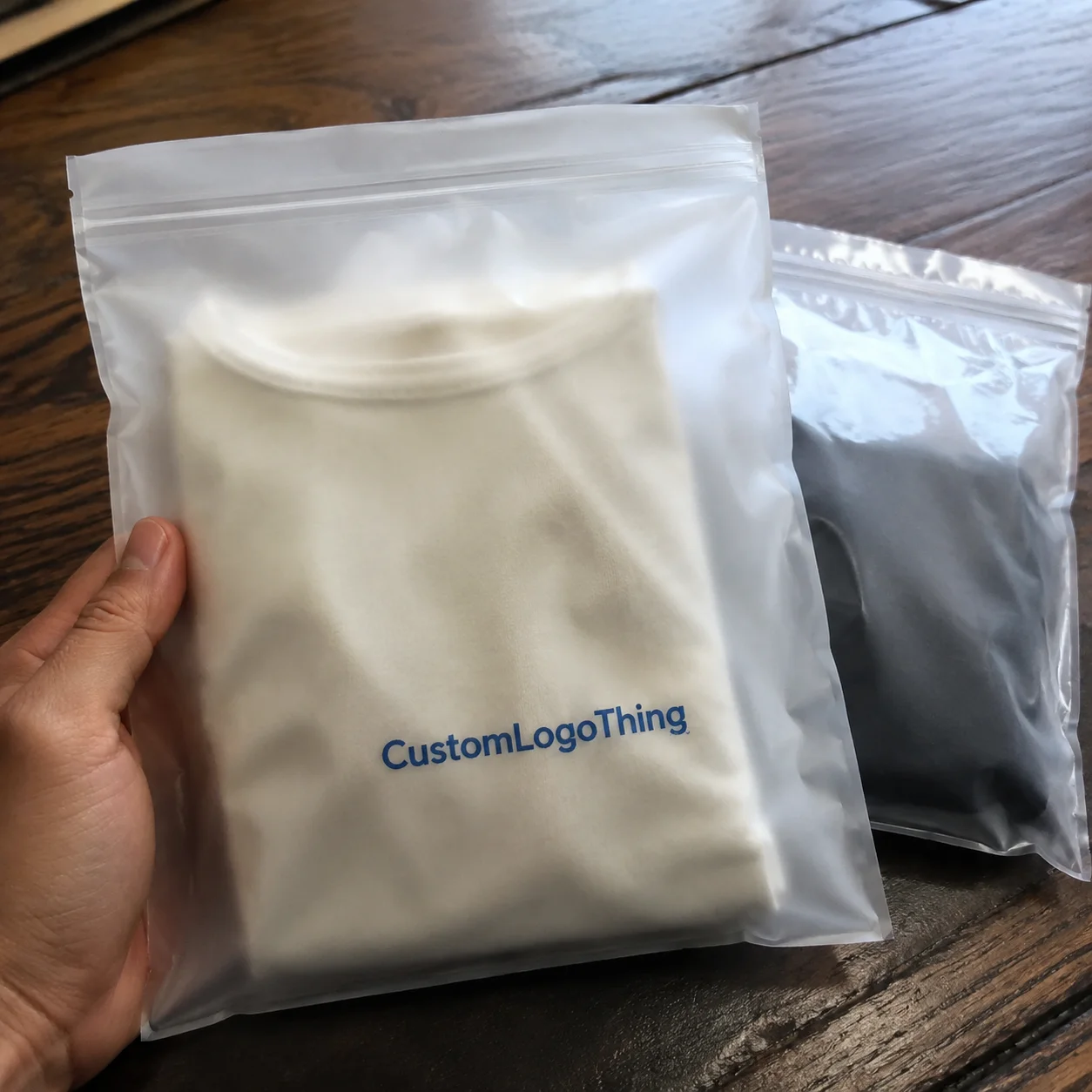
Custom printed Clear Poly Bags do three jobs at once: they protect the product, keep it visible, and carry branding or practical information that helps packing and retail presentation. That combination makes them useful, but it also makes the buying decision more technical than a simple size-and-price comparison.
Clear film is less forgiving than opaque packaging. A design that looks sharp on a screen can soften on transparent material, and a bag that looks fine in a sample can fail once it is packed, handled, and shipped. Gauge, seal style, closure, ink coverage, and artwork setup all affect performance and cost.
For brands comparing Custom Packaging Products across formats, clear poly bags often sit in a practical middle ground: lighter and cheaper than rigid packaging, but more polished than a plain stock sleeve. They can also be a better fit than many Custom Poly Mailers when the product should remain visible.
What Custom Printed Clear Poly Bags Actually Change
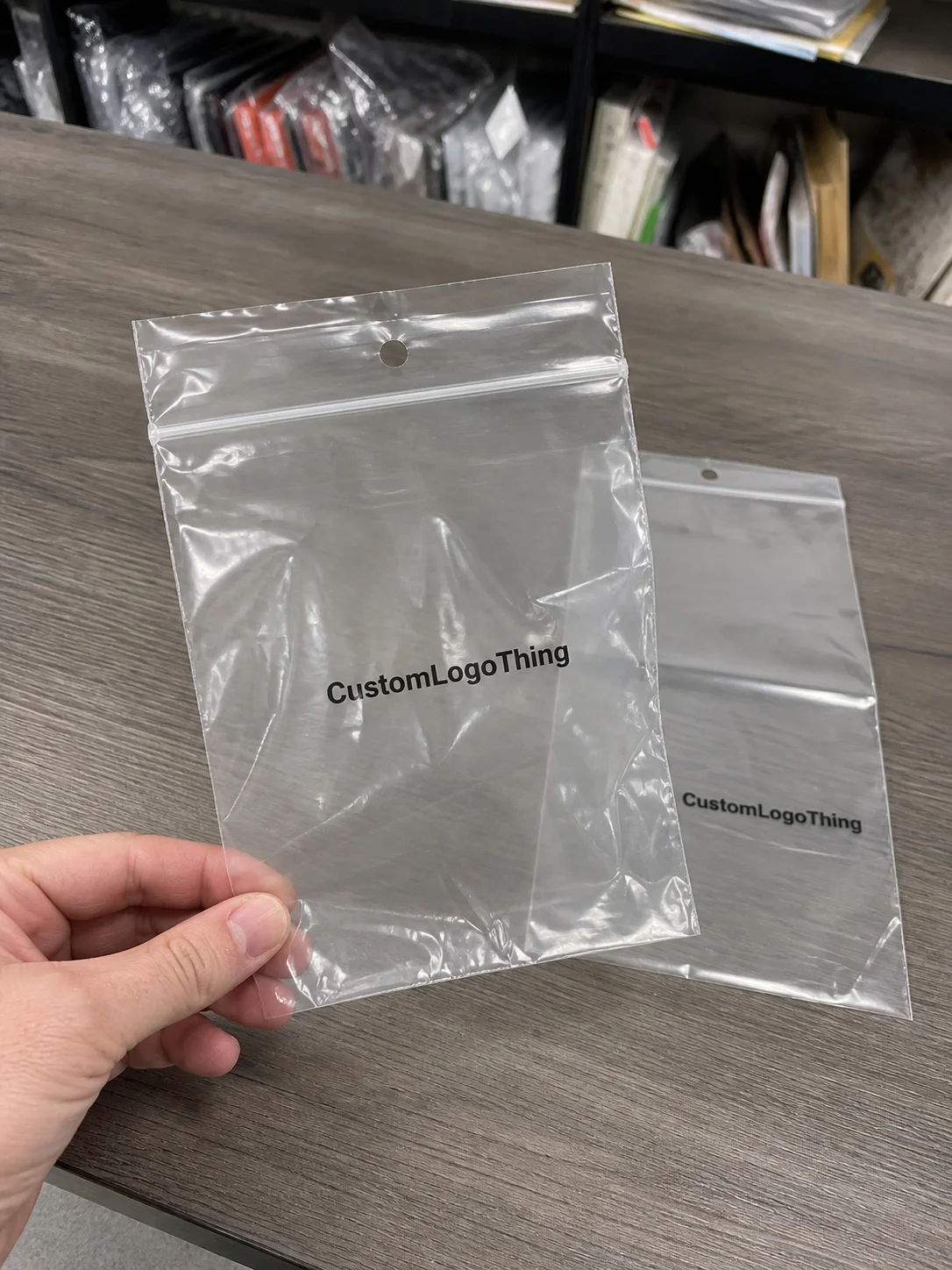
Clear bags let the product do part of the selling. That matters for apparel, accessories, bakery items, sample kits, and bundled sets where the buyer wants to see color, texture, fold quality, or finish before opening anything. They also reduce friction on the packing side because staff can confirm contents without opening the package.
The printed layer is functional, not just decorative. A logo, size callout, care note, warning line, barcode zone, or campaign message can turn a plain sleeve into working retail packaging. In high-volume operations, fewer labels and fewer hand motions can matter as much as presentation.
Plain clear film and printed clear film are different purchases. One is storage. The other is a packaging component. The first is cheaper upfront. The second often costs less in labor once you include label application, sorting, and rework. Buyers who only compare unit price often miss that distinction.
These bags make the most sense when visibility matters and the product does not need a carton. Folded tees, socks, swimwear, small gift sets, cosmetic samples, bakery flat packs, and subscription inserts are common fits. The bag protects against dust and abrasion while reinforcing package branding without hiding the product.
Before quoting, define the real priority:
- Show the product clearly or partially hide it
- Speed up packing
- Improve shelf presentation
- Protect against dust, moisture, and rubbing
- Keep the logo subtle or highly visible
That answer drives the film choice, print area, and whether the bag should feel minimal or more promotional.
How the Printing Process Works on Poly Film
The production flow is simple: artwork, file prep or plate setup, proof, approval, printing, converting, inspection, and packing. Problems usually appear late if the artwork is vague early on, so the first quote should not be the first time anyone talks about dimensions, color, or print coverage.
Artwork quality matters more on clear film than on opaque packaging. Vector files, clean line weights, and stable color references help keep the print consistent. Fine type is especially risky because it can disappear once the bag is filled and the product sits behind it.
Contrast is the main challenge. Clear film shows everything behind it, including weak design choices. If the logo needs to stand out against a patterned product or dark garment, a white underprint may be necessary. Without it, bright colors can look washed out and dark graphics can lose definition.
Color count affects both cost and consistency. A one-color logo is usually easiest to keep stable from run to run. Two colors is still manageable. Full-coverage graphics are possible, but they increase setup time, registration risk, and proofing effort. If the brand cares about exact color matching, a physical sample is safer than a digital mockup.
A screen proof shows placement. It does not reliably show how ink, opacity, and film clarity will interact in production.
For brands building a broader product packaging system, this is where consistency matters. If the bag, carton, and label all follow different color assumptions, the result looks scattered. The same color discipline used for Custom Packaging Products and custom printed boxes should carry over here as well.
For general packaging and shipping reference points, the ISTA test standards are useful for transport performance, and the Packaging Institute is a good source for packaging education and material context.
Film Gauge, Seal Style, and Closure Choices
Gauge affects both the feel of the bag and how long it survives in the real world. Thinner film costs less and packs flatter. Thicker film resists puncture better and usually feels more substantial. The right choice depends on the product, handling path, and shipping method.
Lightweight apparel usually works with lighter gauges. Products with corners, weight, hardware, or repeated handling need more protection. If the bag goes through e-commerce fulfillment, the package has to survive extra abrasion before the customer sees it, so a few microns can matter.
Buyers usually compare the following styles:
| Bag Style | Best Use | Strength | Packing Speed | Typical Tradeoff |
|---|---|---|---|---|
| Flat bag | Apparel, inserts, accessories | Moderate | Fast | Simple and efficient, but not ideal for bulky products |
| Gusseted bag | Thicker product stacks or boxed inserts | Higher capacity | Moderate | Takes more storage space and often costs more |
| Wicketed bag | High-speed packing lines | Moderate to high | Very fast | Needs compatible fulfillment equipment or workflow |
| Zipper bag | Reusable retail and sample packs | High usability | Slower | More expensive than plain seal options |
| Adhesive flap bag | Quick mail-ready or retail-ready packs | Moderate | Very fast | Adhesive quality needs careful testing |
Seal style matters just as much as thickness. Heat seals are clean and secure. Zippers make sense when the customer will reuse the bag or open it repeatedly. Adhesive flaps can reduce labor, but weak adhesive is a common failure point in cold storage, dusty conditions, or fast packing environments.
Functional add-ons should be specified early: hang holes for peg display, vent holes for air release, suffocation warnings where required, and barcode or size zones that keep scanning simple. These details are small on paper and obvious in day-to-day use.
If you are comparing custom printed Clear Poly Bags for retail or fulfillment, ask one direct question: will this bag survive the product, the shipment path, and the actual packing workflow? If the answer is uncertain, the spec needs work.
For recycling and waste context, the EPA is a useful reference point, though local recycling rules and resin type matter more than a generic sustainability claim.
Cost, MOQ, and Quote Ranges
Price is driven by a handful of repeat variables: bag size, film thickness, print colors, print coverage, closure type, and where the order is produced. Domestic and offshore sourcing can differ sharply because labor, tooling, freight, and lead time change the economics. A low unit price can still become a poor landed cost once shipping and setup are added.
MOQ matters because setup cost gets spread across the run. A 1,000-piece order usually carries a higher unit price than a 10,000-piece order, even if the bag is identical. The equipment needs setup, alignment, and waste allowance before the run becomes efficient.
For a realistic planning range, simple Custom Printed Clear poly bags in standard clear PE with limited colors and moderate gauge may fall around $0.08-$0.20 per unit at higher quantities, while smaller runs or more complex specs can move into the $0.25-$0.60+ range depending on size, coverage, and closure. Specialty features, white underprint, and custom converting can push pricing higher.
The cheapest-looking quote is not always the best buy. A low number that excludes freight, tooling, proofing, or packaging is not a bargain. Ask whether the quote includes:
- Tooling or plate fees
- Artwork setup and proofing
- Packaging and carton counts
- Domestic freight or ocean freight
- Import duty or brokerage handling
The best way to compare pricing is to send identical specs to every vendor. Include finished dimensions, film preference, print area, number of colors, closure type, quantity, and delivery location. If you are comparing branded packaging vendors, make them quote the same build.
Basic pricing tiers buyers often see:
- Basic: clear PE, one-color logo, standard flat bag, higher MOQ
- Mid-range: two-color print, moderate gauge, added warnings or size marks
- Premium: white underprint, zipper or gusset, tighter tolerances, custom converting
Timeline From Artwork Approval to Delivery
The standard sequence is quote, file check, proof approval, setup, production, quality check, packing, and freight handoff. Delays usually come from missing files, vague color specs, or late changes after the job is already in motion.
For standard custom printed clear poly bags, production after proof approval often takes about 10-20 business days, depending on quantity and print complexity. Shipping adds time on top of that. Domestic transit may be short. Overseas freight is not. Customs, carrier handoffs, and port congestion can add days that were not visible in the initial quote.
Rush work is possible if the job is clean. Final artwork. Clear dimensions. No uncertainty about closure style. No last-minute redesign. If the spec is still moving, the schedule moves with it.
The fastest approvals happen when the buyer sends a complete packet:
- Finished bag dimensions
- Product weight and shape
- Artwork files in vector format
- Pantone targets or approved color references
- Target quantity and delivery address
Packaging works better when the bag is treated as part of a system rather than an isolated SKU. If labels, cartons, and inserts all have different visual logic, the final pack looks less intentional. Align the specs before production starts.
Common Ordering Mistakes That Raise Unit Cost
The first mistake is ordering from rough dimensions instead of the actual finished product. Bags need room for seal areas, insertion method, and product bulk. A folded shirt in a test sample can behave differently in production once tags, steam, or hang cards are added.
The second mistake is overloading the print. Clear film is less forgiving than opaque packaging. Too much ink can make the bag look muddy, especially when the product behind it is dark or patterned. A heavy block of color may work on a carton, but on a transparent sleeve it can reduce clarity and distract from the product.
The third mistake is selecting the wrong gauge. Too light, and the bag tears. Too heavy, and the bag costs more than it needs to and may slow packing. The target is the right balance of protection, appearance, and handling.
Compliance is another place where orders go wrong. If the bag is for food use, ask about food-contact suitability. If it is retail apparel, confirm suffocation warnings where required. If hang holes or barcode zones are needed, specify them before production begins. Changing those details after approval usually means time lost and money spent twice.
Inventory planning can also distort the economics. A lower unit price does not help if the bag is the wrong size, wrong closure, or wrong level of print visibility. Bad packaging at a bargain price is still bad packaging.
For brands managing multiple formats, think about product packaging as a system instead of a single SKU. A clear bag, a mailer, and an outer carton each do different jobs. If one format is forced to cover all three, the result tends to be inefficient and more expensive than necessary.
How to Spec the Right Bag and Plan Next Steps
The cleanest way to spec custom printed clear poly bags is to start with the product, not the quote. Measure the finished item. Decide how it will be packed. Choose the closure. Set the gauge based on handling risk. Then define the print area and the number of colors. That sequence cuts down on back-and-forth and reduces the chance of a costly revision later.
After that, request two or three quotes using identical specs. Same dimensions, same print colors, same gauge, same closure, same destination. Anything less makes the comparison unreliable. The goal is a quote set that tells you something real about value, not a stack of numbers that only look comparable.
Ask for a proof or sample before you approve the full run, especially if the bag is going into retail, food, or a visible fulfillment process. A simple sample can expose weak seal strength, poor clarity, bad logo contrast, or product fit problems. Catching that before production is inexpensive. Catching it after delivery is not.
If the brand is new to printed packaging, start with one pilot SKU. That gives you a real test of gauge, artwork, and closure in actual handling conditions. The second run is often better because it is based on observed behavior instead of assumptions.
Useful working checklist:
- Measure the product accurately
- Choose the closure style
- Pick the right gauge for handling and shipping
- Confirm print colors and contrast needs
- Request a proof or sample before release
- Compare quotes on the same spec
That approach keeps the purchase grounded in reality. The right bag should fit the product, the packing process, and the shelf without creating extra work. Good packaging tends to disappear into the workflow. That is usually the sign it was specified correctly.
Are custom printed clear poly bags good for retail apparel?
Yes. They work well for folded shirts, socks, swimwear, and other lightweight apparel because the product remains visible while the bag adds branding, size information, and basic protection. If the item is heavier or has sharp edges, specify a thicker gauge so the bag is less likely to split in transit or on the shelf.
What print method works best on custom printed clear poly bags?
Flexographic printing is common for larger runs because it handles repeat logos efficiently and keeps unit cost reasonable. For short runs or variable artwork, ask whether a digital or short-run process is available. If the design needs strong contrast on clear film, confirm whether white underprint is included.
How thick should custom printed clear poly bags be?
Use a lighter gauge for soft, lightweight items and a thicker gauge for products with corners, weight, or repeated handling. Apparel and soft goods often work in lighter films, while shipping or retail-ready packs usually need more strength. Do not choose by price alone; the wrong gauge creates tears, waste, and reorders.
What details should I send for an accurate quote?
Send finished bag dimensions, material preference, print colors, quantity, closure type, and the product the bag will hold. Add compliance needs such as food-contact use, warning text, hang holes, or retail labeling requirements. Include the delivery location so freight and landed cost are not guessed at the end.
How long do custom printed clear poly bags take to produce?
Lead time depends on artwork readiness, proof approval speed, production queue, and shipping method. Simple jobs move faster when the files are final and the spec is standard. Custom sizes and complex print setups take longer. If the order is time-sensitive, confirm both production time and transit time before approving the quote.