Buyer Fit Snapshot
| Best fit | Custom Printed Gift Bags projects where brand print, material claims, artwork control, MOQ, and repeat-order consistency need to be specified before quoting. |
|---|---|
| Quote inputs | Share finished size, material target, print colors, finish, packing count, annual reorder estimate, ship-to region, and any compliance wording. |
| Proofing check | Approve dieline scale, logo placement, barcode or warning zones, color tolerance, closure strength, and carton packing before bulk production. |
| Main risk | Vague material claims, crowded artwork, missing packing details, or unclear freight terms can make a low unit price expensive after revisions. |
Fast answer: Custom Printed Gift Bags: Quote Scope, Sample Proof, MOQ, and Lead Time should be specified like a repeatable production item. The safest quote records material, print method, finish, artwork proof, packing count, and reorder notes in one written spec.
Production checks before approval
Compare the actual filled-product size with the drawing, then confirm tolerance on folds, seals, hang holes, label areas, and retail display edges. Reserve space for logos, QR codes, warning copy, and material claims before decorative graphics fill the panel.
Quote comparison points
Review material grade, print process, finish, sampling route, tooling charges, carton quantity, and freight assumptions side by side. A quote is only useful when the supplier can repeat the same color, closure quality, and packing count on the next order.
What Are Custom Printed Gift Bags and Why Do They Matter?
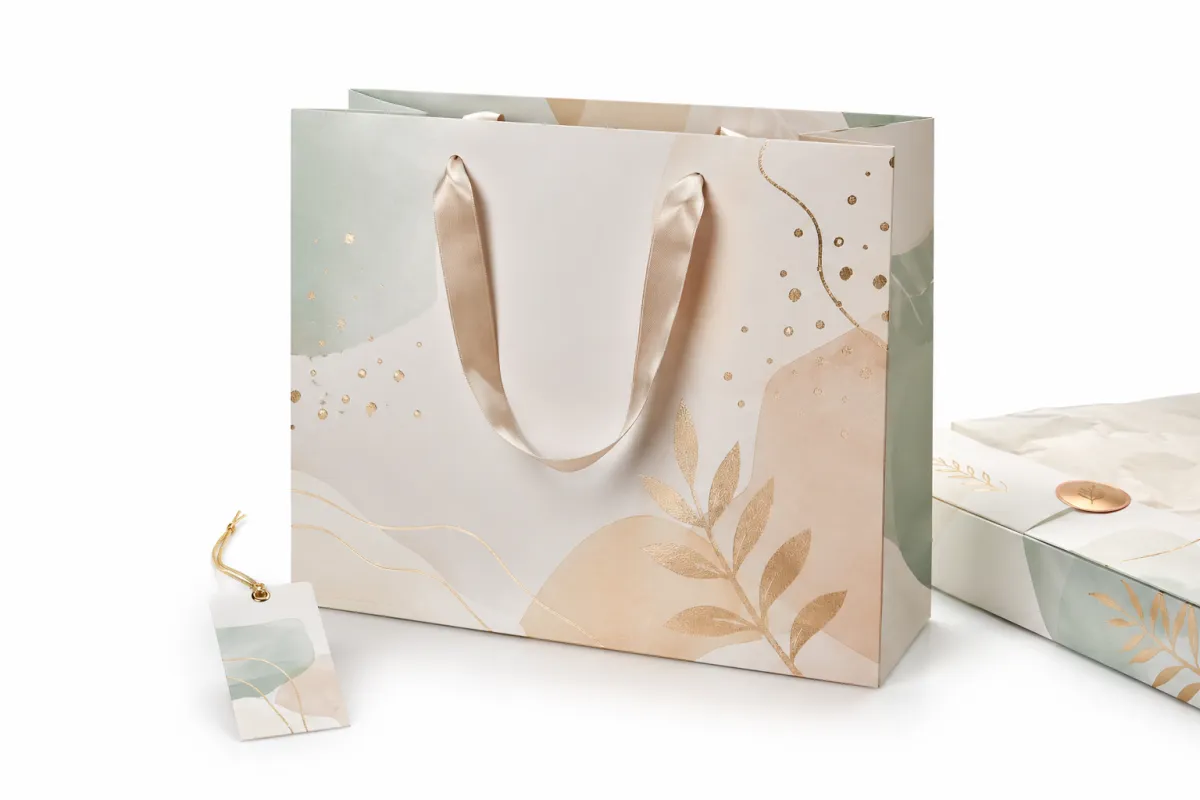
I still remember a client in our Shenzhen facility who thought a premium launch bag only needed a sharp logo and decent paper. We changed two details on the sample: the handle moved from a thin twisted paper loop to 9 mm cotton rope, and the stock shifted from a light 128gsm sheet to a sturdier 157gsm art paper with matte lamination. The same Custom Printed Gift bags went from looking like leftover promo material to something that belonged beside a $120 candle set. That kind of change is tiny on a spec sheet and loud in the hand. On a packed production floor in Shenzhen, a 2 mm shift in handle placement can change the whole read of a bag.
At the simplest level, custom printed gift bags are branded carriers built for a logo, campaign, event, product line, or seasonal release. They are not plain shopping bags with ink dropped onto them. They are packaging decisions with a practical job: hold the product, carry the brand, and make the handoff feel deliberate. I have stood on production floors in Dongguan and Guangzhou where a 3 mm fold-line shift or a handle tone that landed two shades off brand color turned an otherwise good bag into a weak one. The mistake is rarely obvious on screen. It becomes obvious once the paper is folded, glued, and touched by a customer. The bag either feels considered or it feels like a rushed afterthought, and customers usually spot the difference in under five seconds.
Why do they matter? Retail packaging rarely gets judged in isolation. A customer sees the bag, feels the handle, hears the paper crackle, and decides in seconds whether the brand feels considered or careless. custom printed gift bags also keep working after the sale. The shopper carries them through a mall, into a taxi, across an office lobby, or onto a train platform. That is public brand exposure with no extra media spend. A 200-unit boutique run in Singapore or Seoul can still be photographed, posted, and shared hundreds of times. The logo matters, sure. The carrying experience matters more than most people admit.
I want to keep this practical. We will look at how custom printed gift bags are made, what pushes the price up or down, how materials and finishes change the result, and where buyers usually make avoidable mistakes. If you also need matching cartons or mailers, the broader Custom Packaging Products range can help you keep branded packaging consistent across the order. That consistency matters more than a lot of teams want to admit. A bag, box, and insert that feel like cousins create trust, especially when the bag uses 157gsm art paper and the carton uses 350gsm C1S artboard.
How Custom Printed Gift Bags Are Made
The production path is usually more structured than buyers expect. Bag style comes first: square bottom, gusseted sides, rope-handle boutique, flat-handle retail, or a heavier laminated gift bag build. After that, the printer checks the dieline, because custom printed gift bags need exact dimensions before anyone starts a press. A bag that looks clean in a mockup can fail in real use if the gusset is too shallow for a boxed product or the top fold leaves no room for a reinforcement board. A 180 mm wide gift bag may work for a candle jar, then fail for a boxed 3-piece skincare set. That is not theory; that is what happens when structure gets treated like decoration.
Once the structure is set, artwork enters proofing. That stage causes a surprising number of problems. Printers need vector files, usually AI, EPS, or a print-ready PDF, with fonts outlined and colors specified in Pantone or CMYK values. I have sat through prepress reviews where a client sent a logo copied from a website, 900 pixels wide, then wondered why the edges looked fuzzy on the sample. On custom printed gift bags, file quality matters just as much as stock choice. A soft file gives a soft result. There is no heroic printer who can rescue a blurry logo with sheer optimism, even if the factory is in Ningbo and the press room is immaculate.
The print method changes both appearance and cost. Offset printing gives crisp detail and suits higher-volume custom printed gift bags with multiple colors. Flexo works well for simpler paper builds and straightforward artwork. Digital printing handles shorter runs and test launches, often from 100 to 1,000 pieces. Foil stamping adds a metallic hit that reads as premium, while embossing or debossing adds texture without adding more ink coverage. I have negotiated foil jobs where a client wanted gold, rose gold, and silver on the same run. That sounds elegant in a showroom. In production, it means extra tooling, extra setup, and extra chances for delay. My opinion? Choose one accent and let it do the work. Too many effects can make a bag look like it is trying to win an argument.
After printing, the sheets are finished, die-cut, glued, folded, and assembled. Handles go on next, then reinforcements, then inserts if the bag needs more structure. Lead time often lands around 12-15 business days from proof approval for a straightforward run, though custom printed gift bags with foil, lamination, or special handles can take 18 to 22 business days. Freight planning matters too. A bag sitting finished in the factory does not help if the shipment misses a store opening because nobody left room for transit. I have watched a launch timetable wobble because someone assumed shipping would behave like email. It does not. Shipping behaves like shipping, which is to say: it has opinions.
There are a few recurring causes of delay:
- Artwork gets approved late after the dieline has already been locked.
- Color changes arrive after a digital proof has been signed off.
- Structural revisions show up after the product has grown taller, heavier, or boxed differently.
- Shipping decisions happen too late for the production calendar.
For reference standards, I often point buyers to packaging industry groups and test methods, especially for retail or e-commerce use. The ISTA testing standards are useful when a bag needs to withstand rough handling, while the broader packaging resources at packaging.org help with materials, sustainability language, and basic design principles. Those resources will not pick the paper for you, but they will keep you from guessing in the dark. A bag spec written around a 2.5 kg test load is a lot better than a guess based on a mood board.
Custom Printed Gift Bags Pricing: What Drives Cost
Pricing on custom printed gift bags looks simple right up until the quote lands and everyone starts asking why the number is higher than the internet version of the project. The honest answer is rarely one thing. Quantity, size, paper weight, handle type, print coverage, and finishing all stack up. At 5,000 pieces, a basic one-color kraft bag might land around $0.15 to $0.28 per unit before freight. At 1,000 pieces, the same idea often jumps to $0.38 to $0.85 per unit because setup costs are spread across fewer bags. That is not a factory trying to be difficult. That is math, and it does not negotiate well.
Small runs cost more per unit because fixed costs do not shrink much. Plates, setup, test sheets, cutting dies, glue adjustment, and labor time still exist whether you order 800 bags or 8,000. Bigger runs usually unlock better pricing because the press stays moving longer and the factory can buy paper in larger lots. I once sat through a supplier negotiation where a client kept pushing for a lower quote on 2,000 bags, then asked for hot foil, soft-touch lamination, and ribbon handles. The supplier gave me the expression every factory manager recognizes: the one that says, “You want champagne on a soda budget.” I nearly laughed out loud, which would have been rude, so I just stared at my notes like they had suddenly become fascinating.
Setup charges matter, and so do details buyers rarely ask about. A quote for custom printed gift bags may include plate making, tooling, glue molds, handle attachment, and carton packing. Freight can swing the budget too. Sea shipping out of Shenzhen or Ningbo is slower and usually cheaper, while air freight from Hong Kong or Guangzhou moves faster and can make the bags feel absurdly expensive by the time they arrive. If the quote does not separate production from transport, you cannot compare suppliers cleanly. I always ask for bag price, setup cost, and shipping method as three distinct lines. Otherwise, you are not comparing quotes. You are comparing fog.
| Option | Typical Build | Relative Unit Cost | Best Fit |
|---|---|---|---|
| Basic kraft | 120gsm kraft, one-color print, paper handle | Low | Retail carryout, events, simple branded packaging |
| Mid-tier boutique | 157gsm art paper, full-color print, rope handle | Medium | Gift sets, beauty, apparel, seasonal campaigns |
| Premium finish | Coated stock, foil, lamination, reinforced insert | High | Luxury retail packaging and VIP gifting |
| Short-run digital | Digital print, lighter setup, smaller quantities | Medium to high | Launch tests, limited drops, niche promotions |
If you are comparing quotes, compare the full specification, not just the headline number. Two quotes for custom printed gift bags can look similar until one uses 120gsm stock with a flat handle and the other uses 157gsm art paper, cotton rope, and a matte finish. That is not a small difference. That is a different product. Ask for exact specs, exact print method, exact handle type, and exact carton count. If a supplier cannot answer those questions clearly, keep moving. A clear spec sheet is one of the fastest ways to separate professionals from people who are just hoping no one notices the gaps.
One more detail matters more than people expect: consistency with other packaging. If your bag sits beside Custom Printed Boxes, the tone, ink density, and finish should feel related. Buyers notice when the bag looks warm ivory and the box looks cold white. That mismatch weakens package branding faster than a typo in the logo. I have watched a $40,000 launch lose polish because the bag and the box seemed to come from different brands. No one planned that outcome. The customer still saw it. Customers are excellent at noticing dissonance and terrible at forgiving it.
Key Factors That Shape Custom Printed Gift Bags
Material is the first major decision. Kraft paper gives a natural, practical feel and fits eco-minded retail packaging. Coated paper offers smoother print reproduction and a more polished surface. Specialty papers, textured stocks, and laminated finishes push custom printed gift bags into premium territory. If the bag needs to hold something heavy, structure matters more than decoration. I would rather see a strong 150gsm build with clean print than a fragile designer bag that collapses under a boxed perfume set. A bag can be beautiful and still be a bad bag, especially if the insert board is only 250gsm when the product really needs 350gsm C1S artboard.
Size and gusset depth matter more than most buyers realize. A narrow bag that is too tight around the product wrinkles at the sides and looks cramped. A bag that is too large lets the product shift around and makes the whole unboxing feel lazy. For custom printed gift bags, I usually ask three questions: what exactly goes inside, how much clearance does it need, and whether the customer will carry it for ten steps or ten blocks. The answers change the dimensions quickly. Ten steps needs one kind of bag. Ten blocks needs another. That difference sounds small until the handle starts cutting into someone's hand on a 700 m walk from the boutique to the hotel.
Handles are another quiet decision with big consequences. Twisted paper handles are economical and practical. Flat paper handles suit some retail applications and keep the look simple. Rope handles, ribbon handles, and cotton handles change the hand feel immediately. Reinforced tops and cardboard inserts add durability. During one supplier review, a factory manager in Dongguan showed me two nearly identical bags and dropped a 2.5 kg box into each one. The first tore at the handle fold. The second held because of a hidden reinforcement strip. Same print. Very different outcome. That is why structure comes before decoration on custom printed gift bags. I have learned to trust the bag that survives the ugly test, not the one that looks pretty under perfect lighting.
Design choices sit on top of the structure. Logo placement should avoid the bottom fold and leave enough margin near the side gussets. Full coverage color can look striking, but heavy ink on light paper may show stress lines after folding. Foil can elevate a bag, yet too much foil can make it noisy instead of elegant. Color accuracy is where production reality humbles everyone. A bright red on screen rarely matches the first print proof without adjustment. That is normal. It is also the reason proof approval matters. A Pantone 186 C chip is not a personality trait. It is a starting point, and it often needs one or two test pulls on press.
The use case should decide the spec, not vanity. A trade show may only need simple branded packaging with a strong logo and quick turnaround. A jewelry launch or luxury skincare set may need soft-touch lamination, a rigid insert, and color-matched handles. Seasonal promotions may care more about speed and cost than a dramatic finish. I have watched brands overbuild custom printed gift bags for a three-day event, then complain the unit cost is too high. If the bag will be handed out to 2,000 people and thrown away after one use, you probably do not need a museum piece. You need a good-looking carrier that survives the walk from booth 12 to the parking lot.
Here is a practical way to think about the build:
- Kraft: best for clean, earthy branding and lower-cost runs.
- Coated paper: best for sharper art and brighter color reproduction.
- Laminated stock: best for scuff resistance and a more finished surface.
- Reinforced handles: best for heavier products and a better customer grip.
- Special finishes: best when the bag needs a distinct retail presence.
Sustainability claims need discipline too. If you want FSC-certified paper, ask for the certification chain and do not assume every “eco” label means the same thing. If the bag needs to be recyclable, speak plainly about paper-based components and avoid unnecessary laminates. That kind of clarity helps both trust and product packaging decisions. Nobody wins when a bag looks green in the marketing deck but behaves like a mixed-material headache on the back end. A recyclable kraft bag with water-based ink is a more useful answer than a vague leaf icon printed in the corner.
Step-by-Step: Ordering Custom Printed Gift Bags
Step one is unglamorous and absolutely necessary: define the goal, quantity, budget, and deadline before asking for a quote. If you do not know whether the bag is for retail packaging, a corporate event, or a launch kit, the supplier will guess. Guessing costs money. For custom printed gift bags, I like to know the product dimensions, estimated weight, and where the bag will be used. A cosmetics bag and a wine bag are not cousins. They are different species. One wants elegance. The other wants gravity to stop being rude. A 250 mm x 90 mm x 320 mm gift bag works for many mid-size sets; a 320 mm x 120 mm x 420 mm bag works better for apparel and multi-item kits.
Step two is choosing the build. Pick the bag style, paper stock, handle type, and print method based on the use case, not whatever sounded nice in a meeting. A boutique bag with rope handles and foil suits premium gifting. A kraft bag with a single-color logo may be perfect for a retail checkout counter. If the project sits between those two, ask for two or three quote options. I have found that custom printed gift bags are easier to approve once the team sees a simple option, a mid-tier option, and a premium option side by side. People are much better at choosing than inventing from scratch, especially when they can compare 120gsm, 157gsm, and 350gsm builds in one sheet.
Step three is artwork and dieline. Send the logo in vector format, confirm the exact print area, and make sure the edges, folds, and handle positions are visible before production starts. I once had a client place a slogan across a fold line because the mockup had been cropped in a slide deck. The printed proof made the mistake obvious. The fix took 20 minutes. Catching it after 5,000 bags would have been far more expensive. That is the kind of detail that separates smooth custom printed gift bags orders from painful ones. I still remember the silence in that meeting. It was the kind of silence that says, “Well, that could have been bad.”
Step four is proofing. Review the digital proof like the order depends on it, because it does. Check spelling, phone numbers, URL placement, logo color, handle color, and the size of every mark near the edge. If the run is high stakes, request a physical sample. It costs more than a PDF approval, yes, but a sample can save you from approving a paper tone, finish, or structure that looks wrong in real light. I have seen teams approve a proof at noon and regret it by 3 p.m. after seeing the sample by a window. The sunlight does a brutal but useful job of exposing flimsy choices, especially on gloss-coated stock.
Step five is production and shipping. Approve the order, confirm the lead time, and lock freight with a real buffer. If the supplier says 12 business days, I plan for 15. If the freight estimate says 7 days, I plan for 10. That cushion is not pessimism. It is how you avoid surprises. For custom printed gift bags, a two-day delay can separate an on-time launch from a very awkward apology to marketing. And marketing, as we all know, never forgets. They may smile, but they will remember the exact date, the exact delay, and the exact person who approved the wrong proof.
- Define the use case, quantity, and deadline.
- Choose the paper, handle, and finish.
- Send vector artwork and confirm the dieline.
- Review proof, request a sample if needed, and approve carefully.
- Book production and freight with buffer days built in.
If your brand has multiple packaging touchpoints, keep the system consistent. Matching custom printed gift bags with Custom Printed Boxes, tissue, and inserts gives the order a cleaner package branding story. It is easier to manage one visual language than four competing ones. That is one reason I steer clients toward coordinated branded packaging instead of isolated items that each try to steal attention. Cohesion reads as confidence. Randomness reads as compromise. A bag with 157gsm art paper and a box with 350gsm C1S artboard feels far more intentional than two unrelated materials picked in separate meetings.
Common Mistakes With Custom Printed Gift Bags
The first mistake is bad artwork. Low-resolution logos, tiny type, and colors pulled from a screenshot may look fine on a phone and terrible in print. I have seen custom printed gift bags come back with blurry brand marks because nobody asked for the original files. Use vectors wherever possible. If the artwork is raster only, make sure the resolution is print-safe at the final size. Screen files are not print files. A factory cannot magically sharpen a 400-pixel logo. I wish it could. That would save everyone a lot of unnecessary hair-pulling.
The second mistake is choosing a size before checking the contents. People like to start with “We want a large bag” and only later measure the product. That is backward. Measure the actual item, add room for tissue or inserts, and then check the bag width, height, and gusset depth. A 210 mm wide gift set may need a 250 mm bag once padding goes in. On custom printed gift bags, a poor size choice creates wrinkling, overstuffing, and weak carry performance. It also makes the bag look less expensive than it was. That is a terrible way to spend money, especially if the item inside costs $38 and the bag cost $0.24 per unit.
The third mistake is ignoring lead time. Buyers assume production can react to a last-minute change the way a digital ad can. It cannot. Printing, curing, die-cutting, assembly, packing, and shipping all need calendar time. The more finish work you add, the more the schedule stretches. I once watched a team finalize a launch date before approving the artwork. They then asked for foil, a custom handle color, and a revised logo position. The supplier stayed polite, which in factory language usually means “no chance.” Custom printed gift bags are not instant just because the design lives in a folder.
The fourth mistake is overdesigning. Too many finishes can make the bag expensive and visually noisy. A foil logo, embossing, soft-touch lamination, spot UV, and ribbon handles can all work on their own. Stack them without restraint and the result can feel try-hard. I would rather see one sharp design decision than four expensive ones fighting for attention. Strong packaging design often comes from subtraction, not addition. If everything is emphasized, nothing is. A single foil mark on a 157gsm matte bag often reads better than five embellishments on one sheet.
The fifth mistake is weak proof review. People skim, approve, and then blame the printer for a typo they missed. That gets old fast. Check everything twice: spelling, spacing, handle color, print count, bag size, side panel copy, and any QR code. If your custom printed gift bags carry a seasonal message or event date, make sure the details are correct before anyone signs off. A wrong date on a bag is not a small miss. It becomes a souvenir of a bad process, and a 10,000-unit run with that error is a very expensive souvenir.
“The prettiest bag in the room is useless if the handle tears on the way to the parking lot.” I said that to a retail client after a sample failed at 2.8 kg. They laughed. Then they changed the spec.
Another trap hides in the finish. Gloss can scuff. Matte can mark fingerprints depending on the coating. Dark inks can show fold wear more quickly than lighter colors. That is not a reason to avoid style; it is a reason to test it. If you are ordering custom printed gift bags for a premium environment, ask how the bag looks after 20 carries, not just how it looks on a white table in a proof room. A bag that survives the real world earns its keep. The rest is just decoration, and decoration does not hold a 1.8 kg fragrance set very well.
Expert Tips and Next Steps for Custom Printed Gift Bags
If you want a cleaner buying process, get three quotes with the same spec sheet. Same size. Same paper weight. Same handle type. Same finish. Otherwise you are comparing apples to oranges and calling it sourcing. That is how teams end up arguing over the cheapest number instead of the best value. For custom printed gift bags, apples-to-apples quoting tells you who is actually competitive and who simply wrote the lowest headline price by quietly changing the build. I have learned to ask for the boring version first, because the boring version is the one that survives reality.
I also recommend a small sample run when the bag will be used for a launch, VIP gift, or premium retail display. A sample batch lets you test color accuracy, handle strength, fold lines, and the feel of the finish in real light. I have visited enough factories in Shenzhen, Dongguan, and Wenzhou to know that what looks perfect under production lamps can feel entirely different when a customer carries it outside. A sample costs money. So does fixing a mistake after 3,000 units are already on a ship. That tradeoff is not subtle once you have lived through it.
Ask every supplier four questions before you commit: What is the MOQ? What is the factory lead time after proof approval? What shipping method do you recommend for this quantity? Do you handle proofing in-house or through a third party? Those answers reveal a lot about how smoothly custom printed gift bags will move through production. If the supplier dodges those questions, that is usually not a good sign. Clear answers are a better sales tool than a polished deck. I trust the vendor who can explain the process without theatrics, especially if they can quote a 5,000-piece run and explain why the price is $0.15 per unit instead of $0.11.
If your project also includes retail packaging, inserts, or matching custom printed boxes, keep the same design language across the line. That is where brand perception gets stronger. A consistent logo treatment, paper tone, and finish set makes the whole order feel planned instead of improvised. I have seen brands spend extra money on one gorgeous bag, then undermine the effect with an off-brand tissue color. Coordination matters more than most buyers expect. A good packaging system is like a good outfit: the details do not need to shout, but they do need to agree. If the bag is warm white and the insert is cool gray, the eye notices immediately.
My practical checklist is simple:
- Measure the product and any inserts.
- Choose the quantity range that fits your budget.
- Gather vector logo files and color references.
- Request a sample or proof review before approval.
- Build in delivery cushion for production and transit.
That is the part I wish more buyers understood. Custom printed gift bags are not just a packaging purchase. They are part of how your brand gets carried, handled, photographed, and remembered. If you get the paper, handles, timing, and printing right, the bag does quiet marketing every time it changes hands. If you get it wrong, people notice in one glance and one tug on the handle. I have watched both outcomes on factory floors, in client meetings, and in supplier negotiations. The difference is usually not luck. It is preparation, and a willingness to sweat the details most people skip.
So the next order should start with the product, not the artwork. Measure what the bag must carry, match the paper and handle to that weight, lock the dieline before design review, and keep one eye on shipping from the start. Do that, and your custom printed gift bags will look polished, hold up in use, and arrive in time to matter. Skip that sequence, and the bag is just a nice-looking problem with a logo on it.
FAQ
How much do custom printed gift bags usually cost?
Price depends on quantity, bag size, paper stock, handle type, print colors, and finishing. Simple kraft custom printed gift bags can start around $0.15 to $0.28 per unit at 5,000 pieces, while foil, lamination, or rigid inserts can move the price well above $0.80 per unit at 1,000 pieces. Ask for a quote that separates setup, production, and freight so you can compare suppliers cleanly and avoid surprise line items. If one quote looks oddly cheap, I would read it twice before celebrating.
What is the typical turnaround time for custom printed gift bags?
Most timelines include artwork proofing, sampling if needed, production, and shipping. A straightforward order can often move in 12-15 business days from proof approval, but custom finishes and larger quantities can stretch that to 18-22 business days. For custom printed gift bags, I always recommend adding a buffer because late approvals and freight delays love to show up at the worst possible moment. They seem to have excellent timing, which is irritating in a very specific way.
What file format is best for custom printed gift bags artwork?
Vector files such as AI, EPS, or print-ready PDF are usually best because they stay sharp at print size. Keep fonts outlined and colors specified clearly so the printer can match the design correctly. Always ask for the dieline before finalizing artwork placement on custom printed gift bags, because the fold lines and handle zones matter just as much as the logo itself. A beautiful logo placed on a fold line is still a bad placement.
Can custom printed gift bags be made in small quantities?
Yes, but smaller quantities usually cost more per unit because setup costs are spread across fewer bags. Digital printing can be a better fit for short runs or test launches. If budget matters, compare a short run against a larger order to see where pricing improves, especially if you want custom printed gift bags for a limited event or pilot retail rollout. Sometimes the smartest move is to buy fewer now and learn before scaling.
How do I choose the right material for custom printed gift bags?
Start with the product weight, brand style, and how the bag will be used after purchase. Kraft works well for simple retail and eco-minded branding, while coated or specialty paper suits premium gifting. If the bag needs to hold heavier items, prioritize structure and handle strength over decoration, because custom printed gift bags are judged by how they carry long before anyone admires the print. That first tug on the handle tells the truth faster than a product photo ever will.

