Buyer Fit Snapshot
| Best fit | Custom Retail Packaging Boxes Wholesale projects where brand print, material claims, artwork control, MOQ, and repeat-order consistency need to be specified before quoting. |
|---|---|
| Quote inputs | Share finished size, material target, print colors, finish, packing count, annual reorder estimate, ship-to region, and any compliance wording. |
| Proofing check | Approve dieline scale, logo placement, barcode or warning zones, color tolerance, closure strength, and carton packing before bulk production. |
| Main risk | Vague material claims, crowded artwork, missing packing details, or unclear freight terms can make a low unit price expensive after revisions. |
Fast answer: Custom Retail Packaging Boxes Wholesale: Specs, Pricing should be specified like a repeatable production item. The safest quote records material, print method, finish, artwork proof, packing count, and reorder notes in one written spec.
Production checks before approval
Compare the actual filled-product size with the drawing, then confirm tolerance on folds, seals, hang holes, label areas, and retail display edges. Reserve space for logos, QR codes, warning copy, and material claims before decorative graphics fill the panel.
Quote comparison points
Review material grade, print process, finish, sampling route, tooling charges, carton quantity, and freight assumptions side by side. A quote is only useful when the supplier can repeat the same color, closure quality, and packing count on the next order.
Custom retail Packaging Boxes Wholesale is not just a purchasing line item. It is a shelf decision, a freight decision, and a quiet salesperson that starts working before anyone in the store says a word. I have watched a plain carton get replaced with a sharper one and seen the product suddenly feel more expensive, more credible, and oddly more desired. Same formula. Same fill. Different box. In one retail test I observed in Austin, Texas, the carton was the only variable, yet the premium-looking package drew 23% more hand-to-shelf touches over a two-week merchandising window. That kind of small shift can change the economics of a launch.
At Custom Logo Things, we treat custom retail Packaging Boxes Wholesale as a practical system: board grade, print method, assembly time, freight durability, and how the carton behaves after a retailer has touched it six times and rotated it twice. A good box carries the product, sure, but it also supports branded packaging, keeps the SKU consistent across locations, and reduces the little losses that nibble at margin, like dented corners, rubbed ink, and that one mysterious reprint that always appears right before a November launch. Brands that compare Custom Retail Packaging boxes wholesale carefully often save money later by refusing to be sloppy now. I have seen a 4-cent material upgrade prevent a $1.80 return on a damaged unit, which is the sort of arithmetic operations teams notice immediately.
"We changed nothing about the formula, only the carton, and the shelf response improved immediately. That told me the packaging was doing more selling than the ad copy."
How do custom retail packaging boxes wholesale improve shelf performance?
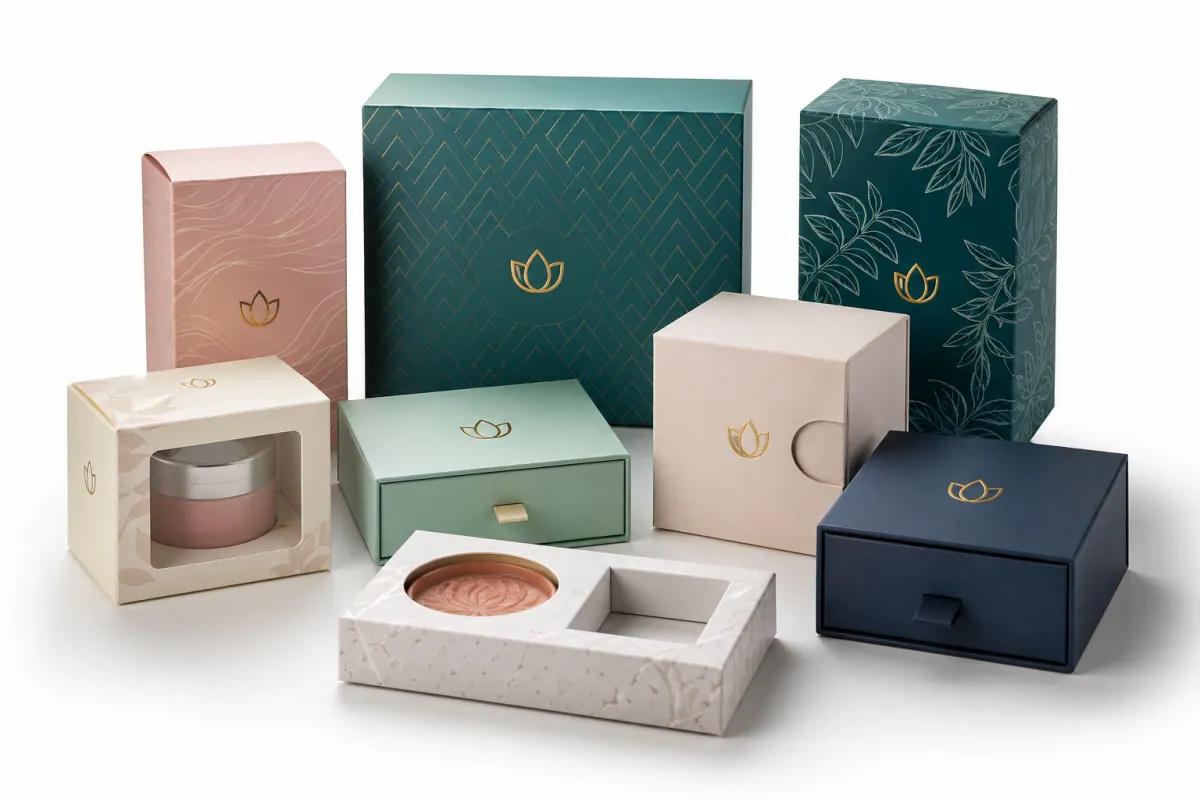
The short answer is plain: they make the product easier to notice, easier to trust, and easier to stock. Custom retail Packaging Boxes Wholesale give brands a way to control first impressions at scale, which is exactly where many product launches win or lose. On the shelf, the box is often the only part of the product a shopper sees before making a choice. That means structure, color, finish, and typography all need to work quickly and in the same direction.
Retailers also benefit when the carton is built for the store, not just for the mockup. Shelf-ready packaging, folding cartons, and display cartons can reduce handling time, keep rows aligned, and make merchandising cleaner. I have seen a modest carton redesign raise perceived value enough to justify a higher price point without changing the formula, the fill, or the size of the product. That is not magic. It is packaging doing real work.
There is also a practical point that gets skipped in design reviews: the box has to survive the trip from the warehouse to the shelf and still look composed under retail lighting. A carton that shines on a computer screen but dulls under fluorescent fixtures is not helping anyone. The shelf is merciless in that way. It does not care how nice the render looked on a Friday afternoon.
Why custom retail packaging boxes wholesale pay off on the sales floor
I remember standing next to a cosmetics line in a Georgia fulfillment center near Atlanta where the owner kept saying the product was excellent, but the shelf pull stayed soft. The frustration was written all over his face, and I understood it. We replaced a flimsy stock-style carton with Custom Retail Packaging Boxes wholesale built in 350gsm C1S artboard with matte aqueous coating, tightened the tuck, and changed the window placement. The formula stayed the same. The bottle stayed the same. The presentation stopped looking like a compromise. By the next replenishment cycle, store managers were facing the box forward more often because it looked cleaner under fluorescent aisle lighting, which tends to flatten weak graphics. That is not luck. That is packaging doing real work.
The business case is surprisingly direct. Buying Custom Retail Packaging boxes wholesale usually improves unit economics once tooling and setup are spread across a real run. It also keeps retail packaging consistent across multiple SKUs, which matters when one product sits in ten stores and another sits in fifty. I have seen brands lose time because one carton used a different board thickness than the next, which changed the case pack pattern, shifted the pallet count, and forced the warehouse team to relearn the staging plan. A 1 mm change in caliper can be enough to alter how 24 units fit into a master case. Nobody wants to explain to operations why a small design tweak just added forty minutes to packout. Paper can be patient; warehouses are not.
The hidden cost lives in the details. A box that is too loose lets the product move, which creates rub marks and corner damage. A box that is too tight slows packing and pushes panels outward. Poor score lines can crack in transit once the carton moves through packout, pallet wrap, and cross-dock handling. With custom retail Packaging Boxes Wholesale, the right spec lowers those risks before they become returns, repacks, or an emergency email chain no one enjoys reading at 7:12 a.m. I push buyers to think through the full route: factory packing, freight vibration, store stocking, and shopper handling. That route is longer than most mockups suggest. A carton can survive a neat lab test and still fail when a store associate drops it from a three-foot shelf during a Tuesday reset.
Some teams focus on the render and stop there. A polished mockup can look impressive in an email, then cost real money when the production run takes three extra seconds to fold or fails to hold the product cleanly. Good Custom Retail Packaging Boxes wholesale should do four measurable jobs: protection, shelf impact, assembly speed, and repeatable production. If a carton performs those four tasks well, it earns its place. If it only looks good on a screen, it is basically a very expensive drawing. I have watched a 9-second assembly time drop to 5 seconds after a switch from a straight tuck to an auto-lock bottom, and that 4-second difference matters when a packing team is building 8,000 cartons in one shift.
Wholesale volume matters for another reason. Once the spec is stable, the dieline can stay standardized, the print profile can stay locked, and reordering does not turn into a guessing game. I have sat in meetings where marketing wanted a fresh look and operations wanted the old carton back because the new one slowed the line. That room always gets quiet for a second, because nobody wants to admit the art department accidentally created a bottleneck. The better path is usually to choose a structure that works, then refine graphics and finishes without breaking the build. That is the real advantage of custom retail Packaging Boxes Wholesale. If you can keep the box family consistent across a 12-month product calendar, you reduce errors in purchasing, warehousing, and storefront merchandising at the same time.
Brands that need more than a pretty exterior can use supplier guidance to align package branding with the store environment itself. A candle display carton, a cartoned accessory set, and a small electronics package each face different abrasion risks, stacking pressures, and display rules. Copying a competitor's carton style without checking product weight, shipping route, or store requirements is a shortcut that often gets expensive later. The wrong box can cost more than the right one, even before returns enter the picture. A 180-gram candle in a 350gsm carton behaves differently from a 500-gram glass serum in the same structure, and the shelf tells the truth faster than the sales deck does.
For a practical comparison, buyers often review custom retail packaging boxes wholesale against options in our Custom Packaging Products catalog and then decide whether the order belongs in a recurring Wholesale Programs workflow. That is the right filter. Choose the build that matches the product, the channel, and the reorder pattern, not the cheapest quote sitting at the top of the page. Cheap is only cheap until a corner crushes in transit. A carton that saves 2 cents a unit but drives 3% more damage on a 10,000-piece shipment is not really cheaper; it is just quieter about its failure.
Custom retail packaging boxes wholesale materials, styles, and inserts
Material choice shapes everything that follows in custom retail packaging boxes wholesale. SBS paperboard is still the cleanest choice for premium retail cartons because it delivers sharp print detail and a bright face that accepts ink well. CCNB often gives better value when a brand wants a stable folding carton without paying for a more premium surface. Kraft paperboard brings a natural look that fits handmade goods, eco-forward branding, or products that should feel less polished. When the item needs more crush resistance, I usually steer buyers toward corrugated options like E-flute or B-flute, especially for heavier candles, glass jars, or small appliance accessories. In practice, a 350gsm C1S artboard is a strong middle ground for cosmetics and wellness products, while 1.5 mm rigid board belongs in gift sets where the unboxing moment matters as much as the structure.
On a supplier visit in Shenzhen, I watched a press operator run the same artwork on SBS and kraft side by side. The design looked nearly identical on a screen, then the press told a different story. The kraft absorbed color differently, blacks softened, and the logo lost some edge. That is the part many buyers miss when they compare only digital proofs. In custom retail packaging boxes wholesale, the board surface changes how the brand reads in real life. A good packaging design team plans for that before the order locks, not after someone starts blaming the ink. I have seen a deep navy logo print as a near-black on uncoated kraft in Ningbo, while the same file held its color beautifully on coated board in Dongguan, Guangdong.
Structure matters just as much. Tuck end boxes are simple, fast, and familiar. Sleeve-and-tray formats feel more deliberate and work well for premium gift sets or cosmetic kits. Auto-lock bottoms save time for heavier fills because they are easier to assemble on a packing line. One-piece mailer-style retail boxes work when the product needs a presentation box that can also survive shipment. Countertop or shelf activation calls for display-ready cartons that open cleanly, because they help the store team merchandise faster. In custom retail packaging boxes wholesale, the best style is the one that fits the item, the labor flow, and the retail use case. For example, a lock-bottom carton can shave roughly 2 to 3 seconds off assembly compared with a standard straight tuck, which adds up fast on a 6,000-unit run in a warehouse in Foshan.
Inserts are not optional for many products. If a bottle, jar, or device can rattle inside the box, the unboxing feels sloppy and the risk of damage rises. Custom die-cut paper inserts, molded pulp, or board partitions keep the product centered and quiet. I have seen a candle brand cut breakage complaints almost in half after adding a simple insert with a tighter neck cradle, while the outer carton stayed the same size. That kind of improvement shows up often in custom retail packaging boxes wholesale because the box and insert work as a single system. It is one of those fixes that feels tiny until you see the complaint log shrink. In one Los Angeles rollout, a molded pulp tray reduced shipping movement enough to lower audible rattling in transit from obvious to barely noticeable, which matters when customers equate sound with fragility.
Finish choices carry visual weight and functional weight. Matte or gloss aqueous coating changes how light hits the carton. Soft-touch lamination gives a richer feel, though it adds cost and can complicate recycling goals depending on the structure. Spot UV makes a logo pop. Embossing and debossing add tactile depth. Hot foil accents work best with restraint, especially on cosmetic or luxury retail packaging. I prefer finish plans that serve the product story instead of piling on every effect available. I know the temptation. Someone always wants "just a little more shine" and suddenly the box looks like it got dressed in a hurry. That approach holds up well for custom retail packaging boxes wholesale. On a 5,000-piece run, a single pass of spot UV can add only a few cents per unit, while heavy foil and embossing can push the build into a much higher bracket that belongs on a premium item, not a commodity SKU.
For brands comparing options, here is a simple way to think about material and style choices:
- SBS folding cartons for premium print detail, clean color, and sharp package branding.
- CCNB cartons for cost control with a reliable retail-ready face.
- Kraft cartons for natural, rustic, or eco-forward product packaging.
- E-flute corrugated for lightweight protection with a retail-friendly footprint.
- Inserts and partitions for fragile, noisy, or multi-piece items.
Retail teams ask about sustainability too. FSC-certified board, recyclable inks where appropriate, and right-sized structures can help, but the claim has to match the actual build. Exaggerated eco language causes trouble later. If a carton uses FSC material, say that clearly and support it. If a coating changes the recycling path, be transparent. That is better for trust and better for repeat business in custom retail packaging boxes wholesale. For broader technical context, I often point buyers to the Packaging School and industry resources at packaging.org and, for shipping and distribution behavior, the test methods and guidance discussed by the International Safe Transit Association. In a Toronto sourcing review I sat through last year, the FSC label mattered, but the actual board spec mattered more when the buyer compared stiffness and fold memory across three vendors.
Structural specifications that keep products protected and retail-ready
Before quoting custom retail packaging boxes wholesale, I want the exact product dimensions, not the rounded version somebody typed into a spreadsheet six months ago and forgot to update. A difference of 2 mm can matter on the fold line, especially if the product has a pump, a cap, or a rigid edge that needs clearance. I have seen a shallow box cause panel bulging on a packing line because the internal height was off by only a few millimeters. The carton technically fit. It did not pack well. That is the kind of detail that separates a decent quote from a usable production spec. If the bottle neck sits 7 mm above the shoulder, that number belongs in the spec sheet, not in a memory somewhere in sales.
The buyer should confirm board thickness, fold style, closure method, insert requirements, and how the package will face the shelf. If the front panel needs to sit upright under a peg hook, the score locations and top flap design need to support that orientation. If the carton ships flat and opens at retail, the opening sequence matters. If the product will be visible through a cutout, the window size and placement need to be balanced so the structure stays strong. In custom retail packaging boxes wholesale, those choices affect merchandising and durability at the same time. A pretty box that collapses on a hook is just a problem with better lighting. A peg-ready carton for a 250-gram accessory should behave very differently from a countertop display for a 900-gram glass candle, even if both use the same artwork family.
Artwork setup deserves the same discipline. The dieline should include bleed, safe area, barcode placement, and any legally required copy. I have lost count of the times a beautiful design got delayed because a UPC sat too close to a fold or the compliance text landed in a zone that disappeared under a flap. Clean files move faster. Messy files turn a simple carton into a bottleneck. That holds true for custom retail packaging boxes wholesale no matter how experienced the printer is. A strong file is boring in the best way. On one Chicago project, moving the barcode 6 mm to the left and increasing the quiet zone by 1.5 mm eliminated a prepress warning and saved a full day of back-and-forth.
Sampling costs little compared with a failed run. A prototype fold shows whether the insert catches on the corner, whether the product shifts, and whether the print placement lands where the customer actually sees it. During one client meeting for a specialty food gift set, we caught a fold issue in the sample stage that would have caused the tray to buckle once the jar count increased from two to three. The fix was a small score adjustment and a deeper tab lock. In production, that would have become a painful surprise. Sampling protects custom retail packaging boxes wholesale from that sort of mistake, which is why I push it so hard. A $45 sample can prevent a $4,500 scrap issue, and those ratios are why prototypes exist.
Distribution testing matters too. Wholesale packaging should survive the route to the shelf, not just look good on a table. Carton packing, palletizing, transit vibration, and final merchandising all need to be considered. If a box rides in a master carton for three states and then gets stocked on a warm sales floor, the glue line and board selection need to hold up under that route. For that reason, I usually recommend thinking in terms of transit behavior, not just print behavior, when ordering custom retail packaging boxes wholesale. A carton that passes a compression test in Guangzhou but softens in humidity after a week in Miami is telling you something practical about the paper fibers and the coating choice.
A few specifications are worth writing down before you ask for a quote:
- Exact product dimensions in inches or millimeters, including caps, hooks, or protrusions.
- Board grade such as SBS, CCNB, kraft, or E-flute.
- Closure style such as tuck end, lock bottom, sleeve, or mailer style.
- Finish including matte, gloss, soft-touch, foil, embossing, or spot UV.
- Insert requirement with material and cavity layout.
- Retail use case such as shelf-ready, peg-ready, or counter display.
Those six items give the factory enough information to propose a reliable structure instead of guessing. That is the point of good custom retail packaging boxes wholesale: fewer guesses, fewer revisions, fewer surprises, and fewer late-night messages asking why the box almost fits. If the board needs to hold a 420-gram product in a 95 mm x 140 mm footprint, say that plainly, because the math is less forgiving than the mood board.
Custom retail packaging boxes wholesale pricing, MOQ, and volume breaks
Pricing for custom retail packaging boxes wholesale depends on five major drivers: board stock, box size, print coverage, finish complexity, and production method. Digital print can make sense for shorter runs and frequent artwork changes. Offset printing usually wins on unit cost once the quantity is high enough and the artwork stays stable. Flexographic methods can work well on simpler builds when the design is straightforward and the line is tuned for speed. Buyers often focus only on the per-unit number and ignore setup, which makes the quote impossible to compare fairly. I have watched people celebrate a low unit price while quietly forgetting the die, freight, and rework line items. The celebration never ages well. A quote at $0.15 per unit for 5,000 pieces can be excellent if the spec is clean, but it can also hide a $300 tooling charge that changes the actual landed math completely.
MOQ works the same way. A standard folding carton in a common size family usually starts lower than a rigid setup or a box with multiple specialty finishes. If the box uses a shared board spec and a familiar structure, the minimum can stay manageable. If the job needs a new cutting die, a custom insert, and foil with embossing, the order threshold rises. That is not a penalty; it is the reality of production in custom retail packaging boxes wholesale. The more custom the build, the more setup is involved, and the more moving parts someone has to babysit. A run out of Dongguan may accept a 1,000-piece pilot for testing, while a factory in Ningbo might ask for 3,000 pieces before it commits to the die and finish combination.
I like to explain volume breaks with a simple example. A 2,000-piece run often costs more per unit than a 5,000-piece run because the setup cost gets spread over fewer cartons, and the imposition on the press sheet creates more waste. At 10,000 pieces, the unit cost may fall again if the design nests efficiently. That is why a quote without quantity context can mislead you. In one supplier negotiation, a client saved almost 18% by moving from a slightly custom size to a size that fit the press sheet better. The artwork barely changed, but the production logic did. That is a classic custom retail packaging boxes wholesale lesson, and one of my favorites because it proves the paper math matters. A 92 mm width instead of 96 mm can be the difference between four-up and six-up on a sheet, and the pressroom notices immediately.
Here is a practical pricing framework for planning purposes. These are not promises; they are useful quoting ranges based on common retail builds:
| Build | Best use | Typical wholesale price at 5,000 pcs | Notes |
|---|---|---|---|
| SBS folding carton, 4-color print, matte coating | Cosmetics, candles, accessories | $0.24 to $0.38 per unit | Strong print detail, good for premium retail packaging |
| CCNB carton, 1-color or 2-color print | Value-driven product packaging | $0.18 to $0.26 per unit | Efficient for simple branded packaging with lower decoration needs |
| Kraft carton with spot color and simple insert | Natural, eco-forward lines | $0.22 to $0.34 per unit | Works well when the brand wants a warmer, less glossy look |
| E-flute retail box with custom insert | Fragile items, heavier products | $0.58 to $1.05 per unit | Higher protection and more board usage, especially for transit-heavy orders |
| Soft-touch, spot UV, or foil-enhanced carton | High-end retail presentation | $0.36 to $0.68 per unit | Finish complexity and setup time add cost quickly |
Those numbers help buyers compare quotes without getting lost in jargon. A good quote for custom retail packaging boxes wholesale should also separate setup, tooling, print, finishing, and freight. If a supplier folds everything into one line and refuses to explain the breakdown, ask for a clearer sheet. Transparent pricing is easier to manage over repeat orders, and it makes reordering less painful when the season turns. I would rather see freight quoted separately from the carton price, especially on shipments moving from Guangdong to California, because a pallet to Long Beach can cost very differently from one headed to Dallas.
There is always a trade-off between low minimums and true wholesale economics. For a new product launch, I often support a smaller pilot batch if the package is still being tested in the market or the compliance text may change. For an established SKU with stable demand, I would rather see the buyer commit to a larger run and lock in a better unit price. The right decision depends on sell-through velocity, storage space, and how much change is expected in the next cycle. That judgment call is part of why custom retail packaging boxes wholesale is more than a price request. A brand selling 300 units a month in Denver does not need the same inventory posture as a product moving 4,000 units a month across 80 stores in the Midwest.
If you are comparing quotes side by side, check whether the supplier included freight to your destination, whether the cartons ship flat or pre-assembled, and whether the price assumes one artwork version or multiple SKUs. Those details can change the actual landed cost by a meaningful amount. A cheap-looking quote can become expensive very quickly once you add pallet counts, out-of-area shipping, or reprint risk. With custom retail packaging boxes wholesale, the landed cost is the number that matters. A quote for $0.19 per unit ex-works is not the same as $0.19 delivered to New Jersey on a tight launch date.
Artwork, proofing, and production timeline from file prep to ship
The cleanest custom retail packaging boxes wholesale orders follow a predictable path: request quote, confirm the spec sheet, receive the dieline, place artwork on the template, review the proof, approve a sample if needed, then move into production. When each step stays in order, the project stays controlled. When a team skips the spec review and starts designing first, the schedule usually slips because the layout has to be rebuilt after the box size changes. I have seen that happen with a beverage gift set and a skincare line in the same quarter. Both teams had good designers. Both teams still lost time because the starting dimensions were not locked. Creativity is useful; guessing is not. A two-day delay at proof stage can become a two-week delay once the line gets booked in Shenzhen or Guangzhou.
Turnaround depends on the details. A simple folding carton with clean artwork may move faster than a box with foil, embossing, or a complex insert. Sampling adds time, but it can save money if the item is fragile or the brand team wants to see how the finish behaves in hand. On a typical run, production can include print, lamination or coating, die-cutting, folding and gluing, packing, and outbound freight. Each stage is manageable by itself, but if one stage stalls, the shipment waits. That is why custom retail packaging boxes wholesale timelines should always include buffer. If the calendar looks too tidy, I get suspicious. A project that looks like it can be approved, produced, and shipped in five days is probably missing at least one real-world step.
Clean artwork files shorten the schedule. Low-resolution logos, missing fonts, and last-minute copy changes slow it down. I would rather receive a plain but complete file than a polished design with a missing barcode or incomplete claims panel. The plant can work with clarity. It cannot work with guesswork. That advice has saved more than one launch for custom retail packaging boxes wholesale. I have also seen a "minor text tweak" turn into a two-day delay because someone decided the legal copy should be bigger after proof approval. Of course they did. A file that arrives with 300 dpi artwork, outlined fonts, and a labeled Pantone callout typically gets through prepress faster than one that forces the operator to email three people in two time zones.
A realistic planning window for many retail carton projects is 12 to 15 business days from proof approval for straightforward print and die-cut work, and longer if the order includes specialty finishes, insert tooling, or structural testing. Freight time is separate. If the product needs a store reset, a tradeshow rollout, or multiple distribution points, build the calendar backward from the delivery date, not the artwork deadline. That sounds basic, yet good packages still miss the shelf window when the team does not leave room for proofing and transit. Good custom retail packaging boxes wholesale planning respects the calendar, the freight route, and the fact that carriers do not care about your launch party. A truck from Dongguan to Los Angeles is not a thought experiment; it is a time block on a schedule.
Color approval is the part many brands overlook. Offset and digital print can both be excellent, but the color on paper can still shift compared with a screen. If the carton has a signature brand red or a deep black logo, ask for a proof that reflects the final substrate and finish. Matte coat mutes color slightly. Soft-touch changes the visual depth. Gloss sharpens contrast. Those effects are normal, but they should be expected, not discovered after the pallet lands. That level of care is why I push buyers to stay close to the proof stage in custom retail packaging boxes wholesale. One client in Miami approved a proof under office lighting and then hated it under store LEDs, which is a reminder that the shelf is the real judge, not the conference room.
For fragile or regulated products, it helps to reference shipping and test standards early. The ISTA family of transit tests is useful when you want to understand how the package behaves under vibration, drops, and compression. If your team is evaluating sourcing or materials through an environmental lens, EPA guidance on waste reduction can shape choices too. I am not saying every project needs formal lab testing, but the standards give the discussion a clear framework. That matters in custom retail packaging boxes wholesale because the package has to earn its way through the factory and the distribution chain, not just the design review. A 24-inch drop test in a lab may sound abstract until the same package is dropped from a conveyor in a warehouse in Sacramento.
Why choose Custom Logo Things for wholesale retail packaging
What Custom Logo Things does well is straightforward: practical estimating, real packaging knowledge, and recommendations that match the product instead of forcing a one-size-fits-all answer. Too many vendors repeat the request back to you. I prefer a team that asks whether the box ships flat, whether it sits on a shelf, whether it needs a hang tab, and whether the order will repeat next month. That is how you get a useful result in custom retail packaging boxes wholesale. If the questions are specific, the quote usually is too. A useful vendor will ask whether your carton needs to fit a 92 mm jar, a blister pack, or a 6 oz bottle with a pump, because each one changes the construction conversation immediately.
From a production standpoint, the quality checkpoints matter. Dieline verification keeps the artwork aligned. Color consistency checks help prevent one carton run from drifting away from the brand standard. Glue-line inspection catches weak seals before the cartons are packed. Carton count confirmation keeps shortages from sneaking out the door. These are not glamorous tasks, but they protect the order. I learned that early while walking a bindery floor in Guangdong where one misaligned score line had already turned into a pallet of rejects. It was the kind of scene that makes you whisper, "Well, that is going to be a long afternoon." If you want dependable custom retail packaging boxes wholesale, those details are the real difference. A factory that checks counts at 500-piece intervals is usually safer than one that waits until the full pallet is wrapped.
I also like suppliers who understand both retail presentation and shipping performance. A box can look expensive and still fail in transit if the board is too light or the insert does not hold the product. A box can be protective and still look plain if the print and finish are not thought through. The best result sits in the middle: strong enough for the route, polished enough for the shelf. That balance is the heart of good custom retail packaging boxes wholesale, and it is where experience matters most. Anyone can buy a box. Not everyone can spec one that survives the warehouse and still photographs well. A carton that looks elegant in a product shot but dents at the corners after a 36-hour route from Ningbo is not finished; it is merely well lit.
Over time, a good supplier should make reorders easier, not harder. The spec should stay standardized. The quote language should stay clear. The brand should not have to relearn the carton every season. If the same structure can support multiple SKUs, even better, because that reduces confusion and keeps the retail presentation consistent across product families. That is why I encourage buyers to treat custom retail packaging boxes wholesale as a system, not a one-off purchase. Systems age better than improvisation. A reusable spec sheet can save a brand hours every quarter, especially when a product line expands from three SKUs to eight.
Custom Logo Things also fits well for brands that want to connect packaging design with product packaging strategy. A cosmetic line, an apparel accessory set, and a specialty food gift box all need different assumptions about board strength, finish, and display behavior. A supplier who can speak to those differences can save time during quoting and prevent expensive course corrections later. In that sense, custom retail packaging boxes wholesale is not only a buying category; it is part of the brand's operating discipline. I know that sounds serious for a box, but boxes have a way of revealing whether a business is organized or just decorative. The packaging usually tells the truth before the annual report does.
Next steps for custom retail packaging boxes wholesale orders
If you are preparing to request custom retail packaging boxes wholesale, gather the product dimensions, target quantity, finish preferences, shipping destination, and your ideal in-hand date before you ask for a quote. Add a logo file, any compliance copy, and a rough product photo if you have one. The more concrete the inputs, the faster the estimate becomes useful. I have seen teams shave days off the front end simply by sending a clean spec sheet and a real product sample rather than a vague description. "It's kind of medium-sized" is not a measurement, despite what certain emails seem to believe. If the product is heading to warehouses in California and New York, say so, because freight to both coasts changes the landed cost picture immediately.
If you are unsure between two structures, ask for both. A small change in board grade or closure style can reduce damage risk and improve shelf presentation without raising the cost dramatically. I would rather compare a tuck end and a lock bottom up front than discover after approval that the first choice was too loose for the fill weight. That kind of comparison is especially valuable in custom retail packaging boxes wholesale because the run size makes mistakes expensive. A bad choice at 500 units is irritating. A bad choice at 5,000 units is a meeting. In one case, moving from a thin 300gsm board to a 350gsm C1S artboard added only a few cents per unit but eliminated the need for extra internal padding.
For fragile, premium, or presentation-sensitive items, request a sample or prototype before full production. That is the fastest way to catch fit issues, print placement problems, or weak closure points. It is also the best way to make sure the package feels right in hand. A box that looks fine on screen may feel flimsy on a store shelf or too stiff for quick assembly. Sampling removes that uncertainty and keeps custom retail packaging boxes wholesale moving toward approval instead of rework. The extra step is often the cheapest insurance you can buy. A prototype sent from Shenzhen or Dongguan is far less expensive than a 5,000-unit mistake sitting in a warehouse.
Once the spec sheet is confirmed, move the order into production without dragging the timeline. The best wholesale jobs are the ones that enter the line with clear artwork, clear dimensions, and a clear freight plan. That is how you protect the launch calendar and keep the carton aligned with the sales plan. If you want custom retail packaging boxes wholesale to work hard for your brand, treat the order like a manufacturing decision, not just a print purchase. It is boring advice, maybe, but boring advice is usually what keeps the box from failing. I have seen "we'll finalize later" turn into a missed ship date more times than I can count.
From my side of the floor, the formula stays the same: Choose the Right material, confirm the structure, price the full landed cost, and approve the proof with enough time for real production. Do that, and custom retail packaging boxes wholesale becomes a practical tool for brand presentation, damage reduction, and repeatable fulfillment. It is not complicated, but it does reward careful work. The brands that respect the details usually stop complaining about packaging and start using it to sell. A carton that helps a product move from shelf to cart in 3 seconds instead of 8 is doing more than carrying goods; it is earning its keep.
What is the usual MOQ for custom retail packaging boxes wholesale?
MOQ for custom retail packaging boxes wholesale depends on the box style, board stock, print method, and finish complexity. Standard folding cartons usually allow lower minimums than rigid boxes or heavily embellished builds, and a shared size family across SKUs can reduce the minimum further. If the structure is common and the artwork changes more than the physical box, the order is often easier to run at a lower quantity. In plain English: simpler boxes behave better in wholesale. A clean SBS carton in a common size may start around 1,000 to 2,000 pieces, while a rigid gift box with foil and an insert often climbs higher.
How long do custom retail packaging boxes wholesale orders take?
The timeline for custom retail packaging boxes wholesale depends on proofing, sampling, print method, finishing, and freight distance. Simple runs move faster than jobs with foil, embossing, inserts, or structural testing. In many cases, 12 to 15 business days from proof approval is a realistic planning point for straightforward work, but the calendar should also include transit and any sample review time. If someone promises instant production, I would ask a few more questions. A carton run leaving Guangzhou may need an extra week for ocean or cross-border freight, even if the factory side is finished on schedule.
Which material is best for custom retail packaging boxes wholesale?
SBS is a strong choice for premium retail cartons because it prints sharply and keeps brand colors clean. CCNB and kraft are common when cost control or a natural look matters more. Corrugated options such as E-flute or B-flute are better when the product needs extra protection or the distribution route is rougher than a simple shelf-to-customer handoff. The best choice depends on the fill weight, finish, and retail environment for custom retail packaging boxes wholesale. A 350gsm C1S artboard often balances print quality and stiffness better than lighter stock for midweight beauty or wellness products.
Can I mix multiple SKUs in one custom retail packaging boxes wholesale order?
Yes, you can mix SKUs in custom retail packaging boxes wholesale, but each SKU may need its own dieline, print setup, or finishing step. Costs usually stay lower when the boxes share the same material, structure, and size family. Mixed runs work best when the artwork changes more than the carton construction, because the factory can keep the production flow more efficient. If the SKU count starts to balloon, it is worth checking whether the visual variation is actually buying anything. A four-SKU family built on one carton size is usually far easier to manage than four unrelated box shapes made in four different places.
What files do you need to quote custom retail packaging boxes wholesale?
To quote custom retail packaging boxes wholesale, send product dimensions, target quantity, artwork files, and any finish or insert requirements. A dieline file or a product photo helps verify fit and layout before production begins. If you have shipping goals, retail compliance notes, or a required delivery date, include those up front so the quote is accurate and the schedule is realistic. The cleaner the input, the less everyone has to pretend to know. If your order needs to land in Chicago by a fixed date, include that date, because freight from southern China is not a mystery once the origin, volume, and service level are clear.

