Custom Printed Plastic bags wholesale is a straightforward purchase only until the order has to perform in the real world. Then the practical questions surface: Will the bag hold up in packing? Does the print stay readable? Is the cost low because the bag is efficient, or because someone quietly removed the features your team actually needs?
A plain stock bag can look cheaper in a quote, but the full cost often shows up later in labor. If someone still has to add labels, insert cards, stamp the package, or repackage the item for presentation, that “cheap” option stops being cheap. Packaging buyers see this quickly: one saved cent on material can disappear into seconds of extra labor.
Wholesale printed bags make the most sense when the brand needs repeatable results and the specs are stable. Once the artwork is approved and the dimensions are locked, scaling up usually improves the unit price, especially on standard sizes, common film gauges, and one- to three-color designs.
Why wholesale printed bags lower packaging cost without looking generic
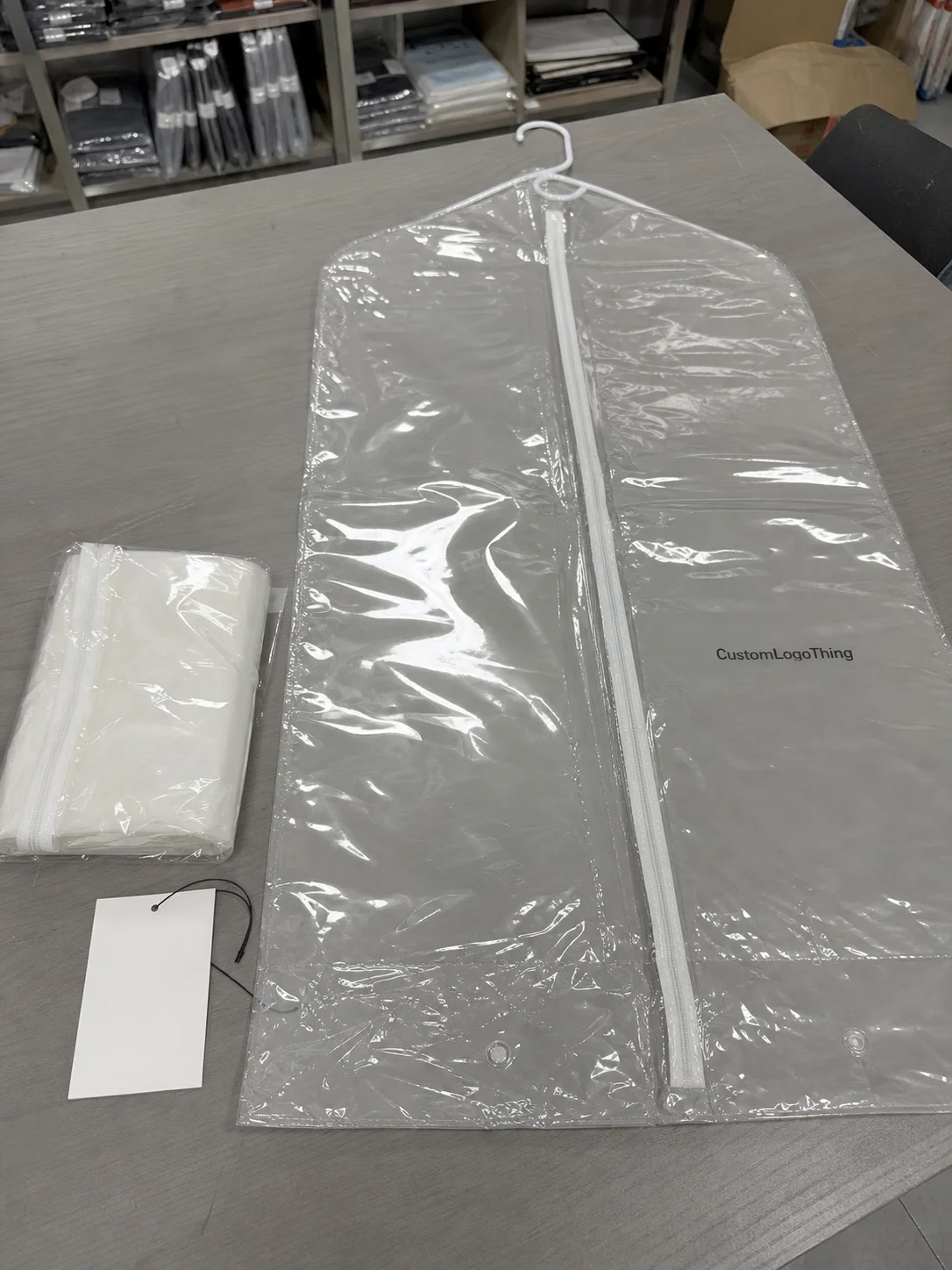
Stock bags work for some operations, but they rarely solve the full packaging job. They carry the product, yes. They rarely do much for branding, product identification, or presentation. That means extra work somewhere else in the process, and extra work tends to be expensive in a high-volume environment.
Custom printed Plastic Bags Wholesale shifts the branding task into the package itself. The logo, product name, handling instruction, or basic brand pattern is already on the bag, so the item leaves the line looking intentional rather than improvised. That matters on a shelf, in a shipping carton, and in hand-to-customer settings where the package is part of the buying experience.
The economics improve further as volume rises. Setup costs are spread across more units, so the per-bag price usually becomes more attractive on repeat orders than on small runs. Standard sizes and simple artwork tend to print more efficiently than oversized formats, heavy ink coverage, or complex graphics with tight registration.
These bags show up in more places than many buyers first expect:
- Retail carry-out and boutique shopping bags
- Ecommerce inner packaging and order consolidation
- Produce, bakery, and foodservice packaging where presentation still matters
- Trade show kits, samples, and promotional handouts
- Light industrial packaging for components, accessories, and bundled parts
The best-fit bag is usually the one that balances three things at once: protection, appearance, and handling speed. If the film is too light, damage risk rises. If the print is too subtle, the branding disappears. If the construction is heavier than the product requires, you are paying for material you do not need. Buyers often discover that the “best value” is not the lowest unit price, but the bag that avoids rework and keeps packing moving.
Practical rule: if a bag forces the packing team to do extra work after fill, it is usually more expensive than it first appears.
Material choices, print styles, and bag formats that affect performance
The film choice affects much more than the look of the bag. LDPE is commonly selected for its softer feel, flexibility, and good puncture resistance in many retail and shipping applications. HDPE is thinner and crisper, often chosen when light weight and a cleaner folded profile matter. PP is used where clarity or a firmer presentation is useful, especially in retail packaging that needs the product visible.
Thickness matters just as much as resin type. Film gauge changes tear resistance, stiffness, and how the bag behaves during filling. A bag that is too thin may split at the seal or stretch awkwardly when loaded. A bag that is too thick may look premium, but it can add cost without improving actual performance if the product is light.
Bag format also affects how the order runs on the packing line. A flat poly bag is simple and efficient for low-profile items. A gusseted bag gives extra room for wider products, kits, or folded goods. Wicketed bags help manual packing lines because the stack is held together for faster access. Handle bags, including die-cut and patch-handle styles, suit retail carry-out and promotions where the bag itself will be carried by the customer.
Printing method changes both the economics and the final appearance. Flexographic printing is common for wholesale production because it handles repeat runs well and keeps unit cost under control once setup is complete. Simple artwork with solid colors usually prints more cleanly than detailed gradients or tiny type. Every added color tends to increase setup work, proofing time, and occasionally the minimum order requirement.
Surface finish matters too. Matte film softens reflection and can make a logo read more quietly. Glossy film boosts contrast and often gives the print more visual punch under retail lighting. Seal strength, opening behavior, and stackability are not cosmetic details; they directly affect whether the bag works on the line and survives distribution.
For food contact, retail labeling, and shipping use, buyers should confirm that the construction fits the intended application. Regulatory and compliance requirements vary by product category and destination, so the safest approach is to verify the actual use case before approving a spec. For broader packaging references, the packaging industry resources are a useful starting point, while environmental guidance can be checked through the U.S. EPA.
Specifications buyers should confirm before requesting a quote
The fastest way to get a useful quote is to provide the measurements that actually drive production. Bag width, height, gusset depth if applicable, film thickness, print area, number of colors, and shipment method all shape the final price. A vague request for “printed bags” usually comes back with more questions than answers.
Artwork format matters as well. Vector files are preferred because they hold sharp lines and scale cleanly across different sizes. Pantone references help control color expectations, especially when a brand needs the same blue, red, or black across multiple packaging items. Fine text and thin lines deserve extra scrutiny; what looks crisp on a monitor can disappear on a small panel or blur during print.
It also helps to explain how the bags will be used. Will they be opened by hand? Run through a manual station? Packed with lightweight goods or items with hard edges? Those details influence film selection, opening behavior, and whether the bag should be easier to separate in a production setting.
Samples and dielines save time and money. A sample confirms feel, size, and print placement before the full order is committed. A dieline is even more valuable when the print area must align with a fold, handle, or gusset. Small corrections caught at proof stage are manageable; corrections after production starts are expensive.
Storage and transit conditions deserve attention too. Heat can affect film handling. Moisture can damage boxed inventory if it sits in poor conditions. Heavy stacking can distort carton packs if the packaging plan is not specified clearly. For parcel or distribution programs, testing references such as ISTA methods are worth reviewing when package durability matters in transit.
Custom printed plastic bags wholesale cost, MOQ, and quote factors
Custom printed plastic bags wholesale pricing usually comes down to a few variables: bag size, material gauge, number of print colors, artwork coverage, and total quantity. Bag style matters, but the real cost movement often comes from how much film is used and how much setup the press requires.
For smaller orders, setup costs can dominate the math. Plates or cylinders, prepress work, proofing, and production startup all need to be covered before the first usable bag is made. That is why minimum order quantity exists. It protects the economics of the run, but it also means buyers should plan against likely reorder volume rather than just the first shipment.
A simple one-color logo on a standard-size bag may quote far differently from a custom-dimension bag with several colors and larger coverage. Rush jobs, nonstandard construction, thicker film, and special finishing can all raise cost and extend lead time. None of that is unusual; it is simply how production planning works when the job moves away from standard configurations.
In practice, wholesale buyers often see price differences in the following pattern:
| Bag Type | Typical Best Use | Relative Cost | Production Notes |
|---|---|---|---|
| Flat poly bag | Light product packing, inner packaging | Lower | Simple construction, efficient for high-volume runs |
| Gusseted bag | Bulkier items, kits, folded goods | Moderate | Uses more film and gives more interior volume |
| Wicketed bag | Manual packing lines | Moderate to higher | Speeds hand packing and helps line flow |
| Handle bag | Retail carry-out and promotions | Moderate to higher | Handle style affects strength, feel, and print area |
To compare quotes fairly, ask for pricing against identical specs and the same destination. A quote for 10,000 bags delivered to one warehouse is not comparable to a quote with split freight or a compressed schedule. The cleaner the input, the clearer the pricing.
For broader packaging programs, buyers often compare bags with other branded items such as Custom Packaging Products or paired secondary packaging like custom printed boxes when the product line needs a more complete presentation system.
Process, timeline, and production steps from artwork to shipment
The production sequence is simple enough on paper: inquiry, spec review, artwork check, proof approval, production, inspection, and shipment. In practice, each step depends on the one before it. If a dimension is missing or the artwork is not ready, the schedule slows down immediately.
Jobs move fastest when the buyer already has the bag size, quantity, print-ready files, and packing instructions before the quote is approved. That saves prepress time and reduces the odds of a proof coming back with avoidable changes. Complete information makes the whole order easier to run.
Proofing deserves careful review. This is where logo placement, color expectations, text size, and barcode readability are confirmed. Small type is often the first thing to fail if the artwork is too detailed or if the print surface is soft. A proof should be checked as a working production reference, not as a formality.
Lead time depends on structure, print complexity, and current plant schedule. Standard jobs usually move faster than highly customized bags or heavy multi-color artwork. Buyers should separate manufacturing time from freight time. A bag may be finished in production, but it is not yet in the warehouse until transportation is complete, and that distinction matters for launches and replenishment cycles.
Late revisions create the most delays. A change after proof approval can mean new plates, new setup, and a new slot in the schedule. If multiple people need to sign off internally, that review should happen early. It is better to spend one extra day on approval than to spend a week fixing something that could have been caught before release.
For brands that track packaging across paper and plastic systems, FSC resources at fsc.org can be useful when the broader packaging program includes paper-based components alongside plastic bags.
How wholesale bag production supports consistency at scale
Wholesale buyers do not just need bags that work. They need the same bag, over and over, across the entire run. That is why quality control focuses on measurable details: film gauge consistency, seal integrity, print alignment, color repeatability, and cut-edge cleanliness. If those vary, the package starts looking inconsistent before it reaches the customer.
Small deviations are easy to ignore on a sample. Across thousands of units, they become visible. A weak seal can cause failures in transit. A logo shifted off-center can make the whole batch look less polished. Poor stackability can slow fulfillment. These are not abstract concerns; they are the kinds of issues that show up in warehouse handling and retail presentation.
Packaging requirements also vary by product. A lightweight apparel insert does not need the same construction as a bag for a heavier kit, a food item, or a product with sharp corners. Good packaging decisions start with the product itself, then work backward to the film, print, and sealing structure that suit it.
Repeat buyers care about consistency for a reason. Reorders should match the approved sample, lead times should stay predictable, and the approved spec should remain easy to retrieve. In a recurring packaging program, the bag becomes part of the brand system. If the packaging shifts every reorder, the brand starts to feel less stable than it should.
Good wholesale packaging should do three things well: protect the product, support the brand, and stay consistent from the first carton to the last.
Next steps to place a bulk order with fewer delays
If the goal is a smoother bulk order, prepare the basics before requesting pricing. Have the bag size, quantity, film preference, number of print colors, artwork files, shipping destination, and target delivery date ready. That single step removes most of the back-and-forth that slows a project down.
Use case matters just as much as dimensions. Retail, food, ecommerce, and light industrial applications often need different construction details even when the bag looks similar from a distance. A bag that works well for a promotional giveaway may be a poor choice for a packed line or a product with hard edges.
Ask for a sample or proof against the real product dimensions before approving the run. A logo can be technically correct and still look wrong if it sits too high, too low, or too close to a fold. Printed packaging is visual work; the time to correct placement is before production starts.
For repeat orders, save the approved spec sheet and artwork version. That makes reorders faster and reduces the chance of drift between seasons, product lines, or replenishment cycles. It is one of the simplest ways to keep packaging consistent without creating extra administrative work.
For buyers comparing custom printed plastic bags wholesale options, the most useful request is the most complete one. Exact specs produce accurate quotes, and accurate quotes make scheduling easier. That tends to matter more than a low headline price that later changes once the order is clarified.
FAQs
What is the minimum order for custom printed plastic bags wholesale?
Minimums vary by bag size, material, and print complexity. Standard constructions usually support lower MOQs than custom dimensions or multi-color artwork. Setup costs are easier to absorb at higher quantities, so it helps to compare the MOQ with your expected reorder volume.
How long does production usually take for custom printed plastic bags wholesale orders?
Production time depends on artwork approval, bag specifications, and the current schedule. Ready-to-print files usually move faster because prepress work is lighter. Freight time should be planned separately from manufacturing time, especially for larger wholesale orders.
Which material is best for wholesale printed plastic bags?
LDPE is often chosen for flexibility and a softer feel, while HDPE is used when a thinner, crisper bag is preferred. The best material depends on product weight, handling method, desired appearance, and whether the bag needs extra strength or clarity.
Can I print my logo in multiple colors on wholesale plastic bags?
Yes, multi-color printing is common. Each added color can affect setup cost, proofing complexity, and sometimes MOQ. Simpler artwork usually prints more reliably, so logos with strong contrast and controlled detail often produce the cleanest result.
What should I send to get an accurate quote for custom printed plastic bags wholesale?
Provide the exact bag dimensions, quantity, material preference, number of print colors, artwork files, and delivery location. Including the intended use helps match the right construction, which reduces revisions and makes the quote more accurate.


