If you are planning a streetwear drop frosted zipper plastic Bags Wholesale Order Planning run, the packaging decision is not decorative. Buyers notice the bag before they touch the garment, and a frosted zipper bag usually makes the whole drop feel more deliberate than a basic poly mailer or clear sleeve. That matters. Streetwear is judged fast, and packaging gets a vote whether you like it or not.
From a packaging buyer’s point of view, Frosted Zipper Bags sit in a useful middle ground: they look cleaner than plain plastic, they cost far less than rigid boxes, and they can still be reused by the customer. That combination is why they show up so often for tees, hoodies, accessories, socks, and bundled sets. The trick is not piling on extras. It is choosing the right size, closure, and print method so the bag supports the product instead of fighting it.
There is also a timing advantage. A soft-pack format like this is faster to spec than a rigid carton and less risky than a packaging concept that needs custom inserts, magnets, or molded trays. For a drop schedule that already has apparel sampling, photography, and inventory timing to juggle, packaging should be one of the easier decisions.
Why frosted zipper bags make streetwear drops look intentional
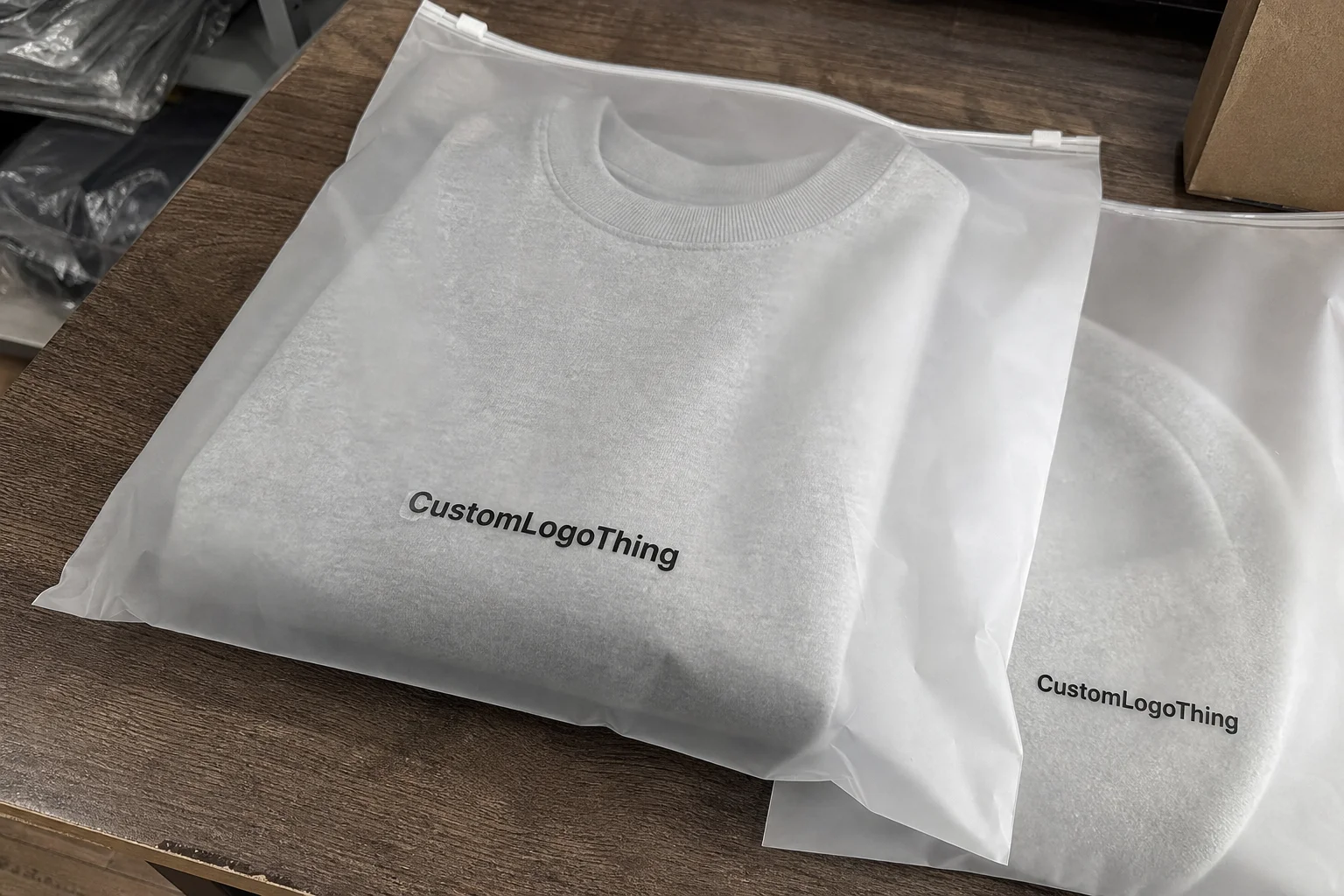
Streetwear packaging has one job before anything else: make the product feel considered. Frosted zipper bags do that quickly because the semi-opaque finish softens the view of the garment without hiding it completely. You get product tease, a bit of mystery, and a cleaner shelf or launch-day display than you would with a fully clear sleeve. That tiny difference affects perceived value more than people admit.
There is also a practical benefit. A frosted finish hides light handling marks better than clear plastic, which is useful when you are packing hundreds of units and not every bag gets handled with gloves and prayers. The customer still sees enough of the item to recognize color and fold shape, but the presentation feels controlled. On a launch table, that visual consistency helps more than flashy print ever will.
These bags fit especially well for:
- Tees and folded long sleeves
- Hoodies and sweatpants
- Caps, socks, and accessories
- Two-piece or bundle sets
- Retail display packaging for launch tables
What they do not do is magically make weak branding look premium. They help you look custom faster than they help you look expensive. That distinction matters. If the garment fold is sloppy, the logo is muddy, or the sizing is wrong, the bag will not rescue it.
Good packaging does not need to shout. It just needs to look like someone made choices on purpose.
That is why streetwear drop Frosted Zipper Plastic Bags wholesale order planning should start with the product, not the fantasy version of the product. Size, closure style, and print area need to match the item weight and fold. Random extras usually create more cost than brand value.
Product details that matter before you place a wholesale order
The base material is usually frosted PE or LDPE, and that is not a tiny detail. PE gives you a soft handfeel and enough flex for apparel packing. LDPE tends to feel a bit smoother and more supple, which many brands prefer for zipper bags. If you need a stronger presentation, some buyers ask for a heavier film with reinforced seams so the bag keeps its shape better in transit and on shelves.
The difference between these films shows up in use, not just in a spec sheet. A bag that sounds crisp in a sample video can still feel flimsy once it is filled with a heavyweight hoodie and stacked in a carton. Ask for real samples whenever possible, because paper-thin approvals create expensive surprises later.
Then comes the closure. A press-to-close zipper is the common choice for garment packaging because it is simple, low-cost, and easy to open and reclose. A slider zipper feels more premium and is easier for repeat use, but it adds cost and can increase lead time. If your customer is likely to reuse the bag for storage, the slider can make sense. If the bag is mainly for launch presentation and shipping, press-to-close is usually enough.
Other details worth deciding early:
- Hang holes for retail display
- Reinforced seams for heavier garments
- Bottom gusset if you need more depth
- Write-on panels for SKU or size labels
- Barcode or warning text zones for retail use
Print design matters more on frosted film than people expect. Bold logos, clean typography, and simple blocks of color print best. Tiny text can disappear. Thin outlines can look weak. The surface is translucent, so your art needs enough weight to survive the material. Physics is rude like that.
For apparel branding, a one-color logo is often the cleanest choice. It keeps the bag readable and lowers print cost. If you want a more retail-heavy feel, you can add a size mark, QR code, or a short brand line. Just do not turn the bag into a flyer. Nobody needs the whole brand manifesto on a zipper pouch.
From a use-case angle, frosted zipper bags work best when the folded product is compact and visually tidy. Thick hoodies can fit well, but you need to account for the extra bulk at the zipper line. Socks, small accessories, and shirts are usually the easiest fit. Oversized garments may need a larger format or a gusseted style.
For buyers working through Wholesale Programs, the main decision is not “Can we customize it?” Of course you can. The real question is whether the customization supports the drop without wrecking margin.
Size, thickness, and print specifications to lock in early
Locking specs early saves money. Every late change ripples through quoting, proofing, and production. For a streetwear drop Frosted Zipper Plastic Bags wholesale order planning workflow, the first three specs to settle are width, height, and thickness. If the item needs extra room, add a gusset. Do not assume “close enough” will work. It usually does not.
Thickness is typically discussed in microns or mil. Thinner bags are cheaper, but they feel lighter and can flex more during packout. Heavier film improves structure and gives the zipper line a more substantial feel. For folded tees and accessories, a moderate thickness is often enough. For hoodies or bundled sets, a heavier film is safer if you want the bag to survive handling without looking crushed.
A practical way to avoid sizing errors is to test the finished fold, not just the garment size on paper. A folded heavyweight tee can shrink a bag opening faster than expected once you add a hang tag, tissue sheet, or small insert card. That is the sort of problem that shows up in packout, not in a mockup file.
Common planning approach:
- Measure the folded garment at its thickest point.
- Add room for tag cards, tissue, or inserts if used.
- Allow a little extra height so the zipper does not pinch the fold.
- Test a sample before locking the full run.
Print specs should be documented clearly. That means PMS color targets if you need color matching, the exact print side, and the maximum imprint area. Single-side printing is usually cheaper and cleaner. Double-side printing gives more brand visibility, but it raises cost and can make the bag look busy if the artwork is not well controlled.
For retail use, compliance is not optional theater. Depending on where the bags are sold, you may need suffocation warning text, recycling marks, or other regional labeling. If you want a reference point on packaging standards and environmental requirements, these organizations are useful: ISTA for transit testing and EPA recycling guidance for material handling context. Different markets have different rules, so check before print plates are made.
| Spec choice | Best for | Cost impact | Tradeoff |
|---|---|---|---|
| Press-to-close zipper | Tees, socks, accessories | Lower | Less premium feel than slider |
| Slider zipper | Reusable storage, premium drops | Higher | More expensive, sometimes longer lead time |
| Single-side print | Minimal branding | Lower | Less visible from both sides |
| Double-side print | Retail display, stronger branding | Higher | Can look crowded if art is overdone |
Pricing, MOQ, and unit cost ranges that affect margin
Packaging pricing is driven by a few boring variables that matter a lot: bag size, film thickness, zipper style, number of print colors, quantity, and whether you need special tooling. That is the whole game. Fancy branding is nice, but the quote will mostly react to material usage and production complexity.
For custom frosted zipper bags, a practical ballpark for wholesale orders is often around $0.18-$0.40 per unit at mid-sized quantities, depending on dimensions, thickness, and print coverage. Smaller runs can land higher, sometimes meaningfully higher. Larger runs can bring the unit cost down, but only if you can actually use the inventory before the design changes. If your brand changes packaging every drop, ordering too deep is just expensive storage.
Minimum order quantity, or MOQ, varies by supplier and spec. One-color, standard-size bags usually allow lower MOQs than multi-color prints or custom-shaped details. As a rule, simple spec = lower MOQ. Complicated spec = the factory wants to make sure the setup is worth it. Fair enough.
Here is a simple buying logic that works in practice:
- Test batch: 300-1,000 pieces if you are validating size, fit, or artwork.
- Launch batch: 1,000-5,000 pieces if the design is already settled and the drop is confirmed.
- Scale run: 5,000+ pieces when the packaging will carry across multiple replenishments.
That said, lower MOQ is not automatically better. Sometimes the per-unit price on a tiny run is so high that you end up wasting margin for the sake of caution. It may be smarter to pay for a sample first, then order a realistic quantity once the fit is confirmed. That is especially true if you are bundling bags into a full streetwear launch kit.
Budget for the quiet line items too:
- Sample and proof fees
- Plate or setup charges
- Freight or air shipping
- Rush production surcharges
- Extra cartons or inner packing requests
One hidden cost is rework. If a print file is not set up correctly, a cheap run can become an expensive one after correction and reapproval. The same applies to packaging that arrives technically correct but functionally wrong because the garment fit was never tested. That kind of miss shows up as labor, not just waste.
If the packaging is going into a product with a tight margin, do the math against the retail price before you approve. A bag that costs $0.30 on a $40 hoodie is usually easy to justify. The same bag on a lower-ticket accessory line may be too expensive unless it pulls double duty as retail display packaging.
For buyers comparing options, the useful question is not “What is the cheapest quote?” It is “What is the real landed cost, and what do I get for it?” Those are not the same thing. Not even close.
Process and turnaround: from artwork approval to delivery
The standard workflow for a custom order is straightforward, which is exactly why people mess it up by rushing. First comes the inquiry. Then the supplier confirms sizing, material, zipper type, and print details. After that you receive a digital proof. Once the proof is approved, the order moves to production, then quality check, then shipping.
Artwork delays are the usual bottleneck. If the logo file is low resolution, the color values are unclear, or the size is changing every other day, everything slows down. A clear vector file is still the best starting point. If your brand team keeps redrawing the logo in tiny ways, you are not “refining the identity.” You are extending the schedule.
Typical timing depends on quantity and complexity, but a reasonable custom wholesale lead time is often 12-20 business days after proof approval. Physical samples can add several days, sometimes more if the bag is large or has special print requirements. Rush production may shorten the schedule, but it usually increases cost and can narrow your print options.
For busy drop calendars, the real schedule is not just production time. Sampling, proof review, carton packing, freight booking, customs clearance if applicable, and receiving all need room. A package can be “finished” and still miss a launch because it is sitting in transit while the hoodie inventory is already on the shelf.
If your launch date is fixed, plan backward. Do not start at the deadline and hope packaging will behave. It will not. Build in enough time for proof review, sample approval if needed, production, packing, and transit. Freight can be the real schedule killer, especially if you are importing cartons for a fixed drop date.
Good suppliers will give you carton counts and packing method details before shipment. That matters because carton size affects warehouse handling and receiving. If you are syncing packaging with apparel inventory, the whole run needs to arrive before launch week, not during it. Surprising your fulfillment team is not a strategy.
For answers on common ordering questions, the FAQ page can help you sort out basics before you request a quote.
How to choose a supplier that won’t derail your drop
A supplier quote is only useful if the supplier can actually repeat the spec. That sounds obvious, yet people still pick the lowest number and act surprised when the zipper feels flimsy or the print drifts. Cheap quotes are often cheap because they leave out the annoying parts. Guess when those reappear? Right before ship date.
Look for a supplier that can explain material grades, zipper differences, and print methods in plain language. If they cannot answer basic spec questions, they probably cannot control the run well either. Communication is not a “nice to have.” It is the quality control system before production even starts.
Before approving a supplier, check these points:
- Sample quality matches the quote and finish.
- Seam strength holds under normal garment weight.
- Zipper action opens and closes cleanly.
- Print registration is sharp and centered.
- Repeat order consistency is available for future drops.
Repeatability matters in streetwear because the packaging becomes part of the brand identity. If the next refill batch looks different, your drop starts looking like it came from a different company. That is awkward at best.
Also check whether the supplier can support FSC-certified packaging components if your brand is making material claims, or if you need documentation for broader sustainability messaging. For standards context, the FSC site is a solid reference point. Just do not claim certifications you have not verified. Buyers do notice that stuff.
A dependable supplier should also help you choose between a lower-cost setup and a more premium build without pushing everything to the top tier. That kind of honest guidance saves money and usually produces a better drop. The best quote is the one that matches your actual use case, not the one with the prettiest number in the email.
Inspection is worth requesting, especially for higher-volume runs. A basic quality check should cover seal alignment, zipper closure, print placement, bag clarity, and the feel of the film after folding. None of those checks are glamorous, but they are what keep an order from looking cheap once it reaches the customer.
Next steps to order frosted zipper bags for your drop
If you want a clean order, gather the essentials first: product dimensions, target quantity, logo artwork, number of print colors, zipper preference, and launch deadline. That is the minimum. Everything else is refinement.
For streetwear drop Frosted Zipper Plastic Bags wholesale order planning, I would also ask for two quotes if possible: one built around lower unit cost and one built around faster turnaround. Seeing the tradeoff in black and white makes decision-making much easier. Otherwise you end up guessing, and guessing is how budgets get ugly.
Ask for a sample or photo proof before mass production. If the bag is going to hold folded apparel, test it with the real product, not a random T-shirt from your drawer. Size issues show up fast once you pack the actual garment. Better to catch that early than discover the zipper line is too tight after 3,000 units are in cartons.
Plan a small buffer too. 5-10% extra quantity is a sensible range for defects, influencer packs, display use, and last-minute retail needs. It is not wasteful. It is practical. A drop without any spare packaging is one unexpected event away from looking underprepared.
Final move: confirm the specs, approve the proof, lock the production slot, and schedule delivery before launch week. If you do that, your packaging supports the drop instead of becoming the thing everyone has to scramble around. That is the point of a good wholesale order, and it is exactly how streetwear drop frosted zipper plastic bags wholesale order planning should work.
FAQ
How do I plan a streetwear drop frosted zipper plastic bags wholesale order without overbuying?
Start with your actual pack list, not a guess. Use product dimensions and the confirmed launch quantity to choose the bag size and MOQ together. Then add a small buffer for defects, samples, and promo packs instead of padding inventory blindly.
What thickness should frosted zipper plastic bags be for streetwear packaging?
Light accessories can use thinner film, but folded tees and hoodies usually need heavier material for better structure. Choose thickness based on item weight, zipper durability, and whether customers will reuse the bag. If you are unsure, request two sample thickness levels and test them with your product.
What is the typical MOQ for custom frosted zipper bags wholesale?
MOQ depends on bag size, printing complexity, and setup requirements. One-color prints usually allow lower minimums than multi-color or specialty finishes. A supplier should give you MOQ and price breaks together so you can compare real unit cost, not just a headline number.
How long does production usually take after artwork approval?
Standard custom runs usually take several business days to a few weeks depending on quantity and print method. Sampling, proof revisions, and freight time can extend the schedule. If your drop date is fixed, confirm both production lead time and shipping time before approving anything.
Can I print a logo on frosted zipper plastic bags for a streetwear drop?
Yes, and it is one of the simplest ways to make the packaging look intentional. Bold logos, clean typography, and limited colors usually print best on frosted film. Avoid overly thin lines and tiny text because translucent surfaces do not forgive bad design choices.


