Custom Printed Plastic garment bags protect clothing while turning a hanger, shipment, or rack display into a branded touchpoint. The difference between a plain poly sleeve and a printed cover is practical as well as visual: one mainly moves product, the other helps present it.
That matters because apparel is judged before it is worn. It is photographed, packed, transported, and handled by multiple people, so packaging becomes part of the customer experience. For buyers, the bag is not just protection; it is also retail presentation, handling support, and brand signaling.
The best garment bags usually work quietly. They keep dust off a jacket, reduce scuffs on a dress, and help a rack look organized instead of improvised. That utility is why the format continues to be used in retail, dry cleaning, uniform programs, bridalwear, and seasonal storage.
Why custom garment bags still matter for retail presentation
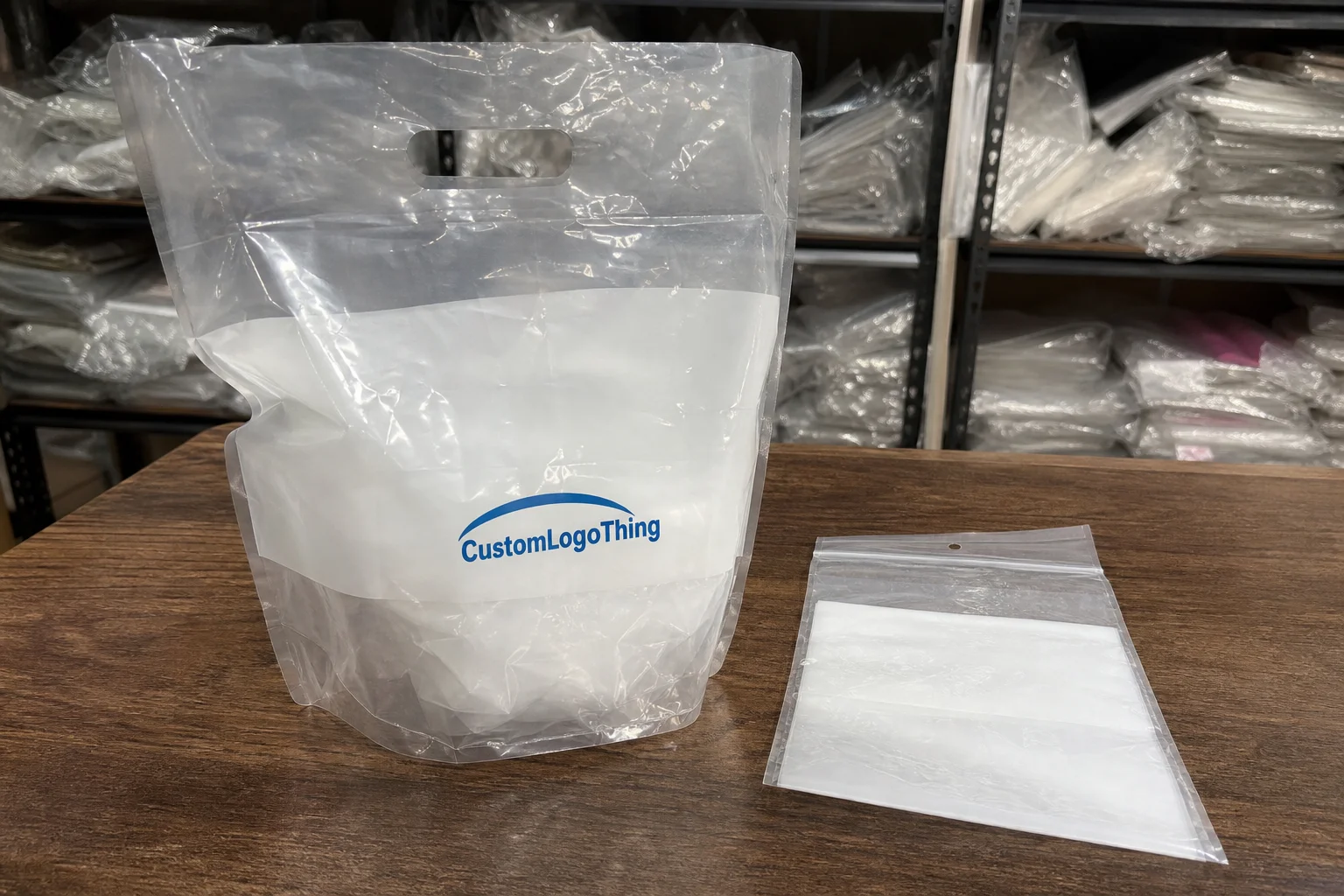
Custom printed Plastic Garment Bags are protective sleeves or covers made from plastic film and printed with brand elements such as a logo, size callout, store name, or care messaging. They are used in retail stores, dry cleaning, ecommerce fulfillment, bridalwear, uniforms, and seasonal storage.
Garments move through several hands before the customer sees them. Each touchpoint can leave dust, crease marks, fingerprints, or a dull first impression. A properly specified bag helps reduce those problems while also giving the item a more finished look. Many brands use them alongside other Custom Packaging Products rather than treating them as an afterthought.
Plain poly bags are usually cheaper, but they tend to signal transit protection rather than brand care. That difference shows up on rack presentation, in back-of-house storage, and in unboxing photos.
Common use cases include:
- Apparel retail and boutique display
- Dry cleaning and uniform distribution
- Ecommerce fulfillment for dresses, coats, and suits
- Bridalwear protection and storage
- Seasonal wardrobe storage and inventory handling
“The best garment bag is the one that protects the item, fits the workflow, and still looks intentional on the floor or in transit.”
Printed bags can also help staff identify product categories faster. A size cue, department name, or short handling instruction can save time in a back room where many similar items are moving at once.
How printing and bag construction work
Most Custom Printed Plastic garment bags start with film selection. That usually means polyethylene in a chosen gauge, though the exact grade depends on the feel, clarity, and strength needed. After that comes artwork setup, then the print method is chosen based on quantity and design complexity.
Flexographic printing is common for larger runs because setup costs are spread across more units. Digital printing can make sense for shorter runs or artwork with more variation. The print process affects color sharpness, turnaround, and how much artwork freedom is practical.
The bag itself is more than a flat tube of film. Structure changes how it performs in daily use. Side gussets help the bag accommodate bulky items. Bottom seals affect strength. Hanger holes, vent holes, zipper closures, and die-cut openings all change how the garment is loaded, displayed, and stored.
Typical customization options include:
- Dimensions and gusset depth
- Thickness or gauge
- Clear, frosted, or tinted film
- Single-color or multi-color print
- Logo placement and message copy
- Hanger hole, venting, and closure style
Proofing matters because a logo that looks balanced on screen can sit too low on the finished bag, and a font that reads well in a PDF can disappear on glossy film. Sampling catches those issues before they become a full production problem.
Packaging lines also influence the design. If bags are loaded by hand, the opening must be easy to access. If they are stacked, slit placement and fold style matter. If they ship flat and are filled later, storage footprint becomes part of the decision.
Key spec factors that affect protection and brand impact
The first spec to review is material. Polyethylene remains the workhorse because it balances cost, clarity, and sealability. Recycled content options are increasingly available, though the look and feel can vary by resin mix. Clear film shows the garment best, while frosted film gives a softer visual without hiding the product completely.
Thickness affects both durability and perception. Lighter gauges can reduce material use and unit cost, but they may feel flimsy if the bag is handled often. Heavier gauges usually improve tear resistance and create a more substantial feel.
Fit is another area where buyers make avoidable mistakes. A bag that is too narrow wrinkles the garment and makes loading harder. Oversized bags waste material, take up more rail space, and can look sloppy in-store. The right size should account for hanger width, closure style, and how the garment hangs when packed.
Print spec matters too. A one-color logo on clear film often reads cleaner than a dense full-coverage design. More colors, more ink coverage, and heavier opacity can increase cost and reduce product visibility.
Useful functional details to specify up front include:
- Hanger holes for fast merchandising
- Perforations for tear-off access
- Resealable closures for repeat use or storage
- Breathable vents for longer hanging periods
- Warning or care text for retail or dry cleaning use
For channel-specific programs, labeling may need to align with recycling marks, handling instructions, or retailer requirements. If the bags will move through multiple distribution channels, check compliance expectations early rather than after artwork is approved. For broader material and sustainability context, the EPA recycling guidance is a useful baseline.
Clarity is not just a visual preference. In apparel packaging, it affects whether customers can inspect color, texture, and drape before purchase. That matters for premium coats, bridal pieces, and anything where fabric quality is part of the sale. Frosted film softens the look, but it also dims the product slightly.
Environmental claims should be handled carefully. Many buyers want a recycled or recyclable option, but the outcome depends on local collection systems, contamination risk, and whether inks or closures complicate recovery. A packaging spec that sounds sustainable on a quote sheet may not perform the same way in disposal.
Custom printed plastic garment bags pricing, MOQ, and quote basics
Pricing is driven by a handful of variables: resin cost, print complexity, bag size, film thickness, closure style, and order volume. If your art uses multiple colors, heavy coverage, or fine type, expect the quote to reflect that. If your dimensions are unusual, tooling and setup may also shift the economics.
MOQ, or minimum order quantity, usually exists because custom printing has setup work attached to it. Plates, film preparation, press setup, and production planning all take time. Smaller quantities are possible, but they often cost more per unit.
Here is a rough planning table many buyers find useful when comparing options:
| Order style | Typical strengths | Typical trade-offs | Indicative unit cost |
|---|---|---|---|
| Short-run digital print | Lower setup burden, flexible artwork, faster for smaller volumes | Higher unit cost at scale, fewer material or finish choices in some cases | $0.28-$0.55 depending on size and coverage |
| Flexographic mid-run | Better pricing as volume rises, consistent print quality, common for retail programs | Plate and setup costs, less efficient for very small orders | $0.16-$0.32 at moderate volumes |
| High-volume flexographic | Lower per-unit cost at scale, strong for repeat programs | Higher up-front commitment, more planning needed | $0.09-$0.22 for large runs, depending on spec |
Those are not universal numbers. They depend on print coverage, raw material pricing, freight, and the exact construction. In practice, a quote that looks cheap can become expensive once you add shipping, sampling, rush charges, or special packing requirements.
Ask suppliers to quote the same spec sheet: same dimensions, same gauge, same print count, same closure. Otherwise, you are comparing different products. The most useful quote is usually a landed-cost quote that includes freight.
Plastic garment bags compress well, but bulky dimensions, custom folding, and pallet configuration still affect shipping cost. A low unit price can look attractive until the cartons arrive on a pallet with unexpectedly high dimensional weight.
Production timeline and approval process
A clean production timeline usually starts with a specification brief. Then comes artwork submission, proofing, sampling if needed, production, quality checks, and shipping. If everything is ready and approvals move fast, the process can be smooth.
Typical lead time varies by method and order size, but a common range is 12 to 15 business days from proof approval for standard production runs, with longer timelines when sampling, special materials, or freight coordination are involved. The biggest schedule risks are late approvals, unclear dimensions, color corrections, and forgotten file revisions.
Set aside extra time if the bags support a launch, seasonal reset, or event with a fixed date. Trade show prep is especially unforgiving, and a delayed bag order can disrupt product packaging and display prep.
Before requesting a sample or quote, prepare:
- Artwork files in the correct format
- Exact bag dimensions
- Preferred material and thickness
- Print colors and placement
- Closure or opening style
- Target quantity and delivery deadline
The approval process is what keeps a small issue from turning into a full reprint. If you have seen a logo placed too low or text printed too small to read, you already know why proofing matters.
Quality control should include more than a visual glance at the finished carton. Buyers should ask how print registration is checked, whether film thickness is measured against spec, and how seals are inspected for consistency. For garment bags, the failure points are usually predictable: weak seams, misaligned perforations, off-center print, and openings that are harder to use than they looked in the proof.
Common mistakes buyers make with custom garment bags
The first mistake is sizing by garment length only. A coat on a hanger is not the same thing as a folded jacket in storage or a formal dress with extra volume at the shoulders. Hanger width, seams, and closure features all affect the final fit.
The second mistake is overdesigning the print. Busy artwork can make the bag look darker, less premium, and harder to read from a distance. A simpler layout often performs better, especially in retail settings where the bag needs to support the merchandise rather than dominate it.
Third, some buyers chase the lowest material cost and discover too late that the film is hazy, weak, or inconsistent. A small savings per unit can disappear fast if bags tear, wrinkle, or make the garment presentation look cheap.
Other common errors include skipping sample review, ordering too late, and choosing a style that does not match the use case. A display-style cover may be fine for storefront presentation, but not ideal for long storage cycles or heavy handling in a warehouse.
Another recurring issue is underestimating the real mix of garments in a program. A bag sized for standard dresses may fail once it meets long coats, embellished formalwear, or thick uniforms. If a purchase order covers several garment categories, ask for the size map in advance rather than assuming one spec will cover all of them.
Expert tips for a smarter custom bag order and next steps
Start with the garment, not the graphic. Confirm the item’s dimensions, hanger style, folding method, and storage environment before finalizing the artwork. That one habit prevents more problems than almost anything else in the ordering process.
Ask for a spec sheet and a pre-production proof. Verify size, print placement, material feel, and closure behavior before you commit to the full run. If the bag is part of a larger branded packaging program, coordinate it with other items like hang tags, mailers, or custom printed boxes so the visual language stays consistent.
Use one primary message when possible. A logo, a short brand line, or a clear instruction usually reads better than several competing elements. From a distance, simplicity wins; up close, accuracy wins.
When comparing suppliers, do not stop at price. Ask about tolerances, print registration, inspection steps, and what happens if the first samples miss spec. For buyers who care about sustainability or environmental signaling, it can also help to understand the supplier’s material sources and certifications. The FSC site is useful for paper-related coordination, even if your garment bag itself is plastic.
Requesting matched quotes is one of the fastest ways to expose weak assumptions. If two vendors are quoting different gauges, different print counts, or different bag folds, the gap between their numbers is not a clean price difference. It is a spec difference.
For recurring programs, consistency is often more valuable than the lowest possible unit price. A bag that repeats the same color, fit, and print quality quarter after quarter makes inventory handling easier and keeps the brand presentation stable.
If you are ready to quote, gather artwork, dimensions, quantity, and any must-have features, then request matched pricing from two or three vendors. The strongest orders are the ones that treat custom printed plastic garment bags as part of the product, not just a cover for it.
What are custom printed plastic garment bags used for?
They protect clothing from dust, handling marks, and moisture during storage, display, or shipping. They also add branding and can include logos, sizing, or care information.
How do I choose the right size for printed garment bags?
Measure the garment on its hanger or folded in its final packed form, not just the clothing length. Leave room for hanger width, seams, and any closure or gusset features.
What affects the price of custom printed garment bags the most?
Order volume, material thickness, bag size, print complexity, and closure style are the biggest drivers. Freight, sampling, and rush production can also change the final unit cost.
How long does production usually take for custom printed plastic garment bags?
Timeline depends on artwork approval, sampling needs, order size, and printing method. Clear specs and fast approvals usually shorten lead time significantly.
What should I send when requesting a quote for garment bags?
Include dimensions, material preference, thickness, print colors, quantity, closure style, and artwork files. The more specific your request, the easier it is to compare quotes accurately.


