Buyer Fit Snapshot
| Best fit | Custom Printed Polybags With Logo projects where brand print, material claims, artwork control, MOQ, and repeat-order consistency need to be specified before quoting. |
|---|---|
| Quote inputs | Share finished size, material target, print colors, finish, packing count, annual reorder estimate, ship-to region, and any compliance wording. |
| Proofing check | Approve dieline scale, logo placement, barcode or warning zones, color tolerance, closure strength, and carton packing before bulk production. |
| Main risk | Vague material claims, crowded artwork, missing packing details, or unclear freight terms can make a low unit price expensive after revisions. |
Fast answer: Custom Printed Polybags With Logo: Practical Buyer Notes should be specified like a repeatable production item. The safest quote records material, print method, finish, artwork proof, packing count, and reorder notes in one written spec.
Production checks before approval
Compare the actual filled-product size with the drawing, then confirm tolerance on folds, seals, hang holes, label areas, and retail display edges. Reserve space for logos, QR codes, warning copy, and material claims before decorative graphics fill the panel.
Quote comparison points
Review material grade, print process, finish, sampling route, tooling charges, carton quantity, and freight assumptions side by side. A quote is only useful when the supplier can repeat the same color, closure quality, and packing count on the next order.
Custom printed polyBags with Logo look almost too ordinary to matter. Then one arrives with a seal that wandered 6 mm, a logo that sits too close to the fold, or corners that split after a carton makes one ugly trip through the warehouse. That is when the bag stops being a bag and becomes a very expensive lesson.
I still remember a buyer in Chicago calling about a 5,000-piece order because the print "failed." The artwork was fine. The problem was a film blend that changed just enough to alter the seal window, plus corners that gave out after normal handling in a 70-pound carton. Nobody had done anything wildly wrong. A few small misses simply lined up at the same time, and that is how packaging goes sideways.
The mistake I see most often is treating a printed polybag like a decoration with a utility function. It is not. It is a spec sheet with a logo on it. Film gauge, resin, seal profile, bag dimensions, print registration, and freight abuse all have to play nicely together. Miss one variable and the whole order can turn from brand asset to complaint log. Not dramatic. Just expensive.
I have spent enough time on factory floors in Shenzhen, Ningbo, Dongguan, and Ho Chi Minh City to know that Custom Printed Polybags with logo are part engineering, part merchandising, and part logistics. Buyers usually start with the appearance. Fair enough. But the better questions are boring ones: does the bag fit the product, survive transit, and still read cleanly under warehouse lighting at 500 lux? Those questions save money. The pretty questions usually arrive after the damage report.
Brands that invest heavily in Custom Printed Boxes often underweight the bag. That still surprises me. A clear bag with a crisp logo can carry nearly the same visual authority as a printed carton, and it often does it for a lower unit cost. I have seen teams approve a carton program with 350gsm C1S artboard, then rush through the bag approval in an email thread between meetings. The result is predictable: reprints, delays, and a lot of "very busy" people suddenly becoming unavailable. The bag may only cost $0.15 per unit at 5,000 pieces, but the delay can cost far more than the packaging itself.
What are custom printed polybags with logo, and why do they matter?
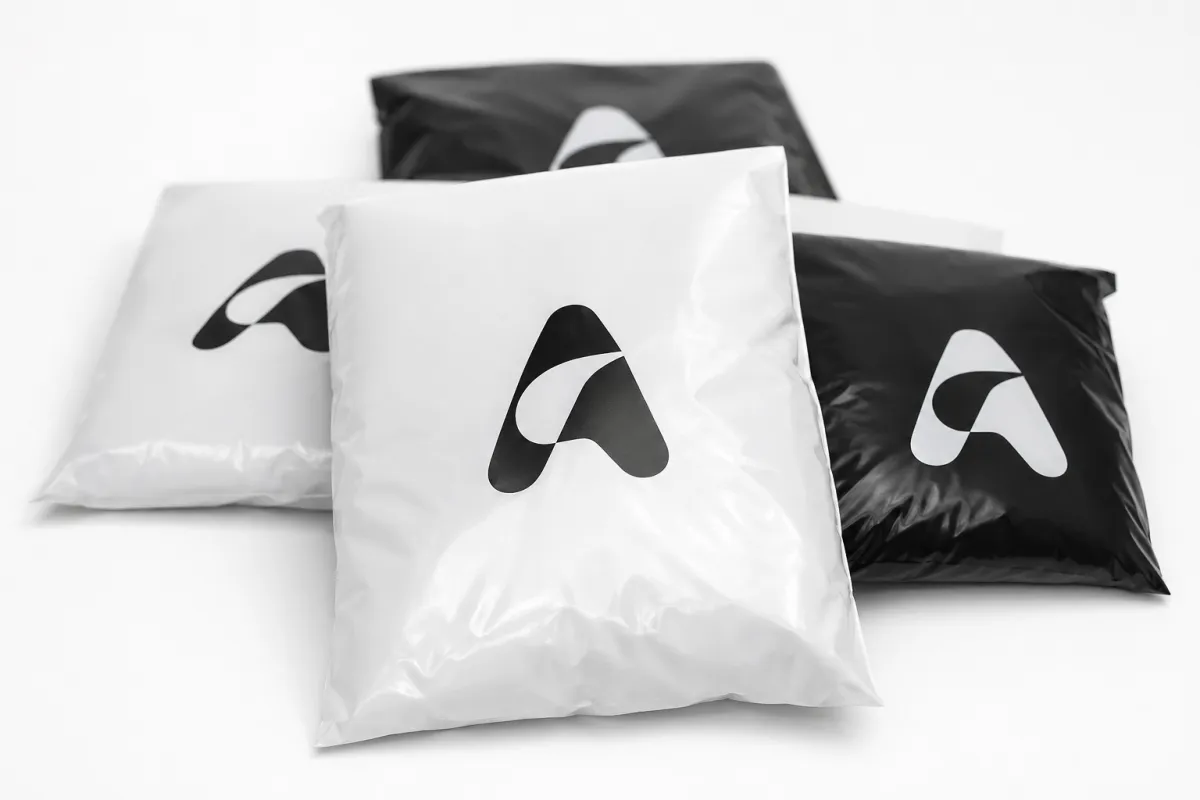
A polybag is a flexible plastic bag made from film such as LDPE, HDPE, or OPP. Once you add custom printing, exact sizing, closures, or display features, it moves beyond stock packaging and becomes Custom Printed Polybags with logo. That customization can be as minimal as a one-color logo repeat in Pantone 286 C, or as detailed as gussets, hang holes, resealable strips, and print coverage built around the product itself. I like that range because it lets packaging act like a tool instead of a guess.
Buyers Order Custom Printed polyBags with Logo for three reasons that show up again and again in procurement conversations: brand visibility, product protection, and speed on the line. Printed bags make inventory easier to identify, strengthen shelf appeal, and reduce extra inserts or labels. I have seen apparel teams cut packing time by 30 minutes per carton after switching from mixed packaging to a single clear bag with clean print and a 1-inch hang hole. Not glamorous. Very profitable. Finance tends to notice later than marketing, but it notices.
Control matters too. A logo on the bag changes how a product is perceived before anyone even touches it. I once watched a retail packaging manager compare two samples under the same 4,000K light in a sample room in Los Angeles. One was plain. The other was Custom Printed Polybags with logo. The dimensions matched at 10 x 12 inches, and both used 1.75 mil LDPE. The branded version won by a few cents and a wide margin because it looked finished. That kind of judgment sounds small until the purchase order lands.
"The bag is never just a bag. If the seal fails, the size is off by 10 mm, or the print is muddy at 300 dpi equivalent, the customer sees cheap packaging before they ever touch the product."
That is why I treat custom printed polybags with logo as a packaging specification, not a graphics project. The logo matters, obviously. So do resin, film thickness, seal profile, and print placement. A polished-looking bag that leaks or wrinkles badly under tension is still a bad bag. It is the packaging equivalent of a tailored jacket with one sleeve hanging loose. I saw exactly that in a sample room in Guangzhou at 9:20 a.m., and yes, the mood in the room got very quiet.
One detail gets missed more often than it should: custom printed polybags with logo can reduce shipping friction. A tight fit keeps the product from shifting inside the carton. High-contrast print helps warehouse staff sort faster. A good bag spec reduces void fill and lowers the odds of a damage claim that lands in the inbox at 8:14 a.m. on a Monday. Those emails always arrive with the energy of a minor disaster and the grammar of a shrug. If the bag is 0.5 inches too wide, you pay for it in dunnage, box size, and freight class.
There is also a perception effect that people underestimate. A clear bag with a tidy logo can make an entry-level product look organized, while a sloppy bag can make a premium item feel cheap. Same SKU. Same contents. Different impression. That is a packaging truth I’ve watched play out across apparel, accessories, and even hardware kits. The human eye is very fast at making judgments, and it does not wait for a spreadsheet.
How custom printed polybags with logo are made
The production flow looks straightforward on paper and stubbornly specific in practice. It starts with resin selection, then extrusion into film, then slitting, printing, sealing, inspection, and packing. On a disciplined line in Dongguan or Ningbo, each stage is held to a tolerance sheet with a 2 percent variance. On a sloppy one, the gauge drifts, the ink creeps, and the seal looks like it was assembled with a stapler and hope. I do not say that lightly; I have seen all three in the wild, usually before lunch.
For custom printed polybags with logo, film choice sets the base behavior. LDPE is common because it is flexible, soft, and seals well at around 110 to 130 degrees Celsius. HDPE feels thinner and crisper, so it often appears where stiffness matters. OPP delivers a sharper look and more gloss, which is why it shows up in retail packaging and apparel bags, though it does not seal the same way and usually needs a separate closure plan. I have had buyers insist on "the cheapest material," then call after the first shipment because the hand-feel was wrong. Material feel is part of package branding whether anyone wants to admit it or not.
Printing method shapes the economics. Flexographic printing usually fits higher quantities because setup costs spread across volume. Digital printing tends to fit shorter runs and faster artwork revisions. The lowest press price is not always the lowest bag price, because a tempting setup fee can hide slower speed, lighter opacity, or extra waste. I once reviewed a quote in Dongguan that looked sharp until plate charges, color-matching fees, and packing labor were added back in. The "cheap" option added $430 before the first carton left the dock. That is not savings. That is a trap with good manners.
Artwork choices affect the finished bag more than most people expect. More colors mean more screens, more registration risk, and more chances for small shifts. White ink on clear film makes a logo stand out, though it also changes how the bag reads under retail lights. Bleed, overprint, and transparent zones all need attention. A logo placed too close to a seam can be cropped after approval, and by then 20,000 custom printed polybags with logo may already be sitting in a warehouse with the mark clipped at the edge. Nobody enjoys explaining that one in a postmortem, especially when the proof clearly showed a 12 mm safe zone.
Common formats include flat polybags, gusseted bags, wicketed bags, zipper styles, and Bags with Hang Holes. Flat bags are the simplest. Gusseted bags add room for bulkier items. Wicketed bags help faster line packing. Hang holes support display. The right shape depends on the product and the packing process, not on which sample looks best in a sales deck. I have learned to distrust the sample that looks too photogenic; it often hides a practical compromise, like a zipper placed 3 mm too low for the line speed in an Atlanta fulfillment center.
For buyers comparing custom printed polybags with logo to other packaging options, the useful lens is engineering. The bag is not just decorated; it is built to perform. Treating it like a flyer wrapped in plastic misses the variables that drive cost and failure. If you have ever watched a well-designed bag fail because the seal bar was off by 1 mm on a 600 mm machine, you stop romanticizing packaging pretty quickly. That is also why I want actual measurements, not adjectives, on every production brief.
Custom printed polybags with logo pricing: what actually drives cost
Pricing for custom printed polybags with logo usually comes down to six variables: material weight, bag size, number of print colors, setup charges, quantity, and shipping destination. The bag itself may cost only a few cents. Setup, freight, and waste can move the final number far more than the film does. That is how a quote that looks tidy on page one turns into a surprise on the invoice. I have seen that movie, and I would not recommend it.
A 1-color 12 x 15 inch bag running 5,000 pieces might land near $0.15 per unit. The same bag at 1,000 pieces can jump close to $0.28 once tooling is spread out. That shift is not mysterious. It is simply math refusing to be polite. Volume changes the structure of the quote fast, and the smaller the run, the more every one-time fee matters.
One-time costs are where buyers get caught. Plate charges, artwork setup, cylinder fees, and sample charges often sit outside the unit price. I have seen a quote where the per-bag number looked attractive, but tooling added $95 for a single-color run and $260 for proofing. At 1,000 pieces, that hurts. At 25,000, the same fee barely registers. It is the difference between a nuisance and a rounding error.
| Option | Typical setup | Typical unit cost | Best fit | Notes |
|---|---|---|---|---|
| Digital print LDPE | $0-$75 setup | $0.29-$0.55 at 2,000 pcs | Short runs, frequent artwork changes | Good for test orders, usually higher per-unit cost |
| Flexo print LDPE | $95-$180 plates/setup | $0.11-$0.24 at 10,000 pcs | Mid to high volumes | Best balance of cost and consistency for many custom printed polybags with logo |
| OPP retail bag | $120-$240 setup | $0.18-$0.38 at 8,000 pcs | Retail presentation, higher gloss | Often chosen for apparel and display packaging |
| HDPE shipping bag | $85-$160 setup | $0.08-$0.19 at 15,000 pcs | Simple shipping or inner pack use | Can feel thinner, so spec the gauge carefully |
Quantity changes the price structure fast. A $95 plate charge seems modest until it is spread over 1,000 bags and becomes nearly ten cents per unit. Spread across 25,000 pieces, the same charge disappears into the background. That is one reason custom printed polybags with logo tend to make more sense at larger volumes when the artwork will stay stable through a season. I am not saying smaller runs are bad. I am saying they punish indecision, especially when the buyer changes the print area after the first proof.
Cost traps usually hide in the details. Oversized bags use more film and more freight space. Too many print colors raise setup time. Heavy film used where a lighter gauge would work adds waste. Rush production is the classic self-inflicted tax. I have seen a buyer pay an extra $325 for rush slots because the purchase order sat untouched for six days. The bag did not become more valuable. The schedule simply got more expensive.
Supplier comparison needs a careful method. A local converter may quote higher per unit than a distributor such as Uline or Veritiv, but freight, storage, and repacking terms can flip the result. A supplier that is $0.03 cheaper on unit price but $180 higher on shipping is not cheaper on a small order. For custom printed polybags with logo, total landed cost matters more than the headline number. The headline is for meetings. The landed cost is for invoices.
Ask for a line-item quote. Film, print, setup, sample, freight, and taxes should be broken out. If a supplier refuses to separate the numbers, I get cautious quickly. That usually means padding has been tucked somewhere in the quote, and nobody enjoys finding it after the carton arrives. Frustration is a poor substitute for transparency. I would rather compare a $0.15 bag with a clear $180 freight line than a clean-looking total that hides three extra charges.
For buyers who also source Custom Packaging Products, a single master spec sheet helps across categories. The same discipline that keeps custom printed boxes under control helps here too. A clean spec sheet cuts down on accidental upgrades nobody asked for, like a carton moving from 350gsm C1S artboard to a heavier 400gsm board without anyone approving it. It also cuts the number of times someone says, "I thought that was included." Usually that line is followed by silence, then a very long email thread.
Production timeline for custom printed polybags with logo
The timeline starts before the factory runs anything. The brief comes first: dimensions, thickness, print colors, bag style, target quantity, and destination. A messy brief slows everything down. A clear one saves days before a single roll of film is converted into custom printed polybags with logo. I have watched two identical jobs move at completely different speeds simply because one buyer knew exactly what they wanted and the other was "still deciding" after the sample had already been couriered from Shenzhen to the office in Dallas.
Artwork review usually takes a few days if files are ready. Sampling often takes 1 to 2 weeks, depending on the print method and whether plates or digital proofs are needed. Production can take a few weeks for a simple order or much longer for larger runs and special features. I have seen a clean flexo order move from approval to shipment in 14 business days. I have also watched a sloppy order drag past 6 weeks because the buyer kept changing the logo size by 3 mm. Three millimeters sounds harmless until you multiply it by revisions, proofs, and the word "just." That word has ruined more schedules than bad weather.
Delays usually come from the same predictable problems. Missing dimensions. Late artwork. Color changes after approval. A surprise request for thicker film. Someone wanting to move the seam after the preproduction sample had already been signed off. In factory meetings, the line I hear most often is, "Can we just adjust one more thing?" Yes. The schedule adjusts too. It does not do so gracefully. If the original spec says 1.8 mil LDPE and the buyer asks for 2.5 mil after approval, a one-week delay is a reasonable outcome.
Shipping time is separate from factory time, and those two get mixed up constantly. Air freight is fast and expensive. Ocean freight is slower and far cheaper for larger orders. If your custom printed polybags with logo must arrive before a launch, subtract time for inspection, transit, and a correction window. I usually build in 7 to 10 days of buffer when the bags support a hard retail date, because the first correction rarely turns out to be the only one. That buffer has saved me from several awkward status calls.
A pallet leaving Ho Chi Minh City for Los Angeles by air can arrive in 4 to 6 days, while ocean freight may take 18 to 28 days depending on the port. Those ranges are useful, not sacred. Weather, customs, and port congestion do not care that a calendar was already booked. That is why lead time should always be treated as a working estimate, not a promise carved into stone.
Here is a rough planning model I use with clients:
- Day 1 to 3: brief, specs, and artwork collection.
- Day 4 to 7: art review and proof adjustments.
- Day 8 to 15: sample or preproduction approval.
- Day 16 to 30+: production, depending on print method and quantity.
- Transit: a few days by air or several weeks by ocean.
If your custom printed polybags with logo are tied to a launch, trade show, or retail reset, lock the approval date first. The bags will not care about the calendar. The factory will care even less. Planning around that reality is annoying, but so is missing a launch window. I usually tell clients in New York or Los Angeles to treat the proof date like a ship date with a 48-hour slip buffer.
Key factors that decide performance and shelf appeal
Film thickness gets too much credit and too much blame. A thinner bag is not automatically weaker if the resin blend, orientation, and seal profile are right. I have seen a 1.5 mil LDPE bag outperform a heavier but poorly sealed alternative because the structure matched the load better. Custom printed polybags with logo work best when the structure is built around the product rather than copied from a competitor's SKU sheet. Copying the competition is often how people inherit someone else’s mistakes, just with a different supplier name on the invoice.
Fit matters more than many buyers expect. What are the exact product dimensions? How much headspace is needed? Does the bag need room for a label, hang tag, or folded insert? Is it carrying one item or a bundled pack? A bag that is 15 mm too short can wrinkle the logo, while one that is too loose makes the product look sloppy on shelf. I have watched retail buyers reject an attractive print because the extra slack made the garment look haphazard in a store in Seattle. The bag looked fine in theory and careless in reality, which is usually how these mistakes surface.
Visibility is the other half of the equation. Clear film, gloss level, opacity, and print contrast all change how the logo reads under store lighting or warehouse LEDs. A strong black logo on frosted film feels premium. The same logo on cloudy clear film can look dull. That is why I talk about packaging design even for a polybag order. The print is part of the product presentation, not an afterthought. If the bag is a first impression, then "good enough" is usually not good enough.
Performance changes with environment too. Moisture can fog clear film. Cold storage can make some structures brittle. Static can turn a bag into a dust magnet. UV exposure can fade certain inks. If the bags will travel through rough freight, I want to know the drop and vibration profile. I still refer to ISTA testing guidance when a bag is part of a broader distribution system, because the bag does not live by itself; it rides inside cartons, pallets, and trucks with everything else. Packaging is social like that.
Sustainability only matters when the claim is real. If a buyer wants recyclable packaging, the structure needs to support that claim in the market where it will be sold. Monomaterial structures are often easier to position than mixed laminates, but local recycling rules vary. The EPA has useful source reduction and recycling guidance at epa.gov/recycle, and I tell clients to verify any environmental claim before the artwork is approved. Guesswork becomes a future complaint, and future complaints are a terrible brand asset. A claim that works in California may need different language in Texas or Ontario.
Here are the specs I check first on custom printed polyBags With Logo:
- Dimensions: finished width, length, and gusset if needed, down to the millimeter.
- Thickness: usually stated in mil or microns, depending on market and supplier.
- Seal strength: enough to survive packing, transport, and pallet compression.
- Print placement: logo location relative to seals, folds, and hang holes.
- End use: retail display, inner pack, shipping protection, or warehouse sorting.
That list sounds dull. Good. Dull specs make good packaging. Exciting specs usually create extra work, and I have had enough "exciting" packaging projects to last a lifetime. A 12 x 18 inch bag with a 2-inch gusset and 1-color print is usually more useful than a fancy bag with no measurable tolerance.
There is one more practical issue that gets glossed over: how the bag will be handled after it leaves the factory. If it is packed by hand, a slightly softer film may be easier to work with. If it runs through a machine, stiffness and slip become more important. That difference sounds small until someone on the line has to compensate with speed, and then everything turns into a little bit of choreography. Nobody wants that.
Common mistakes when ordering custom printed polybags with logo
The first mistake is chasing unit price and ignoring the rest of the quote. A bag that is $0.02 cheaper can become more expensive once freight, storage, reprint risk, or a second round of approvals gets added back in. I have seen buyers celebrate a low quote, then pay for expedited replacement because the first batch had the wrong seam location by 4 mm. Cheap is only cheap if the bag works. Otherwise it is just a lower number on a document.
The second mistake is vague specs. If dimensions, thickness targets, print area, and closure style are missing, the supplier has to guess. Suppliers do guess sometimes. They guess in the direction that protects their margin, not yours. Custom printed polybags with logo need a written spec, not a hopeful conversation. A missing detail can turn a usable quote into a useless sample. And yes, I have sat in meetings where everybody thought someone else had handled the dimensions. Nobody had, which is how a 9 x 12 inch bag becomes a 10 x 13 inch problem.
Skipping samples causes trouble too. A screen proof may look perfect, while a filled bag behaves differently. The logo can stretch. The film can haze. The seal can shift under pressure. I once sat in a client meeting where everyone loved the digital mockup, then the physical sample arrived and the hang hole punched straight through the top line of the mark. That was a very expensive lesson in 12 mm. We all got quiet after that, which is rarely a good sign.
Artwork creates its own set of traps. Low-resolution logos, wrong color expectations, and web-sized files do not print well. A logo that looks fine at 300 pixels is not automatically production ready. If you want custom printed polybags with logo to look sharp, send vector files, specify Pantone references when color matters, and ask for a printed proof before full production. If a supplier says color matching is "close enough" without a standard, alarm bells should go off. "Close enough" is how brands end up explaining why the blue on the packaging is somehow the wrong blue.
Operational mistakes matter just as much. Buyers underestimate minimum order quantities, forget approval time, or choose a bag shape that does not fit the packing line. A wicketed bag can speed up hand packing while slowing a machine. A zipper can help the customer while annoying the warehouse. These choices are not style points. They are throughput decisions. I wish more teams treated them that way before someone on the floor had to do the math with a marker and a sigh. In one plant in Manila, a wrong hang-hole placement added 18 seconds per carton; the line felt that immediately.
There is also the habit of approving a bag from a screen and assuming the physical version will behave the same. It won’t. Screens flatten texture, gloss, and scale. A white background makes a print look cleaner than it will under fluorescent warehouse lights. That is one of those little facts that seems obvious after the mistake has already been made.
My fix list is boring and effective:
- Use a written spec sheet.
- Approve a physical sample or printed proof.
- Confirm unit cost, setup cost, and freight separately.
- Check the bag on the actual product, not just on a white background.
- Get the lead time in writing before the order starts.
That last one saves headaches. Suppliers can be optimistic. Freight can be odd. Customs can be slower than anyone wants. Written timelines keep custom printed polybags with logo from becoming a guessing contest. I am all for optimism in life. I just prefer my packaging timelines to be a little less cheerful and a lot more accurate.
What to do next before you order custom printed polybags with logo
Before asking for a quote, gather five things: exact bag dimensions, target quantity, artwork files, preferred material, and delivery destination. If you can also share product weight, packing method, and any special features such as hang holes or gussets, even better. The tighter the brief, the cleaner the quote for custom printed polybags with logo. A 6-ounce apparel item and a 2-pound hardware kit should never share the same bag spec.
Request a line-item quote. Film cost, print cost, setup cost, sample cost, and freight should appear separately. If a supplier bundles everything into one round number, the number may be tidy and the reality may be messy. A transparent quote lets you compare suppliers without guessing where the extra dollars are hiding. And if the quote changes later, you will know exactly where the wobble started.
Ask for a physical sample if logo placement matters or if the film needs to look a certain way under light. A printed proof is useful for checking copy and layout, but a real sample shows how the material behaves. That matters for custom printed polybags with logo because glossy film, clear film, and opaque film all change the visual result. I trust a sample a lot more than a mockup that only exists to win approval in a spreadsheet.
Compare at least two suppliers, but keep the spec sheet identical. If Supplier A gets a 12 x 16 inch bag on 1.5 mil LDPE with one-color print and Supplier B gets "similar bag, maybe thicker," the comparison is worthless. I say that bluntly because I have watched people compare poor quotes for a week and call it procurement. That is not procurement. That is competitive confusion. A supplier in Guangzhou and another in Ningbo can only be compared fairly if both see the same drawing, the same Pantone numbers, and the same delivery port.
One useful habit: confirm lead time in writing and ask what happens if artwork needs a second correction round. Some suppliers include one round in the price. Others charge for every revision after the first proof. That matters on a custom printed polybags with logo order because a small typo in the product code can trigger a second cycle of work. The typo is small. The bill is not. I have seen a $40 correction become a $140 correction once the schedule moved and the machine had to be reopened.
If your packaging program also includes Custom Poly Mailers, ask whether the supplier can keep the print style and color tone aligned across both products. I have seen brands strengthen package branding by making the bag and mailer feel like one system instead of two unrelated jobs ordered in a hurry. Consistency is not flashy, but it makes the whole line look intentional. Even a simple black logo and one spot color can tie together mailers, bags, and inserts across a 6-month season.
My last bit of advice is straightforward: lock down dimension, film, print colors, and usage environment first. Everything else follows. Custom printed polybags with logo work best when the buying decision starts with structure and ends with appearance, not the other way around. Get the spec right, and the bag does its job quietly, the logo reads cleanly, and finance never has to explain a damage claim. That is a rare kind of peace, and frankly, I would protect it.
One more thing: if you are torn between a prettier bag and a tougher one, choose the bag that survives the real handling route. A package that looks elegant on a desk but tears in transit is a very short-lived victory. Packaging has to earn its keep after the sample room has gone quiet.
FAQ
What is the minimum order quantity for custom printed polybags with logo?
It depends on the print method, bag size, and whether the supplier needs plates or other setup tooling. Digital printing usually supports lower quantities, while flexographic runs usually make more sense at higher volumes. I always ask for the MOQ and setup charge together, because a low MOQ with a heavy setup fee can cost more than a larger run with better spread on the tooling. I have been burned by that math before, and I suspect plenty of others have too. For example, a 2,000-piece digital order may be workable, while a 10,000-piece flexo run in Dongguan can cut the unit price by nearly half.
How long do custom printed polybags with logo usually take to produce?
If the files are ready, artwork approval can take a few days. Sampling often takes 1 to 2 weeks, and production can take several more weeks depending on the print method and quantity. Then shipping time still needs to be added, which is why I separate factory lead time from door-to-door delivery. Ocean freight and air freight are very different animals. One is patient, one is expensive, and neither cares about your launch date. In many cases, I plan on 12 to 15 business days from proof approval for a standard repeat order, then add 4 to 28 days for transit depending on the route.
What information do I need for an accurate quote?
Give the supplier the bag dimensions, material, thickness, print colors, quantity, closure style, and any special features such as hang holes or gussets. Include the delivery destination and the end use, whether the bag will support retail display, shipping, or a packing line. The more exact the spec, the fewer surprise charges later. Clear information saves everyone from pretending a vague brief was somehow "close enough." A quote for 12 x 15 inch, 1.8 mil LDPE, one-color print, and 8,000 pieces is far more useful than "need a medium bag for apparel."
Are custom printed polybags with logo recyclable?
Some are recyclable, but only when the structure and local recycling rules support that claim. Monomaterial structures are usually easier to position as recyclable than mixed or laminated structures, but the exact answer depends on where the bags are sold. If recyclability matters, confirm the claim before you approve artwork or packaging copy. I would rather spend an extra hour verifying than spend a month explaining a misleading label. A bag sold in California may need different language than one shipped to Ontario or Texas, and that difference matters.
How can I lower the cost without making the bag look cheap?
Reduce print colors, standardize sizes, and avoid special finishes you do not need. Increase quantity if cash flow and storage allow it, because setup costs spread out faster on larger runs. Keep the design clean, use the right film weight for the product, and do not overbuild the bag just to feel safer. That is how custom printed polybags with logo stay sharp without turning into a budget sink. In my experience, restraint usually looks more expensive than excess anyway, especially when the logo sits 10 mm above a clean seal line.

