For boutique retailers, clear resealable Poly Bags for Boutique Retailers moq planning is really a three-way balance: presentation, protection, and cash flow. Miss one of those and the packaging “deal” starts looking less clever by the week.
A good clear bag keeps folded apparel clean, displays accessories without hiding them, and speeds up pack-out better than rigid packaging in most small-shop workflows. It also takes up less room in receiving, backstock, and on the sales floor. That matters when every square foot has a job to do.
Retailers keep coming back to clear resealable bags because they solve practical problems, not because they are glamorous. The item stays visible. The staff can pack it quickly. The customer can inspect what they are buying. And if the sizing is right, nobody has to fight the packaging just to get the product onto a hook or into a display stack.
Packaging that upgrades shelf appeal without inflating labor
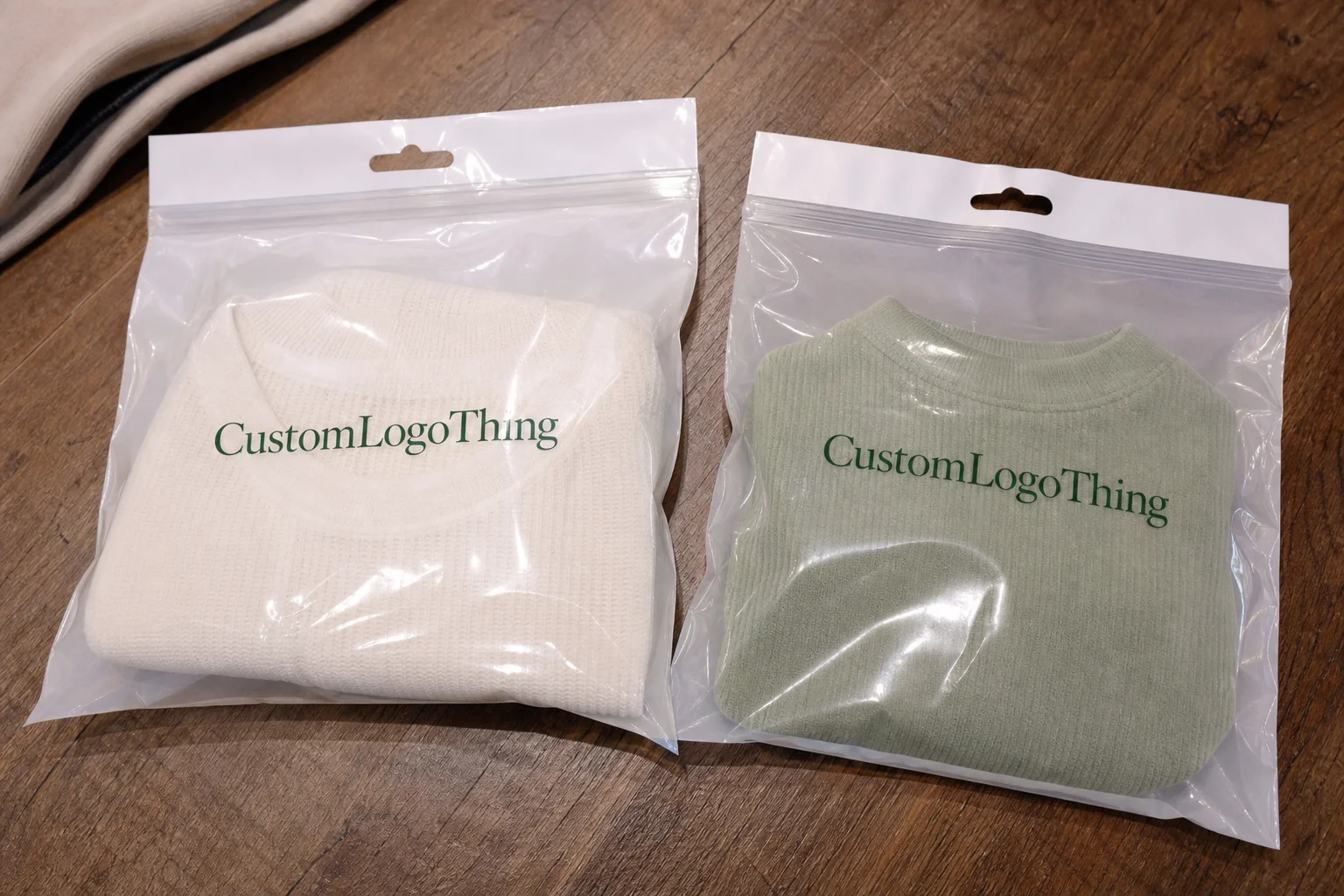
In a boutique, packaging has to do a little bit of everything. It needs to protect the product, keep it looking fresh, and fit into a workflow that usually does not include extra hands. Clear Resealable Poly Bags handle that better than most people expect, especially for apparel, jewelry cards, scarves, socks, stationery sets, and giftable items that benefit from visibility.
From the buyer side, the appeal is obvious. A flat poly bag weighs almost nothing, ships efficiently, and stacks without turning into a storage problem. Staff can reseal it after re-folding, relabeling, or re-merchandising. That makes it especially useful for products that move from stockroom to shelf more than once before sale.
There is also a labor reality that gets ignored in shiny packaging discussions. If the closure works and the dimensions are right, one employee can pack quickly without messing around with inserts, lids, or fragile corners. That saves time on replenishment days and reduces the chance of wrinkled product or damaged packaging. The package should help the team, not audition for a headache.
“The best clear bag is the one customers barely notice because the product looks good and the staff can use it without slowing down.”
The buying decision should not stop at appearance. Seal performance, gauge, print format, and MOQ all affect the final cost of the SKU. If the order is too large, inventory sits. If the bag is too flimsy, the packaging gets replaced early or fails during handling. If the closure is awkward, the store team stops using it the way it was intended. That is how a small packaging choice starts eating margin.
For retailers comparing packaging formats, standards and testing resources from ISTA can help with transit performance questions, while the EPA is useful for broader material and waste considerations.
Product details: films, seal styles, and print options
The two most common films for clear resealable retail bags are LDPE and CPP. LDPE is soft, flexible, and forgiving. It is a solid choice for folded garments and general soft goods because it tolerates handling well. CPP has a firmer feel and usually delivers stronger clarity, which is why boutiques often choose it when the display has to look sharper on shelf.
Gauge is where a lot of first-time buyers underestimate the difference between “good enough” and “annoying.” Around 1.5 to 2 mil works for light items such as flat accessories, cards, or thin apparel. Step up to 2.5 to 4 mil for sharper edges, heavier hardware, or anything likely to see repeated handling. For bulky or metal-heavy items, the extra thickness is usually worth the modest jump in unit cost.
Closure style changes both the customer experience and the pack-out speed. A zipper reseal is useful when the shopper may reopen the bag multiple times. Adhesive strip closures are faster and often cheaper, which makes them a good fit for one-time presentation or lower-touch retail. Press-to-close tracks usually sit in the middle: familiar, practical, and easy to train staff on. Flap-and-adhesive styles can give a clean top edge and simplify assembly when the packaging line needs to move fast.
Finish choices matter more than the marketing copy suggests. Crystal-clear film gives the strongest product visibility. Frosted film softens the look and hides fingerprints better, though it slightly reduces how vivid the contents appear. Vent holes help release air when inserting garments. Hang holes are useful for pegboard or hook display. Anti-static treatment can be worth asking about for synthetics or items that cling and attract dust during packing.
Printing is optional, and many boutiques keep the bag plain for flexibility. When printing is used, the most practical elements are usually a small logo, size marking, care note, warning text, or a barcode-friendly blank area. A simple one- or two-color print often does enough without pushing setup costs into silly territory. Full-coverage decoration can look nice, but it also narrows the product window and raises production complexity.
The practical reality is simple: Clear Resealable Poly bags for boutique retailers moq planning works best when the construction matches the assortment. A premium scarf, a set of hair accessories, and a folded tee do not need the same bag architecture, even if they share the same shelf space.
| Option | Typical use | Relative cost per piece | Practical note |
|---|---|---|---|
| LDPE zipper reseal | Folded apparel, soft goods | Low to moderate | Good balance of flexibility and reuse |
| CPP press-to-close | Premium presentation items | Moderate | Clearer look, slightly firmer feel |
| Adhesive flap bag | Fast pack-out, lower-touch retail | Lower | Simple, efficient, less reusable |
| Printed custom bag | Branded boutique assortment | Higher | Better branding, more planning required |
Specifications to confirm before you request a quote
If you want a useful quote, do not send only a product name. Send the width, length, whether a gusset is needed, the film gauge, the closure type, and the pack count per master case. Those are the details that determine whether the supplier is quoting the same thing you are picturing.
Bag sizing is where many first orders get messy. The widest point of the product is the starting measurement, but that is not the whole story. Folded apparel needs some headspace for insertion and normal variation in folding. Boxed accessories need room for corners. Soft goods are usually easier to fit, but they still need enough clearance that the zipper or seal is not under strain.
For tight-fit items, sampling is worth the time. A bag that looks generous on paper can feel cramped once a folded knit, insert card, or hang tag is inside. A half-inch difference may sound tiny. In retail packaging, it can change the entire packing rhythm.
There are also compliance and performance questions that should be asked plainly. If the item is food-related or includes edible components, food-contact status matters. If recycled content is being claimed, ask for the exact percentage and whether it is certified. If the item has sharp edges, puncture resistance should be discussed in actual terms, not waved away with a vague “make it thicker.” The same goes for barcode or label placement if the bag needs a flat, readable zone.
Artwork specs should be equally specific:
- Print area and exact logo placement
- Number of colors in the print file
- Barcode placement and scan orientation
- Need for a proof or mockup before production
- Whether artwork is repeat-print or variable by SKU
Clear resealable Poly Bags for Boutique retailers moq planning gets easier fast when the specification is complete on day one. That is where a good supplier saves time: the quote reflects actual production requirements instead of forcing a round of clarifying emails later.
For assortments that need more than bags alone, it can also help to review Custom Packaging Products alongside bag-only options, especially if some SKUs need inserts, sleeves, or secondary ship packaging.
Cost, pricing, and MOQ planning that protects margin
Pricing for clear retail poly bags usually comes down to size, film gauge, closure style, print coverage, and total quantity. The larger the run, the lower the unit cost tends to be because setup gets spread across more pieces. That is true for plain bags and even more true for printed runs that require proofing, plates, or tooling work.
For plain stock-size bags, pricing often falls somewhere around $0.04 to $0.12 per piece, depending on gauge and closure. Custom sizes typically move higher, and printed versions can land around $0.10 to $0.30 per piece or more when the order is small. If the bag needs special print coverage, unusual dimensions, or structural changes, tooling fees or setup charges may apply.
The real question is not “what is the cheapest bag?” It is “what order structure protects margin without creating dead stock?” A low-MOQ purchase is usually the right move for a new boutique, a seasonal launch, or a product line that may change after the first sales cycle. Higher quantities make sense when the SKU is stable, reorder patterns are predictable, and the item already has proven sell-through.
Here is the practical way to think about MOQ planning:
- Test items with low or mid MOQ if sell-through is uncertain.
- Scale quantities for fast-moving SKUs that replenish monthly.
- Keep standard sizes for slow movers to avoid custom inventory risk.
- Ask for two quotes: one at launch quantity and one at deeper volume.
That two-scenario quote structure is usually the smartest way to review bulk pricing. The smaller order shows the cash needed to launch. The larger order shows the savings if the SKU performs. It also makes it easier to compare whether the upfront savings are actually worth the storage and inventory risk.
Compare quotes carefully. A lower price can hide a thinner gauge, a weaker zipper track, a lower case pack, or a different print method. If two bags do not share the same dimensions and material specification, they are not the same product, even if the line item price looks similar.
If your assortment includes ship-to-customer packaging as well as floor-ready retail bags, it may help to review Custom Poly Mailers so the whole packaging system stays consistent across warehouse and store operations.
For boutique buyers, the most practical cost model is usually mixed: keep a standard clear bag for the broad middle of the assortment, then reserve custom printed or specialty closure options for hero SKUs that can justify the extra spend.
Process and turnaround from spec sheet to shipment
The buying process is straightforward when the paperwork is clean. Start with the spec sheet: dimensions, material preference, closure style, print needs, and estimated quantity. Then review the artwork proof or confirm that the bags will stay plain. If a sample or pre-production mockup is needed, approve that before the order moves into full production.
Timing depends on a few real production variables. Custom print jobs usually need more time because artwork has to be prepared and verified. Custom-sized bags can also add lead time if tooling or line adjustments are required. Standard stock-size unprinted bags generally move faster, especially when film is already available and the factory is not dealing with a seasonal spike.
Typical turnaround can range from roughly 10 to 15 business days for straightforward stock orders after approval. Custom-printed or custom-sized projects often take longer, especially if artwork revisions are involved. Transit time is separate, and that is where many buyers misread the calendar. A bag order can leave the plant on time and still arrive late if the receiving window is too tight.
Build in a buffer. If the bags are needed for a promotion, seasonal launch, or store opening, allow time for proof revisions, freight, and receiving inspection. A few extra days in the schedule cost far less than a sell-through problem caused by missing packaging.
Clear resealable poly bags for boutique retailers moq planning should also account for replenishment. If a first run works, it helps to know whether the supplier can repeat the order without restarting the whole process. Repeatability matters, especially for retailers that want the same size and closure across multiple seasons.
For general packaging education and stewardship questions, the FSC site is a useful reference when comparing paper-based components or broader sustainability claims across a packaging mix.
Manufacturing controls and buyer checks that reduce waste
A good bag order should be checked for a few practical quality points: gauge consistency, seal integrity, exact dimensions, print registration, and film clarity. If the order is supposed to be crystal clear, cloudy film or uneven thickness should not be treated as normal. If the zipper track is weak, the bag will fail in store long before anyone feels good about the cost savings.
Watch for common problems early. Bag slippage can happen when the fit is too loose or the product surface is too smooth. Cloudiness may come from the film itself or from storage and handling conditions. Incorrect case counts waste labor and create inventory confusion. Weak seals are especially frustrating because they often show up after repeated handling, not immediately on arrival.
For new SKUs, request samples or a pre-production proof. That is especially helpful for glossy items, delicate fabrics, or dimensionally tight products that may catch on the zipper or seal edge. A sample run tells you more in ten minutes than a spreadsheet can tell you in ten pages.
Storage matters too. Keep the bags flat, dry, and away from heat. Left in a warm stockroom, film can lose clarity or warp slightly, which slows down packing. Nothing dramatic is required. Just clean shelving, sensible handling, and a storage spot that is not next to high-heat equipment.
There is also a waste-reduction side to this that buyers sometimes miss. Better-fit bags reduce overuse of material, and the correct gauge prevents rework and replacements. That saves packaging spend, but it also saves labor, which is often the more expensive line item in a boutique operation.
When a retailer asks for packaging support, I usually want to know how the item is handled after packing. If it is opened on the floor, resealability matters. If it stays closed until the customer gets home, a simpler adhesive closure may be enough. That one decision can change both the construction and the cost per piece.
The same logic applies to the display environment. A bag that looks great in a sealed storage carton can behave differently after a few weeks on a humid sales floor, or after being handled constantly by customers. That is why material choice and closure style should be matched to the actual retail setting, not just the ideal one.
Next steps to place the right order for your assortment
If you are ready to quote clear resealable poly bags, gather five things first: product dimensions, monthly usage estimate, desired closure type, branding needs, and target order quantity. With that information, a supplier can recommend a realistic specification instead of guessing at the bag size or building something oversized “just to be safe.”
Organize your SKU list by size and velocity. Often, two or three packaging specs can cover a large portion of a boutique assortment if the products are grouped carefully. That kind of consolidation reduces SKU sprawl, keeps replenishment simpler, and can improve bulk pricing without forcing every product into a custom bag.
It is smart to ask for two quote paths: the minimum quantity that gets the launch started and a larger volume that improves economics. That gives you a clear view of cash outlay versus savings. For many boutiques, the right answer sits in the middle, especially if the product is seasonal or the assortment changes with the calendar.
Most important, send measurements, artwork, and a rough replenishment forecast together. That is what helps a supplier give the most accurate recommendation on clear resealable poly bags for boutique retailers moq planning, with a quote that reflects real production needs instead of a hopeful guess.
If you want to compare packaging options beyond bags, review FAQ for common buying questions and pairing options, then move into the quote request with the specs already organized. That simple step usually saves time and money, which is rare enough to appreciate without a speech.
When the order is planned correctly, the bag becomes one of the quiet strengths of the assortment: protective, clean-looking, easy to handle, and priced in a way that supports margin instead of chewing through it.
What MOQ should boutique retailers plan for clear resealable poly bags?
MOQ depends on whether the bag is a stock size or a custom-sized or printed order. Smaller boutiques often start with a lower MOQ to test sell-through, then increase the quantity after repeat orders confirm the item is moving. The right MOQ is the one that matches SKU velocity without creating excess inventory.
Which closure works best for clear resealable poly bags in retail?
Zipper reseal works well when the customer may reopen the bag repeatedly. Adhesive or flap closures are useful for simple, fast pack-out and lower cost. The best choice depends on how often the item will be handled after purchase and whether the retailer wants reuse or one-time presentation.
How do I size clear resealable poly bags for boutique products?
Measure the product at its widest point and add allowance for thickness, inserts, and easy insertion. Folded apparel, boxed accessories, and soft goods each need different headspace and gauge considerations. If the fit is tight, request a sample before committing to full production.
Are printed clear resealable poly bags worth the added cost?
Printed bags can improve brand recognition and reduce the need for extra labels. They also create a more consistent retail presentation across SKUs, which is useful for repeat assortments. If product lines change often, plain clear bags may be the more flexible option.
How long does production usually take for custom retail poly bags?
Lead time depends on whether the bag is stock, custom-sized, or custom-printed. Proof approval, artwork changes, and factory scheduling can all affect turnaround. Build in extra time if you need the bags before a seasonal launch or promotion.


