Buyer Fit Snapshot
| Best fit | custom product packaging boxes price for packaging buyers comparing material specs, print proof, MOQ, unit cost, freight, and repeat-order risk where brand print, material, artwork control, and repeat-order consistency matter. |
|---|---|
| Quote inputs | Share finished size, material target, print colors, finish, packing count, annual reorder estimate, and delivery region. |
| Proofing check | Approve dieline scale, logo placement, barcode or warning zones, color tolerance, and any recyclable or compostable wording before bulk production. |
| Main risk | Vague material claims, crowded artwork, or missing packing details can create delays even when the unit price looks attractive. |
Fast answer: Custom Product Packaging Boxes Price: What Impacts It Most should be specified like a repeatable production item. The safest quote includes material, print method, finish, artwork proof, carton packing, and reorder notes in one written spec.
What to confirm before approving the packaging proof
Check the product dimensions against the actual filled item, not only the sales mockup. Ask for tolerance on folds, seals, hang holes, label areas, and retail display edges. If the package carries a logo, QR code, warning copy, or legal claim, reserve that space before decorative graphics fill the panel.
How to compare quotes without losing quality
Compare board or film grade, print process, finish, sampling route, tooling charges, carton quantity, and freight assumptions side by side. A lower quote is only useful if the supplier can repeat the same color, closure quality, and packing count on the next order.
Custom Product Packaging boxes price is never just a number sitting on a quote sheet. Two boxes can look almost identical from across a conference table and still land worlds apart in cost once board grade, print coverage, inserts, coatings, and freight get pulled into the mix. That is why a quote without context is mostly noise. If you are buying custom printed boxes, the gap between a clean quote and a misleading one can be the difference between a controlled budget and a slow leak in margin.
The better question is not what the box costs. It is what the custom product packaging boxes price does to landed cost, damage rate, and customer experience. A right-sized recycled mailer can cut void fill, reduce parcel weight, and keep the product from rattling around in transit. That is not just a sustainability story. It is a cost story, and a pretty practical one at that.
Custom Logo Things works with brands that need packaging to do three jobs at once: protect the product, support package branding, and stay inside budget. Comparing custom product packaging boxes price across vendors only by unit cost is a fast way to miss the point. Structure, material, print method, and production efficiency all change the number in ways that matter.
Why custom product packaging boxes price changes so much
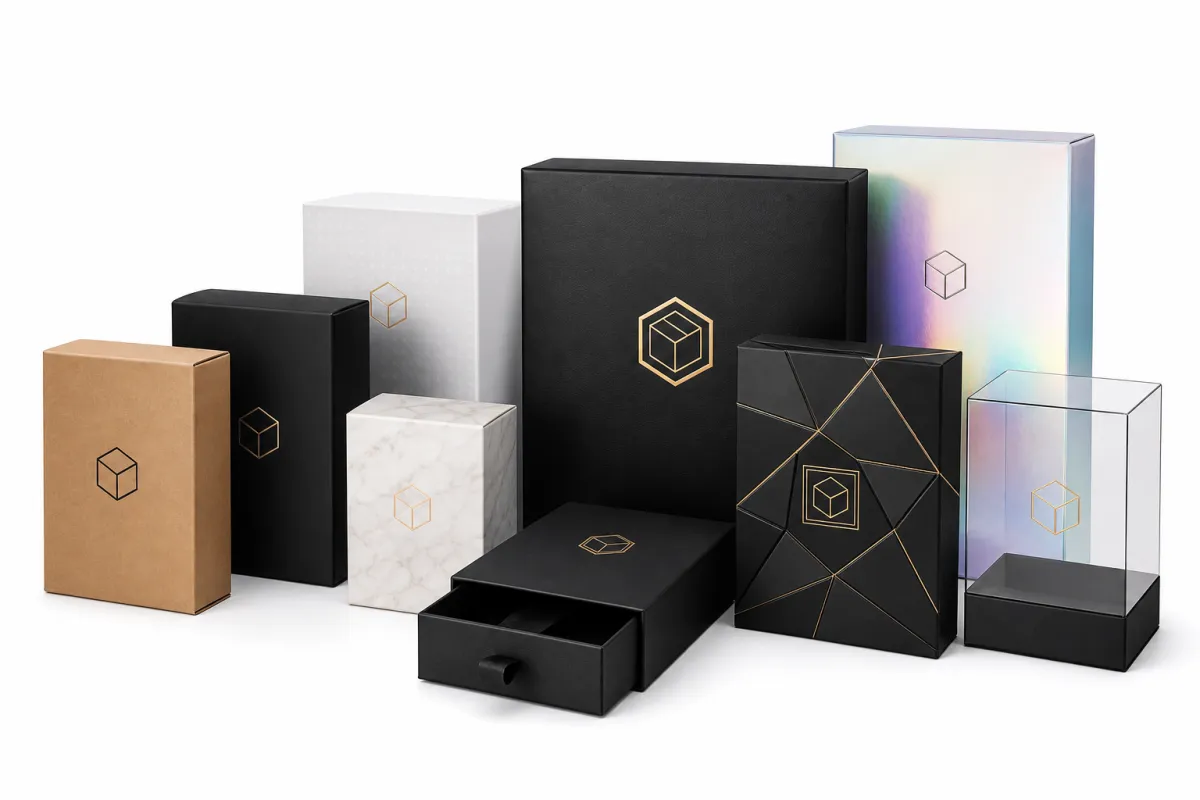
Custom product packaging boxes price shifts because packaging is a system, not a single item. A price reflects board type, dieline complexity, setup work, finishing, and how much hand labor the line needs to finish the job. A simple kraft mailer with one-color print will never cost the same as a rigid box with foil stamping and an EVA insert, even if both hold the same product.
Boxes with nearly identical dimensions can still price out very differently. One may use 32 ECT corrugated board while the other uses a heavier B-flute build. One may need print on the outside only. The other may need inside and outside print, plus coating, plus a custom insert. Add gloss aqueous, window patching, or specialty die work and the custom product packaging boxes price moves fast. That is normal. Packaging is annoying that way.
I have seen brands start with oversized stock mailers because they look cheaper on paper. Then the shipping bill shows up and ruins the mood. Right-sized cartons lower dimensional weight charges, often reduce the amount of void fill needed, and can keep the product from sliding around inside the box. In some categories, that means fewer returns and fewer replacements. So the real comparison is not stock versus custom. It is total cost versus total cost.
A box that looks cheap but ships badly can get expensive in a hurry. Smart buyers measure the custom product packaging boxes price against freight, damage, and labor, not just against the print line item.
Sustainability can also help cost when it is handled with a little common sense. Lighter structures, cleaner dielines, and fewer unnecessary layers usually use less board and weigh less in transit. The EPA has long pushed source reduction and material efficiency for packaging waste, and the logic is simple: less material often means less cost. You can read more about that kind of thinking at EPA's waste reduction resources, even if your exact packaging category is different.
The first quote should cover more than the box itself. Tooling, proofing, freight, and expected waste rates all matter. A run with higher setup complexity is not automatically overpriced. It may just be a more labor-heavy way to make the packaging you asked for. If you want a predictable custom product packaging boxes price, ask vendors to quote from the same spec sheet, not from a rough sketch and a hopeful mood.
The most expensive packaging is usually the one that creates problems later. A box that is too big, too decorative, or too weak can cost more in shipping or replacements than it saves on press. That is the part people forget when they chase the cheapest unit rate. Custom product packaging boxes price only makes sense when the full job is on the table.
Product details that shape box performance and value
Box format changes both performance and value, and it changes custom product packaging boxes price in a direct way. Mailer boxes are popular for ecommerce because they are sturdy, compact, and easy to brand. Folding cartons fit retail shelves well and usually work best for lighter products. Rigid boxes feel premium and support high-end presentation, but they cost more because of the build and the hand assembly. Shipper boxes are the workhorses for logistics. They care more about protection than presentation, which is exactly what they are supposed to do.
The right format depends on the product. Cosmetics often need crisp retail packaging with strong shelf presence and tight dimensional control. Supplements usually need clear labeling surfaces, tamper awareness, and enough board strength to survive pallet movement. Apparel can often use lighter boxes or mailers because the product is forgiving. Fragile items need inserts, separation, or double-wall protection, which raises the custom product packaging boxes price but can cut claims and replacements.
Print method matters too. Digital printing works well for shorter runs and faster artwork changes. Offset printing gives excellent image quality on larger runs, especially when the design uses detailed photography or precise color work. Flexographic printing can be efficient for simpler graphics on corrugated formats. Artwork choice changes the quote as well. Full-coverage, multi-color layouts with special inks take more setup than a restrained one- or two-color design. Fancy costs money. Pretending otherwise is how budgets get wrecked.
Structural choices carry their own weight. Tuck ends are efficient for folding cartons and usually keep labor down. Lock bottoms give better support for heavier contents. Inserts stop movement and improve presentation, but they also add cutting, folding, and assembly cost. Tamper-evident features may be required in some categories, and they can push the custom product packaging boxes price higher because they add components or specialized finishing steps.
Looking good and performing well are not the same thing. A glossy finish may help branded packaging, but soft-touch coating, spot UV, and foil stamping all add cost. Some brands need those features to stand out on a crowded shelf. Others do not. Buyers who know the sales channel, shipping method, and product fragility usually make better calls than buyers who start with a mood board and a prayer.
If you want to compare formats side by side, review the material and structure lineup available through Custom Packaging Products. Seeing the options next to each other makes it obvious why the custom product packaging boxes price shifts so much from one setup to another.
Specifications buyers should lock down before requesting quotes
If you want a quote that matches reality, the spec sheet has to be real. The biggest pricing variables are dimensions, board type, thickness, print count, finish, and whether the artwork wraps the inside as well as the outside. Those details determine material usage, machine setup, and labor. Without them, the custom product packaging boxes price is just a guess wearing a tie.
Start with exact dimensions. Even a small change can affect board consumption and shipping fit. Then define the board grade. A 14 pt folding carton, a 24 pt SBS board, and a corrugated mailer are not comparable materials, even if they all hold the same product. After that, lock down the coating or finish: matte aqueous, gloss, soft-touch lamination, uncoated kraft, or a specialty barrier coating. Each one changes cost, appearance, and sometimes recyclability.
Artwork files matter more than people want to admit. If you send a dieline, print-ready art, and your preferred color profile upfront, vendors can quote against a real production path instead of making assumptions and guessing your taste. A quote built from final files is usually far more useful than one built from a napkin-level concept. That is one of the cleanest ways to make custom product packaging boxes price comparisons actually mean something.
For sustainability, say exactly what you need. Recycled content percentage, FSC certification, compostable components, and water-based inks all change compliance and cost. FSC certification, for example, can add documentation and chain-of-custody work, but it can also support retail requirements and buyer trust. You can review standards and certification context at FSC. That matters when the packaging has to support both sustainability claims and a shelf-ready presentation.
Tolerance and quality-control standards are easy to overlook and expensive to ignore. If you demand tighter box dimensions, stricter color matching, or a premium surface finish, the vendor may need more inspection and more scrap allowance. That can raise the custom product packaging boxes price, especially on smaller runs. The same goes for embossing alignment, window placement, and exact insert fit. Precision costs more than “close enough.” Surprise.
Tell the supplier the ship method before they quote. An ecommerce box moving by parcel post is a different problem from a carton traveling on a pallet to a retail distribution center. If the vendor knows the shipping environment, they can recommend the right balance of protection and cost. That beats discovering the problem after the first sample is already sitting on your desk.
Custom product packaging boxes price: pricing tiers and MOQ
Volume changes everything. Setup costs are fixed or partly fixed, which means the custom product packaging boxes price usually falls as quantity rises. A short run feels expensive per unit because press setup, die cutting, and proofing are spread across fewer boxes. A larger run lowers the unit cost because those fixed costs are divided across more pieces. That is why tiered quotes matter.
MOQ, or minimum order quantity, matters because it sets the entry point. Low minimums help new launches, seasonal programs, and test runs. Higher minimums usually unlock better pricing because production runs more efficiently. The right MOQ is not the lowest one on the page. It is the one that fits your sales velocity, storage space, and cash flow while still keeping the custom product packaging boxes price workable.
Below is a practical view of how pricing often behaves across order sizes. These are directional ranges, not promises, because actual cost depends on board grade, print coverage, and finishes.
| Order size | Typical use case | Typical unit behavior | What usually drives cost |
|---|---|---|---|
| 250-500 units | Prototype, pilot launch, limited edition | Highest unit price | Setup, sampling, short-run print efficiency |
| 1,000-3,000 units | Initial commercial launch | Moderate unit price | Board type, color count, coating, die complexity |
| 5,000-10,000 units | Core selling SKU or repeat reorder | Lower unit price | Press efficiency, reduced waste, spread setup costs |
| 25,000+ units | Established volume program | Lowest unit price | Material sourcing, logistics, storage, freight |
Sample costs and prototype fees confuse a lot of buyers. Some sampling charges get credited back if production follows. Others do not. A structural prototype may cost more than a print proof because it needs a custom dieline and physical assembly. That fee is worth paying when fit and protection matter. It is cheap insurance compared with finding out the insert is loose or the closure jams after the full run is already approved.
Sustainable packaging can still be cost-controlled inside these tiers. Right-sized formats reduce material usage. Standard board stocks avoid special-order premiums. Simple graphics can keep the custom product packaging boxes price in a lower tier without making the box feel generic. In many cases, one strong print treatment on a recycled substrate looks better than a crowded layout packed with expensive effects.
The most common buyer mistake is treating MOQ as a production detail instead of a pricing strategy. MOQ affects storage, reordering cadence, and cash tied up in inventory. If you can reorder predictably, a larger MOQ may reduce the custom product packaging boxes price enough to justify the extra stock. If demand is shaky, a lower MOQ can protect margin by preventing dead inventory. The answer depends on how quickly you sell, not on what sounds efficient in a meeting.
Process and timeline from brief to delivery
The production path is predictable when the brief is complete. It usually starts with intake, where the supplier reviews dimensions, product weight, target use case, and sustainability requirements. Then comes quotation, structural review, and proof approval. Sampling may follow, then production, then shipping. Each step has its own timing, and each one can change the custom product packaging boxes price if revisions show up late.
Timeline drivers are usually easy to spot. Dieline revisions slow things down when box size or closure style changes. Pantone matching adds time when the brand color has to be exact. Specialty finishes such as embossing, foil, or soft-touch lamination usually need extra setup. Certification paperwork can also add time, especially if FSC documentation or recycled-content verification has to be confirmed before the run starts.
Delays usually happen in approval, not at the press. Teams wait too long to confirm artwork, approve structural samples, or finalize SKUs. If the product line has multiple flavors, sizes, or scent variants, organize the files early. A clean SKU list prevents mistakes that turn into reprints. That is not just a scheduling issue. It also keeps the custom product packaging boxes price from creeping up because of avoidable churn.
Rush and standard service are often separated by the amount of rework needed, not just the calendar. A rush order with final dimensions, final art, and one material spec can move faster than a standard order that keeps changing every two days. The fastest path is usually the one with the least drama. If the brief is incomplete, even a vendor with good capacity cannot quote or produce accurately.
Quality assurance should be part of the schedule, not a bonus round. Useful checks include board caliper, print registration, color consistency, glue performance, and dimensional accuracy. For shipping-heavy products, test the packaging against the parcel method or pallet method it will actually face. ISTA testing standards are widely used for transport simulation and package performance. If your product is fragile or high-value, review those standards at ISTA and ask whether a basic transit test makes sense for the project.
From a cost angle, the timeline is not separate from the quote. Faster jobs can cost more because capacity is tighter and there is less room to optimize the run. If a vendor can stage materials, group press runs, or avoid a second proof round, the custom product packaging boxes price often improves. Good planning is a pricing tool. Not glamorous, but useful.
Why choose us for sustainable packaging that stays on budget
Choosing a packaging partner should come down to evidence, not adjectives. You want manufacturing controls that keep print consistent, sourcing that matches the spec, and quoting that reflects real production conditions. That is the foundation of accurate custom product packaging boxes price guidance. If a supplier cannot explain why one material or finish costs more, they are not helping you manage budget. They are asking you to trust a black box and hope for the best.
Custom Logo Things focuses on practical packaging design and production choices that support both presentation and cost discipline. That means recommending the simplest structure that still protects the product, not selling the most complicated option on the menu. It means using the format that fits the shipping channel, not forcing a premium build where a simpler recycled carton would do the job. It also means keeping the quote readable so buyers can compare recycled board, finish options, and order volumes without guessing where the differences come from.
A well-run packaging program lowers total cost beyond the print line. Better fit reduces transit damage. Better structure reduces void fill. Better material choices can lower weight and freight. Better artwork planning can reduce waste on press. Those gains are often worth more than a tiny price difference on the box itself. A smarter custom product packaging boxes price is not always the lowest unit quote. It is the one that behaves best across the supply chain.
We also support brands that need a path from pilot run to repeat production without changing standards halfway through. That matters because packaging consistency protects the product story and keeps purchasing sane. When a brand grows, the best packaging partner is the one that can repeat the same spec at higher volume while keeping color, Fit, and Finish aligned. That consistency supports package branding, but it also keeps operations from turning into a circus.
For buyers comparing options, transparency is the real differentiator. Ask for line-item clarity. Ask how the board choice changes waste, how the finish changes recyclability, and whether the quote includes freight or excludes it. A supplier who answers clearly makes it easier to understand the custom product packaging boxes price before you commit. That is how packaging should be sold: with facts, not fog.
Next steps to confirm your quote and move forward
If you want a quote that is easy to compare, gather the core inputs first: box dimensions, product weight, material preference, print count, quantity, and shipping destination. Add whether you need inside printing, inserts, or any certification such as FSC. Once those details are set, the custom product packaging boxes price becomes far more useful because it is tied to actual production conditions.
Compare at least two versions of the same package. One version can use a standard recycled board with simple print coverage. Another can use a premium finish or more elaborate structure. That side-by-side view usually exposes the biggest cost swing right away. Sometimes the finish Drives the Quote. Sometimes the insert does. Sometimes the extra board size is the real culprit.
When the package has to survive shipment, shelf display, or unboxing scrutiny, ask for a sample or prototype. That is where you catch the problems that get expensive later: loose inserts, weak closure, poor fit, or a graphic element that disappears in production. Spending a little more up front usually protects the final custom product packaging boxes price from rework, rush freight, or replacement stock. Cheap now, expensive later is not a strategy.
The strongest packaging decisions line up product need with production reality. Right-size the structure. Use the right board. Choose the print method that fits the run size. Ask for a quote that includes freight and setup. Do that, and custom product packaging boxes price becomes manageable instead of mysterious.
Custom Logo Things can help you shape a brief that quotes cleanly and produces without unnecessary surprises. If the goal is sustainable packaging that looks sharp, ships well, and stays on budget, the next step is straightforward: prepare the specs, compare the options, and evaluate the custom product packaging boxes price with real numbers instead of assumptions.
FAQs
What affects custom product packaging boxes price the most?
Material grade, box style, print coverage, and quantity usually have the biggest impact on custom product packaging boxes price. Finishes, inserts, and specialty coatings can add cost quickly, especially on smaller runs. Freight and setup fees should also be included so the comparison reflects the full landed cost, not just the unit box price.
How can I lower custom product packaging boxes price without making the box look cheap?
Use a standard recycled board, reduce special finishes, and keep the structure as simple as possible. Right-size the box so you are not paying to ship air or add unnecessary void fill. Limit color coverage and use one strong print treatment instead of several expensive effects. Those choices often keep custom product packaging boxes price in a healthier range while preserving presentation.
What MOQ should I expect for sustainable custom packaging boxes?
MOQ depends on the manufacturing method, but small pilot runs are usually possible with digital production. Higher quantities generally lower unit pricing because setup costs are spread across more boxes. Ask for tiered quotes so you can see the price break between launch volume and reorder volume, then decide whether the lower custom product packaging boxes price at scale offsets the added inventory.
How long do custom product packaging boxes take to produce?
Simple designs can move quickly after artwork approval, while complex structures and finishes take longer. Sampling, proofing, and sourcing certified materials are the most common timeline drivers. The fastest projects start with final dimensions, final artwork, and a confirmed quantity, which also helps keep the custom product packaging boxes price stable during production.
Are recycled packaging boxes more expensive than virgin board?
Not always. Recycled board can be cost-competitive, especially on standard structures and larger runs. The final price depends on board availability, required strength, and whether certification is needed. Comparing total cost matters more than the board label alone because freight and waste can outweigh small material differences in custom product packaging boxes price.

