Buyer Fit Snapshot
| Best fit | Custom Product Packaging Manufacturer projects where brand print, material claims, artwork control, MOQ, and repeat-order consistency need to be specified before quoting. |
|---|---|
| Quote inputs | Share finished size, material target, print colors, finish, packing count, annual reorder estimate, ship-to region, and any compliance wording. |
| Proofing check | Approve dieline scale, logo placement, barcode or warning zones, color tolerance, closure strength, and carton packing before bulk production. |
| Main risk | Vague material claims, crowded artwork, missing packing details, or unclear freight terms can make a low unit price expensive after revisions. |
Fast answer: Custom Product Packaging Manufacturer: How It Works should be specified like a repeatable production item. The safest quote records material, print method, finish, artwork proof, packing count, and reorder notes in one written spec.
Production checks before approval
Compare the actual filled-product size with the drawing, then confirm tolerance on folds, seals, hang holes, label areas, and retail display edges. Reserve space for logos, QR codes, warning copy, and material claims before decorative graphics fill the panel.
Quote comparison points
Review material grade, print process, finish, sampling route, tooling charges, carton quantity, and freight assumptions side by side. A quote is only useful when the supplier can repeat the same color, closure quality, and packing count on the next order.
A Custom Product Packaging manufacturer does a lot more than put a logo on a box and call it done. The right partner turns product dimensions, shipping conditions, brand goals, and budget limits into packaging that protects the item, presents it well, and still makes sense on a production line. That last part matters more than most people admit. Pretty packaging that falls apart in fulfillment is just expensive disappointment.
Packaging is often the first physical touchpoint a customer has with a product. In crowded categories, a clean structure, a smart material choice, and a crisp print finish can move buying decisions fast, especially when the package has to work as both retail packaging and shipping packaging. For Brands That Sell online, in stores, or through both channels, a Custom Product Packaging manufacturer can be the difference between packaging that merely looks good and packaging that actually performs.
That also means the buying process should not be casual. A weak brief leads to weak quotes, and weak quotes lead to weird surprises later. If you are building out Custom Packaging Products for a launch or a refresh, the details here will help you ask sharper questions and make cleaner decisions. If you want to understand the team behind the service, take a look at About Custom Logo Things.
What a Custom Product Packaging Manufacturer Really Does
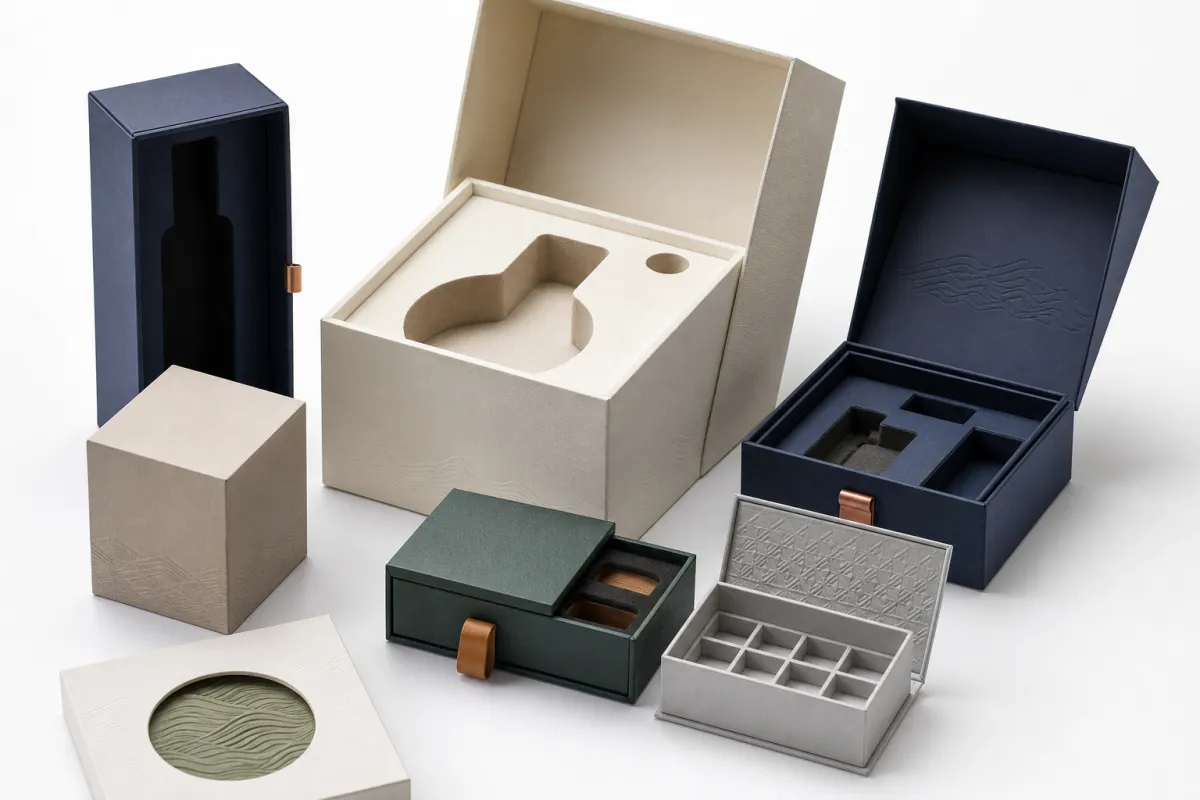
A good custom product packaging manufacturer takes a product from rough idea to working package. Structure, material selection, print prep, finishing, sample development, and production control all have to line up. The package is not just a shell. It is part of the product experience, part of the shipping system, and part of the brand story.
People often blur the line between a manufacturer, a printer, and a broker. They are not the same thing. A printer may focus on graphics on paperboard or corrugated stock. A broker may connect you with factories and manage quotes, but not actually control the line. A custom product packaging manufacturer is the group that handles engineering, sampling, and factory oversight needed to turn a concept into usable packaging. That includes dielines, board selection, insert fit, structural testing, and production approval.
Most buyers want a result that looks polished, but a real packaging partner also thinks about function. A sleeve that slides too loosely, a box that crushes in transit, or an insert that slows packing labor can create more cost than it saves. I have seen a "premium" rigid box add three seconds to every pack-out line. That sounds tiny until you multiply it by ten thousand units and everyone starts looking tired. A strong custom product packaging manufacturer balances package branding, protection, assembly speed, and freight efficiency instead of chasing a glossy look alone.
Common packaging forms include:
- Folding cartons for cosmetics, supplements, small electronics, food items, and subscription goods.
- Rigid boxes for premium gifts, luxury goods, tech accessories, and presentation packaging.
- Mailer boxes for ecommerce and DTC shipments that need structure and branding in one piece.
- Sleeves for adding branding to an existing carton, tray, or bottle pack.
- Custom inserts made from paperboard, corrugate, molded pulp, foam, or die-cut paper systems.
- Retail-ready display packaging for shelves, counters, peg hooks, and club-store environments.
The best custom product packaging manufacturer also understands where the package will live after production. A carton that only sits on a shelf needs different design priorities than one that crosses multiple distribution nodes, sees pallet pressure, and lands in a residential mailbox. That is where branded packaging becomes more than a visual exercise. It becomes a practical system.
A package is not finished when the artwork looks good on screen. It is finished when the product fits correctly, survives handling, and still looks intentional after the logistics chain has done its work.
One more point buyers miss all the time: a strong custom product packaging manufacturer does not say yes to every request. Sometimes the better answer is to change a panel size, simplify a finish, or switch to a more efficient board grade. Honest tradeoffs usually beat a design that looks impressive in a mockup and behaves badly in production. Nobody wants to find that out after the freight bill lands.
How a Custom Product Packaging Manufacturer Runs the Process
The process usually starts with intake. A custom product packaging manufacturer needs product dimensions, weight, fragility, sales channel, shipping method, branding goals, and a budget range before anyone can make useful recommendations. The more complete the brief, the faster the project moves because the structural and print decisions can be made with fewer revisions. If the brief is fuzzy, the quote is gonna be fuzzy too.
Intake and Specification Gathering
At this stage, a good team will ask for actual product samples if possible. That is not busywork. A bottle may measure one thing on paper and behave differently once caps, closures, shrink bands, or inserts are included. The same is true for skincare jars, electronics kits, and gift sets. A custom product packaging manufacturer often needs to see how the item is packed, how much void space remains, and whether the package should prioritize presentation or carton strength.
Expect questions like these:
- What are the exact product dimensions and weight?
- Will the package be used for retail display, ecommerce shipping, or both?
- How fragile is the product under drop, vibration, or stacking pressure?
- Do you need an insert, divider, window, or tamper-evident feature?
- What is the target quantity and launch date?
That last question matters because lead time is not some abstract number. It changes the choices available to you. If launch is three weeks away, fancy finishing and multiple proof cycles may be unrealistic. Better to hear that early than after everyone has already gotten attached to a layout that cannot be produced on time.
Structural Development and Fit
Once the basics are clear, the manufacturer develops the structure. That usually means a dieline, material recommendation, and a proposed folding logic. For paperboard cartons, common choices might include 250gsm to 400gsm SBS, C1S, or artboard depending on print coverage and stiffness needs. For mailers and transit boxes, corrugated flute selection matters just as much as print quality. A custom product packaging manufacturer is looking for a fit that protects the item without using more material than necessary.
At this point, the design team will often test the package with the actual product. That check catches problems early, like a flap that catches on a closure, an insert that needs a tighter pocket, or a box depth that leaves too much movement. Small errors here can turn into expensive rework later, so this stage deserves the time. Once the line is set up, changing a dimension by just a few millimeters can ripple through the whole job.
Sampling, Proofing, and Production
Sampling is where theory meets reality. A structural sample confirms the size and shape. A digital proof confirms artwork placement. A printed prototype confirms color, finish, and legibility. For a custom product packaging manufacturer, this sequence is the best way to reduce surprises before full production starts.
Production usually follows a practical order: artwork finalization, plate or die setup, print run, finishing, cutting, folding, quality checks, and packing for freight. If the job includes foil, embossing, spot UV, or soft-touch lamination, expect more setup time. If inserts need hand assembly, there may also be added labor. A simple folding carton can move faster than a Luxury Rigid Box with custom foam, but the exact timeline depends on quantity and complexity.
In general, the steps look like this:
- Gather specs and confirm the packaging brief.
- Build or refine the dieline and structure.
- Approve samples and printed proofs.
- Set up print, die-cutting, and finishing equipment.
- Run production, inspect quality, and pack for shipment.
- Ship by freight or parcel depending on the product and volume.
Lead time can shift based on order size, material availability, special finishes, and rush requests. A small run with standard materials might be straightforward, while a large launch with a complex insert system can take noticeably longer. A custom product packaging manufacturer should tell you where the time is going instead of handing over vague promises. Vague promises are cheap. They are also useless.
For transit-focused programs, packaging should also be aligned with recognized testing methods. If your product is going through parcel networks, the International Safe Transit Association has widely used procedures that help validate package performance in shipping conditions.
What Drives Cost and Pricing in Custom Packaging
Pricing is where many buyers get surprised, but it becomes much easier to understand once you break it down. A custom product packaging manufacturer is pricing material, labor, setup, tooling, finishing, and shipping. If any of those change, the quote changes too.
The biggest cost drivers are quantity, material grade, print coverage, structure complexity, insert design, and premium finishes. A large run spreads setup costs across more units, so the per-unit price usually falls as quantity rises. Smaller runs feel expensive because the same setup work is divided across fewer boxes. That is normal, and it is one reason a custom product packaging manufacturer will often ask for both a target run and a forecast range.
Here is a simple comparison of common packaging options and how they tend to price out:
| Packaging Type | Typical Use | Common Material | Approx. Price Range at 5,000 Units | Notes |
|---|---|---|---|---|
| Folding carton | Retail, cosmetics, supplements | 300gsm to 400gsm paperboard | $0.18-$0.45 each | Efficient for print-heavy branding, usually lower freight cost |
| Mailer box | DTC shipping, subscription kits | E-flute corrugated | $0.65-$1.40 each | Stronger for parcel handling, more board volume than a carton |
| Rigid box | Luxury, gifting, premium presentation | Greyboard with wrapped liner | $1.80-$4.50 each | Higher labor and finishing cost, especially with inserts or specialty wraps |
| Sleeve with tray | Product sets, layered branding | Paperboard plus inner tray | $0.40-$1.10 each | Good visual impact, but can add assembly time |
Those numbers are directional, not universal. Print coverage, embossing, foil, matte or gloss coating, and custom inserts can move pricing significantly. A custom product packaging manufacturer will also factor in whether the job is offset printed, flexo printed, digital printed, or a hybrid of methods. Each has its own setup cost and quality profile.
Hidden costs can show up in places buyers do not expect:
- Multiple rounds of revisions on dielines or artwork.
- Extra printed proofs or color-matching approvals.
- Rush charges for compressed schedules.
- Warehouse storage before release.
- Freight, especially for bulky rigid packaging.
- Hand assembly for inserts or specialty structures.
That is why comparing quotes line by line matters. Two quotes may both say "custom box," but one may include assembly, structural review, and freight cushioning while another only covers printed blanks. A careful custom product packaging manufacturer should state exactly what is included so the number can be judged fairly.
Budget choices should be strategic, not random. Sometimes the smartest move is to keep the structure simple and spend the savings on a better print finish. Other times, a slightly stronger board can reduce damage claims and make the overall program cheaper. A good custom product packaging manufacturer helps you decide where the money should actually go. That is the job, honestly.
Step-by-Step: Choosing the Right Custom Product Packaging Manufacturer
Choosing a supplier gets easier when you work from a clean brief. A custom product packaging manufacturer can only quote accurately if the request contains the product, the channel, the quantity, the timeline, and the brand goals. If those details are vague, the quote will be vague too. Everyone loses. Especially your schedule.
Start by defining what success looks like. Is the priority premium shelf presence, lower freight cost, faster pack-out, or better protection in ecommerce shipping? That answer changes the packaging direction. A custom product packaging manufacturer that understands your priorities can recommend the right format instead of forcing every job into the same box style.
Build a Shortlist With Real Criteria
Do not compare suppliers on price alone. Review their structure capability, print quality, sample speed, communication, minimum order quantity, and consistency on repeat orders. If a supplier says they can do everything, ask how they handle engineering, proofing, and quality control. A custom product packaging manufacturer with a clear process usually creates fewer headaches later.
Useful comparison criteria include:
- Can they handle folding cartons, mailers, rigid boxes, and inserts?
- Do they provide dielines and structural samples?
- How quickly do they respond during quoting and sample review?
- What is their minimum order quantity?
- Can they support both branded packaging and shipping protection?
If a supplier avoids basic process questions, that is a red flag. Good packaging work has to be repeatable. One-off luck is not a plan.
Ask for Apples-to-Apples Quotes
Request quotes from a small group of qualified suppliers and make sure each one is pricing the same dimensions, material grade, print method, finish, and quantity. It sounds basic, but this is where many buyers get misled. A lower number can simply mean thinner board, fewer print colors, no insert, or no proof included. A trustworthy custom product packaging manufacturer should welcome direct comparison because the details are the point.
Also ask for production assumptions. For example, is the quote based on one packaging style or multiple SKUs? Is the unit price tied to a single ship-to location or split freight? Are the products packed flat or assembled? Those details matter more than most buyers expect.
Review Samples With the Real Product
Never approve custom packaging from a screen alone if you can avoid it. Color shifts, texture changes, and fit issues are easier to catch in person. A printed prototype from a custom product packaging manufacturer tells you far more than a PDF mockup, especially when the product has a label seam, rounded edges, or a fragile finish.
Use the real product during sample review and pay attention to three things:
- Fit - The item should sit securely without force.
- Assembly - The package should not slow the packing line.
- Presentation - The package should look intentional from the customer side.
That is also the right time to ask how the manufacturer manages color consistency across repeat orders. Paper stock, coating, and ink density can shift from run to run. A dependable custom product packaging manufacturer should explain how it controls that variation, especially for multi-SKU programs. If they dodge the question, they probably do not have a good answer.
For paper sourcing, certification, and chain-of-custody questions, the Forest Stewardship Council is a useful reference point when you are discussing responsibly sourced paperboard and branded packaging materials.
Common Mistakes to Avoid When Ordering Custom Packaging
The most expensive mistake is buying on price alone. A low quote from a custom product packaging manufacturer can be fine, but only if the material, print, and service levels are actually comparable. Too often, a cheaper number hides thinner board, weaker finishing, or no meaningful support if the package fails in production.
Another common problem is sending incomplete specs. If the manufacturer only gets rough dimensions and a logo file, they have to guess at the rest. That usually creates back-and-forth, delayed proofs, and avoidable revision cost. A professional custom product packaging manufacturer wants product weight, fragility, quantity, target timeline, shipping method, and any insert requirements up front.
Screen approval is another trap. A design can look excellent in a PDF and still feel wrong in hand. The color can read too cool, the coating can mute contrast, or the closure can misalign once the board is cut and folded. That is why a custom product packaging manufacturer should be part of the review before final approval, not after production starts.
Teams also forget to think about the supply chain. A box that looks great on a desk may fail once it sees stacking pressure, warehouse handling, pallet wrap, or parcel vibration. The package should be designed for the real route it takes. A strong custom product packaging manufacturer asks those questions early because a pack-out problem is often a logistics problem hiding inside a design problem.
Waiting too long is another issue. A launch calendar can collapse if sampling, revisions, and production do not have enough time. Even a straightforward run needs room for approvals, and specialty finishes need even more. A custom product packaging manufacturer can move quickly, but it cannot remove physics, print setup, or freight scheduling from the process.
Here are a few signs you may be heading toward trouble:
- The quote is unusually low but missing key line items.
- No one has checked the packaging with the real product.
- The design is being approved before structural testing.
- The timeline leaves no room for a revision cycle.
- The team is treating shipping and retail as separate problems.
If you avoid those mistakes, the project usually gets much easier. More often than not, the strongest packaging programs are not the flashiest ones. They are the ones where the custom product packaging manufacturer, the brand team, and the operations team all agree on what the package must do.
Expert Tips for Better Structure, Print, and Finish
My strongest advice is to design from the inside out. Start with protection, fit, and pack-out, then layer on the visual work. That approach usually produces better product packaging because the structure supports the brand, not the other way around. A skilled custom product packaging manufacturer can help you build that sequence cleanly.
Use standard sheet sizes where you can. That sounds plain, but efficient panel proportions can reduce waste and keep costs under control. If the carton is slightly too large, the paperboard yield may drop and freight cost may climb. Small structural decisions add up fast. A custom product packaging manufacturer that understands layout efficiency can often save you money without making the package look cheap.
Finishes should support the story you want the package to tell. Matte coating can feel restrained and modern. Gloss can make colors pop and give retail packaging more shelf energy. Soft-touch lamination gives a tactile, premium feel, but it also adds cost and may show scuffs differently than expected. A custom product packaging manufacturer should explain the tradeoff, not just sell the finish.
Quality control matters just as much as design. Ask about tolerances, color control, and repeat-order consistency. If you are running multiple SKUs, even a small dimensional shift can make one insert fit tightly and another one sit loose. That kind of thing is kinda invisible until the first pallet gets unpacked and the ops team starts muttering.
Sustainability choices can still perform well if they are made thoughtfully. Right-sizing a package can lower material use and shipping volume. Recyclable board can work beautifully if the structure is designed correctly. Reduced ink coverage can improve recyclability and lower print cost, while paper-based inserts can replace heavier foam in many cases. A custom product packaging manufacturer should be able to talk through those options in practical terms, not slogans.
Here is a simple way to think about finish choices:
- Matte - Clean, quiet, and often better for a premium minimal look.
- Gloss - Bold, bright, and useful when color impact matters.
- Soft-touch - Tactile and upscale, but less forgiving on scuffs and budget.
- Foil - Strong for accents, logos, and highlight moments, but best used with restraint.
- Embossing - Excellent for depth and brand cues, especially on rigid packaging.
The right finish is not the one that sounds most expensive. It is the one that fits the product, the channel, and the brand promise. That is a subtle but important difference, and a practical custom product packaging manufacturer will usually point you toward the version that works best in the real world.
Print is part of package branding, not separate from it. A small logo placement, a clean color block, or a smart inside print can make custom printed boxes feel considered without overcomplicating the structure. Good custom product packaging manufacturer support turns those details into repeatable production choices. That repeatability is where the real value lives.
Next Steps With a Custom Product Packaging Manufacturer
The best next move is simple: measure the product, collect a few reference packages, define your quantity range, and write down the channel, budget, and timeline before you request quotes. A custom product packaging manufacturer can only solve the right problem if the brief is complete enough to describe that problem clearly.
If possible, ask for a sample review using the real product, not just artwork files. That one step can reveal fit issues, assembly friction, and presentation problems that are hard to spot on a screen. A custom product packaging manufacturer that encourages real-world testing is usually thinking like a partner, not just a vendor.
It also helps to build a short supplier checklist before conversations start. Rank what matters most so you can compare options without second-guessing yourself halfway through the project. For some teams, the priority is a faster turnaround. For others, it is a premium finish, lower freight cost, or stronger structural support. A custom product packaging manufacturer should be chosen around those priorities, not around a single line on a quote sheet.
- Do you need fast sampling or fast full production?
- Does the package need to survive parcel shipping, retail display, or both?
- How important is premium appearance versus lowest cost?
- Will you need repeat orders, multiple SKUs, or seasonal changes?
- Do you have internal approval time built into the schedule?
Before you commit, confirm the decisions still sitting inside your team. Branding approval, forecast volume, insert preference, and whether you want a pilot run are all worth locking down early. Those details shape the structural direction and often change pricing more than the artwork itself. A good custom product packaging manufacturer can help you pressure-test those choices before anything is printed.
From a packaging buyer's point of view, the best results usually come from treating the custom product packaging manufacturer as a technical partner and giving that partner a complete brief to work from. Do that, and you are much more likely to get packaging that protects the product, supports retail packaging goals, and delivers strong branded packaging without unnecessary rework. The actionable takeaway is simple: do not approve a quote until the real product has fit-tested inside a sample, the quote lines match your actual spec, and the launch timeline still leaves room for one revision cycle. That one habit saves more money than any clever finish ever will.
How do I choose a custom product packaging manufacturer for my brand?
Compare suppliers on packaging type, material options, sample quality, communication speed, and minimum order quantity rather than price alone. Ask whether the custom product packaging manufacturer handles structure, print, finishing, and production in-house or outsources key steps that could affect timing and consistency. Request examples of similar packaging programs so you can judge whether they understand your product category and sales channel.
What does a custom product packaging manufacturer need for an accurate quote?
Provide product dimensions, weight, fragility, quantity, target timeline, and whether the package needs retail display or shipping protection. Share artwork status, preferred materials, finishing ideas, and any insert or assembly requirements so the quote reflects the real build. Include whether you need samples, rush service, or warehousing, because those services can change the final price from a custom product packaging manufacturer.
How long does custom packaging usually take from quote to delivery?
Simple projects can move quickly once specs are approved, but sampling, revisions, and print setup often take longer than buyers expect. Lead time depends on quantity, material availability, and whether the job needs custom tooling, specialty finishes, or structural testing. Build in extra time for approvals and freight so production does not finish before your launch or fulfillment window is ready.
Why do prices vary so much between custom packaging suppliers?
Suppliers may use different materials, board thicknesses, print methods, finishes, and labor models, even when the packaging looks similar on paper. Some quotes exclude tooling, samples, assembly, freight, or setup costs, which makes the number look lower at first but more expensive later. The cheapest option may also carry higher risk if the package is hard to assemble, weak in transit, or inconsistent across production runs.
What files should I send to a custom product packaging manufacturer?
Send a product spec sheet with dimensions, weight, photos, and any protection needs, plus reference packaging if you have a style in mind. Share print-ready artwork when available, or ask for the manufacturer's dieline and template so your designer can build correctly from the start. If you do not have final artwork yet, send logo files, brand colors, copy, and inspiration images so the project can move into structure and quote review with the custom product packaging manufacturer.

