Buyer Fit Snapshot
| Best fit | Custom Product Seal Stickers projects where brand print, material claims, artwork control, MOQ, and repeat-order consistency need to be specified before quoting. |
|---|---|
| Quote inputs | Share finished size, material target, print colors, finish, packing count, annual reorder estimate, ship-to region, and any compliance wording. |
| Proofing check | Approve dieline scale, logo placement, barcode or warning zones, color tolerance, closure strength, and carton packing before bulk production. |
| Main risk | Vague material claims, crowded artwork, missing packing details, or unclear freight terms can make a low unit price expensive after revisions. |
Fast answer: Custom Product Seal Stickers: What They Are and How should be specified like a repeatable production item. The safest quote records material, print method, finish, artwork proof, packing count, and reorder notes in one written spec.
Production checks before approval
Compare the actual filled-product size with the drawing, then confirm tolerance on folds, seals, hang holes, label areas, and retail display edges. Reserve space for logos, QR codes, warning copy, and material claims before decorative graphics fill the panel.
Quote comparison points
Review material grade, print process, finish, sampling route, tooling charges, carton quantity, and freight assumptions side by side. A quote is only useful when the supplier can repeat the same color, closure quality, and packing count on the next order.
Custom product seal stickers do more than close a flap or finish a lid. On a crowded shelf, they are often the first cue that a package is complete, untouched, and worth a second look. Used well, custom product seal stickers can hold a closure in place, carry branding, and handle a tamper-indicating role without making the package look clinical, awkward, or overdesigned. I have spent enough time around packaging specs to know that the little pieces are usually the ones that make or break the whole presentation.
Food, cosmetics, supplements, candles, and e-commerce brands keep coming back to them for a reason. Small pieces can change how an entire package feels. A seal that lies flat and stays put makes the pack feel deliberate. A seal that curls, lifts, or tears during transit does the opposite, and packaging has a habit of exposing those problems faster than anyone wants. You can kinda see why buyers obsess over that last 2% of finish.
Custom Product Seal Stickers: What They Are and Why They Matter
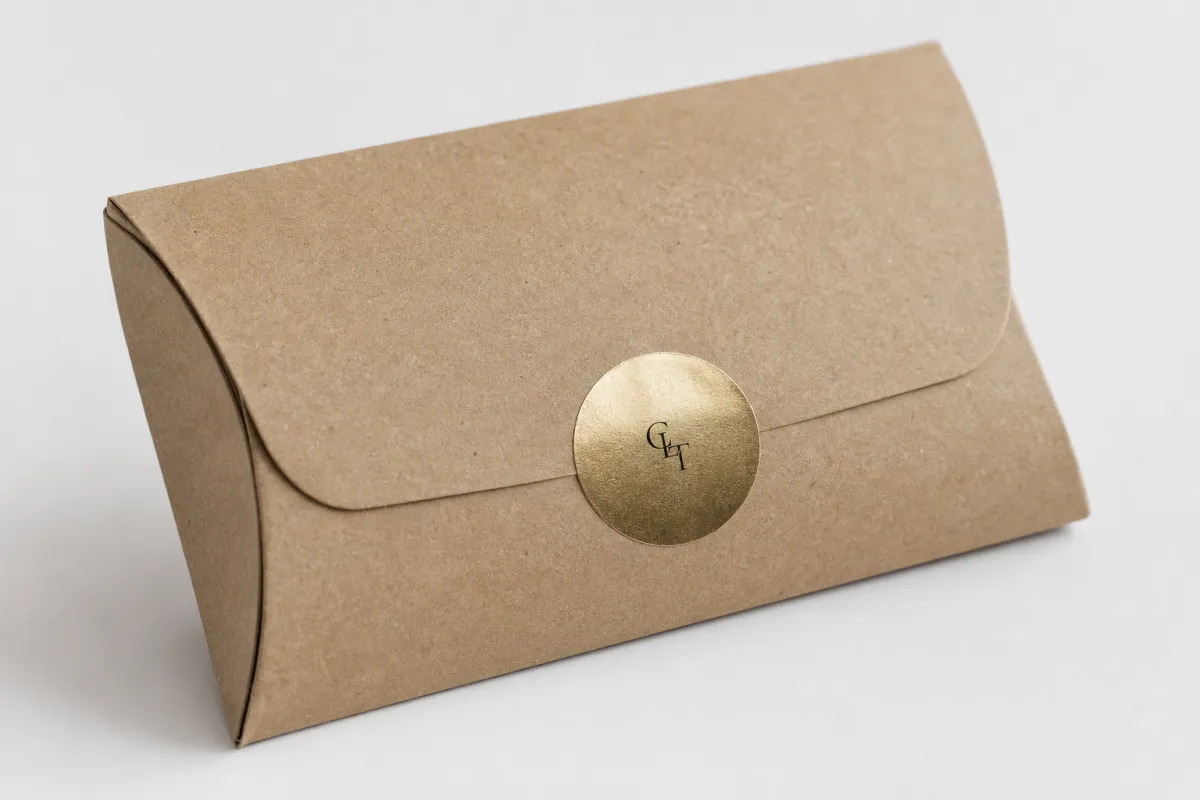
At the simplest level, custom product seal stickers are pressure-sensitive stickers made to bridge, close, decorate, or indicate that a package has not been opened. The same format can serve as a branded closure on a folding carton, a neat seal on a pouch, or a tamper-indicating label on a jar lid. The structure is usually straightforward: face stock, adhesive, liner, and a die-cut shape. The result depends entirely on the packaging surface, the handling, and the amount of abuse the package will see before it reaches the customer.
People often talk about custom product seal stickers as one category, but they usually serve three different purposes.
Decorative seals
These are about appearance first. Think of a bakery box held shut with a round branded seal, or a candle carton finished with a narrow sticker across the top flap. Decorative custom product seal stickers help a package look finished and intentionally designed. They can be the last detail that ties together branded packaging, Custom Printed Boxes, and the rest of the shelf presentation.
Functional closure seals
These do a practical job. They help hold a pouch closed, keep a flap from springing open, or keep a tissue wrap from shifting during transit. In practice, the seal usually works with the fold rather than replacing it. That matters because a seal that is too small or too weak is only decoration pretending to be hardware. Custom product seal stickers used this way should be sized for the seam, the material, and the way the package is actually handled on the line. I have seen plenty of packs where the sticker looked great in proof but felt flimsy in hand, and that mismatch shows up fast in production.
Tamper-evident seals
These are the serious version. A true tamper-evident construction is meant to show disturbance if the sticker is lifted, cut, or removed. That can call for special adhesives, destructible face stocks, or materials that visibly break when someone tries to peel them away. Not every decorative seal is tamper-evident, and pretending otherwise is a costly mistake. If the product needs safety support or compliance backup, ask for a real tamper-evident build instead of guessing. That honest distinction matters more than pretty artwork, even if nobody likes hearing that part.
That distinction matters because customers read packaging quickly, often faster than they read the copy on the back panel. A clean seal can suggest freshness, care, and attention to detail in a single glance. A sloppy seal can make a premium item look improvised. That matters most in retail packaging, where the package has to do a lot of persuasion before the product ever gets touched.
"A seal sticker that looks pretty but lifts at the corner is just expensive confetti."
From a packaging buyer’s point of view, custom product seal stickers are less about decoration and more about risk management. They affect the customer’s first touch, the look of the shelf, the security of the closure, and the way your brand feels across the entire pack. If the seal is part of the product story, it should work as hard as the label on the front panel.
The seal should be treated as part of the whole package system, not as a last-minute add-on. If it looks disconnected from the rest of the packaging design, it will feel cheap even when the material is expensive. If it matches the artwork, stock, and finish of the rest of the product packaging, it feels like it belongs there. That is basic package branding, and it still earns its keep.
How Custom Product Seal Stickers Work on Different Packages
Custom product seal stickers only perform well when the build matches the package. A good proof can still fail on the actual surface, and the reason is usually dull but real: adhesion, texture, temperature, or application pressure. That is the practical side of packaging. The glamorous side is the art file. The practical side is what keeps the package closed.
Face stock, adhesive, liner, and cut shape
The face stock is the visible layer. Paper, BOPP, polypropylene, vinyl, and specialty stocks each bring tradeoffs. Paper can feel warmer and more natural, which suits many food brands and candle lines. Film stocks like BOPP are better when moisture, oils, or handling are a concern. The adhesive matters just as much. Permanent adhesives bond strongly. Removable adhesives are easier to peel but less secure. Freezer-grade or aggressive adhesives are used for colder conditions or rougher surfaces. The liner keeps the sticker stable before application, and the die-cut determines how easy the seal is to dispense and place.
For custom product seal stickers, a clean die cut is not cosmetic fluff. It affects how fast a worker can apply them and how evenly they sit across the seam. If the shape is too fussy, production slows down. If it is too small, the sticker may not bridge the closure properly. If it is too large, the edges can wrinkle or catch on nearby surfaces.
Boxes, jars, pouches, bags, and tubes
Different packaging formats ask the seal to do different jobs. On folding cartons and mailer boxes, the sticker often bridges the top flap and acts like a visual lock. On jars, it may wrap from lid to sidewall to show if the container has been opened. On pouches and bags, it can help hold the closure and give the pack a more finished retail look. Tubes are trickier because the surface is curved and often coated, so the sticker needs enough flexibility to conform without lifting at the edges.
Textured kraft board, powder-coated paperboard, and recycled surfaces can all change how custom product seal stickers behave. A label that sticks nicely to a smooth coated box can fail on uncoated stock with a rough grain. Cold or damp product packaging can also change how the adhesive behaves during the first few minutes after application. That is one reason packaging teams should test on the real material, not the sample swatch in a vacuum. If the carton stock has a heavy tooth or a greasy coating, that detail matters more than the rendering on your screen.
Why application pressure and temperature matter
Pressure-sensitive labels need actual pressure. Not a polite tap. If the operator is applying custom product seal stickers too lightly, the adhesive may not fully wet out on the surface. Too much heat can change tack on some films and adhesives, and cold surfaces can slow bond development. A sticker placed on a jar straight out of a cold room may look fine and still fail later because the adhesive never had the right conditions to settle in.
Think of it this way: the artwork can be perfect and the construction can still be wrong. That is why custom product seal stickers should be designed with the package, the line, and the shipping conditions in mind. If the product is meant for e-commerce, the seal should survive movement inside corrugated mailers, not just sit neatly on a sample box in the office.
For shipping-heavy programs, transit testing is not a luxury. It is basic due diligence. The International Safe Transit Association publishes widely used test methods for parcel and distribution hazards, and if your product has to survive drops, vibration, and compression, that matters more than a good guess. See ISTA for the standards many packaging teams use when validating shipment performance. If your seal is part of a paper-based pack, FSC certification can also matter when buyers want verified fiber sourcing.
Cost, Pricing, MOQ, and Quote Drivers
Custom product seal stickers are often priced in a way that frustrates first-time buyers, mostly because the quote depends on more than size alone. The biggest drivers are quantity, dimensions, shape complexity, material, finish, adhesive, print coverage, and the production method. If your design is simple but your finish is fancy, the quote can still rise fast. If your finish is simple but your quantity is low, the unit cost can still feel stubbornly high. Printing has a talent for that, unfortunately.
MOQ, or minimum order quantity, has a direct effect on unit cost. A 500-piece order usually carries a much higher per-unit price than a 5,000-piece run because the setup cost is spread across fewer stickers. That is normal. The machine still needs setup, the proof still needs review, and the waste still exists whether you order 500 or 50,000. The numbers do not magically shrink just because the quantity is small.
Here is a practical pricing view for custom product seal stickers. These are broad ranges, not promises. Real quotes move with material choice, artwork coverage, and how the seal is built.
| Option | Typical Features | Typical Unit Price at 1,000 Pieces | Best For |
|---|---|---|---|
| Economy | Paper stock, simple circle or rectangle, standard adhesive, limited finish | $0.12-$0.28 | Launch testing, short runs, basic product packaging |
| Mid-range | Coated paper or BOPP, custom die cut, full-color print, stronger adhesion | $0.18-$0.45 | Most retail packaging, branded packaging, repeat orders |
| Premium | Soft-touch or specialty finish, foil, complex shape, premium adhesive | $0.35-$0.90 | High-end package branding, gift sets, shelf-critical products |
If you push the quantity lower, the price usually climbs. A 500-piece order can land anywhere from roughly $0.40 to $1.10 each depending on setup and finish. A 5,000-piece run often falls more comfortably, sometimes around $0.08 to $0.28 each for straightforward custom product seal stickers. Very large volumes can push unit cost down further, but only if the design and material choices are efficient.
There are hidden costs people forget to ask about.
- Custom die cutting: unusual shapes take more setup time than simple circles or rectangles.
- Special finishes: soft-touch, foil, spot gloss, and textured stocks can raise the quote quickly.
- Proofing and sampling: samples on the exact stock are worth paying for if the packaging is sensitive.
- Freight: shipping can matter more than expected on smaller runs, especially for rush orders.
- Adhesive upgrades: freezer, removable, or aggressive adhesives usually cost more than standard versions.
The tradeoff is not always obvious. A premium finish might add 10% to 30% to the quote, but a simpler shape can take some of that back out. A more expensive film stock may be the right call if the package is exposed to moisture, oils, or handling, because a failed seal costs more than a slightly higher print price. A cheap sticker that peels off on the shelf is not cheap. It is waste with a sales team attached to it.
If you want a better read on pricing, ask for two or three options at once: one economy version, one mid-range version, and one premium version. That is the fastest way to see where the real cost jumps happen. You may find that custom product seal stickers in a slightly larger size but a simpler shape actually cost less than a tiny, intricate die cut with a specialty finish. Buyers enjoy a lower quote when it appears, and it does happen.
For broader packaging purchases, it also helps to compare seals against the rest of the line. If you are already ordering Custom Labels & Tags or building out a full set of Custom Packaging Products, you can often standardize stock or finish choices and keep package branding consistent across SKUs.
Process and Timeline: From Artwork to Delivery
Most custom product seal stickers follow a familiar production path, even if the details vary by printer. The work usually starts with a brief, moves into artwork prep, then a digital proof, then approval, then print production, cutting, finishing, and shipping. The process sounds ordinary because it is ordinary. That is a good thing. Ordinary packaging processes are easier to control than dramatic ones.
Artwork prep
Send a clean vector file if you can. PDF, AI, or EPS is usually the safest choice. Include bleed, safe area, and outlined fonts so the proof matches the final cut as closely as possible. If the color has to be exact, call out Pantone or another specific reference. Custom product seal stickers can be tiny, so low-resolution artwork falls apart faster than buyers expect. Tiny text, hairline borders, and ultra-fine details are usually the first things to misbehave. If the sticker needs a legal line or a batch code, keep that text larger than you think you need.
Proofing and approval
This is where timelines often get dragged around by their ankles. Missing artwork details, color questions, or last-minute shape changes can add days. A proof should show the final size, cutline, and print layout. Check it against the real packaging dimensions, not just the file view on screen. If the seal is meant to bridge a seam, the seam width needs to be measured on the actual box, pouch, or jar.
Production and shipping
For a simple reorder, production can move quickly once the proof is approved. Practical lead times are often around 5 to 12 business days after sign-off, plus shipping. First-time custom product seal stickers usually take longer, especially if there is a new shape, specialty finish, or a material test. Rush timelines are possible, but only when the artwork is complete, the size is locked, and the packaging decision is already made. If the buyer is still debating circle versus oval while asking for a rush, the schedule is already in trouble. Nobody is gonna rescue that timeline with wishful thinking.
Packaging tests should happen before final approval, not after the boxes arrive. That sounds obvious, yet people still learn it the expensive way. Test a few seals on the actual package, let them sit, check the edges, and see how they behave after a few hours or a day. If the pack is going through parcel shipping, compression, or cold storage, simulate that as closely as you can before approving the full run.
Custom product seal stickers used in e-commerce packaging benefit from that discipline even more. A seal that looks perfect on the desk can fail after vibration, rubbing, or temperature swings. That is where the package either earns trust or wastes the budget.
Common Mistakes That Make Seal Stickers Fail
Most seal failures are not mysterious. They usually come from one of five boring mistakes, which is somehow more irritating than a dramatic failure. If your custom product seal stickers fail, the reason is often visible in hindsight.
- Using the wrong adhesive for the surface. Textured kraft, cold surfaces, coated board, and curved jars all ask for different adhesion behavior. A standard adhesive can work on one package and fail on another.
- Picking the wrong size. A seal that is too small may not bridge the closure cleanly. A seal that is too large can wrinkle, lift, or slow down application on the line.
- Ignoring bleed and cutline placement. Off-center artwork, tight safe areas, and crowded borders create ugly cut issues. On small custom product seal stickers, even a slight shift stands out.
- Assuming decorative equals tamper-evident. A pretty seal is not the same thing as a security device. If the pack needs to show opening, ask for a tamper-evident build.
- Skipping real-world testing. Paper samples on a desk tell you very little about what happens on actual product packaging under production conditions.
Another mistake is treating the seal as separate from the rest of the packaging design. The sticker should not look like it was borrowed from another product line. If your branded packaging uses warm kraft, muted inks, and soft typography, then a bright glossy seal with a different visual language will feel disconnected. If the box is sleek and minimal, the seal should support that tone instead of fighting it.
On supplement packaging, food packaging, and cosmetics packaging, that mismatch can damage trust quickly. People notice tiny inconsistencies even when they cannot explain them. That is the point of package branding: the customer should feel the system, not each separate part. They may not say, "the seal feels wrong," but they will sense that something is off.
"A seal that doesn't fit the package is just a design problem wearing an adhesive problem's clothes."
Handling matters too. If workers need to place custom product seal stickers quickly, the shape should be easy to align. If the line is manual, an overly complex die cut can slow everything down. If the line is automated, your supplier needs to know the application method before they spec the material. Human hands are not laser-guided, shocking as that may be.
Expert Tips for Better Custom Product Seal Stickers
If you want custom product seal stickers That Actually Work in production, keep the design and construction honest. Do not ask the sticker to do more than it can. Do not expect a tiny seal to carry the whole visual identity. And do not pretend a fragile paper stock can survive a wet environment just because it looked good in a mockup.
Keep the design simple when the footprint is small
Small stickers do not love busy artwork. Fine lines, tiny legal text, and dense illustrations can disappear once the seal is printed at a compact size. Strong logo marks, simple borders, and a few readable words usually perform better. If the seal is only 1 to 2 inches wide, simplicity is not a compromise. It is good packaging discipline.
Use finish like a tool, not a decoration
Matte finishes can make custom product seal stickers feel quieter and more premium. Gloss can punch up color and help graphics look brighter. Soft-touch can work nicely for higher-end branded packaging, but it should earn its place because it usually adds cost. Specialty stocks only make sense when they support the product story or solve a handling problem. Otherwise, they are just expensive texture.
Paper stock is often the right call for natural, artisanal, or retail packaging where the goal is warmth and authenticity. Film stock is often better for moisture resistance and handling. If the package is shipped, chilled, or touched often, the material choice should reflect that reality. A seal that survives the warehouse is usually a better business decision than one that photographs well and fails later.
Design for the person applying the sticker
Application speed matters. If the sticker is awkward to peel, hard to align, or prone to stretching, production becomes slower and more error-prone. Think about the worker applying hundreds or thousands of custom product seal stickers. A simple shape with enough border for visual alignment saves time and reduces waste. That is especially useful on hand-applied runs for custom printed boxes, paper bags, and small jars.
Ask for samples on the real surface
Do not stop at a generic swatch. Ask for a sample or proof on the actual package material whenever possible. A label that behaves beautifully on coated board may act very differently on uncoated kraft, textured paper, or a curved plastic tube. If you are serious about product packaging, test on the real thing. A ten-minute test can save a full pallet of regret.
Buy a little more than the math suggests
Order some overage. Application waste, startup errors, quality checks, and launch demand spikes all eat into the final count. A small cushion is cheap insurance. If the launch goes well, you will use it. If the launch stumbles, you will still have enough stock to adjust artwork or placement before the next run.
For brands building out a larger packaging system, custom product seal stickers should match the same visual logic as labels, cartons, inserts, and shipping materials. That is where the full package feels intentional rather than patched together. If the seals, sleeves, and cartons all speak the same visual language, the whole product line looks more expensive even when every piece is not.
One practical note: if your paper choice matters to retailers or sustainability-minded buyers, ask whether FSC-certified stock is available and whether the print partner can document it properly. If the item is going through shipping stress, ask for packaging validation aligned with the distribution environment. Small questions. Big difference.
Honestly, that is the real secret with custom product seal stickers. Pick the right material, keep the artwork legible, test the seal on the actual package, and do not try to fake tamper evidence. The brands that get this right usually spend less time fixing packaging problems later.
What to Do Next Before You Order Custom Product Seal Stickers
Before you place an order for custom product seal stickers, measure the closure area on the actual package. Not the drawing. Not the polished mockup. The real thing. Write down the width of the seam, the curve of the jar, the finish of the box, and whether the sticker needs to fold over an edge or sit flat on a panel. That one step clears up a surprising amount of confusion.
Then decide what the seal must do first. If branding is the priority, the finish and artwork matter most. If closure is the priority, the adhesive and shape matter most. If tamper evidence is the priority, the material construction matters most. If all three matter, say that upfront so the quote and proof can be built around the real goal instead of a vague wish list.
Ask for two or three material or finish options. Compare them on feel, durability, and price. A paper seal might suit one line beautifully, while a BOPP version is better for a product exposed to moisture or handling. If the line includes both retail packaging and shipping packaging, you may need one solution for the shelf and another for the mailer. That is normal. One size rarely fits every use case.
Prepare one clean artwork file and one backup version. Keep the logo vectorized, keep the text readable, and keep the cutline simple if possible. If you are matching a broader set of branded packaging assets, make sure the seal works with your labels, cartons, and insert cards rather than sitting off in its own design universe. The best custom product seal stickers look like they were always part of the system.
If you are already planning a full packaging refresh, custom product seal stickers can be one piece of a larger rollout alongside Custom Labels & Tags and other Custom Packaging Products. That gives you a cleaner path to consistent package branding across your line, which is usually better than ordering each component in isolation and hoping it all matches later.
Do a pilot order if you are unsure. Ten thousand stickers are not the best place to learn that the adhesive is wrong or the seal is three millimeters too narrow. Start smaller, test the fit, check the application speed, and review how the seal holds up during real handling. Then place the larger run with confidence.
Custom product seal stickers are small, but they carry a lot of weight. They can close a package, support the brand, and signal quality in a way that customers understand immediately. Test them, approve them carefully, and buy them like you actually plan to use them well. The clear move is simple: measure the package, choose the job the seal has to do, and validate the material on the real surface before you approve a full run.
Are custom product seal stickers the same as tamper-evident labels?
Not always. A decorative seal can close packaging without proving tampering, while a true tamper-evident version uses materials or adhesives that show damage when removed. If the product needs safety or compliance support, ask for a real tamper-evident construction instead of assuming a standard sticker will do the job.
How do I choose the right size for custom product seal stickers?
Measure the actual closure area, not just the flat panel. The sticker needs enough width to bridge the seam cleanly without lifting at the edges. Testing the size on the real package before approval is the safest way to avoid a run of seals that look fine on screen and wrong in hand.
What affects the cost of custom product seal stickers the most?
Quantity, size, and material usually drive the biggest price changes. Special finishes, unusual die cuts, and multiple colors can push the quote higher. Smaller runs stay expensive per piece because setup costs do not shrink just because the order is tiny.
What file should I send for custom product seal stickers artwork?
A vector file is best, usually PDF, AI, or EPS. Include bleed, safe area, and outlined fonts so the proof matches the final cut closely. If color precision matters, specify Pantone or another exact color reference so the printer is not guessing.
How long does production usually take for custom product seal stickers?
Timeline depends on proof approval, quantity, print method, and shipping distance. A simple reorder is usually faster than a brand-new shape or finish. The quickest way to keep production moving is to send complete artwork and approve proofs without dragging the decision out for days.

